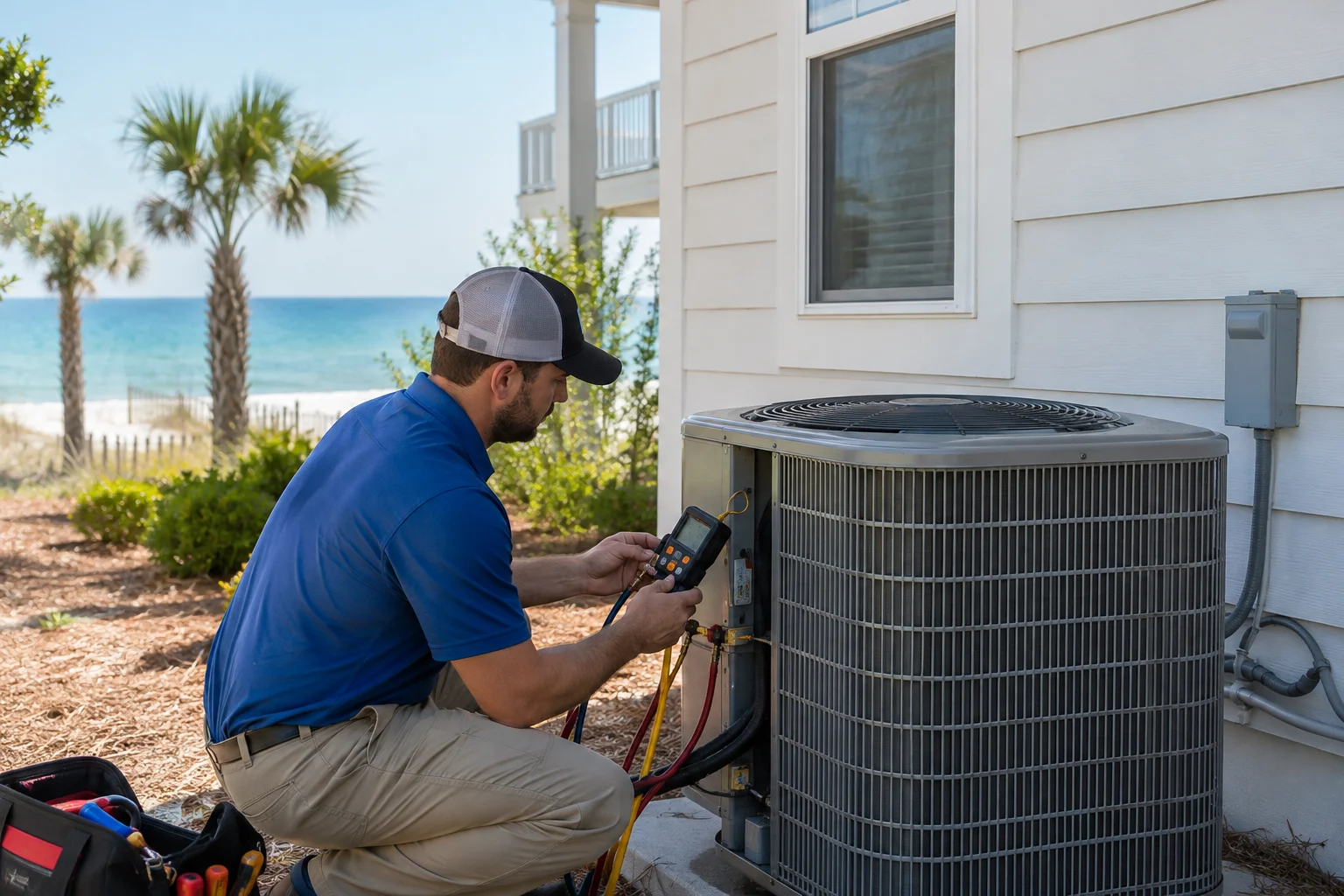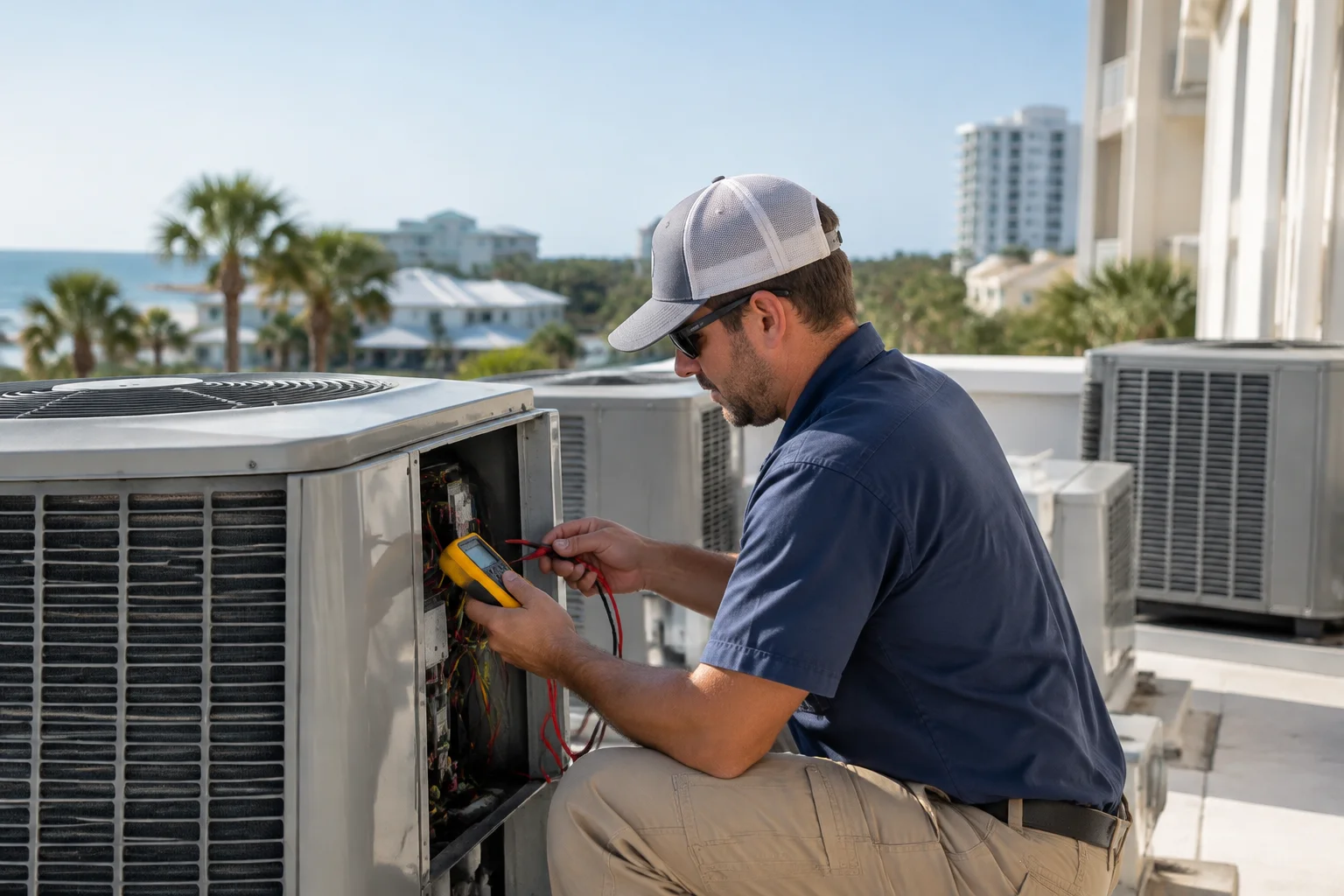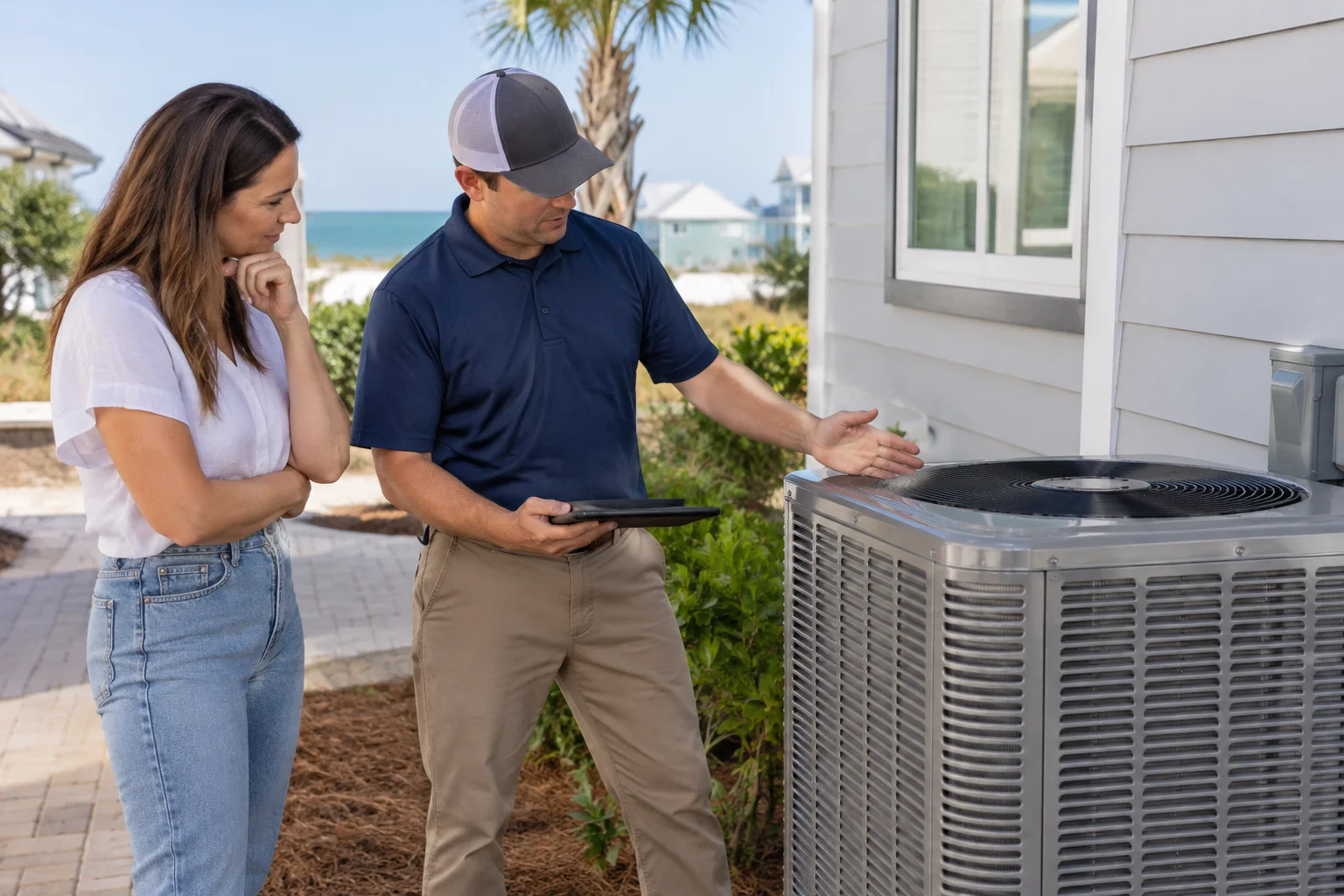
VRF multi-zone systems are built for flexible comfort. One outdoor refrigerant system can serve multiple indoor units, helping homeowners and property managers keep different rooms and zones comfortable. In DeFuniak Springs, FL, though, the environment is hard on HVAC systems. High humidity, frequent warm spells, and salt air in the broader Emerald Coast region can accelerate wear over time. When that happens, VRF performance can drift, indoor air quality can suffer, and energy use can creep up.
This guide explains how HVAC wear and tear shows up in VRF multi-zone systems for homeowners in DeFuniak Springs, what causes common problems, and how preventive HVAC maintenance can reduce the risk of emergency cooling concerns during Florida’s hottest stretches.
Why DeFuniak Springs climate is tough on VRF systems
DeFuniak Springs experiences long, humid summers and frequent periods of high indoor moisture loads. Even when your home feels “comfortable,” the air can still be heavy with humidity. VRF systems rely on refrigerant systems and controlled airflow to move heat and maintain cooling and heating balance across zones. When humidity and heat stress the system, several wear-related issues become more likely.
Florida conditions can also influence how well your home’s ductwork and airflow paths work. In many homes, ductwork or return pathways may not be ideal for consistent zone performance. That matters because VRF multi-zone systems are sensitive to airflow restrictions and improper balancing between indoor units.
What wear and tear looks like in VRF multi-zone zones
VRF systems can develop symptoms that point to normal aging, poor airflow, refrigerant system strain, or condensate drainage problems. Homeowners often notice comfort changes before they notice mechanical ones.
1) Uneven temperatures between zones
If one room cools quickly while another lags, the issue may be related to airflow, dirty filters, blocked intakes, or ductwork constraints where applicable. With VRF multi-zone systems, each indoor unit typically serves a defined area. Over time, dust buildup, reduced airflow, and thermostat settings that do not match how the system distributes cooling can create noticeable temperature differences.
Uneven temperatures can also be triggered by issues that require an in-person evaluation of refrigerant operation and system balance. A homeowner can check basic airflow and filter cleanliness, but a proper diagnosis depends on the system’s readings and inspection.
2) Humidity that stays high even when cooling runs
In DeFuniak Springs, humidity is a major comfort factor. When VRF indoor units cannot remove moisture effectively, you may see persistent clammy air, condensation near registers, or musty odors. Causes can include airflow problems that reduce latent moisture removal, dirty coils, or condensate drainage concerns that prevent proper water handling.
Humidity problems can also impact indoor air quality. Even if the thermostat shows the setpoint is reached, the air may still feel damp because the system is not managing moisture consistently across zones.
3) Strange noises or vibration from indoor units
As components age, you may notice new sounds when units start or change modes. Common sources include debris on intake screens, worn fan bearings, loose panels, or airflow turbulence caused by restricted filters. Salt air and coastal grit can make buildup more noticeable, especially in homes closer to the Emerald Coast corridor.
Some noises are minor and tied to routine wear. Others can signal fan motor issues or mounting problems that should be inspected by a licensed HVAC contractor.
4) Airflow that feels weak or inconsistent
VRF multi-zone systems depend on steady airflow to transfer heat properly. If a zone feels like the air is “not moving,” the system may be compensating, working harder, or failing to reach comfort targets. Filters, return pathways, and ductwork (where used) can become clogged or mismatched over time.
If you have ducted elements, duct inspection and duct repair may become part of the overall fix. When airflow is restricted, the system can run longer, increasing energy use and accelerating wear.
5) Condensate drainage issues and water concerns
VRF indoor units can produce condensate during cooling. If condensate drainage becomes restricted or mismanaged, you may see water staining, dripping near the indoor unit, or signs of moisture around the unit’s drainage line.
Because condensate is tied to cooling performance and humidity control, drainage problems can quickly become both an HVAC and an indoor air quality issue. Homeowners should not ignore water signs, especially in humid Florida seasons.
6) Thermostat behavior that seems “off”
Thermostats and zone controls affect how VRF systems cycle and modulate. Over time, thermostat settings, sensor placement, or control scheduling can lead to comfort complaints that look like mechanical failure. If your system seems to short cycle, run longer than expected, or struggle to maintain setpoints, the cause could be control related, airflow related, or a combination.
A professional air conditioning service technician can review how the thermostat is set up for your zones and confirm that the system is operating as intended.
Common causes behind VRF wear in Walton County homes
Wear and tear is not just about time. In DeFuniak Springs, several factors can push VRF systems toward faster degradation.
Dust, humidity, and coil buildup
High humidity can encourage dirt to stick to coils and surfaces. When coils and heat transfer areas get coated, the system has to work harder to move heat. That can increase energy use and contribute to comfort drift.
Airflow restrictions from filters, returns, and ductwork
Even a well-designed system can struggle if airflow is limited. Dirty filters, closed dampers, blocked returns, or ductwork leaks and restrictions can reduce airflow to indoor units. That can trigger poor humidity control and uneven temperature distribution across zones.
Homeowners sometimes search for duct cleaning near me or duct repair near me when comfort issues persist. In VRF systems, improving airflow can be a key part of restoring stable zone performance. A duct inspection helps confirm whether ductwork is contributing to the problem.
Condensate drainage strain during peak humidity
When humidity spikes, condensate production increases. If drainage components are partially blocked or improperly routed, water can back up or fail to drain smoothly. Over time, that can create odors, moisture problems, and indoor comfort issues.
Refrigerant system stress from operation outside ideal conditions
VRF systems are refrigerant-based, and performance depends on stable operation. Wear can develop from long runtimes, repeated mode changes, or system imbalance. Salt air and airborne debris can contribute to buildup on outdoor components, which can affect heat rejection.
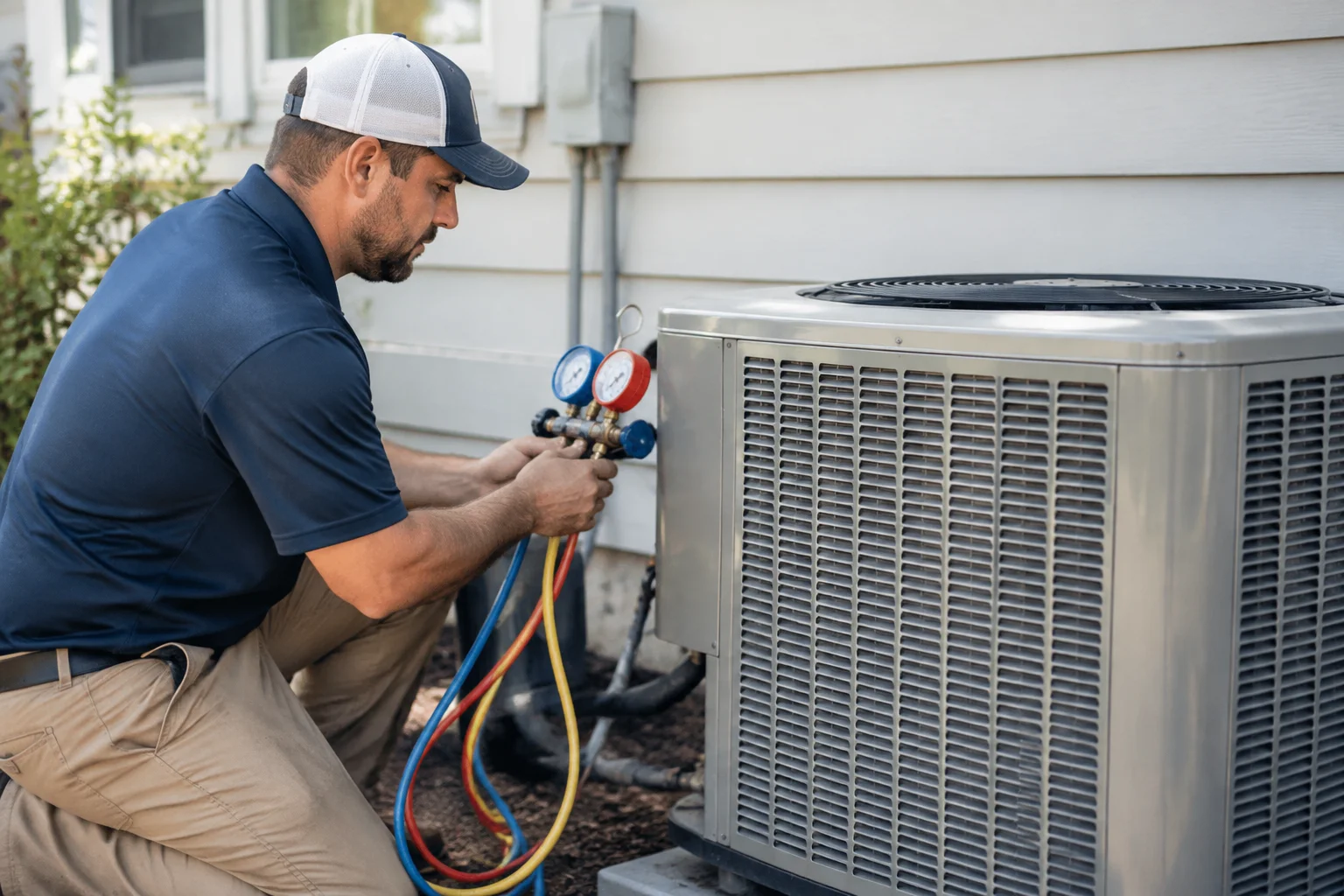
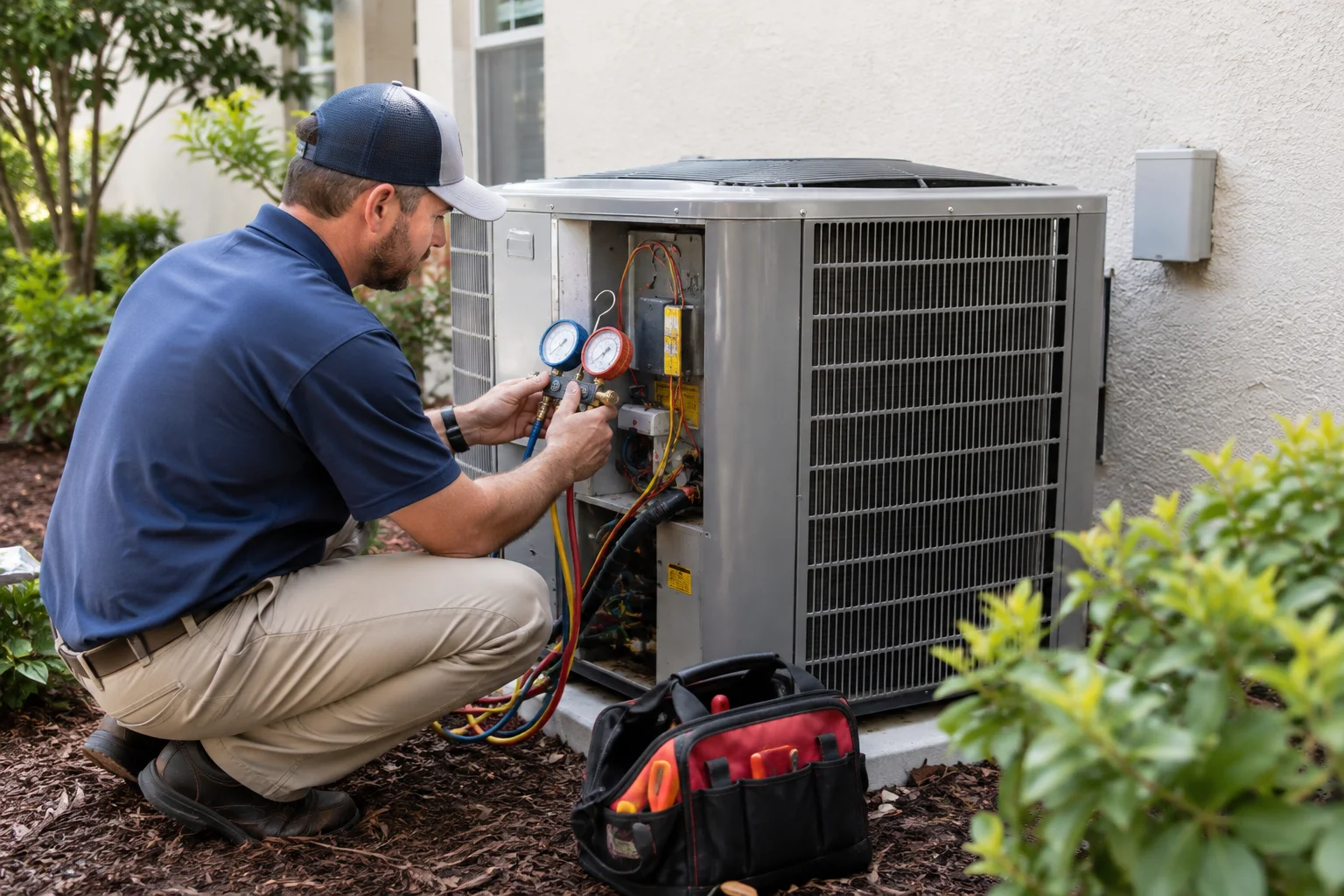
Important: homeowners should not attempt refrigerant adjustments or DIY troubleshooting. Refrigerant system issues require an in-person professional evaluation to ensure safe and accurate handling.
How problems affect energy use and comfort
When VRF multi-zone systems experience wear, the system may compensate by running longer or cycling more often. Restricted airflow and coil buildup can reduce heat transfer efficiency. Humidity issues can make rooms feel uncomfortable even when the thermostat setpoint is satisfied.
In Florida’s warm season, that can mean higher energy use and more frequent cooling demand. Over time, this additional strain can accelerate wear on fans, motors, and other components that help move air and manage refrigerant flow across zones.
Maintenance that prevents wear from becoming a breakdown
Preventive HVAC maintenance is where homeowners can make a real difference. The goal is to catch early indicators of wear and restore airflow, humidity control, and system stability before problems become emergency cooling concerns.
Replace or clean filters and keep airflow pathways open
Start with simple checks. Replace disposable filters on schedule or clean reusable ones as recommended by your system’s documentation. Make sure indoor unit intakes are not blocked by furniture, curtains, or storage. For homes with ductwork, ensure returns are not obstructed and that vents are not sealed shut.
Schedule air conditioning inspection for VRF zone performance
A professional Air Conditioning Inspection helps confirm that zones are operating as expected. During an inspection, a licensed HVAC contractor can review airflow, indoor unit cleanliness, control operation, and signs that condensate drainage needs attention. This is especially valuable before the hottest months when homeowners search for HVAC maintenance near me to avoid mid-summer breakdowns.
Use duct inspection and ductwork care when airflow is the bottleneck
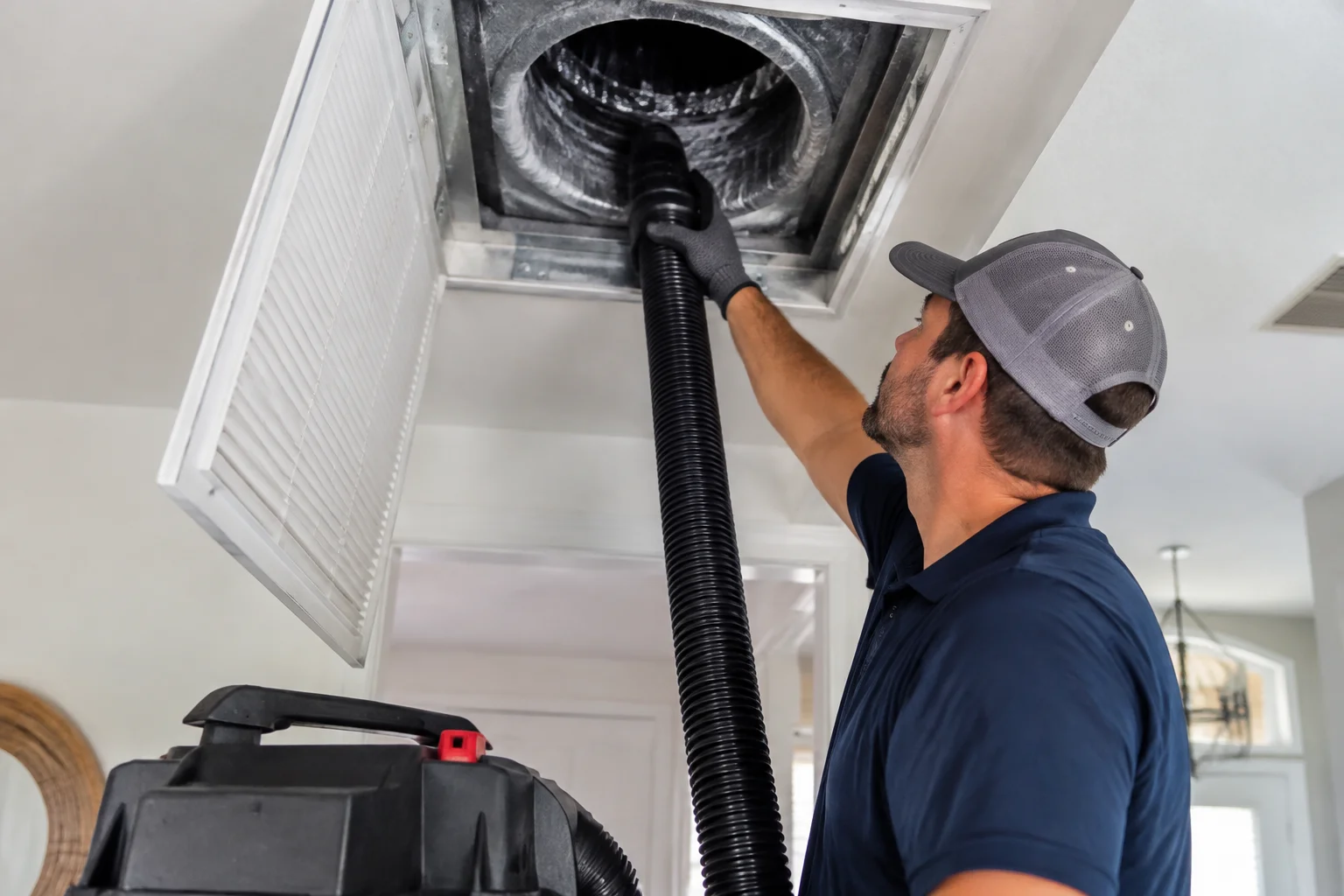
If some zones run warm or feel weak, ductwork and airflow distribution may be part of the story. Consider duct inspection and related service options such as Duct Sealing & Aeroseal Services when appropriate. Sealing and airflow improvements can help VRF systems maintain steadier comfort across zones.
Some homeowners also ask about duct cleaning near me. Dust control can support indoor air quality, but it is most effective when paired with airflow verification and proper filter maintenance.
Plan maintenance around humidity season in DeFuniak Springs
Humidity peaks are predictable. Scheduling maintenance before the season ramps up can help coils stay cleaner, drainage systems stay clear, and thermostats and zone controls operate properly. If you are managing a vacation rental or a multi-zone commercial property, maintenance timing becomes even more important because systems may sit idle and then run hard during guest arrivals or busy weeks.
Indoor air quality: wear that homeowners can actually feel
Indoor air quality is not just about filters. VRF systems move air through indoor units, and wear that impacts airflow, coil cleanliness, or humidity control can affect how fresh and comfortable the air feels.
When humidity stays high, you may notice odors, increased dustiness, or discomfort that improves only when the system runs longer. Routine maintenance supports better humidity management, which helps reduce conditions that can contribute to indoor air quality problems.
If you are focused on indoor air quality, include VRF maintenance as part of your whole-home comfort plan. If you also have ductwork, keeping airflow pathways clean and properly sealed can reduce dust and help consistent distribution.
When to call for VRF multi-zone system repair
Some issues are safe to monitor briefly, but others should be handled promptly. If you are dealing with any of the following, contact a licensed HVAC contractor for an evaluation.
One or more zones repeatedly fail to reach set temperature despite normal thermostat operation
Persistent humidity or odors that do not improve even when cooling is running
Water leaks, dripping, or visible moisture around an indoor unit or drainage area
New loud noises, vibration, or repeated cycling that wasn’t present before
Noticeable airflow reduction in a zone, especially when filters are clean
Homeowners searching for AC repair near me often feel frustrated when comfort issues come and go. With VRF systems, those patterns can be a clue that airflow, condensate drainage, or refrigerant system operation needs professional attention. For emergency cooling concerns, it is better to address the issue early than wait for the system to fail during a peak heat stretch.
Replacement versus repair: what homeowners should consider
Wear and tear can eventually lead to system replacement, but the decision should be based on an in-person evaluation. A technician can review the condition of indoor units, outdoor components, airflow performance, and any recurring issues that indicate aging components.
While it is tempting to treat replacement as a simple “new unit solves everything” answer, VRF multi-zone performance depends on proper installation, zone design, and ongoing maintenance. If ductwork, airflow, or thermostat zoning is causing the original comfort problems, replacement alone may not fully fix the underlying cause.
If you are considering system replacement in DeFuniak Springs, ask about how a new VRF setup would handle your home’s humidity load, airflow distribution, and zone requirements.
Why local VRF service matters in DeFuniak Springs
Local HVAC contractors who work in Walton County understand the comfort challenges that show up season after season, including the way humidity affects cooling performance and how airflow issues can show up in real homes. They also understand the practical side of service, such as coordinating access to indoor units, verifying drainage routing, and checking the outdoor environment where salt air and debris can contribute to buildup.
If you need VRF multi-zone system installation, replacement, repair, or maintenance, A Superior Mechanical serves DeFuniak Springs and Walton County. You can review service details here: VRF Multi-Zone Systems and the broader service area overview on DeFuniak Springs and Walton County.
Helpful reading for homeowners with VRF systems
If you want to understand the long-term picture, these guides can help you connect day-to-day comfort issues to system wear patterns:
- How DeFuniak Springs weather can wear on VRF multi-zone systems over time
- Keeping VRF Multi-Zone Systems Efficient in DeFuniak Springs Homes and Properties
For homeowners planning maintenance budgets and longer-term upgrades, this resource may help: A Homeowner’s Guide to HVAC Financing for Smarter Maintenance in DeFuniak Springs, FL. If your property is commercial or you manage multiple zones, you can also review Why Commercial HVAC Maintenance Matters More in DeFuniak Springs Than Most Businesses Realize.
Related service options that pair well with VRF comfort goals
Depending on what your system needs, homeowners sometimes combine VRF service with other HVAC improvements that support comfort and indoor air quality.
Geothermal Energy Systems for homeowners exploring efficient alternatives to traditional heating and cooling
Commercial HVAC Maintenance for properties with higher usage demands
Quick homeowner checklist during Florida humidity season
You can do a few practical checks between professional visits.
Confirm filters are clean and properly seated
Check that indoor unit intakes and outlets are not blocked
Listen for unusual fan noises or repeated cycling
Look for water staining or dampness near indoor units
Verify thermostat settings and schedules match how you actually use the home
If comfort problems persist after basic checks, it is time for an air conditioning inspection near me style evaluation from a licensed HVAC contractor. For many homeowners, catching the wear pattern early is the difference between a manageable maintenance visit and the stress of needing emergency AC repair near me during peak heat.
Find VRF Multi-Zone Systems in DeFuniak Springs, FL
If you need VRF Multi-Zone Systems in DeFuniak Springs, FL, visit our local service page or contact A Superior Mechanical today.
Map of DeFuniak Springs, FL
Frequently Asked Questions
What are the most common signs VRF multi-zone systems are wearing out in DeFuniak Springs?
Homeowners often notice uneven temperatures between zones, humidity that stays high even when cooling runs, weaker airflow, new indoor unit noises, or signs of condensate drainage problems such as moisture around the indoor unit.
Can humidity and salt air really affect VRF performance?
Yes. Florida humidity increases the moisture load and can contribute to coil buildup. Salt air and airborne debris in the Emerald Coast region can also accelerate outdoor component wear and buildup, which can affect heat rejection and overall comfort.
How often should I schedule VRF HVAC maintenance for my home?
Most homeowners benefit from seasonal maintenance before the hottest months. A Superior Mechanical can recommend a schedule based on your number of zones, how the system is used, and whether you have ductwork or specific indoor air quality concerns.
Is it safe for me to check refrigerant or try DIY fixes if a zone is not cooling well?
No. Refrigerant system issues require an in-person professional evaluation. DIY refrigerant work can be unsafe and can also worsen system imbalance or create additional damage.
What should I do first if I suspect a condensate drainage issue?
Stop ignoring water signs. Check for visible moisture near the indoor unit and confirm whether the unit is draining properly. Then contact a licensed HVAC contractor for an inspection, since condensate drainage problems can affect comfort and indoor air quality.
Related Articles
- How DeFuniak Springs weather can wear on VRF multi-zone systems over time
- Keeping VRF Multi-Zone Systems Efficient in DeFuniak Springs Homes and Properties
- A Homeowner’s Guide to HVAC Financing for Smarter Maintenance in DeFuniak Springs, FL
- Why Commercial HVAC Maintenance Matters More in DeFuniak Springs Than Most Businesses Realize
Photo Gallery