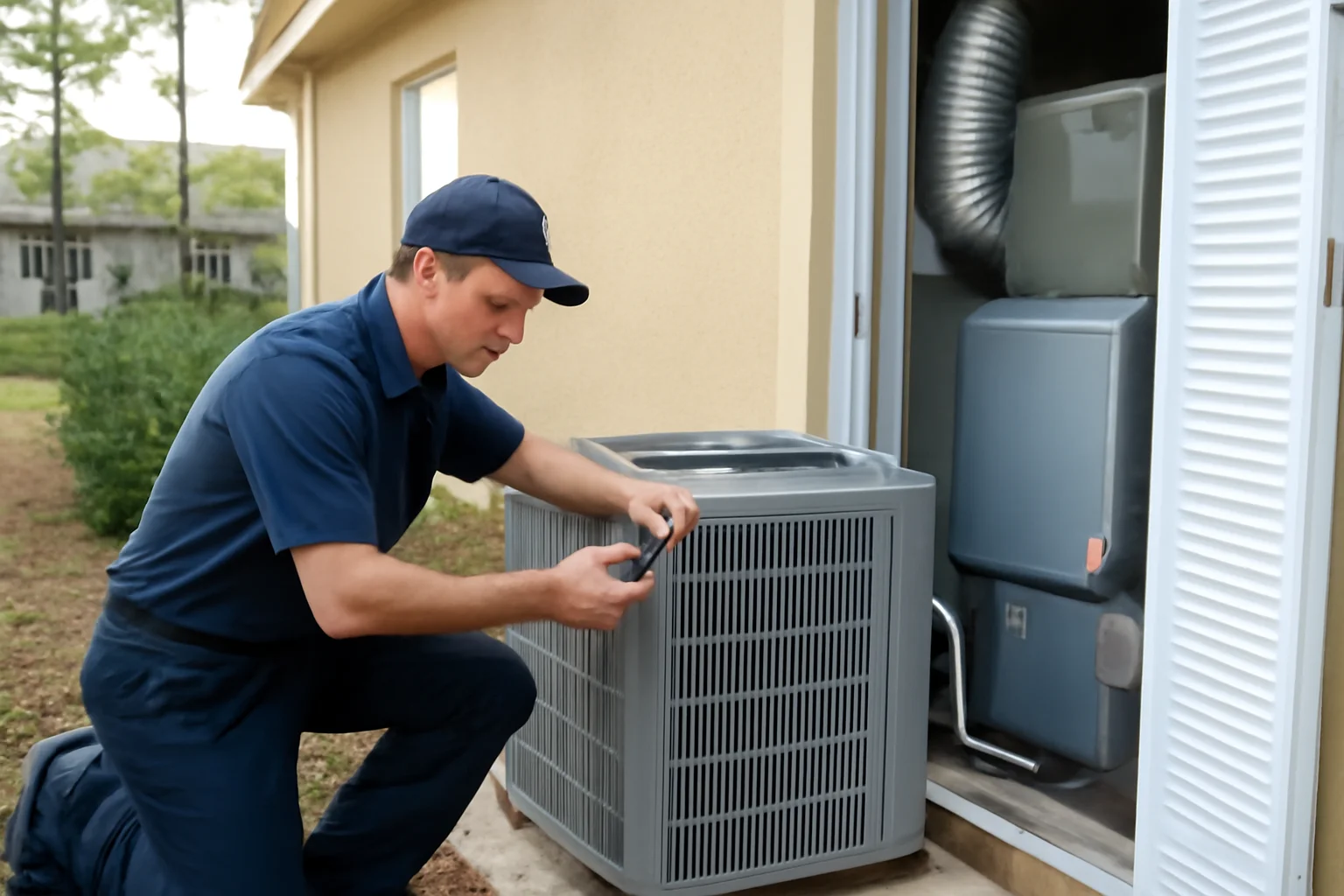
Coastal 30A weather can be relentless. Warm air, high humidity, and salt-laden breezes push HVAC systems to work harder, especially when ductwork is leaking. When conditioned air escapes before it reaches your rooms, your air conditioner or heat pump has to run longer, struggle with airflow, and sometimes fail right when you need it most. The good news is that duct sealing, including Aeroseal, is one of the most practical ways homeowners can reduce emergency cooling concerns by improving airflow and system efficiency.
This guide explains how duct leaks form, why they lead to AC repair calls and emergency HVAC situations in Walton County, FL, and what you can do to prevent problems before the next heat wave.
Why duct leaks can turn a hot day into an HVAC emergency in 30A
In 30A, the air inside your home is often fighting two battles at once. First, Florida heat loads the system with constant demand. Second, humidity adds moisture that can make the home feel hotter than the thermostat suggests. When ductwork leaks, the HVAC system delivers less cooled air to living spaces. That forces the thermostat to call for cooling again and again, which increases run time and wear on the refrigerant system and indoor components.
Duct leakage can also disrupt airflow balance across rooms. Some areas may feel cold while others stay warm. That uneven comfort often drives homeowners to change thermostat settings, close vents, or run the system longer, all of which can raise energy use and increase the chance of an air conditioning repair near me emergency during peak summer stress.
What duct sealing and Aeroseal address
Duct sealing focuses on stopping air leaks through joints, seams, and other gaps in the ductwork. Aeroseal is an approach designed to seal leaks from the inside, targeting hidden leakage that traditional exterior sealing may miss. When ducts hold onto conditioned air, airflow is closer to what the system was designed to move, helping the AC or heat pump maintain more consistent comfort.
If you are searching for duct sealing and Aeroseal services in 30A, FL, it helps to understand that duct sealing is not a quick patch. It is part of preventive HVAC maintenance that supports the entire cooling system, including airflow, refrigerant system performance, and indoor air quality.
Common causes of duct leakage in coastal Florida homes
Many homeowners assume ducts are “sealed enough” because they are out of sight. In reality, ductwork experiences movement and stress over time, especially in homes with attics, crawl spaces, and older construction. In Walton County, the combination of heat, humidity, and salt air can accelerate wear on materials and connections.
Heat and humidity cycling
Florida temperature swings and long cooling seasons cause duct materials to expand and contract. Over time, seams and connections can loosen. Elevated humidity can also affect duct insulation and nearby surfaces, contributing to gaps that allow conditioned air to escape.
Vibration and normal system operation
Air handlers and blower systems create constant airflow movement and vibration. Even small leaks at joints can grow larger as components settle or as ductwork shifts slightly.
Construction gaps and ductwork that was never fully sealed
Some homes have duct connections that were assembled without thorough sealing. In new construction, duct sealing still matters because a system’s performance depends on delivering the right amount of airflow to the right places.
If you are dealing with comfort complaints in a newer home, it can still be worth scheduling an air conditioning inspection near me to evaluate airflow issues and ductwork condition. For homeowners building or upgrading systems, you may also want to review new construction air conditioning considerations, including how ductwork is installed and sealed from the start.
How duct leaks lead to higher humidity and indoor air quality issues
When duct leakage pulls unconditioned air into the system or sends cooled air where it does not belong, your indoor humidity can rise. In a coastal climate like 30A, where outside air is often humid, the home’s moisture balance is sensitive. Poor airflow can reduce the system’s ability to remove moisture efficiently during cooling cycles.
Moisture problems can show up as:
- Rooms that feel sticky even when the thermostat is set lower
- Musty odors or condensation on nearby surfaces
- Dust buildup around vents and registers
- Inconsistent temperatures between floors or between hallways and bedrooms
These issues are often tied to airflow and duct leakage, not just the thermostat. That is why duct sealing belongs alongside indoor air quality goals such as proper filtration and balanced air distribution.
What “emergency cooling” problems often look like
Homeowners on 30A typically notice duct-related issues when the system is under peak demand. A duct leak might not cause a failure overnight, but it can push the system into a stressed operating pattern that makes breakdowns more likely. Here are signs that ductwork may be contributing to emergency cooling concerns.
1) The AC runs constantly but rooms stay warm
If the system runs for long stretches and the temperature does not recover, airflow is likely off. Duct leaks can reduce the amount of cooled air reaching certain areas, which can also lead to thermostat frustration and repeated calls for cooling.
2) Hot spots near specific rooms or vents
Leaky ducts often create uneven airflow. You may feel cold air near one vent and heat in rooms farther away, especially in homes with long duct runs.
3) Rising energy use during summer
When ducts leak, the system compensates by running longer. That increases energy use and can raise the overall heat load on the refrigerant system.
4) Frequent call-backs for AC repair or air conditioning service
If you have repeated AC repair near me visits for the same cooling complaint, it may be time to look beyond the thermostat and focus on airflow delivery. A licensed HVAC contractor near me should treat comfort problems as a system issue, not just a single component.
Preventive maintenance steps that reduce duct-related failures
Duct sealing is a major step, but it works best when paired with preventive HVAC maintenance. Florida homes need ongoing attention because the climate accelerates wear and stress.
Keep airflow pathways clear
Check that supply vents are open and not blocked by furniture, curtains, or seasonal storage. Make sure return air pathways are not restricted. Restricted airflow can mimic duct leakage symptoms and can lead to emergency cooling concerns during peak heat.
Schedule routine HVAC service before peak season
When an preventive HVAC service happens early, technicians can identify airflow problems, check system operation, and help homeowners avoid mid-summer breakdowns. This is especially important in Walton County where the cooling season is long and humidity is persistent.
For many homeowners, duct sealing is most effective when it is planned as part of that seasonal maintenance window rather than after repeated comfort complaints.
Use the thermostat correctly
Thermostats do not cause duct leaks, but they can make symptoms worse. If you keep lowering the thermostat to compensate for warm rooms, the system may run longer than needed. A professional can help verify that the thermostat settings match your cooling needs and discuss thermostat installation near me options if your controls are outdated or not functioning as expected.
Address condensate drainage and humidity control
While duct sealing focuses on airflow distribution, humidity issues can also relate to indoor condensate drainage. If moisture is not draining properly, it can create uncomfortable indoor conditions and add strain to the system. During HVAC service, a technician can evaluate whether condensate drainage is operating correctly and whether airflow improvements are needed to support humidity control.
Why Aeroseal can be a smart choice for 30A comfort goals
In coastal areas like 30A, duct leaks can be harder to spot because they are often hidden behind insulation, in ceilings, or within the duct runs. Aeroseal is designed to seal from the inside, targeting leaks you cannot easily see.
For homeowners trying to avoid emergency HVAC calls, the goal is not only “better airflow.” It is also reduced energy waste and more consistent comfort across rooms. When ducts deliver more of the conditioned air you pay for, the air conditioning system does not have to work as hard to maintain indoor temperatures during Florida’s humid stretches.
If you are comparing duct cleaning near me searches, remember that duct cleaning and duct sealing are different. Cleaning removes debris. Sealing reduces airflow loss from leaks. Many comfort problems stem from both cleanliness and airflow delivery, so it is worth asking your technician how duct sealing fits into the bigger indoor air quality picture.
What to ask a duct sealing and Aeroseal technician in Walton County
Hiring the right local HVAC service matters because duct sealing should be planned around your specific system. A professional licensed HVAC contractor near me should evaluate your ductwork and HVAC operation before recommending sealing.
Ask these questions during an HVAC company near me conversation:
- How will you assess duct leakage and airflow issues before sealing?
- Will you coordinate sealing with the current air conditioning service plan and filter setup?
- How do you protect indoor air quality during the process?
- What areas of ductwork are most likely to be leaking in homes like mine on 30A?
- How should I monitor comfort and humidity after sealing so we can confirm results?
These questions keep the focus on real-world outcomes like airflow balance, humidity control, and preventing emergency cooling concerns.
How duct sealing supports refrigerant system performance and reduces stress
Your air conditioner and heat pump rely on a properly operating refrigerant system and correct airflow across indoor coils. When airflow is weak due to duct leaks, the system can struggle to move heat out of the home efficiently. That can increase operating stress and contribute to performance issues that may lead to air conditioning repair near me visits.
Duct sealing does not replace the need for refrigerant system evaluation. If your system is low on refrigerant or experiencing a refrigerant issue, that requires in-person professional diagnosis. But by improving airflow delivery, duct sealing can help the cooling system operate closer to normal conditions.
For homeowners with heat pump systems, duct sealing can also support consistent cooling and help reduce the likelihood that heat pump repair near me calls become frequent due to ongoing comfort complaints tied to airflow.
When duct sealing is only part of the solution
Not every comfort problem is caused by duct leaks. Sometimes issues involve the thermostat, indoor coil conditions, outdoor unit performance, or condensate drainage. Sometimes the duct layout itself is not well matched to the home’s needs.
That is why a proper evaluation matters. A licensed HVAC contractor near me should review both the HVAC operation and the ductwork condition. Duct sealing is a strong preventive step, but it should be recommended after an on-site assessment, not as a guess.
If you suspect broader system problems, consider reading how 30A homes can stay ahead of HVAC emergencies during seasonal stress. It covers practical steps that complement duct sealing.
Planning duct sealing before summer peaks on 30A
30A homes often see the biggest pressure on HVAC systems during the hottest, most humid weeks. Scheduling duct sealing and related HVAC maintenance earlier helps you avoid the “wait until it breaks” cycle that leads to emergency cooling calls.
If you are managing a residential HVAC service plan, duct sealing can be a proactive move that supports comfort, indoor air quality, and energy use. If you manage a vacation rental or commercial space, airflow consistency can affect guest experience and tenant comfort, and it can reduce the stress that leads to last-minute HVAC service needs.
For business owners, the same physics apply: airflow delivery matters. You can also review keeping 30A commercial spaces comfortable before HVAC trouble spreads for maintenance ideas that align with duct sealing and preventive HVAC service.
How to connect duct sealing to broader HVAC upgrades
Duct sealing can improve performance without immediately replacing equipment. But when system replacement is on the table, ductwork condition still matters. A new AC or heat pump installation near me should be paired with ductwork that can deliver the airflow the new system is capable of moving.
When you are considering a larger upgrade, ask your technician how ductwork sealing will be handled. Even the best equipment can struggle if ducts leak. If you are also working on airflow control, you may want to explore heating control systems so your comfort strategy is coordinated across heating and cooling seasons.
And for homeowners focused on long-term system reliability, pairing duct sealing with a broader preventive plan is often the most direct path to fewer emergency cooling concerns. If you want to understand how routine service protects your system, see why preventive HVAC service pays off for air conditioning repair in 30A, FL.
Why local service from A Superior Mechanical matters in Walton County
30A is unique. Homes can be coastal, insulated differently, and built with duct layouts that differ from inland areas. Salt air and humidity impact building materials and can contribute to ductwork deterioration over time. Local professionals understand the comfort patterns homeowners notice here, including warm rooms, humidity complaints, and the frustration of systems that run too long.
A Superior Mechanical provides duct sealing and Aeroseal services designed to improve airflow and reduce energy waste in coastal Walton County homes and businesses. If you want to focus your search on the right service area, start with duct sealing and Aeroseal services for 30A, FL. You can also explore more HVAC services across the region at the 30A service area page and Walton County service coverage.
For homeowners trying to avoid emergency HVAC calls, the most helpful step is to address airflow delivery early. Duct sealing can reduce hidden losses, support humidity control, and help your air conditioning system run with less strain during Florida’s busiest weeks.
Find Duct Sealing & Aeroseal Services in 30A, FL
If you need Duct Sealing & Aeroseal Services in 30A, FL, visit our local service page or contact A Superior Mechanical today.
Map of 30A, FL
Frequently Asked Questions
How do I know duct leaks are affecting my AC performance in 30A?
Look for uneven temperatures, rooms that never quite cool, longer run times, and rising humidity that does not match your thermostat settings. These symptoms can point to ductwork leakage and airflow imbalance, but an in-person evaluation is the best way to confirm the cause.
Is duct cleaning the same as Aeroseal duct sealing?
No. Duct cleaning removes debris. Aeroseal duct sealing targets air leaks from inside the duct system to reduce conditioned air loss. Many comfort issues involve both cleanliness and airflow, so it helps to discuss your goals with a technician.
Will duct sealing fix refrigerant problems or an AC breakdown?
Duct sealing helps with airflow delivery, which can reduce system stress from air loss. It does not diagnose or repair refrigerant system issues. If your system is not cooling properly due to refrigerant or equipment faults, a professional needs to inspect it on site.
Can Aeroseal help with humidity control in Florida heat?
Improving airflow and reducing duct leakage can support more consistent cooling performance, which may help the system manage indoor humidity better. Humidity can also be affected by condensate drainage and other factors, so it is worth having your system evaluated.
How does duct sealing reduce emergency cooling concerns?
When ducts leak less, conditioned air reaches the living spaces more effectively. That can reduce unnecessary run time, improve comfort consistency, and lower the likelihood of system stress that often shows up during peak summer demand.
Related Articles
Photo Gallery