Whether you live full time on 30A or you keep a second home ready for guests, water quality shows up in everyday moments. The glassware that never looks fully clean, the shower that leaves skin feeling dry, the coffee that tastes off, and appliances that seem to wear out faster can all point to a water purification issue.
Older homes and newer builds can both need attention, but for different reasons. Older plumbing may introduce more sediment or corrosion, while newer homes often have modern fixtures and appliances that are more sensitive to scale and mineral buildup. In Walton County’s coastal climate, it is common to see water conditions that drive homeowners toward hard water treatment, whole home water filtration, reverse osmosis, and water softeners.
If you are searching for water filtration and water softeners or water purification in 30A, this guide will help you understand what matters most in older and newer homes across 30A.
Why 30A water purification is not one-size-fits-all
Homeowners often assume the same solution works for every house. In reality, water purification depends on what is in your water and what your home plumbing and appliances are doing to it. On 30A, homes may be affected by a mix of factors such as mineral content that contributes to hard water, chlorine taste concerns, and the potential for sediment or discoloration events.
Even small differences in plumbing age, water pressure, and how a home is plumbed can change what you experience at the faucet. That is why testing and targeted treatment matter, especially when you want cleaner water for everyday life in both kitchen and bath routines.
Common water problems 30A homeowners notice first
Many families notice water quality through the “small stuff,” then realize it affects everything from drinking water to laundry performance.
Hard water spots on glass, dishes, and fixtures
Hard water can leave visible rings on glassware and a dull film on dishes. You might also see scale buildup on faucets and showerheads, and notice chalky deposits around plumbing connections. Over time, scale can also contribute to soap buildup and make cleaning harder.
When hard water treatment becomes part of protecting fixtures and appliances, homeowners often see fewer spots, faster cleaning, and better performance from water-using devices.
Scale buildup around faucets, showerheads, and plumbing
Scale buildup on faucets and showerheads is usually a sign that minerals are precipitating as water heats and evaporates. In a coastal area where homes may have varying water usage patterns, scale can become more noticeable when a property is vacant and then reactivated for a busy season.
Dry skin or dull hair after bathing
Hard water can interfere with how soap works. If you notice that you rinse and rinse but still feel residue, that can show up as dry skin or dull hair. Some homeowners also describe hair that feels rough or looks less vibrant after showers.
Improving water quality for bathing often means addressing hardness and, in some cases, chlorine taste and odor concerns that can affect the feel of water.
Metallic, chlorinated, or unpleasant taste
Odor and taste issues are not just about drinking water. If the water tastes metallic or has a noticeable chlorine taste in water, it can carry into cooking, ice, and coffee. Some households also see concerns like sediment in household water, discoloration, or occasional odor changes.
Cloudy ice cubes
Cloudy ice cubes can be a quick clue that you have air, minerals, or impurities affecting water clarity. It is common to hear homeowners say their ice looks cloudy but the water coming from the tap “seems fine” until they see it in the freezer.
Poor tasting coffee and cooking water
Coffee and cooking are where water quality becomes obvious. Poor tasting coffee water can come from hardness, chlorine taste in water, or sediment. When water is not filtered properly, it can change how flavors extract from coffee grounds and how water behaves in cooking.
Soap that does not lather or rinse well
If soap does not lather, or it rinses poorly, that often signals hard water. It can also contribute to bathtub film and a “sticky” feeling after washing. Homeowners often switch products, but the underlying water condition still remains.
Visible sediment, discoloration, and odor concerns
Some homes experience visible sediment or discoloration, especially after plumbing work, seasonal changes, or fluctuations in water usage. Even when the discoloration is temporary, it can affect drinking water, ice, and appliance performance.
Appliances wearing out faster
Scale buildup can shorten the life of water heaters, dishwashers, and coffee machines. Over time, mineral deposits reduce efficiency and can lead to repairs sooner than expected. Whole home water filtration near you is often considered when homeowners want protection beyond a single tap.
Older vs. newer 30A homes: what changes
Water purification needs are not only about the water supply. They are also about how your home handles that water.
Older homes often deal with plumbing-related sediment and corrosion
In older homes, mineral deposits and aging plumbing materials can contribute to sediment in household water or discoloration. Even if the municipal water is treated, the way it travels through your home can add contaminants or release particles.
Homeowners sometimes notice this in the kitchen sink first, then in the bathroom. If you have a history of scale buildup on faucets, showerheads, or plumbing fixtures, it can be a sign that your system needs a more thorough approach.
Newer homes can still struggle with hardness and chlorine taste
Newer homes often have better plumbing materials, but they still face hard water and water chemistry issues. Modern appliances can be sensitive to scale, and high-end shower systems can show buildup quickly.
In a newer build, the problem may appear as faster filter clogging, cloudy ice cubes, or dull water that makes skin and hair feel less clean. Even if everything looks “new,” water treatment may still be necessary for cleaner, better drinking water and better bathing water.
How to choose the right water treatment for your home
When homeowners search for water filtration near me, they often want a quick answer. The best approach is to match the system to what you are seeing and what testing confirms.
Start with water testing and a clear goal
Ask yourself what you are trying to fix first: taste and odor for drinking water, scale buildup on fixtures, dry skin after bathing, cloudy ice cubes, or sediment concerns. Then, choose testing that identifies hardness, sediment, and common taste or odor contributors.
For many 30A households, the path looks like this: address hardness for bathing and fixtures, and address taste and odor for drinking water and cooking.
Whole home water filtration for protection across fixtures and appliances
Whole home water filtration is designed to treat water before it reaches sinks, showers, laundry, and appliances. This can be a strong option when you want cleaner water for everyday life throughout the home, not just at one faucet.
Homeowners considering clean water systems near me often choose whole home filtration when they see scale buildup on faucets and showerheads, soap that does not lather, and appliance wear. It can also help reduce visible sediment and discoloration issues before they spread through the plumbing system.
Water softeners for hardness and better soap performance
A water softener reduces the mineral content that causes hard water problems. If you are dealing with hard water spots on glass, scale buildup around showerheads, and dry skin or dull hair after bathing, an AO Smith water softener or similar softening system may be a good fit.
Softened water can help soap lather more easily and rinse more cleanly. For families, that often means fewer cleaning products used on fixtures and a more comfortable feel during bathing.
Reverse osmosis for drinking water and cooking water
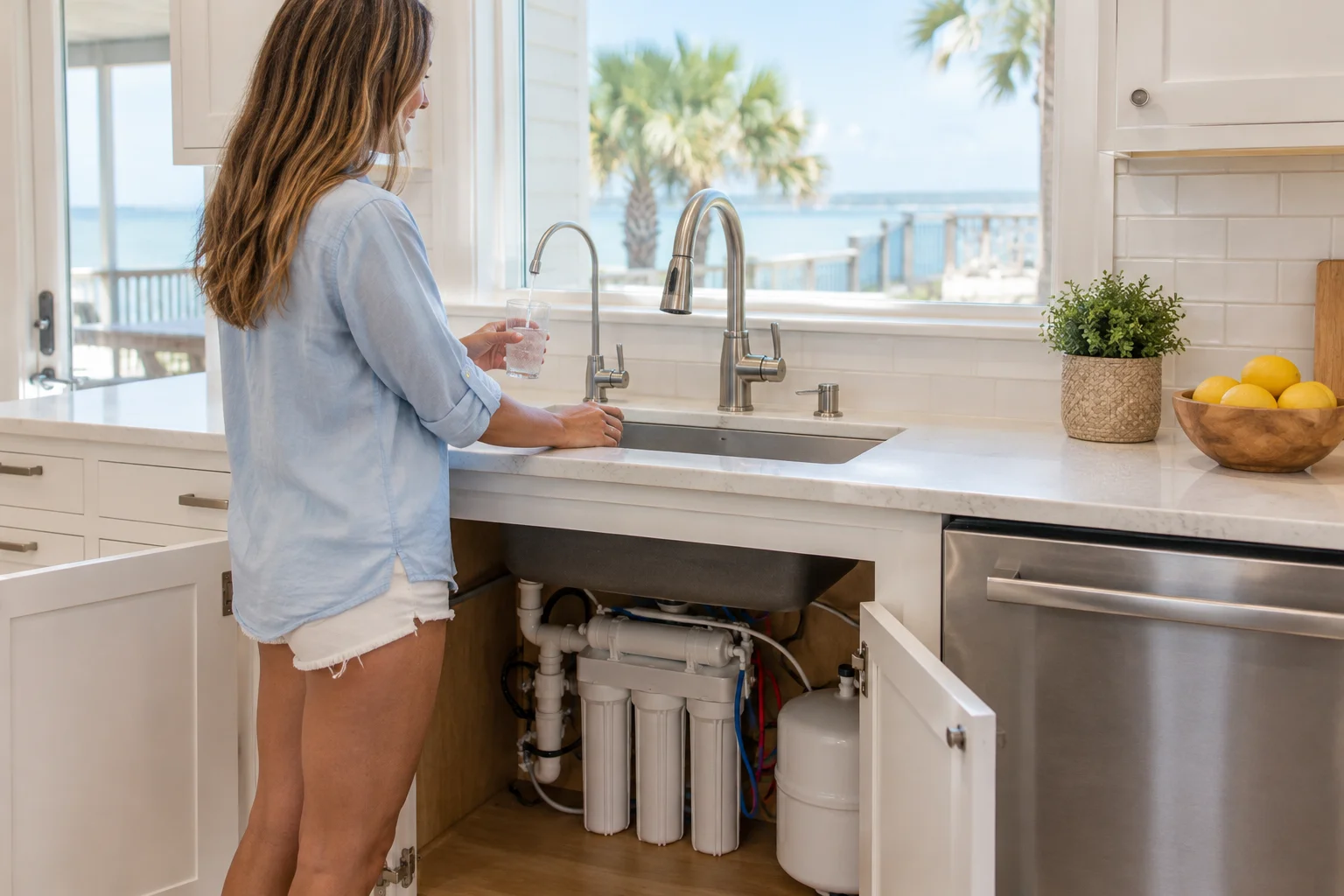
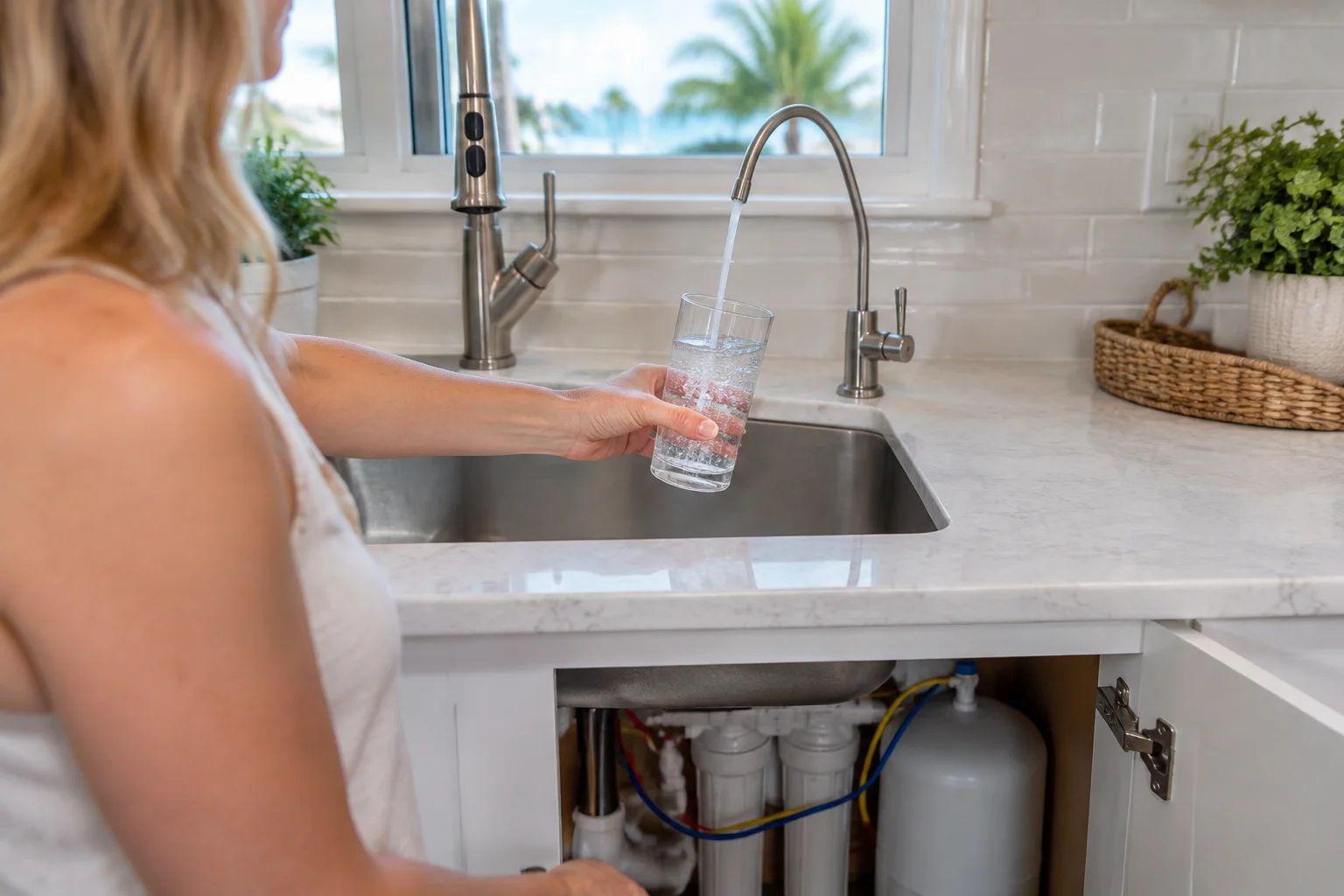
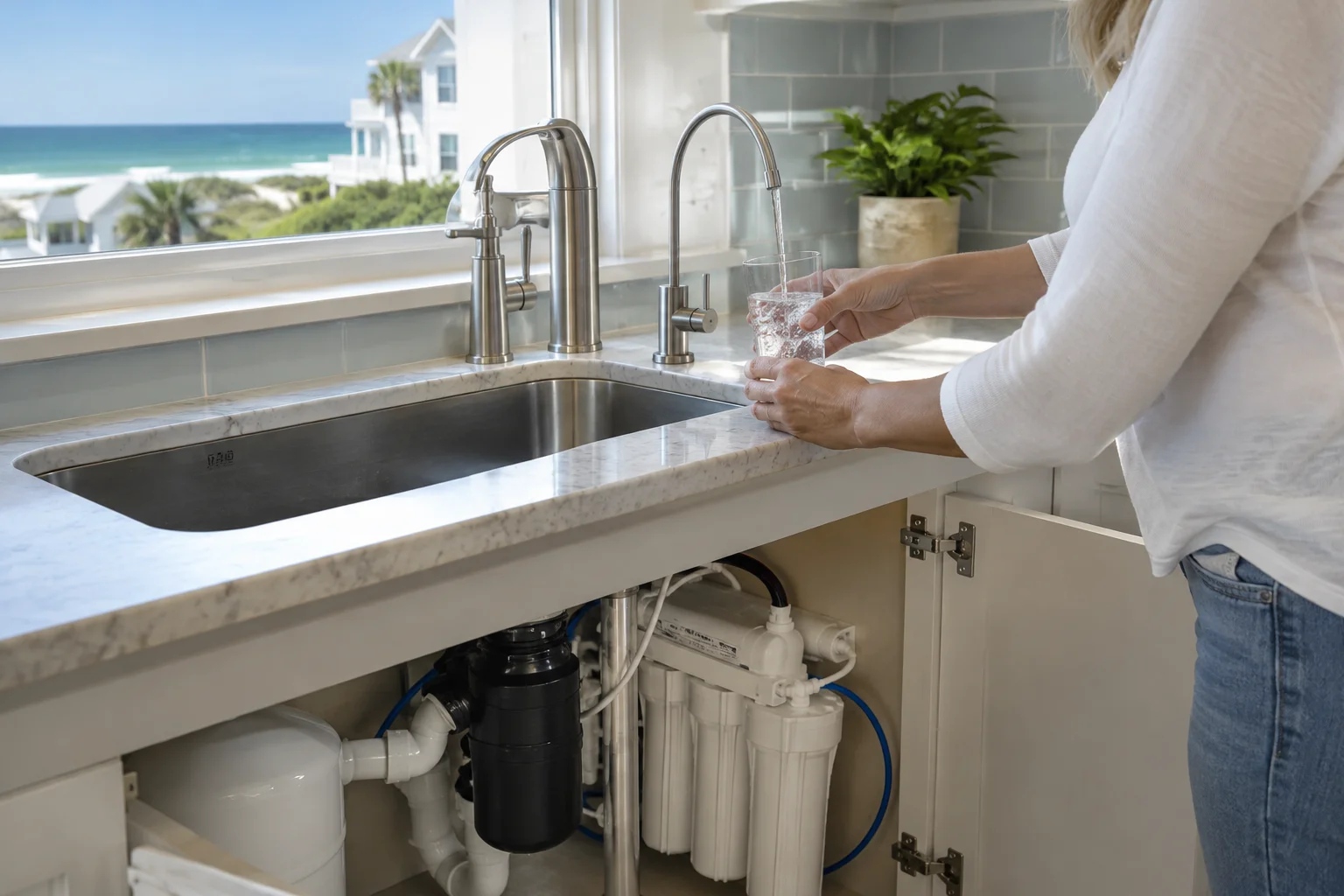
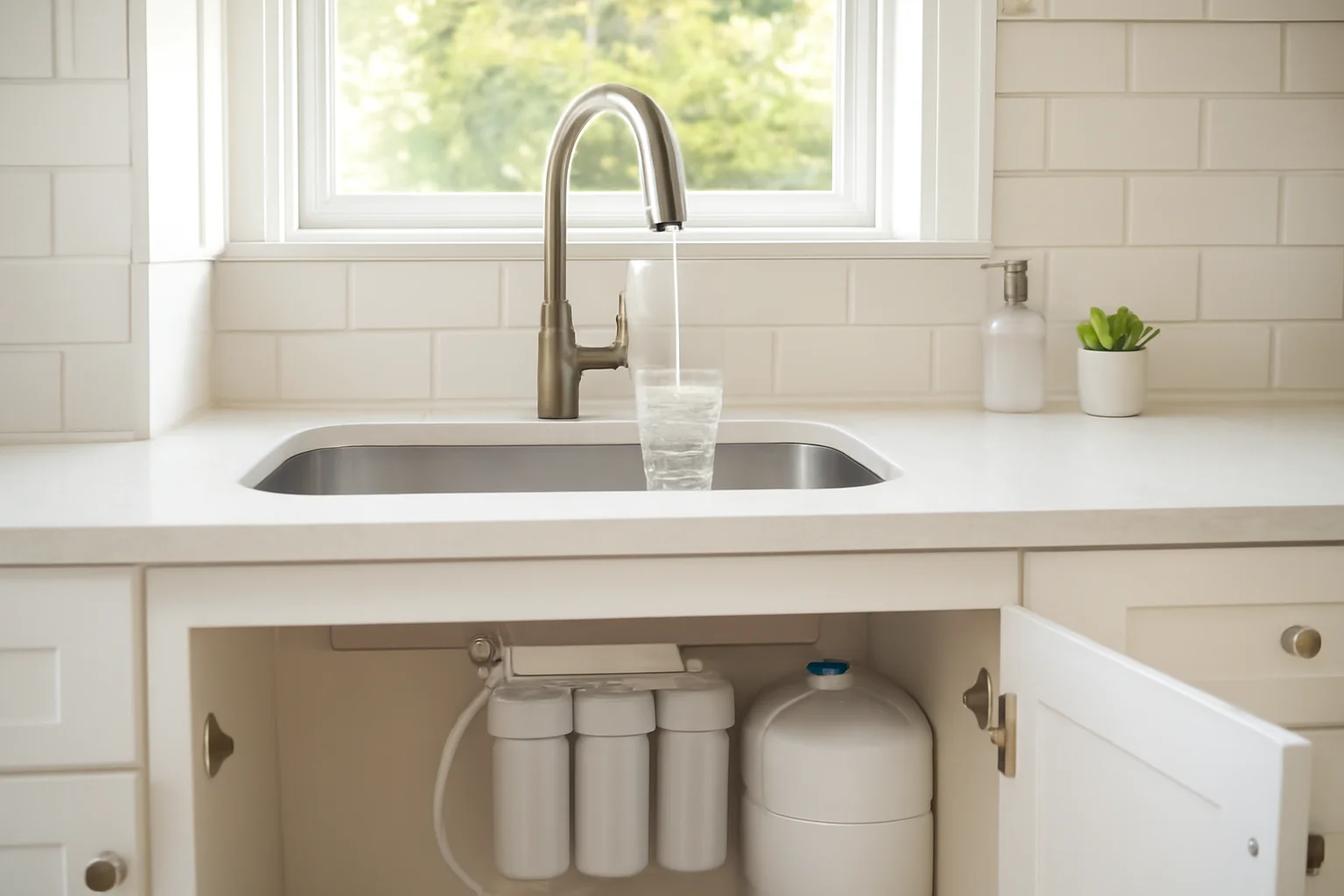
Reverse osmosis systems focus on improving drinking water quality at the point of use or through dedicated lines. Homeowners often choose reverse osmosis when they care most about better drinking water, coffee taste, and ice clarity.
If you notice metallic tasting water, chlorine taste in water, cloudy ice cubes, or poor tasting coffee and cooking water, reverse osmosis can help. Many families also like the idea of having a dedicated source of purified water for cooking and drinking while still using whole home treatment for fixtures and appliances.
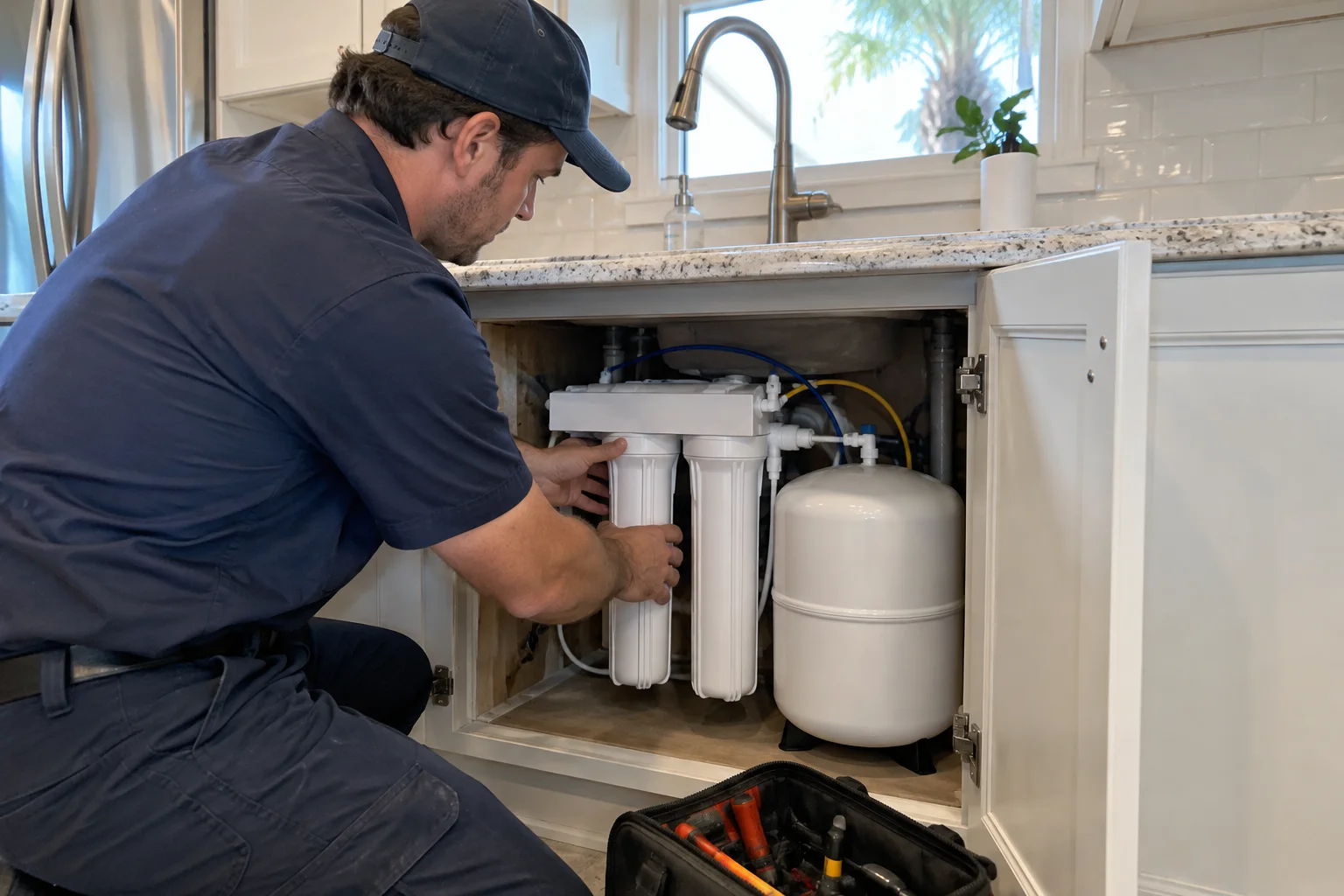
If you are comparing reverse osmosis installation options, it helps to consider system placement, filter maintenance schedules, and how your plumbing is set up to deliver consistent flow to the kitchen.
AO Smith water filtration and system matching
AO Smith is a well-known name in water filtration and water softening equipment. For 30A homeowners, AO Smith water filtration and AO Smith water softener options can be part of a properly matched clean water plan, especially when you want reliable performance and serviceability.
System matching matters. Some homes need a combination of filtration and softening. Others primarily need taste and odor control for drinking water. A professional water purification provider can help you align the system to your home’s plumbing conditions and your daily routines.
What everyday life looks like with better water
Water quality is not just a technical issue. It shows up in the rhythms of a real home.
Kitchen scenes: drinking water, ice, and cooking
Picture a busy 30A morning. Someone fills a glass, the coffee maker runs, and the family asks for ice. When water treatment is dialed in, ice cubes stay clearer and coffee tastes more consistent. Cooking water behaves better too, which matters for pasta, rice, sauces, and even the way certain soups simmer.
When you are dealing with metallic tasting water or chlorine taste in water, it can be hard to ignore. A targeted approach like reverse osmosis can make drinking water and cooking water taste better without changing how the rest of the home runs.
Bathing routines: comfort, cleanliness, and less residue
In the shower, hard water can leave behind residue that makes skin feel dry and hair feel dull. When a softener or whole home approach reduces hardness, soap works better and rinses cleanly.
Many homeowners also notice fewer mineral marks on shower glass and less scale buildup around showerheads. That means less scrubbing and more time enjoying the home.
Laundry and cleaning: fewer bottle refills and faster results
Hard water can make laundry feel less fresh and can contribute to dullness in fabrics. It can also affect how cleaning products work. With improved water quality, detergent can perform more as intended, and cleaning becomes easier on sinks, fixtures, and tubs.
Appliances: efficiency and lifespan
When water is treated, appliances often run more efficiently. Homeowners commonly see fewer issues with water heaters, dishwashers, and coffee machines. Protecting appliances is one reason families seek whole home water filtration near me and clean water systems near me, especially in vacation rental settings where turnover is fast and consistency matters.
Maintenance that keeps water purification working
A water purification system is only as good as its maintenance plan. Filters clog, membranes age, and softener components need attention. Scheduling maintenance helps keep taste and scale control consistent.
Replace filters and monitor performance
Whole home water filtration systems typically require periodic filter changes. Reverse osmosis systems also need membrane and filter replacements over time. If you wait too long, you may notice returning taste issues, cloudy ice cubes, or reduced flow.
Watch for early warning signs
Pay attention to changes such as:
- Soap does not lather or rinse well again
- New scale buildup on faucets and showerheads
- Metallic or chlorinated taste returning
- Visible sediment, discoloration, or odor concerns
- Ice that suddenly looks cloudy
These signs can indicate a system that is due for service or not matched correctly to your home’s water conditions.
Consider seasonal water usage in 30A
30A homes often experience seasonal occupancy. When a home sits unused for weeks, water can stagnate in plumbing lines. When water starts flowing again, you may notice changes in taste, odor, or clarity. A properly maintained water purification system can help stabilize the experience for both residents and guests.
Why local service matters in Walton County
Water purification is influenced by local plumbing realities, water chemistry, and how homes are built and maintained across Walton County. Working with a local provider helps ensure your system is installed correctly for your home layout and serviced on a schedule that fits your usage patterns.
If you are exploring water filtration near me or want cleaner water for everyday life, it helps to connect with a company that regularly supports 30A properties. You can learn more at our Walton County 30A service area and review specific options on our water purification page for 30A.
Related plumbing factors that affect water purification
Water purification is primarily about treatment, but plumbing conditions influence how well a system performs. If you are planning updates, it helps to consider how changes to fixtures and plumbing can affect flow, pressure, and where sediment accumulates.
These reads may help you think through the bigger picture:
- Smart plumbing habits for reverse osmosis systems in 30A homes
- What 30A homeowners should know before replacing plumbing fixtures
- Plumbing installation that helps 30A homes stay ahead of water damage
- How plumbing conditions change water purification in Bid-A-Wee homes
When to call a professional for water purification
It is a good idea to reach out to a professional when you see persistent issues that keep coming back even after cleaning or changing household products.
Contact A Superior Mechanical if you have:
- Frequent hard water spots on glass and dull-looking fixtures
- Ongoing scale buildup on faucets, showerheads, or near plumbing connections
- Dry skin or dull hair after bathing
- Metallic, chlorinated, or unpleasant taste, plus cloudy ice cubes
- Poor tasting coffee and cooking water
- Soap does not lather or rinse well
- Visible sediment, discoloration, or odor concerns
- Appliances wearing out faster than expected
Professionals can help you identify what you are dealing with, recommend the right combination of systems, and service your equipment so your home stays supplied with cleaner water for everyday life.
If you want to compare options for whole home water filtration near you, start with this water filtration and water softener overview. For help specific to Walton County and 30A, visit our Walton County service area and the dedicated 30A water purification page.
Find Water Purification in 30A, FL
If you need Water Purification in 30A, FL, visit our local service page or contact A Superior Mechanical today.
For a broader look at whole-home water filtration, reverse osmosis, and water softener options, visit our water filtration, RO, and water softener page.
Map of 30A, FL
Frequently Asked Questions
Do older 30A homes and newer 30A homes need different water purification systems?
Often, yes. Older homes may have more sediment or discoloration from aging plumbing, while newer homes can still struggle with hard water, scale buildup, and chlorine taste. Testing helps match the treatment to your home’s plumbing and your household goals, like better drinking water, cleaner bathing water, and protected appliances.
What is the difference between whole home water filtration, a water softener, and reverse osmosis?
Whole home water filtration treats water throughout the house. Water softeners reduce hardness that causes scale buildup and soap does not lather. Reverse osmosis focuses on improving drinking water taste and clarity, often used for water you drink and use for ice and cooking.
How can I tell if I have hard water in my 30A home?
Common signs include hard water spots on glass and dishes, scale buildup around faucets and showerheads, soap that does not lather or rinse well, and dry skin or dull hair after bathing. Appliances may also wear out faster due to mineral scale.
Why do my ice cubes look cloudy even if my tap water seems okay?
Cloudy ice cubes can happen when minerals, air, or impurities affect water clarity. It is a frequent sign that drinking water filtration, such as reverse osmosis, may be helpful for cleaner ice and better taste.
How often should water purification systems be serviced?
Maintenance schedules depend on the system type and your water conditions. In general, filters and membranes need periodic replacement, and softener components require routine attention. A Superior Mechanical can recommend a service plan based on testing and your household usage.
Related Articles
Photo Gallery