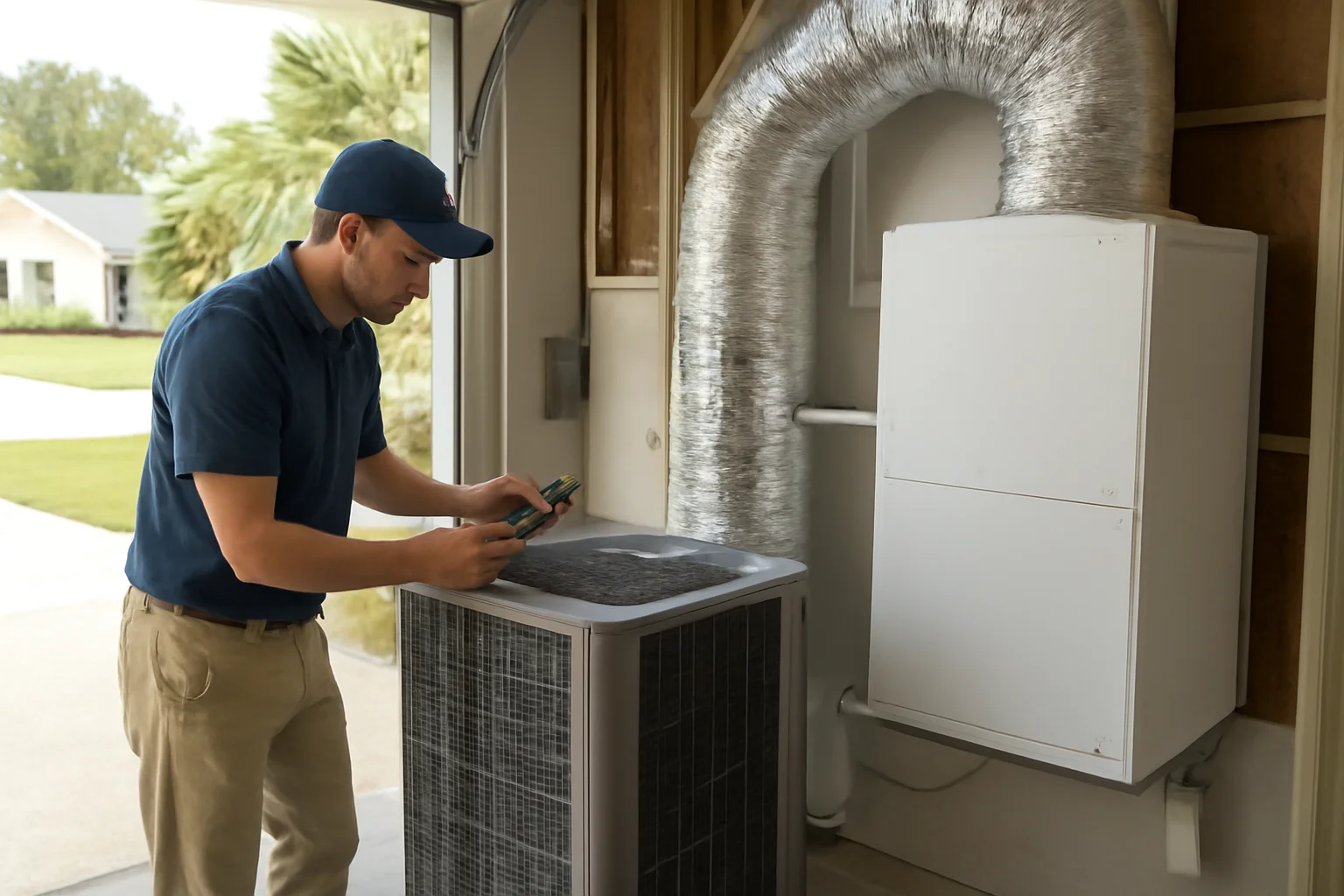
In Seagrove Beach, FL, summer comfort is not just about temperature. It is also about moisture. Whole home dehumidifiers help remove excess humidity so your air conditioning can cool more effectively, protect indoor air quality, and reduce the risk of musty odors and mold-friendly conditions. When a dehumidifier falls behind, homeowners often feel it as weaker cooling, higher energy use, and HVAC systems that seem to run constantly.
This article breaks down what can cause problems with whole home dehumidifiers in Seagrove Beach, why timing matters when you are scheduling HVAC repairs, and how preventive HVAC maintenance can keep your cooling performance steady through Florida heat and humidity.
Why whole home dehumidifiers matter for cooling performance in Seagrove Beach
Whole home dehumidifiers are designed to work with your HVAC system and ductwork to control indoor humidity across the home. In a coastal climate like Seagrove Beach, the air outside is often saturated with moisture. That moisture can infiltrate through gaps in windows, doors, and building envelope seams, and it can also be generated indoors through cooking, showers, laundry, and daily activities.
When indoor humidity is too high, your HVAC system has to work harder to feel comfortable. Even if the thermostat is set to the right temperature, moist air can feel warmer and heavier. In many homes, the result is:
- Longer run times for air conditioning
- Lower perceived comfort even when the temperature looks correct
- Condensation risks around ducts, coils, and air handling components
- More frequent cycling and wear on parts
- Potential indoor air quality problems, including musty odors
That is why homeowners often notice an HVAC performance issue after a dehumidifier starts underperforming, even if the AC itself is not obviously “broken.” If you already have an whole home dehumidifier installed, it is worth treating it as part of your comfort system, not an add-on.
Common causes of whole home dehumidifier problems in Florida’s coastal humidity
Whole home dehumidifiers face a unique stress environment in Seagrove Beach. High humidity, salt air, and frequent HVAC cycling can expose weaknesses in airflow, condensate drainage, and control settings. Below are the most frequent causes we see when homeowners call for residential HVAC service near me due to “cooling issues” that trace back to humidity control.
1) Airflow problems through ductwork or the dehumidifier’s air path
Dehumidifiers rely on consistent airflow. If ductwork has restrictions, leaks, or imbalanced airflow, the unit may not move enough air across the moisture-removing components. That can lead to incomplete moisture removal and a cycle of higher indoor humidity.
Airflow problems can come from:
- Loose or disconnected duct sections
- Flex duct kinks or compression
- Dirty return grilles or filter issues
- Blocked or poorly routed condensate drain lines that indirectly affect system operation
- System changes, such as adding supply registers or adjusting dampers, without checking the overall balance
When airflow is off, you may also see symptoms that look like an AC repair need, such as weak cooling and constant running. If you suspect duct repair near me is related, have a technician evaluate airflow and system balance rather than only focusing on temperature.
2) Condensate drainage issues
Many whole home dehumidifiers remove moisture by condensing it into water that must drain away. If condensate drainage is restricted, the unit can struggle to operate as intended or it may trigger protective behavior.
Condensate problems often show up as:
- Water backup near the dehumidifier or in nearby areas
- Gurgling or unusual sounds from drain piping
- Intermittent dehumidification performance
- Visible moisture in wrong places, which can later become an indoor air quality concern
Because drainage is tied to safe operation and moisture control, it is not something to ignore. Salt air and humidity can contribute to buildup and corrosion over time, which is why drainage checks are a frequent part of HVAC inspections.
3) Thermostat and humidity control settings that do not match real conditions
Home comfort is controlled by more than temperature. Many systems use a thermostat that can include humidity settings or work alongside a humidity controller. If the target humidity is set too high, the home may feel “cool enough” but remain uncomfortable due to moisture. If it is set too low, the dehumidifier and HVAC may run longer than necessary.
Timing matters here too. If you recently changed a thermostat, updated HVAC settings, or made adjustments after an AC service call, the dehumidifier’s operating schedule may not align with your HVAC run patterns. That mismatch can cause under-dehumidification during peak humidity periods, especially late afternoon when coastal humidity is at its highest.
If you are considering thermostat installation near me or a thermostat adjustment after HVAC work, ask your technician to confirm the humidity control strategy works with your ductwork and air handler operation.
4) Refrigerant system strain and coil performance effects
While a whole home dehumidifier is its own comfort component, it still interacts with the HVAC system. Cooling performance depends on how well coils manage heat transfer and how consistently the system maintains refrigerant conditions during operation.
In Florida, high outdoor humidity can increase condensation demands. If coils are dirty, airflow is restricted, or system operation is not stable, moisture control can suffer. Homeowners sometimes interpret this as a dehumidifier problem when the root cause is coil performance or refrigerant system behavior that affects how much moisture the system can remove during cooling cycles.
It is important not to guess. Refrigerant-related issues require an in-person evaluation and proper tools. If you are seeing problems with cooling performance and humidity control together, schedule a professional air conditioning inspection near me so the technician can assess the whole comfort system rather than focusing on one component.
5) Salt air, dust, and corrosion that build up over time
Seagrove Beach homes are exposed to salt-laden air. Over time, that can contribute to corrosion on metal components and buildup on surfaces. Dust and pollen also collect in coastal environments where airflow patterns and filtration quality vary by home.
When components get coated or airflow passages become less efficient, the dehumidifier may not remove moisture at the expected rate. That can increase HVAC run time and make it feel like your AC needs frequent attention.
This is a key reason preventive HVAC maintenance is so valuable in Walton County. Regular inspections keep the dehumidifier and the HVAC system operating as intended, even as the environment changes.
6) Filter, air quality, and indoor air quality service gaps
Filters affect airflow and also influence how much dust gets into the HVAC components. If filters are not replaced on schedule, airflow can drop and the system may run longer. That longer run time can be good for comfort when humidity control is balanced, but it can also increase energy use and lead to uneven moisture removal if the dehumidifier’s air path is not clear.
For homeowners focused on indoor air quality services near me, it helps to connect the dots. Better filtration and proper humidity control work together. If you are adding an air filtration upgrade, consider pairing it with a humidity strategy so your HVAC and dehumidifier do not fight each other.
You can also explore Air Filtration & Purifiers for options that support comfort and healthier air.
Timing matters: why dehumidifier issues can show up after HVAC repairs
Florida HVAC repairs often involve changes to airflow, control settings, and system operation. Even when the repair is correct, the system may not be tuned for humidity control unless the dehumidifier and HVAC are evaluated together.
Here are a few timing scenarios that commonly create problems with whole home dehumidifier performance in Seagrove Beach.
After an AC tune up, the dehumidifier feels “less effective”
An AC tune up near me is usually aimed at improving efficiency and reliability. But if the technician adjusts airflow, changes operating parameters, or replaces components that affect how the air handler cycles, the dehumidifier may need a follow-up check.
Humidity control depends on consistent operation. If the HVAC fan schedule or cooling run behavior changes, the dehumidifier may not get the airflow it needs at the right times during high humidity periods.
After ductwork work, humidity control becomes uneven
Ductwork changes can alter pressure, airflow distribution, and return air paths. If a repair improves airflow in one area but creates imbalance overall, the home may experience higher humidity “pockets” or areas that feel clammy even when other rooms feel fine.
Homeowners who notice these patterns sometimes search for duct repair near me. That can be a helpful direction, but ask the technician to include humidity impacts in their evaluation. A duct fix that improves comfort temperature but reduces dehumidifier effectiveness may not be the complete solution.
After thermostat or control changes, humidity targets no longer match reality
Thermostat updates can change how cooling is staged and how humidity control is prioritized. If the dehumidifier was previously set up around a certain cooling behavior, a change in thermostat programming can lead to under-dehumidification or frequent cycling.
This is especially relevant for vacation rentals in Seagrove Beach, where thermostats may be adjusted between stays. If you manage rental comfort, it helps to align humidity control with occupancy patterns. You can read more in Keeping Seagrove Beach Rentals Comfortable with Smarter HVAC Management.
Signs your whole home dehumidifier is interfering with better cooling performance
Homeowners usually do not say “my dehumidifier is causing airflow imbalance.” Instead, they describe comfort and performance problems. If you notice several of the items below together, it may be time for a professional evaluation of the dehumidifier and the HVAC system working together.
- Your home feels clammy even when the thermostat temperature is correct
- Air conditioner runs longer than usual without improving comfort
- Musty odors show up in closets, hallways, or areas with limited airflow
- Condensate drainage issues such as slow draining, gurgling, or water near the unit
- Uneven humidity between floors or between rooms
- Higher energy use that seems tied to humidity-heavy days
- Short cycling during humid periods, especially when the system is trying to manage both temperature and moisture
These symptoms can overlap with other HVAC problems like dirty coils, airflow restrictions, or control issues. That is why the right approach is a coordinated inspection of the entire system, not a single-component guess.
Why emergency cooling concerns increase when humidity is uncontrolled
Seagrove Beach is a coastal area where humidity can spike quickly. When humidity is not controlled, the indoor environment can become uncomfortable fast. For many homeowners, that turns into an emergency cooling concern, especially during heat waves when outdoor conditions are relentless.
Uncontrolled moisture can also contribute to:
- Higher occupant discomfort that feels like the AC is failing
- More frequent demand on the HVAC system during peak hours
- Potential condensation where it should not be, which can affect materials and indoor air quality
If you are dealing with sudden comfort problems, it is reasonable to seek urgent help. Still, the best “emergency” response is not just restoring cooling temperature. It is restoring balanced humidity control so the system can manage both comfort and indoor air quality.
Preventive maintenance that protects dehumidifier performance and HVAC efficiency
Whole home dehumidifiers work best when they are maintained like part of the HVAC system. Preventive HVAC maintenance helps you avoid the mid-season surprises that are common in hot, humid Florida months.
1) Keep filtration and airflow consistent
Start with basics: correct filter type and timely replacement. If filtration is wrong or neglected, airflow drops and moisture removal performance can decline. Your technician can also check for duct leaks and airflow restrictions that reduce dehumidifier effectiveness.
2) Inspect condensate drainage before it becomes a problem
Ask your HVAC contractor to inspect condensate drainage paths and check for restrictions or buildup. This is a practical step that supports safe operation and helps prevent moisture-related indoor air quality concerns.
3) Verify thermostat and humidity control settings
During maintenance or after an HVAC repair, confirm the humidity targets and operating schedule match how your home actually behaves. If your system runs differently during certain times of day, your humidity control strategy should account for that.
4) Check coils and system cleanliness
Coil cleanliness and airflow across coils affect both cooling performance and moisture removal. In coastal Florida, buildup can happen faster. A professional inspection can identify issues early, before comfort complaints become frequent.
5) Schedule maintenance ahead of peak humidity weeks
Timing is not only about repairs. It is also about season planning. If you wait until the hottest weeks to address comfort problems, it can take longer to get the dehumidifier and HVAC performance back to normal. Many homeowners find that an early AC tune up near me gives them a steadier start to the season.
If you want more guidance on system reliability, see Building Better HVAC Reliability for Seagrove Beach Businesses Starts With the Installation and adapt those principles for a home comfort plan.
How A Superior Mechanical helps with whole home dehumidifiers in Seagrove Beach
Whole home dehumidifier performance is connected to airflow, ductwork, condensate drainage, thermostat settings, and how your refrigerant system and coils behave during cooling. That is why homeowners in Seagrove Beach often benefit from a coordinated approach that evaluates the dehumidifier and HVAC as one comfort system.
A Superior Mechanical provides whole home dehumidifier installation, repair, and maintenance for homes across Seagrove Beach and throughout Walton County. If your cooling performance feels off, your humidity control seems inconsistent, or you are preparing for another humid season, a professional evaluation can help identify the actual cause and the right next steps.
You can also explore the broader service area information on our Seagrove Beach page and learn how we support HVAC needs across the region, including preventive HVAC maintenance and comfort-focused repairs.
Related comfort upgrades that pair well with humidity control
If you are improving comfort and indoor air quality, it is often smarter to coordinate changes. Humidity control works alongside filtration and system design.
- Air Filtration & Purifiers to support healthier indoor air
- Air Conditioning Systems for cooling performance and comfort planning
- VRF Multi-Zone Systems when zoning creates unique humidity challenges
If your home uses a heat pump, humidity control is still important. You can also ask about heat pump service options during evaluations to ensure humidity and cooling performance stay aligned.
When to call a professional HVAC contractor
If you are noticing persistent clammy comfort, condensate drainage concerns, uneven humidity, or cooling that does not feel right despite thermostat settings, it is time for an in-person HVAC assessment. Homeowners searching for residential HVAC service near me usually want answers that connect temperature, humidity, airflow, and indoor air quality.
A licensed HVAC contractor near me can evaluate how your dehumidifier is operating with your ductwork and HVAC system. They can also check for issues that mimic dehumidifier failures, such as airflow restrictions, coil performance problems, and control mismatches. For refrigerant-related concerns, the safest path is always a proper inspection rather than guessing.
If you are planning system replacement or major changes, professional guidance is even more important. Your dehumidifier strategy should be considered as part of the overall HVAC design, especially in a coastal climate where humidity loads can be intense.
For homeowners and property managers in Walton County, this is the kind of planning that helps keep comfort reliable across the year. You can review broader guidance on comfort and HVAC reliability in A Practical Plan for Cleaner Air and More Reliable HVAC in Seagrove Beach.
Find Whole Home Dehumidifiers in Seagrove Beach, FL
If you need Whole Home Dehumidifiers in Seagrove Beach, FL, visit our local service page or contact A Superior Mechanical today.
Map of Seagrove Beach, FL
Frequently Asked Questions
Why does my home feel clammy even though the AC is running?
Clammy comfort usually points to high indoor humidity. If your whole home dehumidifier is underperforming due to airflow problems, condensate drainage issues, or humidity control settings, the air can feel warmer and heavier even when the thermostat temperature is correct.
Can ductwork or airflow issues make a dehumidifier work poorly?
Yes. Whole home dehumidifiers depend on consistent airflow through their air path and related ductwork. Restricted airflow from duct leaks, kinks, or dirty components can reduce moisture removal and make cooling feel less effective.
What condensate drainage problems should homeowners watch for?
Look for slow draining, gurgling sounds, water near the unit, or intermittent dehumidification. Drain restrictions can affect safe operation and moisture control, which can later impact indoor air quality.
Does thermostat programming affect whole home dehumidifiers?
It can. Humidity targets, fan schedules, and how the thermostat coordinates with the HVAC system can change how often the system runs and when the dehumidifier has the airflow it needs. After thermostat or HVAC work, it is smart to verify settings with a technician.
Should I try to diagnose a refrigerant or mechanical problem myself?
No. Refrigerant-related issues require proper tools and an in-person evaluation. If cooling performance and humidity control are both off, schedule an air conditioning inspection so the technician can assess the HVAC system and dehumidifier together.
Related Articles
- Building Better HVAC Reliability for Seagrove Beach Businesses Starts With the Installation
- A Practical Plan for Cleaner Air and More Reliable HVAC in Seagrove Beach
- How Better Commercial HVAC Repair Helps Seagrove Beach Homes Stay Protected
- Keeping Seagrove Beach Rentals Comfortable with Smarter HVAC Management
Photo Gallery