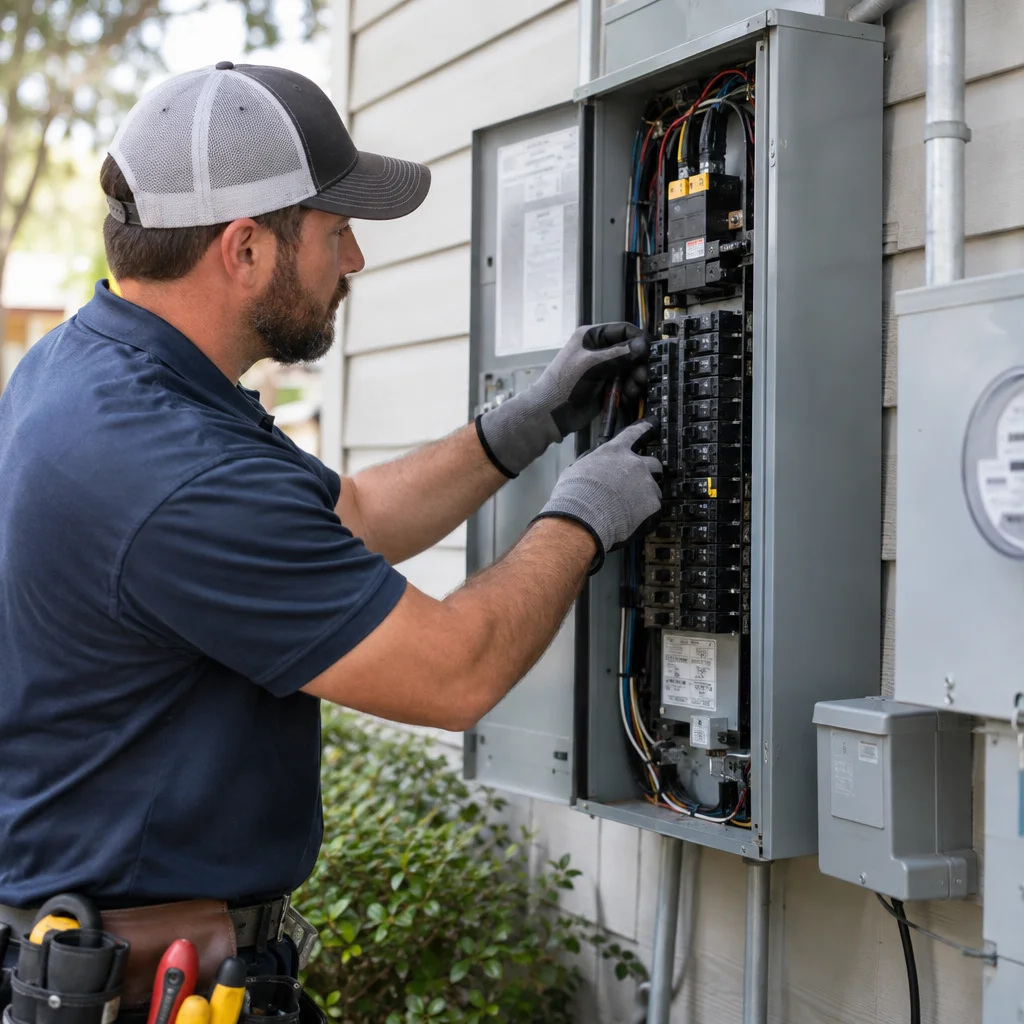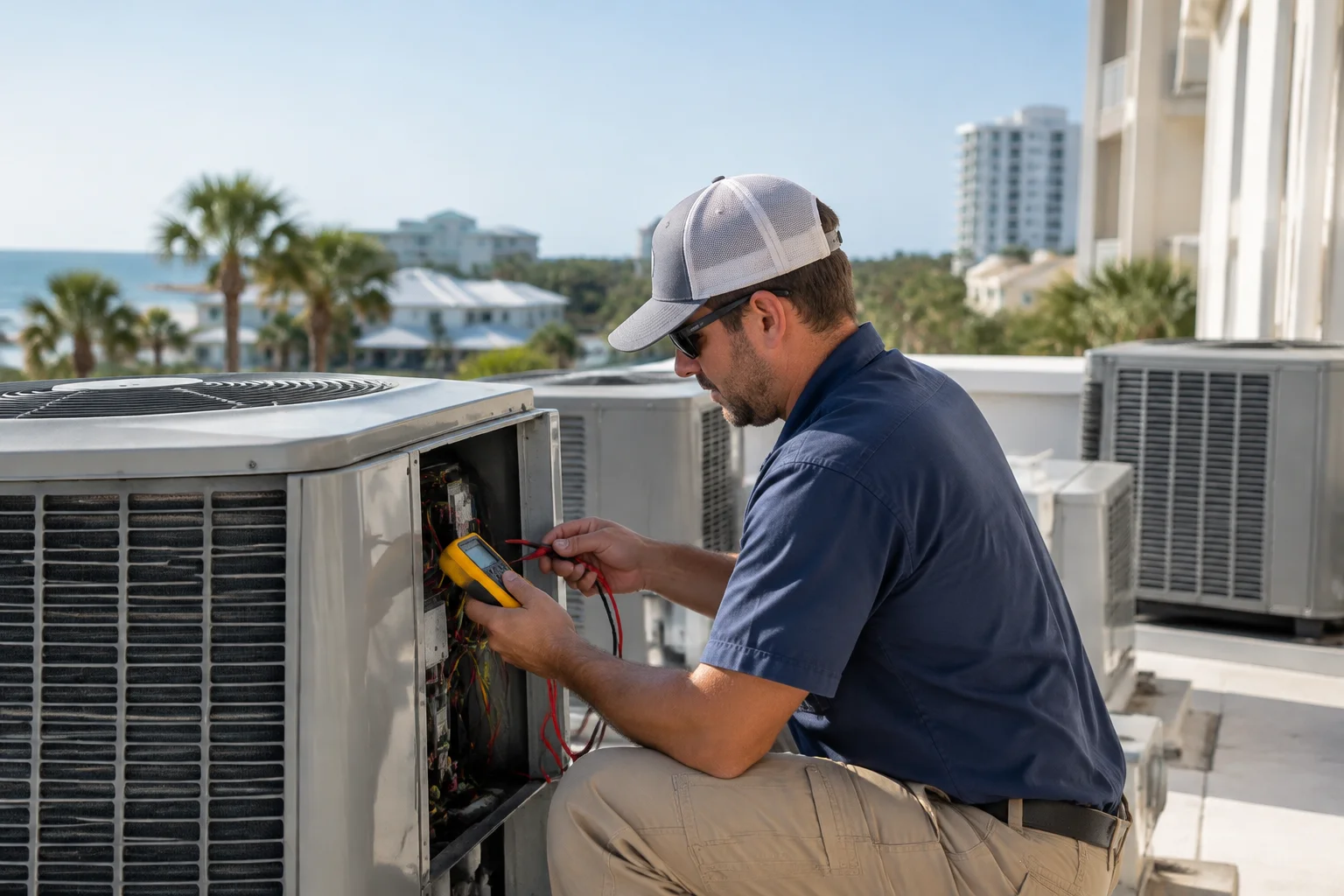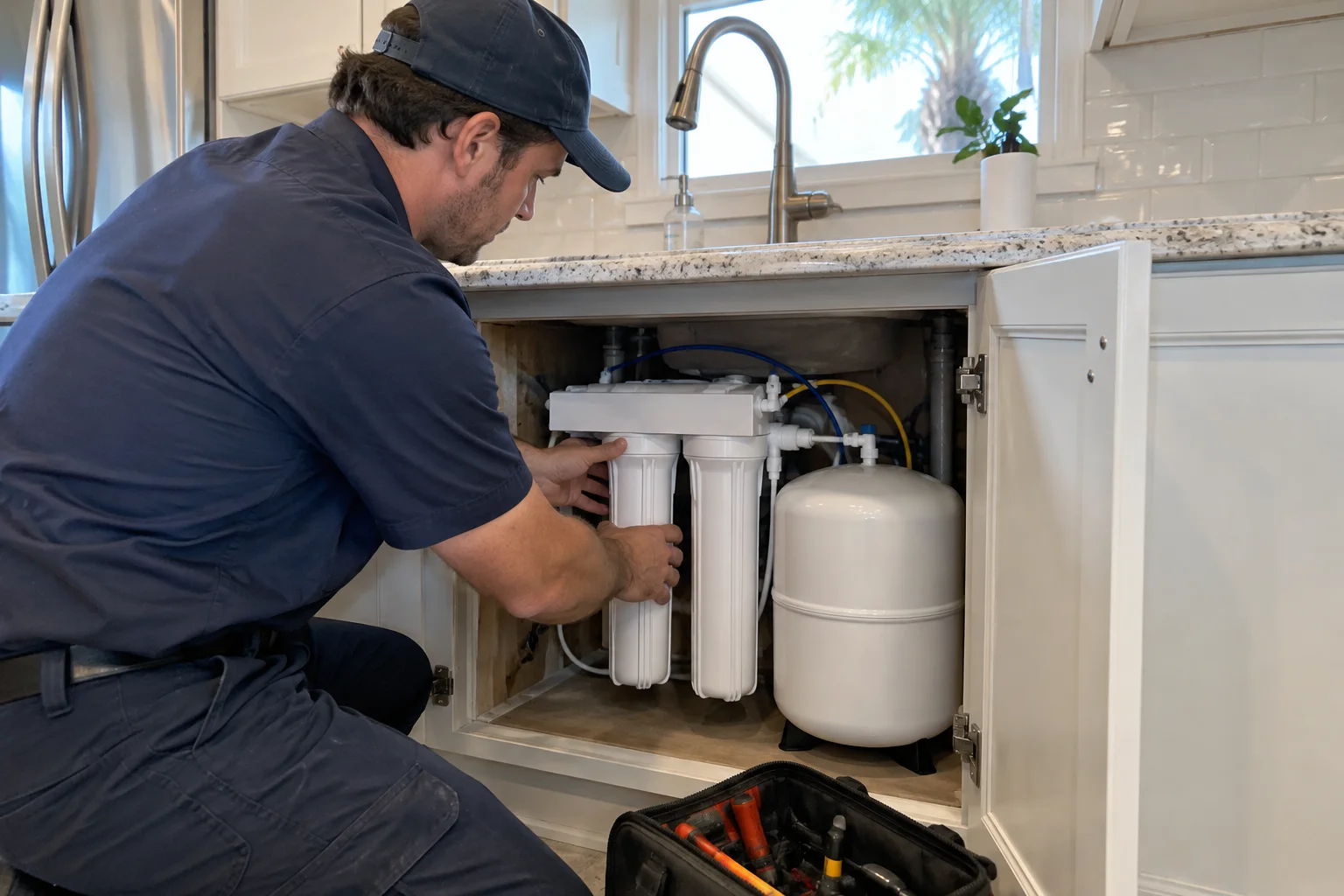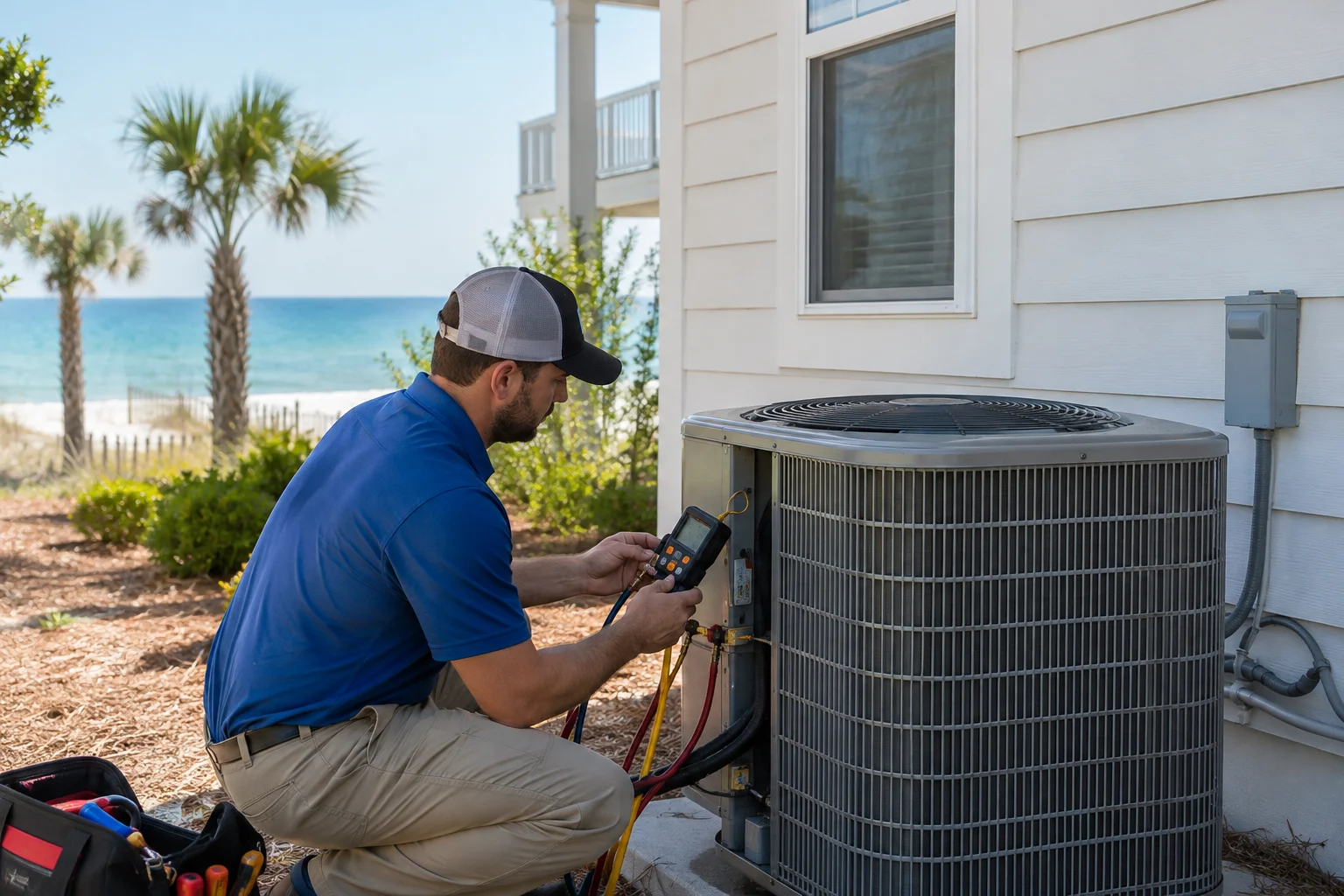
Niceville, FL is a great place to live, but the weather can be hard on HVAC systems and even harder on indoor air quality. Long stretches of heat, sticky humidity, and salty air near the coast can push air conditioners, heat pumps, and ductwork to work harder than homeowners expect. When airflow drops or moisture builds up, homes can feel uncomfortable and the HVAC system can start acting up, sometimes leading to emergency AC repair calls.
This guide focuses on what helps you avoid those urgent situations. You will see how indoor air quality problems often start small, how older and newer homes can differ, and what preventive HVAC maintenance looks like in a humid Florida climate.
Why indoor air quality problems can lead to emergency cooling concerns
Most emergency HVAC calls are about comfort and performance. In Niceville, indoor air quality issues often show up as symptoms that make homeowners call for help quickly: rooms feel muggy, air smells musty, filters clog faster, or the system struggles to cool consistently. Those symptoms are not just “comfort issues.” They can also increase strain on the cooling system.
Here is the common chain reaction:
High humidity and poor airflow reduce how effectively the system removes moisture. The home stays damp, which increases the chance of musty odors and microbial growth. Damp environments also make filters load up faster.
Dirty or restricted ductwork and returns limit airflow. When the system cannot move air the way it was designed to, it can run longer, cycle more often, or fail to reach temperature targets.
Condensate drainage problems can happen when condensate lines are blocked or draining poorly. When moisture cannot drain as intended, you may see overflow risks, water damage concerns, and additional humidity inside the home.
Thermostat and control issues can worsen the problem by causing short cycling, incorrect staging behavior, or comfort settings that do not match the real needs of a humid climate.
Even when the root cause is not an equipment failure, the system can be pushed into a pattern that feels like an emergency during peak summer conditions.
Niceville climate realities: heat, humidity, and salt air
In Okaloosa County, homeowners deal with humid summers and the added challenge of salt air, especially for homes closer to the coast. That environment can affect HVAC performance in a few ways:
Humidity control is not optional
In Florida heat, an air conditioner is doing two jobs: cooling and dehumidifying. If indoor humidity stays high, the home can feel hotter than the thermostat reading suggests. That can lead to frequent temperature adjustments and more run time.
Airflow matters more than many homeowners realize
Air conditioning service is not just about whether the unit runs. It is about moving the right amount of air through the right paths. If returns are blocked, supply vents are partially closed, or ductwork has leakage or restrictions, humidity removal suffers.
Salt air can contribute to buildup
Coastal conditions can accelerate corrosion and buildup on outdoor components and can also increase dirt loads indoors when air filtration and duct cleaning are not maintained. That does not mean every issue is “salt air,” but it does mean preventive HVAC maintenance is especially important.
Older Niceville homes: common indoor air quality drivers
Older homes can be comfortable, but indoor air quality challenges often come from how the house was built and how the HVAC system was integrated over time.
Leaky ducts and uneven airflow
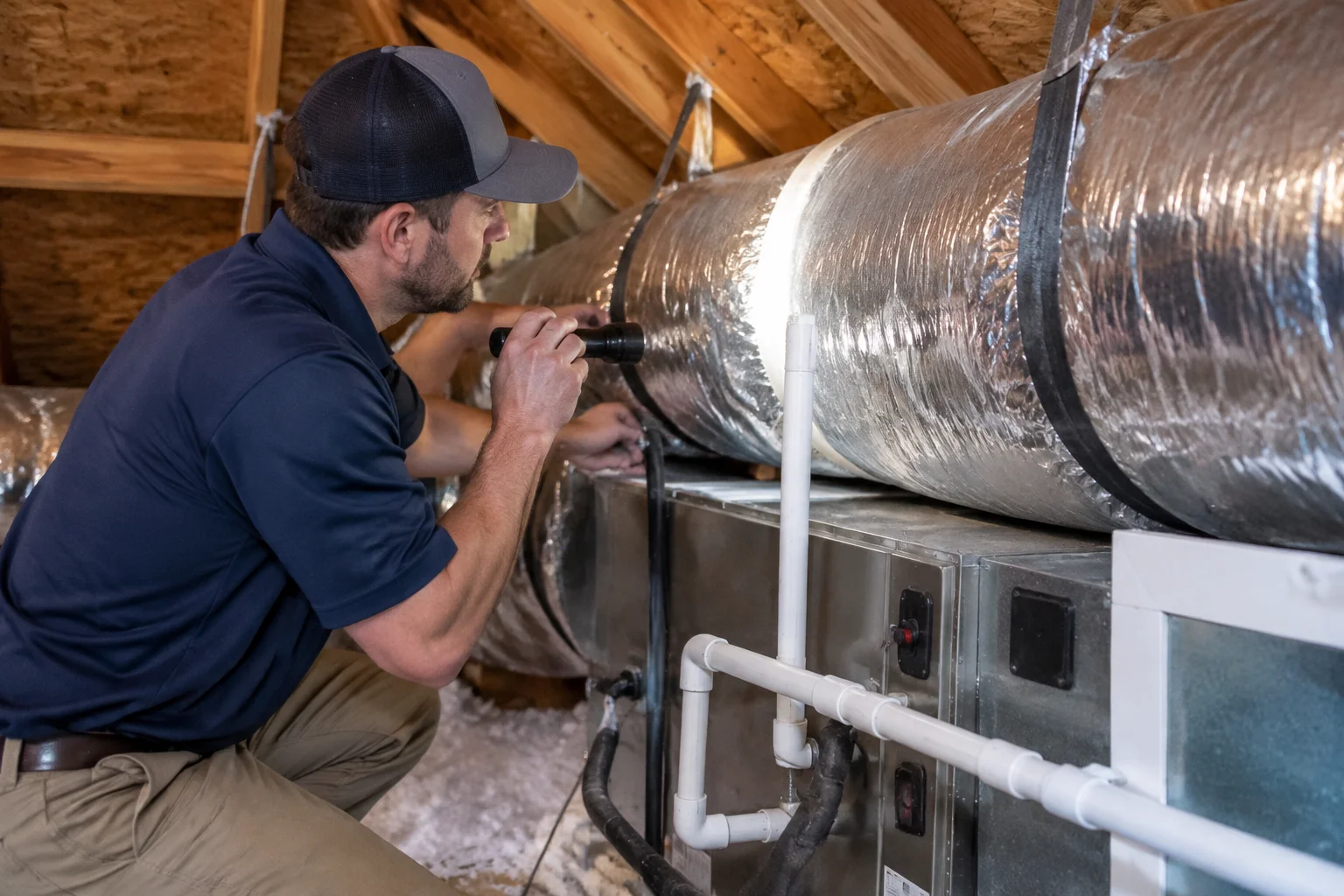
Older ductwork may have leaks, loose connections, or sections that are buried in attics or crawl spaces where temperature swings are common. Leaky ducts can pull in humid air and reduce system efficiency. The result is not only higher energy use, but also a home that struggles to maintain stable humidity.
Condensate drainage issues from aging components
Condensate drainage can become less reliable as systems age. A condensate line can clog, drain slower than it should, or develop partial blockages. When that happens, moisture can linger indoors and contribute to musty odors and discomfort.
Filters and air filtration that do not match today’s needs
Some older systems were installed with a filter approach that made sense at the time. Today, homeowners may have pets, more allergies, or different comfort expectations. If the HVAC air filtration plan is outdated, indoor air quality can degrade without an obvious “break” in the system.
Newer Niceville homes: why problems still show up
Newer construction can be tighter and more energy efficient, but that can also trap moisture and indoor pollutants if ventilation and filtration are not balanced.
Better insulation, higher humidity sensitivity
A tighter home reduces uncontrolled air exchange. That can be a benefit for energy use, but it means humidity control depends heavily on correct airflow and proper dehumidification performance. If the system is oversized, improperly commissioned, or has restricted airflow, humidity can remain elevated.
Ventilation that is not aligned with comfort
Some newer homes include ventilation upgrades, but they still require regular maintenance. If filters are not changed on schedule or if ductwork is not sealed properly, indoor air quality can still suffer.
Smart thermostats and control settings
Smart thermostats can improve comfort, but settings that do not reflect humid Florida conditions can lead to short cycling or inconsistent humidity control. The thermostat can also influence how the HVAC system responds during peak heat.
Preventive steps that reduce emergency AC repair calls
You can often prevent emergency HVAC calls by focusing on airflow, moisture management, and filtration. These are the areas most tied to indoor air quality and comfort in Niceville homes.
1) Make filter changes a real routine, not a guess
Filters protect the HVAC system and help maintain cleaner air. In humid climates, filters can load up faster because the system runs longer and pulls more moisture-laden air through the ductwork. Use your HVAC company’s guidance for the right filter approach for your system. If you are searching for “HVAC air filtration near me,” start by asking a local HVAC contractor how filter selection affects airflow and humidity control.
Also pay attention to airflow symptoms. If vents feel weaker, rooms run warmer, or humidity rises, a filter issue or a duct airflow restriction may be involved.
2) Keep vents and returns clear and balanced
Airflow problems are a frequent indoor air quality trigger. Common homeowner habits can reduce airflow: furniture placed too close to supply vents, return vents blocked by curtains, or closed doors in high-traffic areas.
For homes with multiple zones, make sure dampers and registers are not accidentally set in a way that starves certain rooms. Reduced airflow can make cooling feel uneven and can increase moisture retention.
If you suspect duct repair near me concerns, do not wait for a full breakdown. Ask for an inspection focused on airflow pathways and duct condition, especially in attics and crawl spaces.
3) Address condensate drainage as part of indoor air quality maintenance
Condensate drainage is closely tied to humidity control. When condensate drains poorly, the system can create indoor moisture instead of removing it. That can lead to musty odors, damp areas, and faster filter loading.
During routine AC repair or air conditioning service visits, ask your technician to check condensate drainage performance and the condition of the drainage path. This is one of the smartest ways to avoid emergency cooling problems that appear “out of nowhere” on the hottest days.
4) Review thermostat settings for humid Florida comfort
Thermostats do more than turn the system on and off. They influence how long the system runs and whether it cycles in a way that supports dehumidification.
For many homeowners, comfort improves when the thermostat strategy supports steady cooling run time rather than frequent short cycles. If you are using a smart thermostat, verify settings and schedules. If you are considering upgrades, explore Smart Thermostats to learn how control choices can support humidity control and reduce strain on the system.
5) Consider whole home air filtration or air purification when indoor air quality is a priority
If your home has persistent odors, allergy flare-ups, or visible dust patterns, filtration may need an upgrade. Whole home air purifier systems and HVAC air filtration upgrades can help reduce airborne particles, but they must be matched to the system’s airflow capability.
For homeowners searching for “indoor air quality services near me,” ask about options such as:
• Higher efficiency filtration that does not choke airflow
• Air purification approaches designed for whole home use
• Air scrubber installation near me options where appropriate for the home’s layout and comfort needs
A professional indoor air quality evaluation helps confirm what will actually improve comfort without causing airflow restrictions.
6) Inspect ductwork, especially in attics, closets, and crawl spaces
Ductwork can be a hidden source of indoor air quality problems. Leaks can pull in humid air, and poor sealing can reduce cooling and dehumidification performance. Duct sections that run through hot attic spaces may sweat condensation or allow moisture to move into the system.
If the home has persistent humidity or uneven temperatures, ask for a ductwork-focused inspection. For a broader look at maintaining comfort, you can also review Keeping Niceville Cool Starts with Better AC Maintenance.
7) Plan preventive maintenance before summer demand peaks
Preventive HVAC maintenance is how you catch issues while they are still small: airflow restrictions, early condensate drainage concerns, failing components, and buildup that can reduce efficiency and comfort.
When homeowners search for “HVAC maintenance near me,” the best results usually come from a plan that fits their home and schedule. For example, a maintenance visit ahead of the hottest weeks can help ensure the system is ready for Florida heat and humidity.
To learn how indoor air quality and comfort can be connected, read Indoor Air Quality Testing That Helps Inlet Beach Homes Stay Comfortable Longer. While it focuses on Inlet Beach, the indoor air quality drivers are similar across the region.
System strain and refrigerant systems: what to watch without guessing
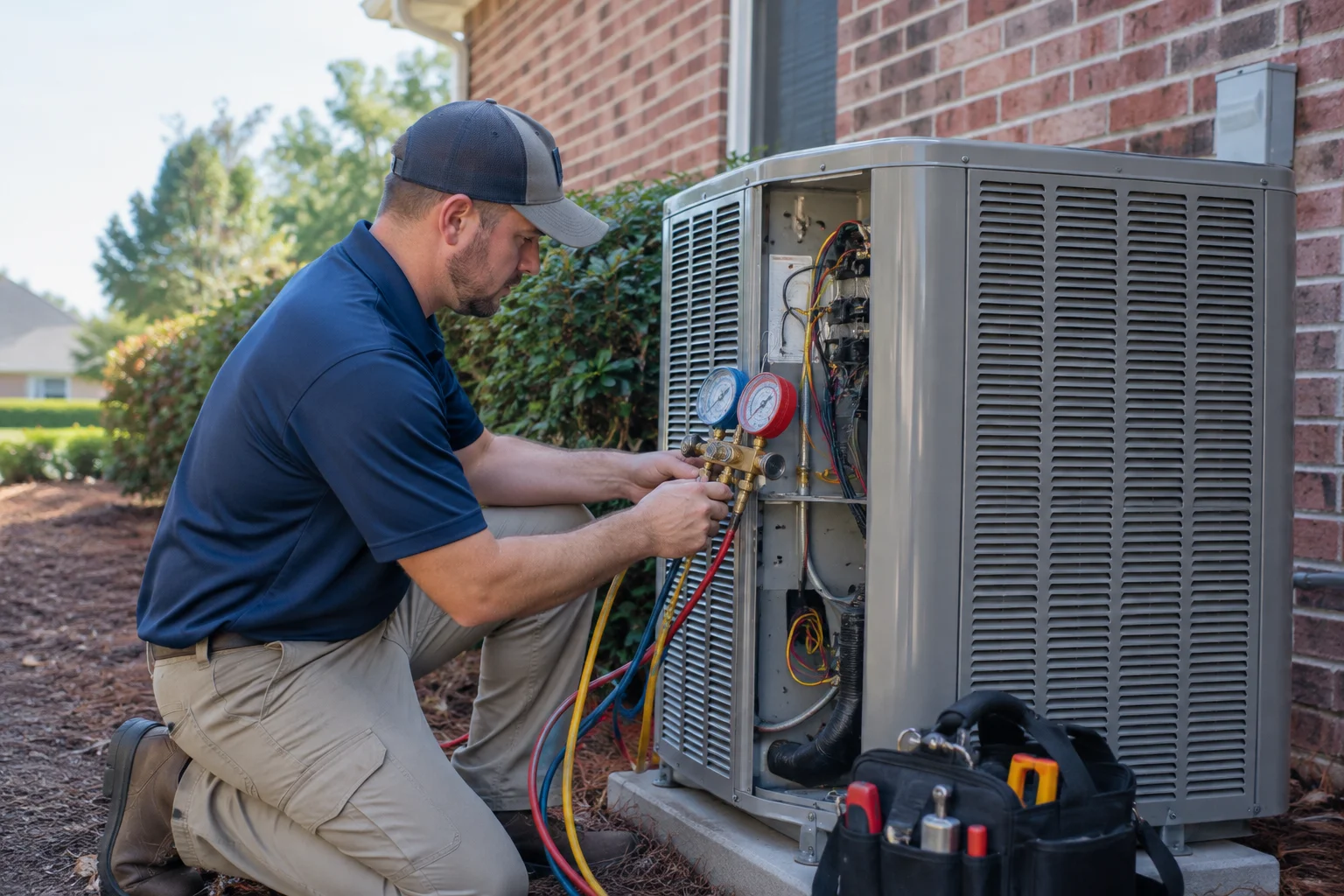
Refrigerant systems are part of the cooling process, but refrigerant concerns are not something homeowners should troubleshoot by guesswork. Low refrigerant, charging errors, or leaks require professional evaluation with proper tools.
What you can do is recognize patterns that suggest the system is struggling. For example, if cooling performance drops and humidity control suffers at the same time, the issue could involve airflow, condensate drainage, or refrigerant performance. A technician can evaluate the system as a whole rather than focusing on one assumption.
If you notice refrigerant-related symptoms such as unusual behavior, persistent cooling problems, or repeated emergency cooling concerns, contact a local HVAC contractor. Avoid DIY “fixes” that can make the situation worse.
Airflow, duct sealing, and humidity control: the comfort triangle
In Niceville homes, indoor air quality is often a combination of three factors: airflow, moisture removal, and filtration. When one factor fails, the others can struggle.
Here is a practical way to think about it:
Airflow supports dehumidification. If airflow is weak, the system may not remove moisture effectively.
Humidity control affects comfort and cleanliness. Higher humidity can increase odors, dust clinging, and the feel of “stale” air.
Filtration improves the quality of what you breathe. Better filtration can reduce particles, but it must be compatible with airflow.
That is why HVAC repair near me searches can sometimes lead to the wrong solution if the underlying issue is airflow or duct performance. A quality residential HVAC service should look at the system’s comfort and air quality outcomes, not just whether the compressor starts.
How to spot indoor air quality trouble before it becomes an emergency
Use these early indicators to schedule help before the hottest day forces an urgent call.
Watch for humidity and odor patterns
• The home feels muggy even when the thermostat is set reasonably
• Musty smells increase when the system runs
• Condensate drainage seems inconsistent, such as water near indoor equipment
Notice airflow changes
• Weak airflow from vents
• Some rooms are consistently warmer or colder
• The system runs longer than usual to reach temperature
Track filter and dust behavior
• Filters look dirty much faster than expected
• More dust settles quickly on surfaces
• Allergies worsen during peak summer months
Pay attention to system cycling
• Short cycling that feels new or more frequent
• Loud operation at times it used to be quieter
• Frequent changes in comfort settings due to inconsistent results
If you see multiple symptoms together, it is a strong sign that an indoor air quality and comfort inspection is needed. That approach can help prevent emergency AC repair near me situations that happen when the system is already under stress.
Choose the right local HVAC company for indoor air quality goals
Indoor air quality is not one single part. It involves ductwork, condensate drainage, airflow, filtration, and how the system is controlled. That is why working with a professional local HVAC company matters. A technician can evaluate how the system performs in your home, including the way humidity and airflow interact.
If you want indoor air quality services tailored to Niceville, start with the dedicated service page: Indoor Air Quality for Niceville, FL. For broader coverage across the region, visit the Okaloosa County service area and the Niceville page.
You can also pair indoor air quality planning with practical maintenance and equipment readiness. If you are evaluating comfort improvements, review Air Conditioning Inspection and Air Conditioning Systems. For communication and control, consider Smart Thermostats to keep settings aligned with humid weather.
For property managers and landlords dealing with multiple units and tenant comfort complaints, Property Management HVAC Services can help you stay ahead of indoor air quality issues that lead to emergency calls.
When system replacement becomes part of the indoor air quality conversation
Sometimes the best way to avoid emergency HVAC calls is to address system capacity, condition, and overall performance. If your HVAC system is old, struggling to manage humidity, or repeatedly fails to maintain consistent comfort, a professional evaluation can help determine whether repair and maintenance are enough or whether HVAC replacement near me planning is appropriate.
Do not assume replacement is necessary based on symptoms alone. An in-person assessment is the right way to evaluate system condition, airflow, ductwork, and indoor air quality needs together.
Ductless mini splits and indoor air quality in humid homes
Some Niceville homeowners explore ductless mini split installation as a way to improve comfort in specific areas. Ductless systems can be effective, but indoor air quality results still depend on filtration choices, humidity control strategy, and how the system is sized and operated for Florida heat and humidity.
If you are considering new comfort solutions, ask an HVAC contractor about how ductless mini split installation near me options can fit your home’s layout and humidity needs, and how indoor air quality goals will be supported.
Make preventive maintenance a habit you can feel
The best way to avoid emergency cooling calls is to treat indoor air quality as part of HVAC care. When you maintain airflow, filtration, condensate drainage, and smart thermostat settings, the system is less likely to struggle during peak summer conditions. You also reduce the chances of musty odors, uneven temperatures, and the “why is it not cooling right now?” moments that often trigger urgent calls.
If you are comparing options for indoor air quality in Niceville, it helps to start with a local evaluation rather than guessing. A professional can connect the dots between humidity, airflow, ductwork condition, and how your refrigerant system is performing, so you can protect comfort and reduce the odds of emergency HVAC situations when the weather is at its toughest.
Find Indoor Air Quality in Niceville, FL
If you need Indoor Air Quality in Niceville, FL, visit our local service page or contact A Superior Mechanical today.
Map of Niceville, FL
Frequently Asked Questions
What indoor air quality issues are most likely to trigger emergency AC repair calls in Niceville?
High humidity, musty odors, clogged or mismatched filtration, weak airflow from ductwork, and condensate drainage problems can all make cooling feel urgent. These issues often increase system strain and lead to faster breakdowns or repeated performance complaints.
How often should I change my HVAC air filter in a humid Florida home?
Filter schedules vary by system and filter type, but humid climates often mean filters load up faster. A technician can recommend a routine that supports both cleaner air and proper airflow.
Can ductwork problems affect indoor air quality even if the AC runs?
Yes. Leaks, restrictions, and poor airflow balance can reduce dehumidification and pull in unwanted moisture. That can worsen comfort and indoor air quality without obvious “no cooling” symptoms.
Is it safe for me to adjust refrigerant or troubleshoot refrigerant issues on my own?
No. Refrigerant systems require professional evaluation and proper tools. If cooling performance and humidity control are off, contact a qualified HVAC contractor for an in-person assessment.
What should I ask an HVAC company about indoor air quality services in Niceville?
Ask how they evaluate airflow, filtration compatibility, condensate drainage, ductwork condition, and thermostat settings. If needed, discuss whole home air purifier or air scrubber options based on your home’s layout and comfort goals.
Related Articles
- Keeping Niceville Cool Starts with Better AC Maintenance
- Indoor Air Quality Testing That Helps Inlet Beach Homes Stay Comfortable Longer
- Why Seaside Homes Benefit From Indoor Air Quality Testing Before Comfort Issues Spread
- Indoor Air Quality in Callaway: A Homeowner’s Guide to Cleaner, More Comfortable Living
Photo Gallery