Laguna Beach summers can feel relentless. Between Florida heat, humidity, and the effects of coastal salt air, even a well maintained air conditioner can drift out of tune over time. A professional air conditioning inspection is one of the most practical ways to keep your system running reliably, improve airflow, and reduce the odds of emergency cooling problems when you need comfort the most.
This guide walks through what homeowners should know about AC inspections in Laguna Beach, FL. It covers common local issues, what technicians typically check, how inspections connect to HVAC repair and preventive HVAC maintenance, and when it makes sense to plan for bigger decisions like ductwork upgrades or system replacement.
Why Laguna Beach AC inspections matter more than you might think
In Bay County, Florida, air conditioning is not a seasonal luxury. It is a daily need for comfort and for protecting indoor spaces from humidity. Coastal conditions add their own challenges. Salt air can accelerate corrosion on outdoor components and impact how well the system moves heat outdoors. Over time, that can lead to weaker cooling performance, higher energy use, and parts working harder than they should.
An inspection is also about airflow. Many cooling complaints are not caused by the thermostat setting or the thermostat itself. They are caused by restrictions in ductwork, dirty filters, blocked returns, or airflow imbalance. When airflow is off, the system may run longer, struggle to reach the set temperature, and cycle in ways that increase wear.
For homeowners searching for an HVAC company near me or duct inspection near me, a solid inspection should feel like a structured check of the whole cooling process, not just a quick glance at the thermostat.
What a real air conditioning inspection includes
Exact steps vary by system type and condition, but a professional inspection for Laguna Beach air conditioning typically focuses on several key areas. The goal is to verify safe operation, confirm proper airflow, and check the refrigerant system performance as it relates to cooling comfort. It also includes looking at condensate drainage, thermostat operation, and the overall condition of components exposed to Florida weather.
1) Thermostat and control settings
Your thermostat controls when the system runs and how it regulates temperature. During an inspection, a technician will confirm the thermostat is operating correctly and that the system responds as expected to cooling calls. If the thermostat is inaccurate, improperly configured, or not communicating correctly with the indoor equipment, the system may short cycle, run longer than necessary, or fail to cool evenly.
If you are considering thermostat installation near me, inspections help you determine whether the thermostat is part of the comfort problem or whether the issue is airflow, ductwork, or the cooling cycle.
2) Airflow across the indoor coil and blower
Airflow is where many cooling problems begin. A technician will check for issues that reduce airflow, such as dirty filters, blocked returns, clogged evaporator coil surfaces, or ductwork restrictions. In humid Florida conditions, airflow problems can also contribute to inadequate moisture removal. That can leave homes feeling clammy even when the temperature seems close to the set point.
For homeowners trying to decide between HVAC repair near me options and preventive HVAC maintenance near me, remember that an inspection can identify airflow limitations early, before they force parts to work harder.
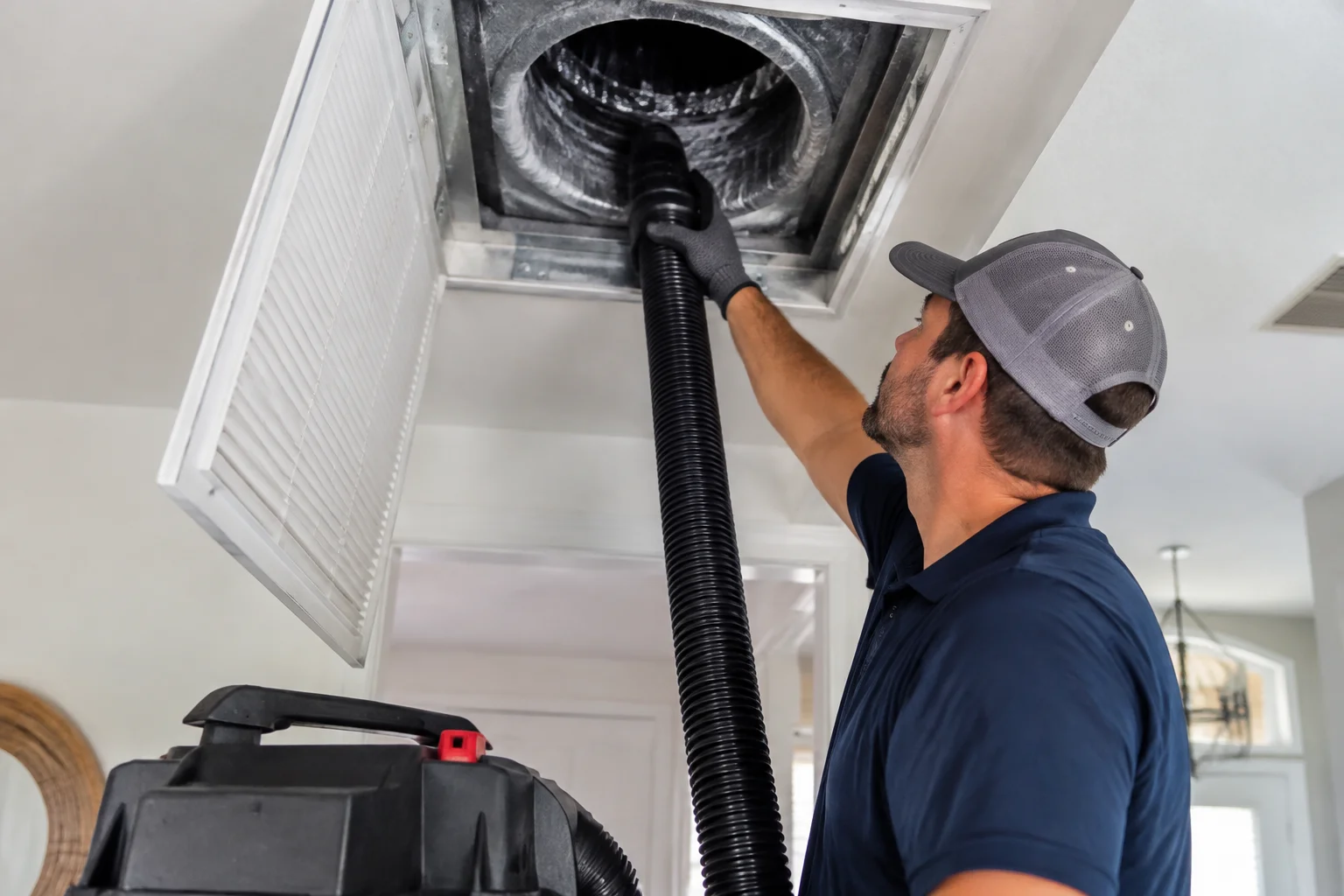
3) Ductwork condition and distribution
Many Laguna Beach homes have ductwork that was installed years ago, or they have layout challenges that cause uneven cooling. A careful inspection may include evaluating ductwork for leaks, poor connections, kinks, or sections that do not deliver air where it is needed.
If you notice hot rooms, cold spots, or rooms that never feel right, consider pairing your inspection with a duct inspection. Even small duct issues can increase energy use because the system compensates by running longer.
4) Refrigerant system performance and cooling cycle symptoms
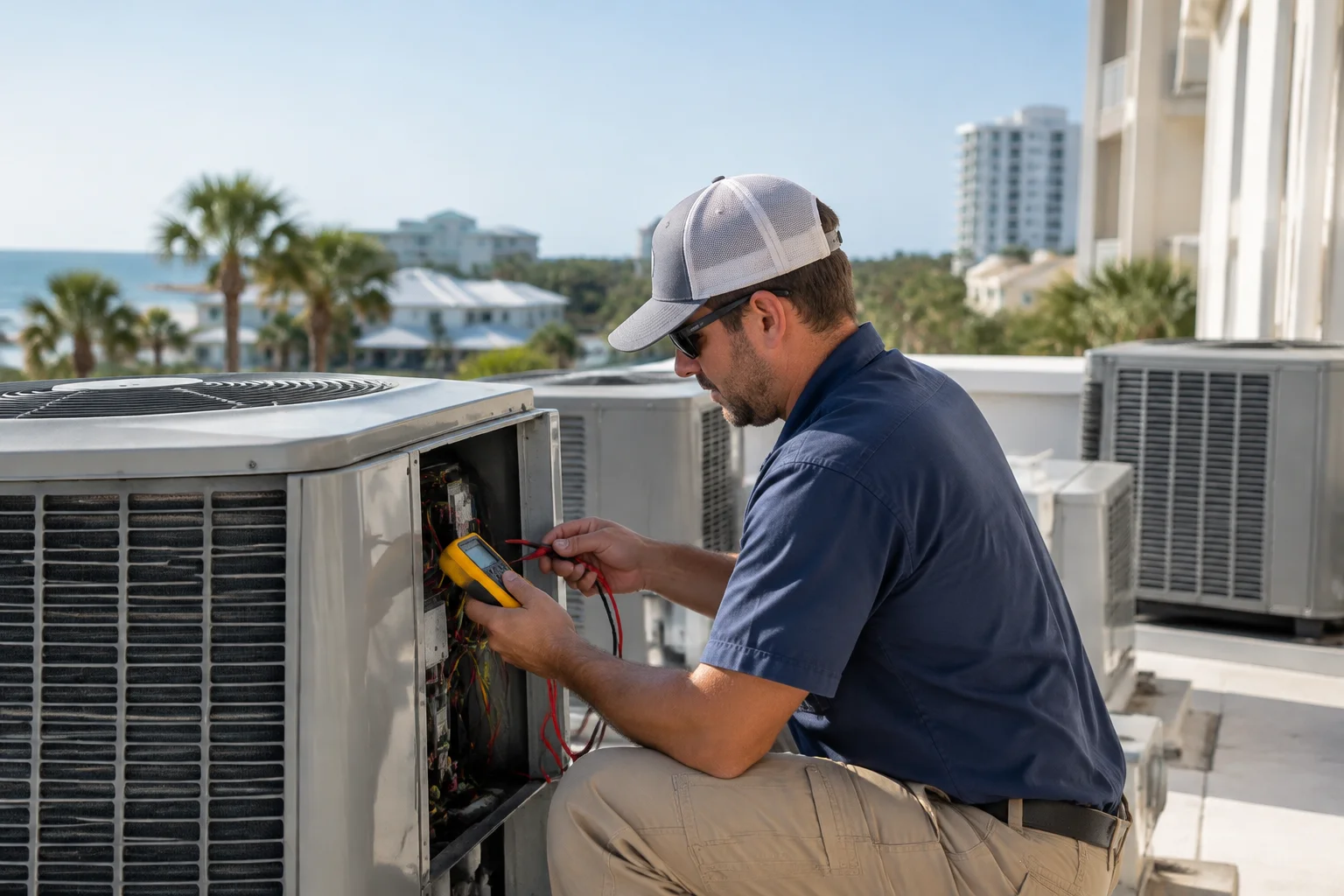
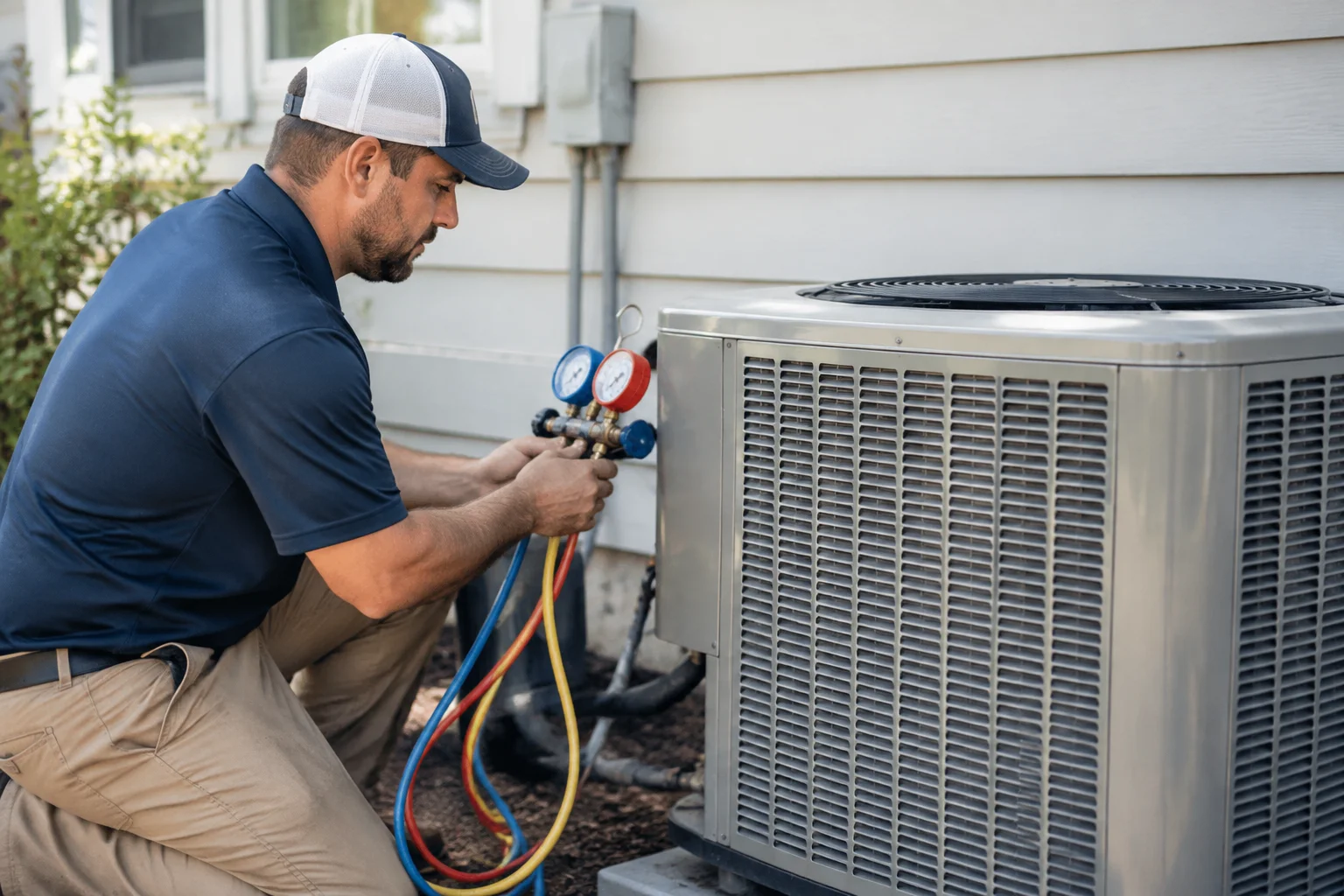
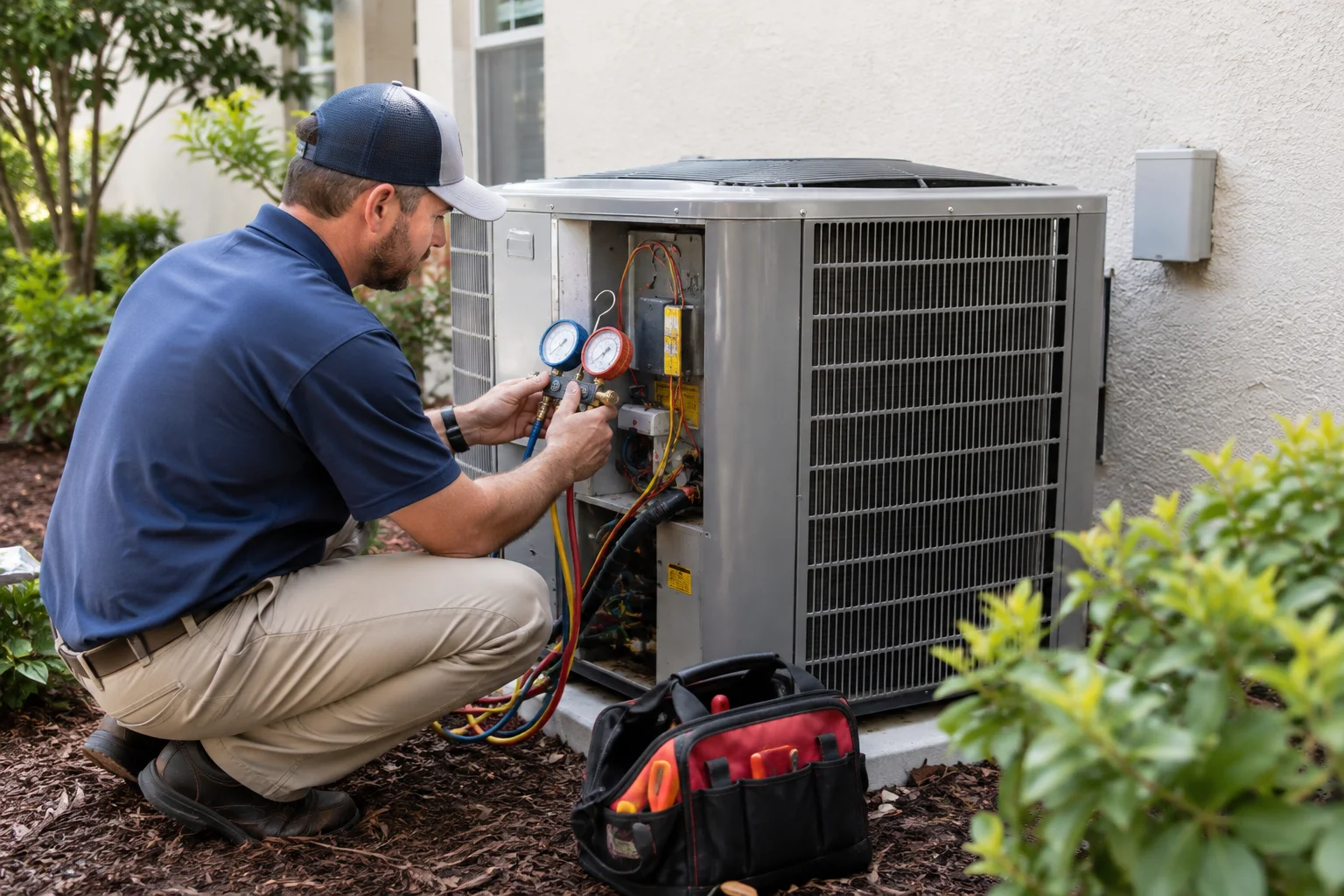
The refrigerant system is central to how your AC removes heat indoors and rejects it outdoors. During an inspection, a licensed HVAC technician evaluates the cooling cycle as a whole. That includes checking operating conditions and looking for symptoms that suggest the refrigerant system is not performing as expected.
Homeowners should not try to self-diagnose refrigerant issues. Refrigerant problems require professional evaluation because the correct next step depends on system measurements and the underlying cause. The inspection should help determine whether the issue is related to airflow, coil cleanliness, compressor operation, or other factors that affect the refrigerant system.
5) Condensate drainage and moisture control
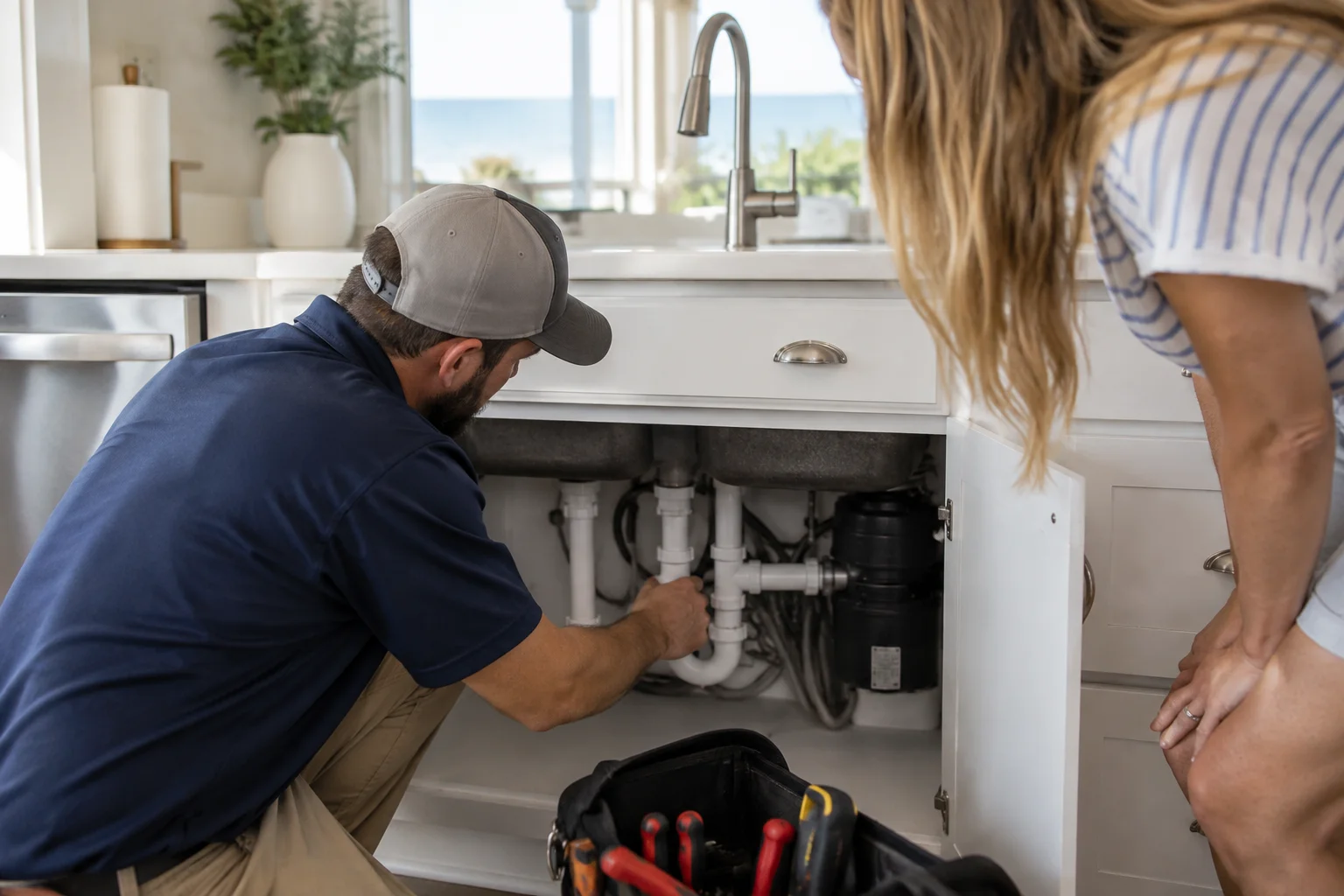
When your AC removes humidity, it produces condensate. That condensate must drain properly through the condensate line and related components. If drainage is restricted, the system can develop water backup issues, indoor moisture problems, or even safety concerns depending on the setup.
In Florida’s humidity, a condensate drainage issue can show up faster and can affect indoor air quality. An inspection should include checking that condensate drainage is clear and that drainage is functioning as intended.
6) Outdoor unit condition and coastal wear
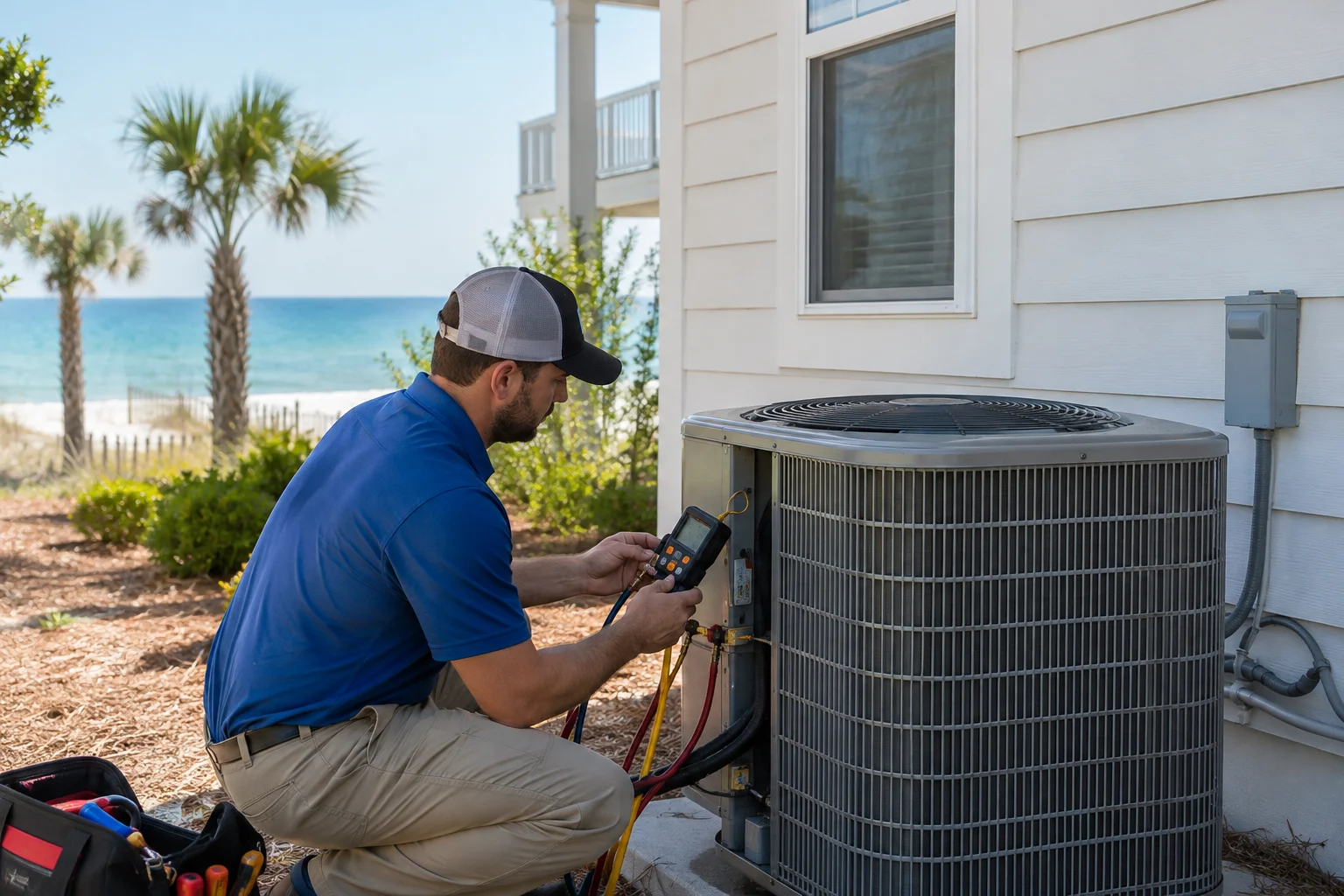
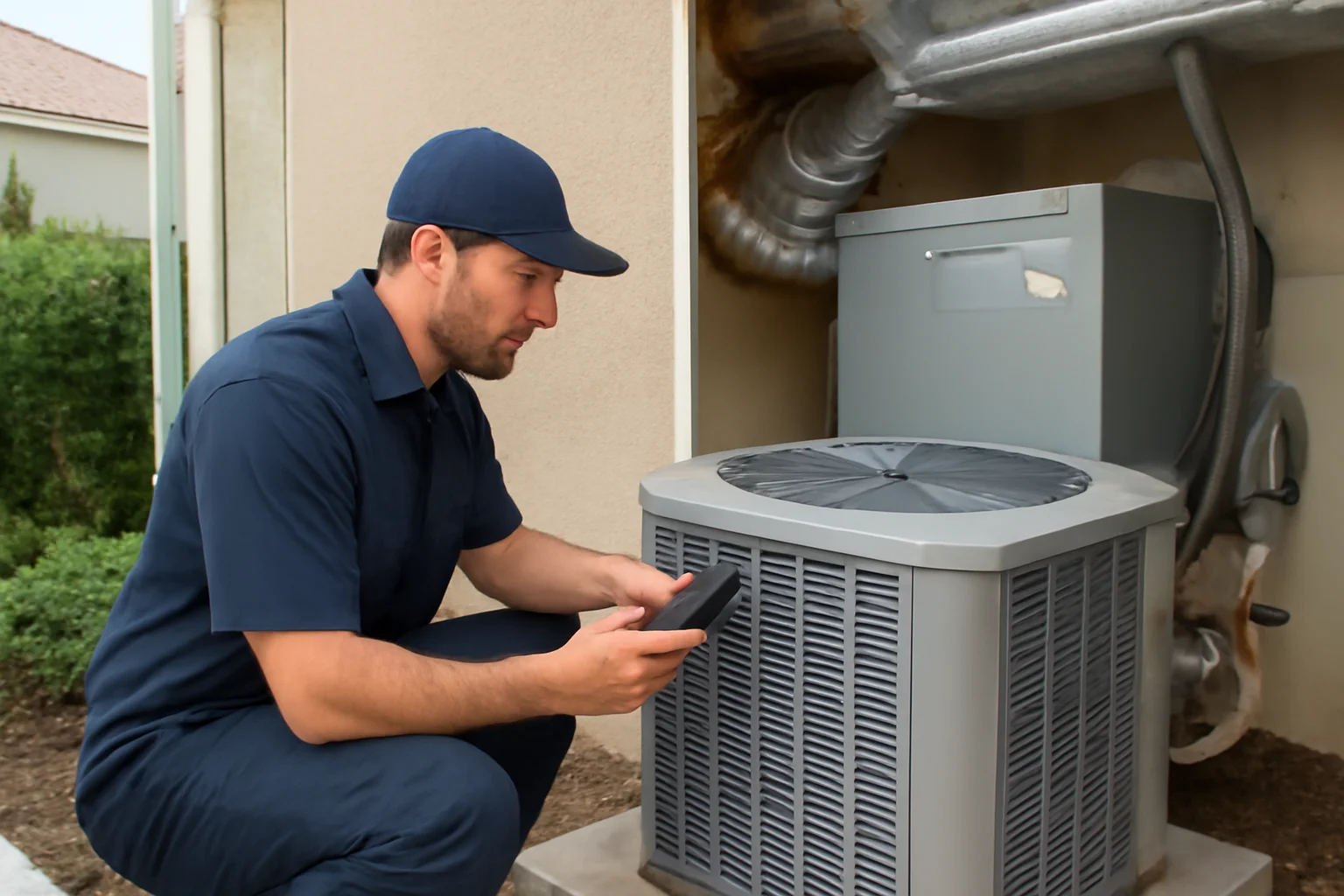
Outdoor components face daily exposure to heat, moisture, and salt air. During an inspection, technicians typically evaluate the outdoor unit’s physical condition, including airflow around the condenser, signs of corrosion, and whether the unit is installed and maintained in a way that allows proper heat rejection.
Blocked airflow around the outdoor unit can quietly reduce cooling capacity. That is why inspections are not just about internal components. Outdoor airflow matters, especially in coastal areas where corrosion and debris can build up.
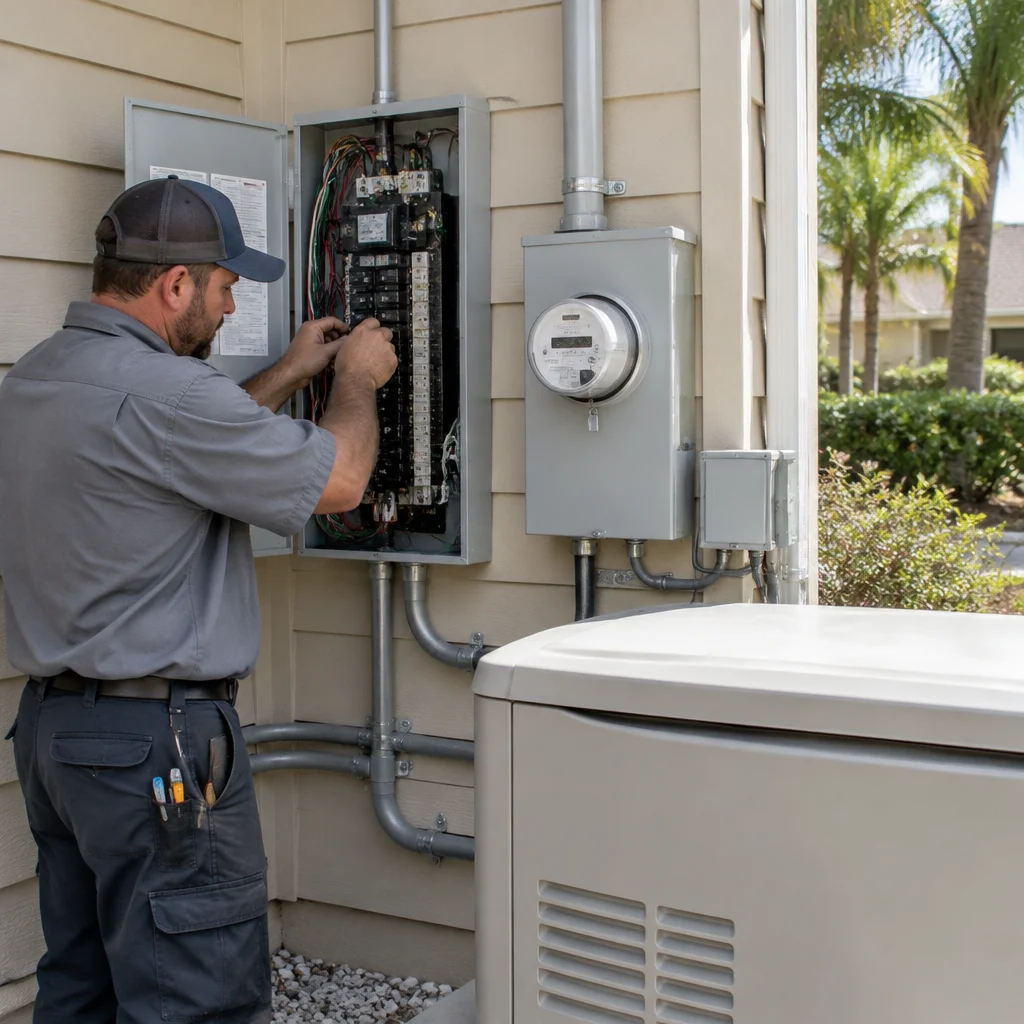
7) Safety and overall system operation
A thorough inspection also verifies safe operation and checks for warning signs such as abnormal noises, repeated cycling patterns, or indicators that the system is struggling. While homeowners can spot comfort issues, a licensed HVAC technician can connect those comfort complaints to the underlying operational causes.
Common AC problems Laguna Beach homeowners run into
Every home is different, but certain issues show up repeatedly in Florida coastal climates. If you are experiencing any of the following, an inspection can help narrow down whether you need AC tune up, HVAC repair, ductwork improvements, or indoor air quality services.
Uneven cooling and “hot room” complaints
If some rooms feel consistently warmer, the cause is often airflow related. That might mean duct distribution problems, return air restrictions, or a blower performance issue. An inspection can confirm whether the system is delivering enough air and whether ductwork is contributing to imbalance.
Humidity that feels worse than the temperature suggests
In humid Florida weather, comfort depends on both temperature and moisture removal. If your home feels damp, the system may not be removing enough humidity, which can point to airflow restrictions, coil cleanliness issues, or drainage problems.
Short cycling or frequent restart behavior
Short cycling can increase wear and lead to inconsistent comfort. It can be triggered by multiple factors, including thermostat control problems, airflow constraints, or operational issues that require professional evaluation.
Higher energy use without obvious comfort improvement
When an AC runs longer to reach the same temperature, energy use typically increases. In many cases, the underlying cause is not “just the bill.” It can be something like duct leakage, restricted airflow, or a cooling cycle that is not performing efficiently. Inspections help identify where the extra runtime is coming from.
Odors or signs of moisture around indoor equipment
Musty smells, visible moisture, or recurring dampness can connect to condensate drainage, indoor coil conditions, or indoor air quality concerns. If you also have allergies or notice dust buildup, indoor air quality services may be part of the solution.
Signs your home may need an inspection sooner rather than later
Even if your AC seems “mostly fine,” certain patterns are worth addressing before peak summer days. Consider scheduling an inspection if you notice:
- Cooling that takes longer to reach the set temperature
- Rooms that feel uneven in temperature or humidity
- Frequent cycling, loud operation, or unusual sounds
- Condensate drainage concerns such as water around the indoor unit or a clogged drain smell
- Rising energy bills paired with no lifestyle changes
- Visible dust buildup or worsening allergy symptoms that suggest indoor air quality issues
If you are searching for AC repair near me after the system already struggles, you may pay more for emergency troubleshooting. Preventive HVAC maintenance can help you avoid that situation by catching problems early.
How inspections connect to AC repair, ductwork, and indoor air quality
An inspection is not only about diagnosing a current problem. It is about identifying the path forward. Sometimes that path is straightforward, like scheduling an air conditioning service appointment to address a specific issue. Other times, the inspection findings point to airflow improvements or indoor air quality upgrades.
Ductwork and airflow upgrades
If ductwork is leaking or underperforming, your AC can cool the air but still fail to deliver comfort where you live. If your inspection suggests airflow distribution problems, a duct inspection can guide next steps. For homeowners considering duct cleaning near me, it helps to confirm whether duct issues are present first, since cleaning is most useful when it addresses real performance limitations.
Air filtration and moisture control
Indoor air quality services often go hand in hand with AC performance. Filters, air purification, and proper system airflow can reduce airborne particles and support cleaner airflow through your home. If your home has allergies or you are trying to improve comfort beyond temperature control, consider pairing your inspection with Air Filtration & Purifiers.
Heat pump and ductless considerations
Some homes in Florida use heat pumps, and some use ductless mini split systems. An inspection can help confirm that heat pump service components are operating correctly in cooling mode and that airflow is adequate. If you are planning ductless mini split installation near me or evaluating whether ductless is a good fit, inspections of your current system can help you compare comfort outcomes and installation considerations.
Preventive HVAC maintenance in Laguna Beach: what “good timing” looks like
Florida weather does not pause, but planning still matters. Many homeowners schedule inspections and AC tune ups before the hottest stretches to reduce the chance of breakdowns during peak demand. A good approach is to align your maintenance with your system’s needs and your comfort goals.
If you want a maintenance roadmap, read Smart HVAC Planning for Air Conditioning Maintenance in Laguna Beach, FL. It covers how to think about recurring maintenance, seasonal checks, and how to stay ahead of the problems that show up when humidity spikes.
Energy use, airflow, and comfort: what homeowners can realistically expect
Homeowners often ask whether inspections will “save money.” The best way to think about it is performance and comfort. When airflow is correct, the system does not have to run as long to deliver the same comfort. When condensate drainage is functioning, indoor humidity control is more consistent. When the system is operating within expected parameters, it can help avoid the inefficient patterns that lead to higher energy use.
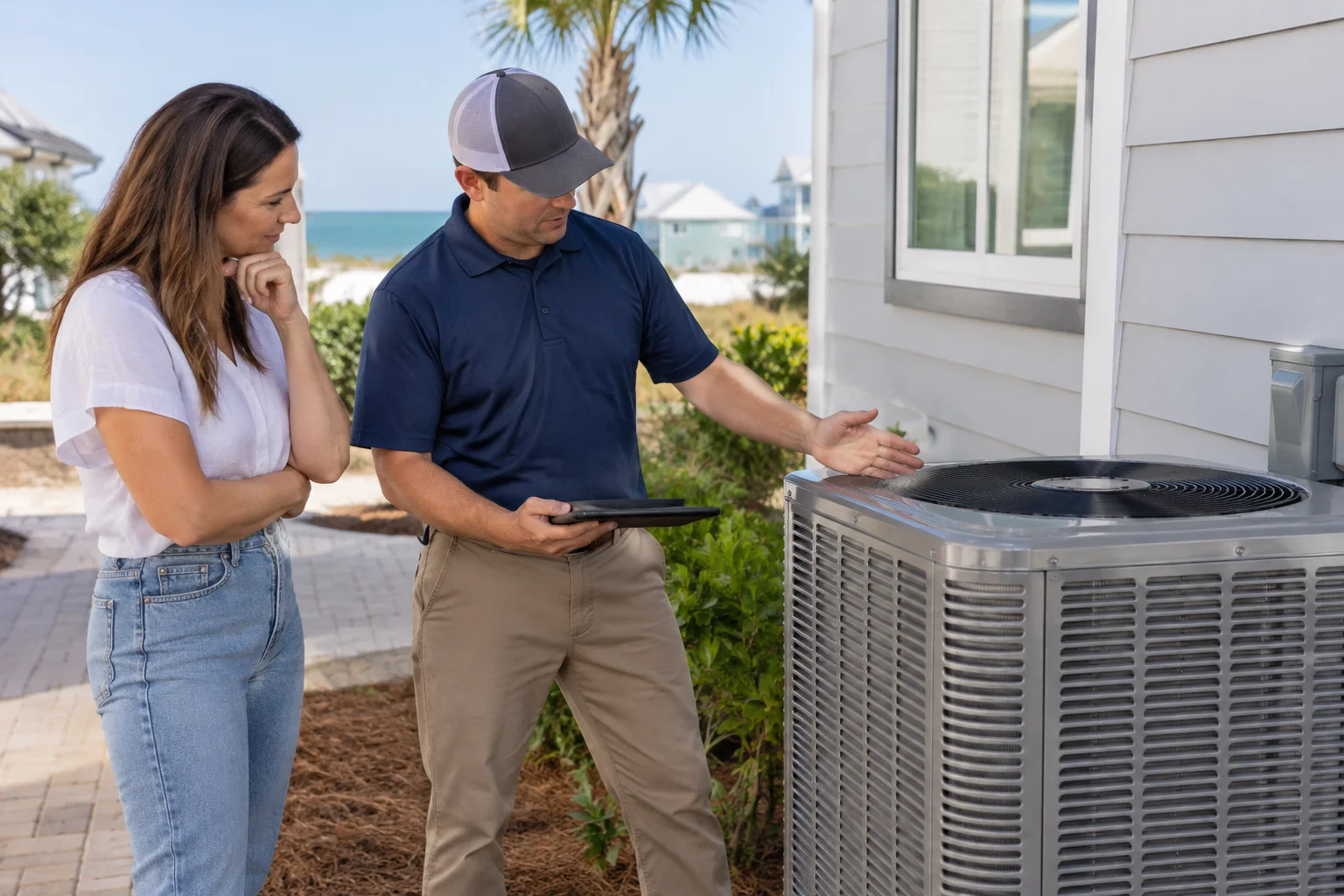
Because every home and system is different, a technician should explain what they found and what it means for comfort and operation. If the inspection points to repairs, the technician should also help you understand how those repairs connect to airflow, moisture control, and reliable cooling.
When you should not wait: emergency cooling concerns
Even with preventive maintenance, emergencies can happen. If your AC stops cooling, you hear repeated alarming sounds, you notice active water issues from condensate drainage, or the system is producing burning smells, treat it as an urgent situation. In those cases, you need professional HVAC repair to restore safe operation and comfort.
Inspections reduce risk, but they do not replace emergency response. If you are facing a cooling failure during a hot, humid stretch, schedule repair as soon as possible through a licensed HVAC contractor near me like A Superior Mechanical.
Planning ahead for bigger decisions: replacement, upgrades, and new construction
Sometimes an inspection reveals that repairs may not fully solve comfort issues, especially if the system is aging and struggling to keep up with indoor humidity and airflow demands. That does not mean replacement is always the answer. It means you should have an honest evaluation of your options after the inspection.
If you are evaluating system replacement or major upgrades, it can help to review how HVAC management affects reliability. For broader guidance, see Keeping Laguna Beach Properties Reliable with Smarter HVAC Management. If your situation involves commercial property or different load requirements, Commercial HVAC Installation in Laguna Beach, FL: The Issues Local Property Owners Should Not Overlook covers common planning pitfalls.
For homes under construction or major renovations, consider how the system will be sized, how ductwork will be designed, and how airflow will reach every area. New construction air conditioning can be easier to get right when the plan is built from the start. Explore New Construction Air Conditioning for Laguna Beach specific considerations.
Why local, licensed HVAC service matters in coastal Florida
Air conditioning in Laguna Beach is influenced by local climate and housing realities. Homes near the coast face salt air exposure, and many properties have older ductwork layouts or airflow challenges. A licensed HVAC contractor near me should understand these local conditions and be able to connect what they see during an inspection to the comfort issues homeowners experience.
Choosing a professional inspection also reduces the risk of misdiagnosis. Refrigerant systems, condensate drainage, and thermostat control all interact. A technician should not jump to conclusions without evaluating the system in person. That is why scheduling an inspection through A Superior Mechanical is a smart step for homeowners and businesses in the area.
If you want to explore service options across the area, visit the Laguna Beach service page and the Bay County service area.
Questions homeowners can ask during an AC inspection
Good communication helps you get the most value from your inspection. Here are practical questions you can bring to your appointment:
- What did you observe about airflow and ductwork distribution?
- Is the system removing humidity effectively for Florida conditions?
- Are there any condensate drainage concerns that could affect indoor moisture?
- Do you see signs of coastal corrosion or outdoor airflow restrictions?
- Are the thermostat settings and system responses consistent and reliable?
- What repairs or maintenance items would improve comfort and reduce unnecessary runtime?
- If we improve filtration or add air purification, how will that affect airflow and indoor air quality?
When you get clear answers based on what was found, you can decide on the right next step with confidence.
How to prepare for your inspection
You can make the appointment smoother by doing a few simple things:
- Note comfort issues such as hot rooms, humidity complaints, or odd cycling behavior
- Write down the thermostat settings you usually use and any recent changes
- Check whether filters have been replaced on schedule and if any are visibly clogged
- Clear access around the outdoor unit and indoor equipment so technicians can inspect safely
- Let the technician know about any past repairs or recurring issues
If you are considering HVAC repair near me or HVAC service near me because your system is not performing consistently, preparation helps your technician focus on the most relevant details during the inspection.
For homeowners in Laguna Beach, a professional air conditioning inspection is a proactive step that respects how Florida heat, humidity, and coastal exposure affect cooling systems. It helps you protect comfort, support indoor air quality, and plan repairs before small issues turn into emergency cooling concerns.
Find Air Conditioning Inspection in Laguna Beach, FL
If you need Air Conditioning Inspection in Laguna Beach, FL, visit our local service page or contact A Superior Mechanical today.
Map of Laguna Beach, FL
Frequently Asked Questions
How often should a Laguna Beach homeowner schedule an air conditioning inspection?
Many homeowners schedule inspections as part of preventive HVAC maintenance before the hottest stretches of the year, then follow up based on how the system performs. If your home has humidity complaints, uneven cooling, or older ductwork, it can be worth inspecting more regularly. A Superior Mechanical can recommend a schedule after reviewing your system’s condition.
What are the most common causes of AC problems in Florida’s heat and humidity?
Common causes include restricted airflow from dirty filters or ductwork issues, condensate drainage problems that affect moisture removal, outdoor unit airflow restrictions, and wear related to heat and coastal salt air. Thermostat control issues can also contribute to inconsistent cooling.
Can an inspection help with indoor air quality?
Yes. An inspection can identify airflow and moisture control issues that influence indoor air quality. If filtration needs improvement, you may also consider air filtration and purification options. For guidance, homeowners can explore Air Filtration & Purifiers.
If my AC is not cooling, should I ask for an inspection or go straight to AC repair?
If the system is not cooling at all, acting unsafe, or showing signs of active water issues, prioritize professional AC repair. If the system cools inconsistently or comfort is gradually worsening, an inspection is often the best next step to identify airflow, ductwork, condensate drainage, and refrigerant system performance concerns.
Will I be able to tell what is wrong with the refrigerant system on my own?
No. Refrigerant system issues require in-person evaluation by a licensed HVAC technician. During an inspection, the technician should assess the cooling cycle as a whole and determine whether the problem is related to refrigerant system performance, airflow, coil cleanliness, or another factor.
Related Articles
- What Laguna Beach Homeowners Should Know About Air Conditioning Inspections and Catching Problems Early
- Smart HVAC Planning for Air Conditioning Maintenance in Laguna Beach, FL
- Commercial HVAC Installation in Laguna Beach, FL: The Issues Local Property Owners Should Not Overlook
- Keeping Laguna Beach Properties Reliable with Smarter HVAC Management
Photo Gallery