Callaway, FL homeowners know the weather does not ease up. Summer brings intense heat, sticky humidity, and long stretches when the air conditioner runs nonstop. Geothermal energy systems can be a strong match for that kind of climate because they use stable ground temperatures to support heating and cooling. Still, geothermal performance depends on the HVAC components around it, including refrigerant systems, airflow, thermostats, ductwork, and condensate drainage.
If you are trying to keep your home running better with geothermal energy, this guide focuses on the practical, HVAC-first habits that help you avoid comfort problems, protect indoor air quality, and reduce the risk of emergency cooling concerns during Florida heat.
Why geothermal HVAC fits Callaway’s climate
In Callaway, you are dealing with coastal and near-coastal conditions across Bay County. Salt air can be hard on outdoor equipment, and high humidity taxes cooling systems. Geothermal systems rely less on outdoor air temperature swings and more on the earth’s steadier temperatures. That can help the system maintain comfort through long cooling seasons, especially when paired with well-designed ductwork and properly sized indoor equipment.
Even with geothermal, you still need a reliable HVAC “loop” inside your home. The indoor unit, refrigerant system, air handler, blower, thermostats, and condensate drainage all play a role in how efficiently your system cools and dehumidifies.
If you are weighing geothermal vs. other options, it helps to talk with a geothermal energy systems contractor in Callaway who understands local humidity loads and typical home layouts.
Start with airflow: the comfort lever most homeowners can feel
Airflow problems can look like “cooling issues” even when the geothermal system is working as designed. If supply air is weak, uneven, or noisy, you may notice hot rooms, cold drafts, or the system cycling more often.
Common airflow issues in Callaway homes
Dirty or blocked air filters. In humid Florida weather, filters can load faster, reducing airflow and making the system work harder.
Leaky ductwork. Duct leaks can waste conditioned air in attics, crawl spaces, and wall cavities where humidity and heat are high.
Blocked or restricted returns. If return grilles are covered or furniture blocks them, the indoor air handler cannot move air effectively.
Blower performance changes. Over time, blower components can accumulate residue or wear, affecting circulation.
For homeowners searching for HVAC repair near me, airflow is often the hidden factor behind symptoms like poor cooling, rising energy use, or inconsistent temperatures. A professional evaluation can confirm whether the issue is truly a refrigerant system concern or simply an airflow and ductwork problem.
If your home is showing seasonal strain, consider reading Why Duct Inspection Matters More in Callaway Homes Facing Seasonal HVAC Stress. It breaks down how ductwork affects comfort during the hottest and most humid months.
Humidity control: geothermal still needs proper dehumidification
Geothermal systems can cool effectively, but indoor humidity management depends on how the system is set up and maintained. In Callaway, where humidity can linger, the goal is not just lower temperatures. It is removing moisture from the indoor air so your home feels comfortable and does not develop musty odors or excess condensation-related issues.
How humidity problems show up
Clammy indoor air even when the thermostat is set to a reasonable temperature
Condensation on vents or registers when humidity levels are high
Uneven comfort, such as bedrooms feeling muggy while other areas feel fine
Increased dust and odors that can worsen indoor air quality
These symptoms can be related to airflow, thermostat settings, duct leakage, condensate drainage, or indoor coil performance. Because geothermal relies on a refrigerant circuit and heat transfer components, it is important not to guess. An on-site technician can assess the system under real operating conditions.
Condensate drainage matters more than most homeowners realize
When a cooling system dehumidifies, it creates condensate that must drain correctly. Even geothermal systems require reliable condensate drainage from the indoor section. If drainage is restricted or the condensate line is not functioning properly, you can see water buildup, nuisance shutdowns, or moisture-related indoor air quality concerns.
Maintenance checks that prevent drainage headaches
Verify drain lines are clear and draining freely during cooling operation
Check the condensate pan for signs of overflow or staining
Inspect drain traps and connections for correct routing and secure fittings
If you ever notice water where it should not be, a musty smell, or repeated system interruptions during summer cooling, do not wait. Those are the types of issues that can turn into emergency AC repair near me situations when the heat is at its worst.
Refrigerant systems: performance depends on the whole circuit, not a single hunch
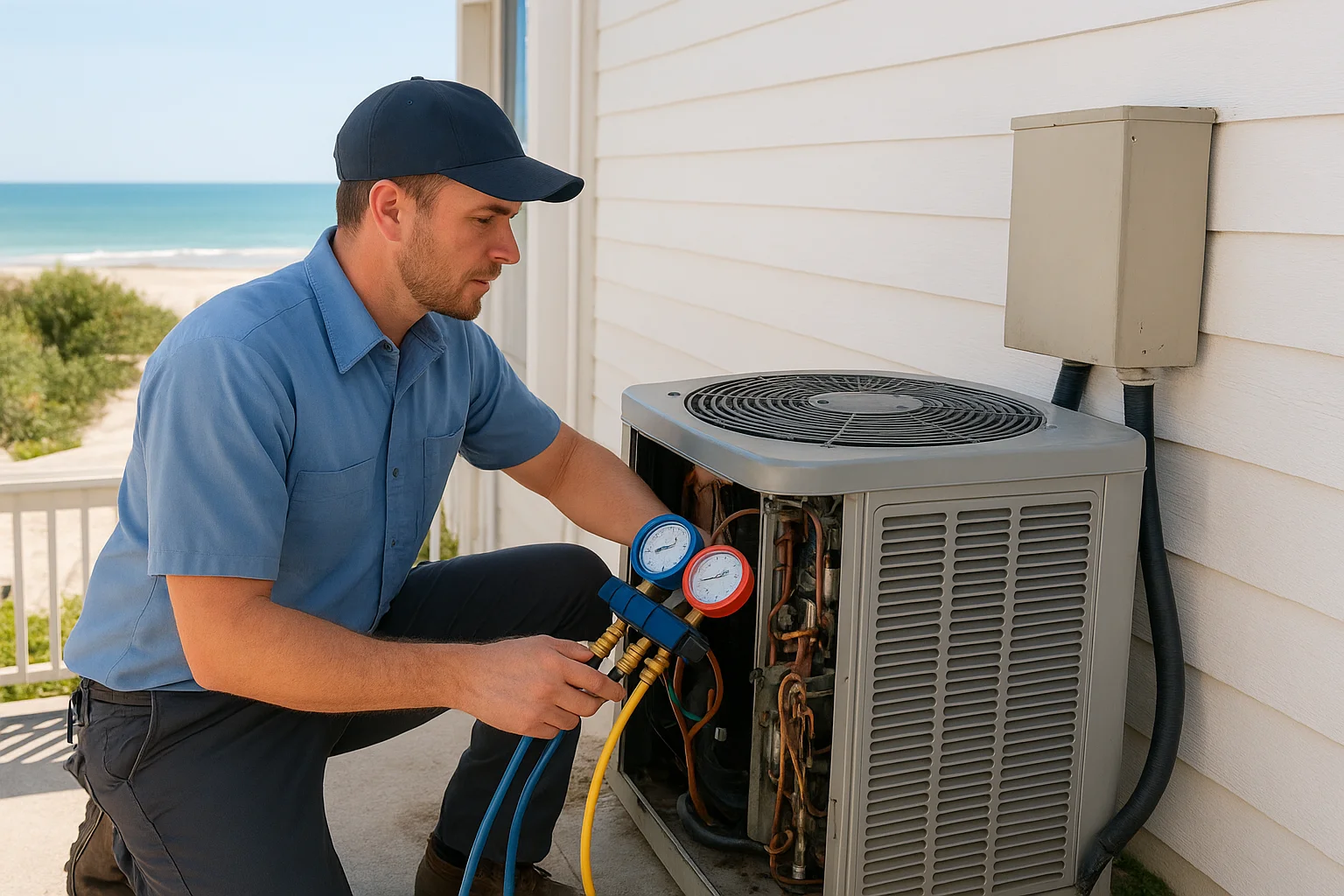
Geothermal HVAC systems use refrigerant systems to transfer heat between the home and the earth loop. When something is off, symptoms might include weak cooling, short cycling, frost or icing on indoor components, or unusual noises. However, homeowners should avoid trying to troubleshoot refrigerant issues without trained diagnostics.
Refrigerant work requires proper tools, safe handling, and an understanding of the specific geothermal setup in your home. It is not appropriate for homeowners to attempt refrigerant diagnosis or repairs themselves. A licensed HVAC contractor can evaluate system performance, verify airflow conditions first, and then determine whether any refrigerant system service is actually needed.
If you are searching for HVAC repair near me because your geothermal system is not keeping up, choose a company that can explain what they checked and why, rather than jumping straight to assumptions.
Thermostats and controls: small settings can make a big difference
Thermostats play a bigger role in comfort and energy use than many homeowners expect. In humid Florida weather, control settings can affect how long the system runs, how consistently it maintains temperature, and how effectively it dehumidifies.
Settings to review
Fan operation. Continuous fan can improve circulation, but it can also raise indoor humidity if the system is not dehumidifying effectively. The right approach depends on your system design.
Temperature setpoints. Large setbacks and sudden changes can stress the system during peak heat.
Schedule consistency. Frequent schedule changes may cause more cycling than necessary.
When you are planning geothermal energy system installation or troubleshooting comfort issues, ask whether your thermostat and control strategy are aligned with your home’s airflow and ductwork. You can also discuss how the system should behave on high-humidity days.
Ductwork and indoor air quality: geothermal comfort is only as good as distribution
Even a well-performing geothermal system can feel underwhelming if air distribution is uneven. In Callaway, where homes may include attics, older duct runs, or renovations that changed airflow paths, ductwork can become a major comfort bottleneck.
Indoor air quality benefits you should protect
Geothermal systems often pair with filtration and air handling strategies that influence indoor air quality. When airflow is restricted or filters are ignored, dust and allergens can build up. That can contribute to respiratory discomfort and make the home feel less clean, especially during allergy season.
Replace filters on schedule and consider whether your filter choice matches your system and indoor air needs
Look for duct leakage and poor sealing that can pull in humid air from unconditioned spaces
Keep returns clear so the system pulls air properly through the filtration area
If you want a deeper look at how air quality and system maintenance work together, explore Indoor Air Quality in Callaway and the related guidance in Why Duct Inspection Matters More in Callaway Homes Facing Seasonal HVAC Stress.
For homeowners searching for duct cleaning near me, it is worth approaching duct cleaning as a targeted decision. A professional can help determine whether cleaning is appropriate based on actual conditions rather than doing it automatically.
Preventive HVAC maintenance that keeps geothermal systems stable
Preventive HVAC maintenance is how you keep geothermal energy systems working better over time. In Callaway, maintenance also helps you stay ahead of seasonal HVAC stress when cooling demand is high and humidity is persistent.
A practical maintenance checklist
Air filter inspection and replacement as recommended for your system and household needs
Airflow verification at supply and return paths to confirm distribution and performance
Indoor coil and drain line checks to support dehumidification and condensate drainage
Thermostat and control review to ensure settings match comfort goals
System operation monitoring for unusual cycling, noise, or comfort drift
How often you schedule service depends on how your home is used. Rentals may have different patterns than owner-occupied homes. Larger homes or homes with long duct runs may also need more attention to airflow and distribution.
If you are comparing options for scheduling, it helps to ask a local HVAC company near me about a maintenance plan built around geothermal system operation and your indoor comfort priorities.
Callaway-specific issues that can affect geothermal performance
Geothermal systems are designed for long-term efficiency, but local conditions still matter. In Callaway, those conditions often show up through humidity, salt air exposure, and the way homes are built and renovated.
What homeowners typically notice
Humidity that lingers, especially in rooms with weak circulation or duct leakage
Comfort swings between rooms, which often traces back to ductwork and airflow
Higher dust or odor buildup when filtration or circulation is inconsistent
Noise or vibration changes as components age or accumulate residue
Also, because Callaway homes can vary widely in age and layout, geothermal system design and ductwork integration matter. That is why professional local HVAC service is important. A licensed HVAC contractor can review your home’s constraints and recommend an approach that supports comfort, indoor air quality, and stable energy use.
How to spot trouble early without guessing
Homeowners do not need to diagnose geothermal systems to recognize when something is wrong. The key is paying attention to patterns.
Watch for these early warning signs
System runs longer than usual to reach the same temperature
Hot spots or cold spots that did not exist before
Rising energy use alongside comfort issues
More frequent cycling or unusual sounds during cooling
Moisture smells or signs of condensate drainage problems
When these issues appear, the best step is to schedule HVAC service near me that can evaluate airflow, indoor comfort performance, and system operation. Trying to “fix” refrigerant or electrical concerns without proper diagnostics can create bigger problems.
If you are also thinking about long-term system planning, you may find it useful to read How Callaway Homes Put HVAC Systems to the Test Over Time to understand what tends to wear first in local conditions.
Emergency cooling concerns: what to do during peak heat
When the temperature climbs and humidity stays high, comfort becomes urgent. If your geothermal system stops cooling or starts behaving erratically, treat it seriously. You should not wait for a “better day” if your home is losing cooling performance.
Steps that can help before a technician arrives
Check thermostat settings and confirm the system is set to cool
Verify air filter condition and replace it if it is clearly clogged
Confirm registers and returns are not blocked
Then contact a qualified HVAC company near me for emergency AC repair near me if the home is not cooling properly. A professional can assess whether the issue is related to airflow, condensate drainage, control behavior, or refrigerant system performance. If your home has multiple units or zones, make sure the technician understands what is happening in each area.
Geothermal installation and replacement planning for Callaway homes
Homeowners considering new AC installation near me or HVAC replacement near me often focus on comfort and efficiency. With geothermal, the indoor HVAC design, ductwork, and controls are just as important as the geothermal concept itself.
What to ask during a geothermal energy system consultation
How will airflow be balanced for your home’s layout and humidity needs?
How will condensate drainage be handled to support dehumidification?
What thermostat and control approach best matches your daily schedule and comfort goals?
How does your home’s ductwork perform today, and what changes might be needed?
For many homeowners, the best starting point is to review the service options at A Superior Mechanical’s geothermal energy systems page, then schedule an evaluation. If you are also exploring other cooling solutions, you can compare approaches with Air Conditioning Systems and review Air Conditioning Inspection for diagnostic and maintenance-focused support.
Support for rentals and commercial properties in Bay County
Callaway is not only made up of single-family homes. Rentals, offices, and commercial properties also face heat and humidity demands. Geothermal systems can be a helpful option when buildings need stable indoor comfort and dependable operation.
If you manage a property and want to keep systems steady through the season, you may also find this useful: Keeping Commercial HVAC Systems steady in Callaway’s heat and humidity. It highlights how maintenance and monitoring reduce the chances of disruptions.
For commercial installations, you can also explore Commercial HVAC Installation to understand how distribution and system design impact performance.
Why homeowners in Callaway trust A Superior Mechanical
Geothermal energy systems are a smart HVAC direction for many Bay County homes, but they still require an HVAC contractor who understands the full comfort chain. That chain includes refrigerant systems, airflow, ductwork, indoor air quality, condensate drainage, and thermostat control behavior.
A Superior Mechanical focuses on geothermal energy system design and installation in Callaway, FL. If your home already has geothermal equipment or you are planning a change, professional HVAC service helps you keep performance stable through Florida heat and humidity, reduce preventable comfort problems, and address issues before they become emergency cooling concerns.
To learn more about geothermal options for your property, visit A Superior Mechanical’s Callaway service area page and the geothermal energy systems page.
Find Geothermal Energy Systems in Callaway, FL
If you need Geothermal Energy Systems in Callaway, FL, visit our local service page or contact A Superior Mechanical today.
Map of Callaway, FL
Frequently Asked Questions
Do geothermal systems still need AC repair and routine HVAC maintenance in Callaway, FL?
Yes. Geothermal systems still rely on indoor HVAC components, including airflow, refrigerant systems, thermostats, ductwork, and condensate drainage. Preventive HVAC maintenance helps catch issues early so you can avoid comfort problems during Florida heat and humidity.
What are the most common geothermal comfort problems homeowners notice in humid weather?
Homeowners often notice humidity staying high, uneven temperatures between rooms, weak airflow, or musty odors. These symptoms can be linked to ductwork performance, filtration, condensate drainage, or system operation, and they should be evaluated on-site rather than guessed.
How can I tell if my geothermal system has an airflow or ductwork issue?
If some rooms feel too warm, registers blow weak air, or the system runs longer to reach the same temperature, airflow and duct distribution may be involved. A technician can verify airflow and inspect ductwork so you know whether the issue is distribution or something else.
Is it safe for homeowners to try to troubleshoot refrigerant problems themselves?
No. Refrigerant diagnosis and repairs require proper tools, training, and safe handling. If you suspect refrigerant system issues, schedule an in-person evaluation with a licensed HVAC contractor.
When should I call for emergency cooling help?
Call for emergency AC repair if your home is not cooling during peak heat, the system stops unexpectedly, or you notice signs of moisture or drainage failure. Florida humidity can escalate comfort concerns quickly, so it is best not to wait.
Related Articles
- Understanding HVAC Financing in Callaway: Homeowners Should Not Overlook These Costly Warning Signs
- Keeping Commercial HVAC Systems steady in Callaway’s heat and humidity
- How Callaway Homes Put HVAC Systems to the Test Over Time
- Why Duct Inspection Matters More in Callaway Homes Facing Seasonal HVAC Stress
Photo Gallery