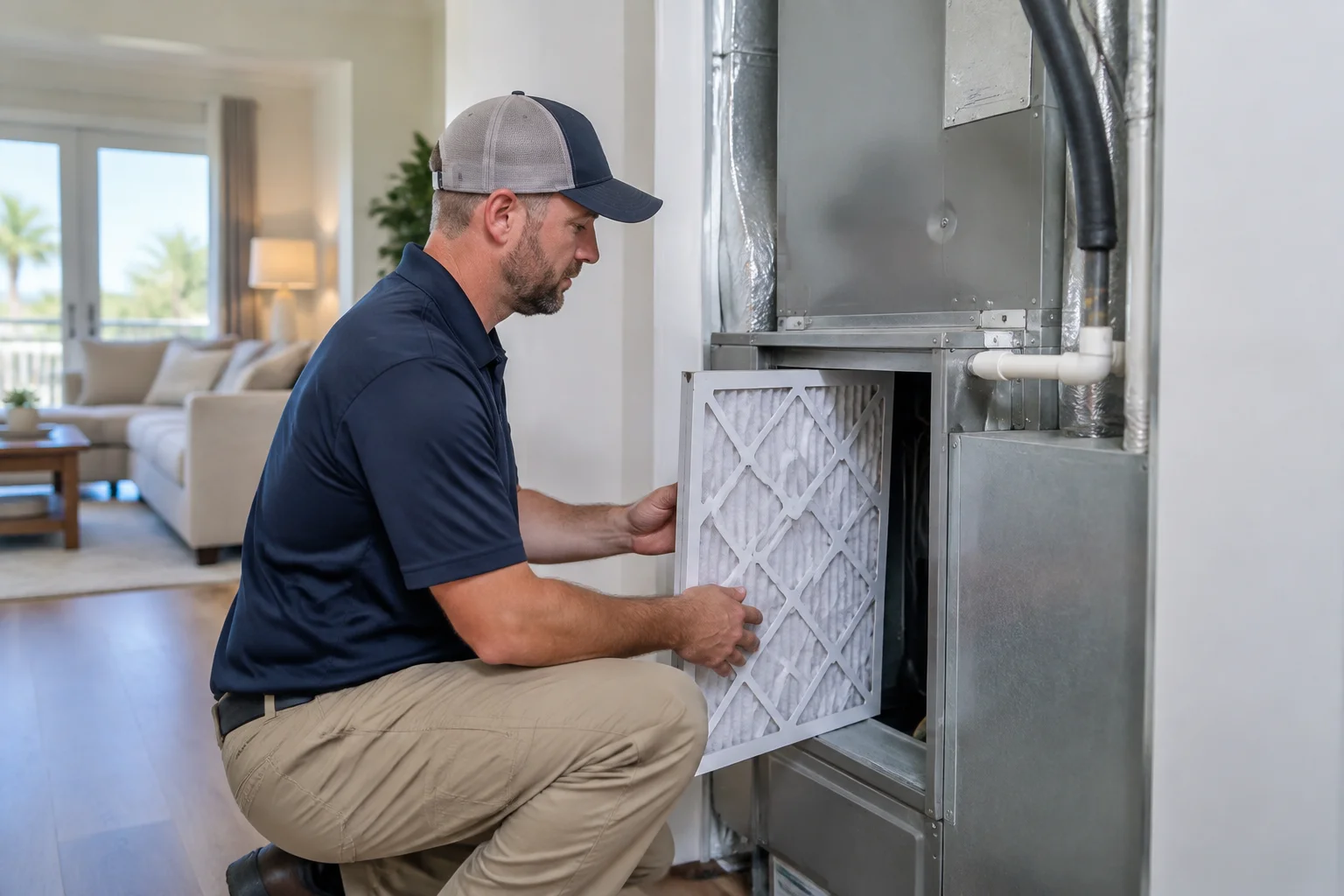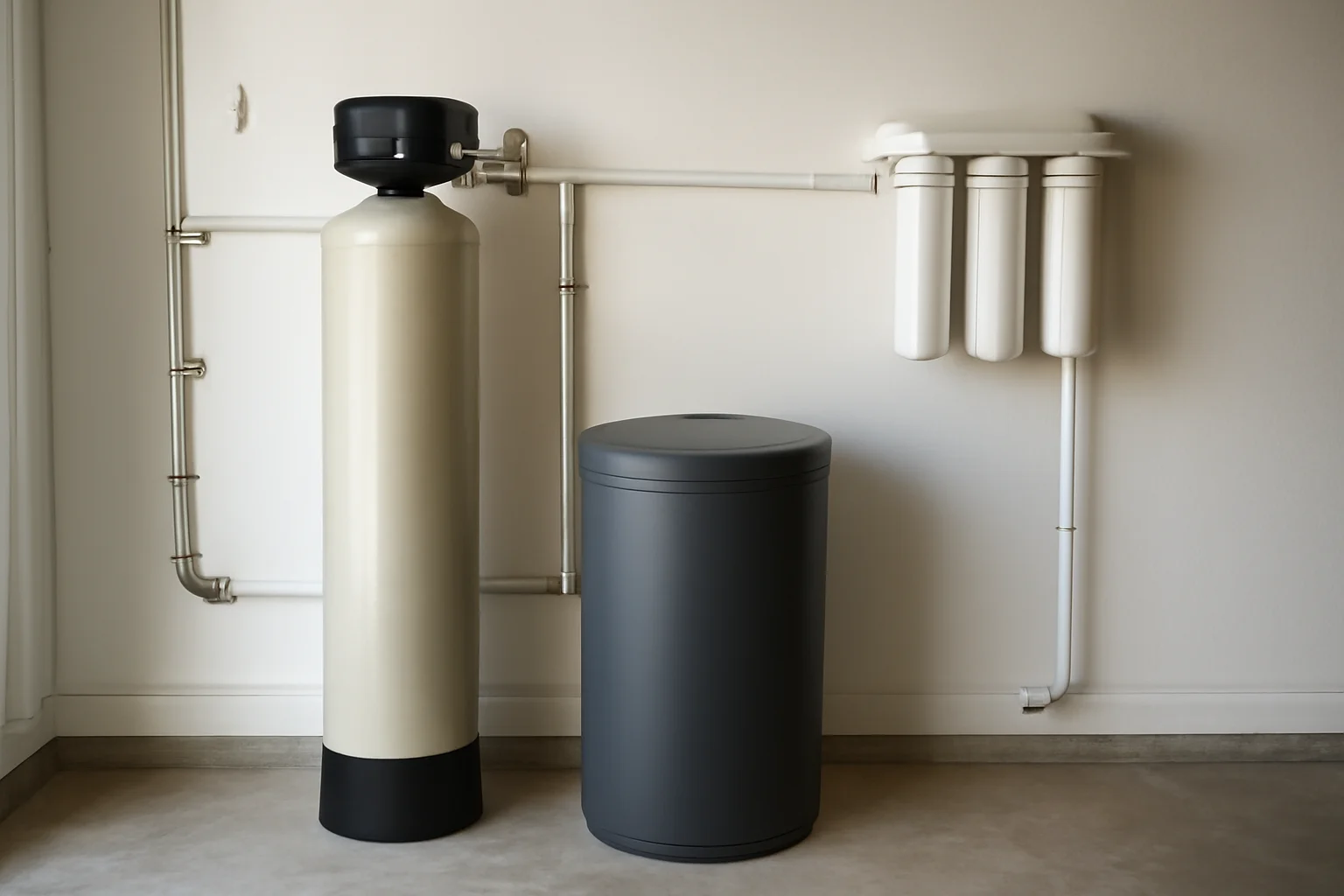
Living in Mary Esther means enjoying coastal weather, beach weekends, and a lot of time at home. It also means your plumbing and appliances can take a beating from hard water. When minerals build up, you feel it everywhere, from that stubborn showerhead scale to cloudy ice cubes and coffee that tastes off. The good news is that better water softening is not just about installation. Maintenance is what keeps your water treatment system performing and helps protect fixtures and appliances across Okaloosa County.
This guide walks you through what to watch for, why local water conditions matter, and how routine service can support better water for drinking and cooking, bathing, laundry, and everyday household tasks. If you are looking for water filtration near me options alongside water softening, you will also see how reverse osmosis and whole home filtration can fit into a clean water systems plan.
Why Mary Esther water softening needs a maintenance mindset
Hard water is common in many parts of the Florida Panhandle, and Mary Esther is no exception. Even when your water looks clear, dissolved minerals can leave deposits as water moves through your home. Over time, that scale buildup around faucets, showerheads, and plumbing reduces water flow, increases wear, and makes your fixtures look dull. It can also interfere with how soap works, leaving you with soap that does not lather or rinse well.
Maintenance matters because a water softener is a system with moving parts and chemical processes. Salt levels, resin performance, and settings all affect results. When something drifts out of spec, the symptoms show up in daily life.
Common hard water symptoms homeowners notice first
If you are trying to decide whether your current setup needs attention, start with the signs you already see around the house. Hard water issues tend to be consistent and easy to connect to water treatment.
Scale on glass, dishes, and fixtures
You might notice hard water spots on glassware, cloudy film on dishes, or a chalky look on faucets and shower doors. Scale buildup around faucets and showerheads often appears as white or gray rings, especially after the water dries.
Soap that does not lather and laundry that feels different
One of the most frustrating household clues is when soap does not lather or rinse well. Laundry can come out feeling stiff, and towels may not feel as soft as they used to. Some homeowners also report dry skin or dull hair after bathing, particularly when the shower water is not being conditioned properly.
Odor, taste, and sediment concerns
Hard water can show up with visible sediment, discoloration, and odor concerns. You may also notice a metallic, chlorinated, or unpleasant taste. Ice cubes can look cloudy, and the water used for drinking and cooking may not taste as clean as you want. If you have ever poured a glass and thought, “This water tastes different,” your water treatment plan may need adjustment.
Appliances wearing out faster
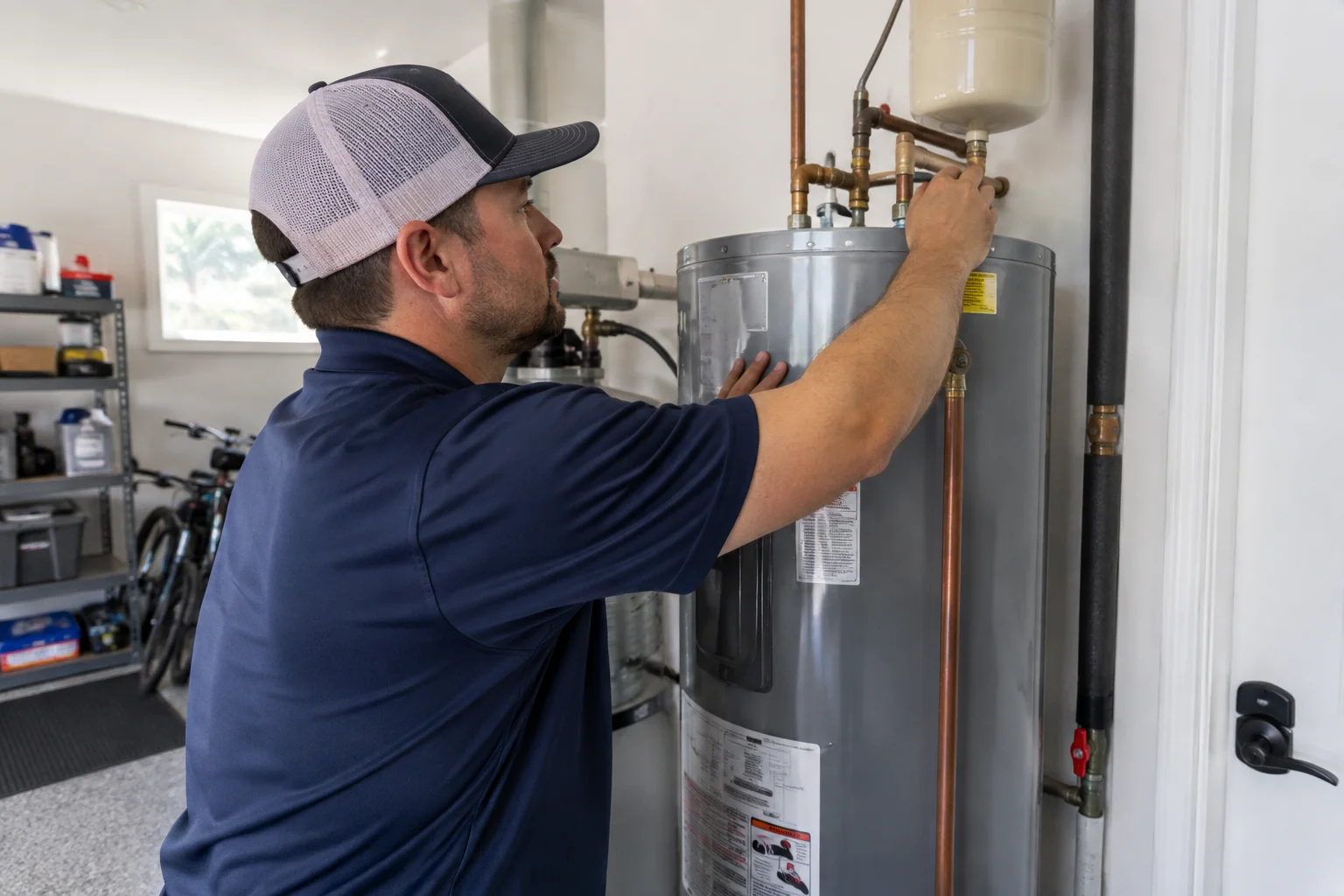
When minerals build up in pipes and equipment, appliances work harder. Water heaters may experience efficiency loss earlier than expected, and dishwashers and washing machines can accumulate mineral deposits that shorten service life. Homeowners often interpret this as “appliances are aging,” but in many cases it is water quality.
How water softeners work, and what maintenance protects
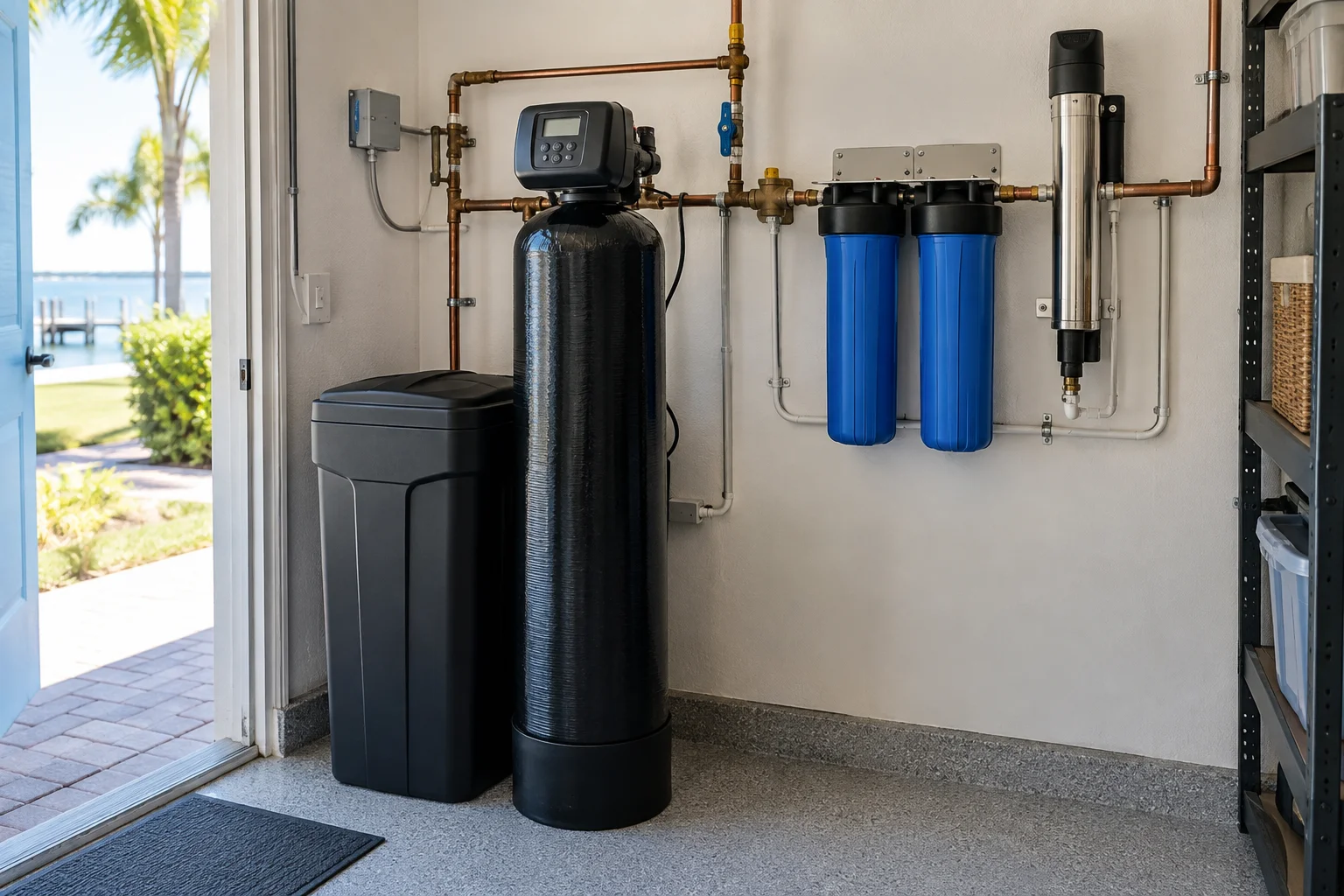
A typical water softener uses resin beads to capture calcium and magnesium, replacing them with sodium or potassium. Over time, the resin gets saturated and needs regeneration. Maintenance keeps the resin cycling correctly and helps ensure your home receives conditioned water.
When softening is working well, you should see fewer hard water spots on dishes and fixtures, easier soap rinsing, better bathing comfort, and improved performance from appliances. Maintenance also helps your system avoid sudden drops in water quality that can lead to scale buildup.
Seasonal checks for Mary Esther homeowners
Mary Esther has a coastal climate with warm temperatures and humid stretches. Those conditions can affect water use patterns, salt consumption, and system demand. A simple seasonal schedule can keep your softener stable.
Monthly: confirm salt and watch for bridging
Salt is the fuel for regeneration. Check your salt level regularly, especially if your household uses a lot of hot water or you have guests. If you use rock salt or pellets, look for salt bridging, where a hard crust forms and leaves the lower portion unused. Bridging can cause the system to regenerate incorrectly.
If you have a brine tank, confirm the water level and that the salt is actually dissolving. If your softener is not drawing brine properly, you may see symptoms like soap that does not lather, scale buildup around faucets, and dull-looking fixtures.
Every few months: inspect the system and settings
Check for obvious issues such as leaks, unusual noises, or error codes on the control valve. Pay attention to your system settings, including regeneration frequency and hardness settings. If you recently changed household size, added a new shower, or started running more laundry, the softener may need a recalibration.
Many homeowners also benefit from asking for a hardness test during service visits. That is especially helpful if your local water conditions fluctuate.
After storms or heavy weather: look for system interruptions
Power outages and disruptions can affect timers and regeneration cycles. After a storm, confirm the system is running normally and that there are no plumbing or drain line issues. If you notice sudden changes like cloudy ice cubes, poor tasting coffee water, or new scale buildup, schedule a water softener service check.
Routine maintenance that keeps fixtures and appliances cleaner
Beyond salt and basic checks, the performance of your water softening system depends on key upkeep steps.
Resin performance and brine draw verification
Over time, resin can lose effectiveness. Service technicians can evaluate whether the resin is regenerating correctly and whether brine draw is happening as it should. This is a major reason homeowners see improvements after a tune-up, especially when symptoms like hard water spots on glass and soap residue start creeping back.
Clean the system components that influence flow
Mineral scale and sediment can affect flow paths. Routine service includes checking parts that influence water movement and ensuring the system is operating efficiently. Keeping flow stable helps protect against scale buildup around faucets, showerheads, and plumbing.
Verify drain line and safety controls
A softener’s drain line needs to work correctly during regeneration. If it is restricted or not draining properly, the system can struggle to complete cycles. Safety controls also matter for consistent, reliable operation.
When to pair softening with filtration for better drinking water
Water softening primarily addresses hardness minerals. If your household is also dealing with chlorine taste in water, sediment, cloudiness in ice cubes, or unpleasant odors, you may need more than softening. This is where water filtration becomes part of a complete clean water systems setup.
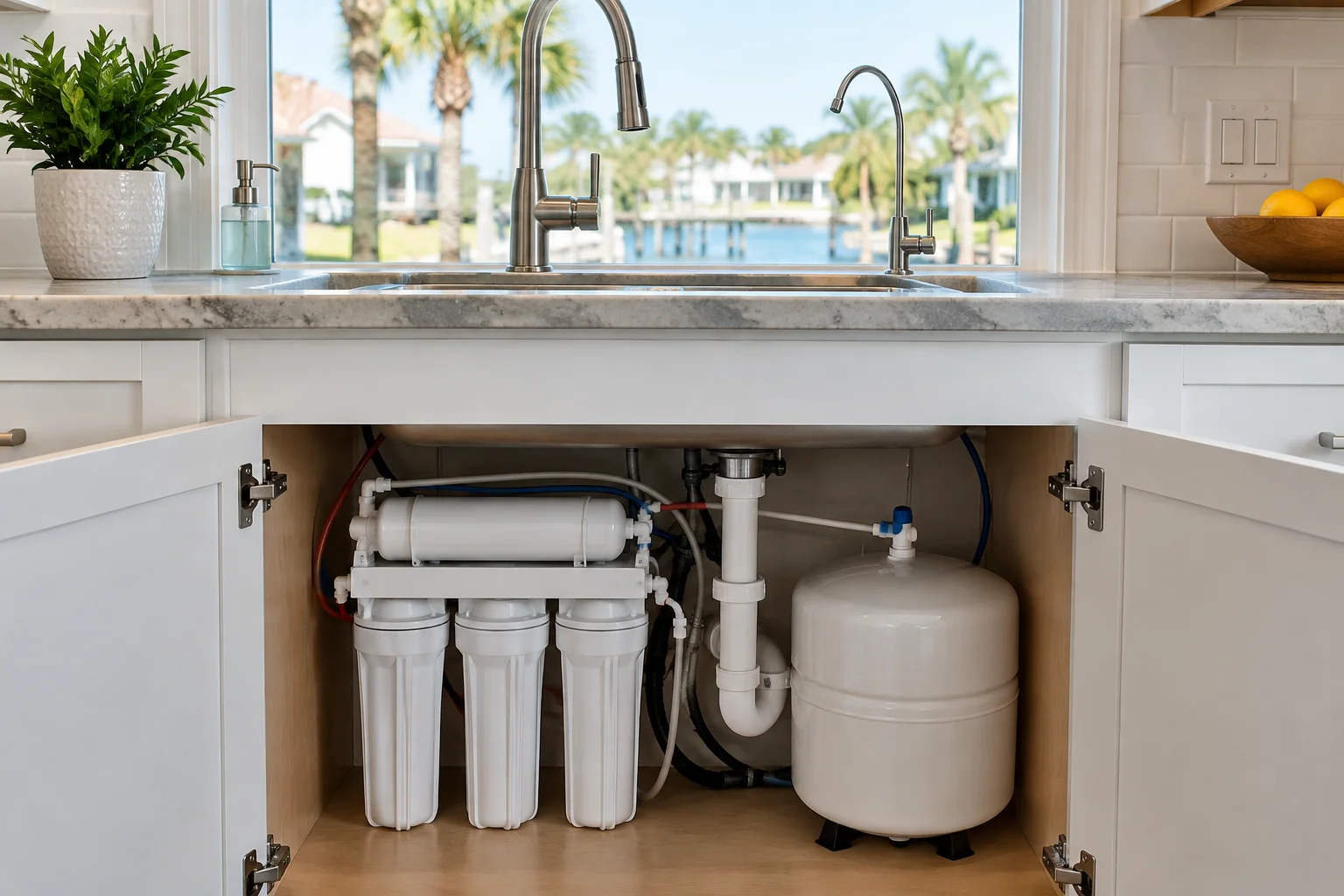
Reverse osmosis for drinking and cooking water
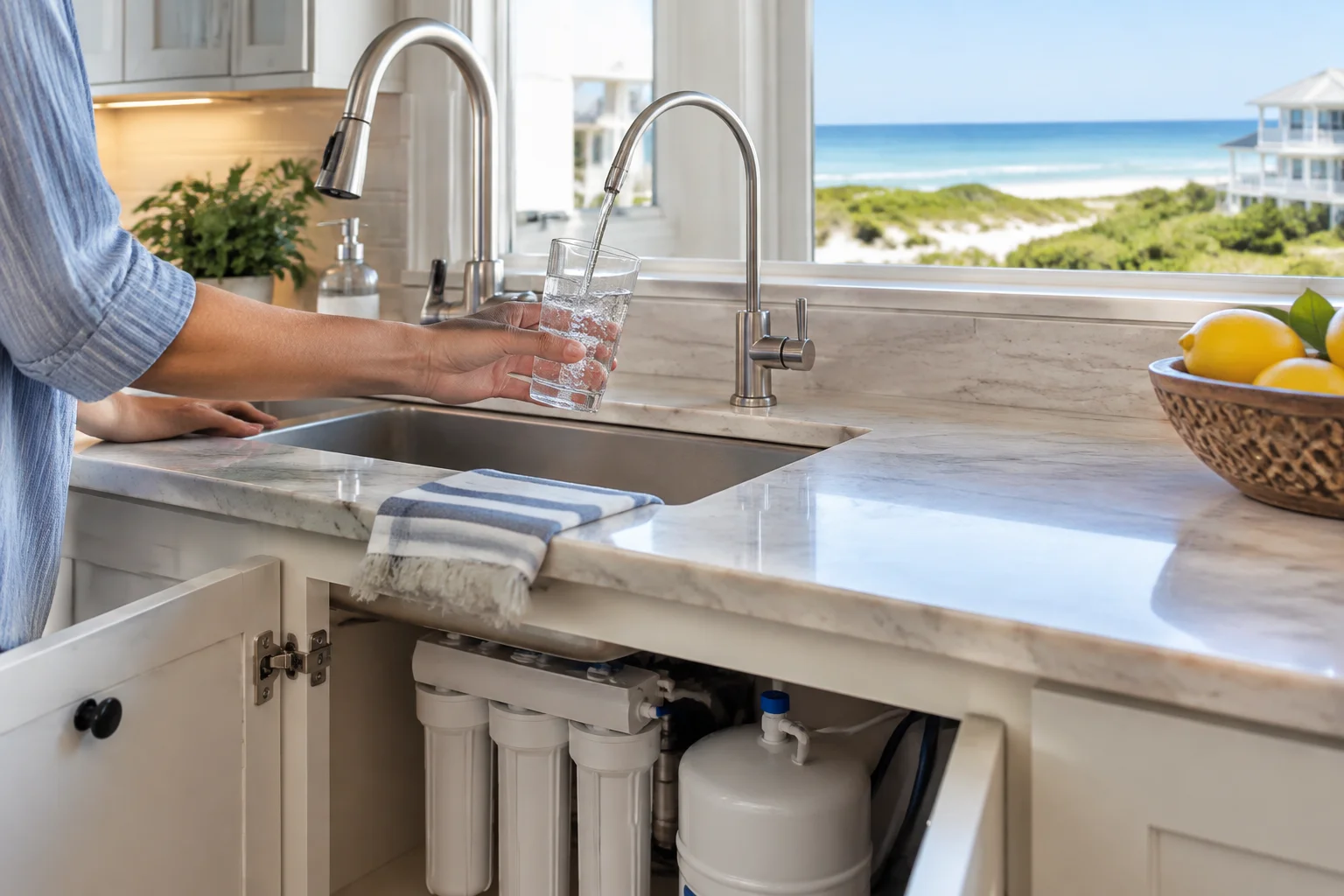
Many Mary Esther homeowners choose reverse osmosis installation for a dedicated approach to drinking water and cooking water. Reverse osmosis can help reduce contaminants that affect taste and clarity, which is often where you notice the difference first. If your kitchen scenes include family coffee mornings, making pasta, or filling a water pitcher for dinner, RO can help deliver better water for drinking and cooking.
When you combine softening with reverse osmosis, you can also reduce the mineral stress that would otherwise impact some filtration elements. That can mean a smoother experience and better long-term results.
Whole home water filtration for everyday comfort
Whole home water filtration near me is a common search for good reason. Softened water can still carry other issues such as fine sediment or taste concerns. Whole home systems help treat water before it reaches fixtures, laundry, and appliances, supporting a consistent water quality profile throughout the home.
If you want a “set it and forget it” approach for your entire household, a whole home plan can complement your water softener and help protect fixtures and appliances from mixed water quality challenges.
AO Smith water filtration and water softener options
Some homeowners ask about AO Smith water filtration and AO Smith water softener solutions because they want dependable performance with recognizable equipment. AO Smith systems are widely used and can be configured to match different water concerns. A professional assessment helps determine whether you need softening only, filtration only, or a combined approach.
For homeowners searching for water filtration near me or drinking water filter near me, the key is not just the brand. It is matching the system to your household symptoms, water test results, and how you use water day to day.
Kitchen, bath, and laundry: what better water looks like at home
Water treatment is not abstract. It shows up in small moments that add up.
Better drinking water and cooking water
When water tastes cleaner and ice looks clearer, it changes the whole kitchen routine. You may notice better tasting coffee and fewer complaints about water flavor during family meals. Cooking water can also behave differently, especially for rice, soups, and pasta, where mineral content can affect results.
More comfortable bathing and less residue
With proper softening, soap and shampoo rinse more completely. That can help reduce dry skin or dull hair after bathing. Fixtures may also stay cleaner longer, with fewer rings and less buildup around showerheads.
Laundry that comes out softer and cleaner
When soap does not have to fight mineral buildup, laundry often feels better and detergents perform as intended. You may also see less residue on machine parts and improved cleaning consistency across multiple loads.
Cost protection: why maintenance is cheaper than repair
Scale and sediment do not just affect appearance. They can reduce efficiency, clog internal components, and force equipment to work harder. Over time, that can mean higher energy costs, more frequent repairs, and earlier replacement for appliances.
Hard water treatment becomes part of protecting fixtures and appliances when you treat it like home maintenance, not a one-time purchase. That is especially important for Mary Esther homeowners with older plumbing, high water use, or households that rely heavily on hot water.
If you manage a property, you can also connect water quality to broader plumbing health. Consider reading Hard Water, Busy Pipes, and Mary Esther Homes: A Practical Look at Commercial Plumbing Repairs That Prevent Bigger Problems and Protecting Mary Esther Homes From Costly Property Management Plumbing Problems for a bigger picture on how mineral buildup can drive plumbing issues.
How a local water treatment service fits Mary Esther homes
Local water conditions and household usage patterns matter. A system that works well for one neighborhood might underperform in another if hardness and sediment levels differ. That is why working with a local provider is valuable. A Superior Mechanical understands the realities of Mary Esther and Okaloosa County homes, including how coastal conditions and local water characteristics can affect performance.
If you are searching for water softening services or water filtration near me, start by evaluating what you are experiencing today. Are you seeing scale buildup around faucets and showerheads? Do you notice metallic or chlorinated taste in water? Are cloudy ice cubes showing up in your freezer? A professional can help you match the right solution to the right issue.
For homeowners looking specifically for water softening service in the area, you can review the service page here: /service-areas/okaloosa-county/mary-esther/water-softening-meocfl. If you want to explore filtration options that work alongside softening, visit /water-filtration-ro-water-softeners. For broader area coverage and local context, see /service-areas/okaloosa-county/mary-esther and /service-areas/okaloosa-county.
Questions to ask before scheduling water softener service
When you call a water softening professional, the goal is to confirm that your system is set correctly and operating efficiently. These questions can make your visit more productive.
Can you test my water hardness and confirm the softener settings match my current readings?
Do you check brine draw and verify the regeneration cycle completes properly?
Is my resin likely to need cleaning, replacement, or performance adjustments?
If I have chlorine taste in water or cloudy ice cubes, should we add reverse osmosis installation near me for drinking and cooking?
Would whole home water filtration near me make sense based on sediment in household water or odor concerns?
Related maintenance habits that support your water treatment system
Water softening maintenance is important, but a few household habits also help you get better results.
Use manufacturer-recommended salt and avoid mixing different salt types unless advised.
Keep the brine tank area clear and dry, especially in humid months.
Clean faucet aerators and showerheads periodically. If you see scale buildup around faucets, it is a sign you may need service or filtration support.
Pay attention to how soap performs. If soap does not lather, do not just switch products. Check your water treatment.
Track changes. When appliances start wearing out faster, or the water taste changes, note when it began. That helps a technician pinpoint the cause.
For homeowners who want to connect water quality with broader home plumbing health, these reads can help: How Better Plumbing Maintenance Protects Mary Esther Property Management Systems and How Water Softening Protects Rosemary Beach Plumbing from Costly Water Damage.
If your goal is better water for drinking and cooking, comfortable bathing, and cleaner fixtures, a dependable maintenance plan is the bridge between “installed equipment” and “real results.”
Find Water Softening in Mary Esther, FL
If you need Water Softening in Mary Esther, FL, visit our local service page or contact A Superior Mechanical today.
For a broader look at whole-home water filtration, reverse osmosis, and water softener options, visit our water filtration, RO, and water softener page.
Map of Mary Esther, FL
Frequently Asked Questions
How often should I have my water softener serviced in Mary Esther, FL?
Most homeowners benefit from professional water softener service at least once per year, and sooner if you notice new hard water spots on dishes, soap not lathering, cloudy ice cubes, or changes in taste and odor. If your household uses more water or your system regenerates frequently, service may be needed more often.
What salt type should I use for an AO Smith water softener?
Use the salt type recommended by your specific AO Smith model and local water conditions. Many systems work well with pellet or solar salt, but the best choice depends on your equipment and how your system regenerates. A technician can confirm the correct salt and set the system for efficient performance.
Can water softening fix chlorine taste in water or cloudy ice cubes?
Water softening mainly targets hardness minerals. If you are dealing with chlorine taste in water, unpleasant odors, or cloudy ice cubes, you may need additional filtration such as whole home water filtration or reverse osmosis installation for drinking and cooking water.
Why does my soap still not rinse well even with a softener?
Soap that does not lather or rinse well can mean the softener is not regenerating correctly, the settings are off, the resin has lost performance, or hardness has increased. It can also happen if only part of the home is being softened. A hardness test and system inspection help pinpoint the cause.
Is whole home water filtration worth it in addition to a water softener?
It can be, especially if you have sediment in household water, visible discoloration, odor concerns, or taste issues. Whole home water filtration near me is often chosen to improve water quality throughout the home, while your water softener protects against scale buildup around faucets, showerheads, and plumbing.
Related Articles
- How Better Plumbing Maintenance Protects Mary Esther Property Management Systems
- Hard Water, Busy Pipes, and Mary Esther Homes: A Practical Look at Commercial Plumbing Repairs That Prevent Bigger Problems
- Protecting Mary Esther Homes From Costly Property Management Plumbing Problems
- How Water Softening Protects Rosemary Beach Plumbing from Costly Water Damage
Photo Gallery