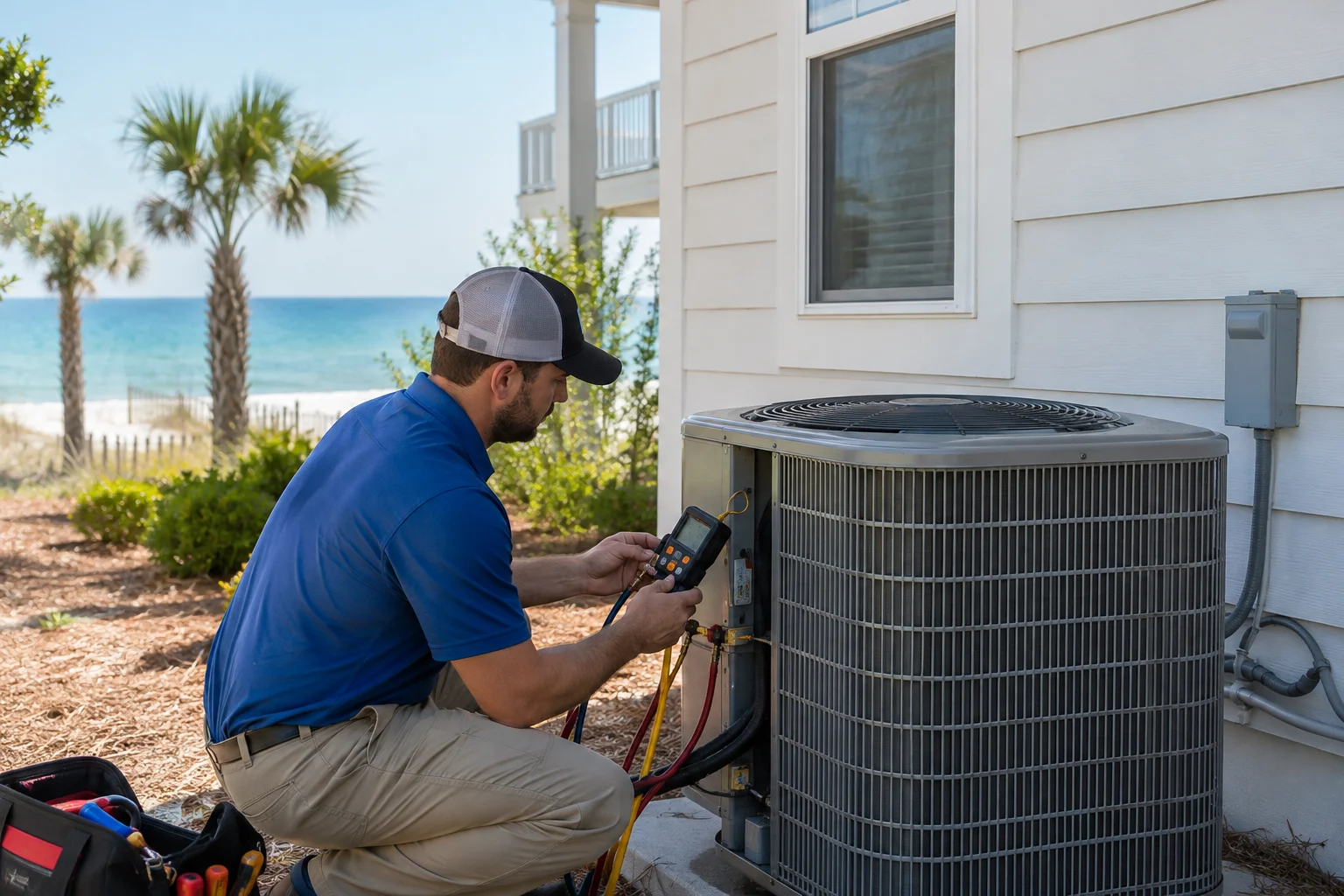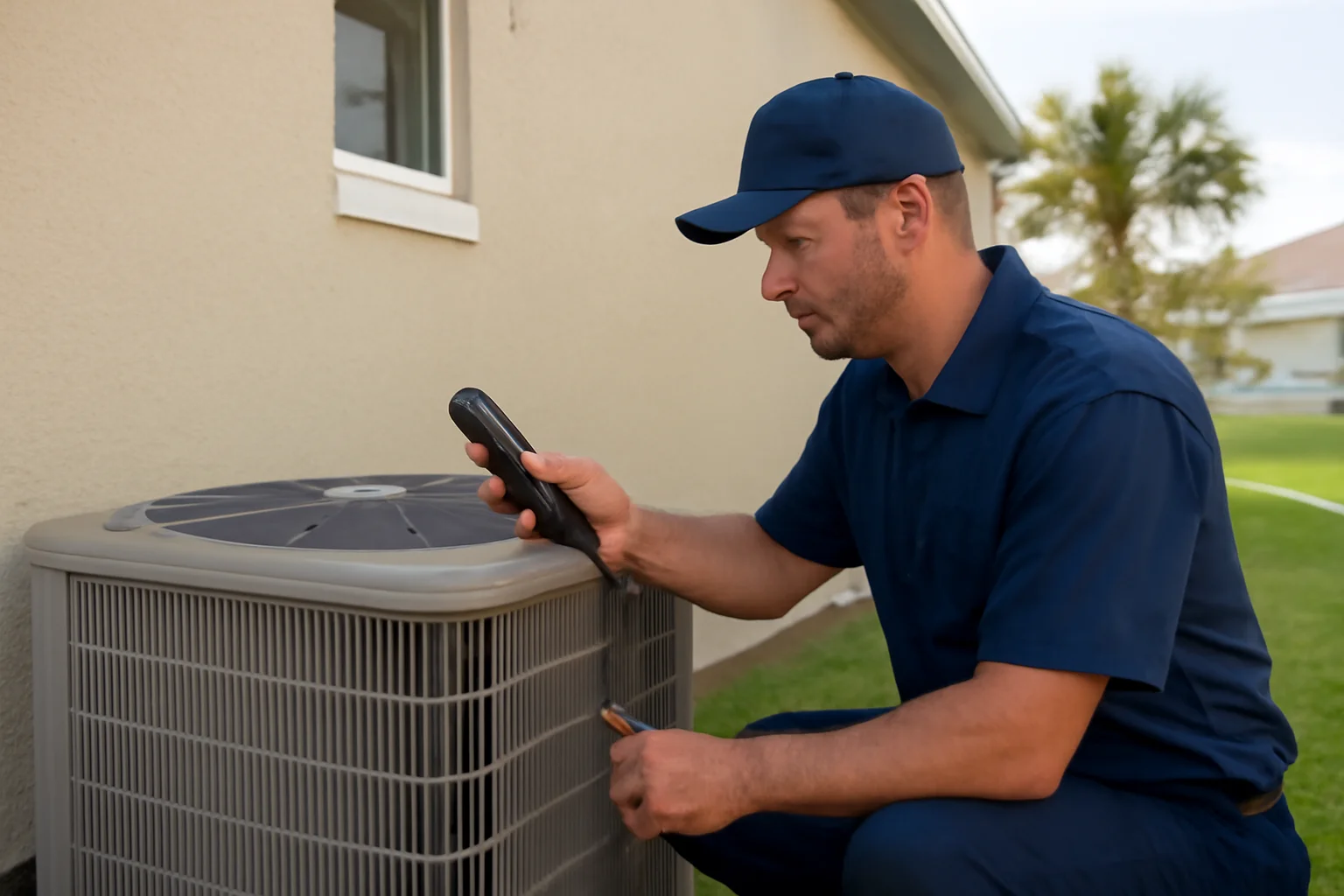
30A homes feel the best when the air is cool, dry enough to prevent musty odors, and moving through the ductwork the way your system was designed to. When indoor air quality (IAQ) is off, cooling performance often suffers too. That is why homeowners in Walton County are increasingly scheduling indoor air quality testing in 30A, FL.
But IAQ testing only helps when it is set up correctly. Small oversights can lead to misleading readings, missed causes, and unnecessary HVAC troubleshooting. The good news is you can prevent most common IAQ testing problems before your technician arrives, especially in a coastal climate where humidity, salt air, and airflow issues are routine.
Why indoor air quality problems show up as cooling problems on 30A
Florida heat is relentless, and the air is often humid. In the 30A area, that combination can make an HVAC system work harder to maintain comfort. When indoor air quality is affected, it is commonly tied to one or more of the following:
- Humidity imbalance: High indoor humidity can make the air feel warmer than the thermostat setting. It can also promote mold growth and musty odors.
- Airflow restrictions: Dirty or poorly balanced ductwork can reduce supply airflow, making the system short-cycle or fail to remove moisture effectively.
- Ventilation and pressure issues: Bathrooms, kitchens, and laundry areas can create negative or positive pressure that pulls in humid outdoor air or pushes indoor air out.
- Contaminants and irritants: Allergens, VOCs, and other airborne particles can worsen comfort and trigger symptoms even when the temperature looks okay.
IAQ testing helps connect these dots. However, the testing process has to match real-world conditions in your home. If conditions are artificially altered right before testing, the results may not reflect what your system experiences day to day.
Set your home up for accurate testing, not “perfect” conditions
Homeowners sometimes try to “help” by changing the environment right before a test. That can backfire. For example, running fans continuously, closing every door for hours, or using strong cleaners right before sampling may skew readings for humidity, airborne particles, and VOCs.
Give the HVAC system time to reach normal operation
If your system has been off for a while, humidity and temperature stratification can be different than during typical living hours. Ask your technician what schedule they prefer, but as a general rule, avoid last-minute changes that dramatically alter indoor conditions.
Also, make sure the thermostat is set to the normal temperature you use. If you keep it far lower than usual to “force cooling,” you could temporarily change airflow patterns and moisture removal behavior.
Avoid using strong chemicals right before sampling
VOCs are a key part of indoor air quality concerns. Sprays, aerosol cleaners, paint products, air fresheners, and even some hobby materials can temporarily increase VOC levels. If you are planning any deep cleaning, try to schedule it well before testing, not during the final hours.
Keep doors and windows consistent with how you normally live
In coastal areas, it is common to open windows for fresh air. If you do that regularly, your IAQ results should reflect that lifestyle. If you normally keep windows closed but open them right before testing, you may see humidity and contaminant patterns that do not match your everyday conditions.
Common IAQ testing mistakes that lead to confusing HVAC troubleshooting
When homeowners say, “The air test looked fine, but the AC still feels weak,” or “The test showed issues, but nobody could explain why,” the cause is often not the testing itself. It is usually the context and the follow-through.
Mistaking comfort complaints for a single problem
On 30A, it is common to experience multiple issues at once: humidity that lingers, rooms that stay warmer, and odors that appear after the system runs. IAQ testing should be paired with HVAC context like airflow, condensate drainage, and ductwork performance.
If the test focuses only on air quality readings without considering how refrigerant systems are removing moisture and how air is moving through the home, the root cause can be missed.
Ignoring ductwork airflow and pressure during the process
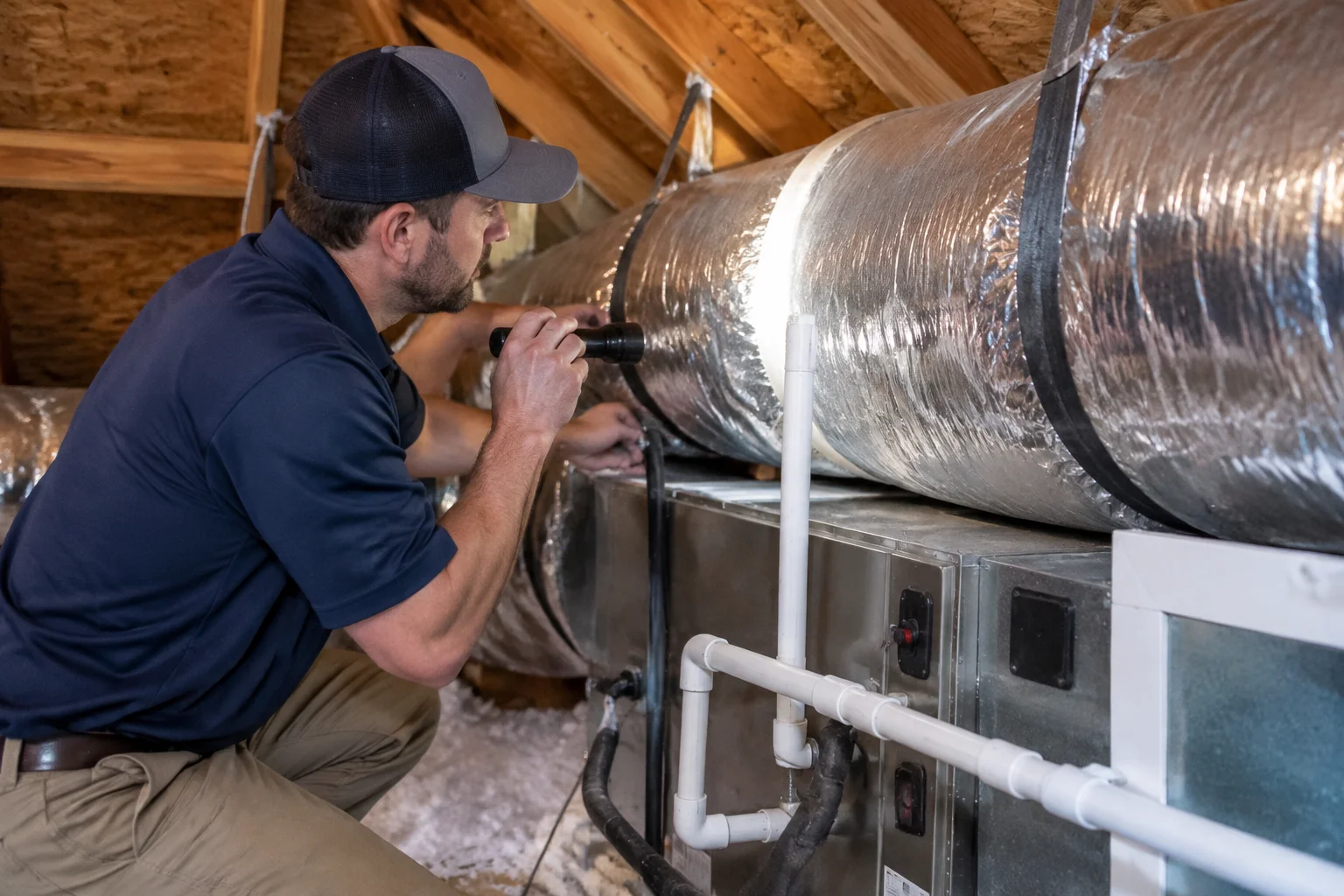
Even the best IAQ testing cannot fully explain comfort problems if ductwork is under-delivering airflow. Leaks, poor sealing, crushed sections, and blocked registers can all reduce cooling performance and moisture control.
If you are searching for duct inspection near me because your home never feels evenly cooled, that is often the right direction. IAQ testing and ductwork evaluation work together, especially in older coastal homes and remodels where duct routes may have changed.
Overlooking condensate drainage and moisture management
During cooling, condensate drainage is critical. When drainage is slow or partially blocked, moisture can back up and contribute to humidity and odor issues. That can also affect how the system cycles and how comfortable the indoor air feels.
IAQ testing can point you toward humidity and contamination concerns, but professionals still need to evaluate condensate drainage as part of the comfort picture.
Relying on thermostat settings alone
Thermostats are important, but they do not measure humidity, airflow balance, or contaminant levels. A home can be at the right temperature and still feel damp or stale. If you are troubleshooting AC performance, consider whether your thermostat installation and system settings match the way your home actually behaves.
If you suspect thermostat-related issues, ask about HVAC troubleshooting and related services during your visit. For homeowners looking for support such as thermostat installation near me, a local technician can confirm compatibility and proper configuration during the same visit when appropriate.
Humidity, salt air, and airflow: 30A realities that change how IAQ testing should be interpreted
Coastal conditions influence both indoor humidity and how airborne contaminants enter the home. Salt air does not always show up as “salt” inside, but it can contribute to corrosion concerns and can increase the importance of maintaining clean, sealed airflow pathways.
Humidity is not just “wet air.” It is a system performance factor.
In summer, your air conditioner removes moisture as part of the cooling cycle. If humidity remains high, it can mean the system is not running long enough, airflow is restricted, or moisture removal is not happening as intended.
That is why IAQ testing in 30A should be paired with a look at HVAC operation, airflow, and ductwork. If you are comparing test results to comfort complaints, remember that humidity affects how cooling performance feels even when the temperature reading looks correct.
Airflow problems can mimic IAQ problems
Reduced airflow can lead to stale air pockets, higher humidity in certain rooms, and uneven temperature distribution. Those conditions can also concentrate allergens and airborne irritants. A test may show elevated particulate levels, but the underlying cause can still be airflow.
If you are considering duct inspection near me, it is a smart step when IAQ symptoms and cooling performance issues overlap.
Ventilation matters, especially in energy-conscious homes
Many 30A homes are built with comfort and energy use in mind. That can be a good thing, but it also means ventilation needs to be handled intentionally. If ventilation is insufficient, indoor air can become stale. If ventilation is excessive or unbalanced, outdoor humidity can infiltrate.
Professional IAQ testing can help clarify whether the issue is contaminant generation, ventilation imbalance, or moisture control related to the refrigerant system and condensate drainage.
How professional IAQ testing supports AC tune ups and air conditioning service
IAQ testing is not only about identifying contaminants. It is also about improving how the HVAC system performs under real conditions. When done correctly, it can help technicians prioritize HVAC maintenance and repairs that actually address comfort.
Pair IAQ insights with preventive HVAC maintenance
Humidity control and airflow are linked to preventive maintenance, such as filter management, coil care, and system checks that support consistent cooling performance. If you notice recurring issues during peak Florida heat, scheduling Air Conditioning Maintenance can reduce the chance of a mid-summer breakdown.
If you are also researching HVAC maintenance near me because your system struggles during the hottest weeks, you are not alone. For homeowners who want a more detailed look at how maintenance affects repair frequency, read Why Preventive HVAC Service Pays Off for Air Conditioning Repair in 30A, FL.
Use testing to guide ductwork decisions
When IAQ issues correlate with room-by-room comfort problems, it often points back to ductwork performance. If you are thinking about duct inspection near me or potential duct repairs, it is better to base the decision on evidence rather than guessing.
Some homeowners also ask about keeping 30A commercial spaces comfortable before HVAC trouble spreads because the same airflow and IAQ principles apply to mixed-use properties and larger systems.
Consider system replacement planning when performance issues persist
Sometimes, persistent humidity and poor cooling performance are signs that the system is struggling to meet the home’s needs. That does not mean you should assume replacement is necessary after a single visit. A professional evaluation should consider HVAC capacity, airflow, refrigerant system behavior, condensate drainage, and ductwork.
If you are weighing HVAC replacement near me as part of your long-term plan, tie the decision to documented findings from both IAQ testing and HVAC diagnostics.
What to ask your technician before and during indoor air quality testing
If you want IAQ testing to prevent future problems, ask questions that connect the test results to HVAC performance. These prompts can help ensure the evaluation is thorough and locally appropriate for 30A conditions.
Questions that help interpret results
- How will you evaluate humidity and moisture control in a coastal climate like 30A?
- Will ductwork airflow and pressure be considered alongside indoor air quality readings?
- How do you check condensate drainage and confirm the system is removing moisture effectively?
- What thermostat settings and operating schedule will you use to match typical homeowner usage?
Questions that help you prevent repeat issues
- What preventive HVAC maintenance steps should happen after the testing is complete?
- Are there immediate comfort changes you recommend, such as filter handling or airflow adjustments that do not require DIY guesswork?
- If duct repair is needed, what is the priority and how does it relate to cooling performance and indoor air quality?
When to call A Superior Mechanical for IAQ testing and HVAC support
Some homeowners wait until symptoms become hard to ignore. In 30A, humidity and heat can turn minor issues into emergency cooling concerns faster than people expect. If you notice any of the following, it is a good time to schedule indoor air quality services near me and pair it with an HVAC evaluation:
- The home feels damp even after the air conditioner runs.
- Rooms are consistently uneven, with certain areas staying warmer or stuffier.
- You detect musty odors or see signs of moisture where condensate should not be pooling.
- Allergy or respiratory symptoms worsen during heavy summer cooling.
- Your system cycles frequently or struggles to maintain comfort during peak heat.
Also, if you are dealing with seasonal stress and want to reduce the chance of an HVAC emergency, review How 30A Homes Can Stay Ahead of HVAC Emergencies During Seasonal Stress.
What homeowners should avoid doing during IAQ testing prep
To prevent problems with testing accuracy and with HVAC troubleshooting, avoid these common DIY actions:
- Do not change refrigerant system components or attempt refrigerant diagnosis yourself. IAQ testing may point to symptoms of moisture or cooling performance, but refrigerant work must be handled by qualified professionals.
- Do not assume electrical issues or bypass safety controls. If the system is not cooling properly, a technician should evaluate the cause in person.
- Do not run strong cleaners or deodorizing sprays right before sampling. This can distort VOC and contaminant measurements.
- Do not ignore ductwork airflow concerns. If the home feels uneven, duct inspection and duct repair may be part of the solution.
Practical prevention plan for better cooling and cleaner air
You can reduce the odds of IAQ testing confusion and cooling underperformance by building a simple routine around seasonal HVAC care.
Before peak summer stress hits
- Replace or verify proper filter condition and size based on your HVAC system requirements.
- Schedule Air Conditioning Services or an AC tune up near me check so the system is ready for humidity-heavy weeks.
- Ask whether duct inspection is appropriate if you have room-to-room comfort complaints. If you suspect duct issues, start with duct inspection near me.
During the cooling season
- Keep thermostat operation aligned with your normal schedule. Do not “test” the system by changing settings drastically right before IAQ sampling.
- Watch for signs of drainage problems, such as unusual odors, damp spots, or recurring humidity complaints.
- Pay attention to airflow. If vents are blocked or registers are consistently closed, cooling performance and indoor air quality can both suffer.
When you are planning renovations or upgrades
Renovations can change airflow paths and ventilation balance. If you are adding a room, sealing up areas, or upgrading comfort systems, it can be wise to schedule indoor air quality testing before the new conditions become “normal.”
For homes using ductless comfort systems, homeowners sometimes search for ductless mini split installation near me as a way to improve zoning and comfort. When zoning changes, airflow and humidity patterns can shift, so IAQ testing can help confirm the home still maintains healthy conditions.
How IAQ testing supports energy use and long-term comfort
In 30A’s humid summers, cooling performance affects energy use. When the system cannot remove moisture effectively, it may run longer or cycle more frequently, which can increase operating costs while still leaving the home feeling uncomfortable.
IAQ testing helps you avoid guesswork. Instead of treating symptoms, you can focus on the HVAC factors that drive comfort, such as airflow, duct performance, condensate drainage, thermostat operation, and how the refrigerant system is supporting cooling and dehumidification.
If you want to ensure your indoor air quality testing is set up for accurate results and tied to HVAC performance, contact A Superior Mechanical’s indoor air quality testing in 30A, FL. You can also explore our broader Walton County HVAC services for related support.
For homeowners who want to tackle contaminants and airflow together, it can also be helpful to ask about whole home air purifier options or air scrubber installation during your HVAC evaluation. Indoor air quality services near me should connect filtration and ventilation choices to the actual airflow your system provides.
When cooling performance and indoor air quality feel linked, professional local HVAC service matters. A Superior Mechanical can help you interpret IAQ findings in the context of real 30A conditions so your home stays healthier and cooler through the season.
Find Indoor Air Quality Testing in 30A, FL
If you need Indoor Air Quality Testing in 30A, FL, visit our local service page or contact A Superior Mechanical today.
Map of 30A, FL
Frequently Asked Questions
Can indoor air quality testing make my AC perform better?
It can. IAQ testing identifies issues like humidity imbalance, airborne contaminants, VOC concerns, and ventilation problems. When those findings are paired with HVAC evaluation, it helps target the airflow, condensate drainage, and operating factors that impact cooling performance.
What should I do in my home before indoor air quality testing in 30A?
Keep conditions as close to normal as possible. Avoid using strong cleaners or aerosol products right before testing, keep doors and windows consistent with your usual routine, and use your normal thermostat schedule rather than forcing unusual cooling.
Why does my home feel humid even when the thermostat is set correctly?
Humidity is influenced by more than temperature. Restricted airflow through ductwork, condensate drainage issues, ventilation imbalance, and how the system’s refrigerant cycle removes moisture can all play a role. A professional HVAC evaluation alongside indoor air quality testing is the safest way to understand the cause.
Should I schedule duct inspection or indoor air quality testing first?
Often, the best approach is to pair them. If your comfort issues are room-to-room or linked to airflow, starting with duct inspection can clarify airflow limits. If you are also dealing with musty odors, allergens, or VOC concerns, indoor air quality testing helps connect those symptoms to moisture and ventilation factors.
If the test shows an air quality issue, does that always mean I need a new HVAC system?
No. Indoor air quality results should be evaluated alongside system operation, airflow, condensate drainage, and refrigerant system behavior during an in-person visit. Replacement is only appropriate after a qualified technician confirms the actual performance limitations and root cause.
Related Articles
Photo Gallery