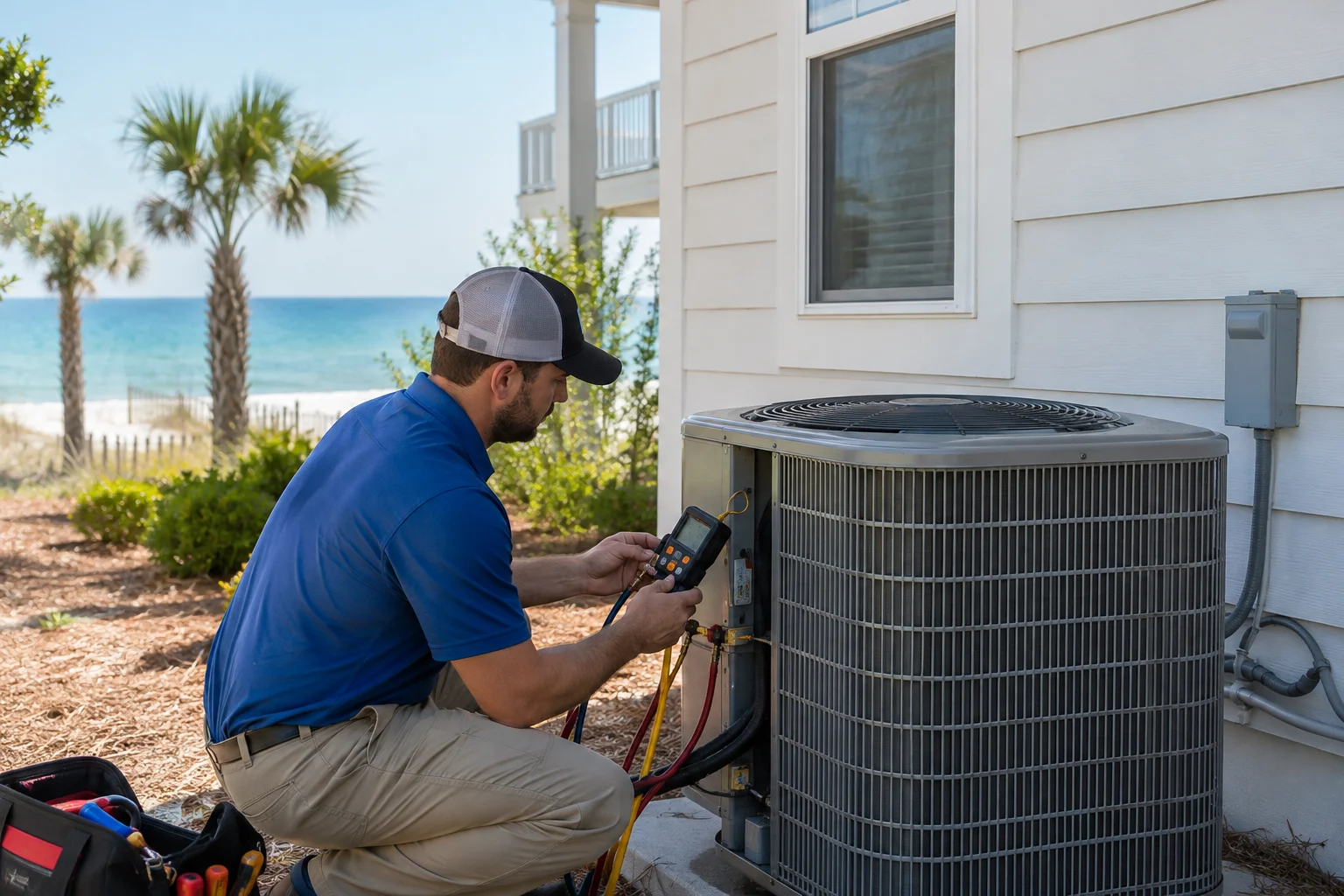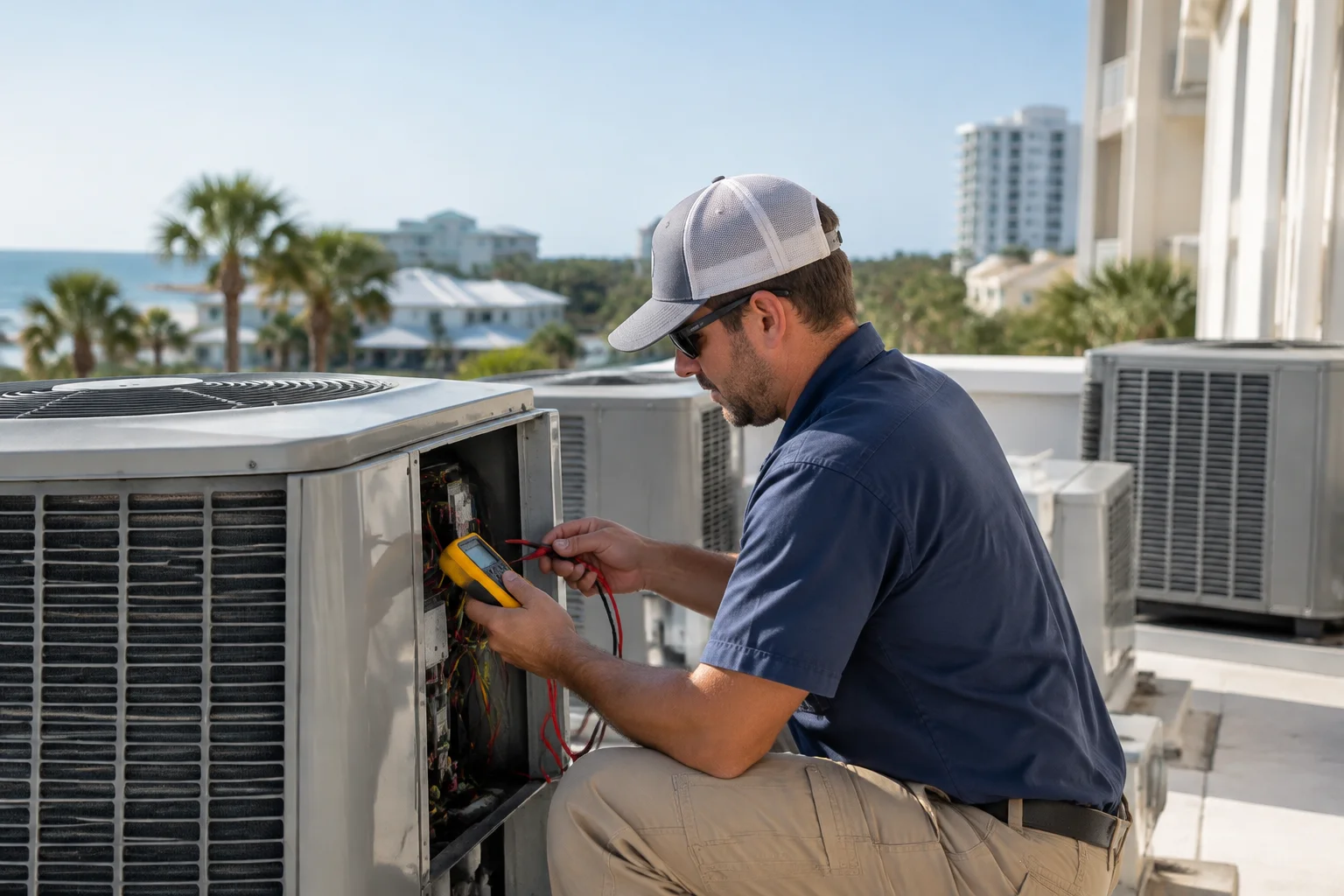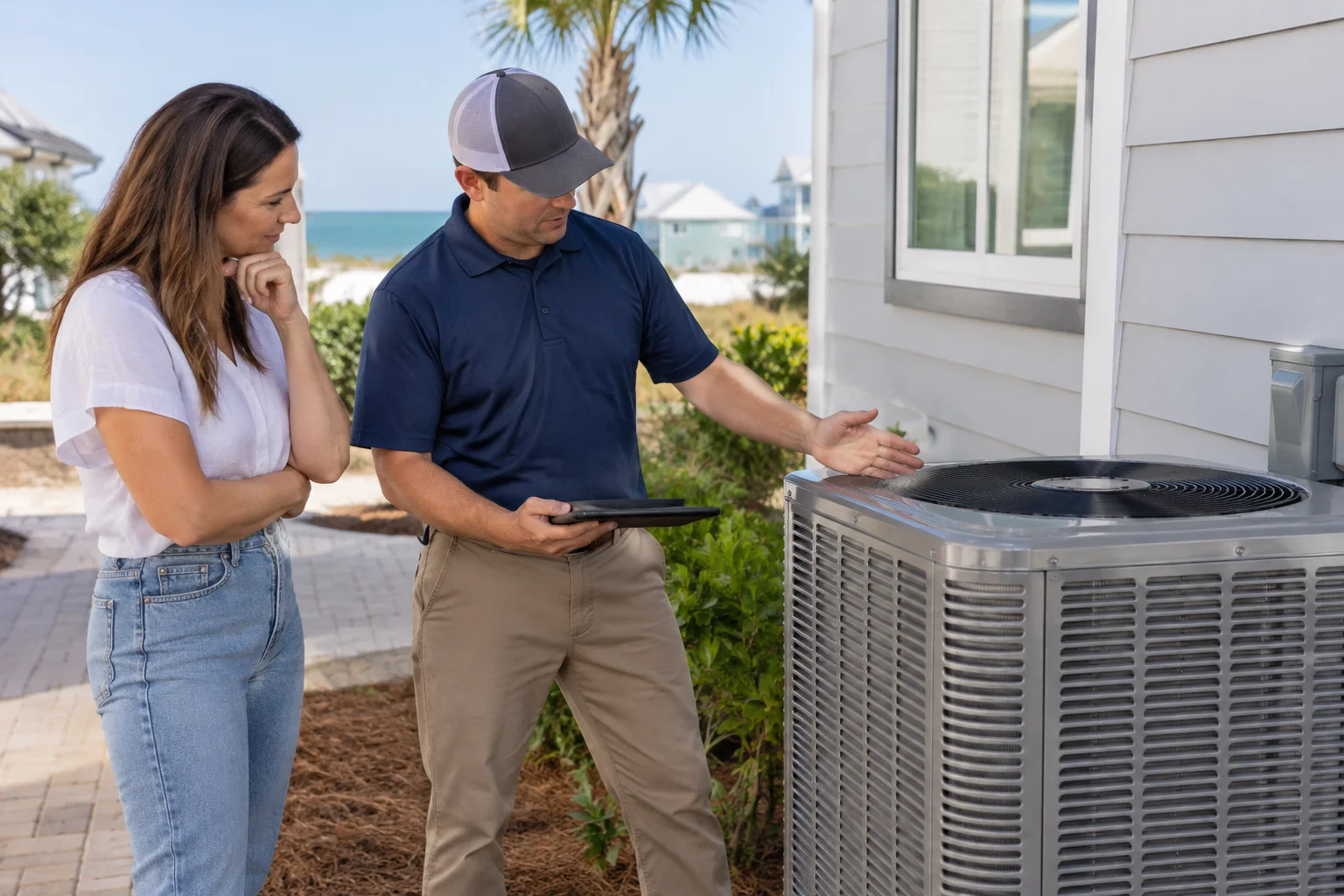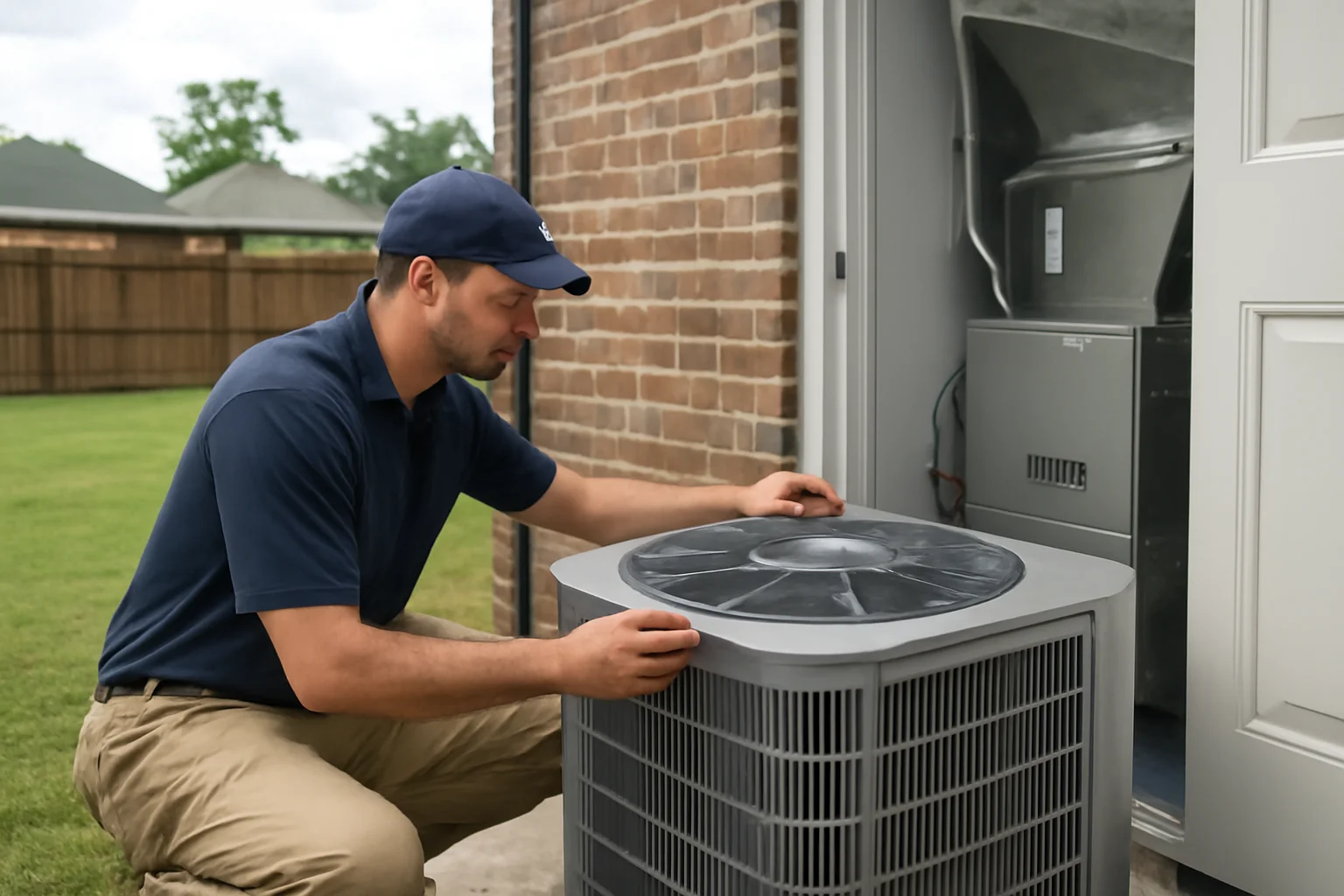
Commercial buildings in Niceville, FL deal with a unique mix of heat, humidity, and salt air. When a commercial HVAC system is installed without careful planning, those conditions can turn small mistakes into major comfort and maintenance problems. The good news is that homeowners and property managers can take practical steps during installation planning and early operation to reduce breakdowns, protect indoor air quality, and avoid emergency cooling concerns.
Why Niceville conditions make installation quality matter
Niceville summers can be intense, with frequent humidity and long cooling seasons. Coastal and near-coastal areas in Okaloosa County also experience salt air exposure, which can accelerate corrosion and affect how components perform over time. For commercial HVAC installation, that means the system has to be designed for real airflow needs, matched to the building layout, and installed with correct refrigerant system practices and condensate drainage.
When installation is done right, the HVAC system can maintain comfort, manage moisture, and use energy more efficiently. When installation is rushed or overlooked, you may see symptoms like uneven temperatures, higher humidity indoors, frequent cycling, and recurring calls for air conditioning maintenance or heat pump service.
Start with the building, not just the equipment
Homeowners often focus on the visible parts of a system, but commercial performance depends on the full installation context. A professional commercial HVAC installation in Niceville should begin with a building assessment that considers:
- Airflow path and zoning: How air will move through rooms, hallways, and common areas.
- Load basics: Heat gain from windows, equipment, and occupancy.
- Humidity control needs: In Florida heat, comfort is not only temperature. Moisture removal matters.
- Ductwork condition and layout: Existing ducts, if any, must be evaluated.
- Thermostat strategy: Control settings and placement affect comfort and energy use.
If you are searching for HVAC installation near me for a commercial property, ask whether the plan includes duct inspection, airflow expectations, and a moisture management approach. Those details often determine whether the system will feel “right” after it is installed.
Ductwork problems show up later as comfort failures
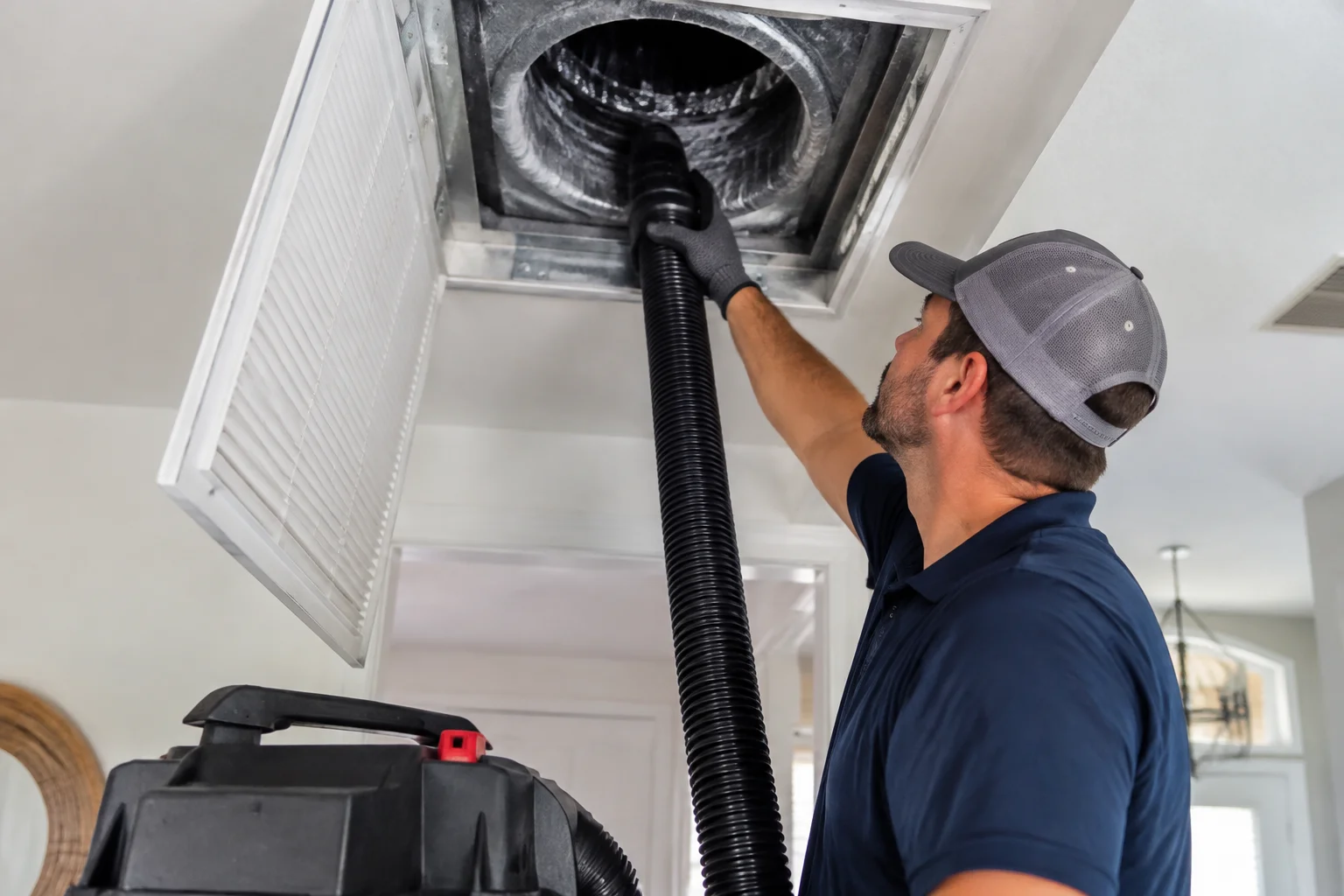
Ductwork is where many installation issues become obvious, even if the equipment itself is operating. In commercial spaces, duct leaks, poor sealing, undersized duct runs, or poorly routed airflow can cause:
- Hot or cold spots that make tenants uncomfortable
- Weak airflow that forces the system to run longer
- Higher humidity because air movement and moisture removal are not balanced
- More wear on filters and indoor components
During planning, request duct inspection and ductwork verification as part of the installation process. Homeowners searching for duct repair near me often find the root cause was a ductwork mismatch or an installation detail that was missed earlier.
For additional guidance specific to commercial setups, review The Details That Get Missed in Commercial HVAC Installation in Freeport, FL. While the city is different, the airflow and humidity challenges across Okaloosa County are similar.
Condensate drainage must be treated like a critical system
In Florida humidity, condensate drainage is essential for both performance and indoor air quality. When condensate drainage is improperly routed, blocked, or installed without correct slope and protection, you can run into:
- Overflow risk during high humidity periods
- Water pooling near equipment
- Moisture issues that can contribute to musty odors
- Corrosion and accelerated wear
Commercial HVAC installation should include condensate drainage design and verification. A professional installer will make sure the drain line is correctly connected, protected, and routed so the system can handle heavy latent loads during summer storms and humid stretches.
Refrigerant system installation details affect reliability
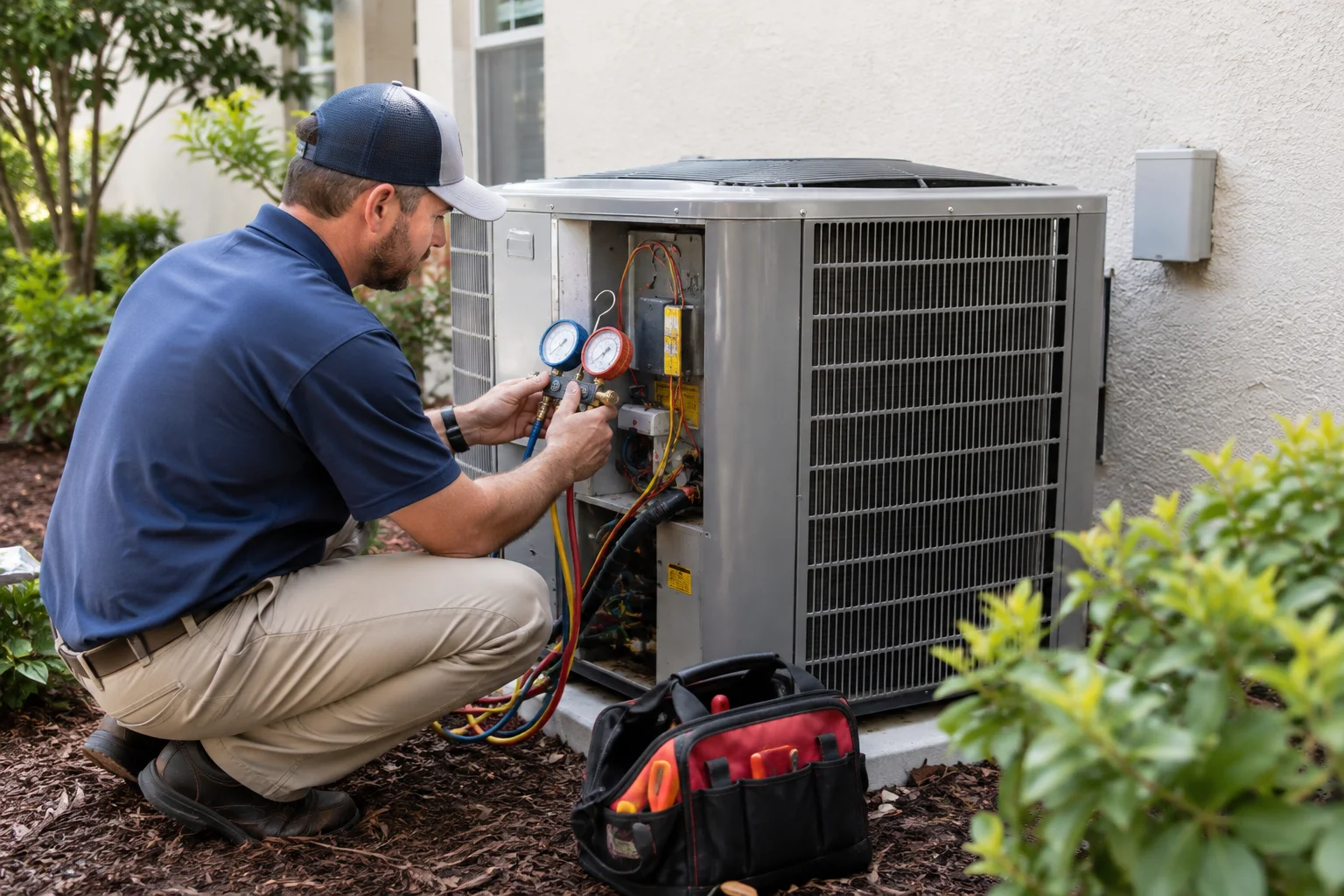
Refrigerant systems are engineered to operate within specific parameters, and installation practices influence long-term performance. Even if a system cools at first, installation issues can lead to persistent problems such as inefficient operation, abnormal cycling, or increased maintenance needs.
Homeowners should avoid guessing about refrigerant performance. Instead, focus on whether the installation process includes proper handling and commissioning steps carried out by qualified technicians. If you ever notice symptoms that concern you, such as repeated cooling failures or unusual operation, it is appropriate to request an in-person evaluation by a local HVAC company.
If you are searching for air conditioning repair near me because performance seems off after installation, be ready to share installation timing, comfort complaints, and any patterns you have noticed. That helps technicians narrow down what to inspect without jumping to conclusions.
Thermostats and controls influence comfort and energy use
Thermostats may seem simple, but commercial comfort depends on control accuracy and correct placement. In Niceville, where humidity and temperature swings can be noticeable, thermostat issues can cause:
- Short cycling, which can wear components faster
- Uneven temperatures across occupied areas
- Comfort complaints that lead to repeated adjustments
- Higher energy use due to incorrect setpoints or control strategy
During installation, ask how the thermostat will be configured for your building’s occupancy and schedule. Also ask whether the system will be set up to manage humidity effectively, not just temperature.
If your property uses multiple zones or has different tenant schedules, thermostat and control planning is even more important. It is also a place where ongoing HVAC maintenance near me can reduce the chance of comfort drift over time.
Indoor air quality should be part of installation planning
In a humid Florida climate, indoor air quality is not a “nice to have.” It affects occupant comfort, productivity, and perceived air freshness. Poor installation choices can contribute to IAQ issues through airflow imbalance, inadequate filtration, or moisture problems.
Consider asking your HVAC installer how the system will support indoor air quality, including:
- Filtration approach for the building and occupancy
- Airflow consistency so air cleaning equipment can work as intended
- Humidity control strategy to reduce excess moisture
- Duct cleanliness and sealing practices
If you want to evaluate IAQ once the system is running, you can also explore Indoor Air Quality Testing as a next step. That helps connect comfort complaints to measurable conditions rather than guesswork.
System sizing and airflow balance prevent “it works, but it never feels right”
One of the most common commercial HVAC frustrations is a system that technically cools but cannot maintain consistent comfort. That is often an installation and commissioning issue, such as:
- Equipment size not aligned with the building load
- Airflow not balanced across spaces
- Duct restrictions or mismatched duct design
- Control settings that do not match real operating needs
In Niceville, humidity makes these problems more noticeable. A system that is slightly off can struggle to remove moisture, leaving the space feeling clammy even when the temperature reads “cool.” A well-executed installation with proper airflow planning can reduce those issues and support smarter HVAC maintenance later.
Watch for early warning signs after installation
After a new commercial system is installed, it is normal to fine-tune settings. It is not normal to keep dealing with the same comfort issues. Pay attention to patterns that can indicate installation problems or commissioning gaps:
- Hot spots or persistent uneven temperatures that do not improve over time
- Humidity that feels high despite cool air delivery
- Frequent cycling or short run times
- Strange odors or musty smells that appear after operation begins
- Condensate drainage concerns such as water around equipment or wet smells
- Airflow complaints from specific rooms, especially those far from the main duct runs
If you notice these issues, document them. Notes about when the problem happens, what areas are affected, and any changes in occupancy can help an HVAC company address the root cause during an in-person visit.
Preventive maintenance starts at the installation stage
Preventive HVAC maintenance is often thought of as filter changes and seasonal checkups. For commercial properties in Niceville, preventive care also means setting the system up to make maintenance effective. A professional installer should ensure key items are accessible and that the system is installed in a way that supports future inspections.
Preventive maintenance planning typically includes:
- Filter access and replacement schedule planning
- Clear documentation of thermostat configuration and operating modes
- Verification of airflow and moisture management performance
- Condensate drainage inspection points included in the setup
- Seasonal checkups that address airflow, ductwork performance, and control operation
If you are comparing options for upkeep, look for a company that treats commercial HVAC service as a long-term relationship. For example, you can explore Air Conditioning Maintenance to understand what a maintenance-focused approach can cover.
Energy efficiency depends on correct commissioning
Energy use is a major concern for businesses and property owners. In Florida heat, systems can run for long stretches, so even small inefficiencies can add up. Installation problems that affect airflow, humidity control, or thermostat operation can cause the system to work harder than it should.
Commercial HVAC installation should include commissioning steps that verify the system is operating as intended. While homeowners cannot confirm refrigerant system performance or electrical function safely from their side, you can still ask how the installer will verify comfort outcomes and airflow behavior once the system is running.
If energy efficiency is a priority, it can also help to discuss an energy efficient AC system near me approach during the planning phase. The right solution is not only about equipment selection. It is about matching equipment to the building and ensuring the installation supports efficient operation.
Emergency cooling concerns are avoidable with the right partner
When a commercial system fails during a hot, humid stretch, the impact is immediate. That is why installation quality and maintenance planning are tied to emergency cooling concerns, not just comfort.
Professional local HVAC service matters in Niceville because technicians understand how Florida humidity affects condensate drainage, airflow balance, and indoor air quality. They also know what issues commonly show up in commercial buildings across Okaloosa County, including duct performance problems, comfort complaints linked to airflow, and humidity control failures that become more obvious as the cooling season progresses.
If you want to see how other nearby areas handle similar challenges, these reads can be useful: Commercial HVAC Installation in Laguna Beach, FL: The Issues Local Property Owners Should Not Overlook and What Panama City Beach Property Owners Should Know Before a Commercial HVAC Installation.
How to choose a commercial HVAC contractor in Niceville
When you are evaluating an HVAC company near me for commercial HVAC installation, focus on process and accountability, not just sales talk. Consider these practical questions:
- Do they discuss airflow and ductwork? Look for duct inspection, ductwork planning, and comfort goals.
- How do they handle humidity control? In Florida, the system must manage moisture, not only temperature.
- Do they address condensate drainage? Ask how drainage is routed and verified.
- How do they set up thermostats and controls? For commercial schedules, controls are part of the installation.
- What commissioning steps are included? You want verification that the system operates correctly after installation.
- Will they support preventive HVAC maintenance? Long-term service matters for reliability.
If you are still exploring options for system replacement or broader planning, you can also review HVAC Financing to help budget responsibly without delaying critical comfort needs.
Work with the right service for your property type
Commercial HVAC installation is not one-size-fits-all. Offices, restaurants, retail spaces, and medical facilities often have different occupancy patterns, air quality requirements, and humidity tolerance. A local provider should be able to tailor installation planning to your building type and operating schedule.
For homeowners and property managers in Niceville who want a local, commercial-focused installation partner, start with A Superior Mechanical’s service page at /service-areas/okaloosa-county/niceville/commercial-hvac-installation-nvocfl. If you want to explore coverage across the area, visit /service-areas/okaloosa-county/niceville and browse /service-areas/okaloosa-county.
When you suspect a problem, request an in-person HVAC evaluation
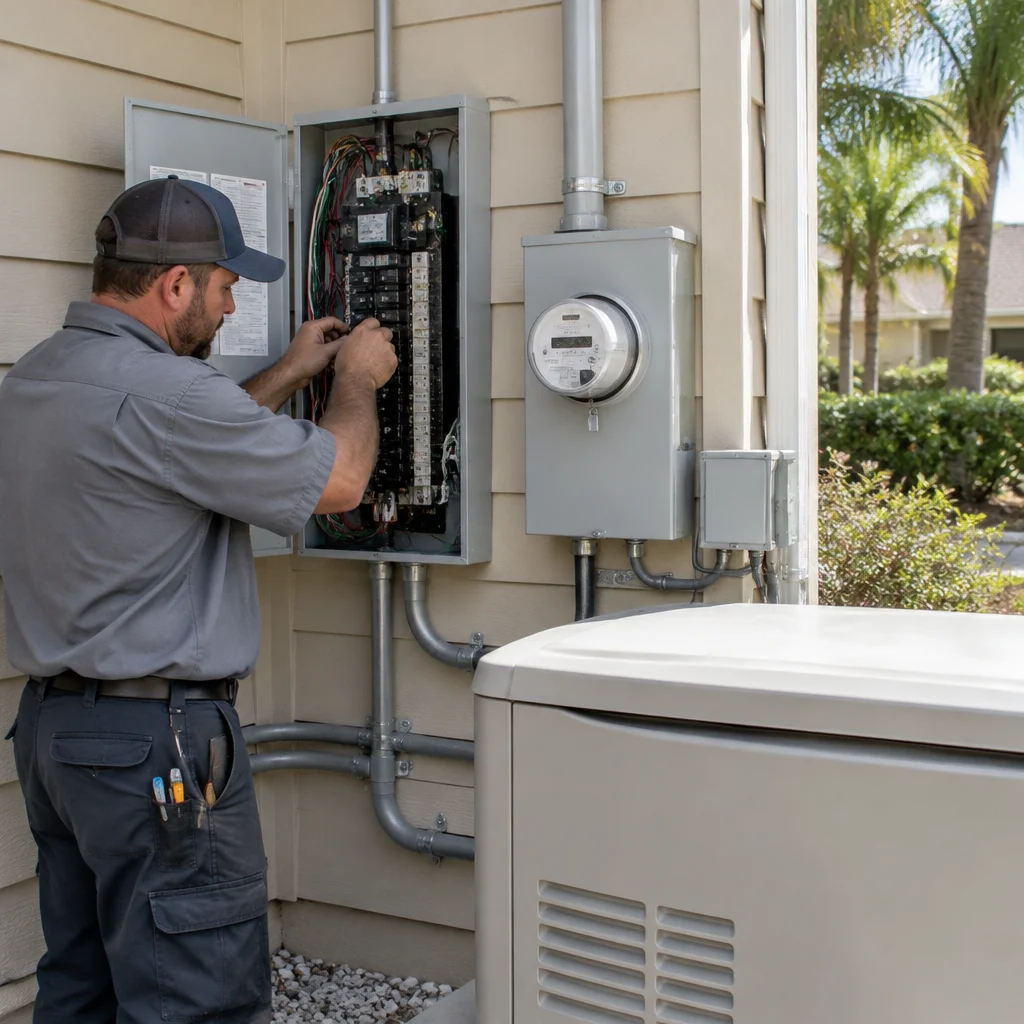
If you suspect installation issues after the system is running, it is best to request an in-person professional evaluation. Homeowners can observe symptoms such as uneven comfort, humidity complaints, airflow issues, or signs of condensate drainage problems. What homeowners should not do is attempt to diagnose refrigerant system performance or electrical concerns without trained, on-site technicians.
That approach keeps everyone safe and helps technicians address the true cause. If you are considering HVAC replacement near me or an AC replacement estimate near me due to repeated comfort failures, a professional assessment can clarify whether the system needs adjustment, ductwork attention, indoor air quality improvements, or a different path forward.
A practical checklist homeowners can use during installation
You can support a smoother installation and smarter HVAC maintenance by keeping a short checklist handy. Use it during the pre-install conversation and again after the system starts up:
- Confirm the plan for airflow across the building, not just the equipment location
- Ask about duct inspection, sealing approach, and balancing goals
- Confirm condensate drainage routing, slope, and where drainage discharges
- Review thermostat placement and scheduling strategy for occupancy
- Discuss indoor air quality priorities, including filtration and humidity control
- Ask how the installer will verify performance after installation
- Plan preventive HVAC maintenance so the system stays tuned through the cooling season
For many Niceville property owners, these steps reduce the chance of “mystery problems” later. They also create a clearer record for troubleshooting if concerns arise, which can make air conditioning repair and commercial HVAC service more efficient.
For additional commercial installation context in the region, you may also find Keeping Sandestin Buildings Comfortable Starts With Smarter Commercial HVAC Installation helpful for understanding how humidity, airflow, and system setup connect.
Find Commercial HVAC Installation in Niceville, FL
If you need Commercial HVAC Installation in Niceville, FL, visit our local service page or contact A Superior Mechanical today.
Map of Niceville, FL
Frequently Asked Questions
What are the most common commercial HVAC installation issues in Niceville, FL?
The most common issues tend to involve airflow and ductwork mismatches, humidity control problems, and condensate drainage details. In Florida heat and humidity, these can show up as uneven temperatures, higher indoor moisture, and recurring comfort complaints.
How can I tell if ductwork is causing comfort problems after a new installation?
Look for hot or cold spots that persist, weak airflow in certain areas, and comfort complaints that do not improve over time. A professional can perform a duct inspection and verify airflow performance rather than guessing.
Should I worry about indoor air quality during commercial HVAC installation?
Yes. Humidity and airflow affect how well filtration and moisture removal work. Discuss filtration and humidity control priorities during installation and consider indoor air quality testing if you have ongoing concerns.
Can homeowners diagnose refrigerant or electrical problems themselves?
No. Refrigerant system and electrical concerns require trained, on-site evaluation. Homeowners can report symptoms and patterns, but a qualified technician should inspect the system to determine the cause safely.
What preventive steps help reduce emergency cooling concerns?
Preventive maintenance is key, but it starts during installation. Ensure condensate drainage is correct, ductwork is inspected and sealed, thermostats are configured for the building schedule, and the system is commissioned for proper airflow and moisture control.
Related Articles
- The Details That Get Missed in Commercial HVAC Installation in Freeport, FL
- Commercial HVAC Installation in Laguna Beach, FL: The Issues Local Property Owners Should Not Overlook
- Keeping Sandestin Buildings Comfortable Starts With Smarter Commercial HVAC Installation
- What Panama City Beach Property Owners Should Know Before a Commercial HVAC Installation
Photo Gallery