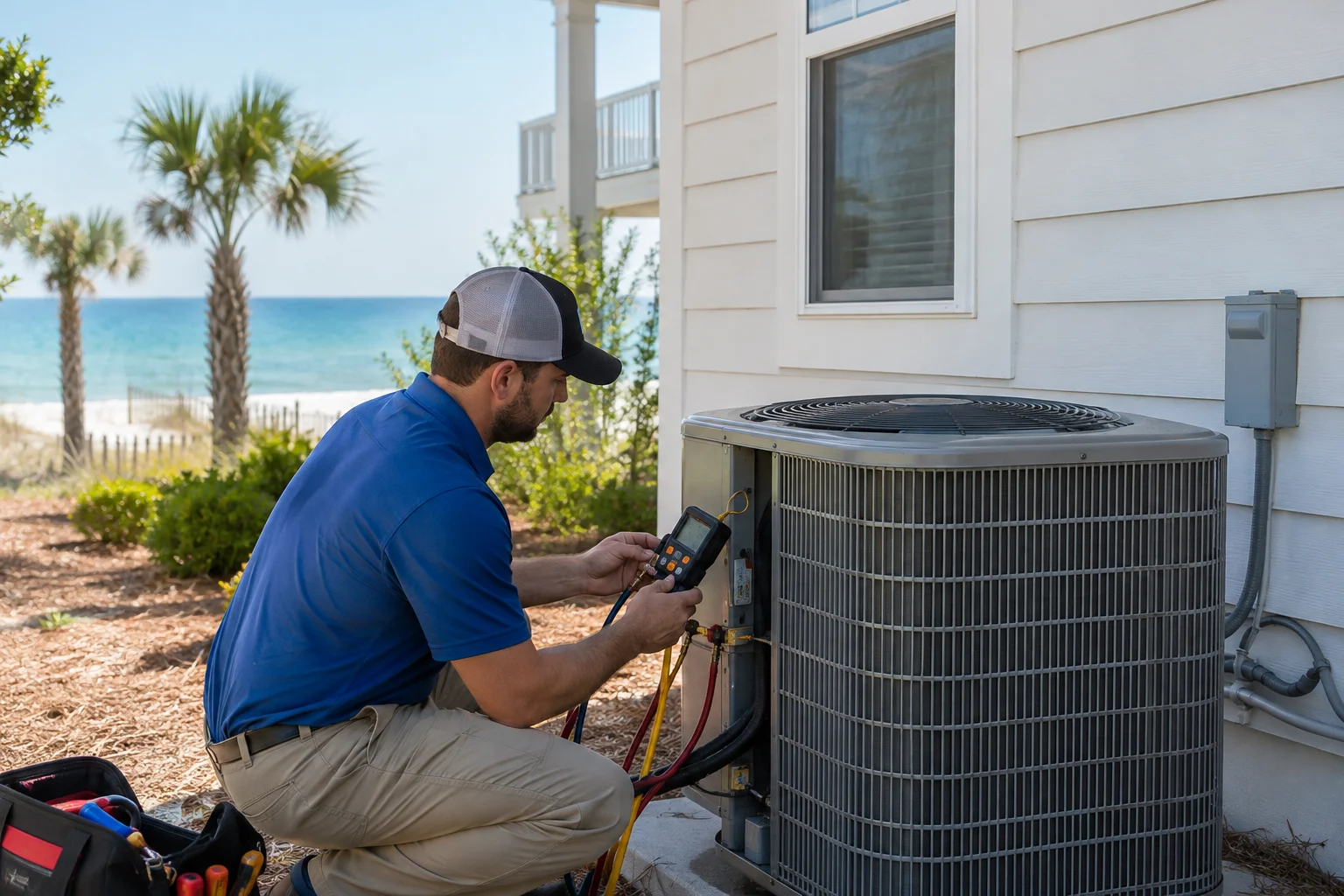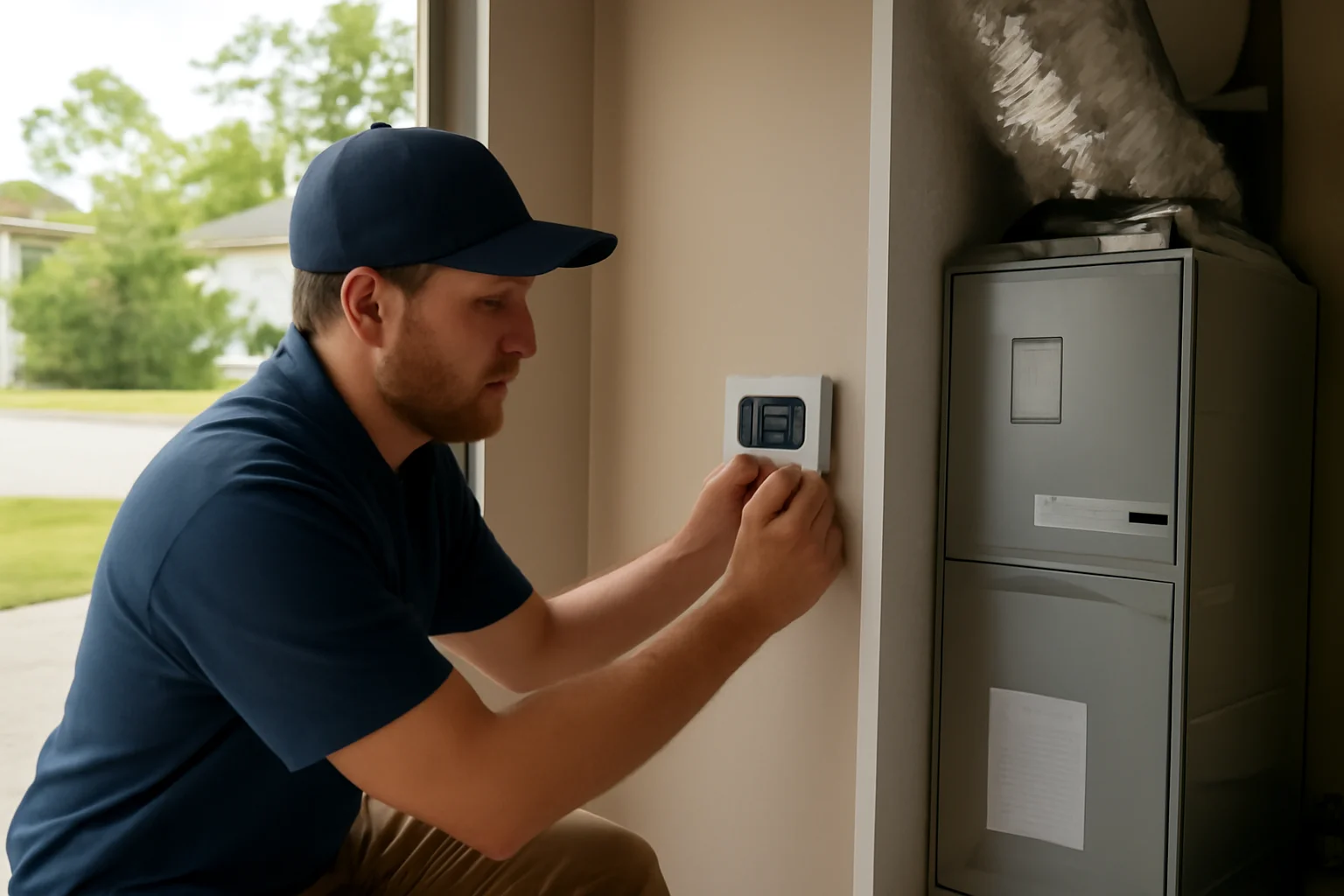
Smart thermostats can make it easier to keep your home comfortable through Santa Rosa Beach summers and cooler winter nights. But the benefits depend on more than choosing the right thermostat app. Installation details, HVAC airflow, and how your system handles humidity and condensate drainage can turn a helpful upgrade into a source of comfort problems.
A Superior Mechanical installs and configures smart thermostats for homes and property managers across Santa Rosa Beach, FL. If you have ever noticed short cycling, uneven temperatures, unexpected energy use, or a system that seems to run more than it should after a smart thermostat install, the cause is often something local homeowners can overlook.
Why Santa Rosa Beach makes thermostat installation more sensitive
Santa Rosa Beach sits in a coastal environment where heat and humidity are common, and salt air can be a factor for HVAC components over time. That combination affects indoor comfort and how your heating and cooling system behaves. When a thermostat is installed or configured in a way that does not match the real behavior of your AC, heat pump, or ductwork, the result can be “technically working” but practically frustrating.
Smart thermostats also rely on sensors, scheduling, and sometimes learning features. If the thermostat placement or setup does not align with your system and airflow patterns, the thermostat may “think” your home is warmer or cooler than it truly is. That can lead to temperature swings and emergency cooling concerns when your system struggles to recover on hot afternoons.
Thermostat placement: the most common setup mistake
Many smart thermostat problems start with where the thermostat is mounted. In a coastal Florida home, heat can collect near windows, in hallways with direct sun, or in rooms that get strong drafts from supply registers and return grilles.
Hot sun and cold drafts confuse temperature sensing
If the thermostat sits behind furniture, near a door that opens often, above a vent, or in a sunlit hallway, the sensor can read a temperature that does not represent the rest of the home. The thermostat may call for cooling too late, or it may short cycle the system trying to “correct” a reading that is distorted.
Airflow from supply and returns matters
Even small changes in airflow can matter in humid climates. If your ductwork supplies air unevenly, some rooms may feel cooler while others stay muggy. A thermostat placed where air moves differently from the rest of the house can amplify the imbalance.
For homeowners searching for an HVAC contractor near me to install a smart thermostat, placement is not an afterthought. It is part of year-round home protection because it directly affects comfort and how often your system runs.
Wrong system settings: when the thermostat does not match your HVAC type
Smart thermostats need configuration that matches your equipment. In Santa Rosa Beach, many homes use central air conditioning systems, some use heat pumps, and others may have multi-zone ductwork. If the thermostat settings do not match what is actually installed, the system can behave unpredictably.
AC versus heat pump configuration errors
Heat pump systems manage heating and cooling with different modes and may use auxiliary heat in some conditions. If the thermostat is configured as if your system is only an AC, or if it is missing the correct heat pump mode behavior, you may notice comfort gaps during shoulder seasons or increased runtime that feels like the system is “working too hard.”
Homeowners looking for heat pump repair near me sometimes discover the thermostat setup contributes to the symptoms. A thermostat that is calling for the wrong mode can mimic equipment problems.
Fan and staging settings that do not match real operation
Some thermostats allow choices for fan control, staging, and equipment types. If those settings do not align with your indoor unit, outdoor unit, or control board behavior, you can see issues like:
- Short cycling, where the system turns on and off too quickly
- Long run times that do not remove humidity as expected
- Comfort swings between rooms
- Higher energy use because the system never settles into stable operation
Wiring and compatibility issues that show up as “mystery” comfort problems
Smart thermostats often use low-voltage wiring, and they must be compatible with your existing HVAC control wiring. In older homes or rentals, wiring may be altered over time, or labels may not match what is currently connected.
Missing or misused wires can cause erratic behavior
If a wire is connected to the wrong terminal, or if a required wire is not present for the thermostat’s features, the thermostat may still display a temperature and schedule correctly. But it may not control the HVAC system as intended, including fan operation, cooling stages, or heating behavior.
Salt air and corrosion can worsen connections
Coastal conditions can accelerate corrosion on electrical contacts, especially when panels are exposed to moisture or when condensate drainage areas are not maintained. Loose or corroded connections can create intermittent control signals. A thermostat install that does not account for the condition of existing connections can lead to intermittent cooling or heating calls that are hard to diagnose.
Because thermostat wiring can affect system operation, it is best handled by a licensed HVAC professional. If you are trying to troubleshoot after an install, avoid guessing at wiring changes. An in-person inspection is the safest path.
Humidity control and condensate drainage: the thermostat cannot fix moisture problems
In Santa Rosa Beach, humidity is not a minor detail. When humidity control is off, homes can feel warmer than the thermostat says, even if the temperature number looks “right.” Smart thermostat settings may influence fan behavior and cycle timing, which can affect how well your system removes moisture.
Improper setup can reduce dehumidification
Air conditioning systems remove moisture when they run long enough and when airflow is correct. If thermostat configuration encourages shorter cycles or does not coordinate fan behavior with your AC’s normal operation, indoor humidity can remain elevated. That can lead to:
- Sticky indoor air
- Condensation risk around ducts or registers
- Musty odors that suggest indoor air quality issues
Condensate drainage issues can be mistaken for thermostat failure
Clogged or poorly draining condensate lines can cause water to back up or trigger safety shutoffs. Homeowners may interpret the timing as “the thermostat stopped calling for cooling,” when the HVAC system is actually protecting itself. If your system has had any drain maintenance issues, a smart thermostat install should be paired with an AC inspection to confirm airflow and drainage are functioning properly.
If you are scheduling an air conditioning inspection after a thermostat upgrade, you will likely get a clearer picture of whether the root cause is humidity control, airflow, condensate drainage, or control settings.
Airflow and ductwork problems can undermine smart thermostat “learning”
Smart thermostats can use data to adjust runtime and anticipate changes. But if your ductwork and registers do not distribute air evenly, that learning can be misleading.
Blocked, leaky, or imbalanced ducts create false temperature readings
When supply air does not reach certain rooms, the thermostat may continue to demand heating or cooling because the home never reaches the target temperature. Conversely, rooms near returns may cool too quickly while other areas stay humid and warm.
Airflow problems can also strain refrigerant systems by changing how the system moves heat. That does not mean you can diagnose refrigerant issues from thermostat behavior alone. It does mean that smart thermostat performance depends on the HVAC system doing its job, including moving air correctly through the ductwork.
Dirty filters and restricted airflow increase runtime
In Florida humidity, filters can load faster. Restricted airflow can cause the system to run longer to reach temperature targets, which can lead to higher energy use and more frequent cycles. If you recently installed a smart thermostat and noticed the system running longer, make sure filter condition and airflow are part of the check.
Refrigerant system symptoms can be misread as thermostat problems
Smart thermostat issues can sometimes look similar to refrigerant system problems, especially when cooling performance is inconsistent. Low airflow, incorrect equipment operation, and refrigerant system issues can all change how quickly the home cools and dehumidifies.
It is important not to treat a thermostat install as the only variable. If the system struggles to cool on peak summer days, a professional should evaluate the full cooling process, including airflow, temperature splits, and system controls. The goal is to avoid missing a real AC problem while you chase thermostat settings.
Year-round protection means thinking beyond cooling
Many homeowners focus on summer comfort, but smart thermostat installation affects heating, too. In Santa Rosa Beach, you may experience cooler periods where heat pump operation or furnace operation becomes important. If settings are incorrect, you can see:
- Delayed heating calls
- Unexpected auxiliary heat behavior on heat pumps
- Air distribution issues that make certain rooms feel cold
Those issues can also feed back into cooling comfort later, because frequent mode switching and runtime patterns can wear components and increase indoor humidity when the system is not operating as designed.
Energy use concerns: why “more control” can still cost more
Smart thermostats often help with energy awareness, but misconfiguration can raise energy use. Common contributors include:
- Schedules that do not match how your home is actually occupied
- Room-to-room imbalance that keeps the system running to satisfy one sensor location
- Fan settings that run too often, increasing airflow and humidity movement in ways that are not ideal
- Short cycling caused by placement and setup, which can reduce comfort stability
For homeowners trying to reduce costs while keeping comfort steady, professional setup matters. If you are looking for an air conditioning service team that understands how thermostat control interacts with AC operation, A Superior Mechanical can help you connect the dots between thermostat behavior, airflow, and HVAC performance.
Emergency cooling concerns: preventing “it won’t keep up” moments
Santa Rosa Beach summers can bring hot, humid afternoons when the HVAC has to perform. If a thermostat install leads to delayed cooling calls, incorrect mode selection, or unstable cycling, the system may struggle to recover after setpoints change.
That is where preventive HVAC maintenance becomes more than routine. When an HVAC technician verifies airflow, checks drainage, and confirms thermostat setup aligns with your system type, you reduce the odds of a mid-summer breakdown that forces emergency AC repair near me decisions.
If you are planning a smart thermostat upgrade, pairing it with an HVAC tune up can also help your system handle Florida humidity and heat more consistently. You can read more about how maintenance supports performance in Why Better HVAC Maintenance Makes New AC Installations Work Better in Santa Rosa Beach.
What homeowners can do right after installation
Once your smart thermostat is installed, you can watch for patterns that suggest setup or airflow issues. These checks do not replace professional service, but they help you know what to ask for.
Track temperature swings and cycle length
Does the system turn on and off quickly? Does it run longer than usual to reach the setpoint? Are some rooms always uncomfortable? Short cycling and uneven temperatures often point to placement, airflow, or configuration.
Confirm fan behavior during cooling
Some thermostats allow fan control options. If the fan runs differently than your system normally does, humidity control may change. In humid Florida conditions, that can affect comfort even if the temperature number is correct.
Look for moisture signs near air handling areas
Any evidence of condensate issues, water near the air handler, or unusual odors should be addressed promptly. A thermostat install should not be treated as a fix for drainage problems.
Recheck settings if you have a heat pump or multi-zone system
If you have a heat pump, a multi-zone setup, or special ductwork layouts, your thermostat configuration should match your equipment and control logic. For homeowners with advanced systems, it can help to review how zoning affects comfort, such as in VRF Multi Zone HVAC Systems.
Why professional local HVAC service matters in Walton County
Smart thermostat installation is part HVAC control, part comfort science. In Santa Rosa Beach, professionals also consider local conditions like humidity, coastal exposure, and how typical homes are built and ducted. A licensed HVAC contractor near you should evaluate your system type, airflow pathways, and condensate drainage behavior before finalizing thermostat configuration.
Local experience matters because it helps prevent “works on the first day” problems that show up later when humidity rises or when the system transitions between cooling and heating seasons. If you want a smart thermostat install that supports year-round home protection, start with the right pairing of thermostat setup and system performance checks.
You can also compare approaches in Getting Smart Thermostat Installation Right in Santa Rosa Beach, FL and explore how smart installs help catch HVAC problems early in How Smart Thermostat Installation Helps Santa Rosa Beach Homes Catch HVAC Problems Early.
Choose the right service scope for your thermostat upgrade
Not every smart thermostat issue is solved by changing thermostat settings alone. A proper evaluation may include:
- Confirming thermostat compatibility with your HVAC type and control wiring
- Reviewing thermostat placement relative to supply and return airflow
- Checking airflow and filter condition for consistent temperature control
- Verifying condensate drainage is clear so the system can cool safely
- Ensuring indoor air quality goals are supported by proper airflow and filtration
If you are ready to install or upgrade, schedule service through smart thermostat installation in Santa Rosa Beach. For broader Walton County coverage, you can also explore Walton County HVAC services.
Find Smart Thermostat Installation in Santa Rosa Beach, FL
If you need Smart Thermostat Installation in Santa Rosa Beach, FL, visit our local service page or contact A Superior Mechanical today.
Map of Santa Rosa Beach, FL
Frequently Asked Questions
Why does my AC run more after smart thermostat installation in Santa Rosa Beach?
Common causes include thermostat placement that reads a warmer or cooler spot than the rest of the home, fan or staging settings that do not match your HVAC operation, or airflow and humidity control issues that make the system work longer to reach targets. A local HVAC inspection can confirm what is driving the increased runtime.
Can high humidity in coastal Florida make a smart thermostat seem inaccurate?
Yes. Humidity affects comfort even when the temperature number looks correct. If the thermostat configuration changes fan behavior or cycle timing, your system may not dehumidify as effectively. Condensate drainage and airflow also play a role in how well cooling maintains comfortable indoor air.
Should I expect different behavior if my home uses a heat pump?
Smart thermostats must be configured for heat pump operation, including how heating and auxiliary behavior works. If the thermostat is set up like a standard AC system, it can call for the wrong mode and create comfort gaps. Professional setup helps match the thermostat to your equipment.
What thermostat placement mistakes cause the most comfort problems?
Placing the thermostat in direct sun, near supply vents or return pathways with strong drafts, behind furniture, or near frequently opened doors can skew temperature sensing. That often leads to short cycling or uneven room temperatures, especially in humid Florida conditions.
When should I call an HVAC contractor after a smart thermostat install?
Call for service if you notice persistent short cycling, cooling or heating that will not keep up during peak conditions, signs of condensate drainage issues, or repeated control errors. An in-person evaluation can confirm compatibility, airflow, and system control behavior.
Related Articles
- How Smart Thermostat Installation Helps Santa Rosa Beach Homes Catch HVAC Problems Early
- Getting Smart Thermostat Installation Right in Santa Rosa Beach, FL
- Why Better HVAC Maintenance Makes New AC Installations Work Better in Santa Rosa Beach
- Better HVAC Decisions for Property Managers and Homeowners in Santa Rosa Beach
Photo Gallery