Living near the water in Upper Grand Lagoon, FL is a big part of the appeal. But the water that comes out of your tap can still bring challenges. Homeowners often notice hard water effects like glassware with stubborn spots, showerheads that build up scale, and laundry that feels less fresh. If you have cloudy ice cubes, a chlorine taste in water, or soap that does not lather, you are not imagining it. A practical water softening plan can make your drinking water, cooking water, bathing, and daily cleaning feel noticeably better.
This guide walks you through what hard water does, how water softening works, what to look for in local systems, and how to pair softening with filtration options like reverse osmosis and AO Smith water filtration for cleaner, more confident water use in your home.
Why Upper Grand Lagoon homes often need hard water treatment
Hard water is common in many coastal areas and can be influenced by local geology and how water is treated before it reaches your neighborhood. When water contains higher levels of minerals, especially calcium and magnesium, it does not just look or taste “off.” It can create deposits that build up on surfaces and inside plumbing.
Upper Grand Lagoon homeowners typically see the results in everyday places:
Hard water spots on glass, especially after the dishwasher runs or after a shower.
Scale buildup around faucets, showerheads, and plumbing connections.
Dry skin or dull hair after bathing, along with soap that does not rinse well.
Metallic, chlorinated, or unpleasant taste in drinking water.
Cloudy ice cubes and water that does not taste clean in drinks.
Poor tasting coffee and cooking water, even when the ingredients are great.
Visible sediment, discoloration, and odor concerns that show up in certain uses.
When hard water treatment is missing, it can also contribute to appliances wearing out faster. Water heaters, dishwashers, and washing machines can accumulate mineral scale that reduces efficiency and increases the chance of premature wear.
What hard water does to your home, not just your fixtures
Hard water is easy to dismiss because it is not always “dirty.” It is usually clear. The problem is what it leaves behind and how it changes the way water interacts with soap, food, and skin.
1) Scale buildup around faucets and showerheads
As water heats and evaporates, minerals can deposit on surfaces. That is why scale buildup around faucets and showerheads becomes visible over time. It can also clog aerators and reduce water flow, leading to inconsistent pressure at sinks or showers.
2) Soap that does not lather or rinse well
Many soaps and detergents are designed to work with water hardness at manageable levels. With hard water, minerals can bind with soap, leaving you with that “soapy film” feel. You may notice laundry that feels stiff, or bathing that leaves skin feeling dry even if you used a good moisturizer.
3) Dry skin from hard water and dull hair after bathing
Dryness after showers is a common complaint. It can be tied to soap residue and mineral effects that make it harder to fully rinse away products. The result is often hair that feels less soft and skin that feels tighter than expected.
4) Taste and clarity issues in drinking water
Even if your main issue is hardness, many homeowners also notice taste and clarity concerns. Chlorine taste in water, metallic notes, or odors can show up alongside mineral buildup. Cloudy ice cubes can indicate suspended particles or air bubbles, and they often point to a filtration gap.
5) Appliances and plumbing wear over time
Mineral scale can build inside plumbing and appliance components where water heats or evaporates. Over time, scale can reduce heat transfer, increase energy use, and shorten equipment life. When hard water treatment becomes part of protecting fixtures and appliances, you are not only improving comfort. You are also lowering the long-term cost of maintenance and replacement.
How water softening works in a practical, homeowner-friendly way
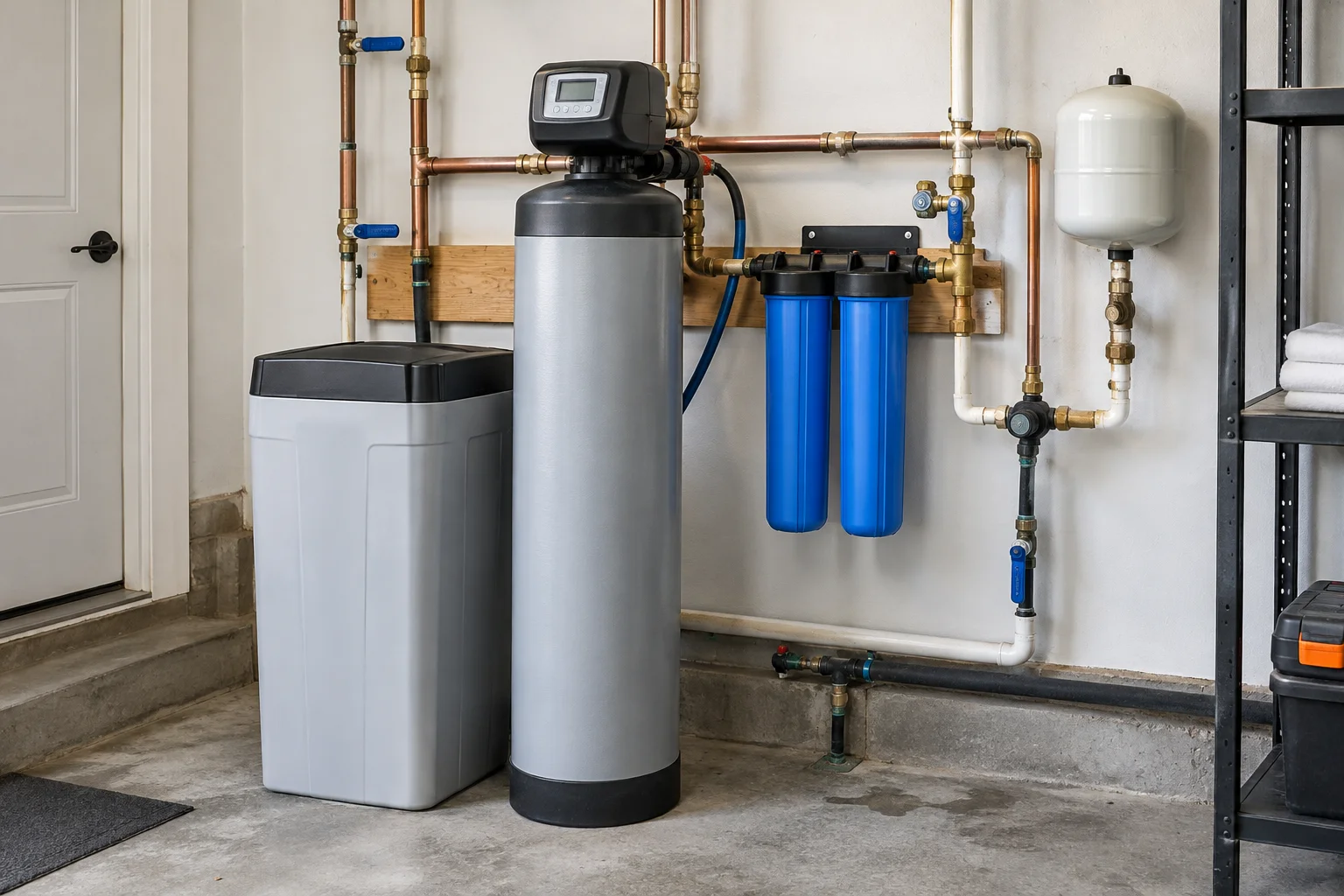
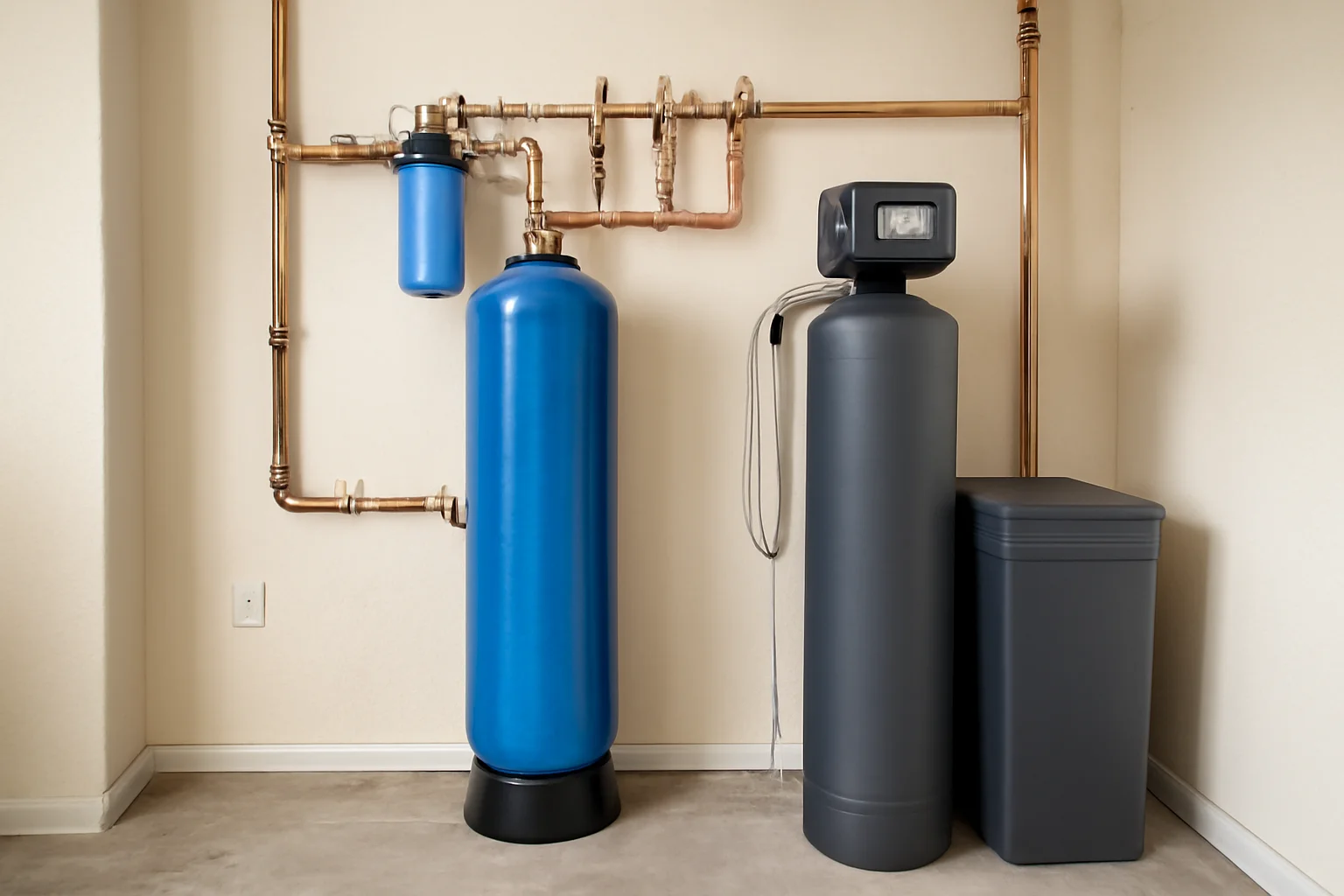
Water softening is designed to reduce the hardness minerals that cause scale and interfere with soap. Most whole home water softeners use ion exchange technology. In simple terms, the system replaces calcium and magnesium ions with sodium or potassium ions, making the water “softer” and less likely to form scale.
When the water is softened, you typically see improvements quickly:
Fewer hard water spots on glass and shower doors
Less scale buildup on faucets and showerheads
Better soap performance, including less residue after rinsing
More comfortable bathing, including less dry skin from hard water
Cleaner-feeling laundry and improved results for many detergents
In a typical Upper Grand Lagoon household, that can look like weekend routines running smoother. The kitchen gets used more confidently for drinking water and cooking water. The coffee tastes cleaner. The bathroom glass wipes down faster. Even the dishwasher seems to leave fewer spots.
Softening vs. filtration: they solve different problems
It is common for homeowners to ask whether a single system can “fix everything.” The honest answer is that hard water and water taste or odor issues are not always caused by the same factors. That is why many homes benefit from a combination approach.
Water softening targets hardness minerals
Softening reduces scale buildup around faucets, showerheads, and plumbing, and it improves how soap and detergents work. If you are dealing with soap does not lather, dry skin from hard water, and visible scaling, softening is usually the core solution.
Whole home water filtration targets sediment and taste concerns
Whole home water filtration can help reduce sediment in household water and improve clarity. It is also often used to address odor or taste issues that come from particles and certain contaminants.
If you are searching for water filtration near me because you want clearer water, it is worth considering whole home water filtration alongside softening, especially if you notice visible discoloration, odor concerns, or cloudy ice cubes.
Reverse osmosis can improve drinking and cooking water
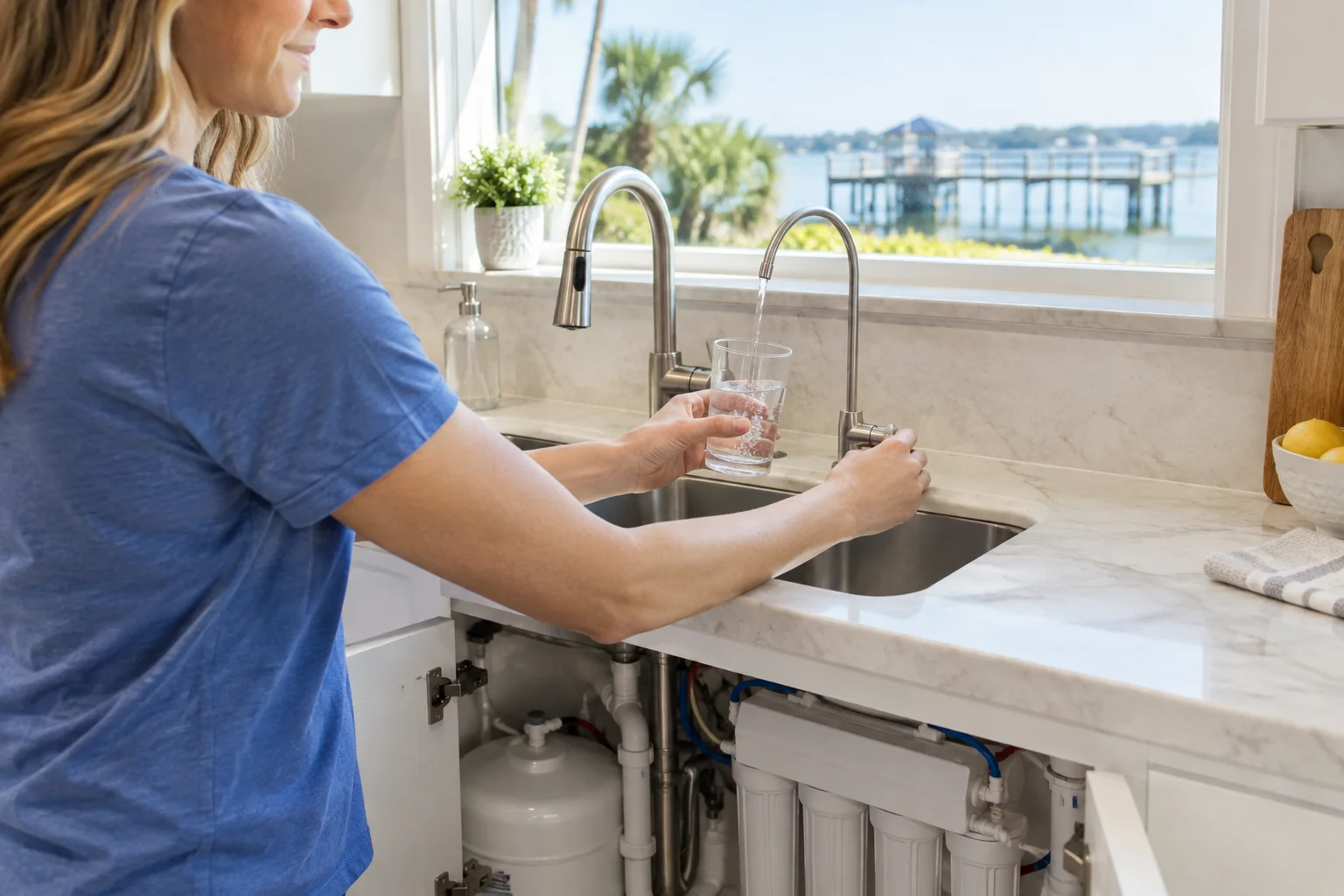
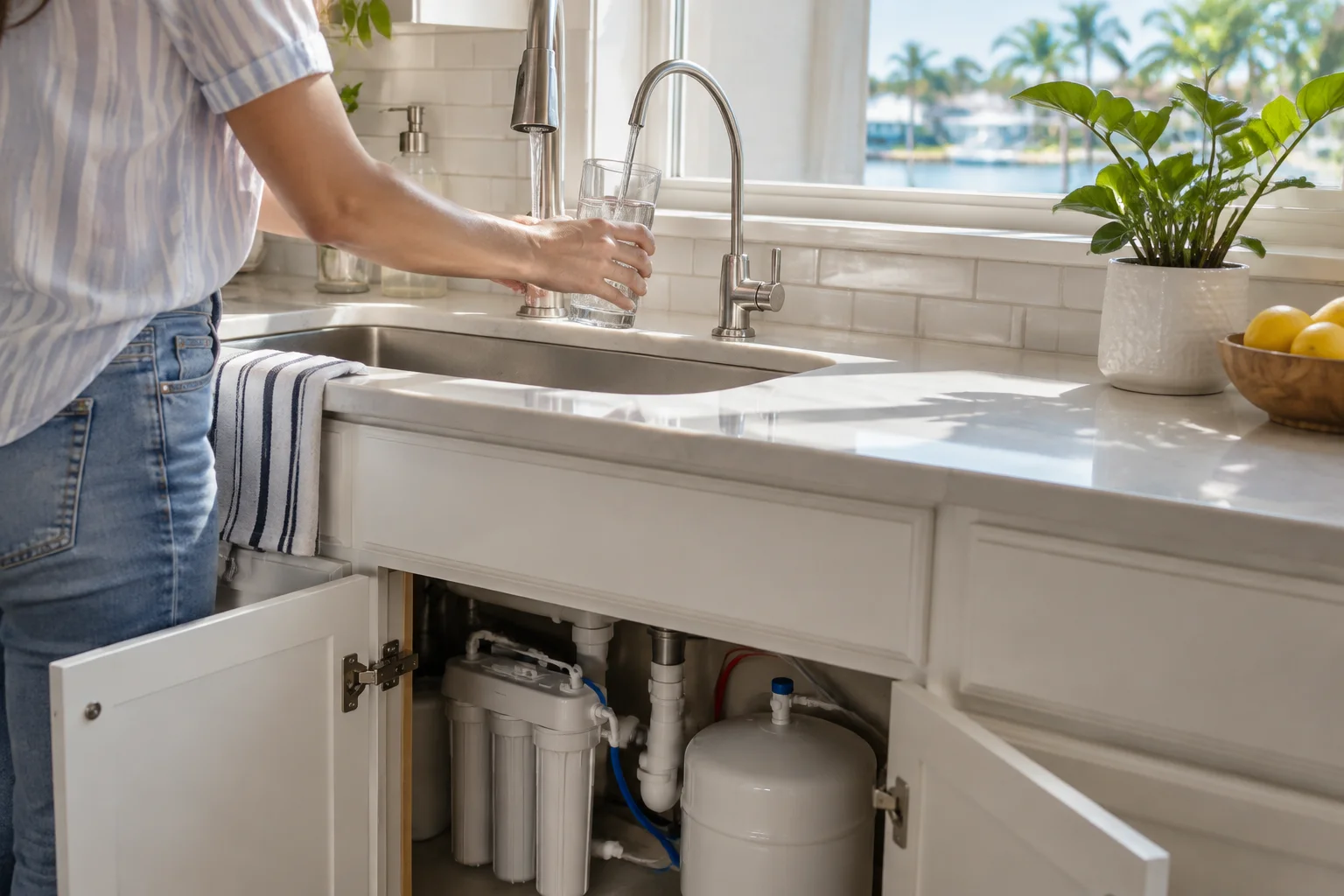
Reverse osmosis systems focus on the water you drink and use for cooking. Many homeowners choose RO under the sink for better tasting water and cleaner ice, especially when they want a noticeable difference in coffee, tea, and meal prep.
If your kitchen is where your family gathers, this matters. Picture filling a pitcher for the fridge, making pasta with water that tastes clean, or brewing coffee that does not carry metallic or chlorinated notes. RO can be a strong option when you want that extra layer of confidence for drinking water.
Where AO Smith water filtration fits into a homeowner plan
AO Smith water filtration is often considered when homeowners want dependable, whole home solutions that support cleaner water throughout the house. In many Upper Grand Lagoon homes, pairing a softener with AO Smith water filtration can help address both hardness and other water quality concerns, like sediment, taste, and clarity.
Because every home’s water conditions are different, a local water treatment service can help determine what you need most. That might include:
A water softener for hardness control
Whole home filtration for sediment and overall clarity
A drinking water filter near me style setup for the kitchen, sometimes including reverse osmosis
Choosing the right water softener and filtration setup for Upper Grand Lagoon
Not every system size fits every home. The right choice depends on your household size, water usage, and the severity of scale buildup around faucets and fixtures.
Start with the real symptoms you see
Take note of what is happening in your daily routine:
Are you removing scale from showerheads and faucet aerators?
Do you see hard water spots on glass after minimal use?
Does soap not lather or rinse well even when you use quality products?
Are you noticing dry skin or dull hair after bathing?
Do you have cloudy ice cubes or poor tasting coffee?
Is there sediment in household water or any discoloration/odor concerns?
These observations help guide whether water softening alone is enough, or whether whole home water filtration and reverse osmosis systems should be part of your plan.
Consider how you use water across the day
Upper Grand Lagoon households often have busy schedules. Showers in the morning, laundry during the day, and cooking and drinking water in the evening. If your home has multiple bathrooms, a larger laundry routine, or a dishwasher used frequently, mineral scale can build faster. That is one reason homeowners look for water softener service near me, especially when they want consistent performance across the whole home.
Plan for long-term maintenance and salt or media management
Water softeners require ongoing upkeep. You will want the system installed correctly and serviced on a schedule that matches your water conditions. Maintenance helps keep the softening process efficient and prevents performance issues that can lead to recurring scale.
How reverse osmosis and whole home filtration can work together
Some homes in Upper Grand Lagoon benefit from a layered system approach. Whole home water filtration near the main line can improve overall clarity and reduce sediment across showers, laundry, and cleaning. Then an RO system can deliver better drinking water quality at the kitchen tap.
That layered plan can be especially helpful when you are dealing with multiple issues at once:
Scale buildup around faucets and showerheads from hardness
Chlorine taste in water or metallic notes in drinking water
Cloudy ice cubes and less appealing coffee water
Visible sediment, discoloration, and odor concerns that show up in certain uses
If you are comparing reverse osmosis installation options, it is smart to ask how RO is being integrated with your softening and filtration. The goal is to reduce stress on the RO system and make sure the rest of your plumbing and appliances are protected too.
Prevention and maintenance that keep your water cleaner longer
A new water softener or filtration system can make a big difference, but good results depend on setup and maintenance. Here are practical steps homeowners can use between service visits.
Watch for early warning signs
If you start seeing scale buildup on faucets again, soap begins to feel less effective, or shower glass becomes harder to clean, do not wait. Those are common indicators that the system needs attention.
Keep an eye on fixtures that reveal hardness first
Faucet aerators, showerheads, and glass surfaces are often the first places where mineral effects show up. If you notice new buildup, it can point to a softening performance issue or a filtration gap.
Protect appliances by staying consistent
Water heaters and other appliances last longer when mineral scale is controlled. That means staying on top of system maintenance and not delaying water softener service when performance changes.
Local service matters for Upper Grand Lagoon water treatment
Upper Grand Lagoon is in Bay County, FL, and local water conditions can vary from one area to the next. Even within the same region, household plumbing and water usage patterns differ. Working with a local provider like A Superior Mechanical helps ensure you are not guessing.
You can learn more about professional installation and service here: water softening in Upper Grand Lagoon. If you are also exploring broader options, the main landing page for system selection is here: water filtration and reverse osmosis water softeners. For homeowners who want to understand the wider service area, visit the Upper Grand Lagoon service page and Bay County service area.
Related reads that connect softening to everyday home protection
If you want a deeper look at how water softening impacts the life of your home, these guides can help you connect the dots:
- Why Water Softening Matters for Upper Grand Lagoon Homes
- How Water Softening Protects Rosemary Beach Plumbing from Costly Water Damage
- Choosing the Right Time for Plumbing Fixture Replacement in Upper Grand Lagoon
For property managers and businesses, water quality can also affect maintenance cycles and customer experience. If you manage multiple units or commercial spaces, you may find this helpful: A Smarter Way to Handle Commercial Plumbing Services in Upper Grand Lagoon.
When to call A Superior Mechanical for water softener service
Some issues are easy to spot, and others build slowly until they show up in your daily routine. Call a professional water treatment service if you recognize multiple signs at once, such as:
Scale buildup around faucets and showerheads that keeps returning
Soap does not lather and residue does not rinse away
Dry skin or dull hair after bathing
Chlorine taste in water, metallic notes, or unpleasant odor
Cloudy ice cubes, poor tasting coffee and cooking water
Visible sediment or discoloration concerns
A Superior Mechanical can help you choose a water softener approach and, when needed, pair it with whole home water filtration or reverse osmosis for better drinking water. That combination is often what turns “I notice spots” into “our water feels clean and dependable” across the entire home.
If you are searching for water filtration near me or water softener service near me, starting with the right system design is the quickest way to get results you can feel in the kitchen, bathrooms, laundry room, and beyond.
Find Water Softening in Upper Grand Lagoon, FL
If you need Water Softening in Upper Grand Lagoon, FL, visit our local service page or contact A Superior Mechanical today.
For a broader look at whole-home water filtration, reverse osmosis, and water softener options, visit our water filtration, RO, and water softener page.
Map of Upper Grand Lagoon, FL
Frequently Asked Questions
Will a water softener fix hard water spots and scale buildup around faucets and showerheads?
Yes. Water softening reduces the hardness minerals that cause scale and hard water spots. Many Upper Grand Lagoon homeowners notice less buildup on faucets, showerheads, and glass after the system is installed and operating correctly.
Do I need whole home water filtration or reverse osmosis if my main issue is hard water?
Sometimes. Water softening targets hardness, but taste, odor, cloudy ice cubes, and sediment concerns can require additional filtration. Whole home water filtration can improve clarity across the home, while reverse osmosis is often used to upgrade drinking and cooking water quality.
Why does my soap not lather or rinse well even when I use good detergent?
Hard water can interfere with how soap cleans and how it rinses away. Softer water typically improves lather and reduces residue, which can also help with dry skin from hard water and improve laundry feel.
How do I know if my water has a chlorine taste or other water quality issues beyond hardness?
If you notice a chlorine taste in water, metallic or unpleasant flavor, cloudy ice cubes, or odor concerns, those can point to filtration needs beyond softening. A local water treatment professional can recommend a system layout that fits your specific symptoms.
Related Articles
Photo Gallery