Upper Grand Lagoon homeowners often notice hard water before they can explain it. Maybe it is the hard water spots on glass after breakfast dishes are set to dry. Maybe it is the scale buildup around faucets and showerheads, or the way laundry feels a little stiff even when you use the same detergent. When you are trying to keep drinking water tasting clean, cooking water consistent, and plumbing working well for years, water softening and water filtration maintenance becomes part of home care, not an afterthought.
Because Upper Grand Lagoon sits in Bay County, FL, local water conditions can create enough mineral content to form scale. Over time, that scale acts like a barrier inside plumbing and appliances. The result is less efficient heating, faster wear, and more frequent cleaning. This guide covers what to watch for, why it happens, and how routine maintenance helps protect fixtures and appliances.
Why Upper Grand Lagoon homes see hard water symptoms
Hard water is primarily caused by dissolved minerals, most commonly calcium and magnesium. When water heats or evaporates, those minerals leave deposits. That is why you might spot white crust on showerheads, rough buildup around faucet aerators, or a dull film on kitchen fixtures.
If you are seeing these issues, you are not imagining it. Common signs include:
Hard water spots on glass, dishes, and fixtures. Plates can look streaky or cloudy, and drinking glasses may show a mineral haze.
Scale buildup around faucets and showerheads. Even careful cleaning can become a recurring chore.
Dry skin or dull hair after bathing. Soap can feel like it is not doing its job, and rinsing can leave residue.
Soap does not lather or rinse well. That is a classic hard water problem. Minerals can interfere with how soap works.
Visible sediment, discoloration, and odor concerns. Some households also notice sediment or an off smell that makes them rethink drinking water and home water purification.
Metallic, chlorinated, or unpleasant taste. Taste issues often lead families to buy bottled water for drinking and cooking, even when their plumbing is otherwise fine.
Cloudy ice cubes. If your ice looks milky or cloudy, it can be a sign of mineral content, trapped air, or water quality issues.
Poor tasting coffee and cooking water. Minerals can affect extraction in coffee and the performance of cooking water for rice, pasta, and soups.
Appliances wearing out faster. Scale inside water heaters, dishwashers, and washing machines can reduce efficiency and shorten lifespan.
What water softening actually does for your home
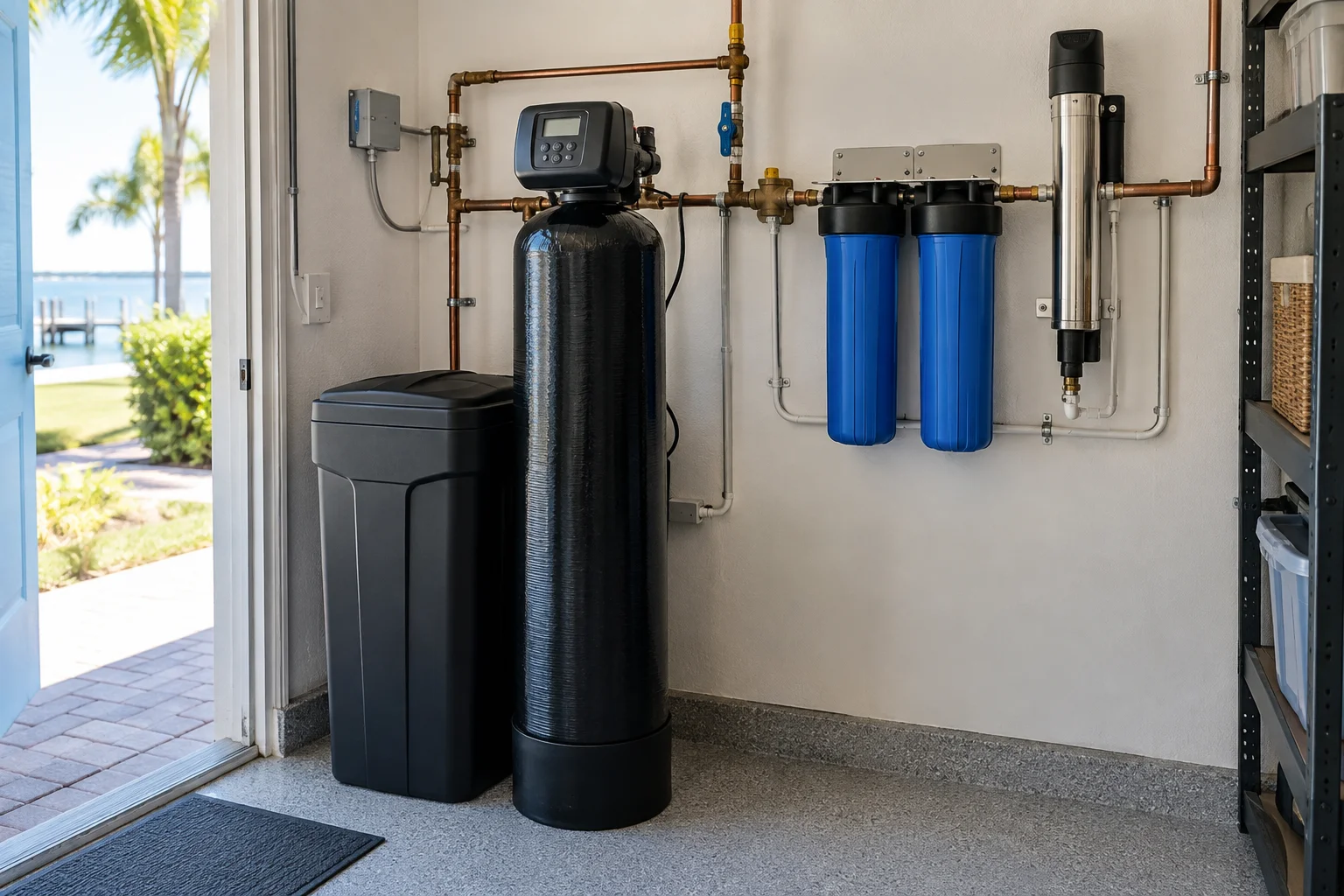
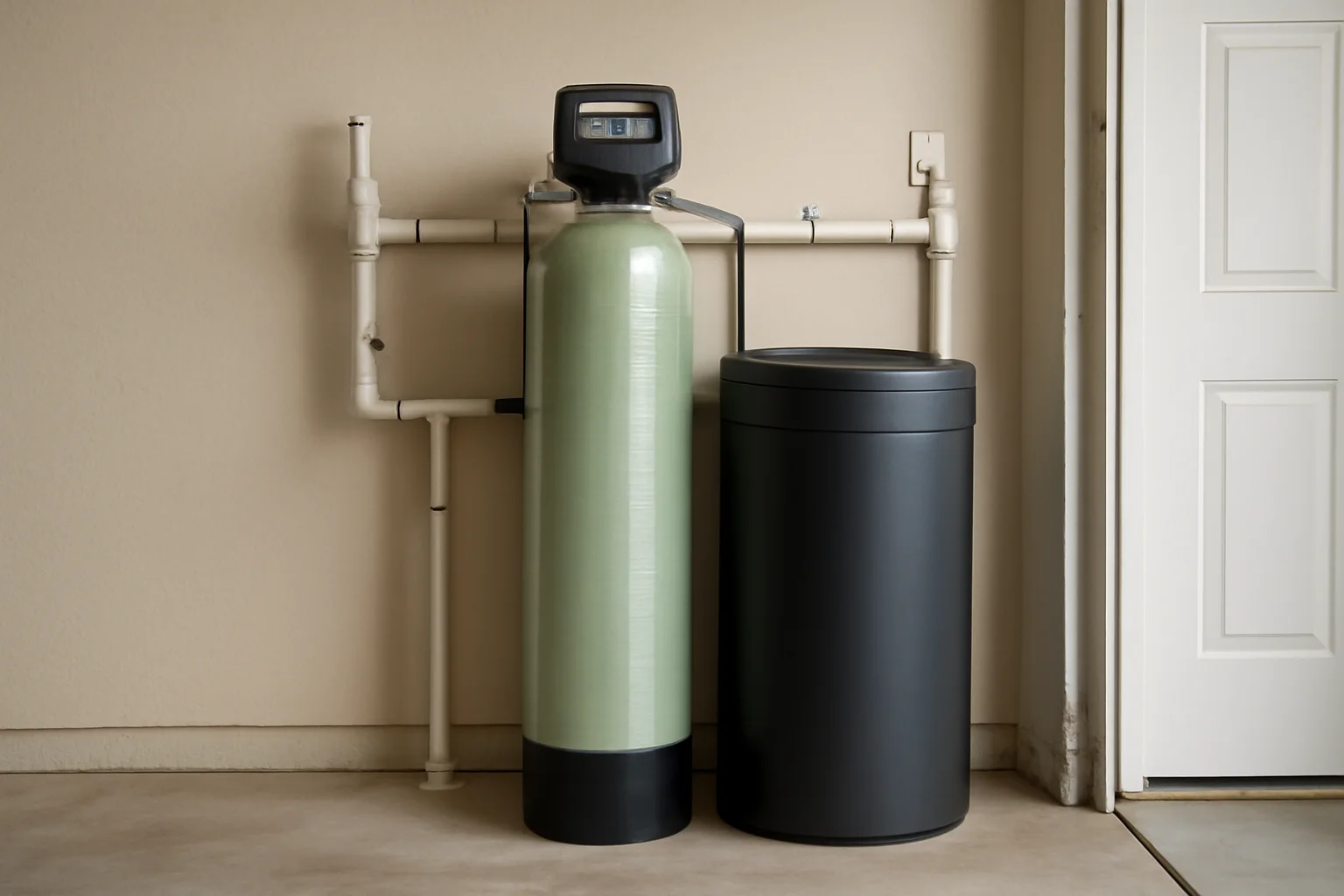
A properly sized and maintained water softener helps reduce hardness minerals before water enters your plumbing. Many systems use ion exchange to swap hardness minerals for sodium or potassium, which significantly reduces scale formation. The difference is noticeable in everyday life.
Think about a typical Upper Grand Lagoon morning: you fill a kettle for coffee, load the dishwasher, run a shower, and start a laundry cycle. With softer water, soap and shampoo can rinse more cleanly. Dishes tend to come out clearer. Showerheads and faucets stay cleaner longer. And appliances that rely on mineral-free water can run more efficiently.
For homeowners searching for water treatment near me or water softener installation near me, the key is making sure the system you install matches your household needs and local water conditions, then maintaining it so it continues to perform.
Where scale shows up first: kitchen, bath, laundry, and appliances
Hard water does not just create cosmetic issues. It impacts performance across the home.
Kitchen fixtures and dishes
Scale buildup around faucets and on sink surfaces often appears first because kitchen water is used frequently and heated during washing. If you see a chalky film on glassware or a spotty residue on cookware, it is usually a sign that hardness minerals are not being managed.
It can also affect cooking water. Many homeowners notice poor tasting coffee, cloudy tea, or inconsistent results when boiling pasta or simmering sauces. Even small changes in water chemistry can change how flavors extract.
Bath time: skin, hair, and showerheads
When hard water is left untreated, soap does not lather as well. The result can be dry skin or dull hair after bathing, because residue can cling to skin and hair. You may also notice showerheads clogging or spraying unevenly due to mineral deposits.
Laundry performance
With hard water, detergent can struggle to dissolve and rinse away. That can lead to laundry that feels less fresh. Over time, mineral buildup can also contribute to inefficiencies in washing machines.
Appliances and water heating
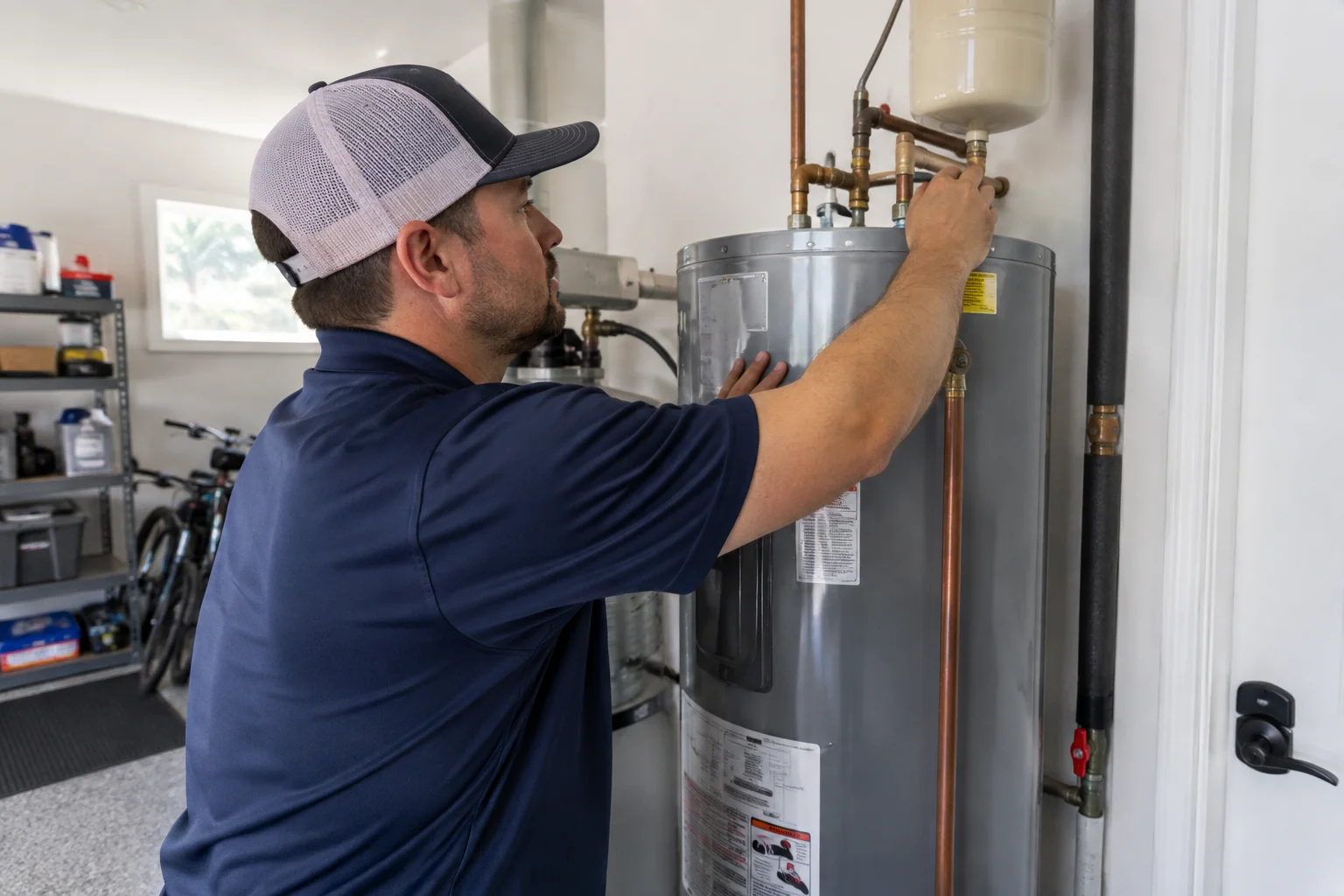
Scale inside appliances and water heaters reduces heat transfer. That means the heater works harder to reach the same temperature. Over time, that can translate to higher energy use and appliances wearing out faster. If you have ever descaled a water heater or checked the bottom of a kettle, you already know how stubborn mineral buildup can be.
Maintenance that protects fixtures and appliances
Water softening is not set-and-forget. A well-maintained system keeps your water soft, helps prevent scale buildup, and supports better drinking water experiences. A Superior Mechanical provides service for water softening and water filtration, including systems that pair softening with other clean water systems.
Here are maintenance habits homeowners can use between professional visits.
1) Keep an eye on salt levels and salt type
If your system uses salt, check the level regularly. Running low can cause hardness to break through and you will start seeing scale again. Also confirm you are using the correct salt type recommended for your unit. Using the wrong product can create bridging or buildup that limits performance.
If you are researching AO Smith water filtration or considering an AO Smith water softener, ask your installer what salt and maintenance schedule works best for that model.
2) Watch for “hard water return” signs
Even with a softener, performance can drift if the system is not regenerating properly or if there is an issue with the control valve. Watch for early warning signs:
- Scale begins returning on faucets and showerheads.
- Soap does not lather as well as it used to.
- Dishes look dull or spotty again.
- Family members complain about dry skin or hair that feels less clean.
These symptoms often mean the softener needs adjustment, service, or a regeneration review.
3) Inspect the system for leaks and unusual noises
Small leaks or worn fittings can waste water and reduce efficiency. Unusual noises during regeneration can also signal a problem. If you notice damp areas near the unit or persistent wet spots around plumbing connections, schedule a water treatment service promptly.
4) Confirm the unit regenerates on the right schedule
Regeneration frequency depends on water use and hardness levels. If the schedule is off, your softener may regenerate too often, wasting salt and water, or not often enough, allowing scale to build up.
Upper Grand Lagoon households with changing schedules, seasonal occupancy, or higher laundry and dishwashing use can see performance shift. A professional can verify settings and flow performance, especially if you are troubleshooting recurring hard water spots on glass.
5) Keep the surrounding area clean and accessible
Salt systems need space for ventilation and access. Keep the area around the softener clear so service technicians can inspect lines, valves, and connections. Good access also helps reduce downtime when you need water softener service.
6) Don’t ignore taste, odor, sediment, and cloudy ice
Softening focuses on hardness minerals. It does not automatically address everything about water quality. If you have metallic, chlorinated, or unpleasant taste, visible sediment, discoloration, odor concerns, or cloudy ice cubes, you may need additional filtration.
That is where whole home water filtration and reverse osmosis systems can help. Many homeowners choose a layered approach: softening to reduce scale plus filtration to improve clean water systems for drinking, cooking, and bathing.
Layering softening with filtration for better drinking and cooking water
Families do not just want fewer scale spots. They want water that tastes right. They want better drinking water for kids, coffee, and cooking. They want water that supports home water purification goals.
Here is how different systems often fit together:
Whole home water filtration
A whole house water filter can reduce sediment and improve overall water quality throughout the home. That can help with odor and discoloration concerns and can protect plumbing components from particles that contribute to buildup.
When homeowners search for whole home water filtration near me or whole house water filter, they are often trying to solve multiple water issues at once, not just hardness.
Reverse osmosis for drinking and cooking
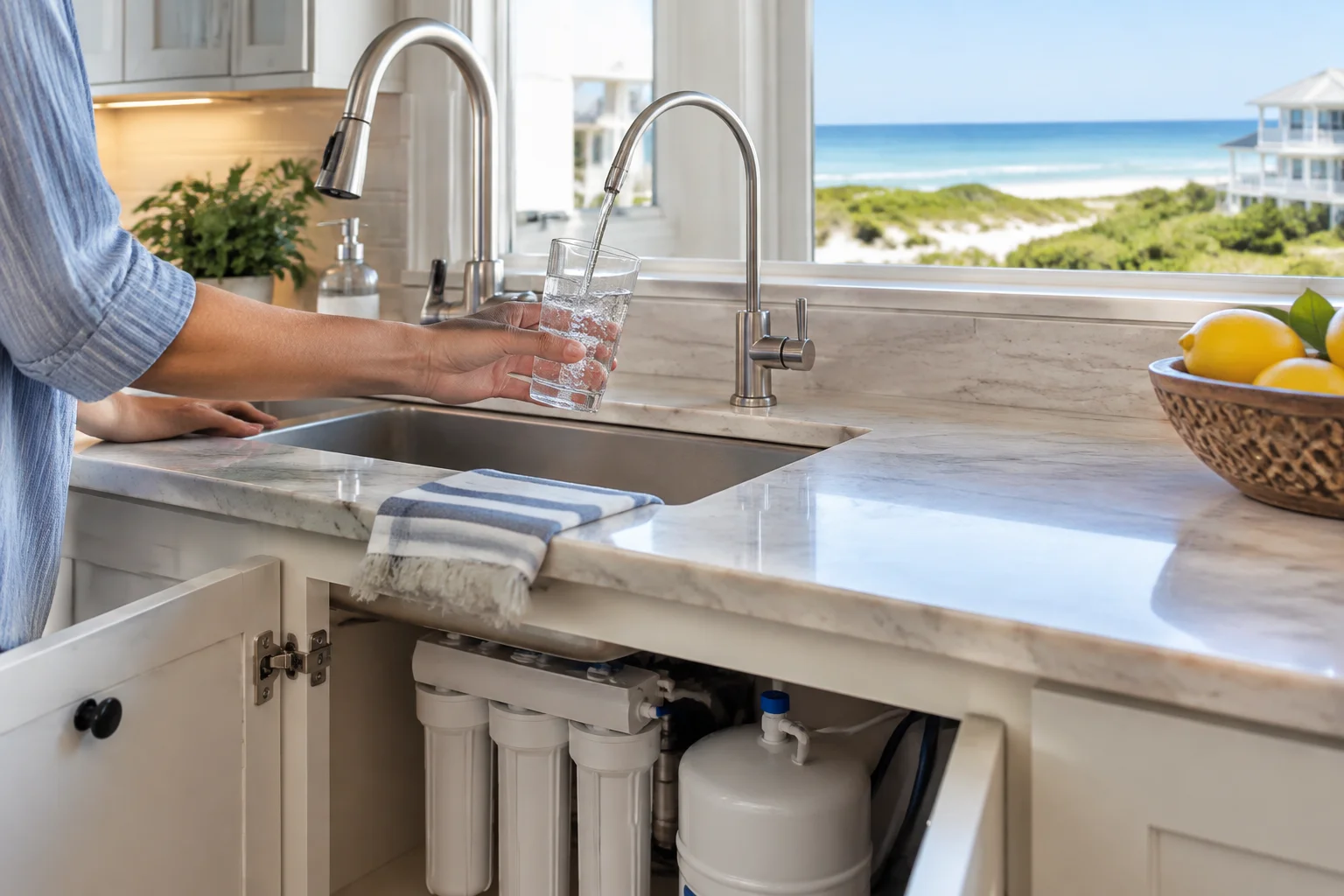
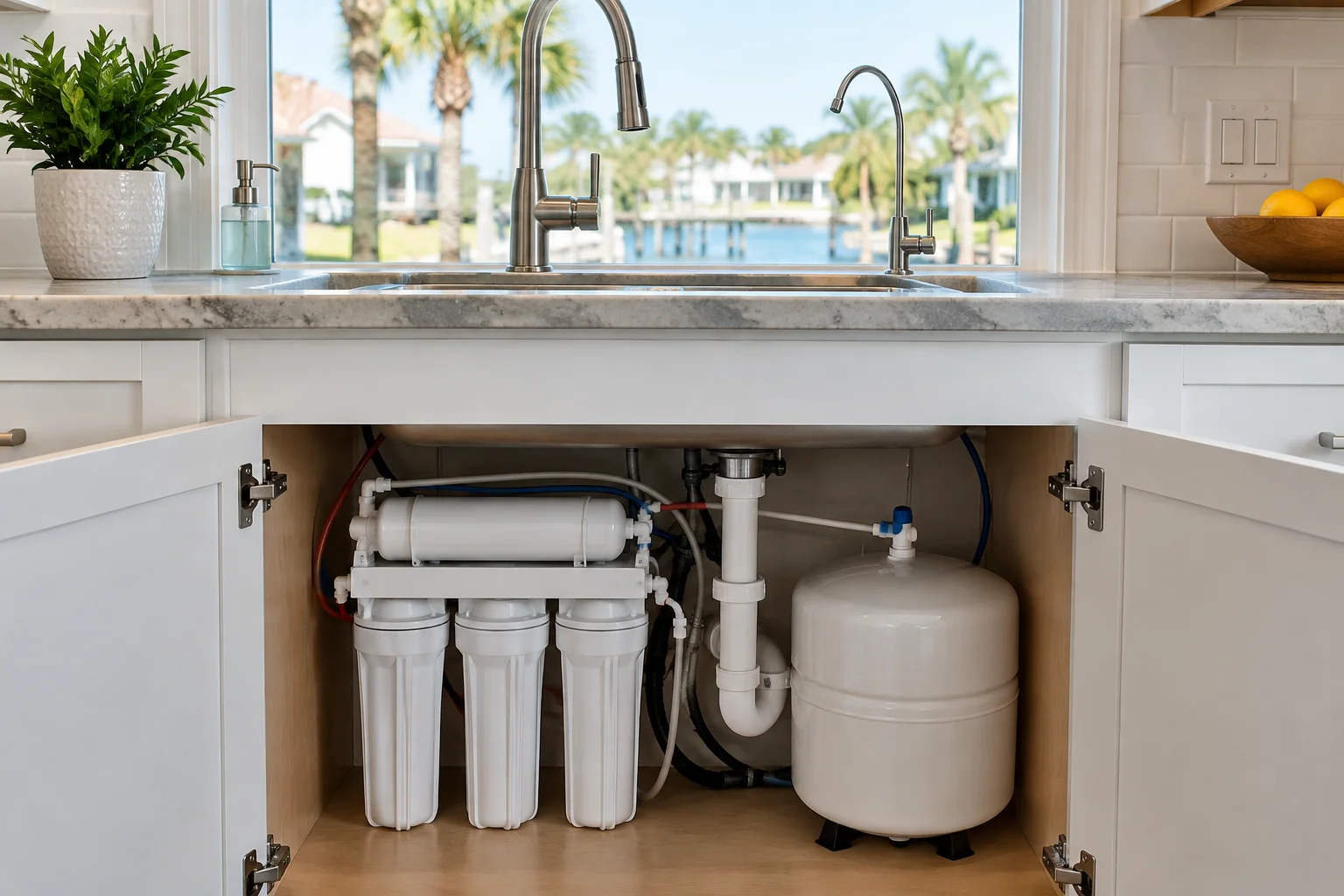
Reverse osmosis is a common choice for kitchen drinking water and cooking water. It is especially popular when taste issues like chlorine taste in water, metallic notes, or unpleasant odors are present. Many households use reverse osmosis at a dedicated drinking faucet or system location.
Searching for reverse osmosis system near me usually means you want reliable performance and a service plan, since filters and membranes require scheduled replacement.
AO Smith water filtration options
AO Smith is a well-known brand for water treatment products. Homeowners may compare AO Smith water filtration options when they want dependable equipment for clean water systems. If you are considering an AO Smith solution, A Superior Mechanical can help evaluate whether softening, filtration, or a combination makes the most sense for your household.
Upper Grand Lagoon climate and household water use: why it matters
Bay County weather can affect how often you run water and how quickly you notice issues. More humid periods can increase the visibility of mineral residue around fixtures. Seasonal changes can also change household usage patterns, which can impact how a softener performs if it is not set appropriately.
For homes with irrigation, frequent laundry, or busy kitchen routines, hardness minerals can build up faster in fixtures and appliances. That is why local water treatment service matters. A system that is correctly sized and tuned for your household helps prevent scale buildup from becoming a recurring problem.
How to tell if you need a tune-up versus a full replacement
Some problems are maintenance related. Others point to aging components or a system that no longer matches your needs.
Consider a professional evaluation if you notice:
- Scale returns quickly after cleaning.
- Soap does not lather or rinse well even after regeneration cycles.
- You see visible sediment or discoloration that softening alone did not address.
- Appliances are wearing out faster than expected.
- Cloudy ice cubes and unpleasant taste persist.
If your unit is older, parts may be wearing out. A technician can check valves, flow rates, and performance. Sometimes a tune-up and media refresh solves the issue. Other times, homeowners may benefit from upgrading to a modern whole home water filtration setup or a refined reverse osmosis system for kitchen water.
Everyday home scenes where better water makes a difference
Better water is not only about preventing scale. It shows up in daily moments.
In the kitchen, clearer glasses and better-tasting coffee can make mornings feel smoother. When you cook with water that tastes clean, you often notice more consistent results in soups, sauces, and rice. Families that previously relied on bottled water for drinking or cooking may find they can use tap water more confidently after proper filtration and softening.
In the bathroom, softer water can mean less dryness and a cleaner rinse. When shampoo and soap work the way they are supposed to, you may feel the difference after the first few showers. Laundry can come out feeling fresher because detergent rinses away more thoroughly.
And behind the scenes, appliances and plumbing can run with less mineral buildup. That means less time scrubbing, fewer emergency repairs, and fewer “why is this using more energy?” surprises.
Local service options and helpful next steps
If you are trying to decide between water softening and whole home water filtration, start by assessing your symptoms. Are you mainly dealing with hard water spots on glass and scale buildup? Softening may be the foundation. Are you also dealing with chlorine taste in water, odor concerns, sediment, or cloudy ice? You may need layered filtration, including reverse osmosis for drinking and cooking.
To explore water softening for Upper Grand Lagoon, visit A Superior Mechanical’s water softening service page for Upper Grand Lagoon. If you want to compare filtration approaches, you can also review water filtration and reverse osmosis with water softeners. For broader coverage in the area, see our Upper Grand Lagoon service area and Bay County service area information.
These related reads can help you connect the dots between water chemistry and long-term protection: Why Water Softening Matters for Upper Grand Lagoon Homes and How Water Softening Protects Rosemary Beach Plumbing from Costly Water Damage. If you are planning fixture upgrades as part of home improvements, you may also like Choosing the Right Time for Plumbing Fixture Replacement in Upper Grand Lagoon. For property owners managing multiple units, A Smarter Way to Handle Commercial Plumbing Services in Upper Grand Lagoon covers maintenance planning that can reduce downtime.
FAQs about water softening and filtration maintenance in Upper Grand Lagoon
Homeowners usually have the same questions once they start noticing scale buildup, dry skin, and taste issues. Here are straightforward answers you can use while planning your next steps.
Find Water Softening in Upper Grand Lagoon, FL
If you need Water Softening in Upper Grand Lagoon, FL, visit our local service page or contact A Superior Mechanical today.
For a broader look at whole-home water filtration, reverse osmosis, and water softener options, visit our water filtration, RO, and water softener page.
Map of Upper Grand Lagoon, FL
Frequently Asked Questions
How often should I have my water softener serviced in Upper Grand Lagoon?
Most households benefit from at least an annual inspection, and sooner if you notice scale returning, soap not lathering, or changes in taste and odor. If you use a lot of water or have seasonal occupancy, a technician may recommend a different schedule.
Does a water softener fix chlorine taste in water and cloudy ice cubes?
A water softener targets hardness minerals that cause scale. If you have chlorine taste in water, unpleasant taste, sediment, discoloration, or cloudy ice cubes, you may need whole home water filtration and, in many cases, reverse osmosis for drinking and cooking water.
Why do my dishes look spotty even after I rinse them well?
Spotting often comes from minerals drying on glass and dish surfaces. If you are seeing hard water spots on glass and streaky dishes, it can indicate your softener needs adjustment or that additional filtration is needed for overall water quality.
What is the difference between water softening and whole home water filtration?
Water softening reduces hardness to prevent scale buildup. Whole home water filtration improves water quality by reducing sediment and other contaminants throughout the home. Many families use both to protect plumbing and enjoy better drinking water.
Can reverse osmosis help with cooking water and coffee taste?
Yes. Reverse osmosis is commonly used for better drinking water and improved cooking water taste. It can help reduce unpleasant flavors and impurities that affect coffee and everyday cooking.
Related Articles
Photo Gallery