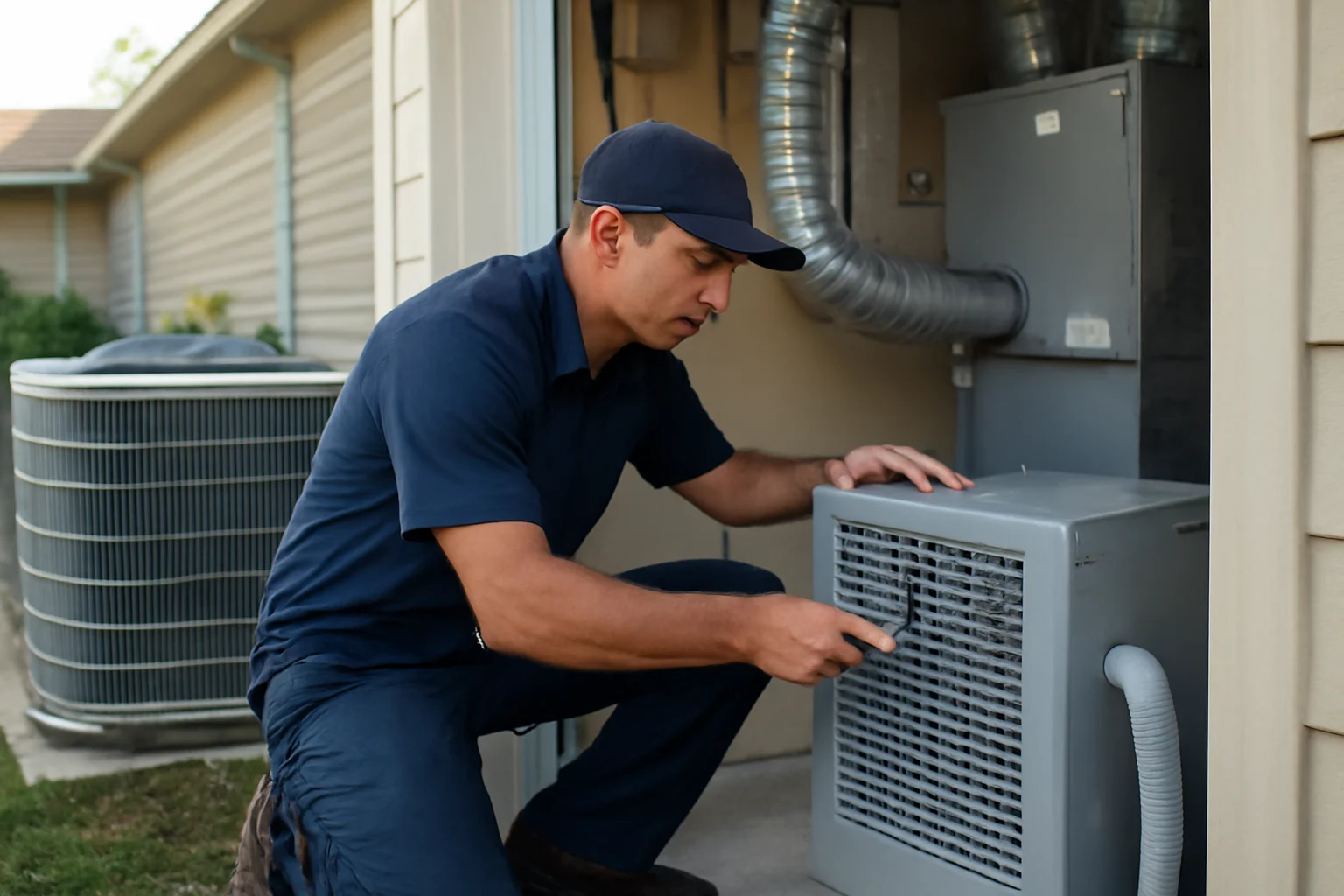
Springfield, Florida feels like home, but the air can be a lot to manage. Between summer heat, coastal salt air, and long humid stretches, indoor humidity can rise faster than most homeowners expect. When moisture builds up, it does more than feel sticky. It can affect airflow, strain HVAC components, and worsen indoor air quality.
A whole home dehumidifier helps control humidity across the entire house, not just one room. With a few practical habits and good maintenance routines, you can keep your system operating more smoothly and reduce the chance of mid-season HVAC headaches. This guide focuses on homeowners in Springfield, FL and how to get better performance from whole home dehumidifiers while supporting preventive HVAC maintenance.
Why Springfield humidity puts extra pressure on HVAC systems
In Springfield and throughout Bay County, the weather often includes hot afternoons, humid nights, and salty air from the Gulf region. Even well-sealed homes can pick up moisture through everyday living: cooking, showers, laundry drying, and even breathing. Add in outdoor humidity that moves through small gaps in ductwork, attic penetrations, and building envelopes, and you have a steady moisture load.
Your air conditioner and heat pump are designed to cool and remove some moisture, but they are not always set up to manage humidity year-round. If the system runs short cycles, if airflow is restricted, or if the thermostat strategy is not aligned with humidity control, indoor relative humidity can stay too high. That’s when problems multiply:
- Comfort drops as humidity makes temperatures feel warmer than they read.
- Condensation risk increases on cool surfaces like duct interiors or near refrigerant lines.
- Indoor air quality suffers when moisture supports mold growth and dust buildup.
- HVAC wear can rise when systems work harder to hit temperature targets without truly controlling humidity.
Whole home dehumidifiers provide a dedicated way to manage moisture, which can help your HVAC system maintain steadier operation and healthier indoor air.
Whole home dehumidifiers: what they do and how they fit with HVAC
Whole home dehumidifiers integrate with your home’s HVAC system to help lower indoor humidity. Depending on the setup, they may work alongside ductwork and the air handling system to distribute drier air more evenly. Many systems also use condensate drainage to remove captured moisture.
The key idea for Springfield homeowners is that humidity control is not just a comfort feature. It supports the performance of your refrigerant system, helps keep airflow balanced through ductwork, and reduces the conditions that allow mold and musty odors to develop.
If you are considering installation, it helps to review your home’s layout, ductwork condition, and thermostat settings with a local HVAC company. An HVAC contractor near me can confirm whether your current setup is limiting airflow or moisture removal, and whether your system replacement plan should include dehumidification upgrades.
Simple habits that improve dehumidifier performance
You do not need to become an HVAC technician. But a few consistent habits can make a noticeable difference in humidity levels, system run time, and indoor comfort.
1) Set humidity goals on the thermostat and dehumidifier controls
Many homeowners focus only on temperature. In humid climates, humidity targets matter just as much. Use the dehumidifier controls and thermostat settings together so your HVAC does not fight humidity or cycle excessively.
If you notice the house feels damp even when temperatures are comfortable, it is often a sign that humidity control needs adjustment. A licensed HVAC contractor can help you align thermostat behavior with dehumidification so your system is not working against itself.
2) Keep air filters clean and airflow steady
Airflow restrictions can reduce how effectively your HVAC system and dehumidifier move air through the home. When airflow drops, moisture removal becomes less consistent, and the refrigerant system can operate under less ideal conditions.
Replace or clean filters on schedule. If you have pets, frequent dust, or construction activity, you may need to check filters more often. If you are also dealing with duct repair concerns, airflow issues can compound quickly.
3) Watch for condensate drainage problems
Whole home dehumidifiers typically rely on condensate drainage to remove water. If drainage is blocked or the line is improperly routed, moisture can back up and reduce performance. It can also create unwanted indoor moisture near mechanical equipment.
During routine checks, look for signs of standing water near the unit, slow draining, or unusual gurgling sounds. If you suspect condensate drainage is not working correctly, schedule HVAC service rather than trying to improvise solutions.
4) Use bathroom and kitchen exhaust correctly
Exhaust fans are not optional in humid Florida homes. Run them during showers and cooking, and give them a few minutes afterward to pull out moist air. This reduces the moisture load that your dehumidifier and AC have to handle.
When exhaust fans are weak, poorly vented, or not functioning, indoor humidity can rise quickly. If you are unsure whether your ventilation is adequate, ask your HVAC company to coordinate whole home comfort improvements with indoor air quality services.
5) Manage indoor sources of humidity
Simple changes can lower the moisture load:
- Use a vented dryer and avoid drying clothes indoors.
- Cover pots while cooking and keep lids on when possible.
- After washing, reduce the amount of time wet towels and laundry sit indoors.
- Check for leaks around plumbing fixtures and roof penetrations, since moisture can enter the home and overwhelm humidity control.
Even though this article focuses on HVAC, moisture sources often overlap. If humidity keeps rising despite proper dehumidifier operation, it is worth investigating the home’s overall moisture pathways with a professional.
6) Keep doors and airflow paths open
In many homes, humidity control depends on air movement through living spaces and return pathways. If you frequently close doors to rooms with higher humidity or block vents, the dehumidifier may not distribute drier air where it is needed most.
If your home has ductwork that serves distant rooms differently, consider a duct inspection to confirm airflow balance. Proper distribution supports both indoor air quality and HVAC efficiency.
7) Avoid thermostat “set and forget” during shoulder seasons
Spring and fall can be tricky in Springfield. The temperature swings can make it tempting to rely on temperature-only settings. But humidity can remain high when outdoor air is still moisture-rich.
During these transitional periods, check that your thermostat strategy still supports humidity control. If your home feels sticky on mild days, you may need to fine-tune settings or schedule system service to confirm the dehumidification system is operating as intended.
Common signs your humidity control needs attention
Homeowners often notice humidity issues before they understand what is causing them. Here are practical signs that your whole home dehumidifier setup, ductwork, or HVAC operation may need help.
Musty odors or visible moisture
A musty smell, condensation on windows, or damp spots near vents can indicate that moisture is not being removed consistently. Sometimes the issue is control settings, but sometimes it is airflow, condensate drainage, or ductwork performance.
Rooms feel clammy even when temperatures are “right”
If your thermostat reads a comfortable temperature but the air feels humid, humidity control is not keeping up. Whole home dehumidifiers can help, but they must be set appropriately and supported by good airflow.
Frequent short cycling or unpredictable comfort
When HVAC equipment short cycles, it may not run long enough to remove moisture effectively. This can lead to a loop of comfort problems. A professional can evaluate how your refrigerant system and airflow are performing together.
Inconsistent dehumidifier operation
If the dehumidifier seems to run constantly or not at all, the controls, drainage, and system integration may be off. Do not assume it is “just the weather.” Salt air, dust buildup, and normal wear can all affect performance over time.
How maintenance habits prevent HVAC issues
Whole home dehumidifiers are part of a larger comfort system. Preventive HVAC maintenance helps keep the HVAC side and the dehumidification side working in harmony.
Keep indoor air quality services on your radar
Controlling moisture supports indoor air quality by reducing the conditions that help mold and mildew grow. Pair humidity control with smart filtration and ductwork care. If you are considering duct cleaning near me or duct repair near me searches due to odors or visible dust, talk to your HVAC contractor about how cleaning and humidity control should coordinate.
Check ductwork performance, not just the equipment
In humid Florida homes, duct leaks and poor airflow distribution can move moisture-laden air into areas where it condenses. That can increase musty odors and strain both the air conditioner and dehumidifier.
A duct inspection can help identify airflow problems that affect dehumidification and comfort. If your home has older ductwork, renovations, or rooms that never feel right, ducts may be a major factor.
Confirm thermostat and control strategy
Thermostats are the “brain” of temperature and, in some setups, humidity management. If your thermostat settings do not align with your dehumidifier operation, you may experience comfort swings and unnecessary HVAC run time. A local HVAC company can review your thermostat setup during routine service.
If you are planning new ductwork, new construction upgrades, or a full HVAC refresh, it is also a good time to consider how dehumidification will be integrated. For Springfield homeowners building or upgrading, explore New Construction Air Conditioning and discuss dehumidification needs early so comfort is designed in from day one.
Emergency cooling concerns during humid weather
Springfield summers can escalate quickly. If your AC or heat pump fails during a peak humidity period, indoor conditions can become uncomfortable fast, and humidity can spike even if temperatures are tolerable at first.
Whole home dehumidifiers help reduce humidity, but they are not a substitute for emergency cooling when the air conditioning or heat pump is down. If you need AC repair near me or air conditioning repair near me due to sudden comfort failures, contact a professional HVAC company promptly. Moisture control and cooling are connected, especially when indoor humidity rises and airflow changes.
Also, if you notice unusual sounds, persistent error codes, or burning smells, treat it as a safety issue. Do not attempt to diagnose refrigerant system problems or electrical issues yourself. An in-person evaluation is the right next step.
Why professional local HVAC service matters in Bay County
Humidity control is not one-size-fits-all. Springfield homes vary in insulation levels, ductwork layouts, and how well they handle airflow. Salt air exposure can add extra dust and corrosion risk to HVAC components over time. Older homes may have duct leaks or uneven airflow that makes dehumidification harder.
A Superior Mechanical can help homeowners in Springfield and across Bay County by evaluating how your HVAC system, ductwork, thermostat settings, and dehumidifier integration work together. That matters for both comfort and preventive HVAC maintenance.
If you are researching whole home dehumidifiers, it is worth choosing a local provider that understands the humidity load and airflow realities of the area. You can also browse HVAC services in Springfield to see what else may help your home’s comfort, including duct and airflow support.
When you should consider dehumidifier upgrades or system replacement planning
Sometimes the best move is not just “better maintenance,” but updated equipment or improved integration. Consider discussing upgrades if:
- Your home repeatedly feels damp despite consistent thermostat and dehumidifier settings.
- You have ductwork changes, additions, or room conversions that altered airflow patterns.
- Your HVAC system is aging and you are planning HVAC replacement near me searches because comfort issues keep returning.
- You notice persistent indoor air quality concerns tied to humidity, odors, or dust.
When planning HVAC replacement, dehumidification should be part of the conversation. A new AC or heat pump setup can be more compatible with whole home humidity control, but it still needs correct ductwork performance and a thermostat strategy that matches your home.
If your home uses multiple zones or you are considering air distribution changes, it can also be helpful to compare options like Ductless Mini-Splits for comfort planning, with dehumidification discussed as part of the overall design.
Questions Springfield homeowners can ask during a dehumidifier service visit
When you schedule an HVAC company near me for whole home dehumidifier help, these questions can keep the conversation practical and focused:
- Are my current thermostat and humidity settings aligned with how my system runs in Springfield humidity?
- Is my ductwork supporting balanced airflow for consistent dehumidification?
- Is condensate drainage working properly, and is the drainage path correct for my setup?
- Could airflow restrictions or filter conditions be reducing moisture removal effectiveness?
- Are there any indoor air quality concerns that humidity control alone will not solve?
- If my HVAC equipment is aging, should I plan for air conditioning replacement or heat pump service alongside dehumidification?
These questions help ensure your HVAC service visit is about the whole comfort system, not just the symptom you notice on a humid day.
Local reading that can help you maintain better humidity control
If you want more practical guidance, these related reads can help you connect dehumidifier performance with HVAC maintenance routines:
- Why Better HVAC Maintenance Matters for Whole Home Dehumidifiers in Sandestin
- Getting More Life and Better Results From Whole Home Dehumidifiers in Upper Grand Lagoon
- What Destin Homeowners Often Miss About Whole Home Dehumidifiers
- What Laguna Beach Homeowners Should Know About Whole Home Dehumidifiers and Smarter Maintenance
Different coastal communities share similar humidity challenges, and the maintenance principles translate well to Springfield.
Where to start if you want healthier air and fewer HVAC problems
If you are dealing with persistent humidity, musty odors, or inconsistent comfort, start by getting your whole home system evaluated. Whole home dehumidifiers can be a strong part of preventive HVAC maintenance, but they work best when airflow, condensate drainage, thermostat settings, and HVAC performance are all aligned.
For Springfield homeowners, the most direct next step is to review your dehumidifier needs and integration with whole home dehumidifier installation. If you want to explore broader service options, visit the Springfield service area or browse Bay County HVAC services.
Better humidity control is not just about feeling comfortable. It is about protecting ductwork performance, supporting refrigerant system operation, improving indoor air quality, and lowering the stress that humid Florida air can place on your HVAC equipment.
Find Whole Home Dehumidifiers in Springfield, FL
If you need Whole Home Dehumidifiers in Springfield, FL, visit our local service page or contact A Superior Mechanical today.
Map of Springfield, FL
Frequently Asked Questions
How do I know if my Springfield home needs a whole home dehumidifier instead of relying on my AC?
If your home feels clammy even when temperatures are comfortable, you notice musty odors, or humidity stays high during periods when your AC cycles short, a whole home dehumidifier can help. A professional assessment can confirm whether airflow, thermostat settings, and dehumidification integration are the real drivers.
What are the most common whole home dehumidifier problems in humid Florida homes?
Common issues include condensate drainage problems, airflow restrictions from dirty filters, ductwork performance problems, and control settings that do not match Springfield humidity patterns. Salt air and dust buildup can also affect system cleanliness over time.
Can high indoor humidity cause HVAC repair needs?
Yes. High humidity can contribute to condensation where it should not be, increase musty odors and indoor air quality concerns, and create comfort complaints that lead to more frequent or longer HVAC operation. If airflow or ductwork is affected, it can also increase strain on the system.
How often should I check or maintain my whole home dehumidifier?
Follow the maintenance intervals recommended for your specific system, and plan for seasonal checks in Florida’s humid climate. Many homeowners benefit from pairing dehumidifier maintenance with routine HVAC maintenance so filters, airflow, condensate drainage, and control settings are all reviewed together.
Should I try to troubleshoot refrigerant or electrical issues with my dehumidifier or HVAC system myself?
No. Refrigerant systems and electrical components require in-person evaluation and safe handling. If you see unusual error codes, persistent performance failures, or signs of a safety concern, contact a licensed HVAC contractor for diagnostics.
Related Articles
- Why Better HVAC Maintenance Matters for Whole Home Dehumidifiers in Sandestin
- Getting More Life and Better Results From Whole Home Dehumidifiers in Upper Grand Lagoon
- What Laguna Beach Homeowners Should Know About Whole Home Dehumidifiers and Smarter Maintenance
- What Destin Homeowners Often Miss About Whole Home Dehumidifiers
Photo Gallery