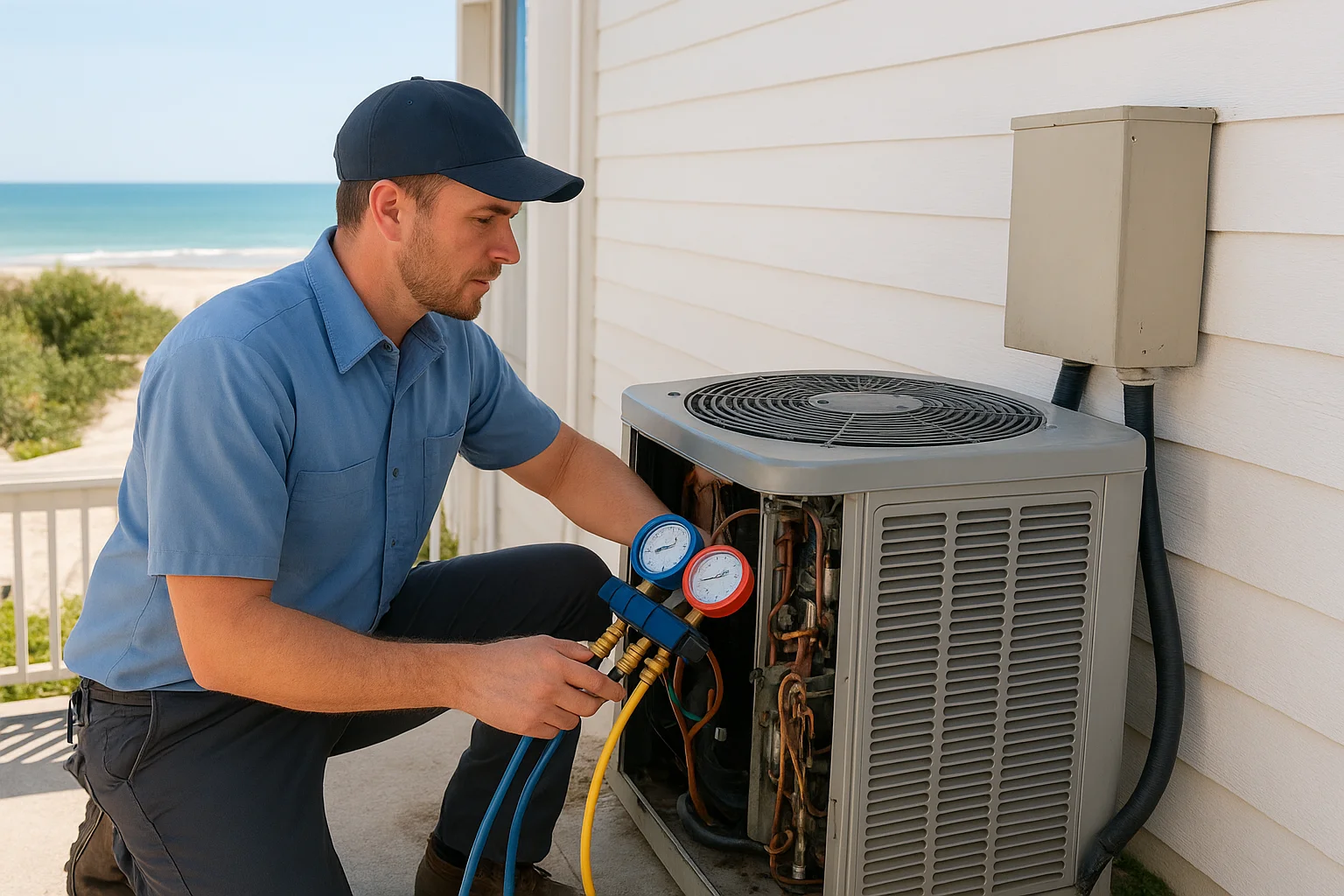
Sandestin, FL is beautiful, but the climate is hard on HVAC equipment. Long stretches of heat and humidity, plus the salt air that comes with coastal living, can wear down the components that manage your heating system. When heating control systems start to degrade, the result is often uneven comfort, higher energy use, and frustrating temperature swings that feel like the HVAC is “almost working.”
At A Superior Mechanical, we help homeowners protect heating control performance in Sandestin homes, rentals, and commercial spaces. This guide explains how wear and tear affects heating control systems, what homeowners should watch for, and how preventive HVAC maintenance can reduce the odds of a bigger breakdown during Florida’s hottest stretches.
Heating control systems do more than set the temperature
Most people think of a thermostat as the “on and off” switch for heating. In reality, heating control systems manage how your system responds to indoor comfort needs. Depending on your setup, controls may coordinate:
- Thermostats (programmable, smart, or zoned controls)
- Zoning (multiple temperature areas with dampers)
- Control boards and wiring between the thermostat, air handler, heat pump, or furnace
- Airflow signals that help the system run at the right time and fan speed
- Safety and protection functions that prevent unsafe operation
When these parts wear, the HVAC may still run, but it can run inefficiently or inconsistently. In Sandestin’s humid coastal environment, that inconsistency can be especially noticeable because comfort depends on both temperature and humidity control.
How Florida heat, humidity, and salt air accelerate control wear
Sandestin homes often have HVAC systems operating year-round, with frequent transitions between heating needs and cooling needs. That cycle alone adds wear. Add Florida’s climate factors and the stress increases.
1) Humidity can affect thermostat operation and wiring connections
High humidity can creep into mechanical closets, attic spaces, or return air pathways. Over time, moisture exposure can lead to corrosion at low-voltage connections, sensor drift, or intermittent communication between the thermostat and the rest of the system. Even small issues can cause the heating control system to misread conditions and respond incorrectly.
2) Salt air can speed up corrosion on exposed components
Coastal air carries salt particles that can settle on metal surfaces and electronics. While many systems are built to handle normal indoor conditions, salt air can increase corrosion risk for contact points, terminals, and control board components. Corrosion does not always show up immediately, which is why homeowners may notice “mystery” behavior months later.
3) Heat can shorten component life inside air handlers and heat pump equipment
Control boards, relays, and sensors live in equipment cabinets where temperatures can rise during operation. Florida heat and long run times can increase thermal stress. Thermal stress can contribute to intermittent failures, especially in components that switch frequently or operate under variable airflow conditions.
4) Airflow problems can make controls look like the issue
Heating controls rely on airflow to achieve the temperature and comfort goals they are programmed to meet. When ductwork has restrictions, leaks, or poor duct sealing, airflow can drop. That can cause the system to cycle more often, run longer than expected, or struggle to reach setpoints. The thermostat may “call for heat” repeatedly, while the system cannot deliver consistent airflow, creating a feedback loop that feels like a thermostat problem.
Common signs heating control systems are under strain
Wear and tear often shows up as behavior, not a single dramatic failure. Here are the patterns homeowners in Sandestin commonly report.
Temperature swings and inconsistent comfort
If your home feels too warm, then too cool, or rooms never match the thermostat setting, the issue may involve thermostat accuracy, zoning control performance, or control board response. In zoned systems, a stuck damper or failing zone control can create uneven heating and comfort.
Short cycling or frequent calls for heat
When controls are misreading conditions or when airflow and system performance do not align, the thermostat may trigger more frequent heating cycles. Short cycling increases wear on the heating system and can also raise energy use because the system does not run long enough to stabilize.
Delayed response after adjusting the thermostat
Homeowners sometimes notice a lag between changing the set temperature and feeling heat. Delays can point to communication issues, sensor problems, or control board timing behavior. A professional can verify whether the thermostat is sending the correct signals and whether the system is responding as expected.
Heating runs when it should not, or stops too early
In some cases, heating may stop before the home reaches the setpoint. In other cases, it may run longer than expected. Both patterns can be linked to thermostat settings, sensor drift, or control logic reacting to incorrect input. It can also be influenced by ductwork performance and overall system airflow.
Humidity discomfort even when temperatures seem correct
Florida humidity is persistent. Heating control systems often interact with how the system moves air through the home. If indoor air quality is suffering, or if airflow through returns and supply vents is uneven, comfort can feel “off” even when the temperature reading looks reasonable. This is one reason heating control problems often overlap with indoor air quality concerns.
Where wear and tear shows up inside the system
Heating control issues can originate in several places. Below are common areas that technicians evaluate during HVAC repair and heating control service visits.
Thermostats and temperature sensors
Thermostats include sensors that measure indoor temperature. Over time, sensors can drift or respond slowly. Some smart thermostats also depend on wireless communication and power stability. If the thermostat is exposed to heat sources, direct sunlight, or drafts, readings can become inaccurate, leading to poor control decisions.
Zoning controls, dampers, and zone boards
Zoning adds complexity, and wear can appear as stuck dampers, inconsistent damper travel, or zone control board issues. If one zone never reaches comfort while others cycle normally, the cause is often tied to airflow balance and how the dampers respond to the thermostat’s calls.
Control boards and relays
Control boards coordinate relays, blower operation, and safety functions. Corrosion, thermal stress, and vibration can contribute to intermittent behavior. Homeowners may notice symptoms that come and go, especially when the weather is hottest or most humid.
Low-voltage wiring and connection points
Heating controls typically use low-voltage wiring. Loose connections, corrosion at terminals, or damaged insulation can create inconsistent signals. Because these issues can be subtle, they are difficult to confirm without an in-person inspection.
Air handling components that affect the control loop
Airflow influences how quickly the home warms. If filters are clogged, returns are blocked, or ductwork has leaks, the system may not deliver the heating output the controls expect. That mismatch can cause the thermostat to keep calling for heat and can increase energy use.
How refrigerant systems and condensate drainage can indirectly affect controls
Heating control systems do not directly “handle” refrigerant, but they coordinate operation with heat pump and other refrigerant-based equipment. When refrigerant systems or condensate drainage are not performing normally, controls may react through safety behavior, altered timing, or protective shutdowns.
Heat pump coordination and refrigerant-related performance
Heat pumps use refrigerant to move heat. If the system is not operating within normal performance ranges, the heating output may be inconsistent. Controls may then cycle more frequently or fail to maintain comfort. A professional evaluation is required before making any conclusions about refrigerant systems, because incorrect assumptions can lead to unnecessary parts changes.
Condensate drainage issues can create cascading problems
In humid Florida conditions, condensate drainage matters. A clogged drain line or drainage pan problems can lead to shutdowns or comfort issues, especially when the system transitions between cooling and heating seasons. Even if your symptom seems like a thermostat problem, drainage and airflow should be checked as part of a complete troubleshooting approach.
Why ductwork and airflow matter for heating control accuracy
Ductwork is often the missing link between “the thermostat says heat” and “the home feels warm.” In Sandestin, where humidity and coastal air can affect how homes breathe, airflow problems can show up as comfort complaints that mimic control issues.
Common ductwork and airflow problems include:
- Leaky ductwork that loses conditioned air before it reaches rooms
- Blocked or undersized returns that restrict airflow
- Ducts with poor insulation that struggle to maintain stable temperatures
- Airflow imbalance between supply and return pathways
When airflow is unstable, heating control systems may keep trying to correct what they think is a temperature problem. That increases energy use and can wear out system components faster.
Energy use and indoor air quality: the hidden costs of control problems
Heating control systems that are not responding correctly can raise energy use. Frequent cycling, longer run times, or repeated calls for heat can all increase electricity consumption. In Sandestin, where summer humidity drives long HVAC run times, energy waste can add up quickly.
There is also an indoor air quality angle. When airflow is inconsistent, air may not move through filtration and ventilation pathways as intended. That can affect how comfortable the home feels and how clean the air distribution is throughout living spaces. If you are noticing stale air, uneven room comfort, or lingering humidity, it is smart to connect heating control concerns with broader HVAC performance, including whole home dehumidifier maintenance.
Preventive HVAC maintenance that protects heating controls
Preventive maintenance is where homeowners get the most leverage. Controls are part of a system, and wear often starts small. A Superior Mechanical focuses on the kinds of checks that help heating control systems stay stable through Florida’s humid seasons.
Schedule seasonal tune ups with a focus on controls and airflow
During HVAC maintenance, technicians can inspect thermostat operation, verify that control signals match system behavior, and check airflow performance. This includes evaluating filters, checking air handler operation, and looking for signs of duct restriction or airflow imbalance.
Keep thermostat placement and settings realistic
Even the best thermostat can underperform if it is installed in a location with direct sun, heat from appliances, drafts, or airflow dead zones. If you recently noticed control changes after furniture moved or after insulation or window changes, thermostat placement and programming should be reviewed.
Address humidity and drainage early
Because condensate drainage and humidity are tied to comfort in Sandestin, maintenance should include checking drainage pathways, verifying proper condensate removal, and confirming that the system is handling moisture as expected.
Inspect ductwork performance and return airflow
If your home has hot or cold spots, maintenance should consider ductwork and airflow. If you suspect duct repair is needed, it is better to address airflow issues before they create persistent control complaints.
If you want a deeper look at how small issues grow over time, read Keeping Heating Control Systems on Track in Sandestin Homes Before Small Issues Grow.
When to call a local HVAC contractor in Sandestin
Some heating control issues are quick fixes, while others require careful troubleshooting. If you notice any of the patterns below, it is a good idea to reach out to a licensed HVAC contractor for an in-person evaluation.
- Temperature changes do not match thermostat settings
- Heating cycles too frequently or stops too soon
- Zoned comfort is inconsistent across rooms
- Thermostat behavior is intermittent, especially during humid or coastal weather
- Your system struggles to maintain comfort and energy use feels unusually high
Homeowners searching for HVAC repair near me often discover that the “control” problem is actually a combination of controls, airflow, and system performance. A Superior Mechanical can evaluate your heating control system and related HVAC components together, rather than guessing from symptoms alone.
Residential, rental, and commercial systems need different attention
Sandestin includes a mix of primary homes, vacation rentals, and commercial spaces. Each type of property has different usage patterns, occupancy schedules, and comfort expectations.
For rentals and commercial properties, heating control stability is also tied to indoor air quality and predictable comfort. If you manage a business or a multi-unit property, consider a maintenance approach that reduces downtime and supports consistent operation. For commercial setups, you may also want to review how installation planning affects long-term control performance. Learn more in Keeping Sandestin Buildings Comfortable Starts With Smarter Commercial HVAC Installation and explore commercial HVAC repair or property management HVAC services.
How heating control systems connect to HVAC replacement decisions
Sometimes wear and tear leads to repeated repairs, and homeowners start weighing HVAC replacement near me. Even then, the control system decision should be based on an on-site evaluation. Controls may be updated while other parts are repaired, or the entire system may be considered if performance is consistently unreliable.
A Superior Mechanical can help you understand the role heating control systems play in overall performance, including how thermostats and zoning controls interact with heat pump operation, ductwork airflow, and humidity management. If replacement is part of the conversation, you can also explore Heating Services and Air Conditioning Replacement depending on your equipment type and comfort needs.
Extra caution for refrigerant-based heating systems and emergencies
If your system includes a heat pump or other refrigerant-based heating method, control issues can sometimes overlap with equipment protection behaviors. A professional should evaluate the system in person before any refrigerant diagnosis or repair plan is assumed.
Also, Florida weather can shift quickly. If you are dealing with a cooling concern alongside heating control problems, it is worth acting early. During uncomfortable conditions, homeowners may search for emergency AC repair near me to restore comfort. Even if your main issue is heating control performance, a technician can check how the system is operating across modes and help you avoid compounding problems.
Local context: why a Sandestin HVAC company matters
Sandestin homes are influenced by coastal air, humidity, and airflow challenges that are different from inland regions. That local context matters when troubleshooting heating control systems. A technician familiar with Walton County homes can better interpret how salt air corrosion, high humidity, and ductwork realities affect thermostat performance, zoning behavior, and heating comfort.
To explore service options across the area, visit our Sandestin service page and our Walton County service area.
If you want help with heating control systems specifically, start with heating control systems in Sandestin. Whether you need thermostat installation, zoning control support, or troubleshooting for inconsistent heating behavior, the goal is the same: smarter control, steadier comfort, and HVAC performance you can count on.
For homeowners comparing HVAC contractor options, choose a team that treats heating controls as part of the whole system, including airflow, indoor air quality, and how the heating equipment responds under Florida’s humidity and heat. That is often the difference between a short-term fix and a long-term comfort solution.
Find Heating Control Systems in Sandestin, FL
If you need Heating Control Systems in Sandestin, FL, visit our local service page or contact A Superior Mechanical today.
Map of Sandestin, FL
Frequently Asked Questions
Can a worn thermostat make my heating system run inefficiently in Sandestin humidity?
Yes. If the thermostat sensor drifts or connections degrade, it can misread indoor temperature and trigger more frequent heating cycles. That can lead to uneven comfort and higher energy use. An in-person inspection is the safest way to confirm what is happening.
Why does my home have hot and cold rooms even when the thermostat is set correctly?
Hot and cold spots often point to ductwork airflow issues, zoning control performance, or thermostat placement. In zoned systems, a damper that does not open fully can prevent heat from reaching one area. A technician can evaluate airflow and control operation together.
Could salt air and humidity cause heating control problems?
They can. Coastal salt air can contribute to corrosion on terminals and control components. Humidity can also affect low-voltage wiring connections and sensors. These effects may cause intermittent behavior that gets worse over time.
Is it safe to diagnose refrigerant or replace parts without an on-site HVAC inspection?
No. Control symptoms can overlap with heat pump and refrigerant system performance, but refrigerant diagnosis and equipment replacement decisions should be based on a professional, on-site evaluation.
What preventive maintenance helps protect heating control systems the most?
Seasonal tune ups that include thermostat and control checks, airflow verification, filter and return inspections, and attention to condensate drainage help keep the control loop stable. If you are dealing with humidity or indoor air quality concerns, maintenance should address those factors too.
Related Articles
- Keeping Heating Control Systems on Track in Sandestin Homes Before Small Issues Grow
- Why Better HVAC Maintenance Matters for Whole Home Dehumidifiers in Sandestin
- Commercial HVAC Services in Sandestin, FL: Answers to Common Questions
- Keeping Sandestin Buildings Comfortable Starts With Smarter Commercial HVAC Installation
Photo Gallery