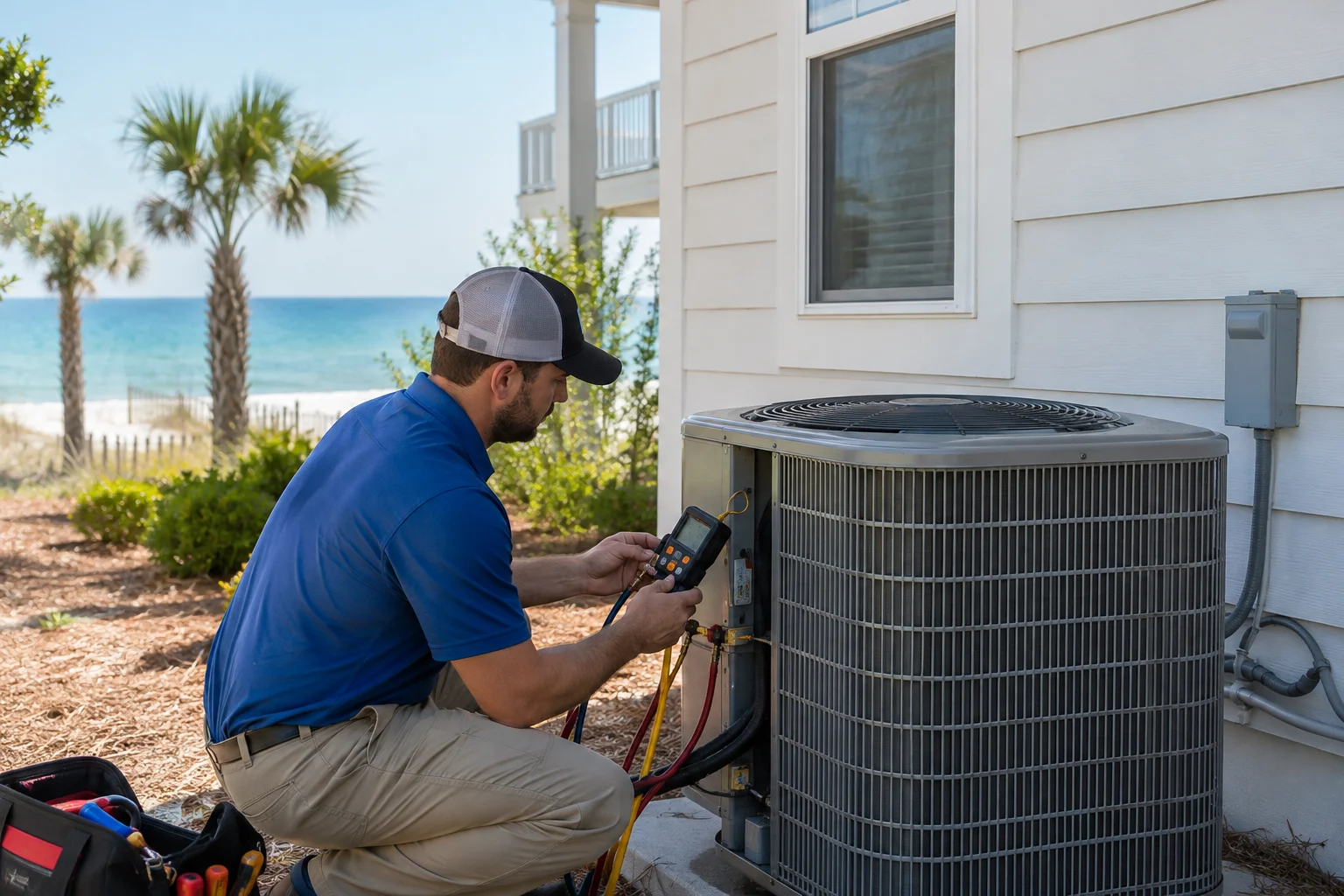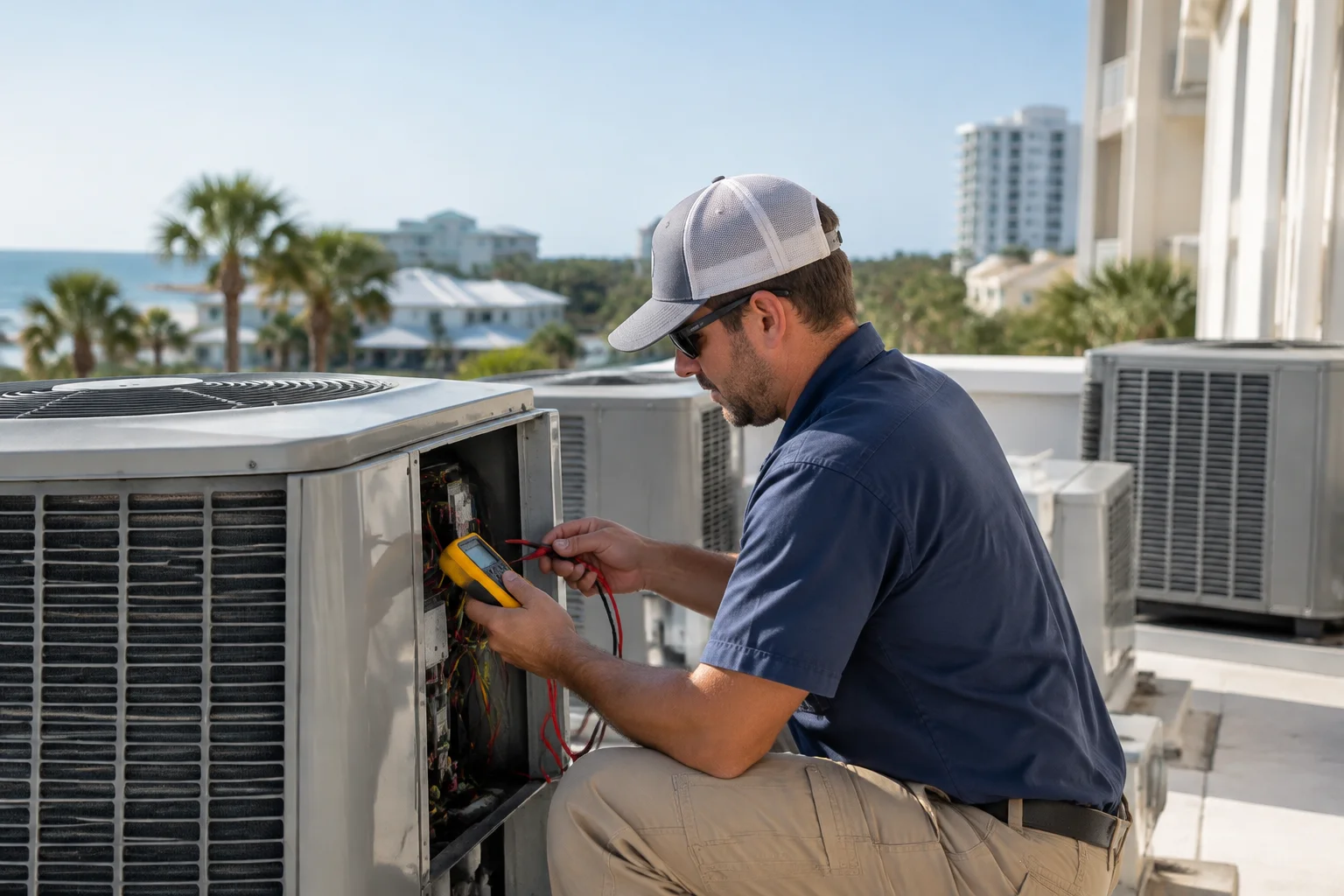
Living on the 30A corridor means your HVAC system works hard year-round. Long stretches of heat, Gulf humidity, and salt air can speed up wear on components that homeowners rarely think about until something feels “off.” When HVAC parts age and airflow drops, ductwork can collect more debris and moisture. That combination is one reason duct cleaning sometimes gets postponed, then becomes urgent when comfort problems turn into emergency cooling concerns.
How HVAC wear and tear changes what happens inside your ductwork
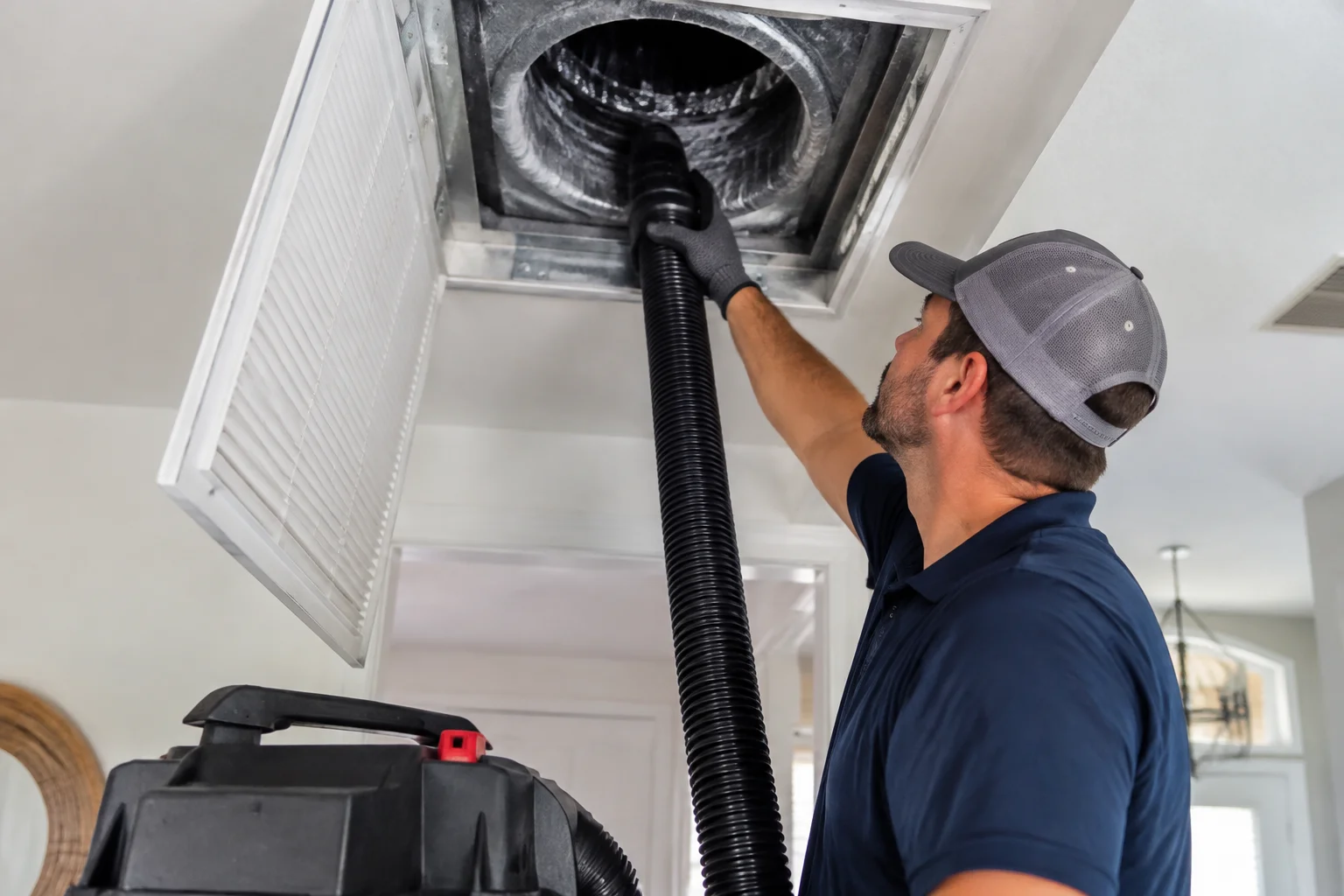
Duct cleaning is not only about dust on the visible grilles. It is about the way air moves through your system. Over time, HVAC wear can reduce airflow, alter pressure, and increase the amount of dust, lint, and other buildup that circulates through the home.
In 30A, the environment adds extra stress. Humid air can lead to condensation in places it should not be, and salt-laden air can contribute to residue that clings to surfaces. Meanwhile, older ductwork and aging insulation can make it easier for contaminants to accumulate.
When homeowners delay duct inspection or skip preventive HVAC maintenance, the system often compensates until it cannot. That is where duct cleaning becomes connected to fewer HVAC emergencies.
Florida heat and humidity: the moisture factor that increases duct buildup
In Walton County, summer humidity is a constant. Your air conditioner and heat pump use refrigerant systems to remove heat and humidity from indoor air. As the indoor air is cooled, moisture condenses on the indoor coil and is directed to the condensate drainage system.
When airflow is restricted, the system can run in ways that increase strain. The coil may not operate as efficiently, and moisture management becomes more sensitive. If condensate drainage is partially blocked or the system is not maintaining proper airflow, moisture can contribute to dampness in supply and return areas. Damp conditions are one reason ductwork can develop musty odors and collect more debris over time.
Duct cleaning helps address the accumulation, but it works best when the underlying airflow and humidity contributors are also understood. That is why homeowners often benefit from pairing ductwork service with an HVAC inspection focused on airflow.
Salt air and dust: why 30A ductwork collects more residue than many expect
Even homes that are not directly on the beach still experience Gulf breezes. Salt air can mix with airborne dust and pollen, then settle inside ductwork and on blower components. Over time, residue builds up in places where air changes direction, such as near elbows, transitions, and branch runs.
As that buildup increases, airflow can decline. Reduced airflow makes the HVAC system work harder to reach the temperature set on the thermostat. Homeowners may notice:
- Longer cooling cycles
- Rooms that feel warmer or cooler than others
- More frequent cycling or short cycling
- Higher energy use during peak months
- More dust on surfaces after the system runs
Those symptoms are common reasons homeowners search for air conditioning repair near me or a HVAC contractor near me, but ductwork can be part of the story. Duct cleaning can remove debris that is feeding airflow problems, while an HVAC inspection can identify whether the system is also suffering from wear in the blower, filters, or coil performance.
Wear on filters, blowers, and coils can make duct cleaning more urgent
HVAC systems are designed for a specific airflow range. Wear and tear can shift that range. Here are a few common HVAC wear patterns that affect duct cleaning outcomes and comfort reliability in 30A homes:
1) Filters that are overdue or not sealing well
When filters are clogged or not properly seated, more fine particles can pass into the system. That increases dust load in the ducts and on internal components. In humid Florida conditions, that dust can behave differently than it would in a drier climate.
Replacing filters on schedule and checking filter fit are part of preventive HVAC maintenance. If you notice dust buildup quickly, it is worth asking for a duct inspection near me and an HVAC airflow check.
2) Blower wear and restricted airflow
Motors, belts (if applicable), and blower wheels can accumulate residue and wear over time. Dirt and buildup can also change airflow patterns. When air cannot move as designed, the system may struggle to cool consistently, which raises the risk of breakdown during the hottest weeks.
3) Coil and condensate drainage strain
Air conditioners and heat pumps depend on refrigerant systems to transfer heat and remove humidity. If airflow is restricted, coil performance can suffer. Moisture management becomes more sensitive, and condensate drainage issues can contribute to odors or dampness. That can make duct cleaning more than a “cleanliness” task and more of an indoor air quality and system reliability issue.
Signs your ductwork and HVAC wear are working together against you
Homeowners in 30A often notice symptoms before a full failure. These signs can point to duct buildup, airflow restriction, or HVAC wear that will make duct cleaning more important:
- Uneven temperatures between rooms, especially on second floors or guest areas
- Visible dust returning to surfaces soon after cleaning
- Musty odors that show up during humid weather or after the system has run for a while
- Longer run times with the thermostat set to a comfortable temperature
- More frequent calls for AC repair during peak summer weeks
If you are considering duct replacement near me or duct sealing near me because airflow seems “impossible to fix,” start with a duct inspection near me and an HVAC evaluation. Duct cleaning is most effective when it targets the actual airflow and contamination problem.
Why duct cleaning should be paired with preventive HVAC maintenance
Duct cleaning can remove debris from supply and return systems, which can improve airflow and support healthier indoor air quality. But duct cleaning alone does not correct HVAC wear that is causing poor airflow, moisture imbalance, or inefficient operation.
For 30A homeowners, duct cleaning works best as part of a broader approach:
- Airflow assessment so you understand how the system is distributing air
- Thermostat review to confirm the system is responding correctly to set points
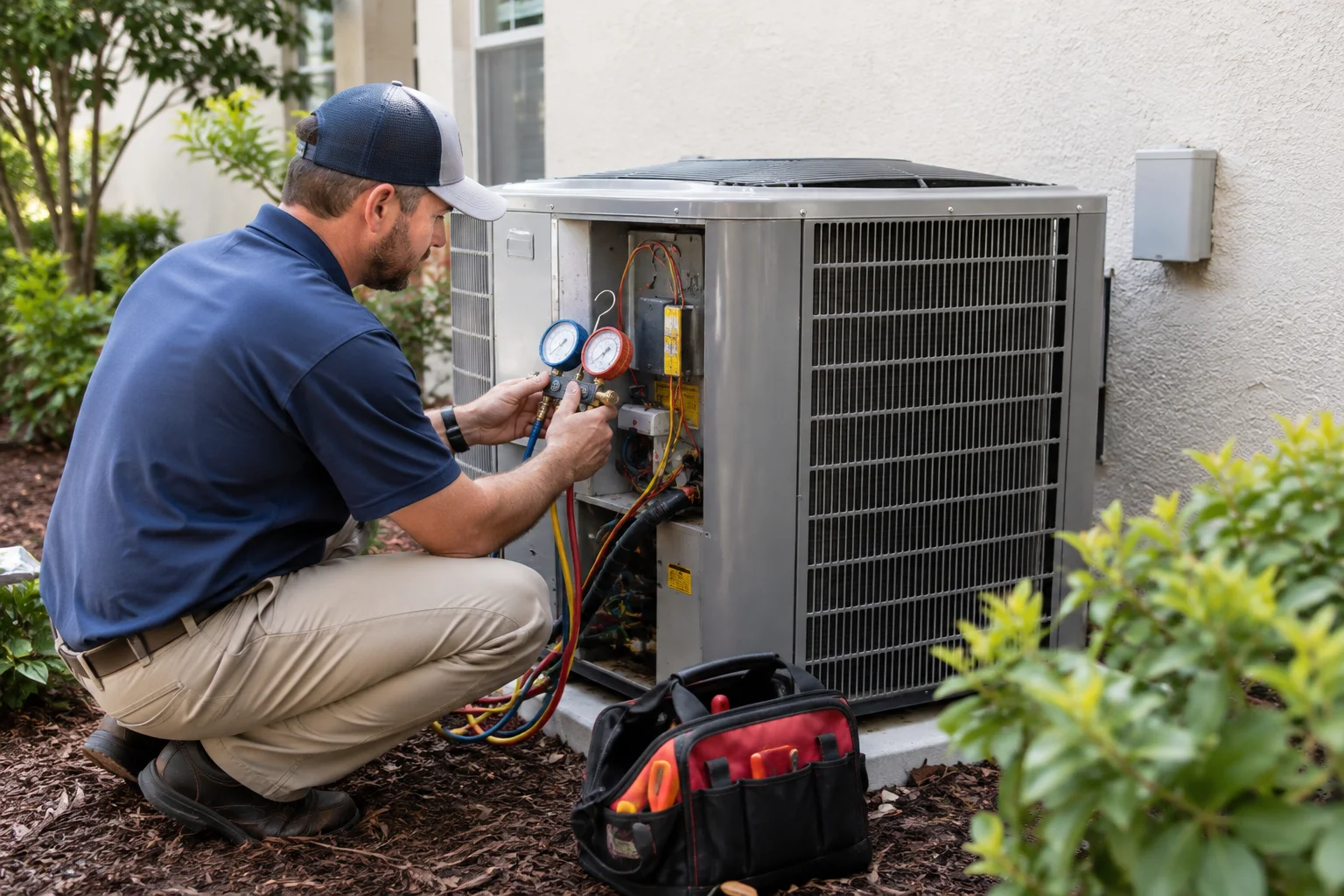
- Refrigerant system awareness so technicians can evaluate performance during an in-person inspection without jumping to diagnosis from symptoms alone
- Condensate drainage checks to reduce moisture-related buildup
- Filter and ductwork condition review so debris sources are addressed
That same preventive mindset can help reduce emergency cooling concerns, especially when the summer heat is intense and you need the system to be reliable.
What homeowners should ask about during a duct cleaning appointment
When you schedule duct cleaning in 30A, ask questions that connect ductwork service to HVAC reliability and indoor air quality. A professional HVAC company should be able to explain the process clearly and tailor it to your home.
How will you evaluate airflow and ductwork condition first?
Look for technicians who treat duct cleaning as part of the HVAC system, not a standalone task. You want a duct inspection that considers where debris is accumulating and how airflow is moving through your ductwork.
What about moisture and condensate drainage?
If humidity has been high or you have noticed odors, ask whether the team will evaluate the system conditions that lead to dampness. This is especially relevant in Florida heat and humidity.
Will you address airflow restrictions that make debris keep returning?
Dust and debris can come back if the system is pulling in particles through leaks or if airflow is restricted. A good HVAC contractor near me should coordinate ductwork service with inspection steps that reduce the chance of repeat buildup.
How do you protect indoor air quality during cleaning?
Indoor air quality is a major reason homeowners book duct cleaning. Ask how the process is managed to minimize dust release and keep the work area controlled.
30A home types and why ductwork issues show up differently
30A includes a mix of primary residences, vacation rentals, and commercial spaces. Each has different HVAC usage patterns, which can affect duct buildup and system wear.
Vacation rentals and frequent occupancy changes
Vacation rentals often have thermostat changes between stays, windows open for short periods, and higher turnover for cleaning. When HVAC systems run after long breaks, dust that settled in ductwork and on coils can circulate. Duct cleaning support plus preventive maintenance helps reduce the chance of a mid-stay comfort problem.
Property managers can also benefit from a plan that aligns with occupancy cycles. If you manage units, consider Property Management HVAC Services.
Coastal homes with airflow challenges
Coastal architecture can create areas with weaker airflow due to duct runs, floor plans, and pressure differences. If ductwork is not balanced, some rooms may stay warmer, forcing the thermostat to call for more cooling. That extra run time increases wear on the system and can raise energy use.
Commercial spaces and steady demand
Commercial systems often run more consistently and can be more sensitive to airflow restrictions. If ductwork buildup is limiting airflow, the system may struggle to maintain comfort under load. For property owners, Keeping 30A Commercial Spaces Comfortable Before HVAC Trouble Spreads is a helpful read for planning around seasonal stress.
How duct cleaning can help reduce HVAC emergencies during peak summer
Emergency HVAC calls often spike when the system is already working at high demand. In 30A summers, that means heat and humidity are at their peak, and the HVAC system is running longer to maintain comfortable indoor conditions.
When ductwork accumulates debris and airflow is restricted, the system has to work harder. That increases stress across components in the air conditioning service pathway, including blower operation, coil performance, and overall system efficiency. Over time, wear can lead to failures when you least want them.
Duct cleaning helps by addressing one side of the airflow equation. It supports better circulation, can reduce dust and odor sources, and can improve indoor air quality. But the best approach is to combine duct cleaning with preventive HVAC maintenance so the refrigerant system, condensate drainage, and thermostat behavior are all operating as they should.
If your system is showing symptoms like uneven cooling or musty odors during humid weather, you do not want to wait until an emergency AC repair situation happens. Homeowners searching for air conditioning repair near me can also ask whether ductwork service is relevant to the airflow problem they are experiencing.
Choosing professional duct cleaning in Walton County
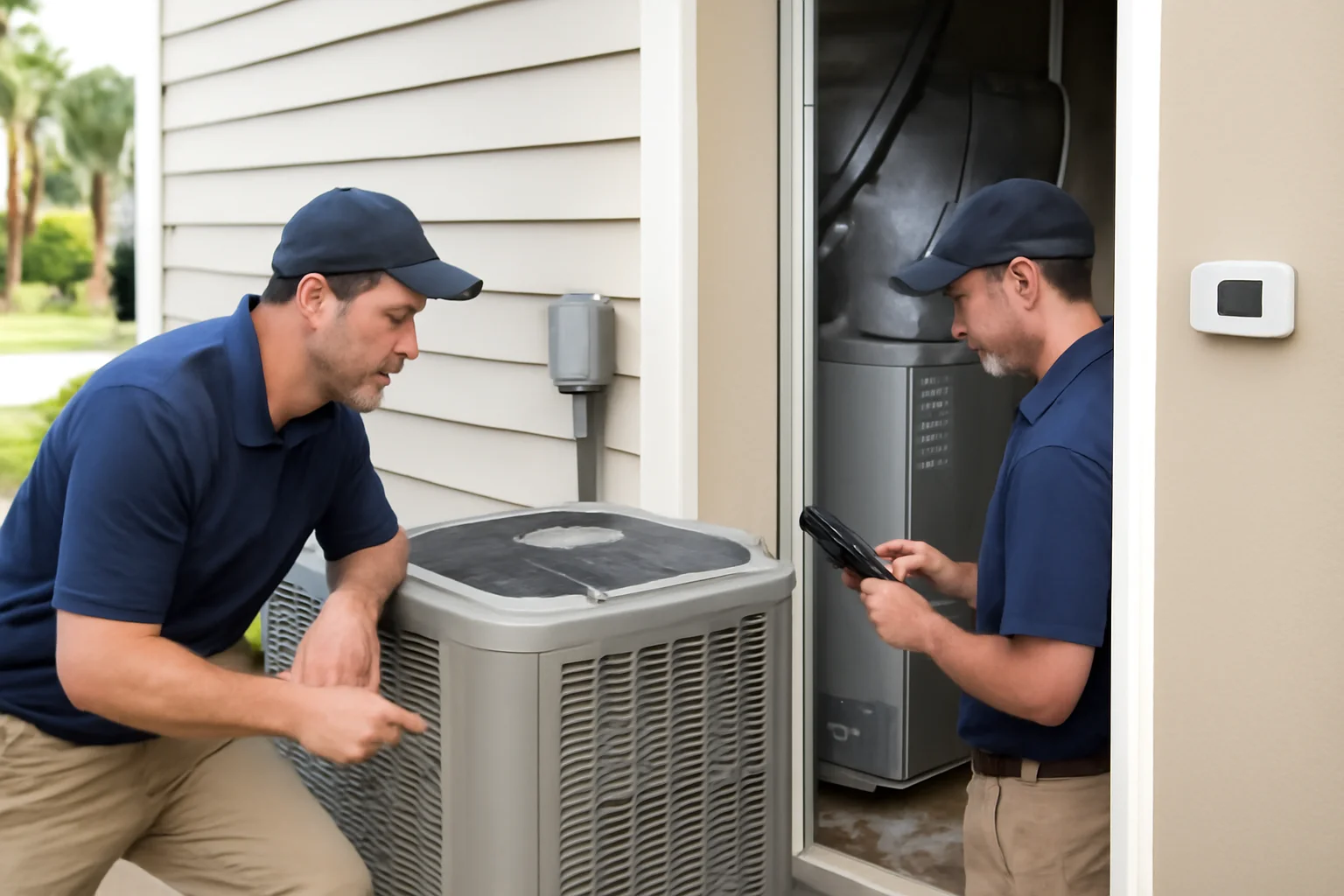
Professional duct cleaning matters because ductwork is part of the HVAC system. A qualified HVAC company can evaluate your ductwork condition, consider indoor air quality goals, and help you understand how HVAC wear and humidity management may be contributing to buildup.
A Superior Mechanical provides professional duct cleaning in 30A to remove dust, allergens, odors, and humidity-related buildup from your duct system. You can explore service details here: duct cleaning in 30A, FL. For broader service area information, visit 30A, FL and Walton County.
If your home also needs a broader HVAC tune-up, pairing ductwork service with an AC tune up near me approach can help you stay ahead of seasonal stress. For more preventive guidance, read Keeping 30A Homes Ahead of Duct Cleaning Problems During Seasonal Stress and Why Preventive HVAC Service Pays Off for Air Conditioning Repair in 30A, FL.
When to call an HVAC professional instead of waiting
It is reasonable to schedule duct cleaning when you want better indoor air quality, cleaner airflow, or fewer dust and odor complaints. But if you are seeing symptoms tied to airflow and humidity, call a professional sooner.
Contact an HVAC contractor near me if you notice:
- Musty or stale odors that increase during humid weather
- Rooms that consistently fail to reach comfortable temperatures
- Short cycling, repeated shutdowns, or sudden changes in cooling performance
- Visible dust coming from vents soon after cleaning
- Condensate drainage concerns, like water around equipment or recurring moisture smells
And if you are facing emergency cooling concerns, prioritize safety and comfort. You can ask for guidance on emergency AC repair near me while also planning ductwork service once the immediate issue is addressed.
Related HVAC services that often connect to duct cleaning needs
Duct cleaning may be the right step, but it is not the only one. Depending on your system and symptoms, homeowners may also benefit from:
- Air conditioning inspection to evaluate system performance with your specific airflow conditions: Air Conditioning Inspection
- Air conditioning systems support when older equipment needs a more complete evaluation: Air Conditioning Systems
- VRF multi-zone systems for properties with complex zoning where ductwork and airflow balance can be especially important: VRF Multi-Zone Systems
If you are considering HVAC replacement near me or system replacement, remember that decisions should be based on an in-person evaluation. Duct cleaning can improve airflow and indoor air quality, but it does not automatically mean replacement is needed.
How to support better airflow between duct cleaning visits
You can help your ductwork and HVAC system stay cleaner and more reliable between professional visits. These steps are simple, practical, and aligned with preventive HVAC maintenance:
- Change filters on the schedule recommended for your system and ensure proper fit
- Keep supply and return vents clear so airflow is not blocked
- Use the thermostat consistently and avoid extreme swings that can stress the system
- Watch for moisture signs like recurring odors, visible water, or dampness near equipment
- Schedule seasonal checkups before the hottest weeks so worn components can be addressed early
These habits support indoor air quality and can reduce the chance that duct buildup turns into a cooling emergency.
For homeowners in 30A, the goal is straightforward: cleaner indoor air, steadier airflow, and fewer surprises when temperatures climb. When HVAC wear and tear is addressed alongside duct cleaning, your system is better positioned to handle Florida heat, humidity, and salt air without pushing into emergency territory.
Find Duct Cleaning in 30A, FL
If you need Duct Cleaning in 30A, FL, visit our local service page or contact A Superior Mechanical today.
Map of 30A, FL
Frequently Asked Questions
Can HVAC wear and tear make duct cleaning less effective?
Yes. If airflow is restricted due to worn blower components, dirty or poorly sealing filters, or moisture and condensate drainage issues, debris can keep accumulating. Professional duct cleaning works best when paired with an HVAC inspection that addresses the airflow and humidity contributors.
How does Florida humidity affect indoor air quality and duct buildup?
Humidity can contribute to condensation on cooling coils and increase the chance of dampness-related residue in ductwork. That can lead to musty odors and more dust sticking to surfaces. Improving moisture management and supporting proper airflow helps duct cleaning goals last longer.
What are common signs that duct cleaning is needed in a 30A home?
Look for uneven temperatures, dust returning quickly, musty odors during humid weather, and increased run times. If you also notice signs of condensate drainage problems, ask for an HVAC inspection along with duct inspection near me.
Should I schedule duct cleaning before or after an AC tune up?
Often, it helps to coordinate both. A tune-up or inspection can identify airflow restrictions and system wear that affect duct performance. Your technician can then recommend duct cleaning in a way that supports indoor comfort and healthier HVAC operation.
Will duct cleaning fix an AC that stops cooling?
Duct cleaning can improve airflow and reduce debris-related restrictions, but it will not replace proper troubleshooting for cooling system problems. If the AC is not cooling, request in-person service so a technician can evaluate refrigerant system performance, condensate drainage, thermostat operation, and overall system condition.
Related Articles
Photo Gallery