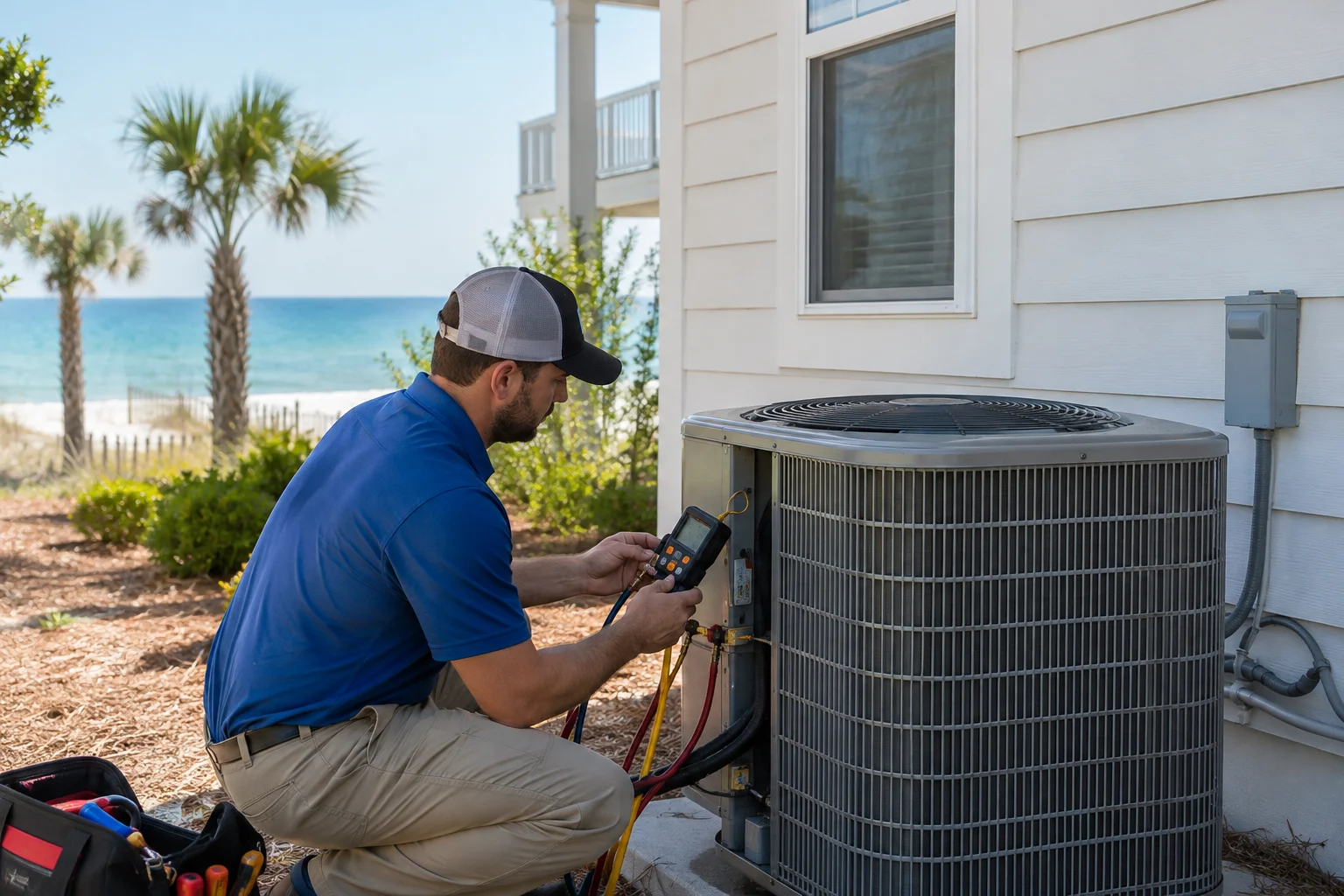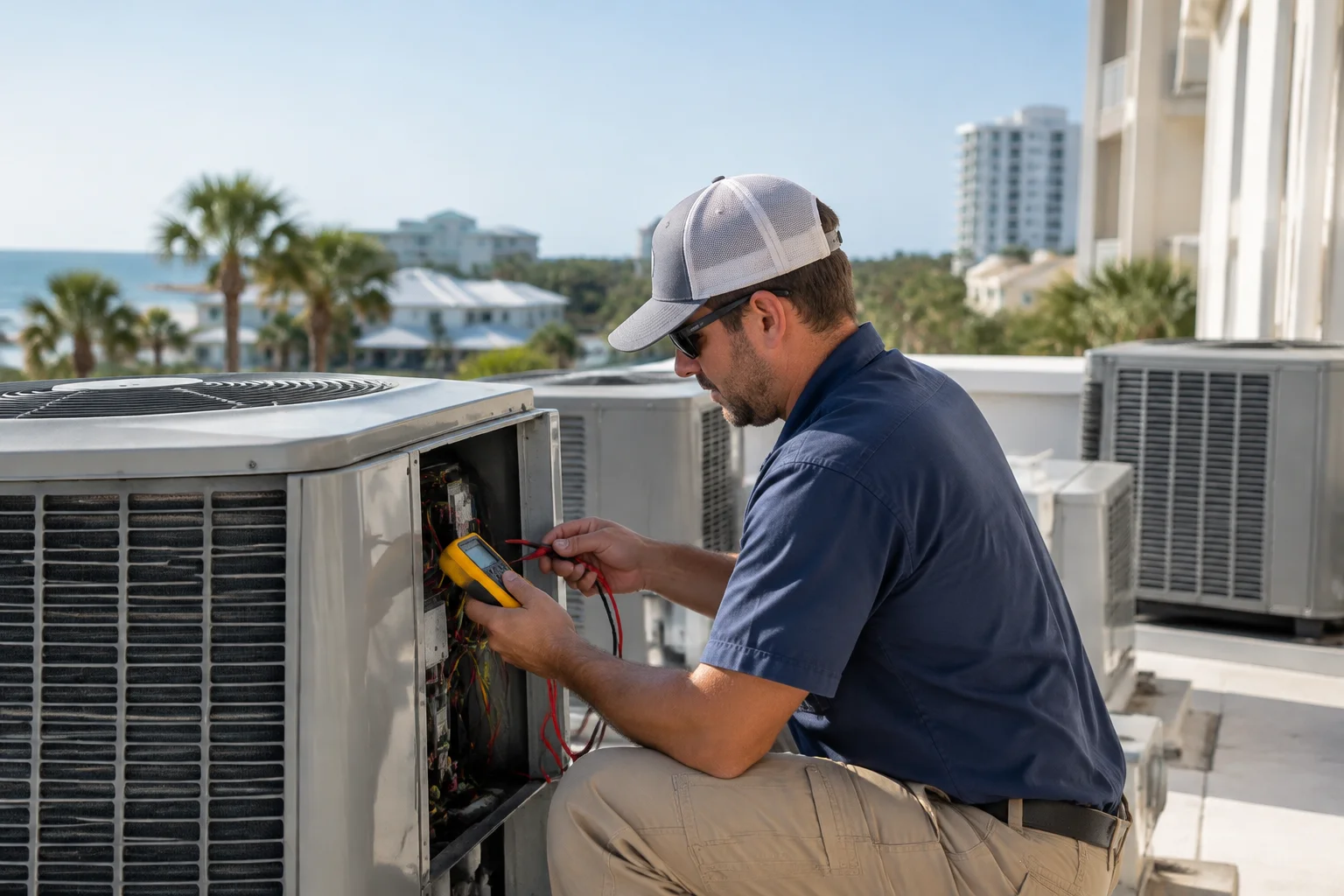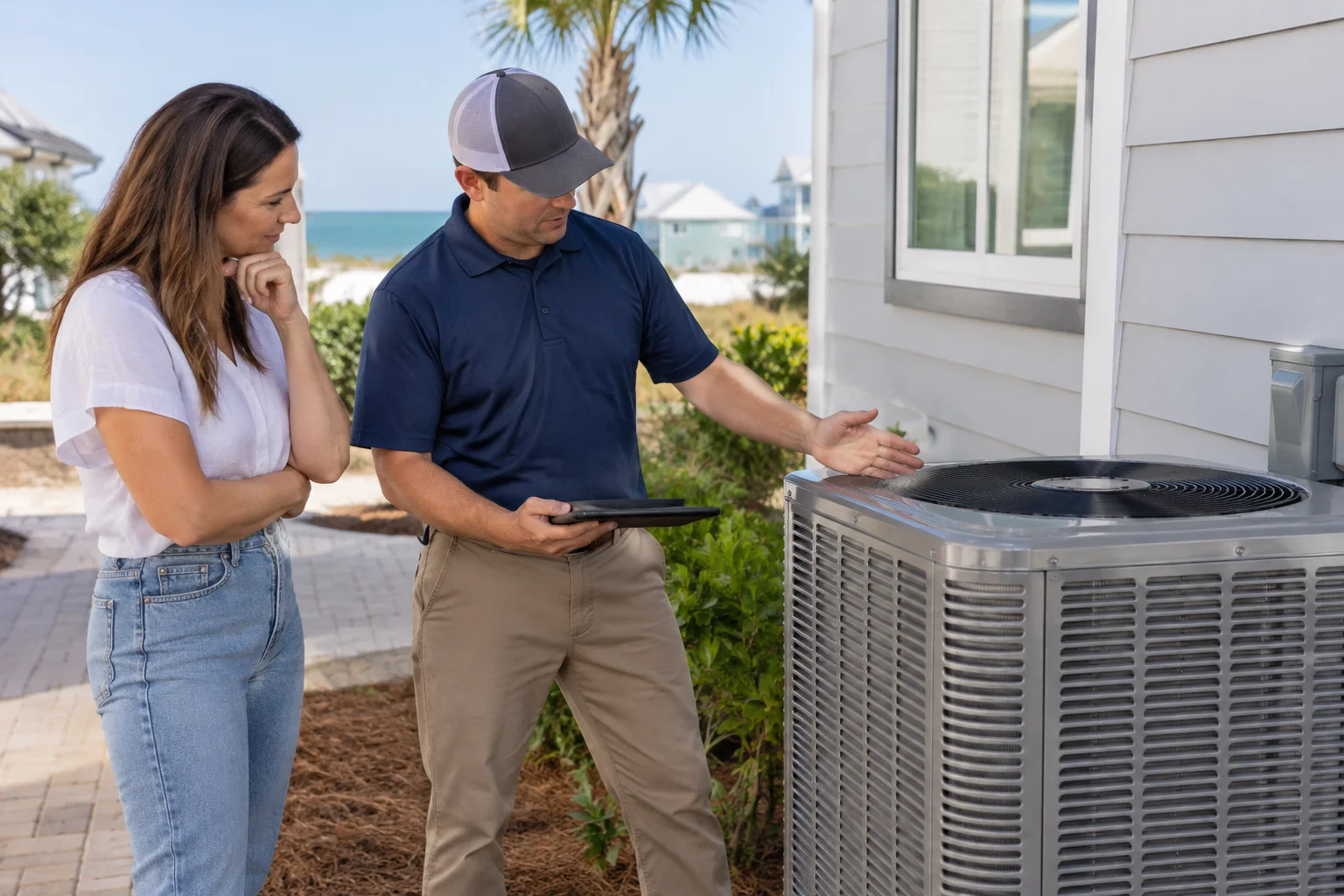
Camp Creek, FL businesses do not just fight the heat. They also manage Florida humidity, coastal salt air exposure, and constant airflow demands that can stress commercial HVAC systems. When a building gets a new commercial HVAC installation in Camp Creek, the work should not stop at startup and thermostat setup. Ongoing HVAC maintenance is what keeps the installation performing as designed, especially when indoor conditions swing through summer.
Below is a practical look at how preventive HVAC maintenance supports commercial comfort and helps control heat and humidity. You will also find maintenance tips, common issues seen in Walton County buildings, and guidance on when to call a local HVAC professional like A Superior Mechanical.
Florida heat and humidity put commercial HVAC systems under real pressure
In Camp Creek, the HVAC load is rarely simple. Warm outdoor air brings moisture, and that moisture can infiltrate through building gaps, door openings, duct leakage, and imperfect insulation. If the system cannot remove humidity reliably, you end up with uncomfortable indoor air, condensation risk, and higher energy use.
Commercial HVAC installation decisions and maintenance routines both matter because they affect:
- Airflow across coils and through ductwork, which influences cooling performance and humidity control.
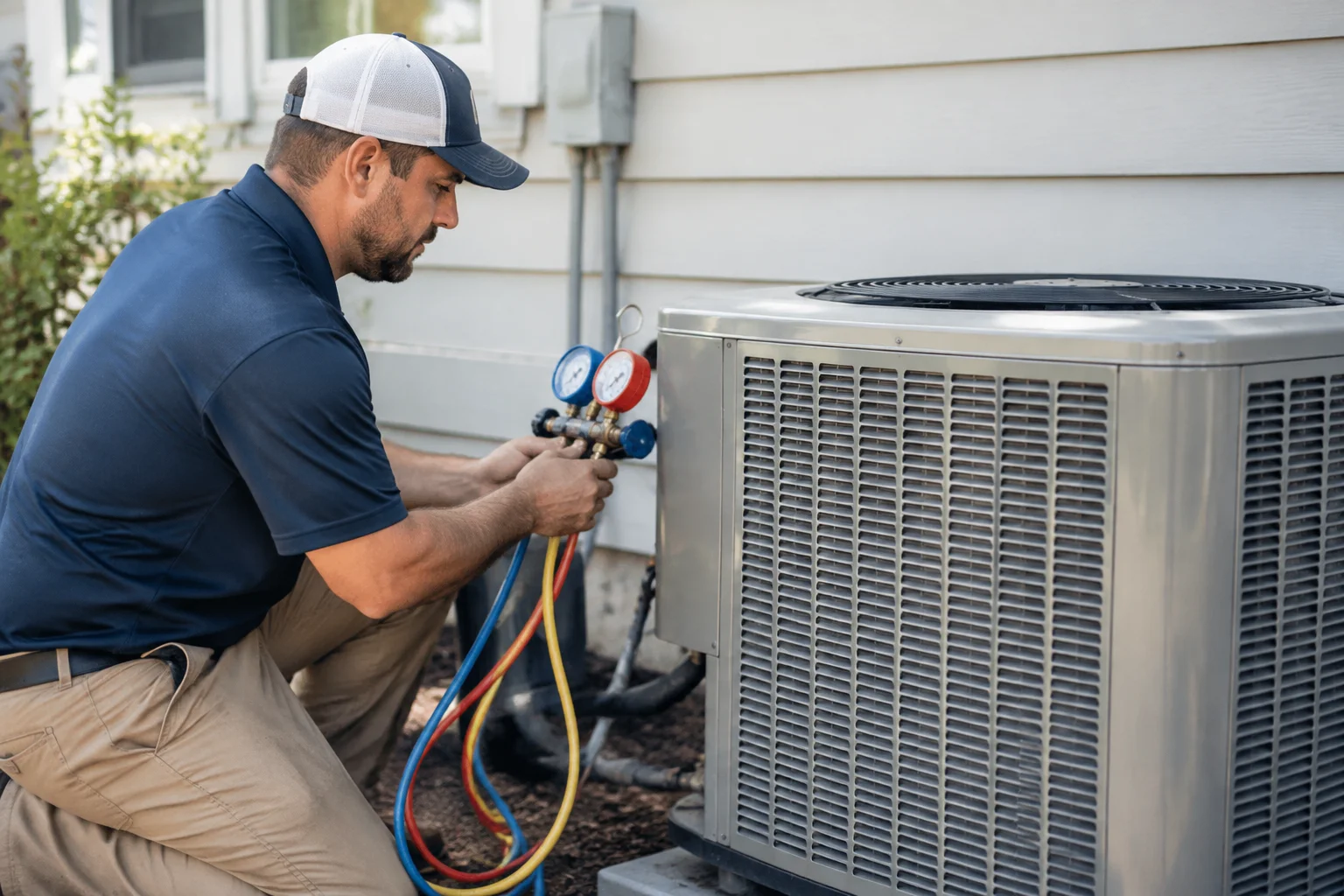
- Refrigerant system performance, which should be evaluated by professionals to ensure the system is operating correctly.
- Condensate drainage, which helps prevent water-related problems when the system dehumidifies.
- Thermostat behavior and control accuracy, which impacts cycling and comfort stability.
- Indoor air quality, including dust, microbial growth risk, and ventilation balance.
Maintenance is what protects these elements over time, especially as filters load up, coils collect debris, and ductwork accumulates dust.
How maintenance supports the performance of a new commercial HVAC installation
Many people think of HVAC maintenance as something you do only after a problem appears. For commercial buildings, maintenance is better viewed as part of protecting the installation’s long-term performance. When maintenance is done well, it helps the system deliver the comfort goals you expect from an installation.
1) Airflow stays balanced, so humidity control remains reliable
Cooling does more than lower temperature. It also removes moisture as air passes over evaporator coils. If airflow is restricted by dirty filters, blocked returns, or duct leakage, the coil may not perform as intended. That can reduce dehumidification and make the space feel clammy even when the thermostat reads “cool.”
Preventive HVAC maintenance typically includes inspecting airflow paths, verifying return and supply conditions, and checking that dampers and registers are not obstructed. For homeowners searching for HVAC maintenance near me for commercial-style systems, the key is to ask how airflow and ductwork are evaluated, not just whether the thermostat turns on.
2) Coils and drain lines stay clean to prevent condensate problems
When systems dehumidify, condensate drainage becomes critical. If drain lines are partially blocked or if drainage is not flowing properly, you can see issues like water damage, microbial growth, and musty odors. In a humid coastal climate, even small drainage problems can become bigger fast.
Professional maintenance routines help keep condensate drainage moving and reduce the risk of clogged drain paths. This matters for commercial operations where downtime is expensive and emergency cooling concerns can disrupt business.
3) Refrigerant systems perform as intended when airflow and maintenance are consistent
Refrigerant systems are designed to operate within specific conditions. Over time, airflow changes and coil buildup can shift how the system behaves. That is why maintenance and refrigerant performance are connected.
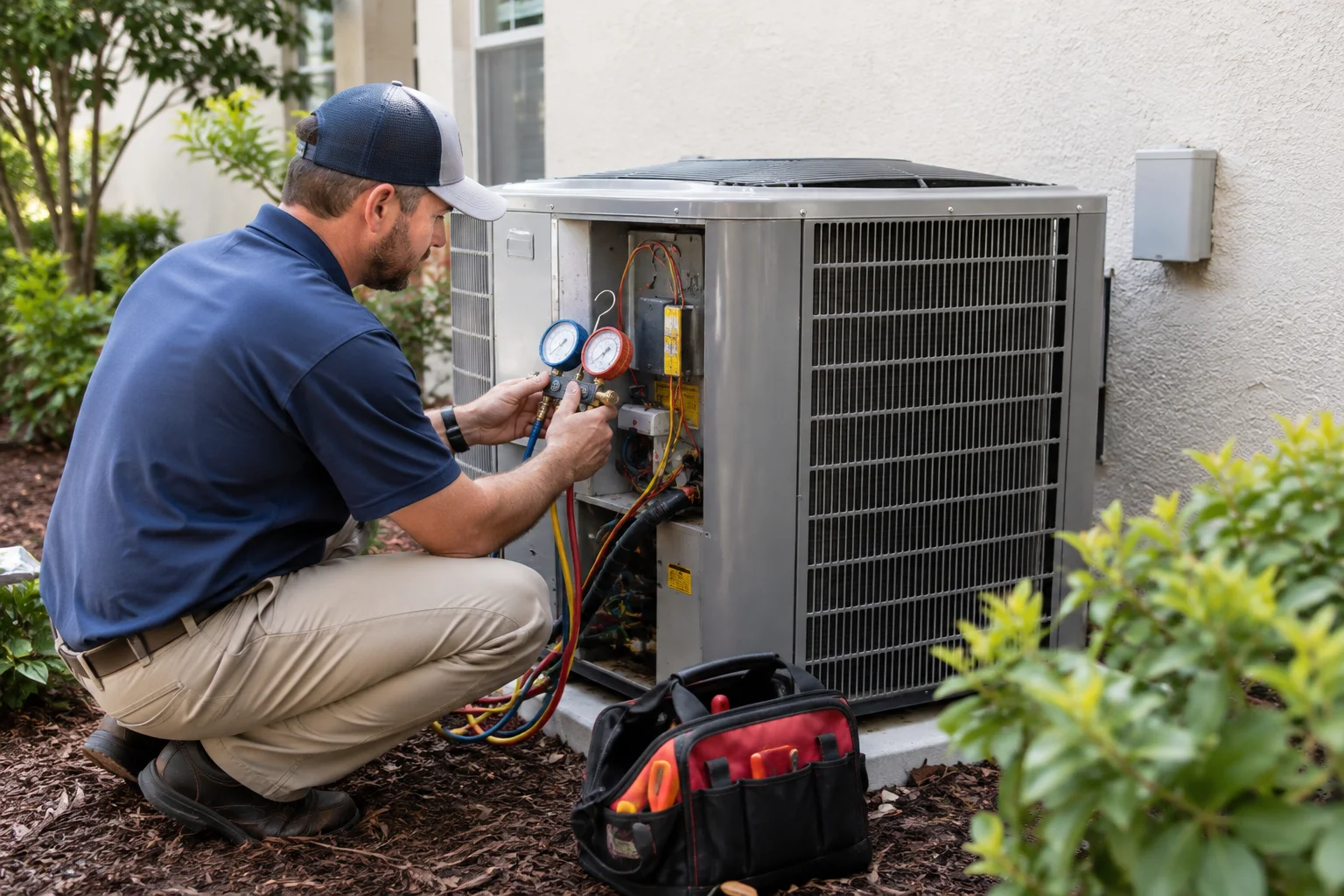
Important note: refrigerant diagnosis and refrigerant-related troubleshooting should be handled by an in-person licensed HVAC professional. If a system is underperforming, do not assume you can correct it with “DIY refrigerant fixes.” A technician can evaluate airflow, coil condition, and system operation before making any decisions.
4) Thermostats and controls help prevent comfort swings
Commercial buildings often use thermostats for scheduling and zoning, sometimes with advanced controls. If sensors are dirty, settings are outdated, or control sequences do not match the building’s actual load, humidity and temperature can drift. Maintenance should include checking thermostat operation, verifying schedules, and confirming that control settings align with how the building is used.
If you are considering control upgrades, you can explore Smart Thermostats for Camp Creek properties, especially if your business runs different occupancy patterns.
Common commercial HVAC issues in Camp Creek and nearby Walton County areas
Camp Creek buildings are not all identical, but certain patterns show up across the area. Knowing the usual suspects makes maintenance more targeted.
Clogged filters and restricted returns
In summer, filters can load quickly due to dust, pollen, and indoor debris. Restricted airflow can reduce cooling and raise energy use. It can also contribute to uneven temperatures across zones.
Coil buildup from dust and coastal salt air exposure
Coastal environments can be tough on HVAC components. Salt air and airborne contaminants can contribute to corrosion and buildup. Regular inspection and cleaning help protect coil performance and help systems maintain proper heat transfer.
Condensate drainage issues
Even a properly sized system struggles if condensate drainage does not work. Drain line restrictions, poor slope, or buildup can lead to overflow risk or water-related damage.
Leaky or poorly sealed ductwork
Commercial ductwork can develop leaks over time. In humid climates, duct leakage can pull in moist air or reduce delivered airflow. The result is higher energy use and reduced comfort stability.
If you are exploring system upgrades, it can help to review the details that get missed in commercial HVAC installation in Freeport, FL because many lessons carry over to Camp Creek.
Maintenance tips that help manage heat and humidity without guesswork
Every building is different, but these maintenance habits are especially useful for commercial HVAC performance in Camp Creek.
Use a maintenance schedule that matches your occupancy and schedule
A restaurant that runs late nights has different demands than an office that operates on weekdays. Maintenance should align with your operating hours, humidity exposure, and how often doors open. When building use changes, the HVAC maintenance plan should adapt.
Address airflow problems early to avoid comfort complaints
When airflow declines, humidity control can slip first. Watch for signs like:
- Air feels cool but spaces feel sticky
- Rooms run warmer than expected
- Frequent cycling or longer run times
- Musty odors that show up after cooling
These symptoms often point to airflow or coil and drainage issues that a professional can evaluate during HVAC repair or preventive visits.
Keep indoor air quality services in the plan, not an afterthought
Humidity and airflow are closely tied to indoor air quality. Dust accumulation, microbial growth risk, and ventilation imbalance can worsen when systems are not maintained. If your business has asthma-friendly comfort goals, allergy concerns, or frequent complaints about air freshness, consider Indoor Air Quality Testing as part of a broader maintenance strategy.
Review ductwork conditions during maintenance, not just during installation
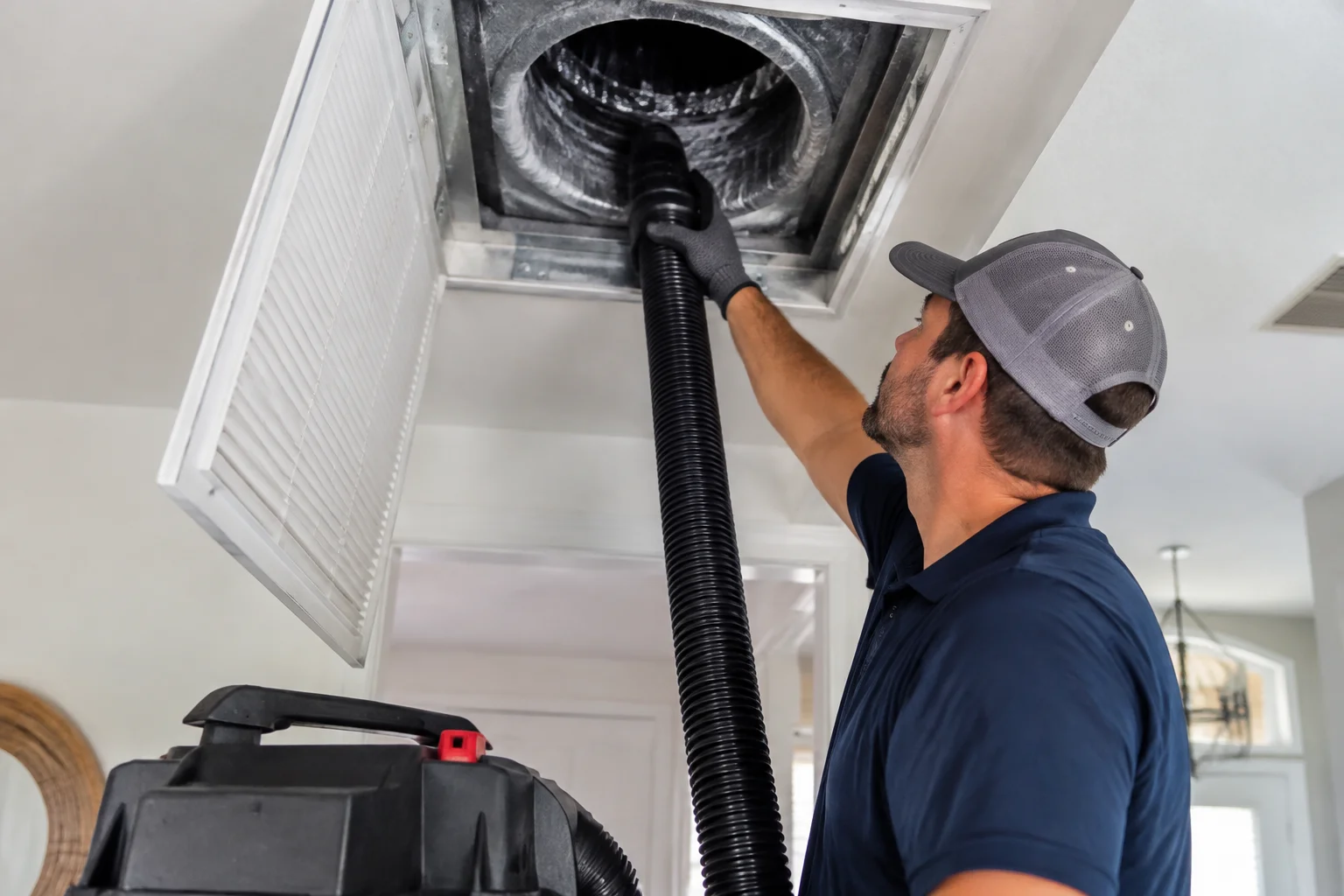
Ductwork is often out of sight, but it is central to performance. Maintenance should include checking for visible damage, assessing airflow balance, and confirming that supply and return paths are not blocked.
If you want a deeper look at how planning affects comfort and humidity, read Smart HVAC Planning for Cleaner Indoor Air in Camp Creek and Smart HVAC Planning for Camp Creek Homes: Comfort, Humidity, and Better AC Installations. Even though those posts focus on homes, the airflow and humidity principles apply to many commercial layouts.
Coordinate thermostat settings with real humidity goals
Thermostat settings affect run time and dehumidification. In a humid climate, settings that chase temperature without allowing enough cooling run time can leave humidity behind. A technician can help confirm that control strategies are appropriate for your building’s comfort expectations.
Energy use and emergency cooling concerns: why maintenance pays off operationally
When systems drift out of tune, energy use rises. That can happen when airflow is restricted, coils are dirty, or condensate drainage causes the system to behave differently than intended. For commercial facilities, higher energy use is not only a cost issue. It can also strain equipment and increase the likelihood of breakdowns during peak demand.
Camp Creek summers can create emergency cooling concerns when equipment fails during the hottest weeks. Preventive HVAC maintenance helps reduce the odds of a mid-season failure by identifying issues before they escalate. It also supports smoother operation during high humidity periods when the system’s dehumidifying workload is at its highest.
For property managers and business owners searching for commercial HVAC service near me or air conditioning repair near me, it is worth asking whether the provider offers maintenance that targets airflow, drainage, and indoor air quality, not just reactive repairs.
What to ask an HVAC contractor during maintenance and installation follow-ups
Whether you are planning HVAC installation near me or you already have new equipment installed, these questions can help you get the right kind of service:
- How do you verify airflow and comfort performance? Ask about how supply and return conditions are checked.
- What do you inspect for condensate drainage? Make sure condensate drainage is part of the routine.
- How do you evaluate indoor air quality factors? Look for filter strategy, humidity considerations, and testing options when needed.
- Do you review thermostat settings and control sequences? Confirm that control behavior matches building use.
- How do you handle refrigerant system concerns? The answer should emphasize in-person evaluation and safe, professional troubleshooting.
If you need a refresher on how maintenance and installation details connect, you can also compare guidance from commercial HVAC installation in Laguna Beach, FL. Coastal climates share challenges like salt air exposure and humidity loads, even though every building is unique.
When you should call for HVAC repair or a professional maintenance visit
Call a licensed HVAC contractor when you notice comfort or humidity problems, especially in hot, wet weather. Some triggers are:
- Spaces feel humid or sticky despite cooling
- Uneven temperatures across zones
- Increased run time or frequent cycling
- Water on ceilings, near vents, or around condensate drainage areas
- Musty odors or visible moisture concerns
- Airflow seems weaker than usual
For businesses and homeowners in Walton County who want a licensed HVAC contractor near me, the safest approach is to schedule an inspection rather than guessing at causes. A Superior Mechanical can help evaluate system operation, airflow performance, ductwork considerations, and indoor air quality factors during service visits.
If your building is due for upgrades rather than repairs, you may also want to review HVAC replacement near me options and discuss an AC replacement estimate near me conversation. Maintenance history, comfort complaints, and system performance trends all help shape those decisions.
Linking maintenance to better commercial HVAC installation planning
Commercial HVAC installation is not only about equipment selection. It is about how that equipment will work with your building’s airflow paths, ductwork, condensate drainage setup, controls, and indoor air quality goals. When maintenance is planned from the start, it becomes easier to keep the system stable through Florida’s humidity swings.
If you are comparing installation plans or want to understand how humidity management should be addressed during design, start with the service area overview for Camp Creek at /service-areas/walton-county/camp-creek, then review the specific installation service page at /service-areas/walton-county/camp-creek/commercial-hvac-installation-ccfl.
For property owners who want to pair equipment performance with comfort and air quality improvements, combining maintenance with smart controls and indoor air quality services can be a strong strategy. Consider pairing your seasonal tune-ups with Air Conditioning Inspection and indoor air quality support when your building’s needs change.
And if you are exploring alternative energy approaches for long-term efficiency, it can be useful to look at Geothermal Energy as part of a broader energy strategy. Even then, maintenance remains essential because comfort and humidity control still depend on airflow, drainage, and system operation.
What “better maintenance” looks like in practice
Better maintenance is not just checking a box. It is a routine that supports heat and humidity management by protecting airflow, coil performance, condensate drainage, controls, and indoor air quality. In a place like Camp Creek, where summer humidity can overwhelm comfort targets, that is the difference between a system that works only on paper and a system that performs consistently for your business.
When you treat preventive HVAC maintenance as part of your commercial HVAC installation lifecycle, you protect comfort, manage moisture risk, and reduce the likelihood of emergency cooling situations. That is a practical way to control energy use and keep operations running when the weather turns hot and wet.
Find Commercial HVAC Installation in Camp Creek, FL
If you need Commercial HVAC Installation in Camp Creek, FL, visit our local service page or contact A Superior Mechanical today.
Map of Camp Creek, FL
Frequently Asked Questions
How does maintenance help commercial HVAC installation manage humidity in Camp Creek?
Maintenance helps by protecting airflow across the evaporator coil and keeping condensate drainage working properly. When airflow is restricted or drainage is blocked, humidity removal can drop even if the thermostat is set correctly.
What are early signs a commercial HVAC system needs service for heat and humidity problems?
Look for sticky or clammy indoor air, uneven temperatures, increased run times, musty odors, or water near condensate drainage areas. These can point to airflow, coil, or drainage issues that a professional should inspect.
Should I try to adjust refrigerant or troubleshoot refrigerant issues myself?
No. Refrigerant system diagnosis and troubleshooting should be done by an in-person licensed HVAC professional. A technician will evaluate airflow, coil condition, and system operation before making any refrigerant-related decisions.
How often should commercial HVAC maintenance be scheduled in Walton County’s humid summers?
Frequency depends on building use, occupancy, and system demands. A Superior Mechanical can recommend a schedule based on your equipment, airflow setup, and comfort goals so humidity control stays consistent during peak heat.
Can indoor air quality services improve comfort even if the AC is cooling?
Yes. When humidity and airflow are managed well, indoor air quality often improves. Testing and targeted maintenance can help address dust, microbial growth risk, and ventilation balance that contribute to discomfort.
Related Articles
- Smart HVAC Planning for Cleaner Indoor Air in Camp Creek
- Smart HVAC Planning for Camp Creek Homes: Comfort, Humidity, and Better AC Installations
- The Details That Get Missed in Commercial HVAC Installation in Freeport, FL
- Commercial HVAC Installation in Laguna Beach, FL: The Issues Local Property Owners Should Not Overlook
Photo Gallery