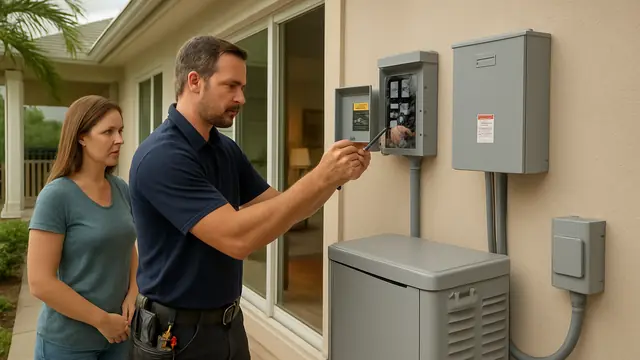
Do not remove an electrical panel cover, touch exposed conductors, bypass protection, or repeatedly reset a fault. Keep clear of smoke, sparks, burning odors, hot equipment, standing water near electricity, and downed lines, then call qualified help.
A homeowner in Lower Grand Lagoon may discover the warning in a garage, utility room, or hallway: the panel feels warmer than usual, a breaker has begun tripping, and a faint electrical odor appears only when several appliances are operating. The power may seem normal after a reset, but repeated symptoms show that something is changing.
Stop using the affected circuit and reduce large electrical loads. Reset a breaker only once after unplugging portable devices. If it trips again, leave it off. Do not remove the panel cover, and do not touch the equipment if it is wet, smoking, sparking, or hot.
An inspection does not automatically lead to full replacement. Many complaints are corrected with a breaker, conductor, connection, or dedicated-circuit repair. The purpose is to locate the defect before it causes a larger outage.
Seven Signs Your Electrical Panel Needs an Inspection in Lower Grand Lagoon
1. A Breaker Trips Again After Being Reset
A breaker that trips once may be responding correctly to an overload. Portable heaters, countertop appliances, or power tools can draw more current than one circuit can safely carry.
Repeated tripping may indicate damaged wiring, a short circuit, ground fault, failing appliance, or weakened breaker. Note what was operating and unplug portable loads. If the breaker will not remain on after one reset, stop using it until the circuit is tested.
2. Part of the Home Loses Power Intermittently
One outlet that occasionally stops working may have a loose local connection. When several outlets, lights, or rooms lose power together, the problem may be at a breaker, panel connection, service conductor, or neutral.
Intermittent faults can reconnect as materials move or cool. Power returning by itself does not prove the connection is safe. Record which areas are affected and whether the outage occurs when a large appliance starts.
3. You Hear Buzzing, Crackling, or Popping
A panel should not produce persistent buzzing, crackling, sizzling, snapping, or popping. These sounds can indicate loose contact or electrical arcing.
Arcing occurs when current crosses a gap instead of traveling through a firm connection. It produces intense heat and can damage metal or insulation. Do not stand close to the cabinet trying to locate the sound. Keep the cover closed and arrange service.
4. The Panel Has a Hot Spot or Burned Odor
Some warmth can occur, but a hot panel door or one noticeably warmer breaker area is not normal. Excess heat may result from an overloaded circuit, loose terminal, damaged breaker, undersized conductor, or poor breaker-to-bus connection.
A smell resembling hot plastic or scorched insulation is another warning. Even if it fades, hidden damage may remain. If the cabinet is smoking or visibly arcing, leave the area and call emergency services.
5. Rust, Staining, or Moisture Appears
Rust, water marks, dampness near cable entries, or powdery residue can indicate current or previous moisture exposure. Electrical connections depend on clean, secure metal contact. Corrosion can weaken that contact and create heat.
Do not assume the panel is safe because it has dried. Do not open it, spray it, or sand away corrosion. A licensed electrician should determine whether breakers, conductors, or bus bars were affected. The moisture source must also be corrected.
6. Lights Flicker Throughout the Property
A single flickering fixture may need a bulb, switch, or fixture repair. Flickering in multiple areas may indicate a loose service connection, failing neutral, overloaded system, or panel problem.
Pay particular attention when lights in one room brighten while lights elsewhere dim. That can happen when a neutral connection is unstable, creating uneven voltage that may harm electronics and appliances. Unplug sensitive equipment and seek prompt diagnosis.
7. The Panel Shows Crowding, Damage, or Questionable Additions
Visible warning signs include missing filler plates, breakers that do not fit evenly, scorch marks, damaged labels, a loose door, or conductors entering through improper openings. A full panel may also show that the system has been expanded repeatedly.
Not every unusual appearance proves unsafe work, but it should be reviewed before more circuits are added. An electrician can verify component compatibility and perform a load calculation to determine whether the service supports present and planned demand.
Safe Checks the Homeowner Can Perform
Keep the panel closed and stand on a dry surface. Write down the breaker number, equipment operating, sounds, odors, and rooms affected.
Check whether cords, plugs, or appliances on the affected circuit are visibly damaged. Unplug portable items before one reset. Stop if the breaker trips again or you notice heat, smoke, or odor.
Clear the area in front of the panel so it can be reached safely. Visual observations are useful; internal investigation is not a homeowner task.
What You Should Not Attempt
Do not remove the dead-front cover, tighten internal screws, replace conductors, or test energized parts. Turning off the main breaker does not necessarily remove power from the incoming service connections.
Do not install a larger breaker to stop tripping. The existing wire may be rated only for the original size. A larger breaker can allow unsafe overheating. Never tape a breaker on, use an unapproved replacement, or spray chemicals inside the cabinet.
When the Situation Becomes Urgent
Arrange immediate help for a burning smell, smoke, sparks, sizzling, melted plastic, a hot cover, water inside the panel, electrical shocks, repeated main-breaker trips, or rapidly changing light brightness.
For an active electrical fire, evacuate and call emergency services. Do not use water on energized equipment. Stay away from damaged exterior equipment and downed lines.
How a Licensed Electrician Diagnoses the Cause
The electrician identifies when the symptoms occur and which loads are involved. The inspection covers breaker types and ratings, conductor sizes, terminals, bus bars, grounding, corrosion, heat damage, and previous alterations.
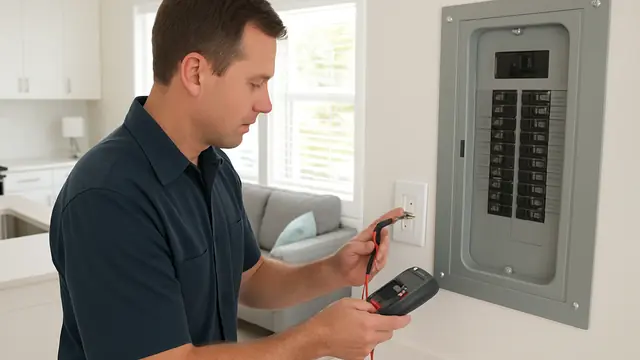
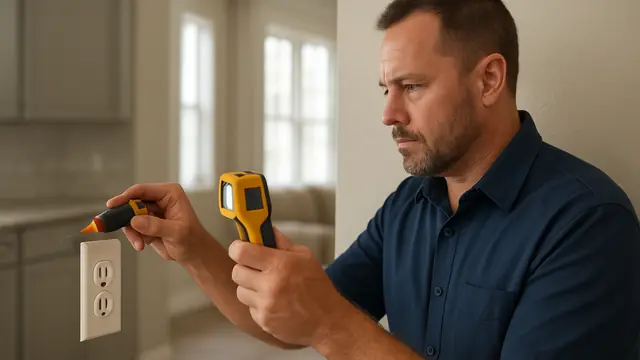
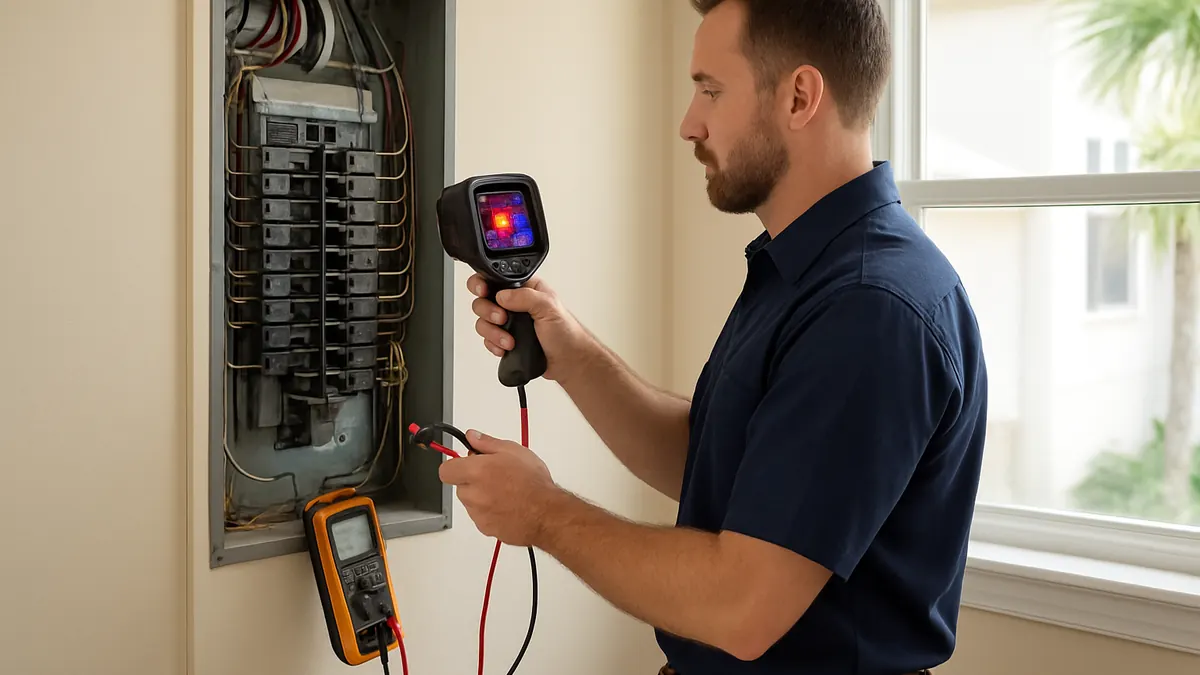
Voltage and current testing can reveal overloads or unstable supply. Thermal imaging may identify abnormal heat. The electrician may also inspect an appliance or branch circuit if evidence points away from the panel.
Repair Options From Least to Most Invasive
The first reasonable option may be replacing one compatible breaker, repairing a loose branch connection, correcting a damaged appliance circuit, or installing a dedicated circuit for equipment overloading a shared circuit.
Other work can include replacing heat-damaged conductors, correcting grounding, repairing moisture entry, or adding a subpanel when more circuit spaces are needed.
Complete panel replacement may be justified by widespread corrosion, damaged bus bars, extensive overheating, unavailable compatible breakers, or unsafe modifications. A service upgrade is considered when a load calculation shows insufficient capacity.
Factors That Affect Repair Cost
Cost depends on the fault, panel type, breaker availability, accessibility, affected conductor length, number of circuits, service size, permits, grounding corrections, and necessary finish work.
A focused breaker repair differs from replacing service equipment. The estimate should connect the recommended work to documented findings and explain whether a smaller safe repair is available.
Prevention and Maintenance
Keep the panel dry, unobstructed, and accurately labeled. Do not store items against it. Have new appliances and circuits installed by qualified professionals, and request a load review before adding major equipment.
After a leak or unusual power event, watch for rust, odors, trips, or flickering. Address warning signs before complete failure.
Homeowner FAQs
Can a tripping breaker simply be worn out?
Yes, but wiring faults and overloads must be ruled out before replacing it.
Why does my power return without resetting anything?
An intermittent loose connection may reconnect as it cools or moves. That behavior should be investigated.
Is rust on the outside only cosmetic?
Not always. Exterior rust may indicate moisture that has also affected internal components.
Can an inspection identify an appliance problem?
Yes. Load and circuit testing can show whether a particular appliance is causing the breaker to operate.
Must a crowded panel be replaced?
Not automatically. Depending on capacity and condition, a different circuit arrangement or subpanel may be possible.
Schedule an Electrical Panel Inspection
Seven signs your electrical panel needs an inspection in Lower Grand Lagoon include repeated breaker trips, intermittent power loss, abnormal sounds, excessive heat, moisture damage, widespread flickering, and visible crowding or alterations. The smallest safe repair should be considered first, but urgent symptoms should never be ignored.
About this guide: This resource provides general homeowner education, not a remote diagnosis. Actual conditions, code requirements, equipment, and safe repair options must be evaluated at the property.