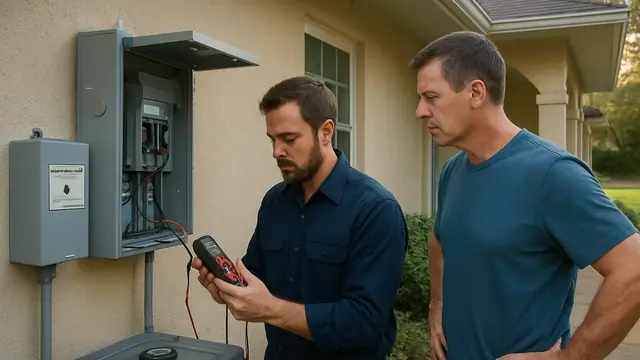
Do not remove an electrical panel cover, touch exposed conductors, bypass protection, or repeatedly reset a fault. Keep clear of smoke, sparks, burning odors, hot equipment, standing water near electricity, and downed lines, then call qualified help.
You switch on a vacuum and the nearby lamps dim. Later, the kitchen lights flutter while the dishwasher is running, and a bathroom light briefly goes out when you touch the switch. In your Freeport home, those symptoms may look similar, but they can have different causes.
Flickering means the voltage reaching a light is changing or the connection is being interrupted. A loose bulb or incompatible dimmer may be easy to correct. A loose neutral, damaged circuit connection, or service problem requires prompt attention. As an immediate safety step, stop using any device that triggers severe flickering and turn off the affected circuit if you notice heat, odor, crackling, sparks, or discoloration.
Why Are My Lights Flickering in Freeport?
Lights need steady voltage. When a motor suddenly draws substantial current, lights on the same circuit may dim.
The symptom's scope provides an important clue:
- One light suggests a bulb, socket, fixture, switch, or dimmer.
- Several lights in one area suggest a shared branch-circuit problem.
- Lights throughout the house suggest a panel, neutral, service, or utility issue.
- Lights that brighten as others dim may indicate a loose neutral.
Common Causes Homeowners Should Know
A Bulb Is Loose or Failing
A bulb may flicker because it is not making firm contact with the socket. LED bulbs can also develop internal driver problems.
The Dimmer and Bulbs Are Incompatible
Older dimmers may not provide stable control for LEDs. The result can be fluttering at low brightness, delayed startup, buzzing, or lights that never turn fully off.
A Switch or Fixture Connection Is Loose
Connections can loosen at a switch, fixture, or junction box. A light that reacts when the switch is touched or a nearby appliance vibrates may have a local connection problem.
Too Many Loads Share One Circuit
Hair dryers, countertop appliances, portable heaters, vacuums, and tools can place heavy demand on a general-use circuit. If lighting shares it, voltage may dip.
An Appliance Has a Starting Problem
Motors draw extra current when starting. A refrigerator, air conditioner, well pump, washing machine, or other motor-driven device may cause a momentary dim. Strong flicker can indicate equipment trouble or inadequate circuit performance.
A Breaker or Panel Connection Is Deteriorating
A breaker can fail, and a panel connection can loosen or overheat. These problems require testing inside energized equipment.
The Main Neutral or Utility Supply Is Unstable
A loose service neutral can cause voltage to shift between circuits. Utility equipment or the connection feeding the property can also create whole-home flickering.
Safe Checks Before Calling an Electrician
Observe the pattern. Note the time, affected rooms, appliances operating, and whether the lights dim, brighten, flash, or shut off.
If one replaceable bulb is involved, turn the fixture off and let the bulb cool. Confirm that it matches the fixture's wattage and application. Reinstall it firmly without forcing it, or test a compatible known-good bulb.
If a dimmer is present, move it through its full range. Flickering only at certain settings may support a compatibility diagnosis.
Turn off portable appliances one at a time. If the lights stabilize when a specific device is unplugged, leave that device off until it can be evaluated.
You may inspect the panel from the outside and note a tripped breaker. One reset may restore a circuit when there are no damage signs, but a breaker that trips again should remain off until inspected.
What Homeowners Should Not Attempt
- Do not remove the panel cover, open the meter base, or handle service wiring. Dangerous voltage may remain present after the main breaker is switched off.
- Do not replace a breaker simply because it feels loose, and never increase its amperage to prevent tripping. The wrong breaker can leave wiring without proper protection.
- Do not bypass a switch or dimmer, create an exposed splice, or use extension cords as permanent wiring. Avoid using a fixture that buzzes, smells hot, or has visible scorching.
- A surge protector cannot repair a loose conductor or overloaded circuit.
Signs the Problem Is Urgent
Arrange prompt service if the flickering is accompanied by:
- Burning or melting-plastic odors
- Sizzling, popping, crackling, or loud buzzing
- Hot or discolored switches, outlets, breakers, or panel surfaces
- Lights becoming unusually bright
- Flickering in unrelated rooms
- Repeated breaker trips
- Electronics restarting
- Shocks or tingling from appliances
- Visible sparks, smoke, or arcing
- Water exposure near electrical equipment
For smoke, flames, or active arcing, leave the property and call emergency services.
How a Licensed Electrician Diagnoses the Issue
The electrician determines whether the problem is at one device, along one branch circuit, or at the main service.
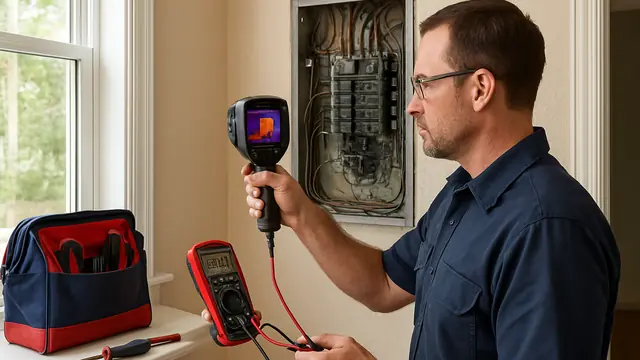
The technician may measure voltage at the fixture, receptacles, panel, and service while appliances operate. Current testing can show whether a circuit or appliance is drawing too much. Thermal testing can identify connections that become hot.
Accessible switches, fixtures, junction boxes, breakers, neutral terminations, grounding, bonding, and service equipment may be inspected. If incoming voltage is unstable before it reaches the panel, the electrician may recommend utility testing.
Repair Options Beginning With the Simplest
- A failed bulb can be replaced with the correct product. A dimmer mismatch may be solved by installing compatible LEDs, an appropriate dimmer, or both.
- A worn switch, damaged socket, or defective fixture can be replaced. Loose connections in accessible boxes may be re-terminated, with damaged components removed.
- An overloaded circuit may be corrected by relocating loads or installing a dedicated circuit. A motor-driven appliance that draws excessive current may need repair.
A damaged breaker or localized panel connection may be repairable. If the panel, feeder, neutral, meter equipment, or service conductors are significantly damaged, broader work may be needed. Complete replacement should follow documented findings.
Typical Factors Affecting Cost
Cost depends on how much testing is required and where the fault is found. One accessible dimmer is different from an intermittent problem affecting multiple circuits.
Other factors include fixture access, ceiling height, concealed wiring, integrated LED parts, panel condition, required circuit length, permits, and utility coordination.
Prevention and Maintenance Guidance
Use bulbs that match fixture ratings and dimmer requirements. Avoid combining several high-demand portable appliances on one general circuit.
Have appliances installed on circuits that meet their requirements. Keep the breaker directory accurate and have repeated trips, warmth, humming, or voltage changes investigated early.
If the home is sometimes unoccupied, ask anyone checking it to report flicker patterns rather than repeatedly resetting breakers.
Schedule the Correct Diagnosis
If you are wondering, "Why are my lights flickering in Freeport?" focus on where the problem occurs and what triggers it. One lamp may need a bulb, socket, or dimmer correction. Several rooms, dramatic brightness changes, heat, odor, sound, or repeated breaker trips point to a problem that should be tested promptly. A licensed electrician can isolate the source and recommend the least invasive safe repair before unnecessary replacement is considered.
About this guide: This resource provides general homeowner education, not a remote diagnosis. Actual conditions, code requirements, equipment, and safe repair options must be evaluated at the property.