Do not remove an electrical panel cover, touch exposed conductors, bypass protection, or repeatedly reset a fault. Keep clear of smoke, sparks, burning odors, hot equipment, standing water near electricity, and downed lines, then call qualified help.
A Freeport homeowner may first notice a sizing problem when the standby generator performs well for several minutes and then struggles as the home returns to normal use. The air conditioner starts, the refrigerator cycles, someone turns on an electric range, and the generator suddenly slows or trips. Another homeowner may hear the generator running but discover that selected appliances are intentionally unavailable because the system is shedding loads to protect itself. The safe immediate step is to stop using optional high-demand equipment and avoid resetting a tripped generator breaker again and again.
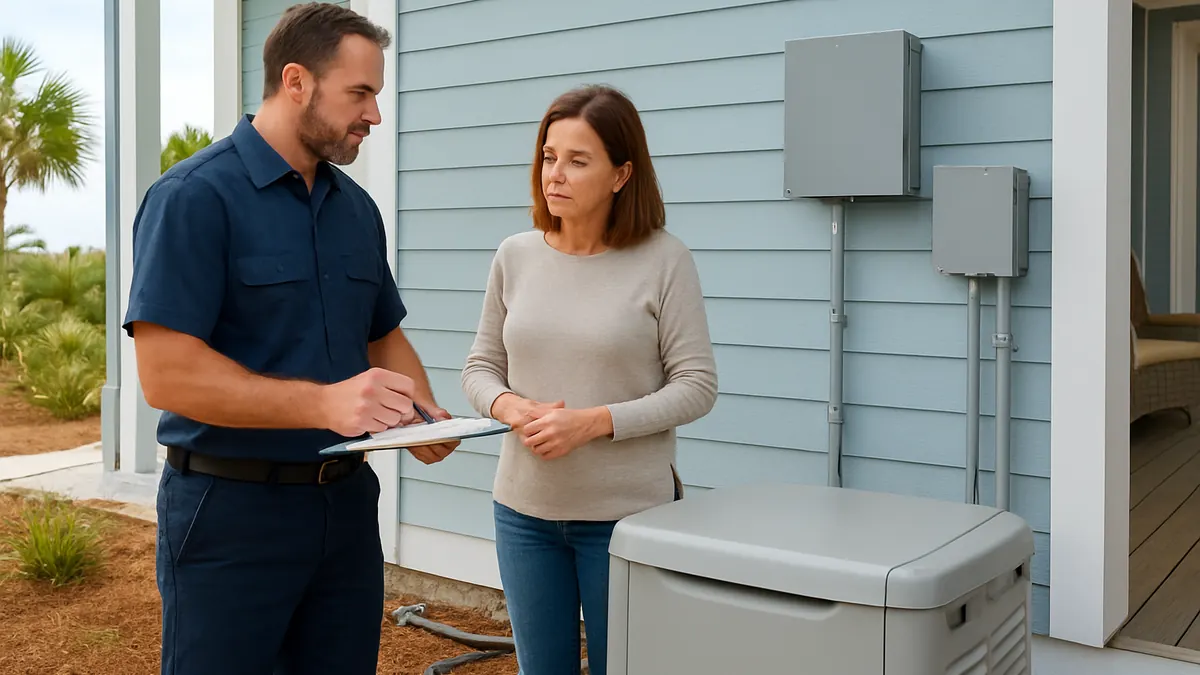
What size standby generator does your home need in Freeport? It should be sized for the electrical demand you actually expect during an outage, including the short surge created when motors and compressors start. The final answer also depends on the transfer-switch design, the load-management strategy, and whether the fuel system can deliver enough natural gas or propane when the generator is heavily loaded.
Why Generator Size Is Not a Square-Footage Decision
Similar homes can have very different electrical needs. Gas appliances reduce demand, while multiple HVAC systems, electric water heating, pool equipment, pumps, or EV charging increase it.
The main-panel rating does not provide the answer. A 200-amp service shows utility-service capacity, not required generator output. A proper calculation identifies realistic outage demand rather than using a generic square-footage rule.
Essential, Managed, and Full-Coverage Plans
- An essential-load plan powers selected circuits such as refrigeration, lights, internet equipment, receptacles, garage access, and one HVAC system.
- A managed plan connects more of the home but delays lower-priority loads. An electric water heater, pool pump, or dryer may pause while the air conditioner starts.
- A full-coverage plan preserves more normal routines with fewer interruptions and may require larger equipment and fuel delivery. It should be justified by calculated demand.
The Difference Between Running and Starting Demand
Electric heating elements draw substantial power while energized. Motors create a brief additional demand called starting watts or starting current.
The generator must carry existing loads while starting the largest likely motor. If voltage or frequency falls too far, lights may dim, electronics may reset, or the generator may shut down.
Large Loads That Must Be Identified
HVAC equipment is often central to the calculation. Electric water heaters, ranges, dryers, pool equipment, pumps, workshop loads, and EV chargers must also be identified when present.
Not every load has to be powered. An EV charger or pool heater may be locked out while a water pump or air conditioner remains a priority.
Safe Checks a Homeowner Can Perform
Make a written list of every major appliance and mark it essential, preferred, or unnecessary during an outage. Include equipment outside the main living area.
Photograph accessible equipment labels without removing covers. Record the generator model, fault code, and loads operating when the problem occurred. Note dimming, engine-speed changes, or breaker trips.
List major changes since installation, such as new HVAC equipment, a pool, electric appliances, or vehicle charging.
What You Should Not Try
- Do not install a larger breaker to prevent tripping. A breaker is a safety device, and increasing its rating may allow conductors or equipment to overheat.
- Do not bypass load-shedding controls. An appliance that turns off temporarily may indicate the system is managing demand correctly.
- Do not remove panel covers, move conductors, alter the transfer switch, or connect the home through an improvised generator cord.
- Do not adjust gas regulators, propane equipment, fuel pressure, or generator fuel settings. A fuel problem can resemble an electrical overload and must be diagnosed safely.
When the Situation Is Urgent
- Repeated overload faults, generator stalls, severe light dimming, unstable engine speed, or frequent breaker trips require prompt professional evaluation.
- Stop the generator if you notice smoke, sparks, a burning odor, melted insulation, damaged conductors, or unusual heat at the generator or transfer equipment.
- A gas odor, leaking liquid fuel, or damaged fuel piping requires immediate action according to the fuel provider's safety instructions.
If a carbon-monoxide alarm sounds or exhaust is entering the home, leave immediately and call emergency services. Do not restart the unit until the placement and exhaust problem have been corrected.
How a Licensed Electrician Sizes the Generator
The electrician first identifies essential, occasional, and optional loads, then inspects the service, panels, transfer equipment, HVAC systems, pumps, water heating, cooking equipment, refrigeration, and other major loads.
A load calculation estimates normal demand, likely overlap, and the largest motor-starting event. The result is compared with generator output on the intended fuel.
The fuel system is evaluated under expected demand. Natural-gas pipe size, available pressure, regulator capacity, propane storage, and other connected fuel appliances can affect performance. A generator with adequate electrical capacity may still stumble if the engine cannot receive enough fuel.
The electrician also verifies the transfer switch, breakers, conductors, grounding, controls, placement, clearances, permits, and inspections.
Solutions That Do Not Always Require a Larger Generator
The least invasive option may be changing the outage operating plan. A homeowner may agree to keep the dryer, EV charger, pool heater, or electric oven off while generator power is in use.
A technician may find a failed load-management module, loose control connection, or incorrect priority setting. Repairing or reprogramming those components can restore reliable operation.
Additional load controls may prevent large appliances from starting together. Selected circuits may also be moved to a dedicated essential-load panel.
Compatible starting-assistance equipment may reduce the startup demand of certain air-conditioning systems. It is not suitable for every system and does not eliminate the need for a complete calculation.
Fuel piping or regulator corrections may solve performance problems caused by pressure or volume loss.
A larger generator is appropriate when the required loads exceed current capacity after reasonable management options have been considered.
Factors That Affect Installation or Correction Cost
Cost depends on generator capacity, transfer-switch type, number of panels, load controls, conductor length, trenching, equipment-pad work, fuel piping, permits, access, and surface restoration.
Panel defects, limited space, incompatible transfer equipment, and long distances between the service, generator, and fuel source can increase labor and materials.
Maintenance and Prevention
Follow the generator manufacturer's maintenance requirements. Oil, filters, spark plugs, batteries, cooling airflow, and fuel quality all influence whether the generator can produce its rated output.
Keep vegetation and stored materials away from the enclosure. Confirm the scheduled exercise cycle occurs and do not ignore recurring warning codes.
Arrange periodic testing under meaningful load. Review the generator plan before adding HVAC equipment, water heating, pool components, workshop loads, or EV charging.
Select the Generator From a Documented Load Plan
What size standby generator does your home need in Freeport? The right generator can carry the selected running loads, start required motors, remain stable as appliances cycle, and operate with the available fuel supply. It should also use load management where sensible so you are not paying for capacity that does not improve your outage plan.
About this guide: This resource provides general homeowner education, not a remote diagnosis. Actual conditions, code requirements, equipment, and safe repair options must be evaluated at the property.