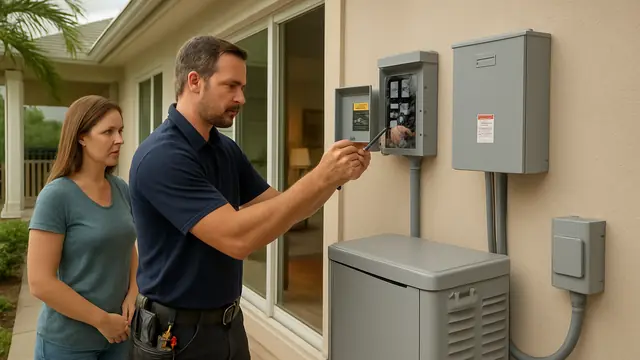
Do not remove an electrical panel cover, touch exposed conductors, bypass protection, or repeatedly reset a fault. Keep clear of smoke, sparks, burning odors, hot equipment, standing water near electricity, and downed lines, then call qualified help.
A guest at your Lower Grand Lagoon vacation rental calls after dinner because the microwave stopped, several countertop outlets are dead, and a breaker will not stay on. Earlier, another guest mentioned that an exterior light sometimes flickered after damp weather, but the problem seemed to disappear before anyone could inspect it.
That combination may indicate an overloaded circuit, a moisture-related ground fault, a damaged appliance, a loose connection, or more than one separate problem. The safe immediate step is to unplug appliances on the affected circuit, keep guests away from any damp or damaged electrical device, and reset the breaker or GFCI only once. If it trips again, leave it off.
The most common electrical problems on vacation rentals in Lower Grand Lagoon are often intermittent at first. Because a rental may be occupied continuously, a loose outlet or recurring trip can be reset several times without anyone documenting the pattern. That can allow a correctable problem to become a larger failure.
Common Electrical Problems in Lower Grand Lagoon Vacation Rentals
Kitchen Circuits That Trip During Meal Preparation
Guests may run a microwave, coffee maker, toaster, blender, and other countertop appliances together. If several devices share a circuit, the breaker may trip because current exceeds the circuit's safe capacity. A damaged appliance, loose receptacle, short circuit, or ground fault can create the same symptom.
Exterior Receptacles and Fixtures Affected by Moisture
Outdoor electrical equipment depends on intact covers, boxes, seals, and weather-rated devices. Water entering a receptacle, fixture, cord connection, or downstream device can trip a GFCI. Coastal air can also accelerate corrosion on vulnerable components, weakening connections and making failures intermittent.
Outlets That Work Only When a Plug Is Moved
A plug that must be held at an angle or wiggled may indicate worn contacts, loose wiring, or physical damage. Continued movement can worsen the connection and create heat. Stop using the outlet.
Lights That Flicker in One Room or Across the Property
One flickering fixture may have a loose bulb or worn switch. Flickering in multiple rooms can point to a loose neutral conductor, a panel connection problem, voltage fluctuations, or an issue with incoming power.
A neutral helps keep voltage balanced. If it becomes loose, some lights may brighten while others dim, potentially damaging electronics.
GFCI Devices That Trip Without an Obvious Cause
A GFCI shuts off power when current leaves the expected path through moisture, damaged insulation, an appliance, or a person. It may protect several outlets, so an exterior fault can appear to be an indoor outage.
Damaged Cords, Power Strips, and Guest-Added Equipment
Guests bring chargers, coolers, gaming systems, and cooking appliances. A damaged cord or overloaded power strip can create heat, arcing, or repeated trips. Extension cords should never run under rugs, through doors, or across wet areas.
Safe Checks the Owner or Property Manager Can Perform
Ask which appliances were running, what area lost power, whether rain preceded the failure, and whether anyone noticed heat, sparks, buzzing, or odor.
Unplug portable appliances. If a GFCI is dry, intact, and cool, press reset once. At the panel, move a tripped breaker fully off and then on once.
Inspect visible cords, plugs, covers, and fixtures without opening them. Remove equipment with cuts, melting, bent plug blades, or scorch marks. If power fails again, leave the circuit off and document the affected areas.
What the Homeowner Should Not Attempt
Do not remove an outlet, switch, fixture, or panel cover. Components can remain energized even when nearby devices are dead.
Never bypass a GFCI, install a larger breaker, hold a breaker on, or dry a wet outlet with a heat gun. Avoid extension cords carrying high appliance loads from another room. Scorch marks or melted plastic require evaluation behind the visible device.
When the Problem Becomes Urgent
Call for urgent electrical service when there is smoke, a burning smell, arcing, shocks, melted insulation, a hot panel, or repeated breaker trips.
A breaker that trips immediately with everything unplugged may indicate a wiring fault. Lights that become very bright and then dim, especially in more than one area, can signal a loose neutral or service problem.
Water near electrical equipment creates an immediate safety concern. Keep guests out of the area, do not touch wet devices, and do not stand on a damp surface while operating the panel. Call emergency services for active fire or smoke.
How a Licensed Electrician Diagnoses the Cause
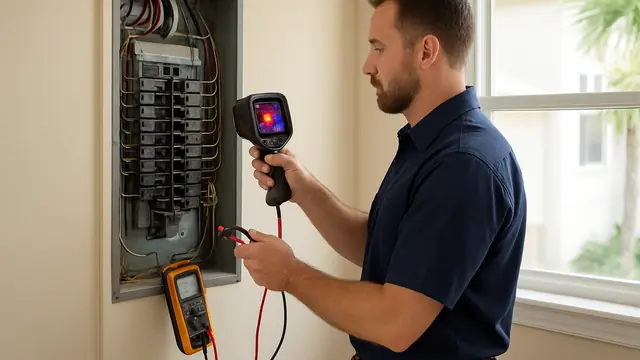
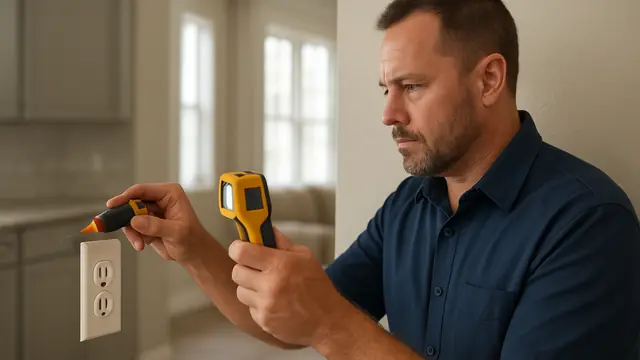
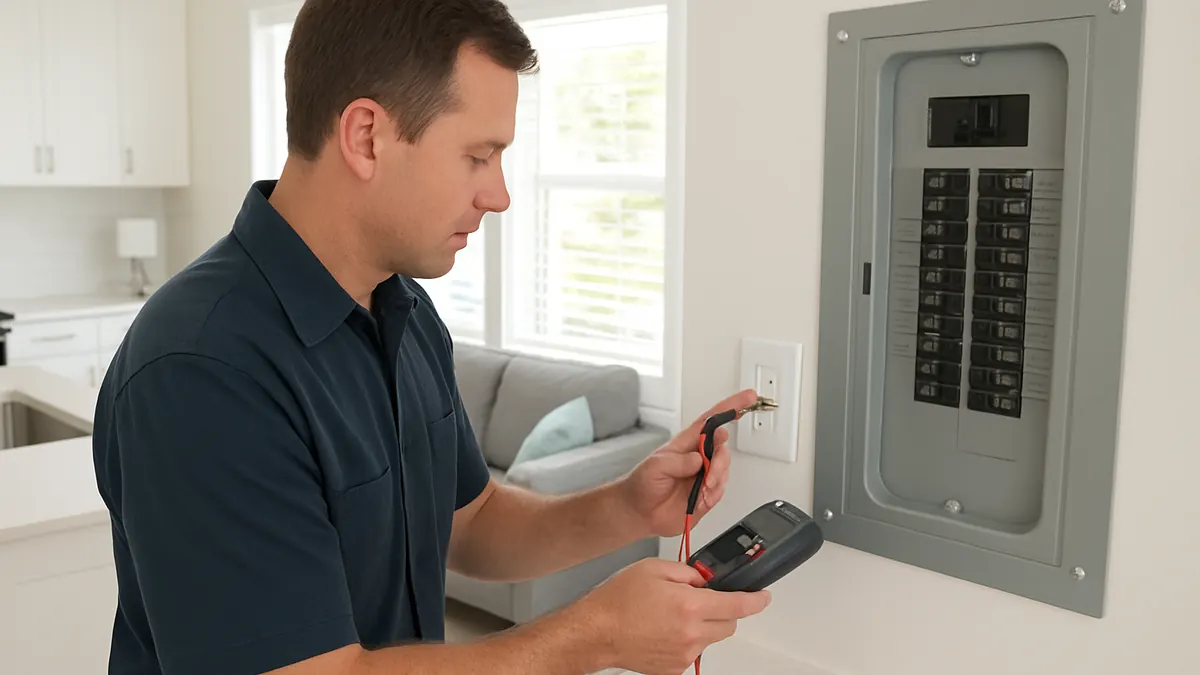
The electrician identifies which outlets, fixtures, and appliances share the circuit. Testing may include voltage readings, load measurements, grounding verification, and GFCI operation.
Devices are inspected for loose terminals, heat damage, corrosion, improper connections, failed covers, or water entry. When flickering affects several areas, the electrician may inspect neutral and panel connections and check incoming voltage.
This process avoids replacing a breaker when the actual cause is a damaged appliance, wet device, or loose connection elsewhere.
Repair Options Beginning With the Least Invasive
The simplest correction may be removing a faulty appliance, replacing a damaged cord, or replacing one worn receptacle, switch, GFCI, or exterior cover.
A loose connection may be repaired when the conductor and device remain serviceable. A failed breaker can be replaced with the correct compatible type after the circuit has been tested.
Moisture-related problems may require a new weather-resistant receptacle, improved cover, repaired box, sealed entry point, or replacement of a damaged fixture. Corroded conductors may need to be cut back or replaced depending on their condition.
If normal appliance use overloads the circuit, the electrician may recommend a dedicated circuit or redistribution of loads. More extensive work may include replacing damaged cable, correcting previous modifications, or upgrading inadequate panel equipment.
Whole-home rewiring is not the first answer to a single failed device. It is considered when testing finds widespread deterioration or unsafe wiring conditions.
Factors That Affect Cost
Cost depends on fault location, wiring access, the number of affected devices, corrosion or moisture damage, panel condition, and whether the problem is intermittent.
Exterior repairs may require weather-rated components and additional labor to correct water entry. Permits, wall access, dedicated circuits, and work scheduled around reservations can also affect the final scope.
Prevention and Maintenance Guidance
- Add electrical checks to every turnover. Test representative lights and outlets, confirm GFCIs reset properly, inspect visible cords, and note any device that feels loose.
- Check exterior covers after severe weather and replace cracked or missing parts. Keep power strips within their ratings and remove extension cords being used as permanent wiring.
- Maintain a written history of breaker trips, flickering, and failed outlets. Several small complaints in the same area may reveal one developing connection problem.
Resolve the Cause Before the Next Stay
The most common electrical problems on vacation rentals in Lower Grand Lagoon include overloaded kitchen circuits, moisture-related GFCI trips, worn receptacles, flickering lights, damaged cords, and corroded exterior connections.
Do not rely on repeated resets or temporary extension cords. Record the circumstances, remove affected equipment from use, and have the circuit tested so the repair addresses the actual cause.
About this guide: This resource provides general homeowner education, not a remote diagnosis. Actual conditions, code requirements, equipment, and safe repair options must be evaluated at the property.