Do not remove an electrical panel cover, touch exposed conductors, bypass protection, or repeatedly reset a fault. Keep clear of smoke, sparks, burning odors, hot equipment, standing water near electricity, and downed lines, then call qualified help.
You have reached the inspection period on a home in Lower Grand Lagoon, and the property appears comfortable until several small electrical concerns begin to add up. One bedroom outlet is dead, an outdoor receptacle has a cracked cover, and the panel directory lists two breakers as "miscellaneous." None of those findings alone proves that the home needs major electrical work. Together, however, they show why a buyer should request more than a quick visual review.
The safe immediate action is to avoid any device that is hot, loose, sparking, discolored, or exposed to water. Do not open the electrical panel, pull outlets from the wall, or keep resetting a breaker. Document the symptoms and ask a licensed electrician to determine whether the issue is a failed device, damaged connection, overloaded circuit, weather exposure, or another condition. An electrical inspection checklist before buying a Northwest Florida home in Lower Grand Lagoon should turn those observations into clear repair priorities.
Review the Service Equipment Before Evaluating Individual Rooms
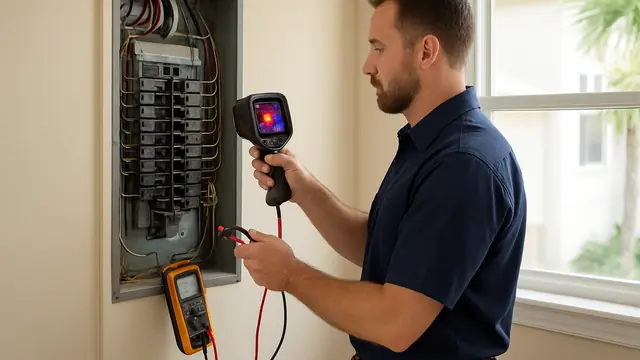
The inspection should begin where electricity enters and is distributed through the home. The electrician checks accessible service components, the main panel, and any subpanels for corrosion, damaged enclosures, missing covers, heat marks, incompatible breakers, and signs of moisture. Because opening a panel exposes energized parts, this work belongs to a licensed professional.
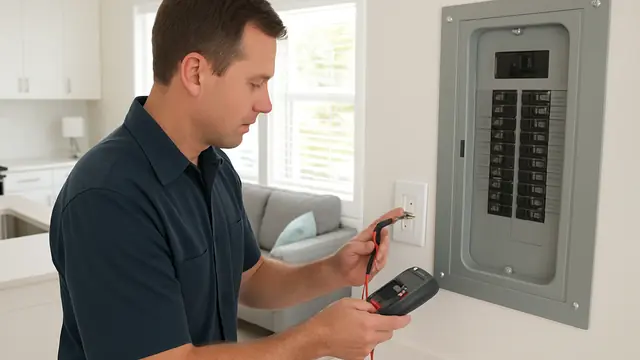
Check the Circuit Directory and Breaker Arrangement
A useful directory should identify the rooms or equipment served by each breaker. Vague labels make emergency shutoff difficult. An electrician can trace circuits and compare breaker ratings with wire sizes. Installing a larger breaker on undersized wire does not create more power; it can allow overheating. The inspection should also identify multiple conductors connected to terminals not approved for them.
Evaluate Outdoor and Damp-Location Electrical Components
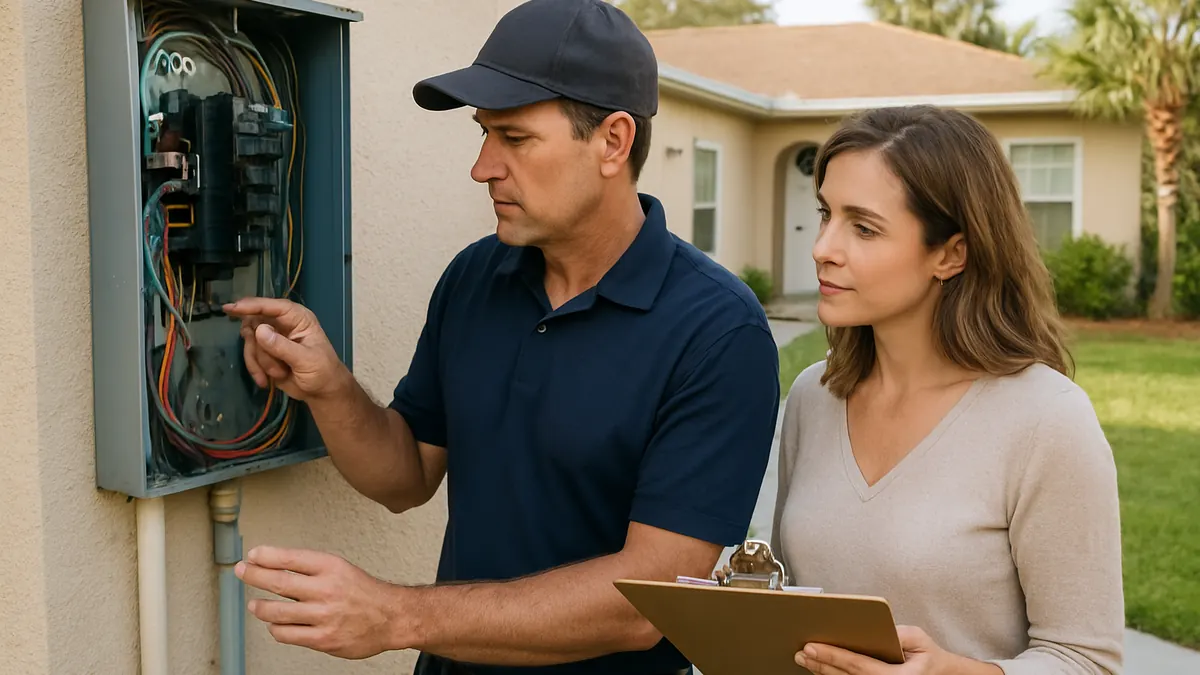
Outdoor receptacles, light fixtures, disconnects, and covers should be intact and suitable for their location. Cracked covers, loose conduit, missing seals, rust, and water staining deserve attention.
A damaged weather cover may be a simple repair, while corrosion around terminals or water inside an enclosure can require more work. GFCI protection helps reduce shock risk by shutting off power when current leaks through an unintended path.
Inspect Receptacles, Switches, and Fixtures Indoors
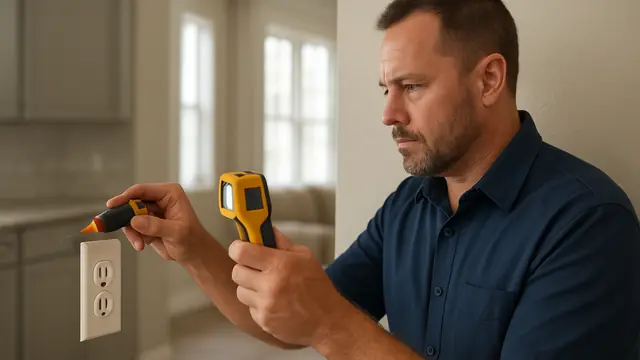
Move through the home in an organized way. Check accessible switches, outlets, lights, fans, and built-in electrical equipment for visible damage or unusual operation.
Signs worth documenting include:
- Plugs that fall out of receptacles
- Loose devices or broken faceplates
- Discoloration or melted plastic
- Buzzing, crackling, or sizzling
- Flickering when unrelated equipment operates
- Switches or outlets that feel warm
- Lights that do not operate consistently
A dead outlet may be caused by a tripped upstream GFCI, failed receptacle, loose connection, switched circuit, or damaged conductor. The cause should be tested rather than guessed.
Confirm Grounding, Polarity, GFCI, and AFCI Protection
Grounding provides a safety path for fault current. Polarity means the hot and neutral conductors are connected to the correct terminals. An outlet can power a lamp while still having an open ground or reversed polarity.
Arc-fault circuit interrupters, called AFCIs, detect certain dangerous electrical arcs associated with damaged wiring or connections.
The electrician can test representative outlets, identify protected circuits, and determine whether devices are present and functioning as intended.
Look for Evidence of Improvised Electrical Work
Buyers should pay attention to extension cords used as permanent wiring, open junction boxes, exposed wire splices, unsupported cable, unusual adapters, and cords routed through walls or doorways.
Connections should be enclosed in covered junction boxes. Ask about additions or equipment that required new wiring. Permits and invoices can help establish the history, but the installed work still requires evaluation.
Safe Checks the Homebuyer Can Perform
A buyer can make several observations without touching wiring:
- Operate lights, fans, and switches.
- Note any dimming, flickering, buzzing, or delayed operation.
- Check whether receptacles are visibly damaged or loose.
- Look at the panel directory without opening the cover.
- Test GFCI buttons only with the owner's permission.
- Ask which breakers have tripped and why.
- Review available electrical permits or service records.
- Consider planned high-demand equipment.
What You Should Not Attempt
Do not remove covers from the panel, meter, disconnect, outlet, switch, or fixture. Do not touch bare wires or reach into an open electrical box.
Never bypass a GFCI, replace a breaker with a larger size, or substitute an unapproved component. Do not repeatedly reset a breaker that trips again. A recurring trip may indicate an overload, short circuit, ground fault, damaged appliance, or failing connection.
When the Finding Becomes Urgent
Prompt professional attention is needed when you observe smoke, active sparks, burning odors, melted insulation, crackling, repeated trips, shocks from metal equipment, water in an electrical enclosure, or a hot panel surface.
If an active hazard is present, qualified personnel may need to disconnect power before anyone approaches the equipment.
How a Licensed Electrician Diagnoses the System
The electrician reviews the reported symptoms and electrical history, then may test voltage, polarity, grounding continuity, GFCI operation, circuit loading, and unusual heat. Conductor sizes are compared with breaker ratings, and accessible grounding, bonding, and alterations are reviewed. The report should explain each finding, why it matters, and its repair priority.
Repair Options Beginning With the Least Invasive
Small corrections may include replacing a broken cover, securing a loose device, correcting reversed polarity, replacing a worn receptacle, installing an approved junction-box cover, or replacing a failed GFCI.
A circuit problem may require repairing an accessible splice, replacing a damaged cable section, redistributing loads, or adding a dedicated circuit. Panel work may involve replacing a compatible breaker, correcting a termination, or updating labels.
Panel replacement, service upgrades, or broader rewiring are justified when damage, inadequate capacity, unavailable compatible parts, or widespread defects make smaller repairs impractical.
Factors That Influence Cost
Cost is affected by troubleshooting time, the number of defects, access to wiring, panel type, equipment availability, circuit length, permit requirements, utility involvement, and wall or finish repair.
Ask the electrician to separate immediate safety corrections from reliability work and optional upgrades.
Preventing Electrical Problems After Closing
Keep panels accessible and correctly labeled. Replace damaged exterior covers promptly, test GFCIs according to manufacturer guidance, and avoid permanent use of extension cords.
Have the electrical load reviewed before adding an EV charger, large appliance, or other high-demand equipment. Call for service when you notice new heat, odors, buzzing, flickering, or repeated trips.
Make the Electrical Findings Part of the Purchase Decision
An electrical inspection checklist before buying a Northwest Florida home in Lower Grand Lagoon should explain the condition of the service, panel, circuits, outdoor equipment, grounding, and protective devices. It should also show which findings are minor and which could affect safety, reliability, or your purchase budget.
Document concerns, stay away from exposed or energized components, and request repair options that begin with the least invasive safe solution. That information can help you enter closing with fewer electrical surprises.
About this guide: This resource provides general homeowner education, not a remote diagnosis. Actual conditions, code requirements, equipment, and safe repair options must be evaluated at the property.