Do not remove an electrical panel cover, touch exposed conductors, bypass protection, or repeatedly reset a fault. Keep clear of smoke, sparks, burning odors, hot equipment, standing water near electricity, and downed lines, then call qualified help.
The wind has eased, but when utility power returns your refrigerator starts, the lights flicker twice, and a breaker serving the garage trips. That may be a simple restart overload, but it can also indicate wet equipment, a damaged appliance, or a loose connection. Unplug items on the affected circuit, check for water or visible damage, and reset the breaker only once if everything is dry and there is no heat, smoke, or burning odor.
A Northwest Florida hurricane electrical checklist in Lower Grand Lagoon should account for exterior equipment, docks or waterfront features where present, vacation-property concerns, generator use, and the possibility of wind-driven rain entering places that normally stay dry.
Make the Electrical System Part of Storm Preparation
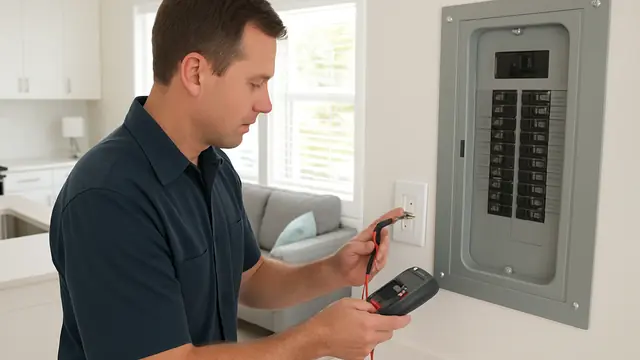
Start by identifying the main panel and the breakers for refrigeration, HVAC equipment, water heating, essential lighting, garage doors, and any equipment that must remain operating.
Correct unclear panel labels and write down which circuits would be priorities during an outage.
Common Electrical Problems During and After Hurricanes
Moisture in Outdoor Circuits
Exterior receptacles, lights, pumps, disconnects, and junction boxes rely on weather-resistant enclosures. Wind can loosen covers, debris can crack boxes, and rain can enter through openings. Moisture may cause a ground fault, corrosion, breaker trip, or delayed equipment failure.
Damaged Service Connections
The service mast, weatherhead, meter enclosure, and conductors connect the home to utility power. Wind, falling branches, or shifting equipment can pull these components loose. A service problem may affect the entire house or create partial power.
Surges and Voltage Fluctuation
Lightning and utility switching can produce a brief increase in voltage called a surge. Power restoration may also bring unstable voltage. Electronic controls in HVAC systems, refrigerators, televisions, routers, and appliances can be damaged even when there is no visible burn mark.
Overloaded Backup Power
A generator may operate normally until several appliances start together. Motors in refrigerators, freezers, pumps, and air conditioners can require extra starting current. That temporary demand may exceed generator or cord capacity.
Corrosion That Appears Later
A device may work immediately after the storm but become intermittent, hot, or unreliable later.
Safe Checks Before the Storm
Inspect visible exterior equipment without opening any enclosure. Look for loose covers, cracked boxes, damaged conduit, rust, missing screws, hanging fixtures, or wires that appear strained. Do not touch meter equipment or service conductors.
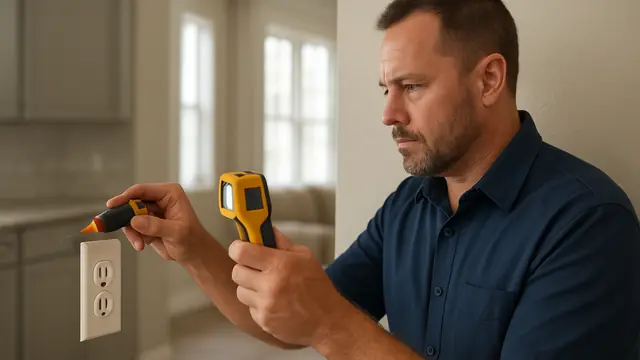
Test accessible GFCI receptacles. GFCI stands for ground-fault circuit interrupter. It is designed to stop current when electricity leaks along an unintended path, often involving moisture.
Test smoke and carbon-monoxide alarms and charge emergency devices.
Unplug electronics that do not need to remain connected. Never approach a wet panel to turn equipment off.
Safe Checks After the Storm
Begin outside and remain at a distance. Look for downed wires, a damaged service mast, a meter enclosure separated from the wall, or tree limbs contacting lines. Treat every wire as energized.
Do not enter standing water when outlets, appliances, cords, or electrical equipment may be present. Water can carry electricity beyond the obvious source.
Inside, use sight, smell, and sound before operating switches. Buzzing, sizzling, popping, heat, discoloration, or a burning odor means the affected area should remain off.
A tripped breaker may be reset once only when the panel is dry, there is no visible damage, and connected loads have been unplugged. Move the breaker fully to OFF and then to ON. If it trips again, leave it off.
What Homeowners Should Not Attempt
Do not remove the electrical panel cover or meter seal. Energized parts may remain live even when the main breaker is off.
Never connect a portable generator to a dryer or range receptacle. This can backfeed power through the home and toward utility lines. Use approved transfer equipment or a listed interlock installed for the panel.
Do not run a generator inside a garage, under an enclosed porch, or near windows, doors, or air intakes. Carbon monoxide can enter the home quickly.
Signs That Require Urgent Electrical Help
Smoke, sparks, visible arcing, melted plastic, exposed wiring, or water inside the panel require immediate action. Call emergency services for fire or an active life-safety hazard.
Partial power is also urgent. If some lights are unusually bright while others are dim, a damaged neutral may be causing unbalanced voltage. This condition can destroy appliances and create overheating.
A shock or tingling sensation from an appliance, faucet, railing, dock component, outdoor shower, or metal surface must be taken seriously. Keep people away and stop using the area.
If service equipment has pulled away from the building, do not try to push it back or secure it yourself. Utility coordination and licensed repair may be required before reconnection.
How a Licensed Electrician Diagnoses Hurricane Damage
The electrician determines whether the problem originates with the utility, service equipment, panel, branch circuit, or appliance. A branch circuit carries power from a breaker to outlets, lights, and equipment.
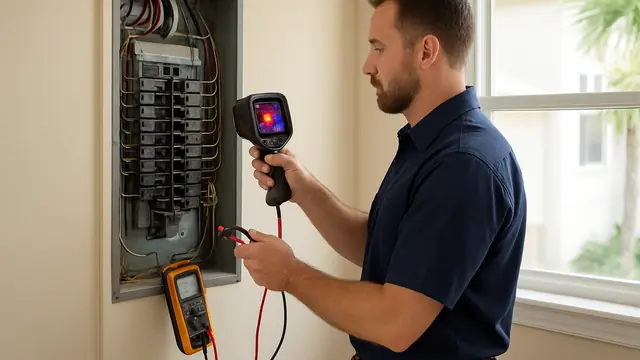
The inspection may include voltage measurements, neutral testing, grounding and bonding checks, and examination of outdoor equipment.
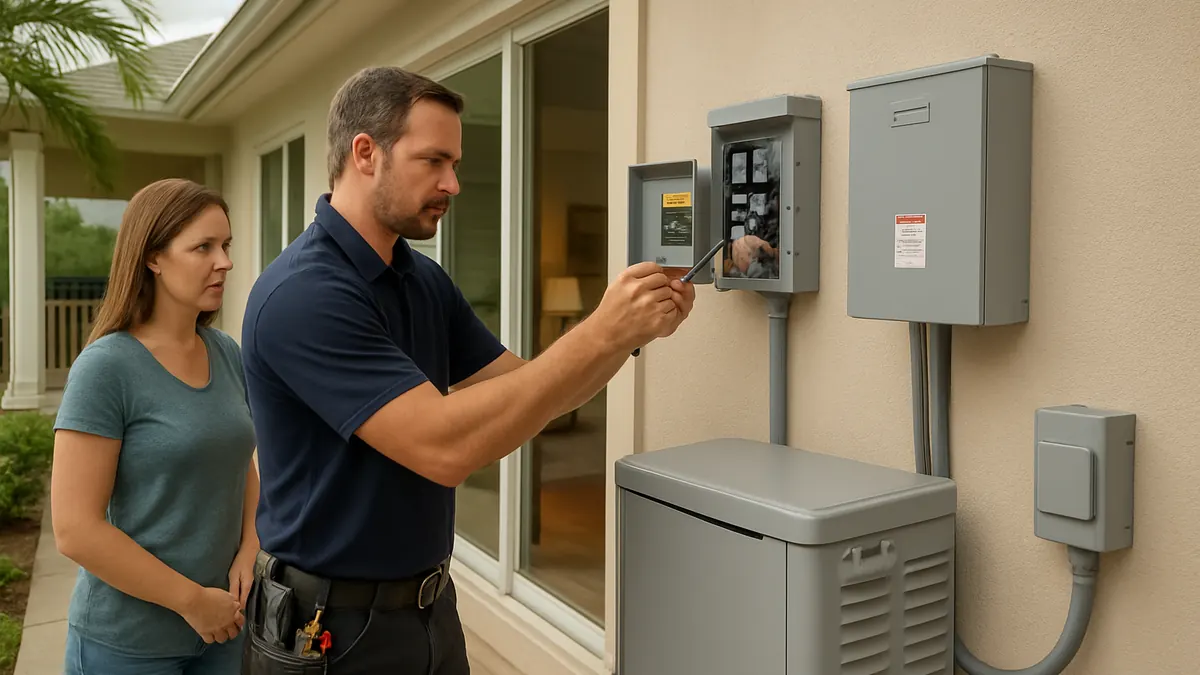
When water exposure is suspected, circuits may be isolated before re-energizing. Generator systems are checked for correct transfer equipment, breaker sizing, cord capacity, and load planning.
Repair Options Beginning With the Least Invasive
A focused repair may involve replacing a broken weatherproof cover, failed GFCI, damaged receptacle, loose light fixture, or worn generator cord.
A single breaker, disconnect, surge protective device, junction box, or limited section of cable may be replaced when damage is localized. Corroded or loose connections may be repaired if the surrounding equipment remains safe and serviceable.
More extensive repairs can include replacing water-damaged panel components, service conductors, the meter enclosure, service mast, or full panel. Complete replacement is generally considered when equipment is physically damaged, heavily corroded, contaminated, obsolete, or unreliable.
Factors That Affect Cost
Cost depends on how far the damage extends, how easily the equipment can be reached, and whether the repair involves service equipment or one branch circuit.
Panel type, permits, utility coordination, generator components, and access through finished walls can also affect cost.
Prevention and Maintenance
Before hurricane season, correct recurring breaker trips, flickering lights, warm outlets, damaged exterior covers, and GFCIs that will not reset. Those symptoms may indicate an existing weakness that storm conditions could worsen.
Consider whole-home surge protection and point-of-use protection for valuable electronics. Neither can prevent every type of lightning or physical damage, but layered protection can reduce common surge exposure.
Review generator capacity each year and confirm which appliances can operate together.
After a hurricane, watch for delayed symptoms such as rust, intermittent lighting, warm switches, nuisance tripping, or electronics that begin failing days later.
Homeowner FAQs
Should I unplug my refrigerator before the storm?
Normally, refrigeration remains connected while power is stable. During repeated outages or abnormal voltage, unplugging it may reduce risk. Keep doors closed to preserve temperature.
Can I reset every breaker after power returns?
No. Reset only breakers associated with dry, undamaged circuits, and reset each no more than once. A breaker that trips again should remain off.
Is an outdoor receptacle safe once it looks dry?
Not necessarily. Moisture and contamination may remain inside the box or device. Have it inspected after direct water exposure.
Why does my generator keep tripping?
The generator may be overloaded, a connected appliance may be faulty, a cord may be undersized, or the transfer equipment may have a problem. Reduce loads and have persistent tripping evaluated.
Does surge protection replace unplugging electronics?
No. Surge protection reduces certain voltage spikes, but unplugging nonessential electronics provides additional separation from the electrical system.
Can storm damage be limited to one circuit?
Yes. A broken outdoor fixture, wet box, failed appliance, or damaged cable may affect one circuit. Proper testing is needed before assuming the entire panel must be replaced.
Complete Your Lower Grand Lagoon Storm Plan
A Northwest Florida hurricane electrical checklist in Lower Grand Lagoon should include labeled circuits, secure exterior equipment, safe generator procedures, working alarms, surge protection, and careful inspection before power is restored.
Leave any wet, damaged, overheating, or repeatedly tripping circuit off. A cautious response protects the home and gives an electrician a safer starting point for diagnosis.
About this guide: This resource provides general homeowner education, not a remote diagnosis. Actual conditions, code requirements, equipment, and safe repair options must be evaluated at the property.