Do not remove an electrical panel cover, touch exposed conductors, bypass protection, or repeatedly reset a fault. Keep clear of smoke, sparks, burning odors, hot equipment, standing water near electricity, and downed lines, then call qualified help.
You are standing in the kitchen of your Panama City home when the recessed lights dip as the air conditioner starts. Later, the dining-room fixture flickers even though no large appliance is running. Then one lamp becomes noticeably brighter before returning to normal. Something is causing the electrical supply to change.
Observe the pattern without opening electrical equipment. Note whether one fixture, one room, several rooms, or the whole house is affected. Turn off any light, appliance, or circuit that smells burned, feels unusually hot, crackles, buzzes, sparks, or shows discoloration. Do not remove the electrical panel cover or tighten wiring. If lights brighten and dim in different areas, flickering is widespread, or electronics restart, contact a licensed electrician promptly.
Why Are My Lights Flickering in Panama City?
Lights flicker when the voltage reaching them changes or the electrical path supplying them becomes unstable. Voltage is the pressure that moves electricity through wiring. A brief, mild dim when a large motor starts may be normal. Repeated flashing, deep dimming, random brightening, or flickering without a clear trigger needs attention.
One flickering bulb usually points to the bulb, socket, fixture, switch, or lamp cord. Several lights on one circuit may indicate a loose connection or heavy load. Lights throughout the home can point to a panel, neutral, service, or utility problem.
Common Causes of Flickering Lights
A Loose or Failing Bulb
A bulb that is not firmly seated can lose contact. LED bulbs can also flicker when their internal driver fails. If a replacement bulb also flickers, the socket, fixture, or circuit needs attention.
An Incompatible Dimmer
Many older dimmers were designed for incandescent bulbs. LED bulbs may flash at low settings, hum, or delay before turning on when paired with an incompatible control.
A Worn Switch, Socket, or Fixture Connection
Switches and sockets contain contacts that wear. A fixture may also have a loose wire. Flickering that changes when you operate a switch, touch a lamp, or move a cord suggests a device-level problem. Loose connections create resistance and heat.
A Circuit Carrying Too Much Load
Kitchen appliances, portable heaters, hair dryers, vacuums, and window air conditioners can draw substantial current. When several share a circuit, voltage can sag even before the breaker trips.
A Large Appliance Starting or Failing
Air conditioners, refrigerators, pumps, and other motors require extra current when starting. Severe dimming, repeated attempts to start, or flickering that continues while the appliance runs can indicate a failing motor, starting component, connection, or circuit.
A Loose Neutral or Service Connection
The neutral conductor helps complete and balance household circuits. If it becomes loose, some lights may become bright while others dim. Loose breaker connections, damaged panel components, meter issues, and service-conductor problems can create similar symptoms and unstable voltage.
Safe Checks a Homeowner Can Perform
Write down which rooms are affected, how long the flicker lasts, what appliances are running, and whether clocks or electronics reset.
For one light, turn the switch off and allow the bulb to cool. Confirm that it is fully seated, within the fixture's wattage limit, and appropriate for the fixture. Replace it with a known-good bulb. If a dimmer is present, test the light at full brightness and confirm that the bulb is labeled dimmable.
Unplug nonessential portable appliances from the suspected circuit. Test one device at a time and note whether a particular appliance triggers the problem. Visually inspect cords, plugs, and cover plates for damage without removing them.
If neighboring homes have the same problem, notify the utility. An electrician may still need to confirm that the issue is not inside your home.
What You Should Not Attempt
Do not remove the panel cover, meter enclosure, switch, receptacle, or fixture canopy. Parts of the service equipment can remain energized even when the main breaker is off.
Do not tighten neutral or breaker connections yourself. Never install a larger breaker to stop dimming or repeated trips. Do not repeatedly reset a breaker that trips after flickering, and avoid using extension cords as permanent wiring.
Signs That Make the Problem Urgent
Prompt service is needed when flickering affects several rooms, appears suddenly, becomes more severe, or occurs without an obvious load. Lights that grow unusually bright are especially concerning.
Other urgent signs include burning odor, warm switches, buzzing from the panel, scorched cover plates, crackling inside a wall, smoke, sparks, repeated breaker trips, partial power loss, or electronics cycling off and on.
If safe, turn off the affected circuit. If there is smoke, fire, or active arcing, leave the property and contact emergency services. Do not touch wet electrical equipment.
How a Licensed Electrician Diagnoses Flickering Lights
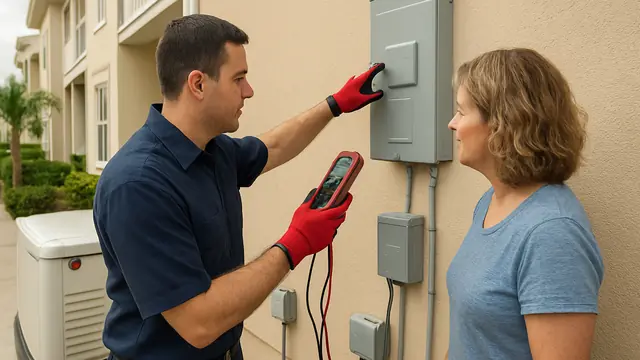
A licensed electrician determines whether the symptom is limited to one fixture, one circuit, several circuits, or the entire service.
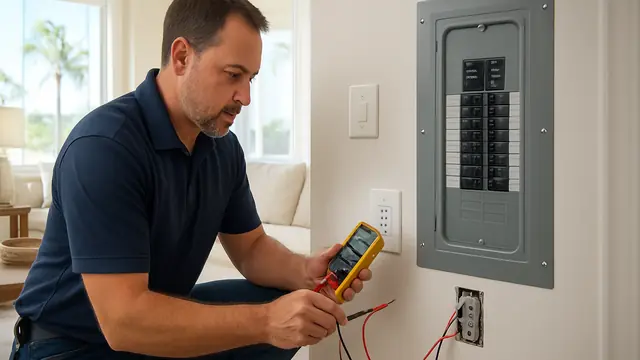
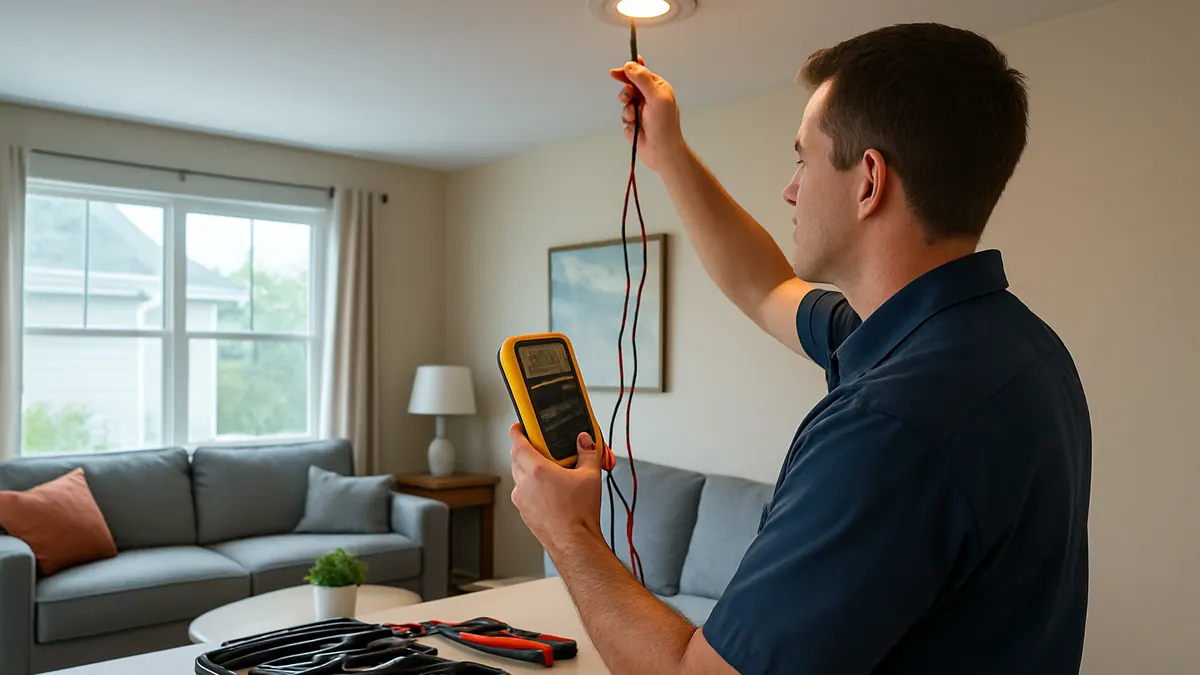
Testing often starts with the bulb, dimmer, switch, fixture, and nearby receptacles. Voltage measurements show whether power remains stable. Current measurements reveal whether the circuit is heavily loaded. Voltage-drop testing helps locate resistance caused by a weak connection.
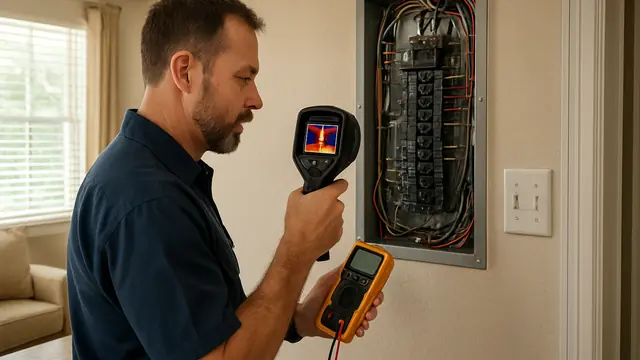
At the panel, the electrician checks breaker seating, conductor terminations, neutral connections, grounding and bonding, and signs of overheating or arcing. Thermal imaging may reveal a hot connection. Service measurements help determine whether the problem begins inside the home or on the utility side.
Repair Options From Least Invasive to More Involved
The simplest repair may be replacing a defective bulb, installing an LED-compatible dimmer, changing a worn switch, or repairing a fixture socket.
If a connection is loose in an accessible box, the electrician can de-energize the circuit and properly re-terminate it. Damaged wire ends or devices may need replacement.
When excessive load is the problem, portable devices may be redistributed or a dedicated circuit added. If a major appliance is drawing abnormal current, repairing that equipment may correct the flicker.
A damaged breaker or conductor termination can sometimes be repaired while the panel remains serviceable. Panel replacement is considered when internal components are damaged, unsafe, or unable to support the home's needs.
Factors That Affect Cost
Cost depends on the cause, accessibility, and time required to reproduce the symptom. Replacing one dimmer is less involved than tracing an intermittent connection through multiple boxes.
The number of affected circuits, panel condition, conductor damage, appliance involvement, permits, utility coordination, and new wiring can influence the scope.
Prevention and Maintenance Guidance
Use bulbs rated for the fixture and compatible with the dimmer. Do not exceed wattage limits. Replace switches or receptacles that feel loose, buzz, operate inconsistently, or show discoloration.
Avoid placing several high-current appliances on one circuit. Have major equipment installed on correctly sized circuits. Keep the breaker directory updated.
After renovations, appliance additions, or major power disturbances, pay attention to new flickering, warm devices, and breaker trips.
Homeowner FAQs
Is It Normal for Lights to Dim When the Air Conditioner Starts?
A slight, momentary dim can occur. Deep, repeated, or worsening dimming should be evaluated.
Can a Bad LED Bulb Cause Flickering?
Yes. A loose bulb, failing driver, incompatible dimmer, or overheating bulb can flicker even when the wiring is sound.
Why Do My Lights Flicker in Only One Room?
That room may have a failing fixture, switch, receptacle, loose connection, or overloaded circuit.
Can a Loose Neutral Damage Electronics?
Yes. It can create unstable voltage and damage televisions, computers, appliances, and other sensitive equipment.
Should I Call the Utility or an Electrician First?
If only your home is affected, call an electrician. If nearby homes are affected or utility equipment is damaged, contact the utility too.
Does Flickering Mean I Need a New Electrical Panel?
Not automatically. Many causes can be repaired without replacing the panel. Diagnosis should come first.
Get a Clear Answer Before the Problem Grows
Why are my lights flickering in Panama City? The cause may be a bulb, dimmer, switch, or fixture, but repeated or widespread flickering can also point to an overloaded circuit, failing appliance, damaged breaker, loose neutral, or service problem. Make only safe observations, stop using anything that shows heat or arcing, and have a licensed electrician identify the least invasive reliable repair.
About this guide: This resource provides general homeowner education, not a remote diagnosis. Actual conditions, code requirements, equipment, and safe repair options must be evaluated at the property.