Stop and call for qualified help when plumbing water is near electrical equipment, sewage is entering occupied space, gas or burning odors are present, or a repair would require opening pressurized piping.
A cleaner reaches your Blue Mountain Beach vacation rental and finds the washer stopped mid-cycle, dampness near the laundry room, and a guest message saying an upstairs shower drained slowly. These are among the most common plumbing problems for vacation rentals in Blue Mountain Beach and may signal a clogged drain, leaking appliance connection, or restriction affecting more than one fixture.
Do not restart the washer or run the shower to "see what happens." If clean water is leaking and an accessible valve operates easily, turn it off. Avoid wet electrical equipment. If dirty water is backing up or several drains are affected, stop water use and call a licensed plumber.
Why Vacation-Rental Plumbing Problems Appear Suddenly
Vacation homes can move rapidly from vacant to occupied. Bathrooms, kitchens, laundry equipment, and water heaters may receive heavy use during a stay. A developing problem may remain unnoticed until guests use multiple fixtures.
Owners also depend on cleaners and managers to notice early changes. A faint odor, slow drain, loose toilet, or damp cabinet should be reported, not postponed until a guest complains.
Most Common Plumbing Problems for Vacation Rentals in Blue Mountain Beach
Washing-Machine Supply and Drain Problems
A washing machine can leak from supply hoses, shutoff valves, internal parts, or the drain connection. Water during filling suggests a different source than water during drainage.
A restricted laundry drain may overflow or back up nearby. Do not assume the appliance has failed until both the machine and its plumbing connections have been evaluated.
Shower, Tub, and Sink Clogs
Hair, soap residue, and personal-care products gradually narrow bathroom drains. Guests may notice water pooling in the shower or a sink taking longer to empty.
If one fixture is slow, the restriction may be close to that drain. If a toilet bubbles when the shower drains, or water appears in another fixture, the blockage may be in shared piping.
Toilet Stoppages and Loose Toilets
Excess paper, wipes, and foreign objects commonly clog toilets. A plunger may clear a simple obstruction, but repeated clogs suggest the problem has not been fully removed.
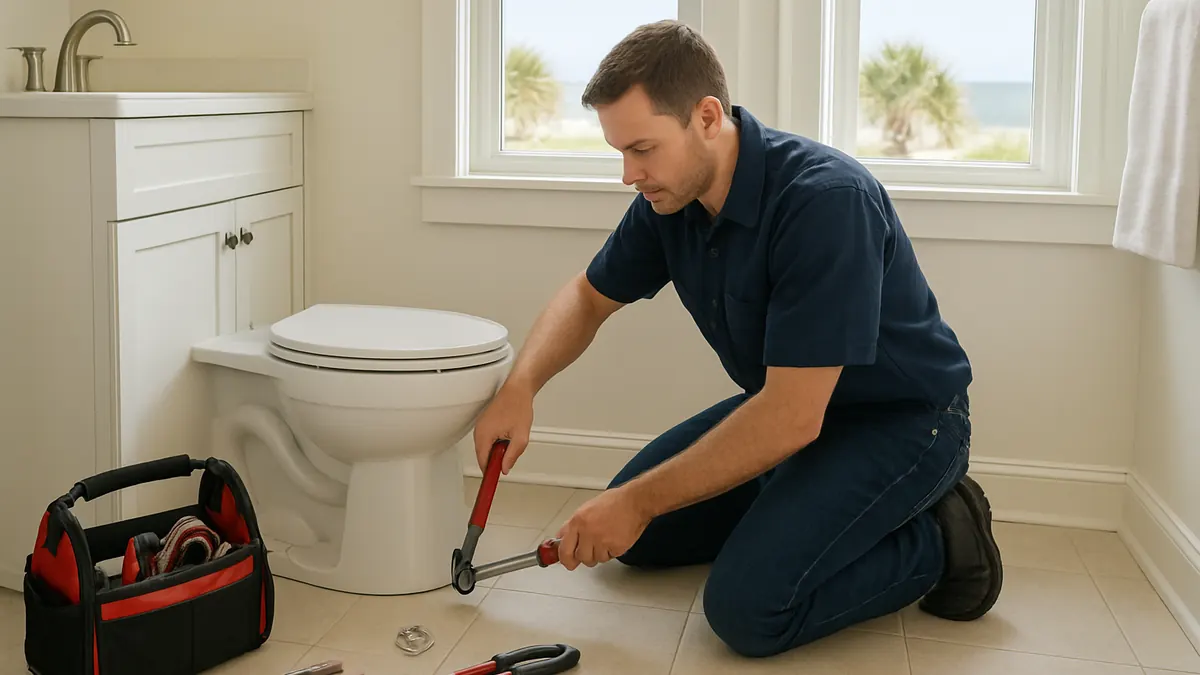
A toilet that rocks may have loose hardware, a damaged mounting surface, or trouble with the seal beneath it. Continued movement can allow leakage.
Kitchen Drain and Disposal Failures
Grease, starchy food, coffee grounds, and fibrous scraps can collect inside a kitchen line. Signs include slow drainage, gurgling, odors, or water rising in the other sink bowl.
A disposal may be jammed, overheated, without power, or mechanically failed. Switch it off before inspection and never place fingers or tools inside.
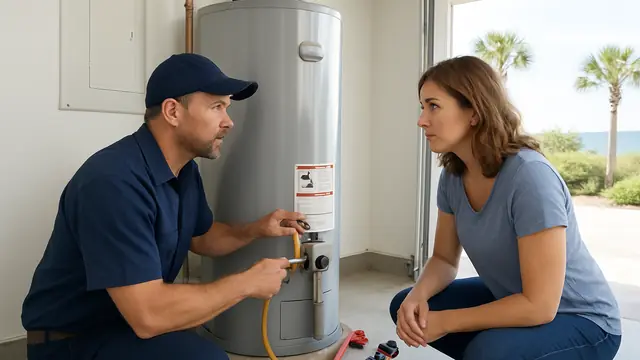
Water-Heater Capacity or Equipment Trouble
A full rental may use hot water faster than the system can recover. A sudden performance change can also point to a failed element, thermostat, burner, control, electrical supply, or other component.
Water beneath the heater, corrosion around connections, recurring breaker trips, or unusual sounds should be checked. Do not assume every complaint requires replacement, but do not repeatedly reset the equipment without diagnosis.
Small Leaks That Become Property Damage
Faucet connections, toilet supplies, appliance lines, and shower valves can leak slowly. Look for swelling, staining, peeling paint, or a musty smell. Visible damage may be away from the source.
Safe Checks You Can Perform
- Determine when the problem occurs. Does the laundry leak while filling or draining? Does a sink leak while the faucet runs or while the basin empties?
- Dry visible surfaces and watch accessible connections. Place a container beneath a small clean-water drip. For a running toilet, check whether the flapper closes.
- A simple toilet clog may be tested with a plunger when no other fixture is backing up. Stop if the bowl rises or the clog returns.
- Photograph the area and note which fixtures were operating. This can shorten diagnosis without repeated testing.
What Homeowners and Managers Should Avoid
- Do not run more laundry when the leak source is unknown. Do not use nearby fixtures when wastewater has backed up.
- Avoid chemical drain cleaners, especially after another product has been used. Never mix chemicals, and tell the plumber if any were poured into the line.
- Do not open a water heater, adjust gas equipment, remove a toilet, cut into a ceiling, or disassemble a disposal without training. Do not force a valve that will not turn normally.
Urgent Warning Signs
Prompt service is needed when water passes through a ceiling, spreads toward electrical equipment, or flows faster than it can be contained. A sewage backup, unusable toilet, overflowing laundry drain, or repeated whole-house gurgling is also urgent.
Leave and contact the gas utility or emergency services if there is a strong gas odor. Do not enter standing water near electricity or stand beneath a bulging ceiling.
A water heater leaking from the tank, rather than an accessible fitting, also needs prompt evaluation.
How a Licensed Plumber Diagnoses the Issue
A plumber identifies which fixtures share piping and when the symptom occurs. Water during appliance filling points toward supply-side components, while water during drainage points toward the drain connection or an obstruction.
Drain diagnosis may use professional cleaning equipment or a camera. A camera helps when a blockage recurs or the line must be inspected.
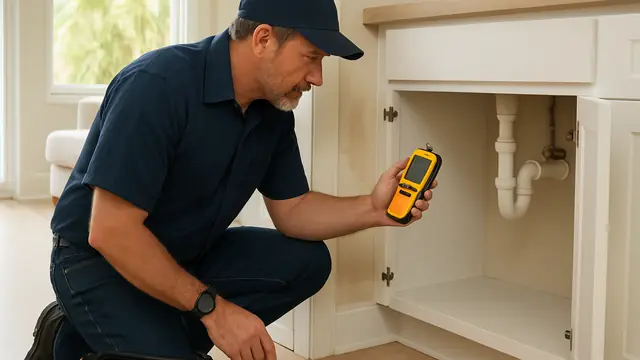
Leak diagnosis can include moisture readings, pressure testing, meter observation, and fixture isolation. Water-heater testing checks the energy supply, controls, heating components, safety devices, and tank condition.
Repair Options Beginning With the Least Invasive
A simple repair may involve tightening an approved connection, replacing a washer hose, clearing a trap, adjusting a toilet chain, replacing a flapper, cleaning an aerator, or safely resetting a disposal.
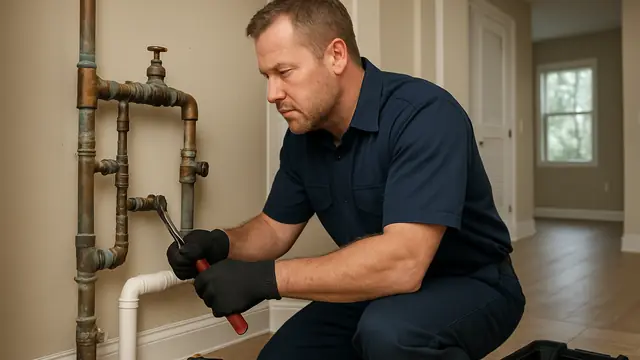
If the issue is deeper, the plumber may clear a branch drain, replace a failed valve, rebuild a toilet, service the water heater, repair a fixture connection, or replace a damaged pipe section.
Replacement is appropriate for a leaking tank, cracked fixture, extensively damaged pipe, or component with repeated failures and few reliable repair options.
What Determines Repair Cost
Cost depends on access, diagnostic time, labor, parts, and equipment. An exposed washing-machine hose is easier to address than piping concealed behind a finished wall.
Water damage also matters if flooring, cabinetry, or drywall must be dried or restored. Recurring stoppages may require more investigation than a first-time clog.
Prevention Between Guest Stays
Add plumbing checks to every turnover. Run faucets to observe supply and drainage, flush toilets, inspect around their bases, test the disposal, check under sinks, and look around the washer.
Ask cleaners to report slow drains, rocking toilets, recurring odors, moisture, and water-heater changes immediately. Label the main shutoff and laundry valves so staff can respond quickly.
Provide guests with simple rules for toilets, kitchen grease, food waste, and laundry loads. Schedule professional service when a symptom repeats instead of relying on temporary resets or repeated plunging.
Respond Early to Vacation-Rental Plumbing Problems
The most common plumbing problems for vacation rentals in Blue Mountain Beach include laundry leaks, bathroom clogs, toilet stoppages, kitchen backups, water-heater complaints, and hidden fixture leaks. Stop using affected equipment, control clean water when safe, document what happened, and obtain a professional diagnosis before the property returns to full occupancy.
About this guide: This resource provides general homeowner education, not a remote diagnosis. Actual conditions, code requirements, equipment, and safe repair options must be evaluated at the property.