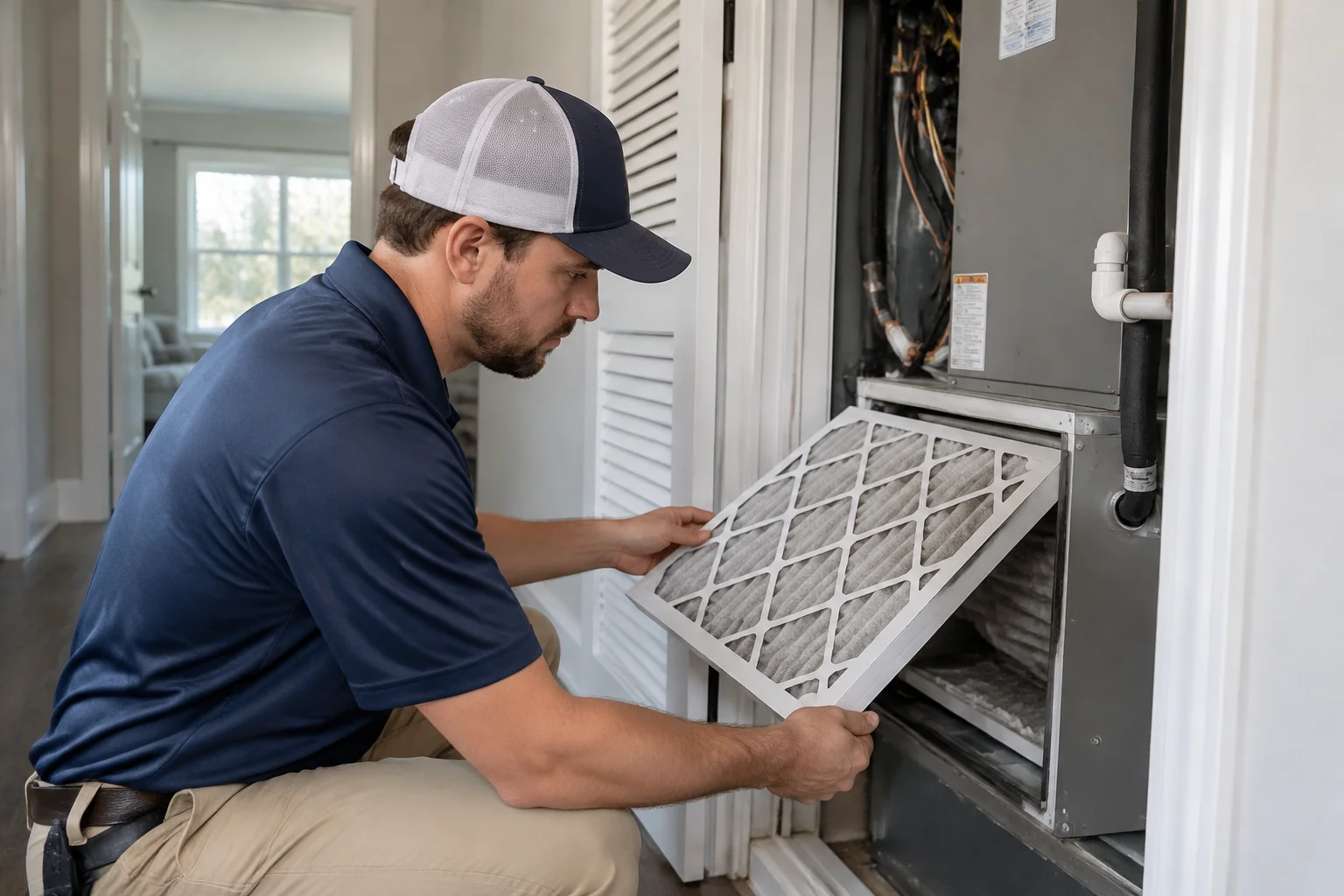
A dusty vent, a warm back bedroom, and a house that feels clammy can seem like versions of the same problem. Sometimes they share a cause. Often, they do not. For Lynn Haven homeowners, the smartest approach to duct cleaning starts with understanding what is happening inside the entire heating and cooling system.
A Superior Mechanical provides duct cleaning in Lynn Haven, FL. Knowing when cleaning is useful, when repairs should come first, and how to prevent repeat buildup helps homeowners make informed decisions about comfort and maintenance.
Why Lynn Haven ductwork deserves a closer look
Lynn Haven's long cooling season puts air conditioners and heat pumps to work for much of the year. High outdoor humidity means the equipment must remove moisture as well as lower the temperature. Ductwork running through a hot attic needs intact insulation and sealed connections to deliver conditioned air effectively.
Coastal weather adds another layer. Salt air can contribute to corrosion on outdoor units and condensers, while storms can damage roofs, introduce water, or disturb exposed equipment. Duct cleaning does not correct those issues, but a broader inspection can help identify them before they undermine comfort.
Older homes may have aging duct insulation or connections that have loosened over time. Newer homes can have construction debris, damaged flexible ducts, or airflow imbalances. Remodels and additions can change the cooling load without corresponding changes to duct capacity. The age of the house alone does not establish whether cleaning is needed.
Start with evidence, not a cleaning calendar
Air ducts do not need cleaning on a universal annual schedule. A light coating of settled dust is not, by itself, proof of a problem. Cleaning is more appropriate when an inspection finds substantial debris, confirmed pest contamination, or particles being discharged from supply vents.
Clues worth discussing with a technician
Tell the technician if dust returns quickly after cleaning rooms, debris blows from registers, or odors appear when the HVAC system starts. Mention recent drywall work, sanding, water intrusion, or pest activity. These details help narrow the inspection, although none independently proves that the ducts need cleaning.
Ask to see photographs of affected areas and an explanation of the findings. Dark material should not automatically be labeled mold based on appearance alone. Suspected microbial growth requires attention to moisture and, where appropriate, evaluation by a qualified specialist.
Cleaning can remove accumulated material, but it should not be sold as a guaranteed cure for allergies or illness. Indoor air quality also depends on filtration, ventilation, moisture, outdoor particles, and activities inside the home.
A weak vent does not always mean a dirty duct
Uneven airflow is a reason to investigate, not a diagnosis. A bedroom may feel warm because its supply duct is crushed, its return path is inadequate, or its cooling load increased after new windows or an addition. A heavily loaded filter can restrict air throughout the system.
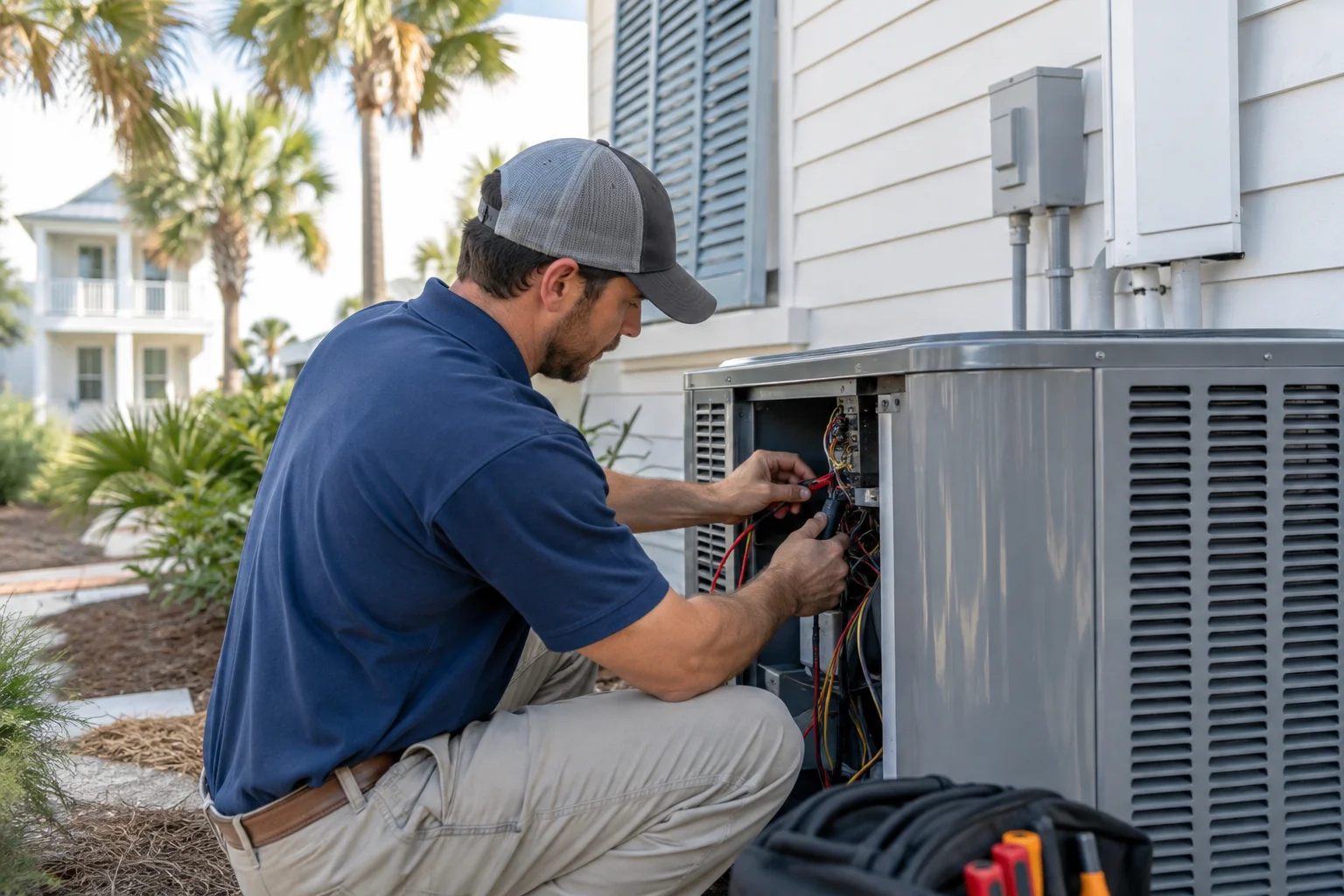
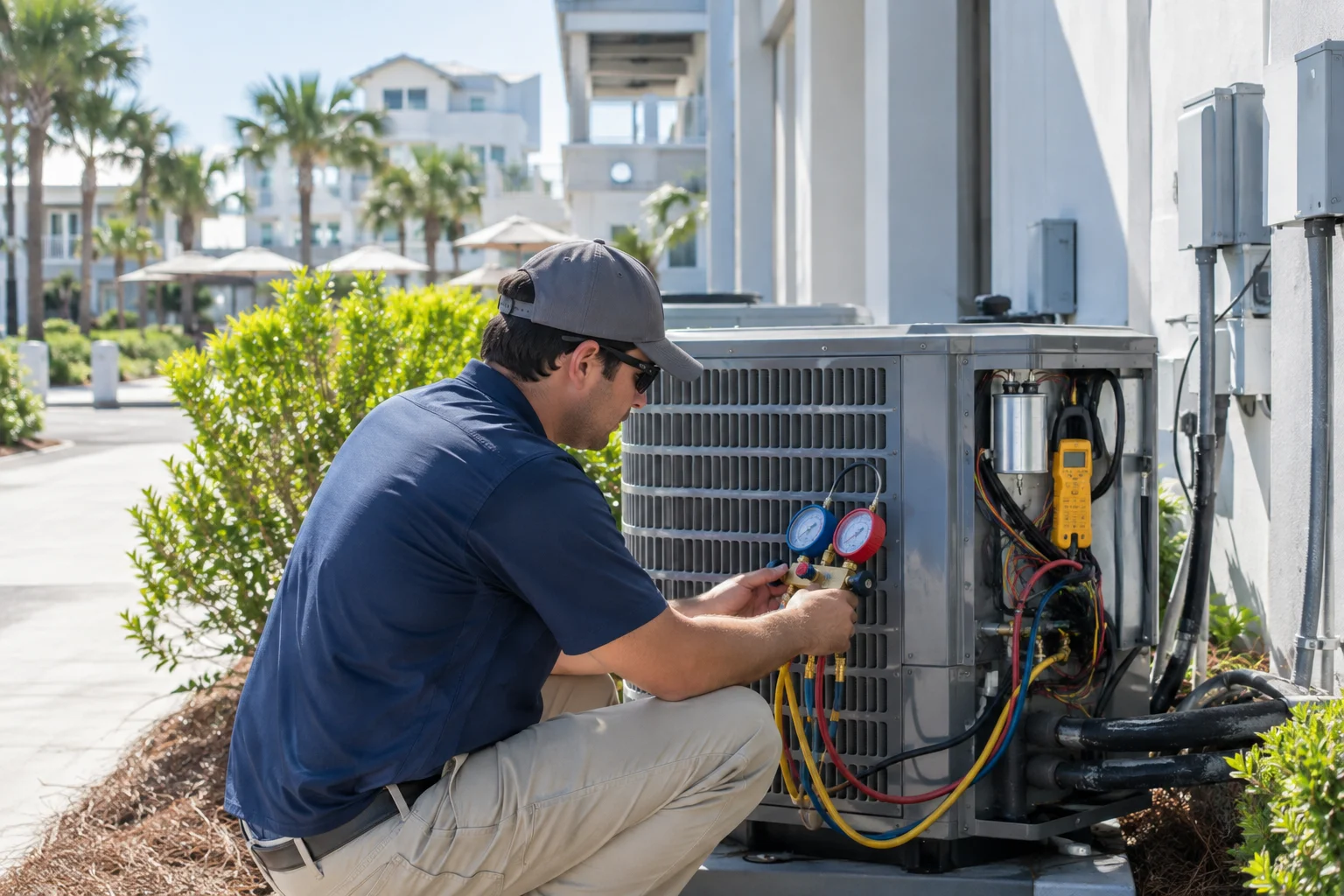
At the air handler, debris on an evaporator coil or blower can also interfere with performance. Refrigerant leaks, incorrect refrigerant charge, and equipment faults can reduce cooling even when the ducts are reasonably clean. These problems require air conditioning service rather than duct cleaning alone.
Homeowners searching for ductwork repair near me should ask about disconnected runs, leakage, insulation damage, and airflow measurements. Duct sealing or ductwork repair may be more valuable than cleaning if conditioned air is escaping into the attic.
If the system runs without cooling adequately, air conditioning repair in Lynn Haven can help identify the equipment fault. Cleaning should follow the findings, not replace diagnosis.
Humidity control belongs in the same conversation
Duct cleaning removes material. It does not dehumidify the house. In Lynn Haven's humid climate, a clean system can still leave rooms feeling sticky if equipment is oversized, controls are poorly configured, or outdoor moisture enters through leaks.
Look for the source of persistent moisture
A technician may check cooling cycles, evaporator coil condition, condensate drainage, and duct insulation. Return leaks can draw humid attic air into the system. Missing insulation can allow condensation to form on cold duct surfaces, creating moisture problems outside the air stream.
Use a reliable hygrometer to track indoor relative humidity. A range around 30 to 50 percent is a useful general target, although local conditions and the building affect what is practical. Persistent readings above 60 percent deserve attention, particularly when accompanied by musty odors or condensation.
Keeping the thermostat fan on Auto rather than continuously On may reduce moisture re-evaporation from a wet coil between cooling cycles. For homes that remain clammy despite appropriate repairs, this guide to whole home dehumidification in Lynn Haven explains another option.
Match the cleaning method to the duct material
Before authorizing work, ask which components are included. Supply ducts, return ducts, registers, grilles, and accessible HVAC components may have different cleaning requirements. A clear scope helps prevent confusion about whether the blower or evaporator coil is included or needs separate service.
Discuss how debris will be contained and removed rather than released into occupied rooms. Mechanical agitation and collection methods should suit the duct material and its condition. Older flexible ducts and deteriorated internal insulation can be damaged by aggressive cleaning.
Wet, mold-contaminated porous insulation often requires replacement rather than cleaning. Pest contamination calls for addressing the infestation and entry points first. Otherwise, the same problem can return after the service visit.
Ask about any proposed chemical treatment. A deodorizer is not a substitute for removing contamination or fixing moisture. Products must be appropriate for the specific application and used according to their labels. Not every duct system needs a chemical treatment.
Coordinate cleaning with remodeling and storm recovery
Remodeling can send fine dust through a home, especially when sanding or cutting occurs near open returns. Contractors should isolate dusty work and protect HVAC openings appropriately. Avoid running the system with its airflow paths blocked, and replace loaded filters as needed during the project.
If inspection supports duct cleaning after a remodel, schedule it after the dust-producing work and general cleanup. For an addition, also review equipment capacity, duct sizing, and return airflow. Extending a branch duct without checking the design may leave both the original rooms and the addition uncomfortable.
After a storm, address roof leaks and other water entry before cleaning ducts. Water-damaged insulation or contaminated flooded components may need replacement. If HVAC equipment has been submerged or electrical components are wet, do not operate it until a qualified professional has evaluated it.
Keep dust from returning with practical maintenance
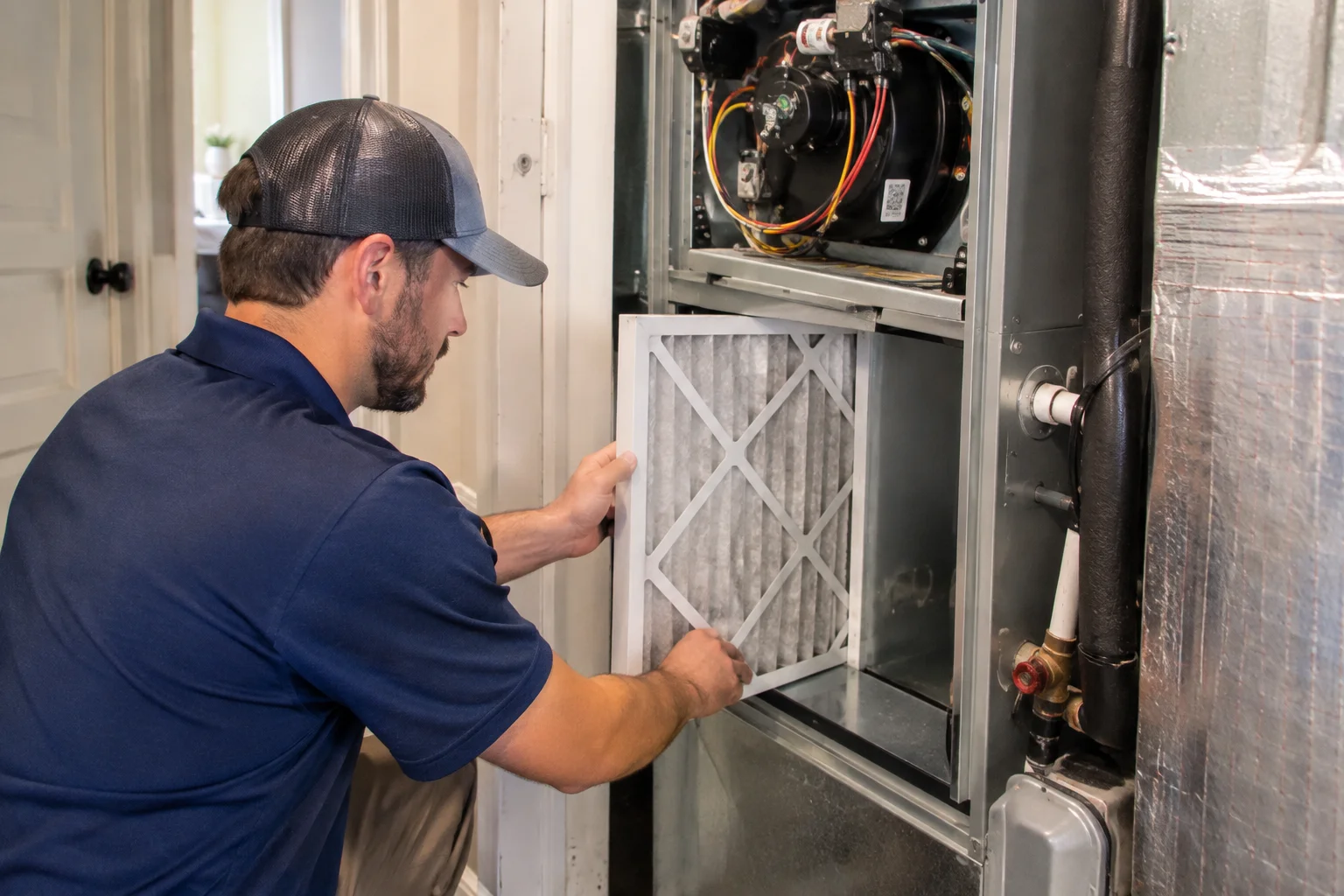
The most useful prevention steps are often straightforward. Fit the correct filter size, make sure the filter seats properly, and inspect it regularly. Replacement frequency depends on the filter, pets, renovation activity, occupancy, and system runtime. Follow manufacturer guidance rather than assuming every home needs the same interval.
A higher-efficiency filter can capture smaller particles, but excessive resistance can reduce airflow in a system not designed for it. Ask which filter rating the equipment and duct system can accommodate. Filtration upgrades should not trade cleaner air for a struggling blower or frozen coil.
Keep furniture and rugs away from returns and supply vents. Vacuum accessible grilles, reduce tracked-in dirt, and maintain normal housekeeping. Leave internal duct cleaning and fragile component cleaning to trained professionals.
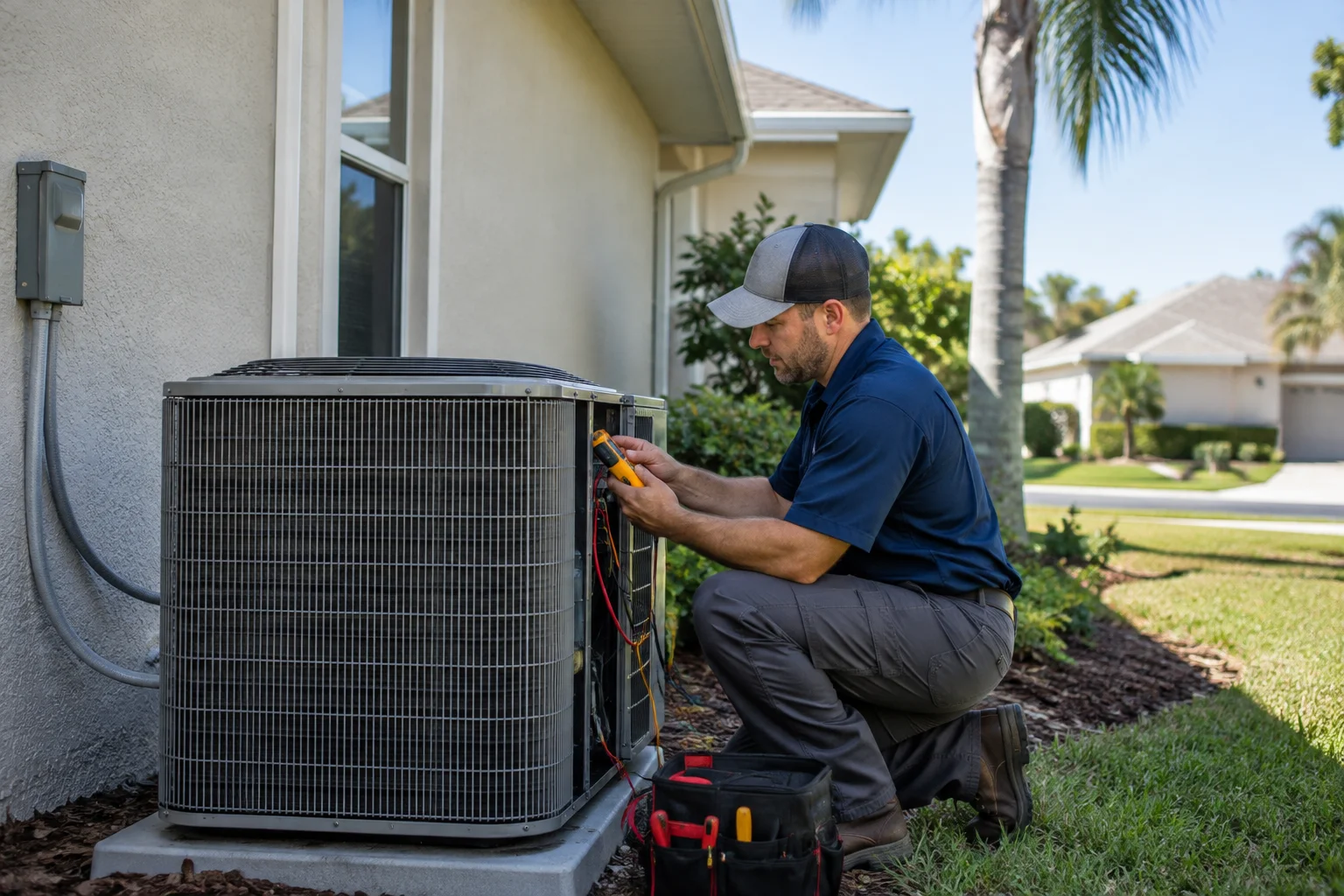
An HVAC maintenance near me search should lead to more than a filter change. Useful maintenance considers the blower, coils, drain lines, electrical connections, outdoor unit condition, and system operation. A blocked condensate drain needs service, not an air duct cleaning appointment.
Connect duct care with the equipment you actually have
Heat pumps use the same duct system for cooling and heating, so leakage and restrictions can affect comfort in both seasons. Heat pump services in Lynn Haven can address equipment operation alongside duct concerns. Heating repair or heat pump repair may be needed when the air temperature is wrong despite adequate airflow.
Homes with furnaces need appropriate furnace service, including combustion safety checks where applicable. Cleaning the ducts does not inspect a burner, heat exchanger, or venting system.
Ductless mini splits generally do not have central distribution ducts to clean. Their filters, indoor coils, blowers, and condensate systems still need maintenance. A home with both central HVAC and a mini split addition needs a plan for each system.
Thermostat installation can improve scheduling and control, but it cannot fix an undersized return or disconnected duct. Discuss equipment compatibility and humidity settings when reviewing heating control systems or other thermostat upgrades.
Set realistic expectations for efficiency and air quality
Removing substantial restrictions may improve airflow. However, routine duct cleaning alone has not been shown to reliably lower household energy use. Sealing leaks, correcting duct damage, cleaning dirty equipment components, and fixing refrigerant problems may offer clearer performance benefits when those defects are present.
For persistent odors or airborne particle concerns, indoor air quality testing in Lynn Haven can help guide further investigation. Ask what a proposed test measures and how the findings would change the recommended work. No single test identifies every indoor air concern.
Before and after photographs can document cleaning. Airflow measurements, temperature readings, and humidity tracking are more useful for evaluating comfort than a promise that every room will automatically feel better.
Know which problems should not wait
A dusty register is usually not an emergency. Smoke, burning odors, repeated breaker trips, or water threatening ceilings or electrical components require prompt attention. Shut the system down if it is safe to do so, and do not repeatedly reset a tripping breaker. For smoke, fire, or a carbon monoxide alarm, leave the home and contact emergency services.
During extreme heat, loss of cooling can become urgent for vulnerable residents. Homeowners searching for emergency AC repair near me should describe the indoor temperature, unusual sounds, visible ice, and any water leakage. These details help distinguish an equipment failure from a routine duct concern.
Build a local service plan around the findings
Summer demand and post-storm scheduling can make nonurgent appointments harder to arrange. Planning inspections before peak cooling demand gives homeowners more flexibility, especially when cleaning needs to be coordinated with duct repairs or remodeling.
When comparing results for licensed HVAC contractor near me, verify credentials and ask for a written scope, documented findings, and a clear distinction between necessary repairs and optional improvements. Familiarity with attic ductwork, coastal exposure, and local humidity matters.
A Superior Mechanical offers HVAC service in Lynn Haven within its Bay County service area. Request a duct inspection and discuss any comfort, dust, or moisture concerns together. The right plan may involve cleaning, sealing, equipment maintenance, or a combination based on what the inspection actually finds.
Find Duct Cleaning in Lynn Haven, FL
If you need Duct Cleaning in Lynn Haven, FL, visit our local service page or contact A Superior Mechanical today.
Map of Lynn Haven, FL
Frequently Asked Questions
How often should air ducts be cleaned in Lynn Haven?
There is no universal cleaning interval. Have the ducts evaluated when there is substantial debris, particles coming from vents, confirmed pest contamination, or concerns following renovation or water damage. Lynn Haven's humidity makes moisture inspection important, but humidity alone does not mean ducts need cleaning.
Will duct cleaning fix weak airflow or high indoor humidity?
Cleaning may improve airflow when substantial debris is restricting a duct, but weak airflow often comes from filter restrictions, damaged ducts, leakage, or equipment problems. Cleaning does not remove moisture from the air. Persistent humidity requires checking cooling performance, duct leakage, drainage, insulation, and control settings.
Should damaged or contaminated ductwork be repaired before cleaning?
The source of contamination should be addressed before cleaning, and damaged sections may need repair or replacement. Wet or mold-contaminated porous insulation often cannot be restored by cleaning. Ask the technician to document the condition and explain the safest sequence for repairs, replacement, and cleaning.
Related Articles
Photo Gallery