Panama City, FL is beautiful, but the weather is relentless on indoor comfort. Salt air, long humid stretches, and warm temperatures can push your home’s moisture levels higher than your air conditioner alone can manage. A whole home dehumidifier helps control humidity across the entire living space, supporting healthier indoor air quality and more reliable comfort during the hottest months.
Planning ahead means thinking about how the dehumidifier will work with your HVAC system, how moisture will be drained, how your ductwork and airflow affect performance, and what maintenance keeps the system dependable. Here’s a homeowner-friendly checklist tailored to Panama City and Bay County properties.
Start with the real goal: stable humidity, not just “cooler air”
Many homeowners assume that lowering the thermostat automatically solves humidity. In practice, comfort depends on both temperature and moisture. When outdoor humidity stays high, your air conditioning can run longer, but the indoor relative humidity may still remain elevated, especially in homes with leaky ducts, uneven airflow, or rooms that trap moisture.
Whole home dehumidifiers are designed to remove moisture from the air and keep indoor humidity within a healthier range. That can reduce the conditions that support mold and mildew, help protect building materials, and make the home feel more comfortable even when temperatures are high.
If you’re comparing options or planning upgrades, it helps to review your existing system and home layout with a local HVAC professional. For more context on how dehumidifiers fit into local comfort needs, see Why Panama City Homes Benefit from Whole Home Dehumidifiers.
Know the moisture sources in a coastal Bay County home
Moisture problems rarely come from one cause. In Panama City, humidity is influenced by coastal air, seasonal rainfall, and how the home is sealed. Common indoor moisture sources include:
- Outdoor humidity infiltration through gaps in windows, doors, and attic penetrations
- Condensation on cool surfaces when indoor air and surfaces are out of balance
- High indoor activity such as cooking, showers, laundry, and drying clothes indoors
- Leaky ductwork and poor airflow that can leave parts of the home under-conditioned
- Basement or crawlspace moisture where applicable
Whole home dehumidifier planning works best when you treat humidity control as a system problem. That’s where indoor air quality and HVAC details matter, not just the dehumidifier itself.
Plan for airflow and ductwork before you choose a setup
A dehumidifier can only remove moisture effectively when air moves through the system in a predictable way. In many homes, the biggest performance limiter is not the dehumidifier, but airflow. Planning ahead should include:
Check supply and return pathways
Ask your HVAC contractor to evaluate where air is being pulled from and where it is being delivered. If return airflow is blocked or limited, the dehumidifier may not circulate enough air to capture moisture consistently.
Consider duct sealing and duct inspection
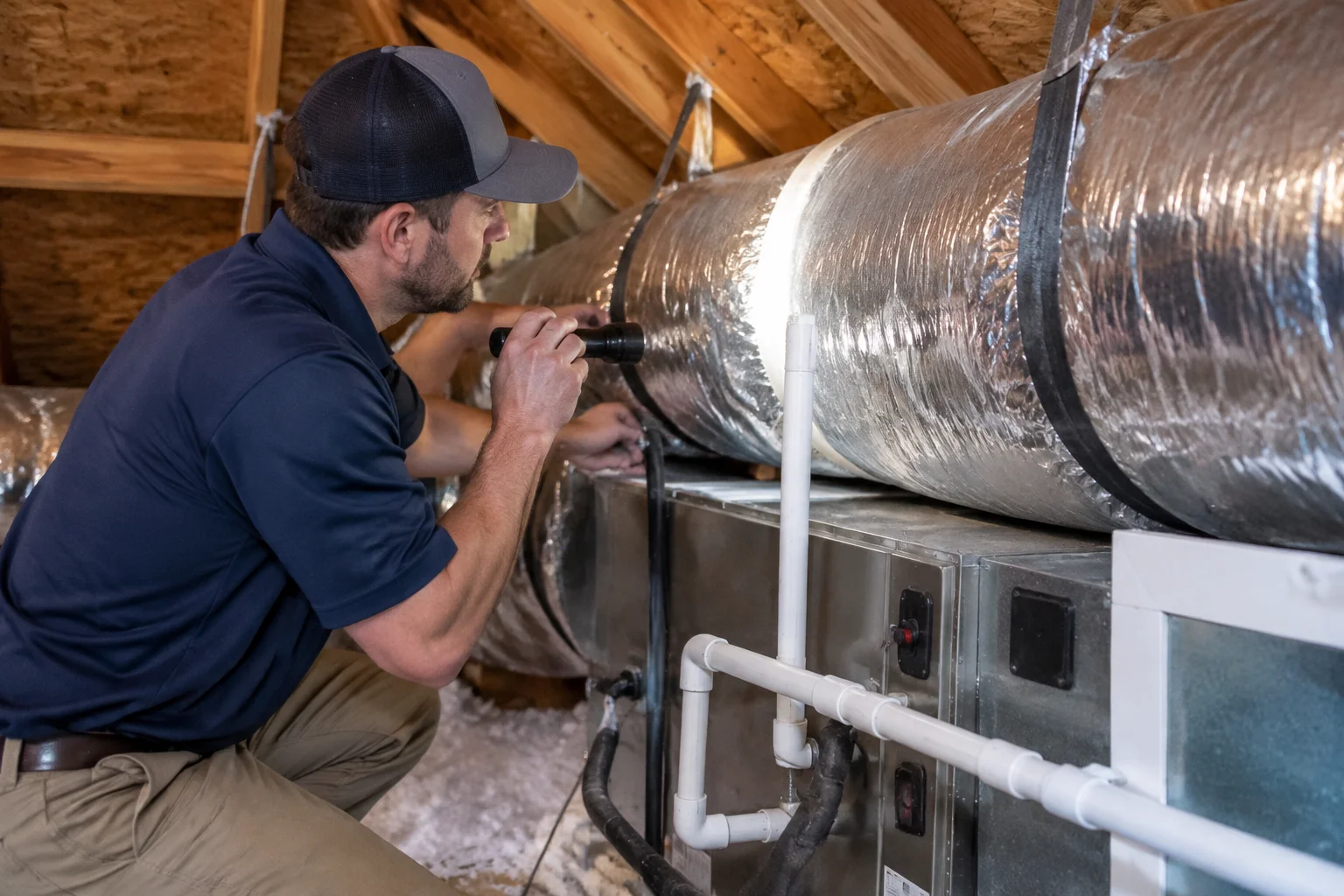
In coastal climates, duct leaks can be more than a comfort issue. They can waste energy and contribute to uneven humidity. If you’re searching for duct inspection near me or duct repair near me, it’s a good sign you’re thinking about the right foundation. Sealing and repairs can help the dehumidifier and your AC work together instead of fighting against airflow losses.
For homeowners prioritizing ductwork improvements, review Duct Sealing and ask how it affects both comfort and moisture control.
Account for room-to-room differences
Some homes have consistent comfort on one level and trouble on another. Bedrooms, bonus rooms, and areas with vaulted ceilings can be more sensitive to humidity swings. Planning includes mapping where moisture tends to linger and ensuring the HVAC airflow pattern supports whole home control.
Think through condensate drainage and humidity removal logistics
Whole home dehumidifiers remove moisture and must manage the resulting condensate. Planning ahead should include clear answers about the drainage path and how the system prevents overflow or nuisance shutdowns.
Confirm condensate drainage routing
A professional should evaluate where condensate will drain and whether the drain line can handle continuous moisture removal. In humid coastal conditions, drainage needs to be reliable, not improvised.
Plan for maintenance access
Homeowners often focus on installation day, but maintenance is what keeps performance steady. Ask how filters and drainage components are accessed and serviced. If you have a system that is hard to reach, maintenance may get delayed, and that can lead to reduced performance or problems you would rather avoid.
Use thermostats and controls to support real humidity management
Temperature control is familiar, but humidity control requires the right coordination. Your thermostat and HVAC controls influence how often the system runs, how air is circulated, and whether humidity is addressed effectively.
Verify how the dehumidifier integrates with your HVAC controls
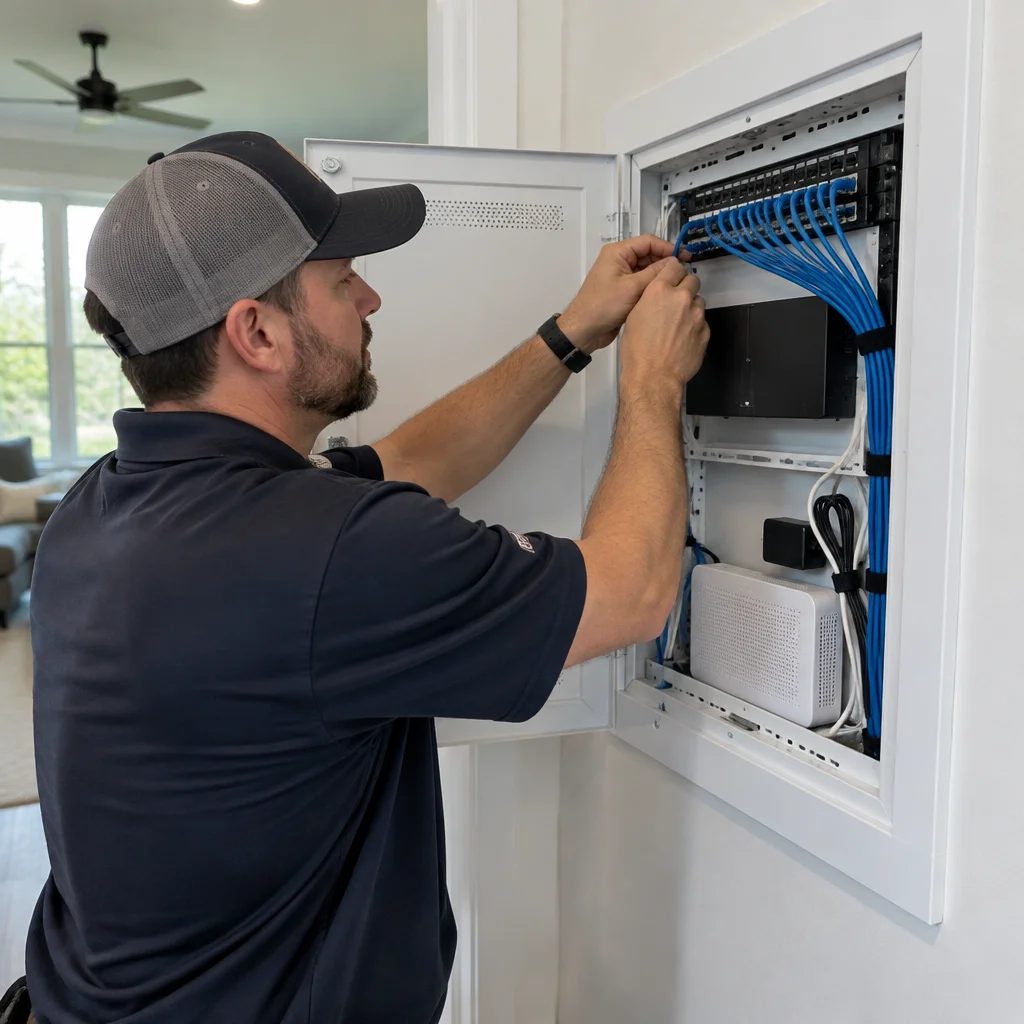
Some systems are designed to work with existing equipment settings. Others use controls that manage humidity directly. Planning includes reviewing how your thermostat settings will affect the dehumidifier operation and how the system responds during high-humidity stretches.
Set expectations for comfort and runtime
With proper setup, you can expect more stable humidity and improved comfort. You may also notice different runtime patterns from your AC and fan operation, especially in summer when indoor moisture loads are highest. A local technician can explain how your specific system should behave after installation.
If you’re considering thermostat upgrades, you can also explore local options like thermostat installation near me through a trusted HVAC provider.
Plan for emergency cooling concerns during peak humidity
When humidity is high, the air feels warmer even if the temperature looks reasonable. That can create a sense of urgency when the AC struggles. Planning ahead is not only about comfort, but also about avoiding emergency cooling concerns.
Before the peak season, talk with a professional about what would happen if your cooling system fails during high humidity. That includes:
- How quickly comfort can be restored
- Whether humidity control is dependent on the same airflow pathways as cooling
- What preventive maintenance reduces the risk of mid-summer breakdowns
For homeowners who want to reduce risk during the busiest months, the timing of service matters. See Why 24/7 HVAC Response Matters in Panama City Homes.
Schedule preventive HVAC maintenance before the heat and humidity hit hardest
Whole home dehumidifiers are part of your HVAC system’s indoor air quality and comfort strategy. Preventive maintenance helps keep airflow steady, condensate drainage working, and system components performing as expected.
Build a maintenance plan around the dehumidifier and your AC
Ask about a seasonal checklist that covers both the dehumidifier and the cooling system it supports. In Panama City’s climate, your maintenance plan should address:
- Airflow across the system, including filters and air paths
- Indoor air quality concerns that can worsen when humidity is high
- Condensate drainage checks to prevent clogs or overflow
- System coordination so the dehumidifier and HVAC do not fight each other
If you’re searching for HVAC maintenance near me or an AC tune up near me, choose a provider that treats humidity control as part of the HVAC system, not a standalone add-on.
Bay County homes also benefit from routine duct-focused work. Many homeowners ask about duct sealing after noticing musty odors, condensation, or rooms that stay damp.
Understand how refrigerant systems and humidity control connect
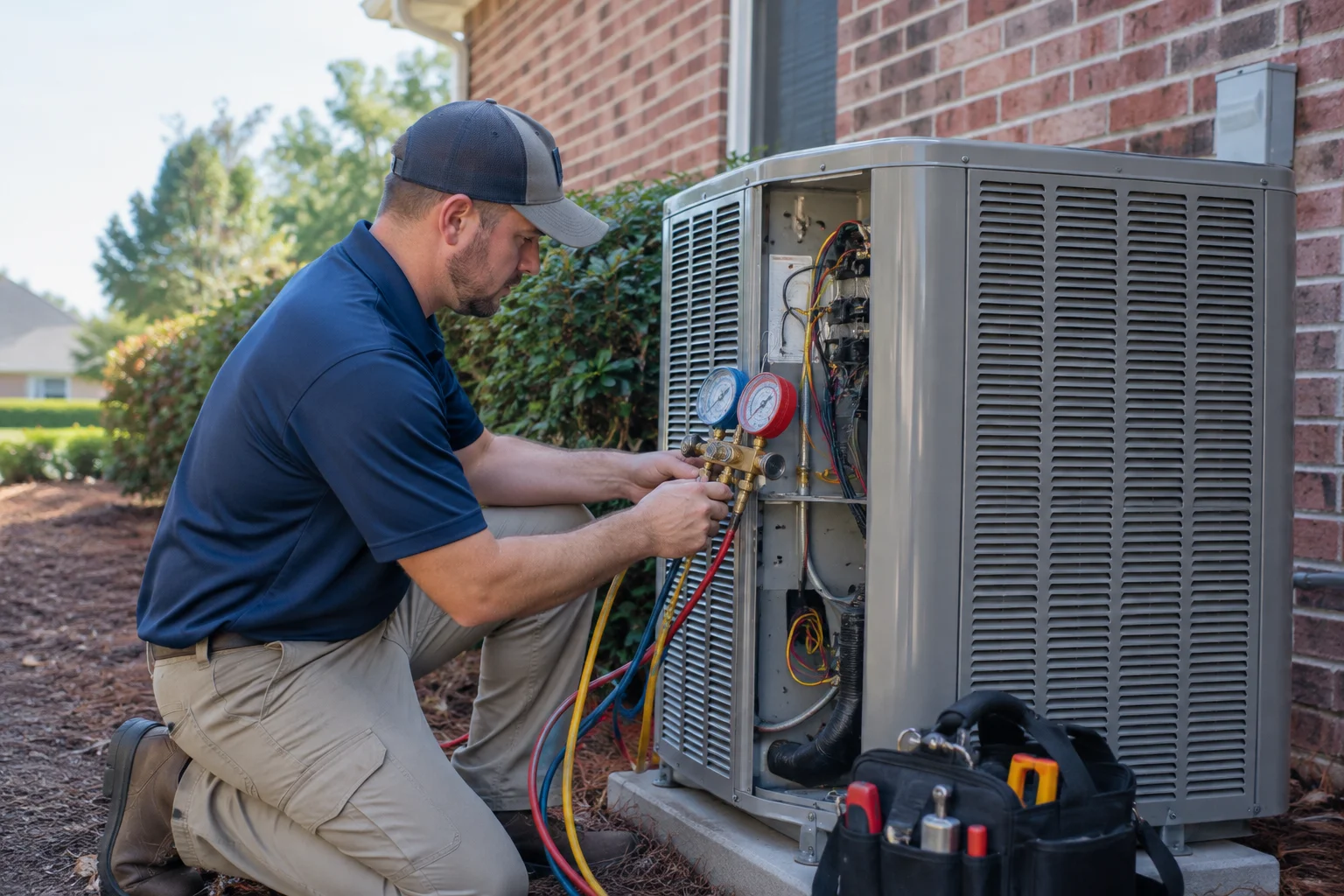
Dehumidification is closely related to cooling and the behavior of air moving through your HVAC equipment. Your air conditioner and heat pump operate using refrigerant systems designed for cooling and heating performance. When the system runs in humid conditions, it can help remove moisture, but it is still not always enough for whole home comfort.
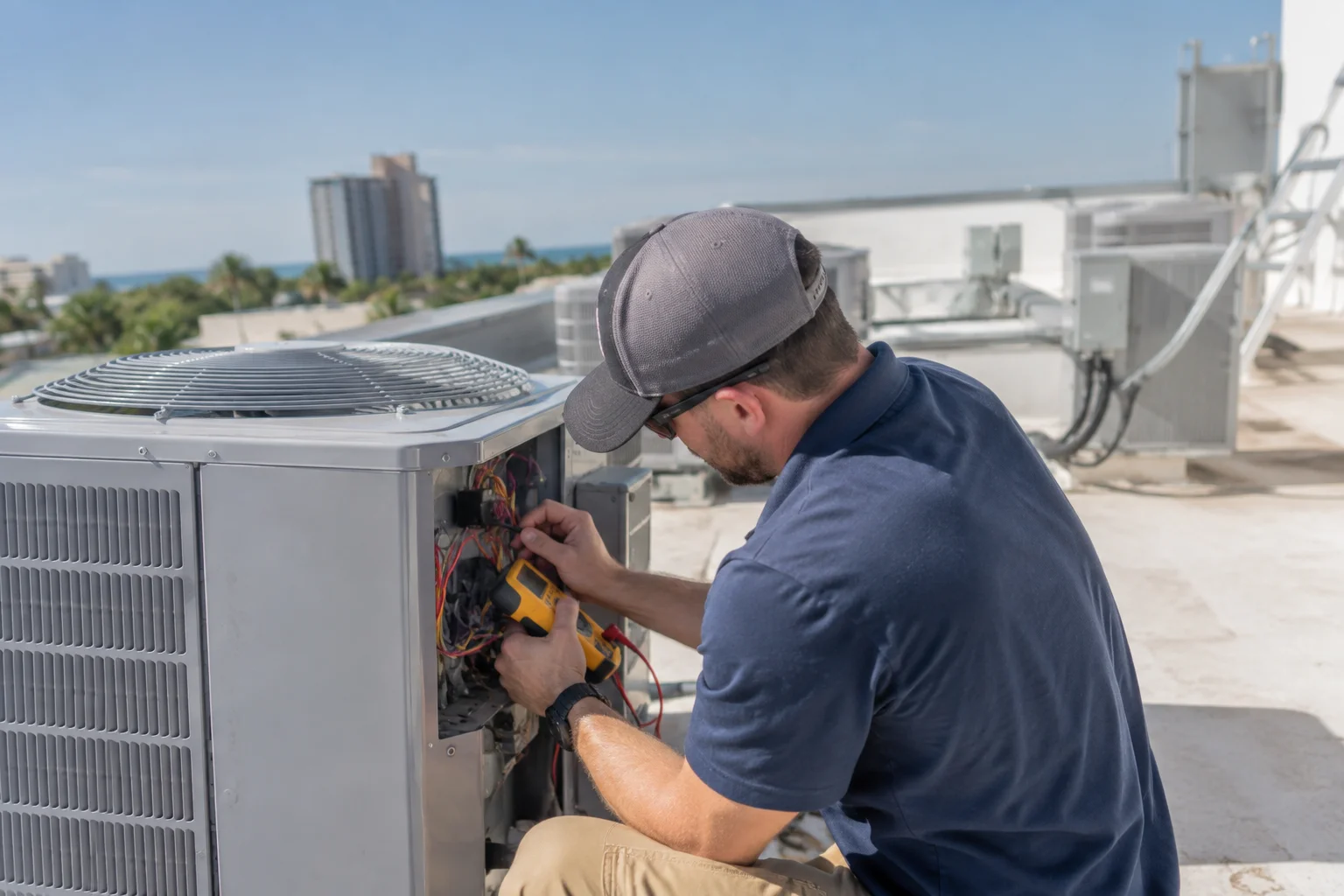
It’s important to keep expectations accurate. A homeowner should not attempt refrigerant diagnosis or adjust refrigerant-related components without an in-person evaluation. If you notice symptoms like persistent temperature swings, unusual noises, or inconsistent humidity, contact a professional for inspection.
Planning ahead includes making sure your cooling equipment is operating properly so the dehumidifier can do its job effectively. If you’re considering broader upgrades, you may also want to review options like Air Conditioning Systems and talk through whether your current setup can support whole home humidity control.
Account for energy use and comfort goals, not just moisture numbers
Humidity control can influence how your home feels and how your HVAC system runs. In Panama City’s heat and humidity, higher indoor moisture can increase the load on cooling because the home has to remove both heat and moisture to stay comfortable.
Planning ahead means discussing energy use as part of the design. A well-integrated whole home dehumidifier and properly balanced HVAC airflow can help you maintain comfort without forcing your system to compensate in inefficient ways.
That’s also why ductwork condition matters. Leaks and poor airflow can increase energy use and make humidity control inconsistent. If you want to improve comfort efficiency, ask your HVAC contractor to evaluate ductwork and airflow patterns as part of the dehumidifier plan.
Plan for system replacement decisions and future upgrades
Some homeowners install a dehumidifier alongside an existing AC. Others plan it as part of a larger HVAC replacement strategy. If your cooling system is older, struggling to maintain comfort, or frequently needs air conditioning repair near me, it may be worth discussing how a dehumidifier fits into a replacement plan.
When discussing HVAC replacement near me or system replacement, ask questions about:
- Whether your current ductwork supports whole home airflow for humidity control
- How the thermostat and HVAC controls will coordinate with the dehumidifier
- What maintenance schedule makes sense for both the dehumidifier and cooling equipment
If heat pump installation is part of your future, you can also discuss it with a local contractor. For example, homeowners searching for heat pump installation near me may benefit from addressing humidity control as part of the planning conversation, since heat pumps also influence indoor comfort and airflow patterns.
Choose the right local service partner for humidity control in Bay County
Whole home dehumidifiers work best when installed and tuned for your home’s airflow, ductwork, and controls. Panama City homes can vary widely in layout, insulation, and duct configuration. That’s why professional local HVAC service matters.
A Superior Mechanical can help homeowners plan for whole home dehumidifier installation, repair, and maintenance in Panama City, FL. You can review the specific service details here: whole-home dehumidifiers in Panama City.
For broader local context on service areas and the kinds of HVAC support available, visit Panama City HVAC services and Bay County HVAC services.
Common planning mistakes that lead to frustration later
Homeowners often discover these issues after installation, when it’s harder to correct the setup. Avoiding them early can save time and reduce the odds of repeated service calls.
Ignoring ductwork and airflow issues
If some rooms stay damp while others feel dry, the root cause might be airflow distribution. A dehumidifier cannot fully compensate for poor ductwork performance.
Overlooking condensate drainage reliability
Drain line routing and long-term reliability matter. Planning for drainage and access for future maintenance is essential.
Setting humidity goals without control coordination
Humidity control depends on how the thermostat and HVAC system coordinate with the dehumidifier. If controls are not aligned, the system can run in a way that doesn’t match your comfort needs.
Waiting until symptoms become emergencies
Musty smells, visible condensation, and persistent dampness can escalate quickly in coastal humidity. Preventive HVAC maintenance is what keeps the system ready for summer instead of scrambling during peak conditions.
When you should call a professional for whole home dehumidifier help
If you’re noticing any of the following, it’s a strong time to schedule an inspection and plan next steps:
- Indoor air feels clammy despite AC running
- Rooms are noticeably more humid than others
- Musty odors return after the AC cycles
- Condensate drainage issues, overflow concerns, or recurring shutdowns
- Frequent HVAC service needs such as AC repair near me or repeated comfort calls
For homeowners who want to prevent problems rather than react to them, it also helps to ask about a maintenance plan. If you’re looking for residential HVAC service near me or a consistent HVAC contractor near me, choose a partner that can review the whole system, including airflow, ductwork, condensate drainage, and indoor air quality.
Extra steps for specific home situations in Panama City
Some homes need extra attention because of how air moves or how moisture collects.
Older homes with uneven airflow
Older construction can have duct leakage or insulation gaps that worsen humidity swings. Planning ahead often includes duct sealing and duct inspection alongside dehumidifier installation.
Homes with comfort complaints concentrated in one zone
If one area stays damp, ask for an airflow-focused evaluation. A whole home plan may still work, but it needs to be matched to your ductwork and circulation patterns.
Commercial or mixed-use buildings
For businesses, humidity control can affect comfort, equipment, and indoor air quality. If you manage a property with different occupancy patterns, consider discussing commercial maintenance planning. For related guidance, see Commercial HVAC Maintenance and Keeping Commercial HVAC Trouble from Turning Into an Emergency in Panama City.
These situations reinforce the same theme: moisture control is a whole-home HVAC and airflow job.
Suggested timeline for planning ahead (before the next humid stretch)
If you want a realistic plan, work backward from the time of year when humidity is at its highest. A practical approach for Panama City homeowners:
- Early spring: schedule an HVAC inspection for comfort and moisture symptoms
- Pre-summer: review ductwork condition, airflow, and condensate drainage routing
- Just before peak months: confirm thermostat and control coordination
- Throughout summer: keep up with maintenance so airflow and drainage stay reliable
Even if your home is comfortable today, planning ahead reduces the odds of mid-season surprises and supports healthier indoor air quality when humidity rises.
If you’d like to discuss whole home dehumidifier installation, repair, or maintenance in your home, start with the local service page: whole-home dehumidifiers for Panama City.
And if you’re comparing HVAC service options across the area, explore Panama City and Bay County for additional support.
Find Whole Home Dehumidifiers in Panama City, FL
If you need Whole Home Dehumidifiers in Panama City, FL, visit our local service page or contact A Superior Mechanical today.
Map of Panama City, FL
Frequently Asked Questions
How do I know if my Panama City home needs a whole home dehumidifier instead of relying on the AC?
If your home feels clammy, bedrooms or certain rooms stay damp, you notice musty odors, or humidity seems high even when the air conditioner runs, a whole home dehumidifier may be the missing piece. A local HVAC inspection can confirm whether airflow, ductwork, and HVAC operation are also contributing.
Will a whole home dehumidifier work with my existing AC or heat pump?
Often it can, but the correct setup depends on your HVAC configuration, thermostat/control coordination, airflow pathways, and condensate drainage routing. An in-person evaluation is the safest way to confirm compatibility and proper integration.
What should I plan for with condensate drainage in a coastal climate like Panama City?
You should plan for a reliable condensate drainage path that can handle consistent moisture removal. A professional should evaluate routing, drainage capacity, and access for maintenance so the system does not develop clogs or overflow concerns.
Can ductwork issues prevent a whole home dehumidifier from controlling humidity effectively?
Yes. If air circulation is uneven due to duct leaks, poor return airflow, or imbalanced airflow, moisture removal may be inconsistent. Many homeowners benefit from duct inspection and, when needed, duct sealing or duct repair to support whole-home performance.
What are the most common reasons homeowners call for whole home dehumidifier repair?
Common triggers include reduced moisture removal, drainage problems, unusual operation tied to airflow limitations, or control issues that affect how the system runs. If you notice symptoms, schedule an inspection rather than attempting DIY adjustments.
Related Articles
Photo Gallery