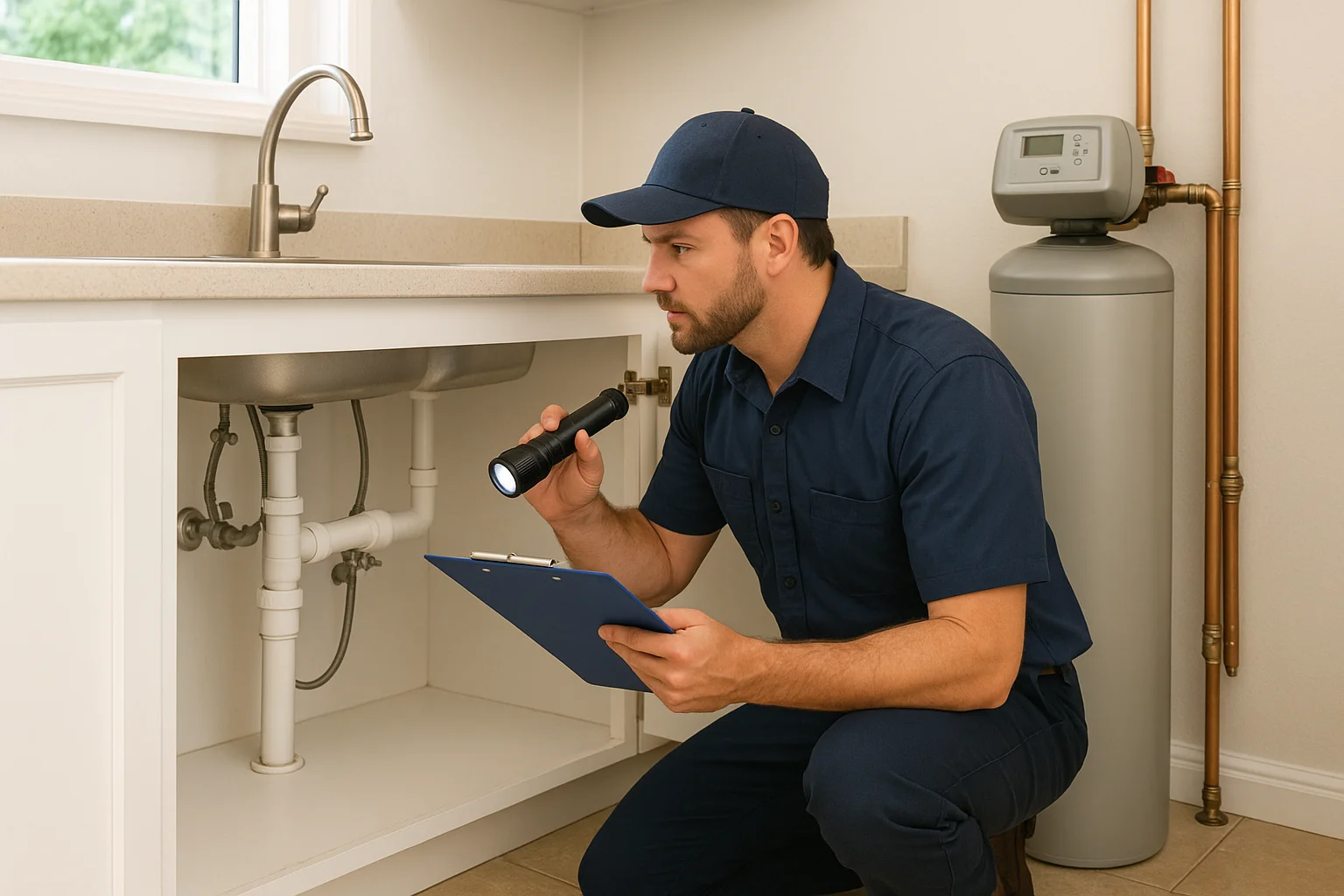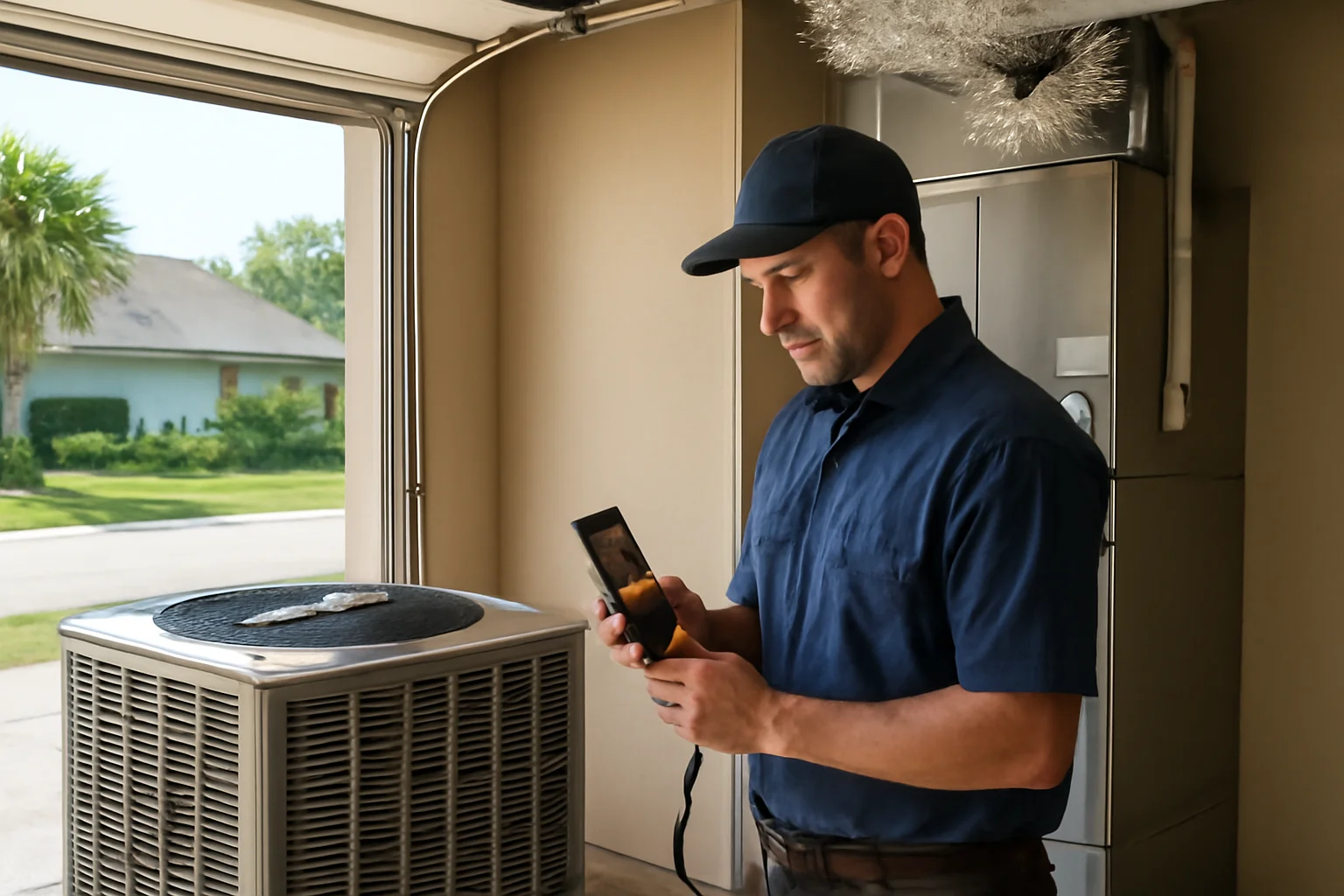
Living in coastal Florida means your indoor air quality is shaped by more than what you can see. In DeFuniak Springs, humidity, occasional musty odors, and the way your HVAC system moves air through ductwork can all influence comfort and health. Planning ahead for indoor air quality testing helps your results make sense and gives your HVAC contractor the right information to guide next steps.
If you are searching for an indoor air quality testing appointment in DeFuniak Springs, this checklist will help you prepare the home, coordinate HVAC operation, and reduce surprises during the test.
Why coastal conditions in DeFuniak Springs change indoor air
Even though DeFuniak Springs is not directly on the shoreline, Walton County homes still feel the effects of Florida’s warm, humid air and coastal weather patterns. When outdoor humidity stays high, it can push indoor moisture levels up, especially when ventilation is limited or ductwork has leakage.
Moisture and airflow are tightly connected. When your system cools, it removes moisture, but only if the refrigerant system, condensate drainage, and airflow are working together. If airflow is weak due to dirty or restricted ducts, undersized returns, or a malfunctioning blower, the system may not pull enough moisture out of the air. That can contribute to musty smells, condensation concerns, and irritant buildup.
Salt air also plays a role over time. Corrosion can affect HVAC components and can worsen performance, which changes how air is distributed and how consistently the system controls humidity. Testing helps you separate “normal Florida comfort challenges” from a real indoor air quality issue tied to HVAC operation, ductwork, or ventilation.
Start with a short home history before the technician arrives
Indoor air quality testing is more useful when the professional has context. Before your appointment, take 10 to 15 minutes to write down what you have noticed recently.
Collect the details that matter for HVAC-related air quality
- Symptoms: allergy flare-ups, headaches, watery eyes, coughing, unusual fatigue, or odors that come and go.
- Humidity clues: condensation on windows, damp drywall smells, sticky air, or rooms that feel wetter than others.
- Where it happens: bedrooms, living areas, rooms with closed doors, or areas near supply vents and returns.
- Timing: does it worsen when the AC runs, when the heat pump is operating, or after the system cycles off?
- Recent changes: new filters, thermostat changes, ductwork repairs, system service, water intrusion, or renovations.
If you keep a thermostat log, even basic notes about temperature set points and how often the system runs can help. Your thermostat settings and scheduling can affect how long the system runs in cooling or heating mode, which affects indoor moisture control and air mixing.
Plan your thermostat and HVAC operation for accurate testing
A common mistake is treating the test like a “snapshot” while the home is behaving differently than it normally does. Your HVAC system’s airflow and run time influence indoor humidity, contaminant movement, and air distribution.
Ask your HVAC technician what settings they prefer for the test. In general, you can prepare by choosing stable operation rather than frequent changes. If the system normally runs on a schedule, keep it close to typical. If you have been experimenting with thermostat settings, return to your regular comfort routine before the appointment.
Also, plan for airflow behavior. If some rooms are usually closed, note that. Closed doors can restrict airflow, increase pressure imbalances, and change how air moves through the ductwork. For indoor air quality testing, those patterns matter.
Choose the right timing to reflect how your home actually performs
Because DeFuniak Springs homes can experience shifts in humidity and temperature throughout the day, the test timing can influence what the professional observes. Testing during a period when the HVAC system is likely to run helps connect indoor air quality measurements to real system operation.
When scheduling, consider:
- Your typical usage: Are you usually home during the morning, afternoon, or evening?
- System cycling: Does your AC or heat pump run steadily or short-cycle?
- Ventilation habits: Do you run exhaust fans frequently, open windows, or keep bathroom fans on?
If you are concerned about emergency cooling needs, plan around comfort and safety. You should never delay cooling when the home is getting too hot, especially during summer heat. Just coordinate with your technician so testing is performed during safe, normal operation.
Prepare your home so testing focuses on HVAC and indoor air
Before the technician arrives, you can improve the usefulness of the results with a few simple steps.
Do these preparations
- Replace or confirm your HVAC filter status: If you recently changed the filter, note the date. If the filter is due, ask your technician whether to replace it before testing.
- Clear airflow paths: Keep vents and returns accessible. Avoid placing furniture or rugs over returns.
- Reduce new contamination sources: If possible, avoid heavy cleaning sprays, strong fragrances, or activities that generate lots of dust right before the test.
- Document any recent water concerns: If you have seen condensation, leaks, or damp areas, tell the technician. HVAC-related condensate drainage issues can contribute to moisture problems.
Avoid these common missteps
- Don’t “dry out” the home right before the visit: If you run dehumidifiers aggressively for days, results may not reflect typical conditions.
- Don’t change multiple systems at once: If you plan to replace ductwork or upgrade the thermostat, do not do it immediately before testing unless your technician advises it.
- Don’t ignore duct access: If your home has accessible ductwork, attic access, or crawlspace areas, let your technician know ahead of time.
What the technician will look at during indoor air quality testing
Every evaluation is tailored to the home, but indoor air quality testing in DeFuniak Springs usually connects measurements to HVAC operation, ventilation, and airflow. Your technician will typically assess more than one factor because indoor air quality problems are rarely caused by a single thing.
Airflow, ductwork, and pressure balance
Airflow is a major driver of comfort and humidity control. If supply air is not reaching certain rooms, or if returns are restricted, you can get uneven temperature and uneven moisture removal. That can lead to persistent dampness or odors.
Ductwork details matter too. Leaks, poor sealing, or duct restrictions can pull unconditioned air into the system, especially in attics. In coastal Florida conditions, that can raise indoor humidity and increase energy use because the HVAC system has to work harder to maintain comfort.
If you suspect duct issues, consider pairing your indoor air quality testing with ductwork services or a duct inspection. An HVAC company near me can help, but local experience matters because ductwork problems look different in Florida attics and crawlspaces.
Condensate drainage and moisture management
When your AC or heat pump removes moisture, condensate drainage is part of the air quality story. If condensate drainage is slow, clogged, or improperly routed, moisture can build up where it should not. That can contribute to musty odors and humidity that lingers even when the thermostat says the home is “cool enough.”
Testing helps connect moisture behavior to system operation. If your home has a history of dampness, a technician may also look at condensate drainage performance as part of the overall evaluation.
Refrigerant system performance and cooling consistency
Your refrigerant system works with airflow to remove heat and moisture. If cooling performance is inconsistent, humidity control can suffer. However, refrigerant issues require an in-person professional evaluation. It is not appropriate to diagnose refrigerant problems from a distance or from a single symptom.
During indoor air quality testing, the technician can evaluate how the system is operating as part of the larger indoor air quality picture. If anything appears off, they can advise next steps based on what they observe in your home.
Thermostat behavior and comfort settings
Thermostat settings influence how the system runs. Fan settings, temperature schedules, and cycling behavior can all affect humidity control and air mixing. If your system runs too little, indoor humidity may stay elevated. If it runs too much or cycles irregularly, comfort and air distribution can suffer.
A technician can help you understand how your current setup interacts with your HVAC system and the indoor air you are breathing.
Common indoor air quality issues in Walton County homes
Homeowners in DeFuniak Springs often ask about indoor air quality because the symptoms show up during humid stretches, after storms, or whenever the system runs more frequently.
Humidity that won’t settle
If the home feels damp or sticky even when the AC runs, your system may not be removing moisture effectively. Causes can include airflow restrictions, duct leakage, condensate drainage problems, or thermostat settings that affect run time.
Musty odors and “stale air” pockets
Odors can come from moisture in hidden areas, but they can also be linked to how air circulates. Rooms that are closed off tend to collect air that does not mix well with the rest of the home. Ductwork and return airflow play a role in where odors travel.
Allergy-like symptoms indoors
Allergy symptoms can be triggered by airborne particles and irritants. Filtration and airflow matter, but indoor air quality testing helps identify whether the issue is primarily filtration, ventilation balance, or a moisture and HVAC performance concern.
Uneven temperatures and higher energy use
If some rooms are always warmer or cooler, the system is not distributing air the way it should. That can increase energy use and indirectly affect humidity levels. Testing can help connect those comfort patterns to ductwork and system airflow.
How preventive HVAC maintenance supports better indoor air quality
Indoor air quality testing is a great diagnostic step, but preventive HVAC maintenance keeps your results from slipping over time. In DeFuniak Springs, humidity and heat can accelerate wear on HVAC components and can make small problems more noticeable.
When you schedule routine service, ask your contractor to focus on the systems that influence indoor air quality, including:
- Air filter condition and airflow performance
- Blower operation and distribution
- Ductwork condition and airflow pathways
- Condensate drainage function during cooling operation
- Thermostat settings and system run behavior
If you are thinking about budgeting for long-term care, you may find this helpful: A Homeowner’s Guide to HVAC Financing for Smarter Maintenance in DeFuniak Springs, FL.
When to call professional help before the test (or instead of waiting)
Planning ahead does not mean ignoring urgent comfort or safety concerns. If you are dealing with emergency cooling concerns, do not delay. A technician can address immediate cooling problems and then coordinate indoor air quality testing once the system is stable.
Call for HVAC service sooner if you notice:
- AC or heat pump struggling to reach temperature
- Frequent short cycling or unusual system noises
- Visible condensation where it should not be
- Persistent musty odors that return quickly after cleaning
- Rooms that stay humid even during cooling
For homeowners searching for HVAC service near me, it helps to choose a company that understands how indoor air quality ties back to HVAC operation, ductwork, and humidity control.
Coordinate with duct cleaning and duct inspection plans
Some homeowners jump straight to duct cleaning when they notice dust. But duct cleaning is not always the best first step. If the underlying issue is moisture, airflow imbalance, or a ventilation problem, cleaning alone may not fix the root cause.
Planning ahead for indoor air quality testing can guide whether duct inspection or ductwork services are the right next move. If you want to reduce common duct cleaning problems, read How DeFuniak Springs Homeowners Can Reduce Duct Cleaning Problems and Keep HVAC Systems Running Better.
Use indoor air quality testing to guide practical system decisions
Testing can help you make smarter decisions about your HVAC system. That might include adjusting thermostat settings, improving airflow, addressing condensate drainage, or planning for system replacement if the equipment is no longer controlling humidity effectively.
If your system is aging and you are considering options, you can review Air Conditioning Replacement to understand how comfort, humidity control, and airflow should be evaluated together. For now, it is important to remember that equipment replacement is only appropriate after a qualified professional evaluates your specific situation in person.
Questions to ask your HVAC contractor in DeFuniak Springs
When you book indoor air quality testing, come prepared with thoughtful questions. You want answers that connect the test results to your HVAC system, ductwork, and indoor comfort.
Helpful questions for homeowners
- How will you connect indoor air quality measurements to HVAC airflow and humidity control?
- Will you evaluate condensate drainage performance during normal cooling operation?
- Do you recommend duct inspection based on what you observe?
- How should I run my thermostat during the test to reflect normal living?
- What preventive HVAC maintenance steps will most improve indoor air quality over time?
If you manage a business or rental property in the area, indoor air quality planning may be even more important. You can also explore Property Management HVAC Services to see how professionals approach consistent comfort and indoor air quality across multiple spaces.
Keep your expectations realistic: testing guides, it does not guess
Indoor air quality testing is designed to identify patterns and potential sources, but it is not a substitute for an on-site HVAC evaluation. Your HVAC contractor should be able to explain what they are measuring, what it suggests, and what observations they made about airflow, ductwork, and system operation.
It is also important to avoid assumptions about refrigerant systems or electrical components based on symptoms alone. A qualified technician can evaluate those concerns safely in person and recommend appropriate next steps.
Local service matters in DeFuniak Springs
DeFuniak Springs homes experience Florida heat and humidity in a way that affects HVAC performance throughout the year. Local professionals understand how ductwork behaves in Walton County housing, how humidity control changes with system cycling, and how indoor air quality complaints often connect to airflow and condensate drainage.
When you choose a local HVAC company near me, you are also choosing someone who can follow up with targeted HVAC repair, heat pump service, or AC tune up recommendations based on what is happening in your specific home.
Build a simple plan you can reuse each year
If indoor air quality is a priority for your household, turn preparation into a repeating routine. Coastal Florida conditions do not pause, and small HVAC issues can grow quickly when humidity stays high.
A practical annual plan for DeFuniak Springs homeowners might look like this:
- Before peak summer: schedule preventive HVAC maintenance so the system starts the season controlling humidity better.
- During humid stretches: if symptoms show up, coordinate indoor air quality testing while the system is running normally.
- After any HVAC repair: confirm comfort and airflow patterns, and consider additional testing only if symptoms persist.
- As systems age: plan for HVAC service decisions with help from a professional evaluation, including options for system replacement when appropriate.
If you want to reduce the odds that a small problem becomes a bigger disruption, this guide is worth reading: Keeping Small HVAC Problems from Turning into Big Business Disruptions in DeFuniak Springs. The same principle applies to homes, especially during Florida’s hottest periods when emergency cooling concerns can become stressful.
For homeowners who want clear answers and practical solutions, start with professional indoor air quality testing through A Superior Mechanical. You will get a better understanding of how humidity, airflow, ductwork, and HVAC operation are shaping the air in your DeFuniak Springs home.
If you are comparing options for whole-home improvements, you may also want to discuss filtration and air cleaning approaches. For example, if you are searching for whole home air purifier near me, ask your technician how any air cleaning strategy fits with ductwork, airflow, and humidity control.
Find Indoor Air Quality Testing in DeFuniak Springs, FL
If you need Indoor Air Quality Testing in DeFuniak Springs, FL, visit our local service page or contact A Superior Mechanical today.
Map of DeFuniak Springs, FL
Frequently Asked Questions
How should I prepare my home for indoor air quality testing in DeFuniak Springs?
Keep your HVAC operation close to normal and avoid making major changes right before the visit. Make sure vents and returns are accessible, note any recent symptoms or water concerns, and ask whether your filter should be replaced before testing.
Can indoor air quality testing help with humidity problems caused by my AC or heat pump?
Yes. Testing can connect indoor air quality findings to HVAC airflow, moisture behavior, and related factors like condensate drainage and ductwork performance. A technician should evaluate your system in person to determine what is driving the humidity.
Should I run my air conditioning before the test?
Often, yes, but follow your technician’s guidance. The goal is to reflect typical living conditions so the evaluation can link indoor air quality measurements to real system operation.
Does indoor air quality testing mean I will need duct cleaning or system replacement?
Not automatically. Results guide next steps. If duct inspection or ductwork services are recommended, that decision should be based on what the technician observes in your home. Equipment replacement is only appropriate after an in-person professional evaluation.
What are signs I should not wait to address HVAC and air quality concerns?
If you have emergency cooling concerns, persistent musty odors, visible condensation where it should not be, or the system cannot maintain temperature, contact a local HVAC professional promptly. Then you can coordinate indoor air quality testing once the system is stable.
Related Articles
- A Homeowner’s Guide to HVAC Financing for Smarter Maintenance in DeFuniak Springs, FL
- Why Commercial HVAC Maintenance Matters More in DeFuniak Springs Than Most Businesses Realize
- How DeFuniak Springs Homeowners Can Reduce Duct Cleaning Problems and Keep HVAC Systems Running Better
- Keeping Small HVAC Problems from Turning into Big Business Disruptions in DeFuniak Springs
Photo Gallery