During a Wright storm outage, keeping the refrigerator cold is only part of the picture. You may also need lighting, ceiling fans, internet equipment, security devices, and power for essential medical equipment. A generator can support those needs, but its performance depends on the electrical system connected to it.
Planning power backup generators in Wright, FL means looking beyond the generator cabinet. Panels, breakers, wiring, outlets, grounding, and transfer equipment all matter. A Superior Mechanical provides power backup generator installation and service in Wright, including Kohler standby generator solutions. The best starting point is an assessment of your home and the loads you actually need during an outage.
Start with the outage you want your home to handle
A brief interruption and a multiday outage create different demands. Wright's heat, humidity, thunderstorms, and tropical weather make it worth deciding which household functions must remain available. An essential-circuit system may serve a refrigerator, selected outlets, a few lighting circuits, and communications equipment. Broader coverage requires more generating capacity, fuel, and load coordination.
Separate necessities from high-demand equipment
Electric ranges, water heaters, dryers, pool equipment, and EV chargers can quickly increase the required capacity. Motor-driven equipment can also need substantial starting power. An electrician should evaluate running loads, starting requirements, and which appliances are likely to operate together rather than selecting a generator by square footage alone.
Tell the contractor about medical devices and any equipment that cannot tolerate an interruption. Standby generators take time to start and transfer power. Sensitive or critical equipment may need a compatible battery backup as well. Homeowners searching for a power outage electrician near me benefit from having this priority list ready before the assessment.
The panel determines how backup power reaches each room
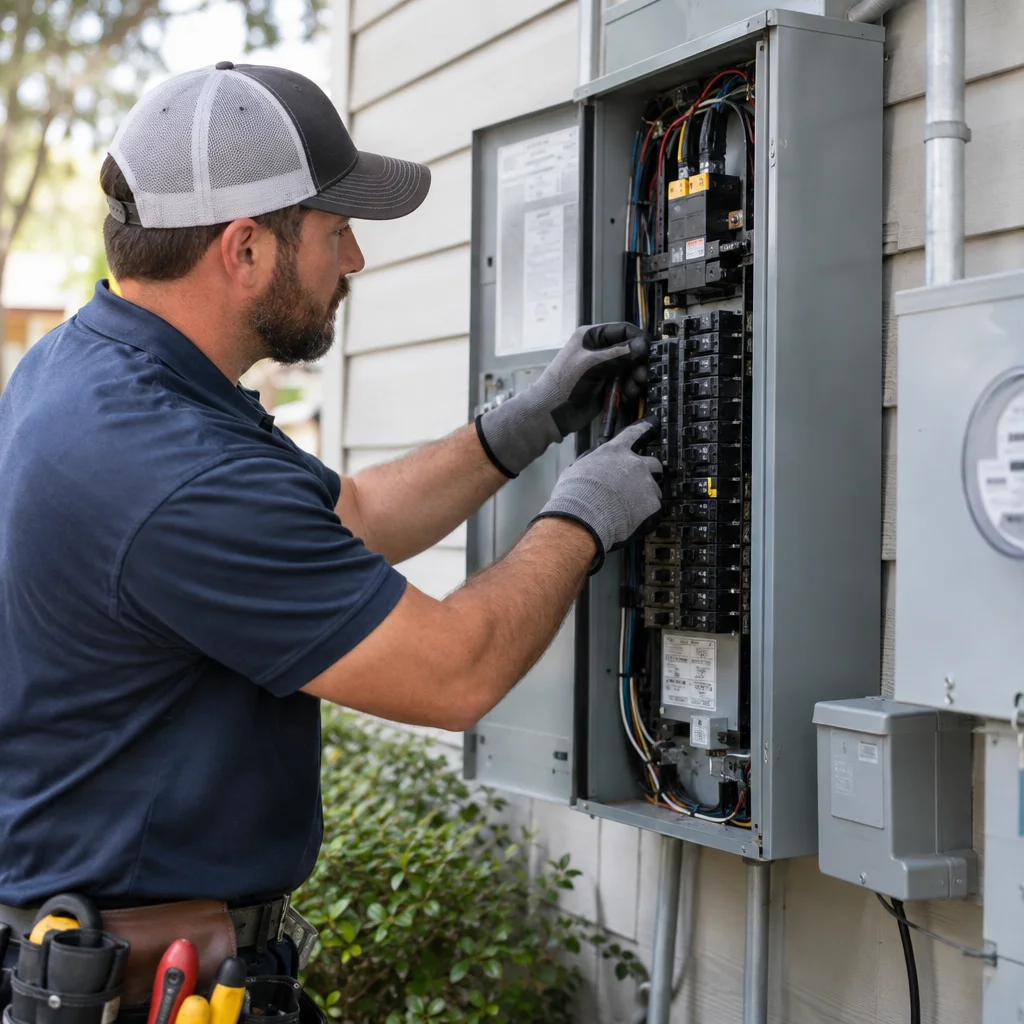
Your electrical panel is the distribution point for generator power. Before installation, an electrician should check its rating, condition, available circuit spaces, breaker compatibility, and circuit directory. Rust, heat damage, loose connections, or improper modifications can turn a generator project into a necessary electrical repair project first.
Older Wright homes may have accumulated circuits for kitchen renovations, enclosed porches, or workshop outlets. Newer homes can also outgrow their original electrical plan after additions, pool equipment, or vehicle charging. A tidy-looking panel does not establish that the service has adequate capacity or that every circuit is correctly protected.
A larger panel is not automatically the answer
A homeowner searching for a 200 amp panel upgrade near me may need additional capacity, but a generator does not automatically require that upgrade. A load calculation and equipment assessment should guide the decision. Sometimes a dedicated backup-load panel or load management provides a better fit. Damaged equipment may instead require electrical replacement in Wright before backup equipment is connected.
Transfer equipment is essential safety equipment
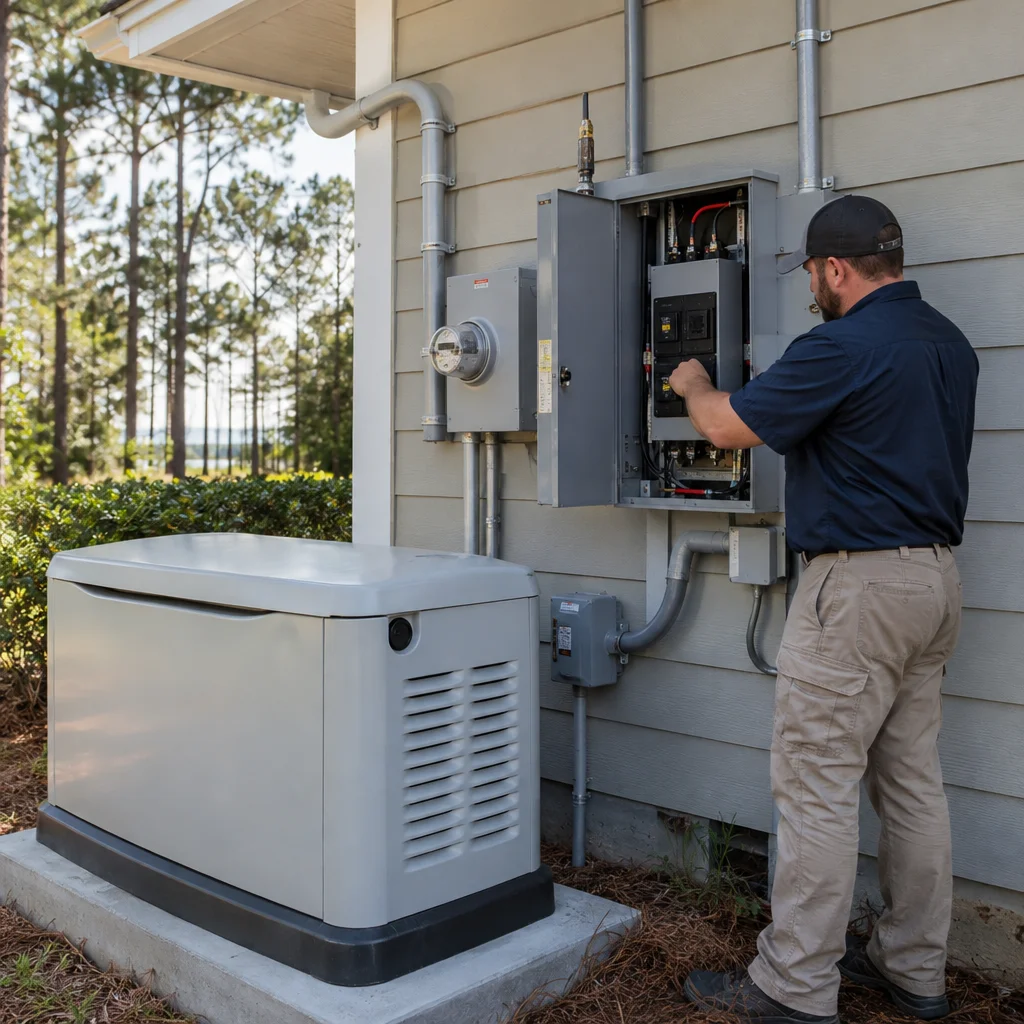
A generator must not energize utility lines during an outage. Approved transfer equipment separates the utility source from the generator source, protecting utility workers, neighbors, and your electrical equipment. Never connect a generator to a household receptacle to feed power backward through the wiring.
Permanent standby systems typically use an automatic transfer switch that detects a loss of utility power, starts the generator, and transfers the connected loads. After utility power stabilizes, the system transfers back. Portable-generator connections need an approved inlet and a suitable transfer arrangement selected for the specific installation. Not every panel can accept every interlock.
Grounding and neutral bonding must match the generator and transfer equipment configuration. This is not a matter of simply adding a ground rod. A qualified electrician should determine the correct arrangement, follow manufacturer instructions, and verify compliance with applicable electrical codes.
Repair weak circuits before depending on them
A generator supplies electricity; it does not repair faulty wiring. Breakers that repeatedly trip, lights that flicker under ordinary loads, buzzing switches, and outlets that lose power deserve investigation before installation. Causes can include overloaded circuits, deteriorated connections, damaged wiring, or defective equipment.
Breaker repair often involves finding a circuit problem or replacing a faulty breaker with a listed, compatible unit. Increasing the breaker size without confirming conductor capacity and circuit requirements is unsafe. A circuit serving a refrigerator and several countertop appliances, for example, may need a different distribution of loads rather than a larger breaker.
During an assessment, identify circuits added during remodels and additions. An electrical troubleshooting near me search may uncover a problem that affects both utility and generator operation. Correcting it early helps prevent unexpected trips when the home switches to backup power.
Give outlets, lighting, and detectors a deliberate role
Decide which outlets will remain energized during an outage and label them clearly when only selected circuits receive backup power. A bedroom receptacle for medical equipment, a refrigerator outlet, and an accessible charging location may be more valuable than powering an entire low-use room.
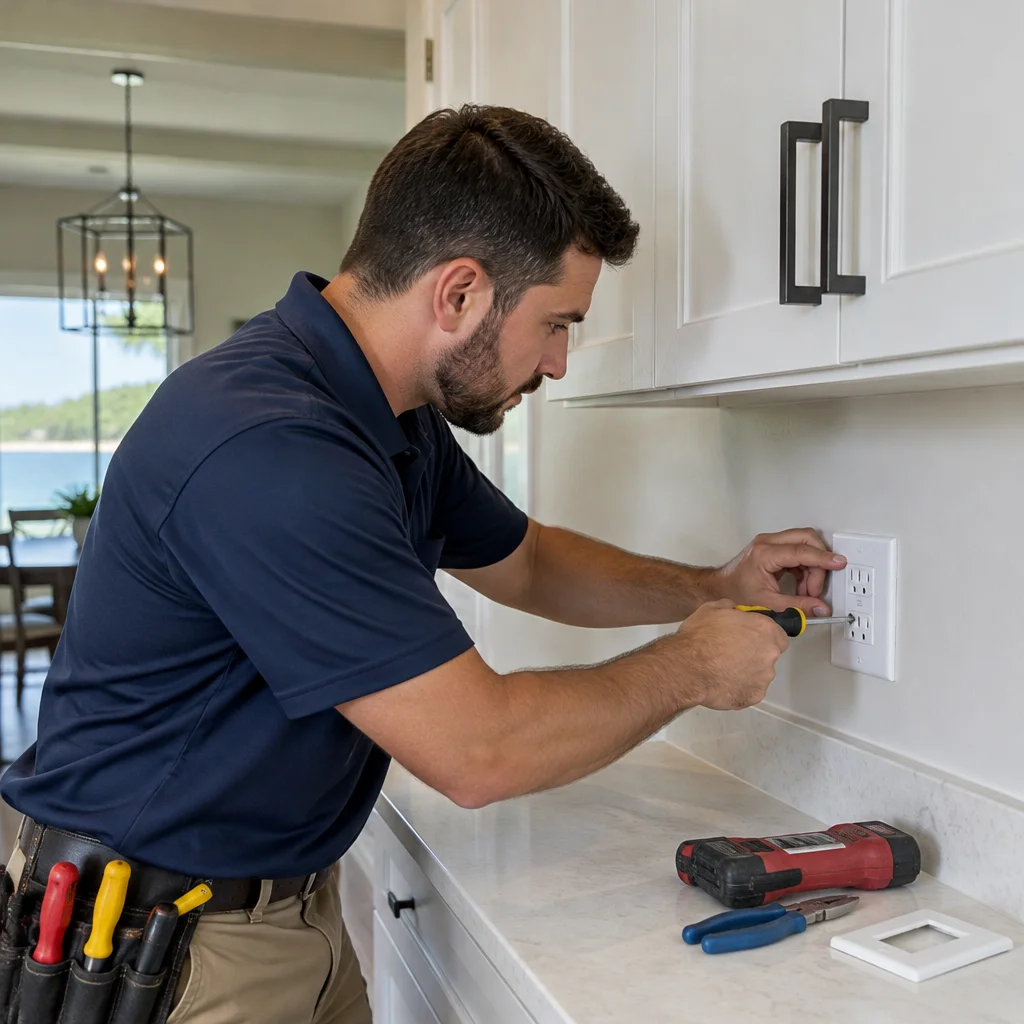
Loose receptacles, cracked covers, discoloration, or intermittent power call for outlet repair. Outdoor locations need appropriate weather-resistant equipment, covers, and GFCI protection where required. Existing GFCI and other required protective devices should remain functional on generator power. Never bypass them to stop nuisance tripping; have the underlying compatibility or wiring issue investigated.
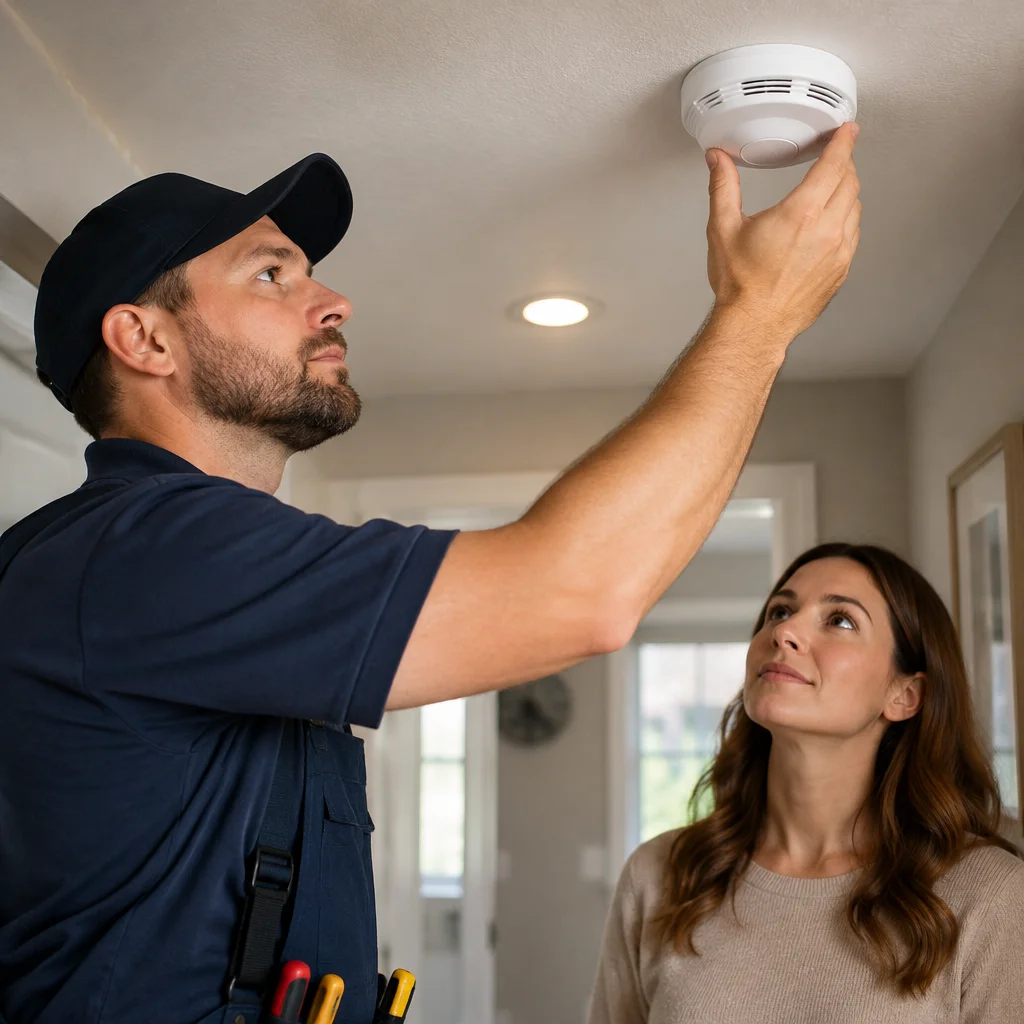
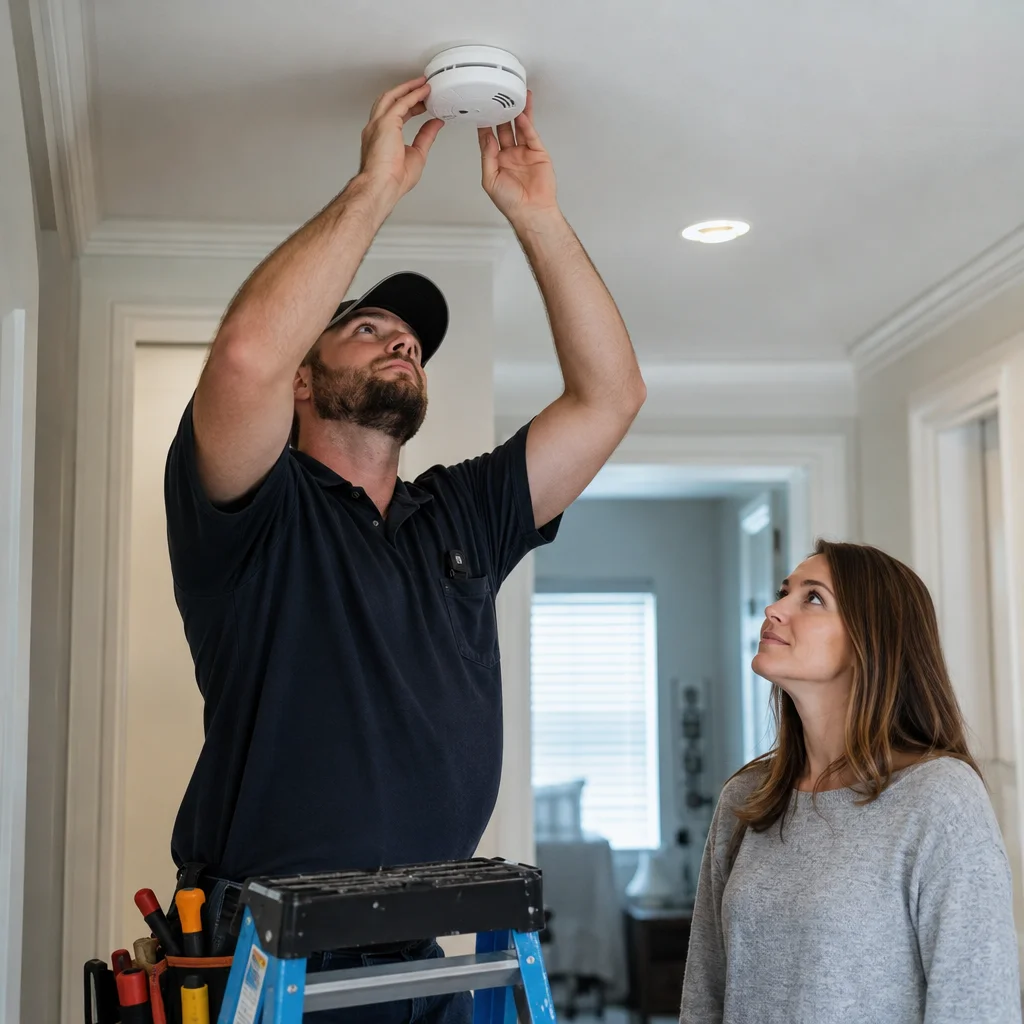
Include practical lighting installation in the plan, especially stairs, hallways, and entrances. Ceiling fans can support comfort with relatively modest power demand, provided their wiring and mounting are sound. Ceiling fan services in Wright can address those concerns. Have smoke detector installation, carbon monoxide alarms, and battery backup needs reviewed too. Not all hardwired alarms necessarily fall on backed-up circuits.
Coastal weather makes placement and corrosion prevention important
Wright's location in Okaloosa County brings humid conditions and exposure to severe coastal weather. Generator placement should account for drainage, potential flooding, wind requirements, service access, and required clearances. Equipment must not block panel working space or place exhaust near windows, doors, vents, or neighboring living areas.
Permanent standby generators must be located according to their listing, manufacturer instructions, and applicable codes. A portable generator must run outdoors at least 20 feet from the home, with exhaust directed away from buildings and openings. Never operate one in a garage, even with the door open. Working carbon monoxide alarms are essential, but they do not make unsafe generator placement acceptable.
Humidity and salt exposure can accelerate corrosion of outdoor cabinets, fittings, and connections. Local electrical service matters because siting and material choices should reflect those conditions. Fuel supply also needs professional evaluation: natural gas capacity or propane storage must support the selected generator and anticipated operating demands.
Surge protection complements backup power
Generators and surge protective devices solve different problems. A generator supplies power during an outage. Surge protection helps limit damaging transient voltage that can affect connected equipment. Neither is a guarantee against all storm damage, and a surge protector cannot correct poor grounding or a failing neutral connection.
If you are searching for a whole home surge protector near me while planning backup power, ask the electrician to review protection at the service equipment and any additional protection appropriate for sensitive devices. Transfer switch location and distribution layout matter. Status indicators should be checked periodically because some protective devices need replacement after reaching the end of their service life.
Keep EV charging from consuming the backup budget
A Level 2 EV charger can represent a substantial household load. Automatically including it in generator coverage may force a larger system than the rest of the home needs. Options include excluding the charger from backup circuits or using compatible load management to prioritize essential loads.
Coordinate EV charger installation in Wright with generator planning, especially if both projects are on your calendar. Dedicated circuits, service capacity, and charging settings should be reviewed together. Hot tubs, workshop equipment, and future additions deserve the same attention. Planning now can prevent another panel reconfiguration later.
Permits and commissioning turn a plan into a dependable system
Generator installation should include the permits and inspections required by the authority having jurisdiction, along with any applicable utility coordination. The scope may include electrical work, equipment anchoring, fuel connections, and site requirements. Ask who handles each part and whether existing code corrections are included in the proposal.
Commissioning should verify starting, transfer operation, connected loads, and the return to utility power. The installer should explain normal indicator lights, shutdown procedures, maintenance requirements, and which circuits receive backup power. Keep documentation accessible and make sure another household member understands the basics.
For homeowners comparing work across the area, A Superior Mechanical's Okaloosa County service information provides a starting point for discussing local service needs.
Maintenance prevents small problems from becoming outage problems
A standby generator that exercises regularly still needs scheduled service. Follow the manufacturer's intervals for oil, filters, spark plugs where applicable, battery checks, and other maintenance. Exercise cycles help reveal some problems, but they do not replace inspection or testing under appropriate load conditions.
Between service visits, check the visible status display, keep vegetation and debris away from required clearances, and watch for unusual sounds, leaks, or corrosion. Do not remove electrical covers or reach into energized equipment. After major storms, request an inspection if the unit, wiring, or surrounding area shows damage or flooding.
Local electrical maintenance should also include attention to outdoor outlets, covers, grounding connections, and panel condition. Test alarms and accessible GFCI devices according to their instructions. Rental owners should provide clear operating guidance and keep tenants from improvising connections or changing generator settings.
Know which electrical concerns cannot wait
Smoke, sparks, a burning smell, electric shock, or water entering electrical equipment require prompt action. If there is fire or immediate danger, leave the area and call 911. Stay away from downed lines and anything touching them. Do not approach a wet or damaged panel to operate its breakers.
Repeated trips, hot outlets, or severe flickering warrant urgent professional evaluation rather than repeated resets. An emergency electrician may need to isolate damaged wiring before any generator is used. A damaged service mast can also require utility coordination. Backup power should never be used to energize equipment that has flooded or sustained unresolved storm damage.
Build one electrical plan instead of several disconnected projects
A useful proposal separates generator capacity, transfer equipment, circuit changes, panel work, surge protection, permits, and maintenance. That makes it easier to distinguish required safety work from optional convenience upgrades. For budgeting guidance, read A Smarter Electrical Budget for Wright Homes.
Bring your outage priorities, renovation plans, and known electrical issues to the first conversation. A Superior Mechanical can help you discuss electrical service needs in Wright and develop a backup power plan around your property. A properly selected generator, supported by sound wiring and maintained protection, is a much stronger investment than added wattage alone.
Find Power Backup Generators in Wright, FL
If you need Power Backup Generators in Wright, FL, visit our local service page or contact A Superior Mechanical today.
Map of Wright, FL
Frequently Asked Questions
Does installing a backup generator require a panel upgrade?
Not always. An electrician should evaluate panel condition, service capacity, circuit space, and the loads you want to support. Some homes can use the existing panel with appropriate transfer equipment, while others benefit from a backup-load panel, load management, or a panel replacement.
Can a standby generator power my EV charger during an outage?
It can if the generator and electrical system are designed for that load. EV charging can substantially increase capacity requirements, so excluding the charger or using compatible load management may be more practical. Have the electrician assess charging demand alongside essential household loads.
How should Wright homeowners prepare their generators for storm season?
Schedule maintenance according to the manufacturer, confirm normal operating status, and have the battery, transfer equipment, and fuel supply checked as appropriate. Keep required clearances free of debris, test carbon monoxide alarms, and address visible corrosion or damage before a storm. Never operate equipment that has flooded without professional evaluation.
Related Articles
Photo Gallery