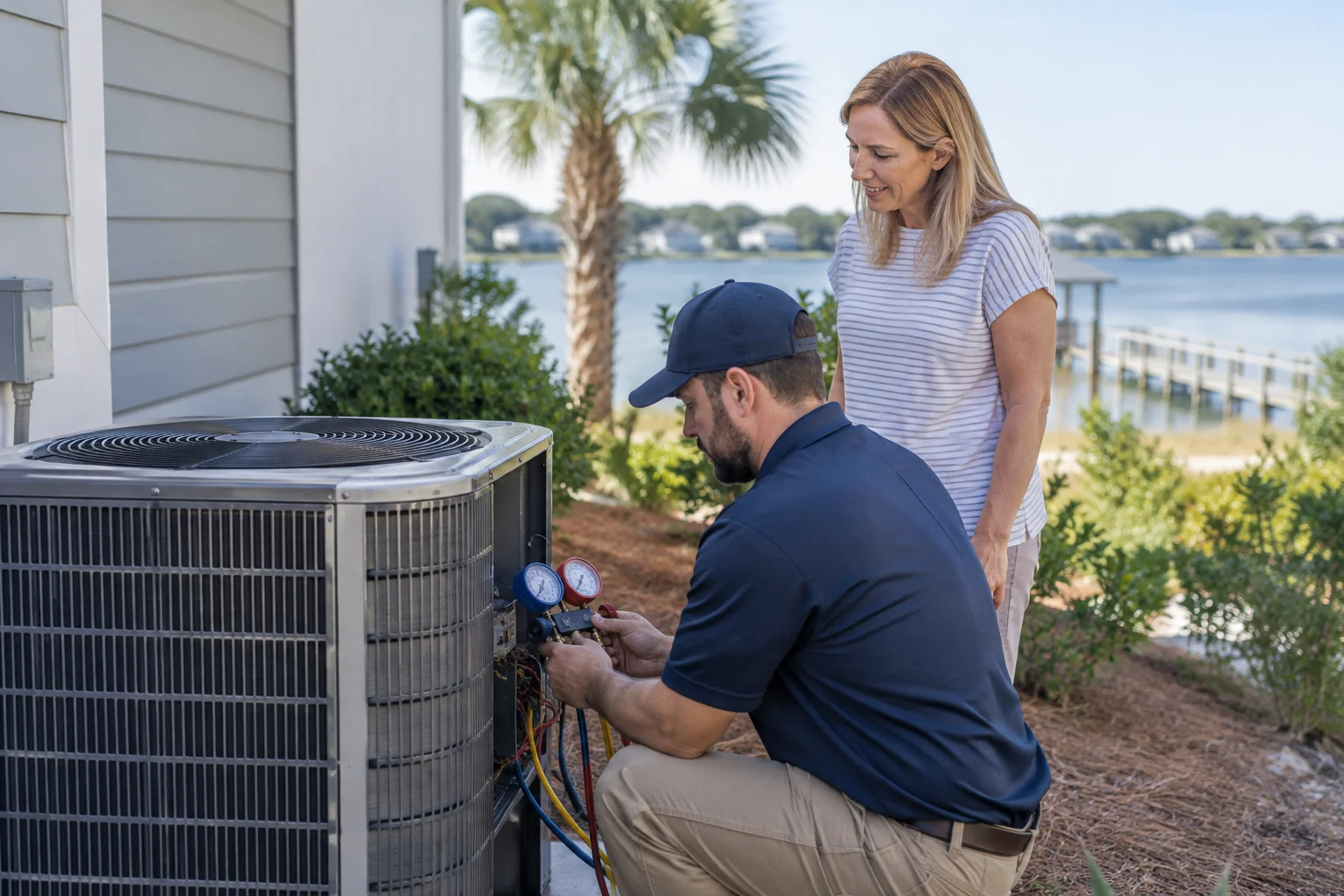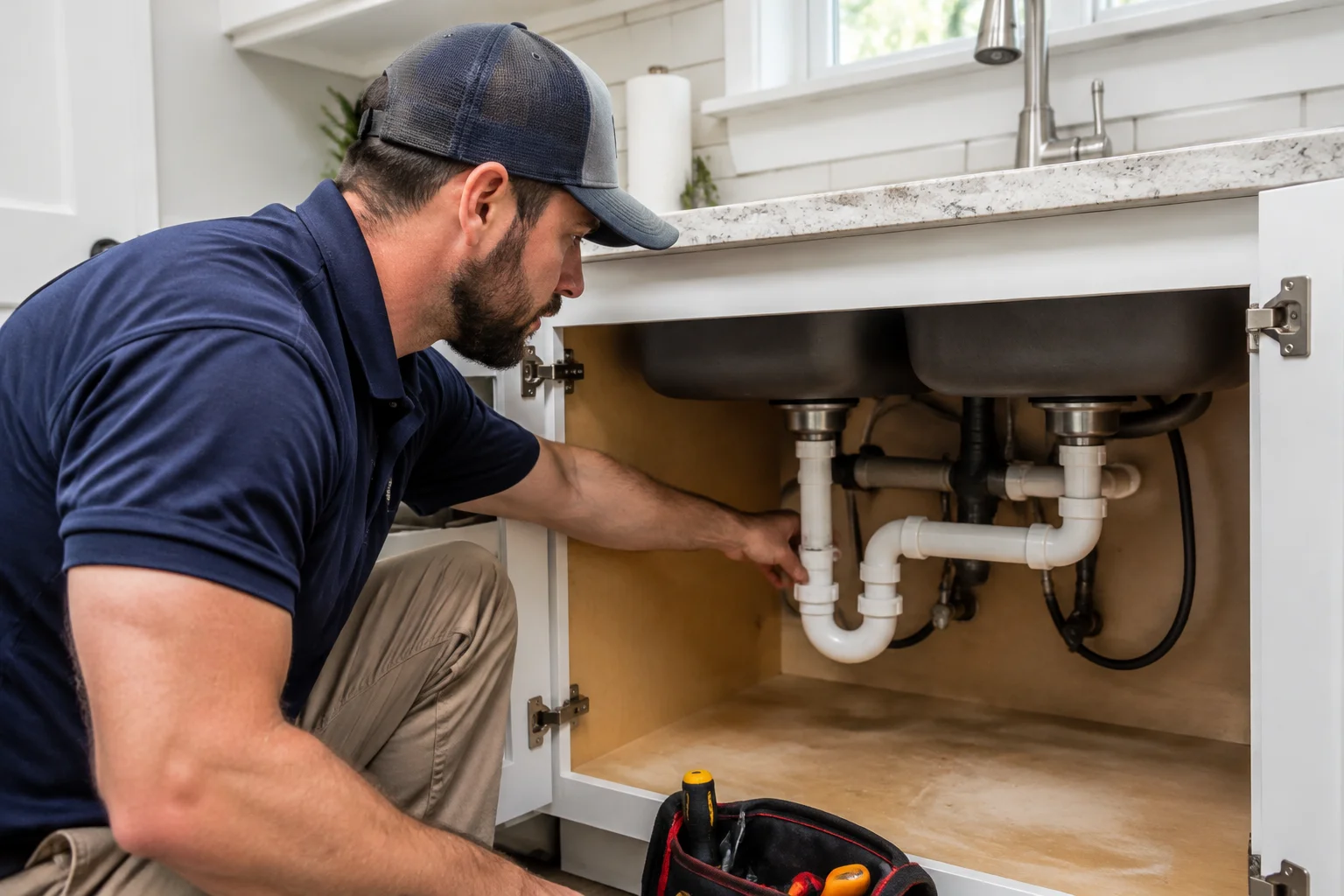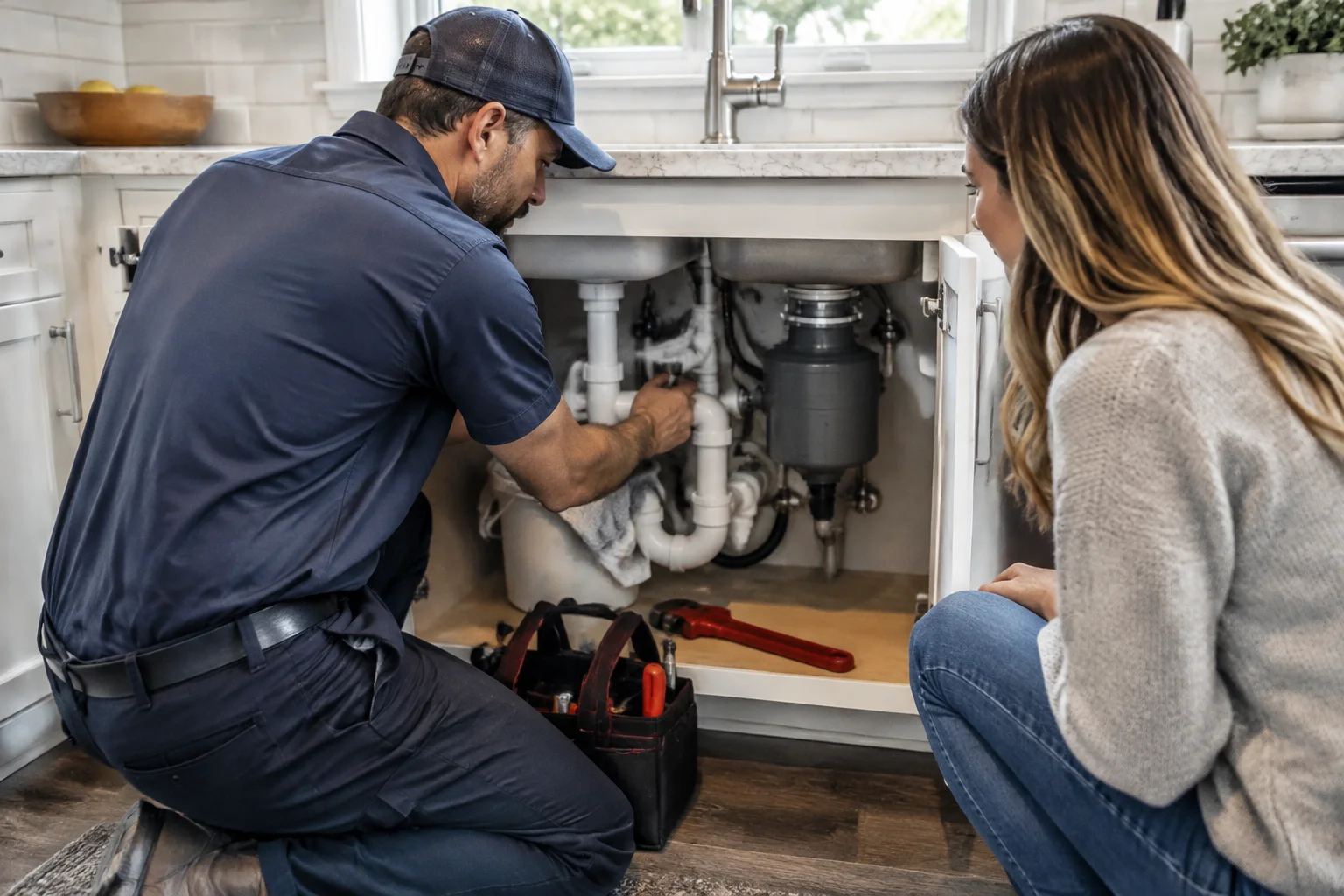
A slow kitchen drain or a dripping faucet can seem minor until it disrupts a busy household. In Camp Creek, seasonal occupancy, humid weather, and heavy stretches of water use make it especially helpful to notice plumbing changes early. The goal is not to replace everything before it fails. It is to recognize trouble, limit damage, and choose the right repair.
This guide explains how to approach leaks, drains, fixtures, water heaters, and underground pipes. If you are comparing plumbing services in Camp Creek, FL, use these checks to describe the problem clearly and understand what a professional should investigate.
How Camp Creek Living Affects Household Plumbing
Camp Creek's coastal setting brings warm, humid conditions and periods of heavy rain. Humidity can make condensation around cold pipes look like a supply leak, while stormwater can expose weaknesses in damaged sewer piping. Rain alone should not cause a sound sanitary sewer line to back up, so recurring wet-weather problems deserve investigation.
Homes also have different usage patterns. A full-time residence may have steady daily demand, while a vacation property can go from quiet to several showers, laundry loads, and dishwasher cycles in a single morning. Those busy periods often reveal an undersized water heater, a partially restricted drain, or a worn toilet valve.
Local service matters because access, property layout, and occupancy affect repair planning. Review the Camp Creek service area information and ask about availability for your property type before scheduling.
Start With Water Use, Pressure, and Shutoff Access
Know how to stop the water
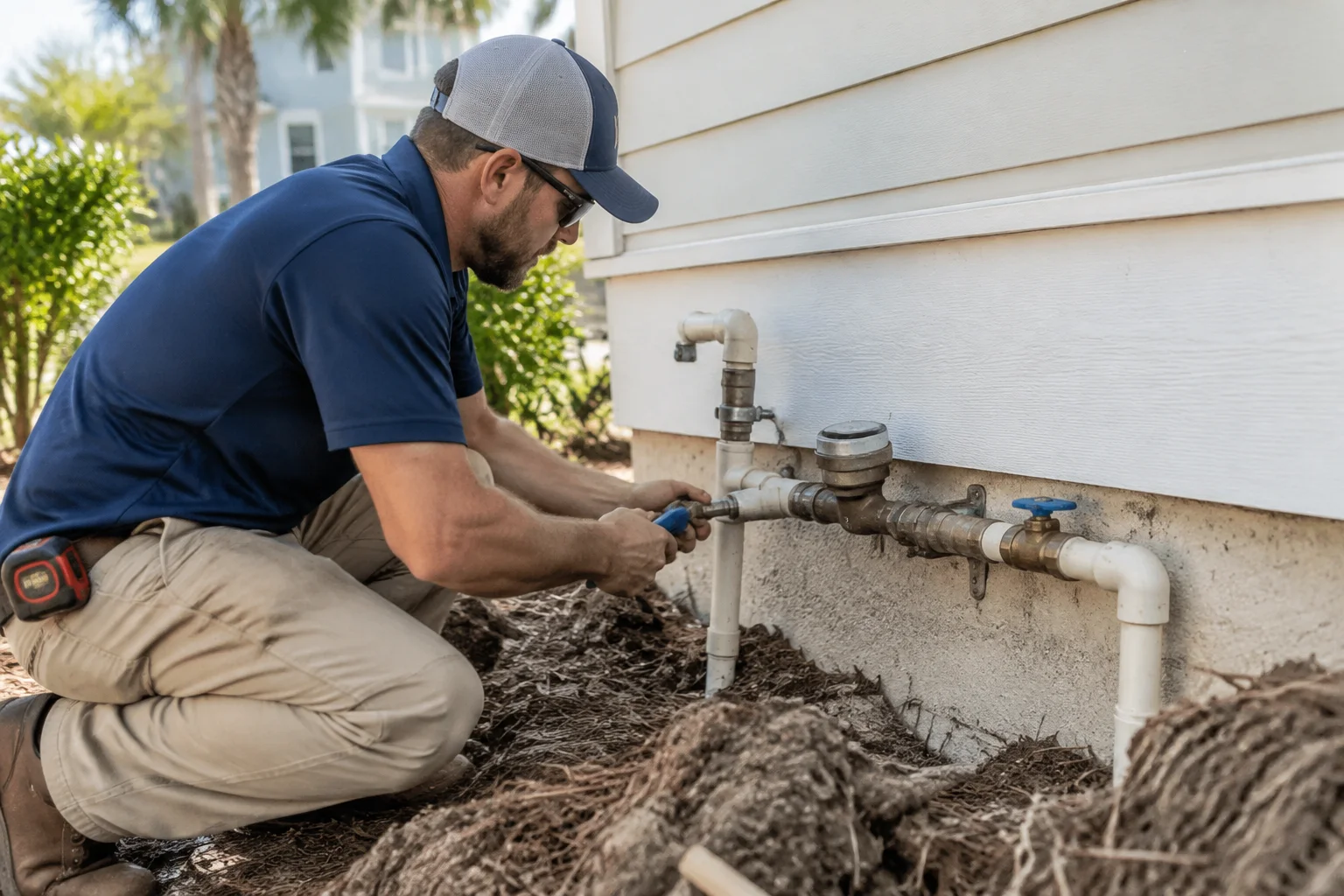
Locate your home's main water shutoff and the individual valves serving toilets, sinks, and appliances. Make sure responsible adults know where they are. A valve hidden behind storage is not much help during a burst supply line. Do not force a seized valve or operate utility-owned equipment without authorization.
Watch for unexplained water use
Compare water bills with occupancy, irrigation schedules, and recent activity. If consumption rises without explanation, turn off fixtures and water-using appliances, including irrigation, and observe the meter if accessible. Continued movement may indicate a leak or automatic equipment still drawing water. It is a clue, not a diagnosis.
Check pressure before blaming every fixture
If one faucet has weak flow, its aerator or cartridge may be restricted. If the whole house is affected, a supply issue, regulator problem, or piping restriction may be responsible. Sustained pressure above about 80 psi generally requires attention. A plumber can measure static pressure and check for pressure changes or thermal expansion.
Small Leaks Need More Than a Towel Under the Sink
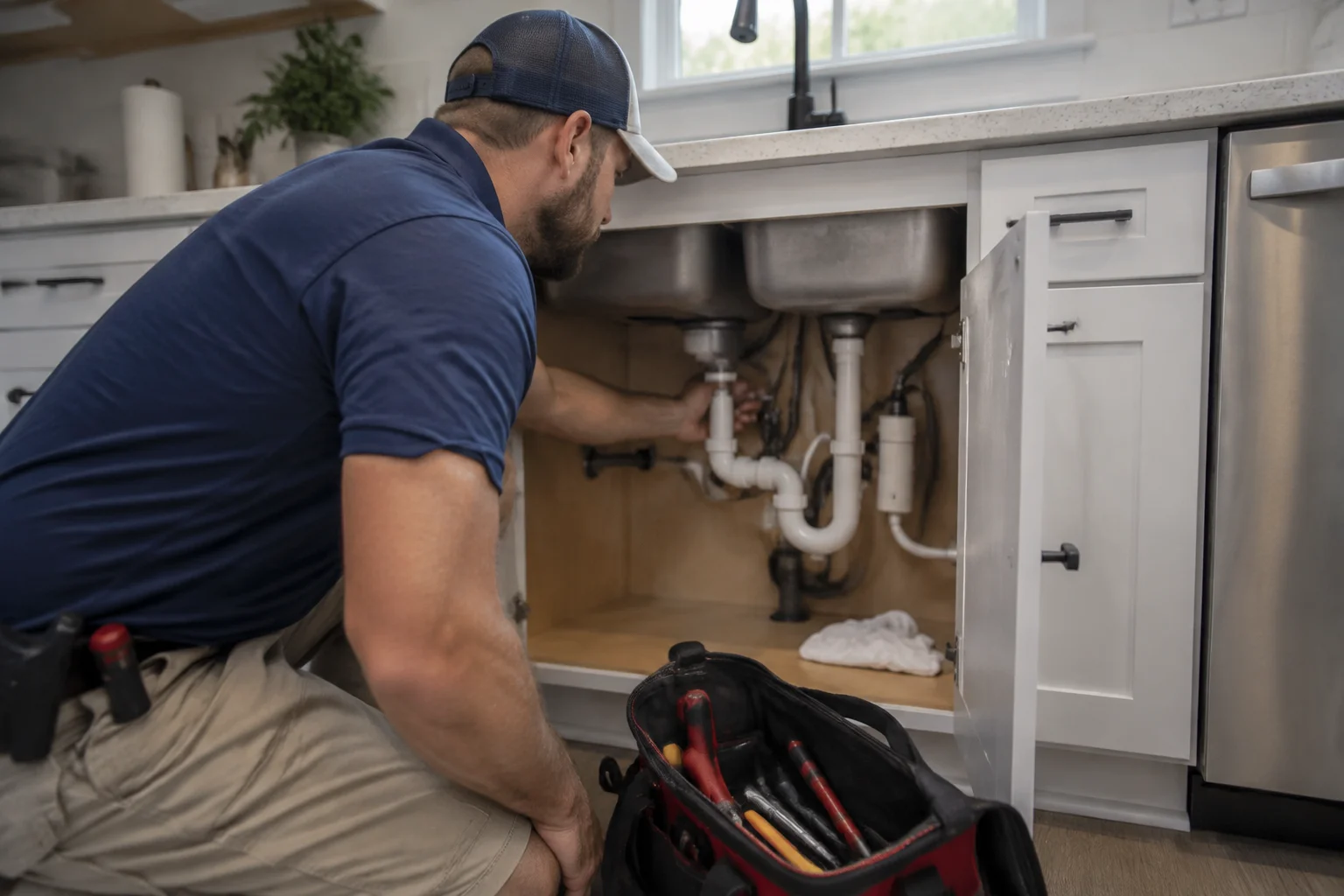
Look for swollen cabinet bottoms, damp baseboards, peeling finishes, and corrosion around supply connections. Dry the area, then check whether moisture appears during faucet use, sink drainage, or continuously. That distinction helps separate a drain leak from a pressurized supply leak or surface condensation.
Faucet repair may involve replacing a worn cartridge, seal, or other model-specific part. Pipe leak repair depends on the pipe material, connection type, accessibility, and condition of nearby piping. Tape or surface sealant should not be treated as a permanent repair for a failing pressurized water line.
Homeowners searching for leak detection near me should explain where moisture appears and whether the meter shows unexplained use. Professional detection can help narrow the location before walls or floors are opened. For an active leak, isolate the fixture if safe and arrange plumbing repair promptly.
Recognizing a possible slab leak
An unexplained warm floor area, the sound of running water with fixtures off, or persistent moisture near flooring can point to a pipe leak beneath a slab. None proves a slab leak by itself. Testing should come before demolition. Depending on the findings, repair options may include localized access or rerouting a section of pipe.
Match Drain Cleaning to the Actual Blockage
One slow drain usually suggests a local restriction. Several slow fixtures, a gurgling toilet, or water appearing in a shower when another fixture drains can indicate a shared branch or main sewer problem. Tell the plumber which fixtures are affected and what happens when each one runs.
Kitchen and bathroom drain habits
Keep cooking grease, coffee grounds, rice, and fibrous scraps out of the kitchen drain. A disposal reduces food size but does not prevent buildup downstream. In bathrooms, removable hair screens help keep hair and soap residue from collecting in traps and branch lines.
For a minor clog, a suitable plunger may help if no chemical cleaner has been added. Avoid repeatedly pouring caustic products into a blocked drain. They can splash during later work and will not repair a damaged pipe. If you have used one, tell the technician before service begins.
Recurring clogs call for investigation
A search for drain cleaning near me should lead to more than temporary relief when the same blockage keeps returning. Ask whether cable cleaning, a camera inspection, or another method is appropriate. Hydro jetting can remove certain deposits, but pipe condition should be considered first. Older or compromised piping may need a different approach.
Keep Sewer Problems Separate From Ordinary Sink Clogs
A sewer line carries wastewater away from the building. Root intrusion at defective joints, settled piping, grease deposits, and structural damage can restrict flow. Tree roots generally enter through existing openings rather than breaking into an intact pipe simply because it is nearby.
If several fixtures back up or wastewater rises through a low drain, stop using water. Running the washing machine or flushing another toilet can worsen the overflow. Keep people and pets away from sewage, and avoid contact with contaminated surfaces.
A camera inspection can help document visible roots, breaks, or standing water, although a heavily blocked line may need cleaning first. Confirm whether the property connects to a public sewer or uses a septic system, since the diagnosis and responsible service provider may differ. The guide to reliable sewer service in Camp Creek explains why recurring symptoms deserve a closer look.
Running Toilets and Dripping Faucets Waste More Than Water
A toilet that refills between uses may have a leaking flapper, worn seal, or fill valve problem. Put a few drops of food coloring in the tank, wait without flushing, and check the bowl. Color appearing in the bowl suggests tank water is leaking through. Flush afterward to reduce the chance of staining.
Water around the toilet base needs a different evaluation. It may come from condensation, a supply connection, the tank, or a failed seal beneath the toilet. Do not assume tightening the floor bolts will solve it. Overtightening can crack porcelain.
Professional toilet repair and replacement in Camp Creek can address the actual source. For faucets, note whether the leak comes from the spout, handle, or connections below the sink. Photos and a model number can help identify the correct parts.
Give the Water Heater Its Own Maintenance Plan
Changing hot water temperature, unusual sounds, rusty-looking hot water, and moisture around the heater all deserve attention. A shorter hot shower may reflect increased demand, a failed component, sediment, or a sizing issue. It does not automatically mean the entire heater needs replacement.
If you are looking for hot water heater repair near me, share the heater's age, fuel type, capacity, and symptoms. Note whether the issue affects every fixture or only one. A single shower with inconsistent temperature may have a mixing valve problem rather than a heater failure.
Maintenance depends on the equipment and manufacturer's instructions. Storage tanks may need sediment flushing and anode inspection, while tankless units may require descaling based on water conditions and use. Temperature and pressure relief devices must never be capped or blocked.
Active leakage from the tank body usually points toward replacement rather than a simple component repair. For budgeting and planning, read the Camp Creek water heater replacement guide. Have a qualified professional handle work involving hot water, fuel connections, or electrical components.
Test Water Before Choosing Treatment
White deposits on fixtures, cloudy spots on glassware, and scale around showerheads can suggest mineral hardness. However, water characteristics vary by source and treatment. Do not assume every Camp Creek home needs the same equipment, or that all taste and odor concerns come from hard water.
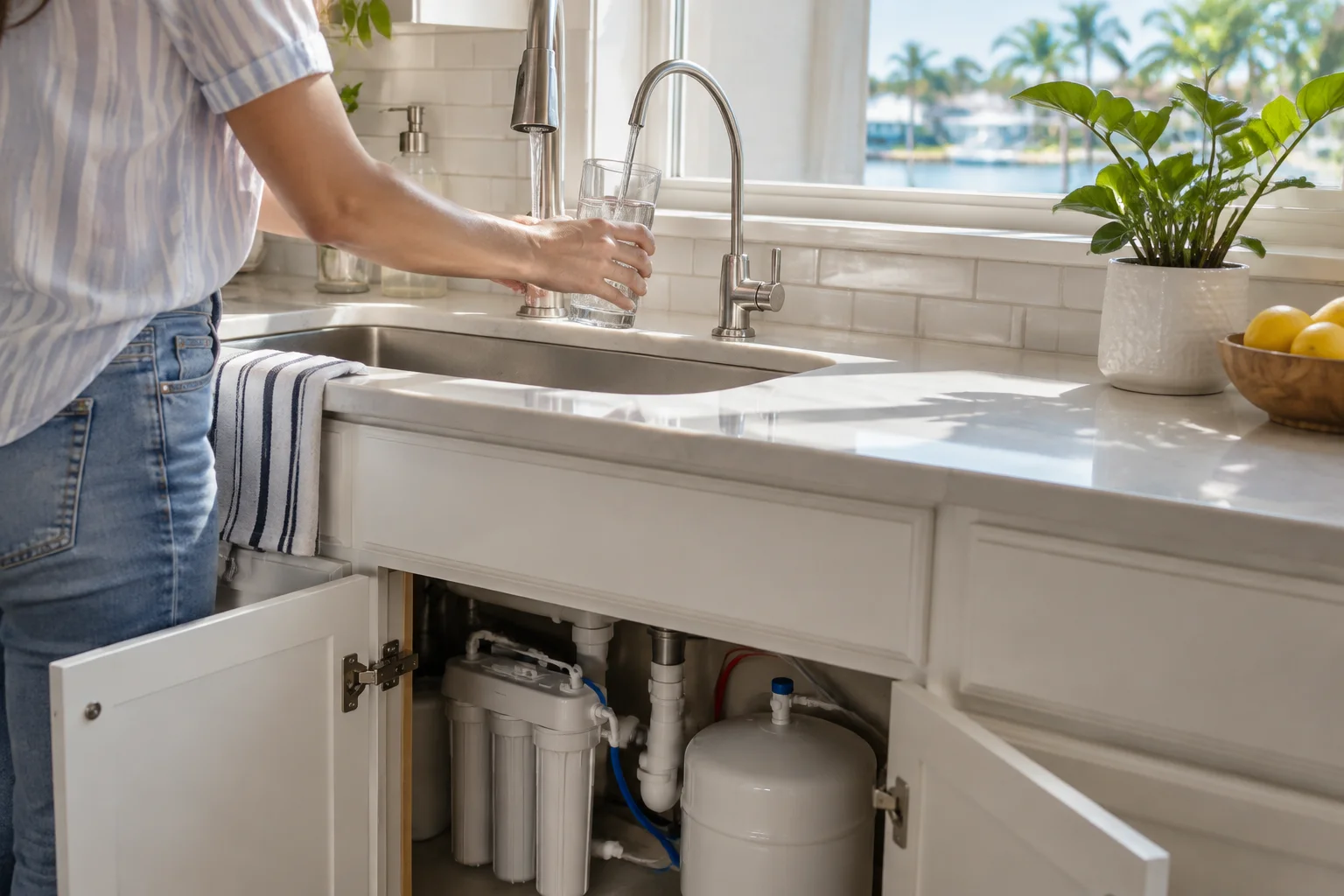
A water test helps separate hardness from other concerns. Water softening in Camp Creek may help reduce mineral scale when testing supports it, but a softener is not a universal drinking water treatment system. Equipment selection should consider measured hardness, household demand, and maintenance requirements.
The nearby Sandestin guide to scale, taste, and odor offers useful background on why different water complaints need different solutions.
A Manageable Plumbing Routine for Busy and Seasonal Homes
Once a month, look under sinks, around toilets, and near the water heater. Check accessible supply hoses for bulging, corrosion, or moisture. Listen for toilets refilling on their own and note drains that are getting slower. These observations take little time and create a useful record if a problem develops.
Before leaving a property vacant, arrange a plumbing check and discuss an appropriate water shutoff plan. Consider irrigation, fire protection, and any equipment that requires water before closing a main valve. Leak sensors near vulnerable fixtures can provide an early warning, especially when someone is available to respond.
For rentals, give guests simple instructions about grease, wipes, and reporting leaks. Between occupancies, check drainage and fixture operation. Property management plumbing services can help coordinate recurring care and access. Across Walton County, the best maintenance schedule reflects the property's condition and use rather than a generic checklist.
Handle Plumbing Emergencies Safely
A burst pipe, uncontrolled supply leak, sewage backup, or rapidly spreading water needs urgent attention. Shut off the affected fixture or main water supply if you can reach it safely. Stay away from standing water near electrical equipment. Do not enter a flooded area to retrieve belongings or reach a valve.
When searching for an emergency plumber near me, explain whether water is still flowing, whether sewage is involved, and whether the building is occupied. Confirm current dispatch availability and any emergency charges. For suspected gas leaks near a water heater, leave the building and contact the gas utility or emergency services from a safe location.
Arrange Service With Clear Priorities
Before booking, gather photos, the problem's timeline, and any previous repair information. Ask what diagnosis is included, how additional work is approved, and whether the estimate covers access and restoration. Contact A Superior Mechanical about service availability and scope for your Camp Creek property.
Prioritize active leaks and sanitation problems before cosmetic fixture upgrades. For larger work, ask about plumbing financing options, subject to applicable terms and approval. A clear diagnosis and written repair plan help you address the immediate problem without overlooking what caused it.
Find Plumbing Services in Camp Creek, FL
If you need Plumbing Services in Camp Creek, FL, visit our local service page or contact A Superior Mechanical today.
Map of Camp Creek, FL
Frequently Asked Questions
How can I tell whether a leak is hidden under my Camp Creek home?
Unexplained water use, persistent floor moisture, a warm spot on the floor, or running-water sounds when fixtures are off can suggest a hidden leak. These symptoms do not confirm a slab leak. A plumber can check the meter, test the piping, and use suitable detection methods before recommending access or repair.
Should I schedule drain cleaning if only one sink is slow?
A single slow sink often has a local restriction in its stopper, trap, or branch drain. If basic safe clearing does not help, or the clog keeps returning, arrange professional drain service. Multiple slow fixtures, gurgling toilets, or wastewater backing up through a shower warrant a broader sewer evaluation.
Does every Camp Creek home need a water softener?
No. Water hardness varies, and visible deposits alone do not establish which treatment is appropriate. Test the water before choosing equipment. A softener can reduce hardness-related scale, but taste, odor, and other water quality concerns may require different treatment.
Related Articles
- A Practical Guide to Water Heater Replacement in Camp Creek, FL and the Plumbing Problems That Shorten System Life
- A Smarter Way to Handle Plumbing Services in Fort Walton Beach Homes
- Cleaner Everyday Water Starts With Plumbing Services in Sandestin, FL: Hard Water Spots, Scale, Taste, and Odor
- Keeping Camp Creek Drains Moving: A Homeowner’s Guide to Reliable Sewer Service
Photo Gallery