A water bill that keeps climbing. A warm patch on the kitchen floor. The sound of running water when every faucet is off. Hidden plumbing leaks often begin with small clues, especially when a damaged pipe sits beneath a concrete slab.
For homeowners in Shalimar, FL, finding the source early can limit wasted water and damage to flooring, cabinets, and surrounding materials. It also helps separate a true slab leak from a leaking toilet, clogged drain, or moisture problem. Here is how to recognize the differences and make practical decisions about leak detection and plumbing repair.
Why hidden leaks deserve attention in Shalimar
Shalimar's warm, humid climate makes moisture problems worth investigating promptly. Heavy rain, condensation, and plumbing leaks can produce similar symptoms, but they require different solutions. A damp floor after a storm does not automatically mean an underground pipe has failed, just as indoor humidity alone does not explain a continuously moving water meter.
Homes in the area vary in age, construction, and renovation history. In slab-on-grade homes, some plumbing may run beneath the concrete, making direct inspection difficult. Previous additions or remodeling can also leave pipe routes that are not obvious from the current floor plan.
Local service matters because diagnosis involves more than finding wet material. A plumber needs to consider the building layout, water supply, drainage, and repair access. A Superior Mechanical provides plumbing services in Shalimar and serves properties throughout Okaloosa County.
Clues that point toward a concealed plumbing leak
Water use that no longer matches your routine
Compare gallons used on recent bills rather than looking only at the dollar amount. Rate changes, visiting family, irrigation, and pool filling can explain higher costs or consumption. If household habits have stayed the same but usage rises, check toilets, outdoor faucets, irrigation equipment, and the water heater before assuming the leak is under the house.
A toilet with a leaking flapper can send water into the bowl without leaving a puddle. Put a few drops of food coloring in the tank and wait about 15 minutes without flushing. Color appearing in the bowl suggests a tank-to-bowl leak. Flush afterward to reduce the chance of staining.
Changes in floors, walls, and sound
Unexplained damp carpet, lifting flooring, swollen baseboards, or a persistent musty odor deserve attention. A localized warm area may indicate a leaking hot-water line, although sunlight, nearby equipment, and floor heating can also cause warmth. None of these observations confirms a slab leak by itself.
Listen for hissing or running water while fixtures are off. If that sound accompanies increased usage or recurring dampness, homeowners searching for hidden water leak detection near me should arrange an inspection rather than waiting for visible flooding.
A safe water meter check before the appointment
If your water meter is safely accessible and serves only your property, it can help identify unexplained water use. Turn off faucets and pause dishwashers, washing machines, irrigation, and other water-using equipment. Remember that ice makers, treatment systems, and automatic pool fillers may operate without anyone opening a tap.
Record the meter reading or photograph the display. Watch its flow indicator, if present, and compare readings after a period with no intended water use. Movement suggests water is passing through the meter, but it does not identify the leak's location. Digital meters may update at intervals, so follow your utility's instructions.
A still meter does not rule out an intermittent leak or a drain leak that occurs only when a fixture runs. Do not enter a flooded meter box, force a stuck valve, or operate utility-owned shutoffs without permission. Share your readings and timing with the plumber.
What a slab leak actually means
A slab leak generally refers to a leaking pipe beneath a concrete foundation. Pressurized supply pipes can lose water continuously, while damaged drainage pipes may leak only during use. The distinction affects testing, repair options, and how quickly damage develops.
Possible causes include corrosion, failed joints, installation defects, abrasion where piping contacts other materials, and ground movement. Excessive water pressure can add stress to vulnerable plumbing. Pipe age provides useful context, but age alone does not establish why a line failed.
Water can travel along pipe trenches or beneath flooring before it becomes visible. That means the wettest spot is not necessarily directly above the break. Accurate location helps avoid unnecessary demolition and makes repair planning more reliable.
How professional leak detection narrows the problem
A thorough investigation starts with your observations and a review of accessible fixtures and piping. Depending on the symptoms, the plumber may isolate sections of the supply system, measure pressure, and use acoustic listening equipment to locate sounds produced by escaping water.
Thermal imaging can reveal temperature patterns worth investigating, particularly around hot-water piping. Moisture meters help assess affected materials. Neither tool sees directly through concrete or independently proves that a pipe is leaking. Results need to be interpreted alongside plumbing tests.
For suspected drain or sewer trouble, a camera inspection may reveal cracks, offsets, roots, or obstructions when access permits. Additional testing may be necessary to confirm leakage. A Superior Mechanical's leak detection and slab leak services in Shalimar help homeowners investigate concealed water loss and determine the next step.
Choosing a repair without unnecessary demolition
Repairing a specific damaged section
When testing identifies an isolated failure in otherwise serviceable piping, a targeted repair may be appropriate. That can require opening a limited area of slab or another building surface. Ask how the pipe will be accessed, which materials will be used, and whether concrete, flooring, or cabinet restoration is included in the estimate.
Rerouting or replacing vulnerable piping
Repeated leaks, widespread deterioration, or difficult access can make rerouting a line more practical than reopening the slab. A replacement route must account for code requirements, protection, insulation, and future service access. There is no single best route for every house.
Homeowners comparing pipe leak repair near me should ask whether the proposed work addresses one failure or a broader piping problem. If multiple sections are deteriorating, plumbing replacement in Shalimar may deserve consideration alongside a localized repair.
Slow drains and sewer problems need a different diagnosis
A slow sink does not usually indicate a pressurized supply leak beneath the slab. Hair, soap buildup, grease, food debris, or a localized obstruction may be responsible. If just one fixture drains poorly, the problem may be close to that fixture. Several affected drains can point toward a shared branch or main sewer line.
Gurgling toilets, wastewater rising in a shower, or repeated backups need prompt attention. Stop using water if sewage is backing up indoors. Keep children and pets away, and avoid contact with contaminated water. A sewer problem requires drainage evaluation, not just a search for supply-side water loss.
If a slow drain repair near me search follows repeated clogs, explain which fixtures are affected and whether the problem returns after cleaning. Avoid repeatedly using caustic drain chemicals, and tell the plumber if any have already been added. Suitable drain cleaning methods depend on pipe condition and the obstruction.
Check fixtures and water heaters before blaming the slab
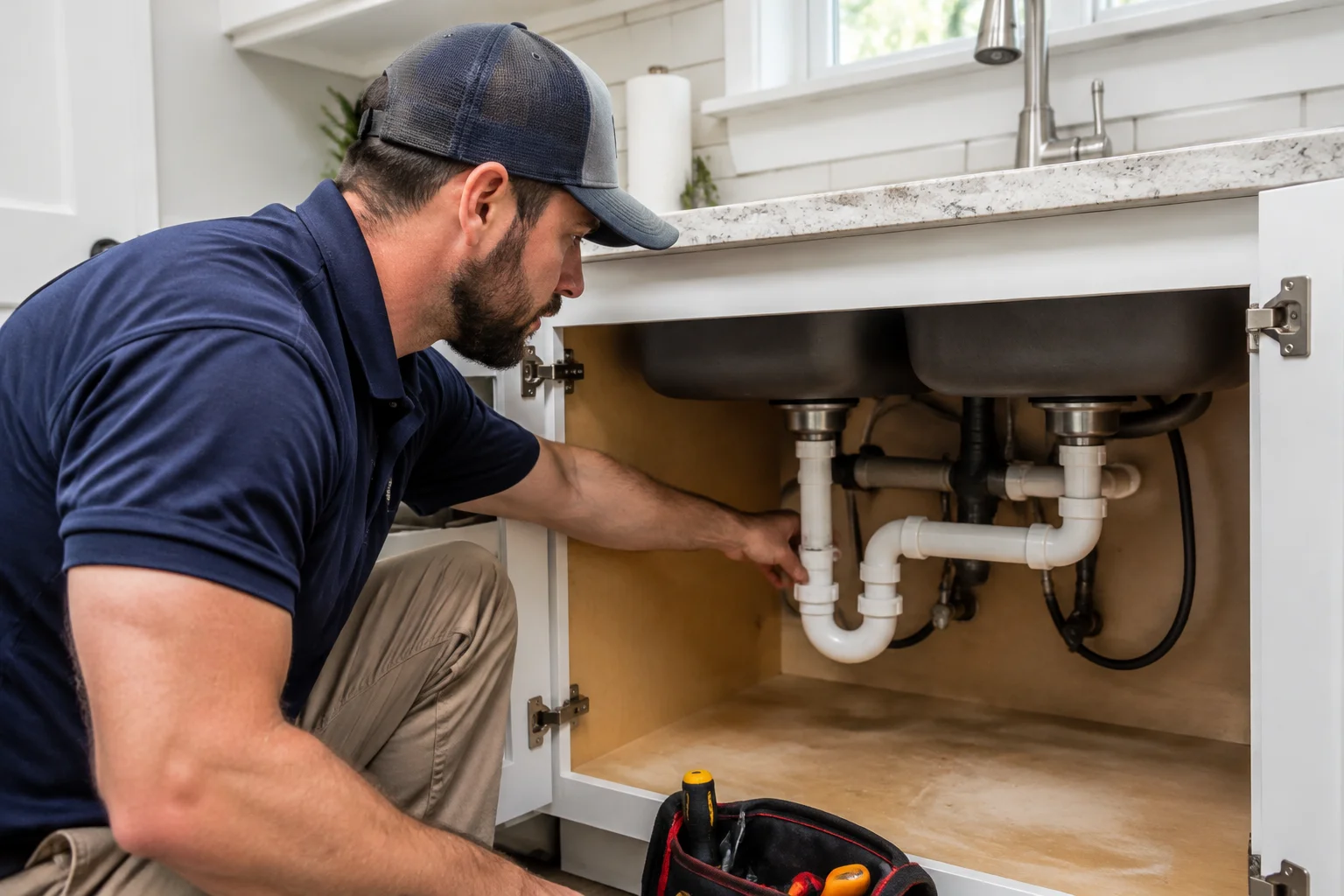
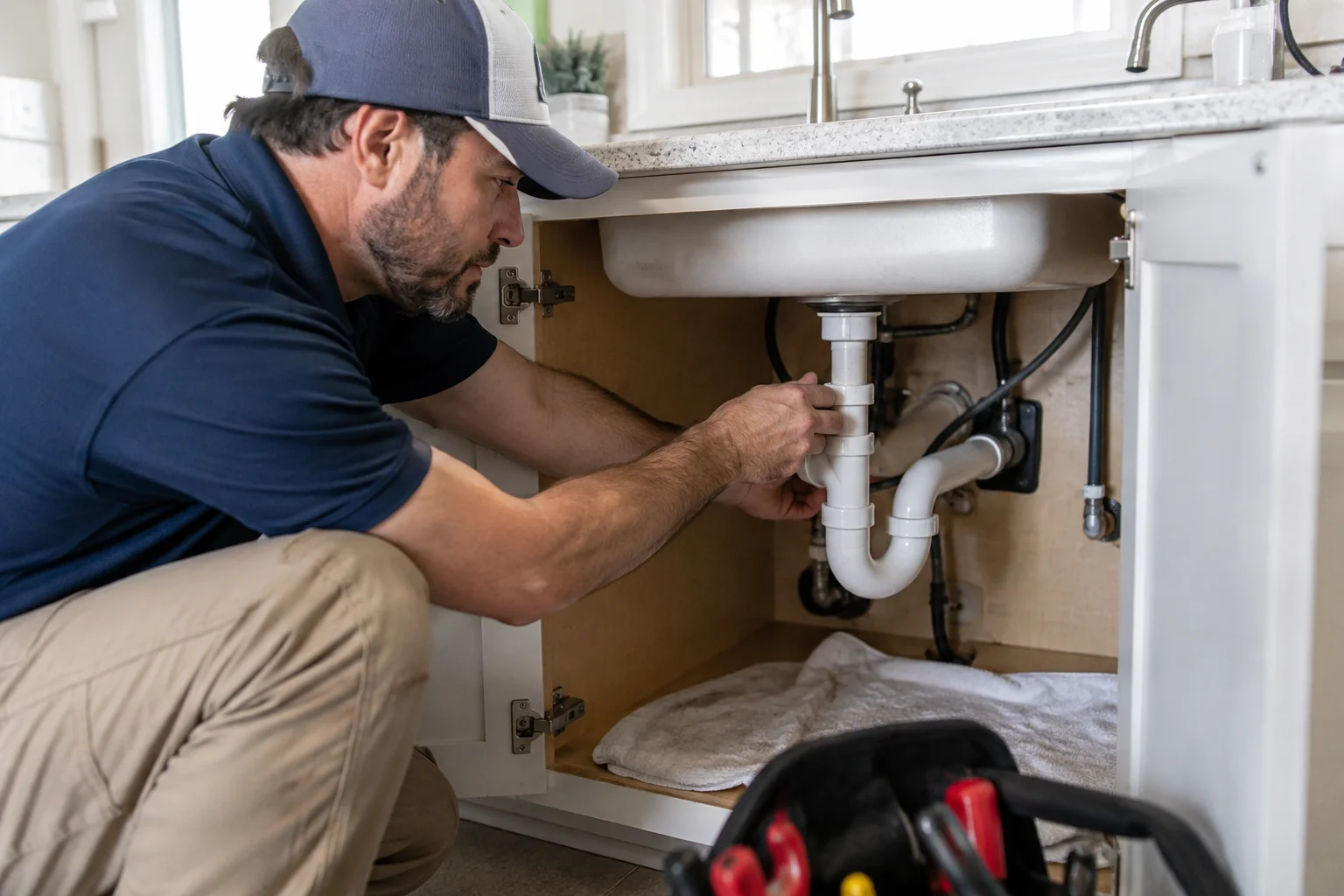
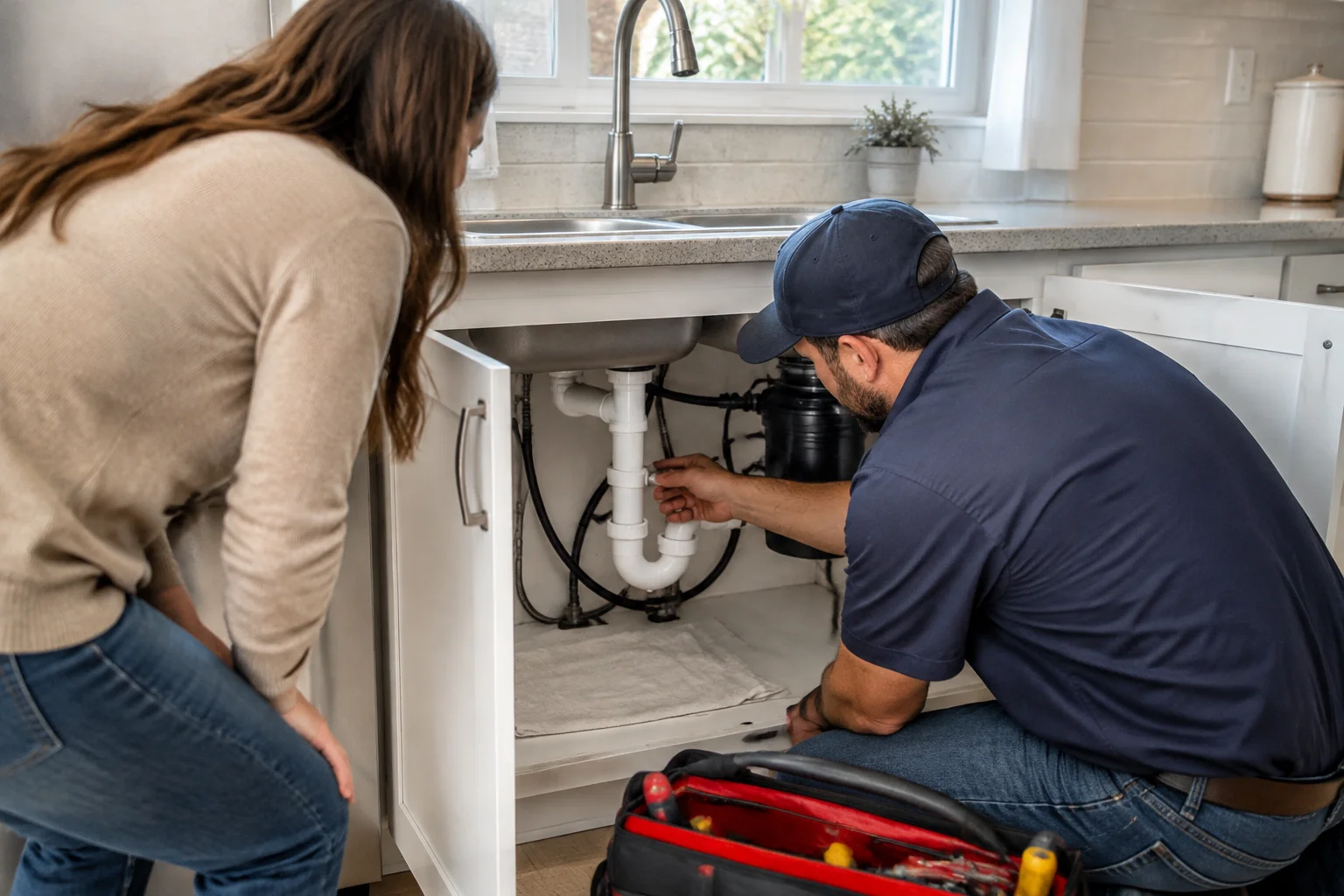
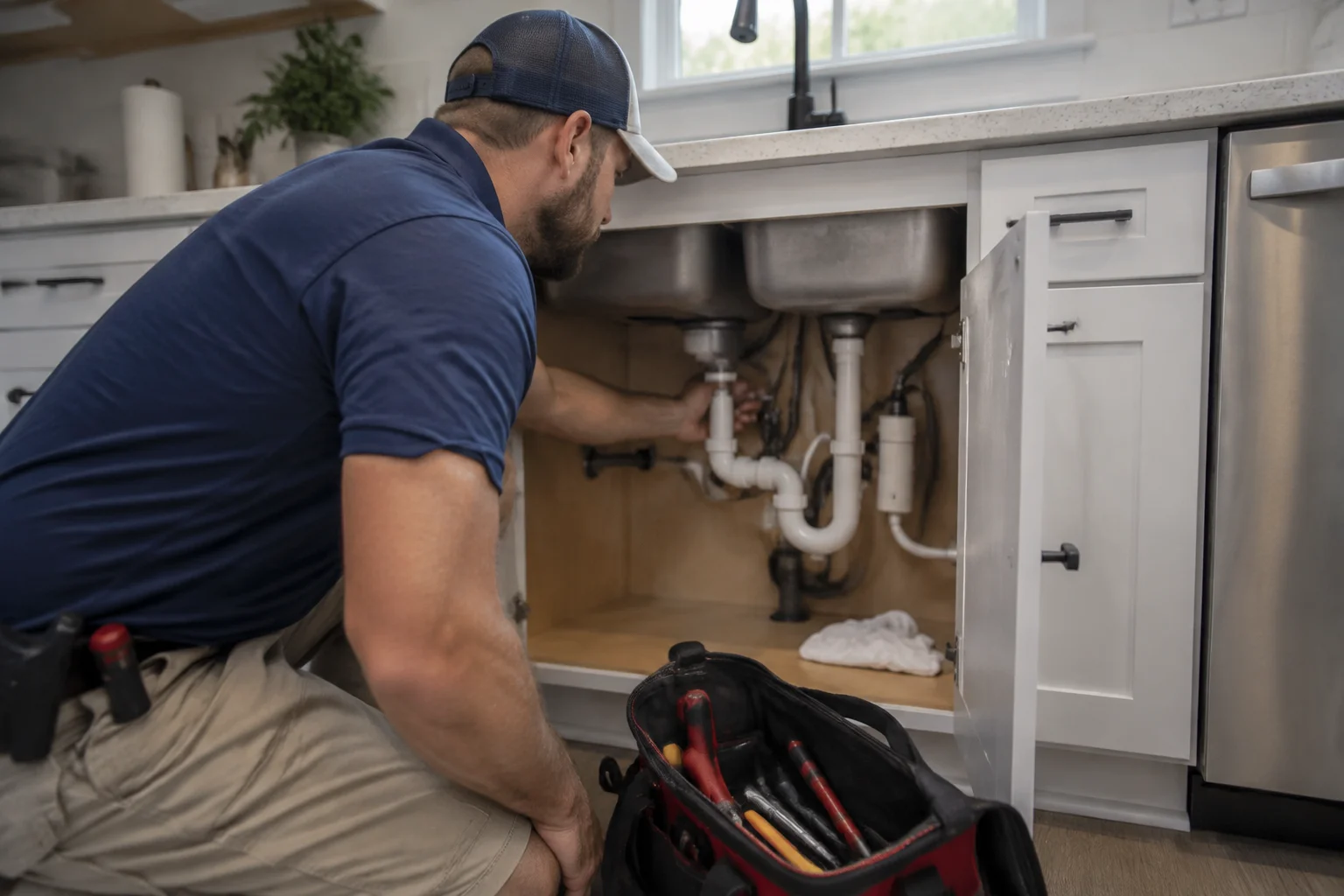
Look beneath sinks for damp supply connections, drain joints, and cabinet bottoms. Run a dry tissue around accessible connections to help reveal small leaks, but avoid hot surfaces and electrical components. Faucet repair, toilet repair, or a leaking sink trap may resolve water loss without any foundation work.
Inspect the area around your water heater for moisture, corrosion, or mineral trails. Leaks may originate at connections, valves, or the tank itself. Never cap a temperature and pressure relief valve or its discharge pipe. Discharge needs professional evaluation because pressure, temperature, or valve problems may be involved.
Tankless equipment also needs maintenance appropriate to the water quality and manufacturer's instructions. For problems involving that equipment, tankless water heater services can address leaks, performance concerns, and scale-related maintenance. Replacing a heater will not repair a separate leaking hot-water pipe beneath the slab.
Pressure, hard water, and practical prevention
Water pressure that feels strong is not necessarily healthy for the plumbing. Have pressure measured if you notice recurring fixture leaks, banging pipes, or unexplained relief-valve discharge. Pressure consistently above 80 psi generally calls for corrective attention under common plumbing standards; a plumber should confirm local requirements and the appropriate solution.
Hard water can leave deposits on faucets and showerheads and contribute to scale inside water heaters. Hardness varies by supply, so testing is more useful than assuming every Shalimar property has the same water. Scale is a maintenance concern, not proof that a slab leak exists.
A drinking-water filter and a whole-house softener serve different purposes. Reverse osmosis systems generally treat water at a designated drinking-water location rather than protecting every pipe and appliance. This Shalimar guide to reverse osmosis explains drinking-water treatment considerations in more detail.
Check beneath cabinets regularly, inspect appliance hoses, and watch monthly water use. Keep grease out of kitchen drains and use strainers to catch debris. Water alarms near heaters, washing machines, and sinks can provide early warning. For vacation rentals or extended absences, consider monitored leak sensors and an appropriately installed automatic shutoff system.
Responding to an urgent leak without making it worse
Active flooding, rapidly spreading floor moisture, a ceiling bulge, or water near electrical equipment requires immediate caution. Keep clear of wet electrical areas. If you can safely reach and operate the home's main water shutoff, close it to limit a supply leak. Do not force a seized valve.
A sewer backup calls for stopping water use, while a supply leak may require shutting off incoming water. Photograph damage from a safe location and contact your insurer when appropriate. Plumbing repairs stop the source, but wet materials may also need professional drying. The Shalimar emergency plumbing guide covers additional preparation and response steps.
Make the service visit more productive
Before searching for a local plumber near me, gather recent water bills, meter photos, previous repair records, and notes about when symptoms occur. Identify affected fixtures and clear safe access to the water heater, shutoff, and damp areas. These details help distinguish a fixture problem from an underground leak.
For persistent water loss or suspected slab damage, contact A Superior Mechanical to discuss leak detection. For accessible fixture and pipe problems, ask about plumbing repair in Shalimar. Request an explanation of the findings, repair options, and restoration responsibilities before authorizing work.
Find Leak Detection and Slab Leak in Shalimar, FL
If you need Leak Detection and Slab Leak in Shalimar, FL, visit our local service page or contact A Superior Mechanical today.
Map of Shalimar, FL
Frequently Asked Questions
Can I have a slab leak without seeing water on the floor?
Yes. Water can escape into the soil beneath the foundation or travel beneath flooring before becoming visible. Higher water use, unexplained running-water sounds, or a localized warm floor may justify testing, but none confirms a slab leak on its own.
Does slab leak repair always require breaking concrete?
No. A targeted repair may require opening part of the slab, but rerouting or replacing the affected line can sometimes avoid that access point. The best approach depends on the leak location, pipe condition, building layout, and applicable code requirements.
Should I shut off the water if I suspect a slab leak?
If water is actively spreading or causing damage, shut off the home's water supply if the valve is safely accessible and operates normally. Do not force a stuck valve or enter an area with wet electrical equipment. For unexplained usage without active flooding, arrange prompt leak detection and ask the plumber about precautions while you wait.
Related Articles
- A Shalimar Homeowner’s Guide to Emergency Plumbing and How to Keep Repairs from Getting Expensive
- From Spotted Glasses to Better Sips: Reverse Osmosis in Shalimar, FL
- Cool Air, Less Humidity: A Smarter AC Maintenance Plan for Shalimar
- A Cooler, Drier Shalimar Home Starts With Smarter AC Installation
Photo Gallery