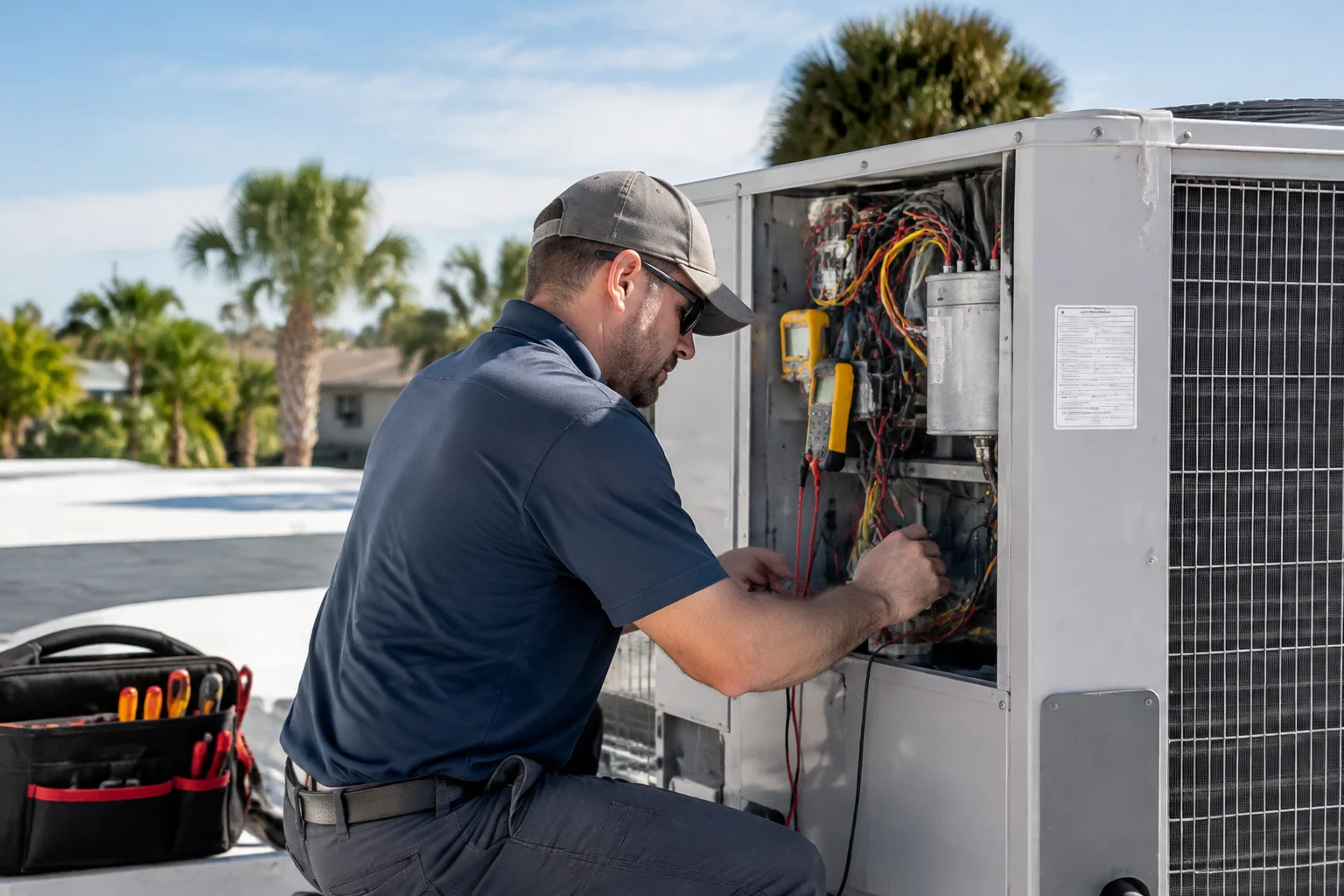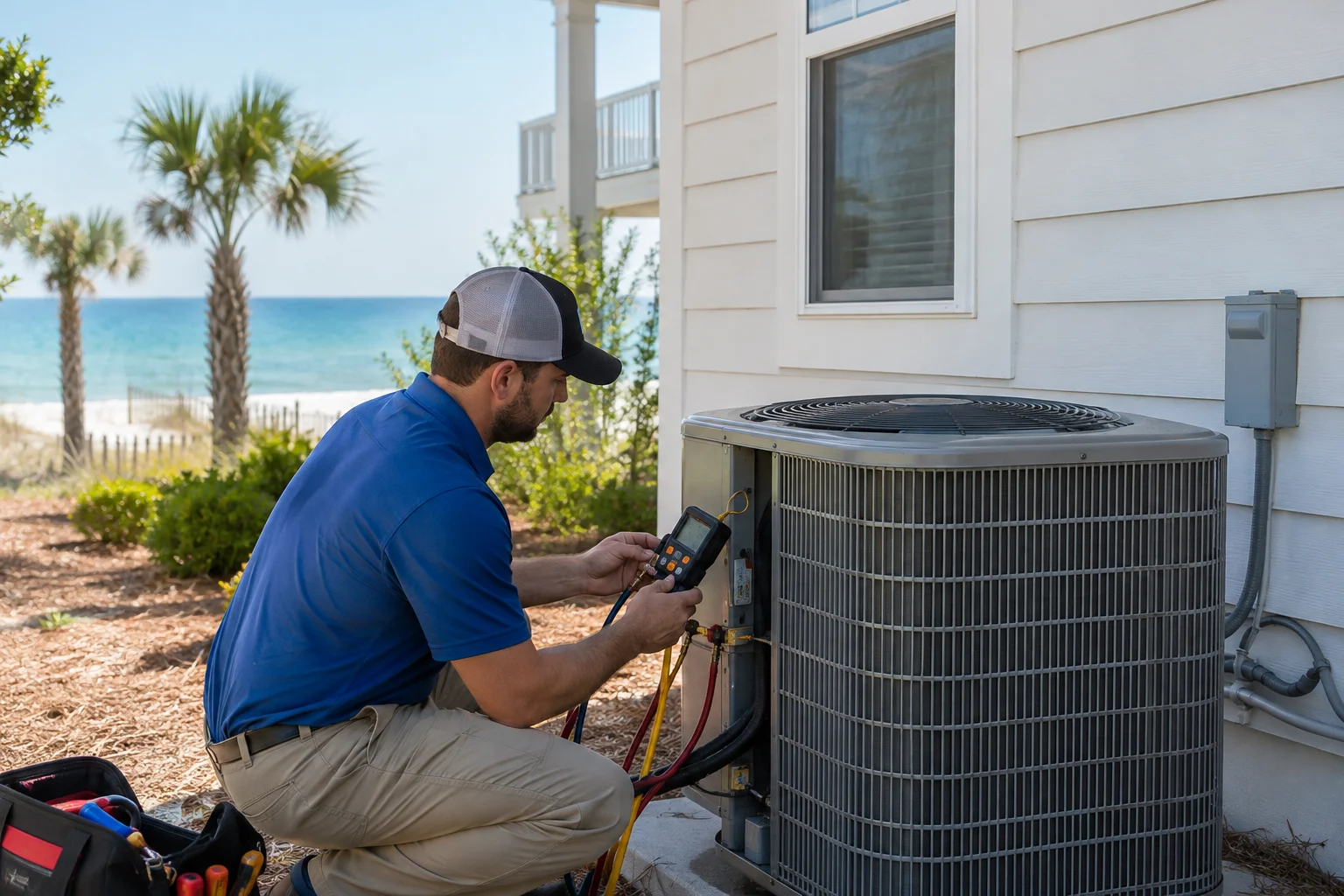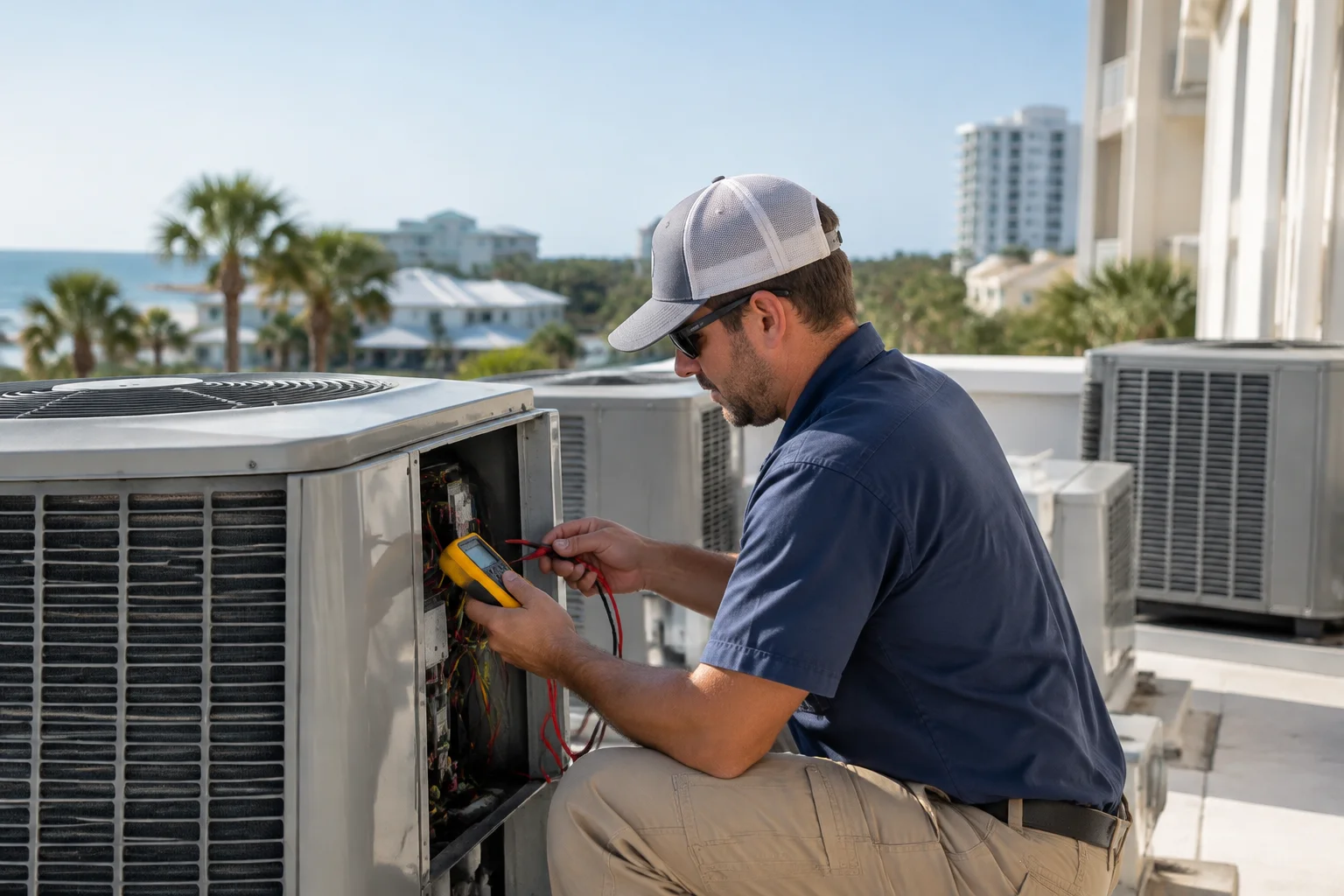
Inlet Beach businesses face a unique mix of heat, humidity, and salt air that can wear down commercial HVAC systems faster than owners expect. A good maintenance plan is not just about checking filters. It is about building a year-round schedule that protects airflow, supports efficient refrigerant system operation, and helps prevent emergency cooling problems during peak Florida weather.
This guide walks through practical planning steps for commercial HVAC maintenance in Inlet Beach, FL, with a focus on what homeowners and business managers can do now, what should be handled by a licensed HVAC contractor, and how to reduce the most common comfort and reliability issues in coastal Walton County.
Start with the reality of coastal Florida HVAC stress
Commercial air conditioning and heat pump systems in Inlet Beach work hard. Summer temperatures climb quickly, and humidity stays high for long stretches. That combination can strain air conditioners, increase indoor moisture, and raise the load on blower motors and condensate drainage components.
Salt air adds another layer. Even when equipment is not directly exposed to ocean spray, coastal air can contribute to corrosion on coils, fan assemblies, and metal drain pans. Over time, corrosion can affect performance and increase the likelihood of service calls.
Planning ahead means treating maintenance as a seasonal rhythm, not a one-time event. It also means designing your schedule around your building’s actual usage patterns, not just the calendar.
Build a seasonal maintenance calendar that matches your operating schedule
A maintenance plan should include multiple checkups throughout the year, because HVAC needs shift with Florida seasons. Use your business hours, occupancy, and thermostat settings to choose when equipment should be inspected and serviced.
Late winter to early spring: prepare for the cooling season
In many Inlet Beach locations, cooling demand ramps up earlier than expected. A spring service is a smart time for:
- Inspecting and cleaning accessible components to support consistent airflow
- Checking blower operation and ensuring proper air movement through supply and return pathways
- Reviewing refrigerant system performance during normal operating conditions, guided by what the system is doing on site
- Inspecting condensate drainage and confirming that condensate drainage pathways clear properly, especially ahead of high humidity
- Verifying thermostat operation and scheduling settings so comfort does not drift during the first hot weeks
If your system uses ductwork that has leaks or obstructions, spring is also a good time to address airflow restrictions before peak load hits.
Peak summer: focus on humidity control and emergency cooling readiness
During the hottest months, comfort complaints often trace back to airflow problems, dirty coils, or issues that affect moisture removal. Humidity can make indoor air feel warmer even when the thermostat is set correctly.
Summer maintenance planning typically includes:
- Coil inspection and cleaning where appropriate to support heat transfer
- Air filter checks and replacement practices that match your indoor air quality goals
- Verification of condensate drainage performance, since drainage problems can lead to water handling issues and reduced dehumidification
- Reviewing airflow across the system so the blower is moving air effectively through the building
- Confirming that indoor air quality equipment is functioning as intended, if you use filtration or air scrubbers
Coastal Florida can trigger urgent service needs. Planning ahead helps reduce the odds of mid-summer breakdowns and helps your team know what to do if cooling performance drops.
Early fall: get ready for shoulder season and temperature swings
Fall in Walton County may bring relief from peak heat, but systems still run. Shoulder season can expose issues that only show up when humidity and outdoor temperatures change.
A fall visit often includes:
- Checking ductwork connections and ensuring airflow balance where accessible
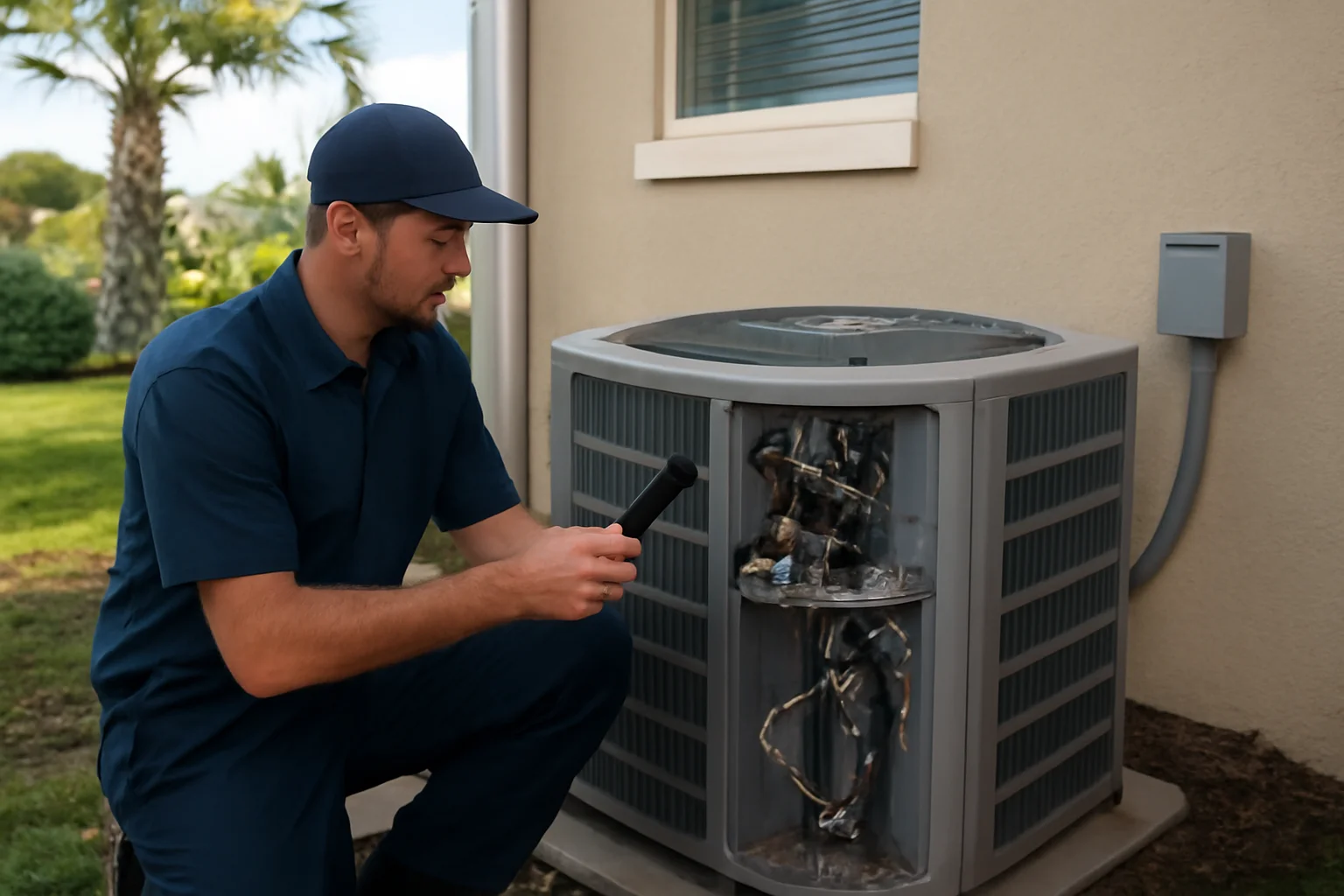
- Inspecting outdoor equipment for corrosion indicators and debris buildup
- Reviewing thermostat settings and scheduling logic so the system does not overcool or short cycle
- Evaluating indoor air quality needs, especially if occupants report stale air or increased dust
Winter: keep comfort steady and avoid neglect
Even when you are not running heavy cooling every day, commercial HVAC systems still benefit from periodic inspection. Winter maintenance helps catch early problems before spring demand returns.
Depending on your equipment type, a winter check may include verifying operation, checking airflow paths, and confirming that controls are working correctly.
Document your system and track performance, not just tasks
A maintenance plan becomes more effective when it is tied to your building’s history. Create a simple system binder or digital folder that includes:
- Equipment inventory: air conditioner or heat pump details, indoor units, and major components
- Service records: dates of inspections, repairs, and filter changes
- Thermostat models and control schedules
- Notes from occupants: comfort complaints, odor concerns, humidity issues, or airflow unevenness
When service technicians arrive, having this information helps them focus on likely causes. It also helps you spot patterns, such as recurring issues during high humidity weeks or persistent hot spots in specific zones.
Plan for airflow and ductwork issues that show up as “AC repair” calls
Many commercial cooling problems are not caused by the refrigerant system alone. Airflow is a frequent culprit. If the indoor blower cannot move air effectively, the system has to work longer to reach the thermostat target. That can increase energy use and contribute to early wear.
Airflow issues can come from:
- Dirty or incorrectly sized filters
- Blocked return pathways or supply registers
- Leaky ductwork or poor duct sealing
- Obstructions in duct runs
- Incorrect airflow balance across zones
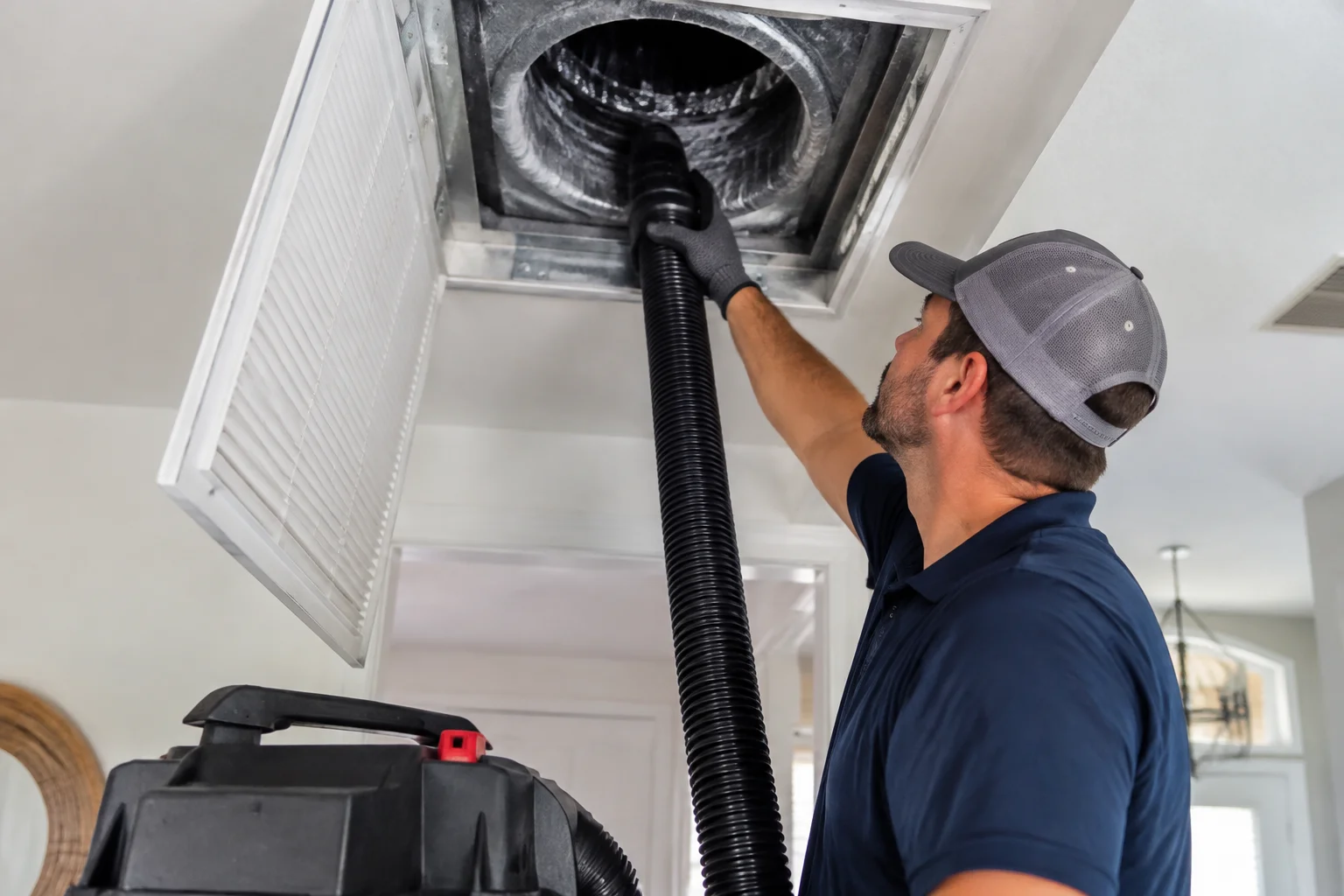
If you suspect ductwork problems, schedule ductwork services as part of your commercial HVAC maintenance plan. Addressing duct performance can improve comfort and reduce strain that leads to air conditioning repair needs.
Humidity control and condensate drainage: protect comfort and reduce risk
Inlet Beach humidity can be relentless. When an air conditioner removes moisture, it relies on proper coil performance and effective condensate drainage. If condensate drainage is slow or blocked, moisture can build and affect comfort.
During maintenance planning, ask your HVAC contractor to include condensate drainage inspection as a standard step. This is especially important for:
- Units serving areas with high humidity loads
- Buildings with frequent occupant turnover or door openings
- Systems with older drain lines that may collect debris over time
Because condensate drainage problems can create secondary issues, keeping this area on your maintenance schedule helps protect indoor air quality and reduces the chance of unexpected emergency cooling concerns.
Refrigerant systems: plan responsibly and avoid DIY assumptions
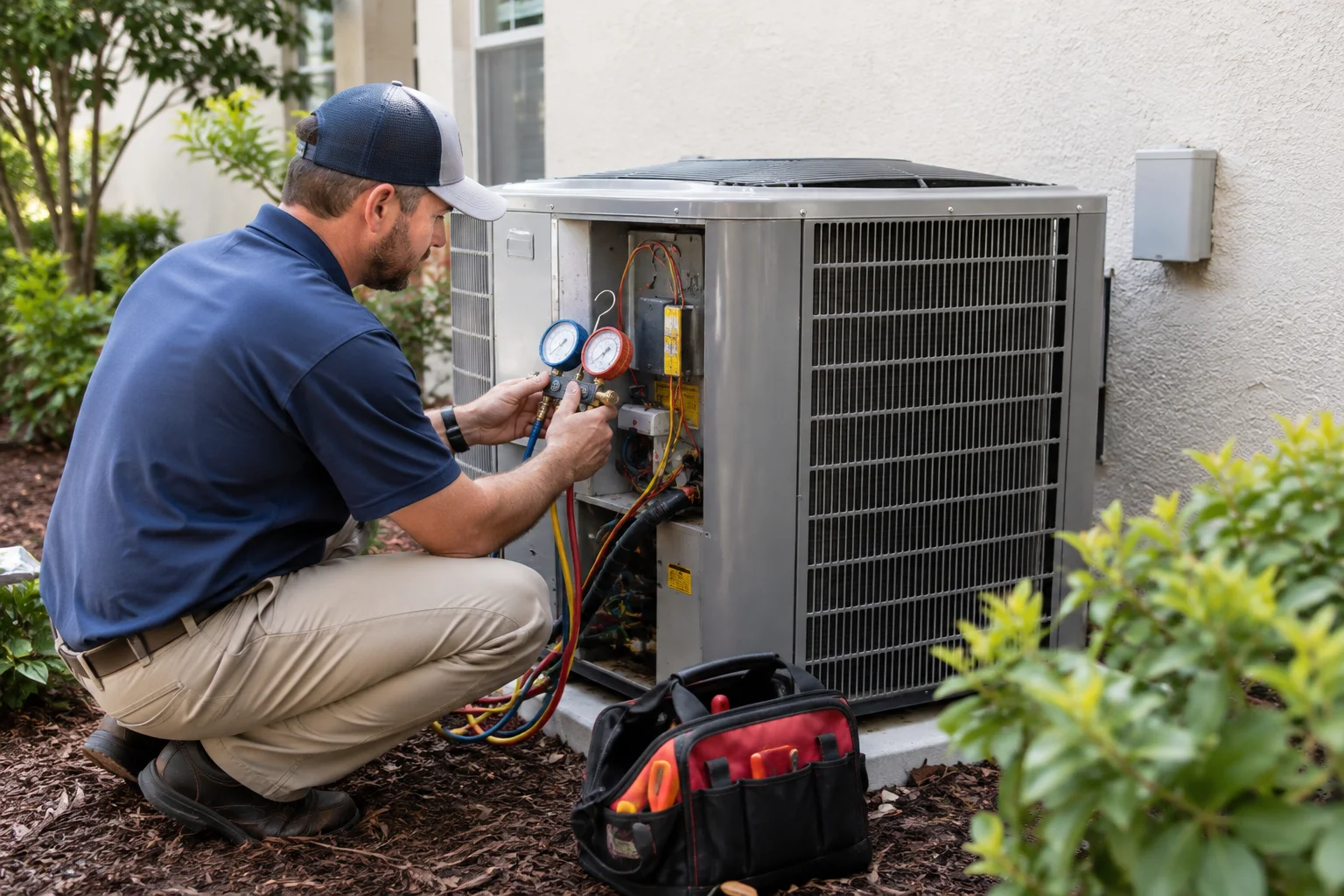
Commercial HVAC systems depend on refrigerant systems to move heat. When refrigerant performance is off, comfort can suffer and energy use can rise. However, refrigerant issues require on-site professional evaluation because multiple factors can influence system behavior.
Planning ahead should include professional inspections that look at system operation under real conditions, along with checks of airflow, coil condition, and controls. If issues are suspected, an in-person technician should determine the next steps. Homeowners and business managers should avoid attempting refrigerant diagnosis or repair without proper training and equipment.
Thermostats and controls: tune comfort and prevent short cycling
Even a well-maintained air conditioner can struggle if thermostat settings or control schedules are causing the system to run inefficiently. In commercial buildings, schedules often change with occupancy, cleaning cycles, and after-hours use.
As part of your commercial HVAC maintenance planning, consider:
- Reviewing thermostat schedules to match actual operating hours
- Confirming that setpoints and temperature setbacks are reasonable for your comfort goals
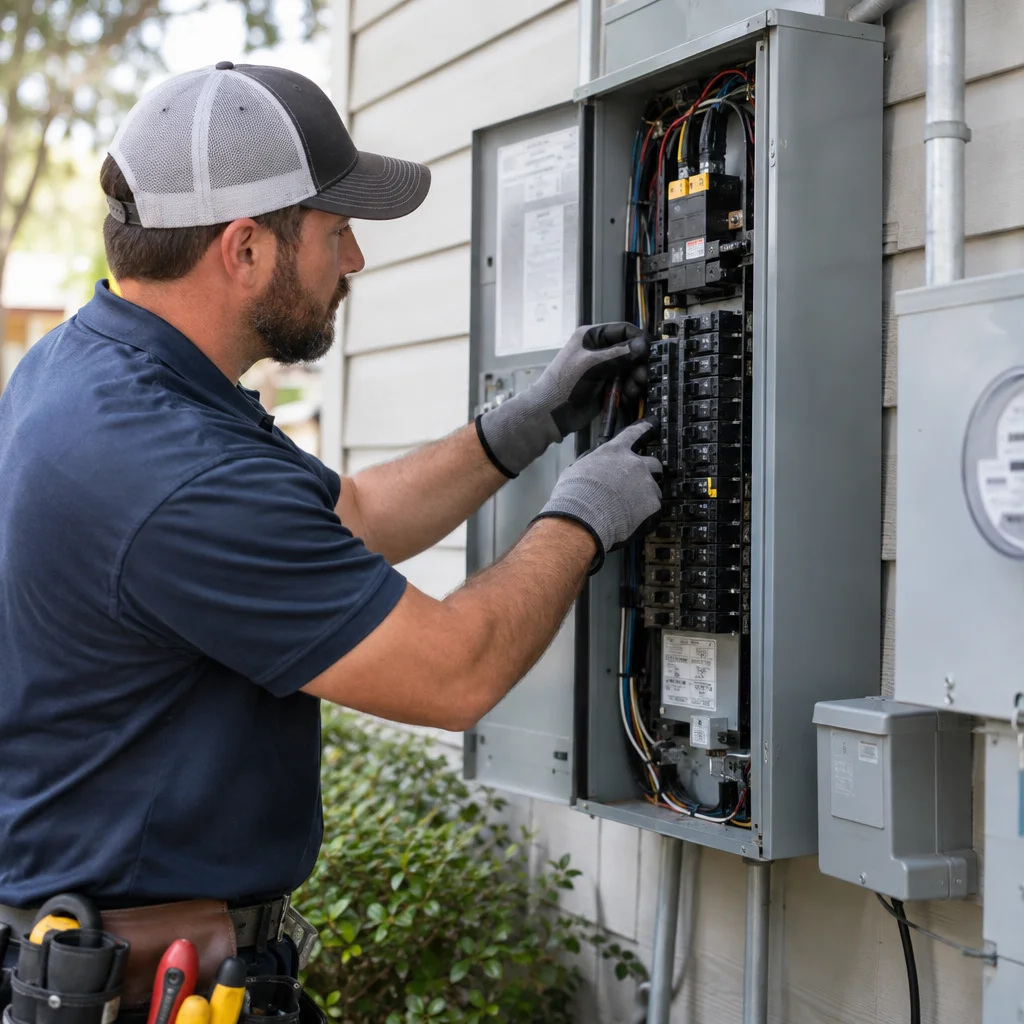
- Checking for control issues that may cause short cycling, which can increase wear on components
- Ensuring that zoning or control strategies align with how the building is used
These steps support efficient operation and help reduce the need for frequent air conditioning repair calls.
Indoor air quality: plan filtration and airflow for the way your building is used
In humid coastal climates, indoor air quality can become a comfort issue, not just a health topic. When moisture and airborne particles build up, occupants may notice stale air, dust, or lingering odors.
Use your maintenance schedule to support indoor air quality by planning for:
- Filter selection and replacement intervals based on occupancy and local conditions
- Air filtration and purifiers where appropriate, especially for businesses with higher particulate loads
- Airflow that supports filtration performance without starving the system
If you want to go deeper, explore air filtration and purifiers with air scrubbers and whole home dehumidifiers when humidity is consistently high.
Good indoor air quality planning can also reduce the feeling of “it is cool but not comfortable,” which often comes from humidity and air distribution issues.
Energy use and cost control: maintenance is part of operating efficiency
Commercial HVAC systems are major energy users. When airflow is restricted, coils are dirty, controls are misconfigured, or ductwork is leaking, the system often runs longer to achieve the same comfort level. That increases energy use and can contribute to earlier equipment wear.
A maintenance plan helps by:
- Supporting efficient heat transfer through clean, well-maintained coils
- Maintaining correct airflow so the system does not compensate for problems
- Reducing preventable breakdowns that can force emergency operation
- Keeping thermostats aligned with real occupancy
Instead of reacting to problems with repeated HVAC service calls, plan maintenance that keeps performance steady through summer humidity and spring heat swings.
Choose the right service partner for coastal reliability
Local knowledge matters in Inlet Beach. A licensed HVAC contractor that understands coastal conditions is more likely to focus on corrosion risks, humidity-driven condensate drainage concerns, and airflow performance in ductwork. That is why it helps to search for a commercial HVAC service near me or an air conditioner service near me that can support ongoing maintenance, not just one-off repairs.
If your business uses heat pumps, include heat pump service in your planning. Heat pump repair and heat pump installation are often different from standard air conditioning service, so your maintenance plan should match your equipment type. Similarly, if you rely on ductless mini split systems, ask about ductless mini split installation near me and maintenance considerations for multi-zone comfort.
For homeowners and managers building a year-round maintenance rhythm, the goal is fewer surprises and faster resolution when problems do occur. You can also learn from related guidance on our site, such as What Fort Walton Beach Homes Can Learn From Commercial HVAC Maintenance and Why Commercial HVAC Maintenance Matters More in DeFuniak Springs Than Most Businesses Realize.
Watch for maintenance red flags before they become emergencies
Even with a plan, issues can develop. The key is to recognize early warning signs while there is still time to schedule service during normal hours.
Common red flags in coastal commercial buildings include:
- Uneven cooling across offices or zones, often tied to airflow or ductwork problems
- Rising indoor humidity or a “sticky” feel, which can point to condensate drainage or coil performance issues
- Weak airflow from vents, which can indicate filter, blower, or duct restrictions
- Strange cycling behavior on the thermostat, suggesting control or airflow imbalance
- Odors or musty smells that may relate to moisture handling and indoor air quality
- Frequent calls for AC repair near me style fixes, when a planned maintenance approach would likely reduce recurrence
When these signs appear during peak summer, emergency cooling concerns can follow quickly. Planning ahead helps you avoid last-minute scrambling.
How to schedule commercial HVAC maintenance in Inlet Beach
When you are ready to plan, use a straightforward approach:
- Review your current schedule and identify gaps between spring, summer, and fall
- Choose maintenance windows that align with business hours and occupancy
- Confirm that your plan covers airflow, ductwork condition, condensate drainage, thermostats, and indoor air quality priorities
- Ask for a maintenance approach built for coastal conditions in Walton County, including salt air considerations
If you are looking for a service plan tailored to local needs, you can review A Superior Mechanical’s commercial maintenance service details here: /service-areas/walton-county/inlet-beach/commercial-hvac-maintenance-ibwcfl. You can also explore the broader service coverage for the area at /service-areas/walton-county/inlet-beach and /service-areas/walton-county.
Planning for system replacement without panic
Most maintenance plans aim to extend equipment life and prevent breakdowns, but every commercial system eventually reaches a point where repair is no longer the best path. If you are considering HVAC replacement near me because your system is aging or experiencing repeated issues, maintenance records become especially valuable.
Instead of making assumptions from online symptoms, ask a licensed HVAC contractor to evaluate the system in person. A proper assessment should consider airflow performance, ductwork condition, indoor humidity concerns, and how the refrigerant system behaves under load. That gives you a clearer view of whether maintenance can still support reliable operation or if replacement is the more practical long-term option.
Questions homeowners ask before signing a maintenance plan
If you manage a property or oversee building comfort, you can get clarity by asking:
- Does the plan include seasonal inspections for cooling performance and humidity control?
- Will condensate drainage and airflow be checked as part of routine maintenance?
- How do you handle ductwork and indoor air quality priorities?
- What thermostat and control checks are included during seasonal visits?
- How does your team approach refrigerant system concerns based on what is observed during on-site evaluation?
These questions help you choose a commercial HVAC maintenance approach that supports year-round home protection for your building and the people inside it.
If you are comparing options, it can also help to review other local perspectives like Why Efficient Heating and Cooling Starts With Commercial HVAC Maintenance in Freeport, FL and Keeping Valparaiso Comfortable Starts With Smarter Commercial HVAC Maintenance. While those areas differ, the core idea is the same: proactive maintenance reduces the chance of emergency cooling issues and improves comfort consistency.
Find Commercial HVAC Maintenance in Inlet Beach, FL
If you need Commercial HVAC Maintenance in Inlet Beach, FL, visit our local service page or contact A Superior Mechanical today.
Map of Inlet Beach, FL
Frequently Asked Questions
How often should a commercial HVAC system be maintained in Inlet Beach, FL?
Most commercial buildings benefit from seasonal planning with maintenance checks in late winter or early spring, again during peak summer, and in early fall. The exact schedule depends on equipment type, occupancy, and how hard the system runs during Florida heat and humidity.
What humidity-related HVAC problems are common in coastal Walton County?
High humidity can lead to comfort complaints, musty odors, and reduced dehumidification. Condensate drainage and coil performance are frequent factors. Salt air can also contribute to corrosion that affects equipment performance over time.
Can dirty ductwork cause the same symptoms as an AC repair issue?
Yes. Restricted airflow from ductwork, leaky connections, or blocked pathways can cause weak airflow, uneven cooling, and higher energy use. A maintenance plan that includes airflow and ductwork inspection can help prevent repeat service calls.
Should I try to diagnose refrigerant problems myself?
No. Refrigerant system concerns require an in-person evaluation by a licensed HVAC contractor. A technician should assess airflow, coil condition, controls, and system operation before recommending any next steps.
What should be included in a commercial HVAC maintenance visit for indoor air quality?
Ask whether the visit includes filter checks, airflow verification, and inspection of any indoor air quality equipment you use. Keeping filtration performance aligned with airflow helps support cleaner, more comfortable indoor conditions in humid coastal weather.
Related Articles
- Keeping Valparaiso Comfortable Starts With Smarter Commercial HVAC Maintenance
- What Fort Walton Beach Homes Can Learn From Commercial HVAC Maintenance
- Why Efficient Heating and Cooling Starts With Commercial HVAC Maintenance in Freeport, FL
- Why Commercial HVAC Maintenance Matters More in DeFuniak Springs Than Most Businesses Realize
Photo Gallery