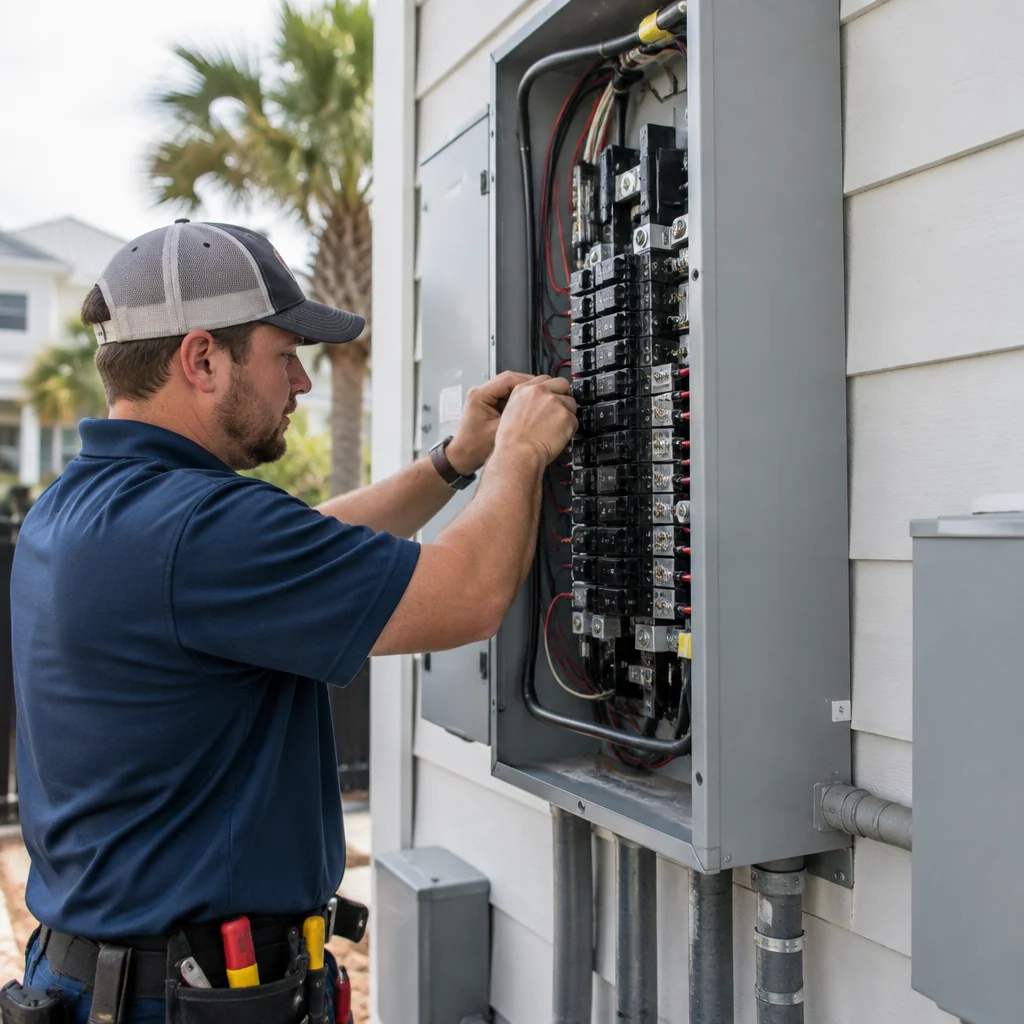
A breaker trips during dinner. The porch lights flicker after a storm. An outlet feels unusually warm when a charger is unplugged. In an Inlet Beach home, these problems deserve attention before someone assumes they are just part of living near the coast.
Good electrical planning separates an inconvenience from a hazard and helps prevent repeat failures. A Superior Mechanical provides emergency electrical services in Inlet Beach, FL for outages, storm damage, and urgent repairs. Knowing what to report, what to leave alone, and which improvements matter can make the next decision much easier.
Recognizing an electrical emergency without taking chances
Some electrical symptoms require immediate action, even if the lights still work. Smoke, visible arcing, a burning odor, buzzing accompanied by heat, or a shock from an appliance or fixture can indicate a serious fault. Do not wait for a breaker to trip before treating these conditions as dangerous.
Fire, smoke, shock, and damaged utility lines
If you see smoke or fire, leave the building and call 911. Do not use water on an electrical fire or return inside to shut off power. Keep away from downed lines and anything touching them, including fences and standing water. Report damaged utility lines to the utility and emergency responders as appropriate.
If someone is in contact with an energized source, do not touch them. Call 911 and follow the dispatcher's instructions. A wet panel, flooded outlet, or storm-damaged service connection is also a reason to stay clear rather than attempt troubleshooting.
Problems that need prompt professional assessment
Repeated breaker trips, scorching around an outlet, crackling switches, and partial power loss call for an electrician. Leave the affected circuit or device unused. If the panel is dry, undamaged, and safely accessible, switching off a clearly identified affected breaker may be appropriate. Never remove its cover or approach equipment that is hot, sparking, buzzing, or wet.
Why coastal conditions change the maintenance picture
Inlet Beach homes face humid air, wind-driven rain, salt exposure, and seasonal thunderstorms. Corrosion can develop at outdoor fixtures, receptacles, service equipment, and connections. A damaged cover or loose enclosure fitting may let moisture reach parts that should remain dry.
Older homes may have fewer circuits than today's appliances require. Newer homes can also develop loose connections, storm damage, or problems after equipment is added. Remodels and additions sometimes extend existing circuits without adequately accounting for the new demand.
Local electrical service matters because exposure, equipment placement, and permitting requirements affect the repair. Homeowners throughout Walton County benefit from an assessment that considers both the immediate fault and the conditions likely to cause it again.
Panels and breakers: find the cause before replacing parts
A circuit breaker is a safety device, not an inconvenience to work around. It may trip because of an overload, short circuit, ground fault, or another condition depending on its protective function. A failing breaker is possible, but replacement should follow diagnosis rather than guesswork.
Homeowners searching for circuit breaker repair near me often describe a breaker that will not stay on. Repeatedly resetting it can reenergize a dangerous fault. Never install a higher-rated breaker to stop tripping unless an electrician has verified the entire circuit is designed for that rating.
Separate circuit trouble from a capacity problem
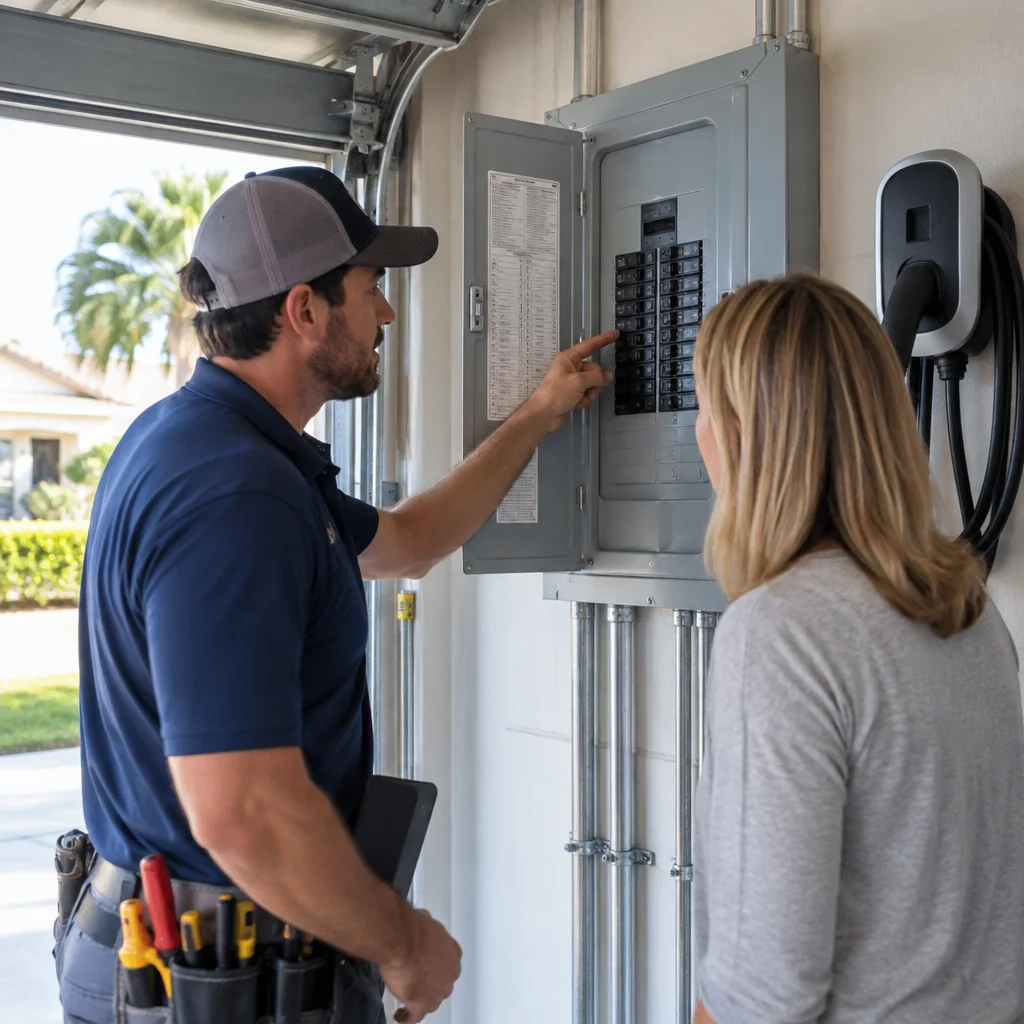
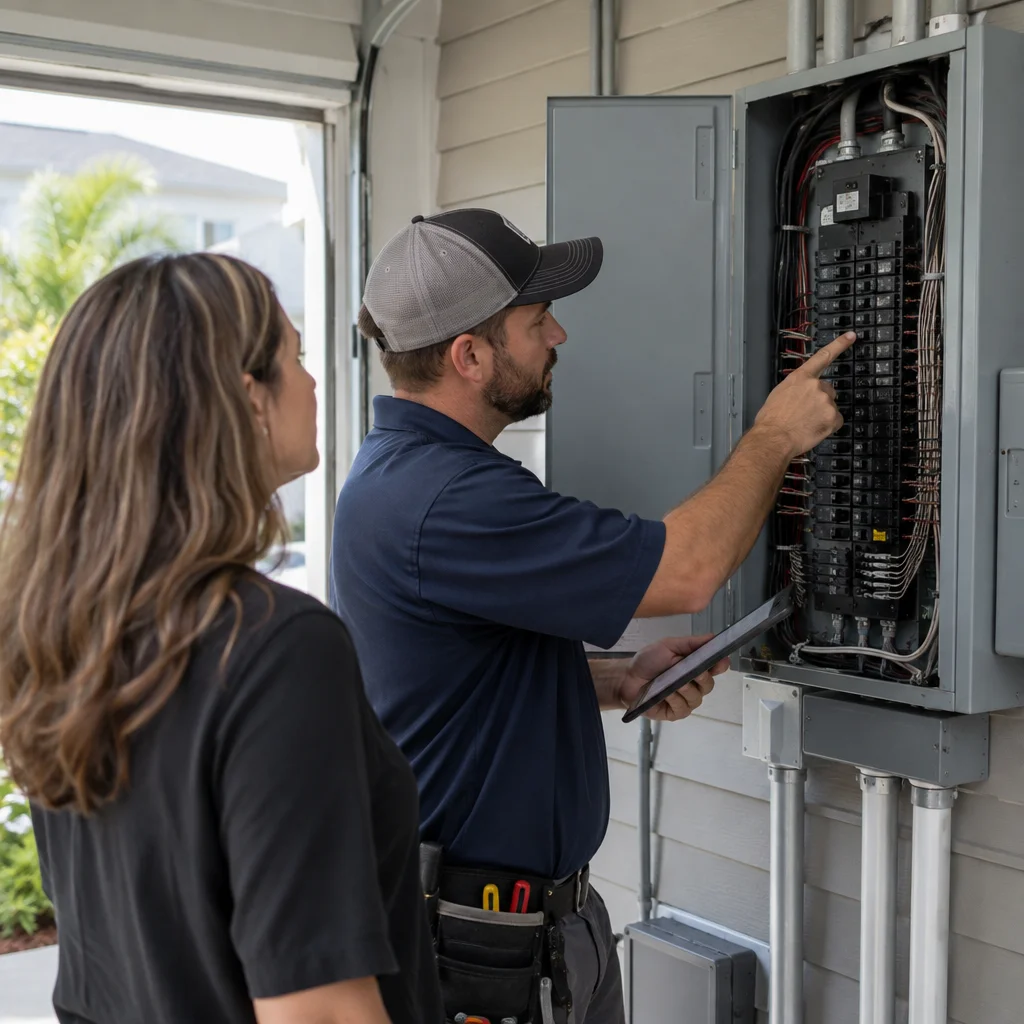
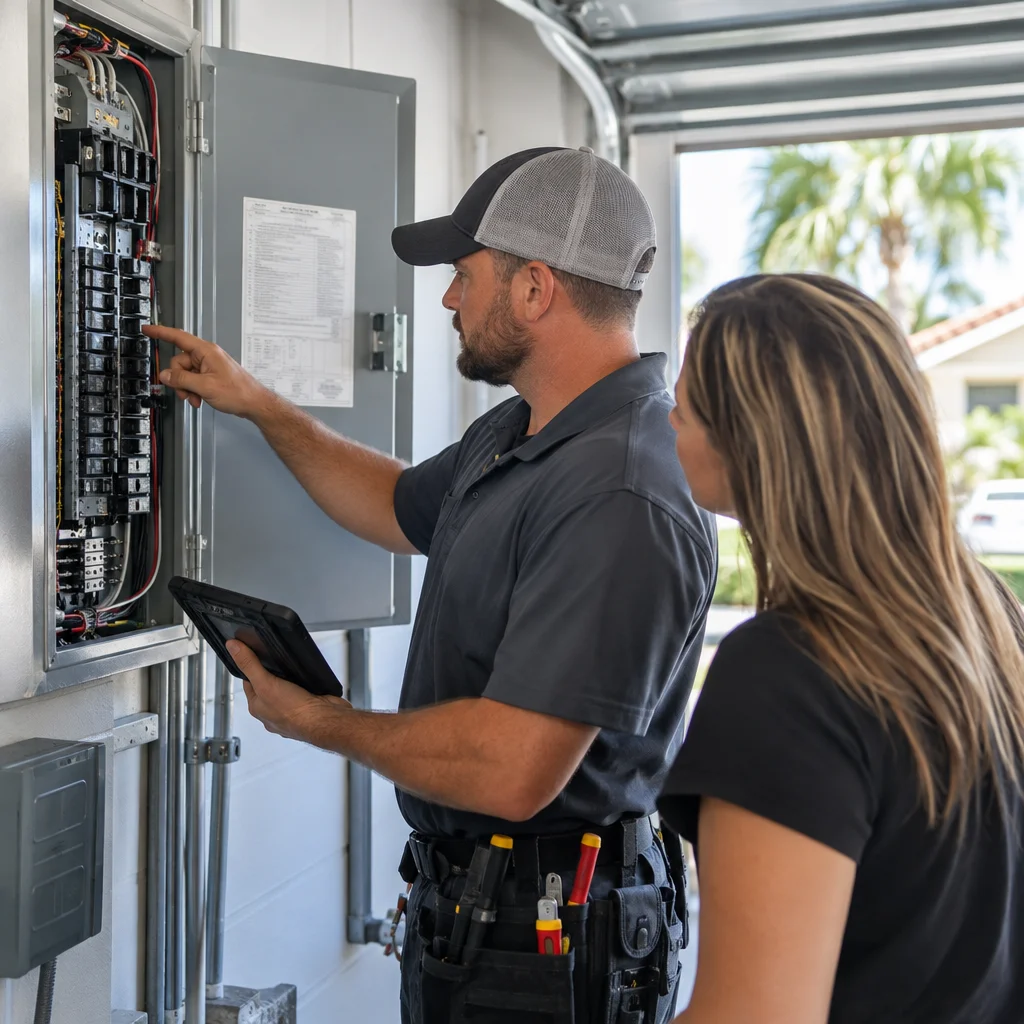
An electrician can check connected loads, conductor sizing, breaker compatibility, connection condition, and panel damage. Heat discoloration, corrosion, or damaged bus connections may require more than a single breaker replacement. Meter base repair can also require utility coordination because parts may remain energized even with the main breaker off.
An electrical panel upgrade near me search does not always lead to a full replacement. A dedicated circuit, approved load management, or correction of a defective connection may solve the problem. A load calculation helps determine whether service capacity is sufficient before recommending an upgrade.
Wiring problems can hide behind normal-looking walls
Lights that dim sharply when equipment starts, intermittent power, or a burning smell near a switch can point to wiring trouble. Possible causes include loose splices, damaged insulation, improperly installed devices, and concealed alterations from earlier projects. Unusually bright lights in one area with dim lights elsewhere may indicate a neutral problem that needs urgent electrician or utility attention.
When electrical troubleshooting near me becomes an urgent search, useful details include which rooms are affected, what was running, and whether the symptom started after rain or recent construction. Those observations help an electrician narrow the problem without asking you to open devices.
Older wiring should be evaluated by condition and suitability, not age alone. If aluminum branch-circuit wiring is present, repairs require methods and connectors specifically approved for that application. Old wiring replacement or targeted wiring repair should include appropriate grounding, accessible junction boxes, and required protective devices.
Outlets, switches, and GFCI protection deserve attention
A loose plug fit, discoloration, persistent warmth, or intermittent operation can indicate a worn outlet or poor connection. Stop using the receptacle and arrange outlet repair. Extension cords and power strips are not substitutes for properly installed outlets or dedicated circuits.
GFCI protection helps reduce shock risk by detecting certain current imbalances. It is especially important in locations where moisture is likely, with required locations determined by applicable code. Test devices using their built-in buttons according to the manufacturer's instructions. If a device trips repeatedly, will not reset, or fails its test, leave it unused and request service.
A gfci outlet repair near me search may uncover more than a faulty receptacle. Moisture in an outdoor box, damaged equipment, or downstream wiring trouble can cause tripping. Never bypass GFCI protection to keep a pool pump, landscape light, or patio appliance running. Suspected pool electrical faults require keeping people out of the water until the installation is evaluated.
Lighting and ceiling fans can reveal circuit issues
A flickering lamp may have a simple bulb problem, but several fixtures flickering together can indicate a circuit or supply issue. Buzzing dimmers may involve incompatible lamps, incorrect loading, or wiring defects. Warmth beyond the manufacturer's normal operating limits deserves assessment, especially with odor or discoloration.
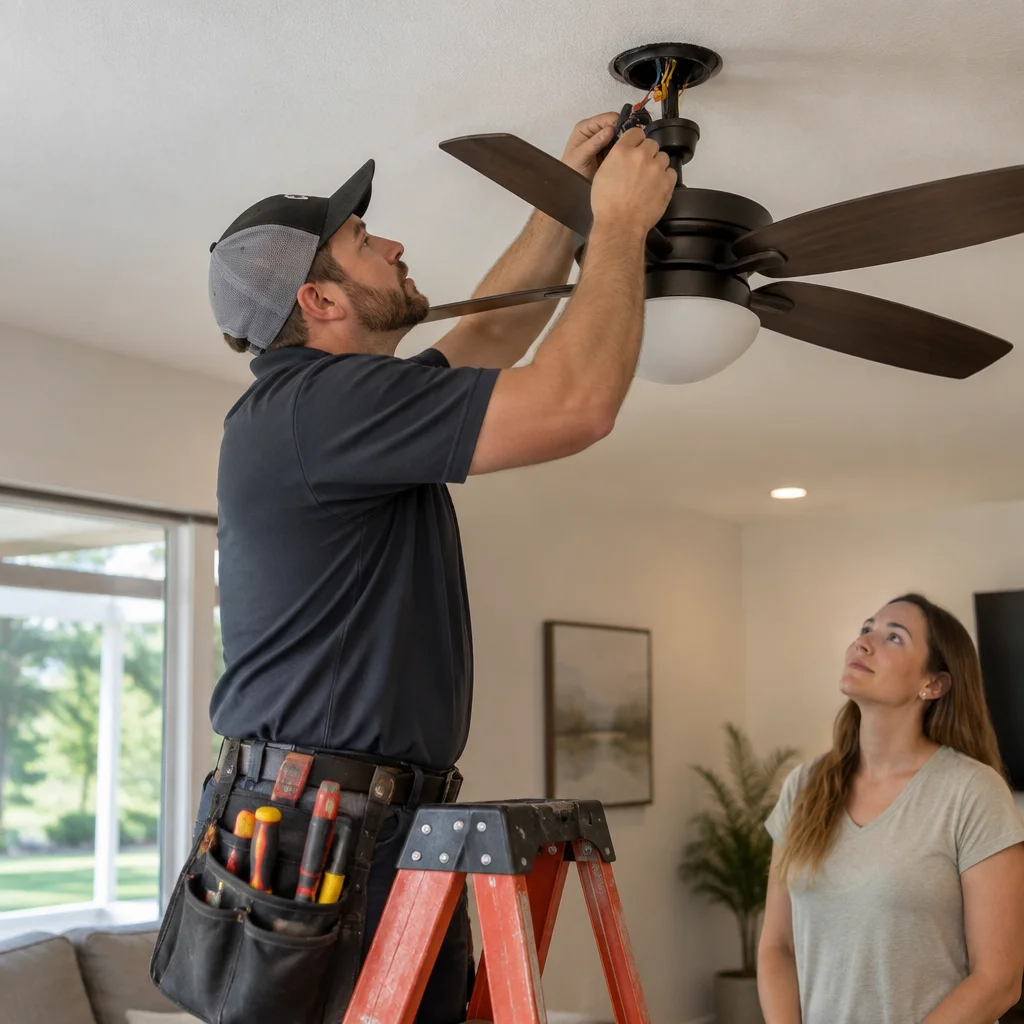
For planned lighting and fixture installation, verify fixture suitability, electrical box support, and control compatibility. Ceiling fans need properly rated support, not just a box that previously held a lightweight light. New kitchen lighting should be planned around existing circuits rather than added wherever a wire is easiest to reach.
Coastal outdoor landscape lighting needs suitable wet or damp location ratings, protected connections, and materials appropriate for the exposure. Water entry and corrosion should be corrected before failed lamps or fixtures are simply replaced.
Storm preparation means more than having flashlights
Before storm season, make sure the panel directory is readable and accurate. Know where the main disconnect is, but understand that switching it off does not deenergize every component of the service equipment. Keep access clear and store the utility's outage number with your electrician's contact information.
If an outage affects neighboring homes too, check the utility's outage reporting system from a safe location. If only part of your home loses power, or power returns with unusual flickering, odors, or buzzing, request an assessment. Do not assume every post-storm problem originates on the utility side.
Equipment exposed to floodwater should not be reenergized simply because it appears dry. Contamination and internal damage can remain. An electrician can identify equipment requiring replacement or further evaluation and coordinate any necessary inspection before power is restored.
Surge protection and generators serve different purposes
Whole-home surge protection helps limit certain transient voltage spikes reaching connected equipment. It does not provide backup power, prevent every type of electrical damage, or make faulty wiring safe. Proper grounding and bonding remain essential, and sensitive electronics may benefit from coordinated point-of-use protection.
Generator installation addresses continuity of power. A standby system needs appropriate sizing, approved transfer equipment, placement that meets applicable requirements, permits, and maintenance. Decide whether you need selected essential circuits or broader household coverage before choosing equipment.
Never connect a portable generator to a household outlet. Backfeeding can endanger occupants and utility workers. Operate portable generators outdoors, at least 20 feet from the home, with exhaust directed away from windows, doors, and vents, while following manufacturer instructions. Never operate one in a garage, even with the door open.
Working smoke and carbon monoxide alarms are also part of emergency preparation. Smoke detector installation and carbon monoxide detector installation should account for required locations, power supplies, interconnection where applicable, and manufacturer replacement dates. Test alarms regularly and address missing or expired units.
Plan new electrical demand before the next addition
An EV charger, workshop, pool equipment, or expanded kitchen can change how a home uses power. Dedicated circuits help serve equipment that should not share general household circuits, but adding one still requires checking capacity and installation requirements.
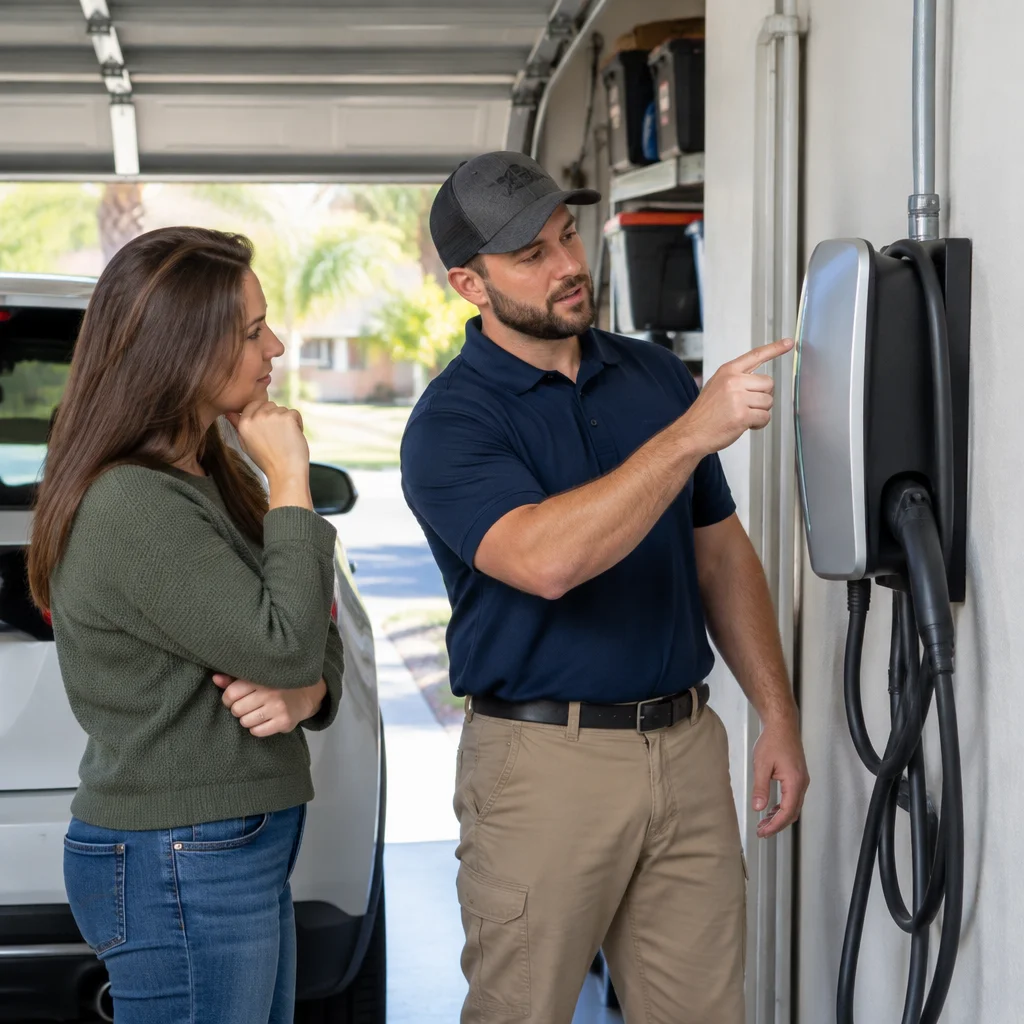
Level 2 EV charger installation calls for attention to charging load, conductor sizing, protection, routing, and coastal exposure. Our guide to planning an EV charger in Inlet Beach explains how panel capacity and installation location fit together.
For remodels and additions, involve an electrical contractor before walls close. Early planning allows proper circuit distribution, lighting controls, outlet placement, and required AFCI or GFCI protection. Permits, inspections, and code corrections should be addressed for the actual scope of work under locally adopted requirements.
A practical maintenance routine for local homes and rentals
Periodically look for damaged outlet covers, loose devices, deteriorated outdoor enclosures, and cords that have become permanent installations. Keep electrical equipment accessible. Test GFCIs and alarms on their recommended schedules, and arrange an electrical inspection after flooding, significant storm damage, or unexplained recurring faults.
Rental owners should give guests clear instructions for reporting electrical concerns without attempting repairs. Heavy turnover can conceal recurring problems, especially when a breaker is repeatedly reset between stays. Record symptoms, repairs, and equipment additions so maintenance decisions reflect the home's actual history.
Get the immediate hazard addressed, then plan the repair
When requesting help, describe the symptom plainly: which circuit lost power, whether there is heat or odor, and whether water or storm damage is involved. Mention recent appliance changes and any previous repair. Take photographs only from a safe position without approaching damaged equipment.
A Superior Mechanical serves Inlet Beach homeowners and property managers with local electrical support. For an urgent fault, request emergency electrical service and explain any immediate safety concerns. Once the hazard is controlled, ask which repairs are essential now and which preventive improvements can be scheduled separately.
Find Emergency Electrical Services in Inlet Beach, FL
If you need Emergency Electrical Services in Inlet Beach, FL, visit our local service page or contact A Superior Mechanical today.
Map of Inlet Beach, FL
Frequently Asked Questions
What counts as an electrical emergency in an Inlet Beach home?
Smoke, arcing, burning odors, electrical shocks, hot or scorched devices, and storm-damaged electrical equipment require immediate attention. For fire, smoke, or an immediate threat to life, leave the area and call 911. Stay away from wet electrical equipment and downed lines. Repeated breaker trips or unexplained partial power loss also warrant prompt professional assessment.
Does a repeatedly tripping breaker mean I need a new electrical panel?
Not necessarily. Tripping can result from an overloaded circuit, damaged wiring, faulty equipment, or a defective breaker. An electrician should diagnose the cause before recommending replacement. Panel condition and a load calculation help determine whether a targeted repair, dedicated circuit, or panel upgrade is appropriate. Do not repeatedly reset the breaker or replace it with a higher-rated one.
How can coastal homeowners reduce the risk of electrical emergencies?
Maintain outdoor enclosures, test GFCIs and alarms according to manufacturer instructions, keep panel access clear, and have recurring faults investigated. Plan new loads such as EV chargers before installation, and consider properly installed surge protection. After flooding or significant storm damage, have affected electrical equipment evaluated before restoring power.
Related Articles
- Protecting Your Inlet Beach Home, One Waterline Repair at a Time
- Planning an EV Charger in Inlet Beach, From Panel Capacity to Coastal Protection
- What Shortens a Plumbing System’s Life in Inlet Beach and How Sewer Camera Inspection Helps Catch It Early
- How Plumbing Wear and Tear Changes the Way Water Softening Works in Inlet Beach
Photo Gallery