A thermostat can show 74 degrees while the house still feels sticky. Towels dry slowly, bedrooms feel heavy at night, and lowering the temperature only makes the floors colder. In Hammock Bay, that mismatch often points to humidity control rather than a need for more cooling.
Whole home dehumidifiers help manage moisture independently of the air conditioner's cooling demand. For homeowners in this part of Walton County, thoughtful planning means looking at the equipment, ductwork, drainage, controls, and ways outdoor moisture enters the home. A Superior Mechanical provides whole home dehumidifiers in Hammock Bay, FL with an approach that considers how the entire HVAC system works together.
Why Hammock Bay Homes Can Feel Damp Even With the AC Running
Hammock Bay's location near Freeport brings the warm, moisture-heavy conditions familiar across coastal Walton County. Long cooling seasons, rainy stretches, and humid shoulder-season days create different demands on an HVAC system. In spring and fall, the house may need moisture removal without much temperature reduction.
An air conditioner removes water when indoor air passes over its cold evaporator coil. But it only does that effectively when operating conditions and runtime support it. An oversized system may reach the thermostat setting quickly and shut off before removing enough moisture. Low airflow, dirty coils, and refrigerant problems can also interfere with performance.
Older homes may admit humid air through leaky ductwork and building gaps. Newer, tighter homes can retain moisture from showers, cooking, and occupants, especially without properly designed ventilation. Remodels and additions can change both the cooling load and the path air takes through the house.
Measure the Moisture Before Choosing Equipment
Homeowners searching for a whole home dehumidifier near me usually have a comfort complaint already. A few measurements help determine whether the problem affects the whole house, a particular room, or only certain weather conditions.
Look beyond one thermostat reading
Use a reliable hygrometer to check relative humidity in the main living area and problem bedrooms. Record readings over several days, including rainy afternoons and mild evenings. Keep sensors away from supply vents, direct sunlight, and bathroom steam. A practical starting target is around 45 to 55 percent relative humidity, with adjustments for the home and occupant comfort. Persistent readings above 60 percent deserve attention.
Watch for musty odors, recurring window condensation, damp closets, or moisture around supply grilles. These symptoms are clues, not proof that a dehumidifier is the only answer. Roof leaks, wet building materials, and unvented bathroom exhaust need their own corrections. Condensation at a vent can also reflect missing insulation or humid air reaching a cold surface.
How Whole Home Dehumidification Fits Into HVAC
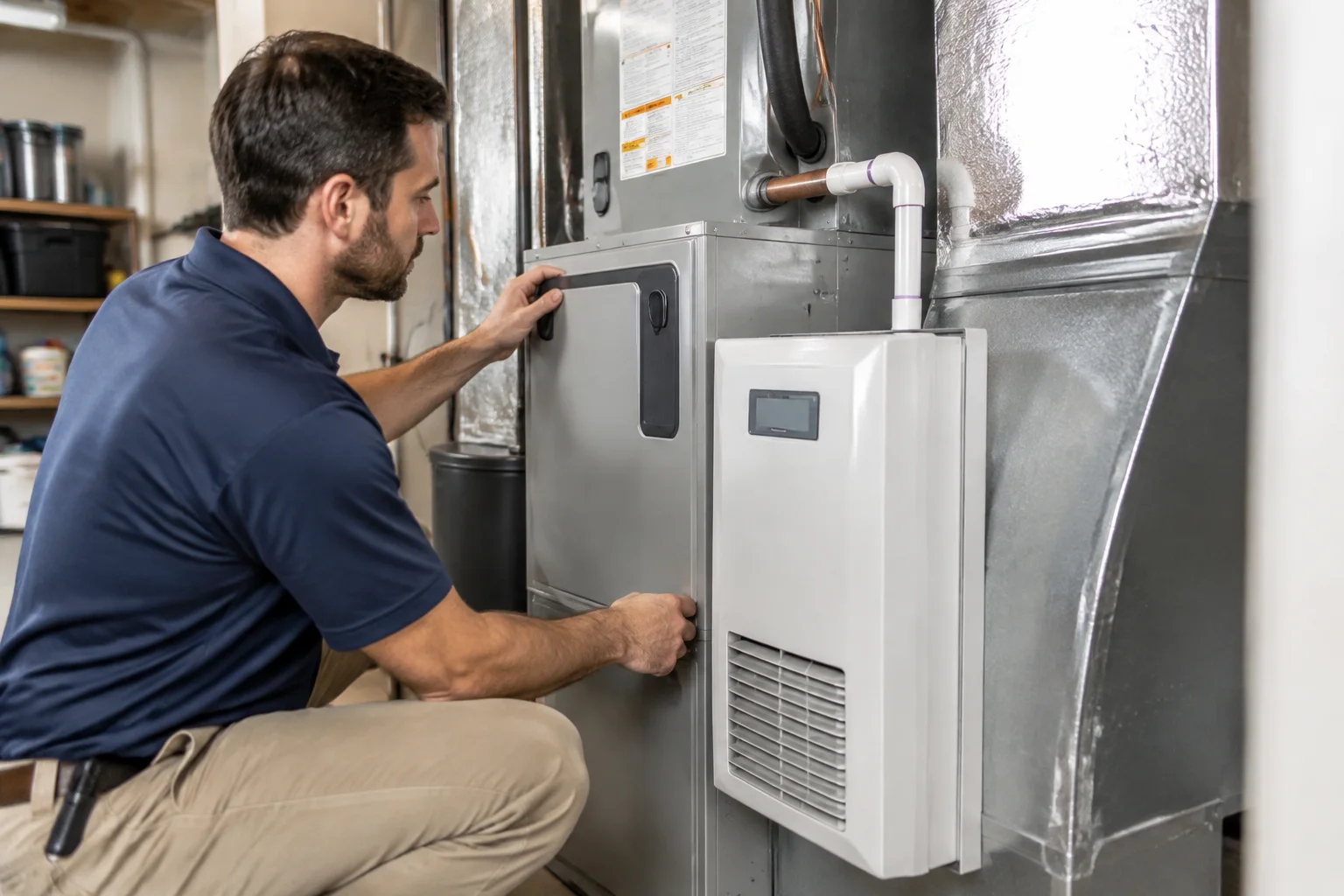
A whole home dehumidifier pulls air across its own cooling coil, collects condensed water, and returns drier air to the home. Unlike a portable unit serving one room, a properly designed ducted system can manage moisture across connected living spaces. It still depends on suitable air pathways to reach enclosed rooms.
The unit releases some heat as it operates and uses electricity. Its value is not free cooling. It is more consistent moisture control without repeatedly lowering the AC setting just to feel comfortable.
Installation layout matters as much as the equipment
Depending on the equipment and home, the installer may use dedicated ductwork or an approved connection to the existing HVAC distribution system. Duct sizing, dampers, blower coordination, and pressure relationships must follow manufacturer requirements. A convenient connection is not necessarily a good connection.
The installation also needs accessible filters, service clearance, suitable condensate disposal, and overflow protection where required. Placement should account for operating noise, particularly near bedrooms. Some equipment supports outdoor ventilation, but that feature requires deliberate design rather than simply opening a path to humid outdoor air.
Repair Airflow Problems Before Adding More Capacity
A dehumidifier cannot compensate for every HVAC defect. If the house has weak vents, rooms that never cool properly, or an air handler that runs constantly, those issues should be evaluated before equipment is selected.
A technician can check filter restriction, evaporator coil condition, blower performance, and static pressure. Low refrigerant from a leak may reduce cooling and moisture removal, and it can contribute to icing. Refrigerant leak repair should address the source rather than rely on repeated recharging. Frozen coils require professional diagnosis, not continued operation.
Leaky return ducts can pull humid attic air into the system. Damaged supply ducts can waste conditioned air and upset pressure balance. A duct inspection in Hammock Bay helps identify disconnected runs, deteriorated insulation, and restrictions before they undermine a new dehumidifier.
If a search for duct sealing near me started with a musty bedroom, ask for both leakage checks and an airflow assessment. Sealing damaged ducts and improving return-air pathways may be as important as moisture-removal capacity. Avoid closing multiple supply vents to push air elsewhere, since that can increase system resistance.
Size the System for the House You Actually Have
Square footage alone is not enough to choose a whole home dehumidifier. Capacity depends on outdoor moisture entering the home, ventilation rates, indoor moisture sources, ceiling height, building tightness, and the humidity target. Published water-removal ratings also depend on test conditions, so a rating needs context.
Consider how the property is used. A full-time household has different moisture patterns from a vacation rental with frequent showers, laundry, and doors opening throughout the day. An addition, enclosed porch, or remodeled primary suite may change the load beyond what the original HVAC design anticipated.
Heat pumps and central air conditioners can work alongside dedicated dehumidification. Furnaces do not provide summer moisture removal, even when they share a blower and ductwork with an AC system. During heating repair or furnace service, shared airflow components still deserve attention.
Ductless mini splits can remove moisture while cooling, but their reach and dry-mode behavior vary. A room served by a mini split may need a different humidity strategy from the main house. Equipment planning should account for closed doors and separate zones.
Make Thermostats and Humidity Controls Work Together
Smart controls help only when their capabilities match the equipment. Not every thermostat can command a separate dehumidifier, and a humidity display does not guarantee accessory control. Confirm compatibility, wiring requirements, sensor placement, and operating sequences before thermostat installation.
A dedicated humidistat may be the right choice. In other installations, integrated controls can coordinate the air handler and dehumidifier. For many conventional systems, keeping the cooling fan on AUTO rather than continuously ON helps limit re-evaporation of water left on the coil. Follow the system's specific ventilation and control requirements.
The guide Hammock Bay Comfort Starts Beyond the Smart Thermostat explains why controls cannot replace sound airflow and equipment design. If an HVAC troubleshooting near me search began with inaccurate readings or conflicting settings, ask the technician to review the full operating sequence.
Protect Indoor Air Quality Without Promising Too Much
Controlling excess humidity can reduce conditions that favor mold growth and dust mites. It can also make rooms feel less clammy. However, a dehumidifier does not remove existing mold contamination, repair water damage, or replace effective filtration and ventilation.
Choose filters that suit the HVAC system's airflow capacity. A highly restrictive filter can create problems if the blower and ductwork cannot support it. Kitchen exhaust, bathroom ventilation, and prompt attention to water intrusion remain important parts of indoor air quality.
Air cleaning equipment serves a different purpose from moisture control. Homeowners comparing upgrades can review air scrubber planning in Hammock Bay to understand why filtration, air treatment, and dehumidification should be evaluated separately, then coordinated where useful.
Maintenance That Prevents Damp Surprises
Dehumidifiers need routine attention alongside the AC or heat pump. Follow the manufacturer's schedule for filter inspection, coil cleaning, and service. Check accessible drain connections for leakage and keep the equipment area clear so problems remain visible.
Give drainage its own inspection
Both the air conditioner and dehumidifier produce condensate. Blocked drain lines, a failing condensate pump, or an unnoticed overflow can damage finishes and create new moisture problems. An ac drain line cleaning near me search should lead to a review of drainage condition and overflow protection, not just removal of one visible blockage.
Schedule HVAC maintenance before the busiest summer cooling demand when possible. The maintenance principles discussed in this guide to whole home dehumidifier care in Sandestin also apply to nearby Hammock Bay properties.
Regional salt air can accelerate corrosion on exposed outdoor units and condensers, though exposure varies by location. After storms, check safely from ground level for debris, visible damage, or flooding. Never operate equipment that has been submerged until it has been professionally evaluated.
Balance Comfort, Efficiency, and Project Cost
Better humidity control may let you feel comfortable at a slightly higher cooling setpoint. That does not guarantee lower utility bills because the dehumidifier consumes power and adds heat indoors. Results depend on equipment efficiency, settings, building leakage, and how the household used the AC before installation.
Ask for a proposal that explains capacity selection, duct connections, drainage, controls, and maintenance access. If the existing air conditioner is oversized or nearing replacement, discuss air conditioning installation options before committing to a separate upgrade. Correct cooling design and dedicated humidity control should complement one another.
For larger projects, review available HVAC financing information and compare the complete installed scope rather than equipment price alone.
Know Which Problems Need Prompt Local Service
Persistent humidity calls for diagnosis, but active water overflow, repeated breaker trips, burning odors, and a frozen evaporator coil need prompt attention. Stop operating affected equipment if continued use could cause damage. For smoke or fire, leave the home and contact emergency services.
A Superior Mechanical's emergency HVAC services provide a point of contact for urgent equipment concerns. Avoid opening electrical panels, handling refrigerant, or trying to chip ice from a coil.
Local service matters because seasonal demand, storm exposure, and humid weather shape both installation and maintenance needs. Explore HVAC services in Hammock Bay or the company's broader Walton County service area. For a humidity assessment, have recent readings, room-by-room comfort concerns, and equipment information ready. Those details help turn a damp-house complaint into a practical plan for airflow, repairs, and whole home dehumidification.
Find Whole Home Dehumidifiers in Hammock Bay, FL
If you need Whole Home Dehumidifiers in Hammock Bay, FL, visit our local service page or contact A Superior Mechanical today.
Map of Hammock Bay, FL
Frequently Asked Questions
Do I need a whole home dehumidifier if my air conditioner is working?
Possibly. An air conditioner can maintain the temperature while indoor humidity remains high, especially during mild, rainy weather with short cooling cycles. Track humidity over several days and have airflow, equipment operation, duct leakage, and moisture sources checked before deciding.
What humidity setting works well for a Hammock Bay home?
Around 45 to 55 percent relative humidity is a practical starting range for many homes. Persistent readings above 60 percent should be investigated. The best setting depends on comfort, building conditions, sensor accuracy, and equipment performance.
Can a whole home dehumidifier work with a heat pump or ductless mini splits?
Yes, with an appropriate design. A dehumidifier can use approved connections to a heat pump's duct system or have dedicated ductwork. Homes with ductless mini splits may need a separate distribution approach to reach enclosed rooms. An installer should evaluate airflow, controls, drainage, and moisture load.
Related Articles
Photo Gallery