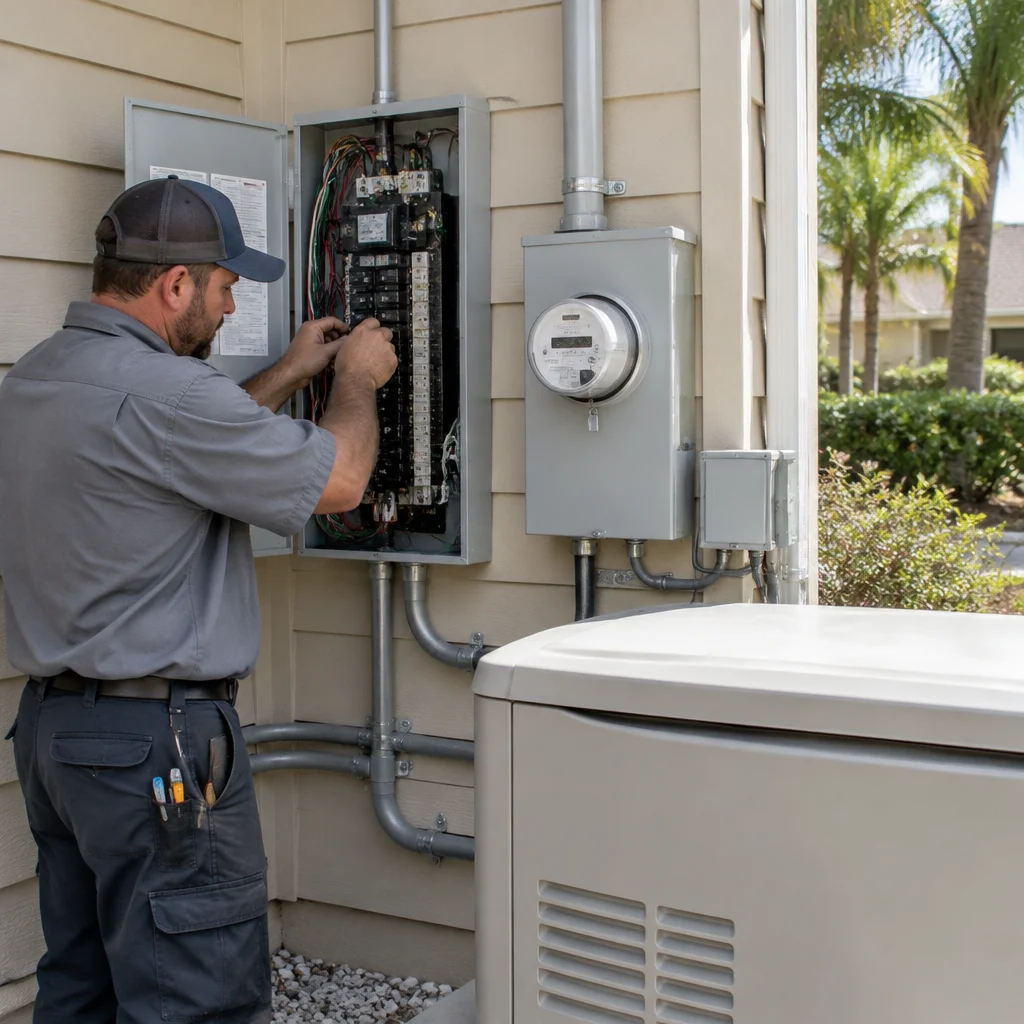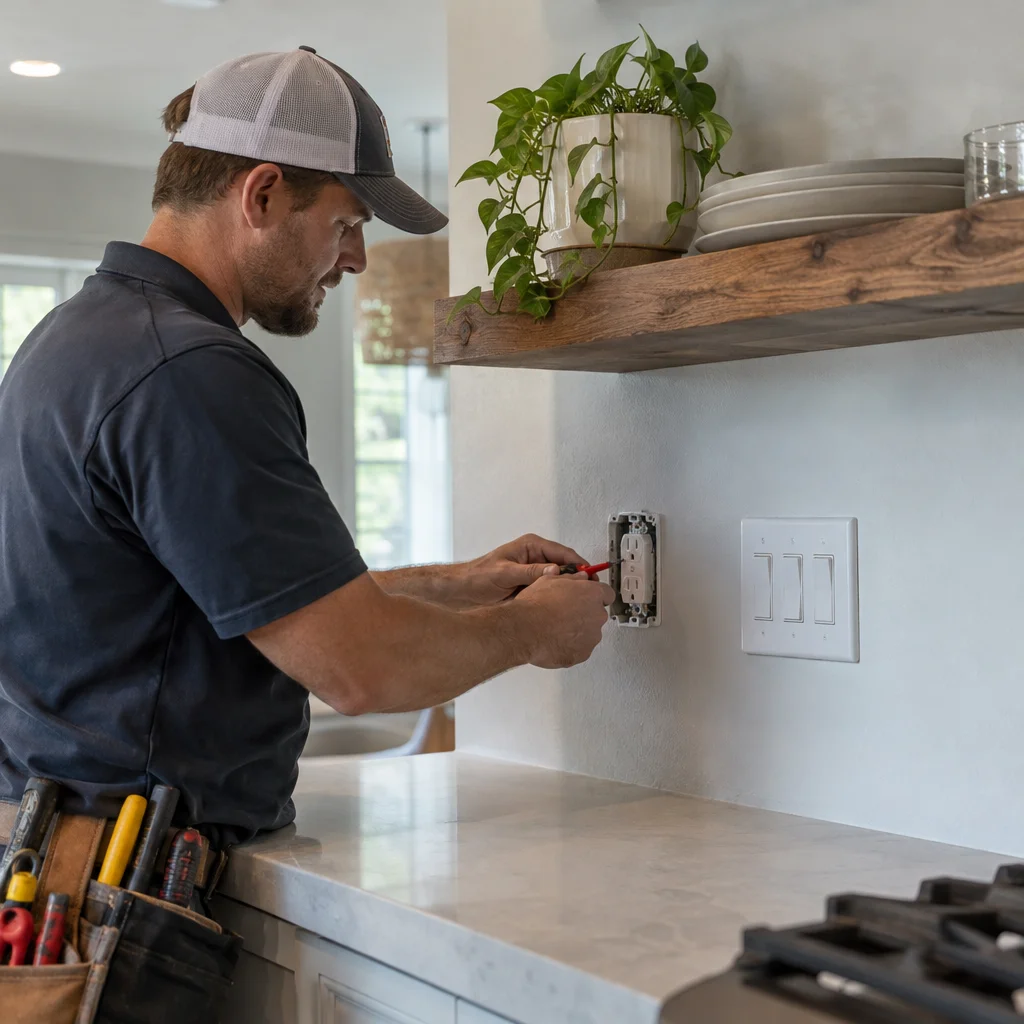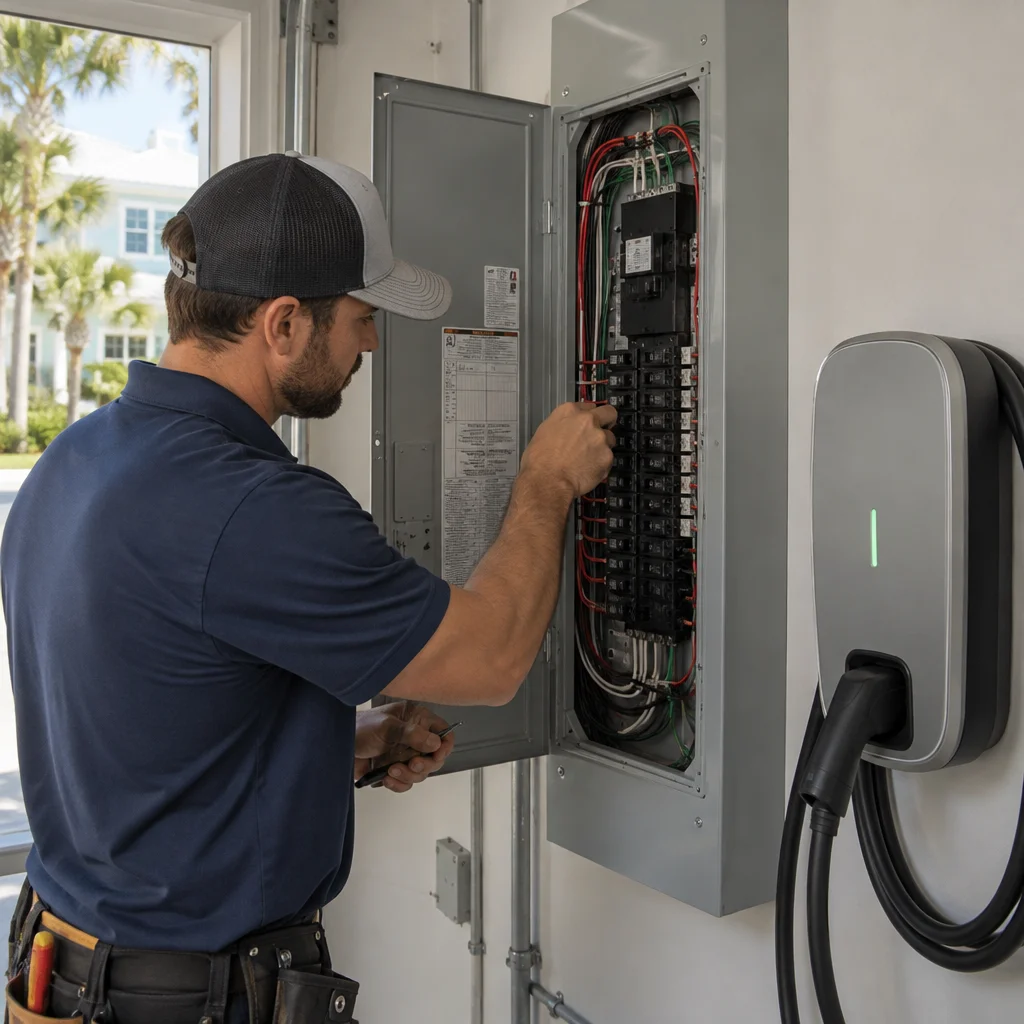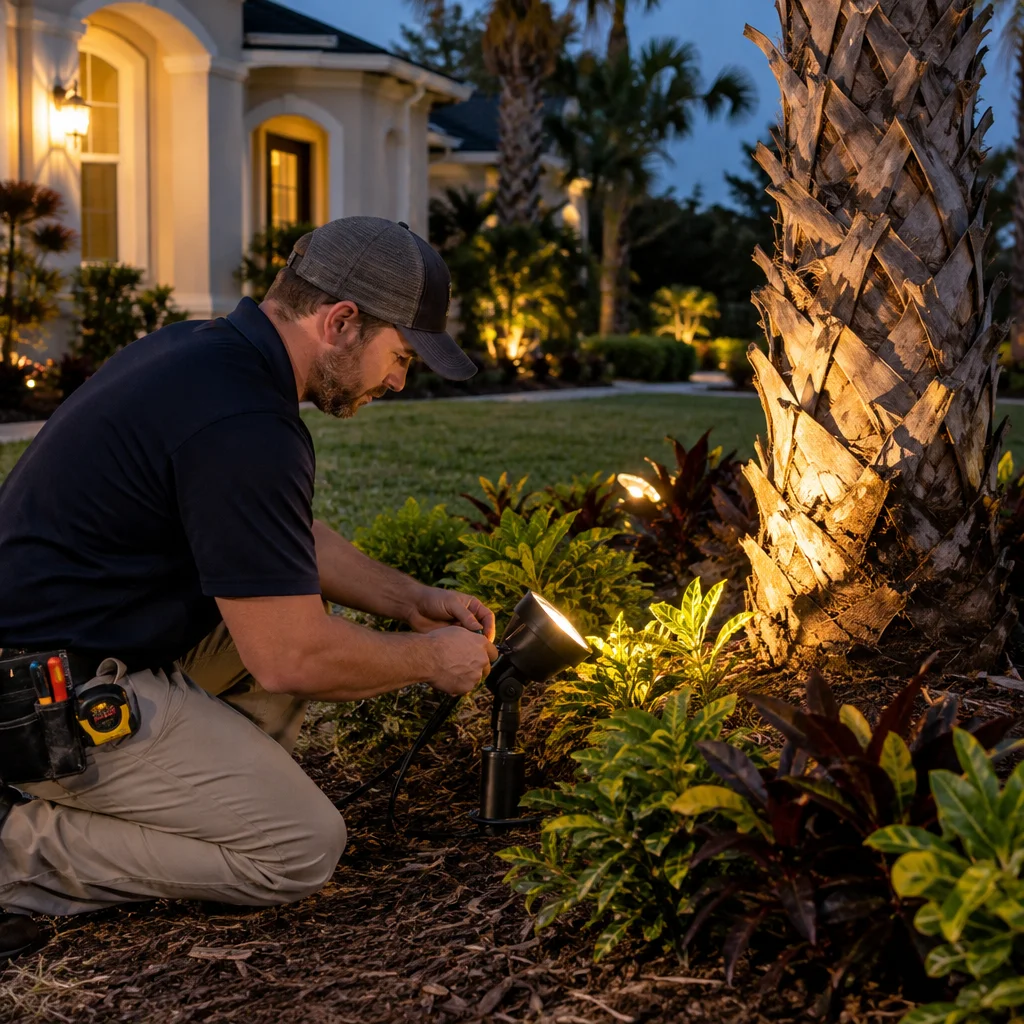
A well-lit walkway makes coming home easier. Soft light across palms and planting beds can make a Camp Creek yard more inviting without washing the whole property in glare. But reliable outdoor lighting depends on more than attractive fixtures. The panel, supply circuit, outlets, transformer, and buried wiring all deserve attention before installation begins.
For coastal homes and vacation rentals, planning also means accounting for humidity, wind-driven rain, salt exposure, and summer thunderstorms. Thoughtful outdoor landscape lighting in Camp Creek, FL starts with an electrical system that supports the design safely and leaves room for future changes.
Start with how you actually use the yard
Walk the property after dark before deciding where fixtures belong. Notice steps, uneven paving, driveway edges, gates, and the route from parking to the front door. A vacation rental may need especially clear walking routes because guests are unfamiliar with the property.
Separate essential visibility from decorative lighting. Path lights serve a different purpose than tree uplights, and a motion-controlled security light should not overpower a seating area. Aim fixtures away from neighboring windows and avoid placing bright lamps at eye level.
Think beyond today's planting beds. A future patio, outdoor kitchen, addition, or spa could change wiring routes and power demand. Homeowners searching for landscape lighting installation near me benefit from discussing those plans before trenches are dug, rather than paying to reopen finished landscaping later.
Check the panel before adding outdoor loads
LED landscape fixtures usually consume relatively little electricity, but that does not make every existing circuit suitable. An outdoor receptacle may already share power with garage equipment, holiday decorations, or other household loads. The electrician should identify what the circuit supplies and evaluate its condition.
Available breaker spaces are only part of the picture
An empty slot in a panel does not establish that the electrical service has enough capacity. Planning may involve a load calculation, inspection of panel condition, and confirmation that any proposed breaker is listed for that panel. Rust, overheating, loose connections, or damaged equipment require attention regardless of the lighting load.
Older homes may have limited circuit capacity or undocumented modifications. Newer homes can also need changes when owners add outdoor living spaces, generators, or EV chargers. A lighting project alone does not automatically justify panel replacement.
If homeowners searching for electrical panel upgrade near me also want landscape lighting, both projects should be evaluated together. A Superior Mechanical's circuit breaker panel and rewiring services provide a relevant starting point for discussing those needs.
Choose the right circuit and transformer arrangement
Many residential landscape systems use low-voltage fixtures supplied through a listed transformer. That transformer still connects to household line voltage, so its supply, mounting, and protection matter. Low voltage reduces certain hazards but does not eliminate the need for correct installation.
Match capacity to the actual design
The installer should total fixture wattage, follow the transformer's loading instructions, and account for cable lengths and voltage drop. Long runs or undersized cable can leave distant lights dimmer than fixtures closer to the transformer. Dividing the layout into appropriate branches can improve performance.
A dedicated circuit may be appropriate when the existing circuit is heavily used, the equipment requires it, or the overall design calls for one. Lighting does not universally require a dedicated circuit. For nearby appliances with separate power requirements, discuss dedicated circuit planning rather than assuming everything can share the patio receptacle.
Outdoor outlets need more than a flip-up cover
Outdoor receptacles generally require GFCI protection under applicable electrical code. GFCI devices help protect people by interrupting power when they detect certain current imbalances. They do not replace grounding, overcurrent protection, or sound wiring.
The receptacle and enclosure must suit the location. Where required, a weather-resistant receptacle and an appropriate weatherproof while-in-use cover protect the connection even with a transformer plugged in. A cracked cover, missing gasket, or poorly sealed box can allow moisture to reach electrical components.
If an outlet feels loose, has discoloration, or stops working after rain, do not assume replacement of the receptacle alone will solve it. Homeowners looking for outlet repair near me may need troubleshooting of the box, upstream GFCI device, wiring, or connected equipment. Never bypass GFCI protection to keep landscape lights operating.
Route wiring for weather, landscaping, and future repairs
Camp Creek landscaping faces irrigation, heavy rain, shifting mulch, and regular yard work. Wiring routes should avoid predictable damage from edging tools, stakes, root work, and future digging. Ordinary indoor cable is not a substitute for wiring approved for its intended outdoor or underground use.
Burial depth and protection depend on voltage, wiring method, location, equipment instructions, and applicable code. There is no single depth appropriate for every lighting installation. Line-voltage wiring and low-voltage landscape cable have different requirements, and underground conduit must be treated as a wet location when selecting conductors.
Arrange utility locating before excavation. Public utility marking may not identify privately owned wiring, irrigation lines, or other private facilities, so additional locating can be necessary. Ask for a simple record of cable routes and connection points. It can prevent accidental damage during a remodel or planting project.
Coastal durability comes from the whole installation
Salt exposure and persistent humidity can corrode fixtures, mounting hardware, terminals, and enclosures. Choose equipment rated for its exposure and check the manufacturer's coastal-use guidance. A fixture advertised as outdoor-rated may still need careful placement and maintenance near the coast.
Connections deserve as much attention as housings. Splices need connectors listed for the location and conditions, including direct burial where applicable. Electrical tape wrapped around an ordinary connector is not an adequate underground moisture barrier.
Keep transformers and electrical connections out of low spots where water collects. Respect required mounting heights and clearances, and consider irrigation spray patterns. Local electrical service matters because an installer familiar with Walton County's coastal conditions can identify exposure and drainage concerns before equipment is placed.
Coordinate switches, timers, and other outdoor equipment
Controls should make the lighting easy to use without creating unnecessary complexity. Photocells, astronomical timers, and compatible smart controls can reduce wasted operating hours. Separate zones let homeowners illuminate walkways without keeping every decorative fixture on all night.
Confirm that switches, dimmers, LED drivers, and transformers are compatible. Flickering or erratic operation can result from mismatched controls rather than failed lamps. Outdoor smart equipment also needs an appropriate environmental rating and reliable communication where installed.
For covered patios, include ceiling fans and overhead lighting in the electrical plan. Fans need the correct damp-location or wet-location rating for their exposure and suitable support. Remodels and additions are a good opportunity to review related indoor needs, including smoke detector installation and interconnection requirements, without treating landscape lighting as a substitute for broader electrical safety work.
Plan for storms without assuming every outage is a surge
Thunderstorms can bring surges, wind damage, water intrusion, and utility interruptions. Whole-home surge protection can help reduce damage from transient overvoltages when properly selected and installed. It does not make a home lightning-proof, repair grounding defects, or keep lights on during an outage.
An electrician should evaluate grounding and bonding when assessing protection for the home. Adding an isolated ground rod beside a landscape transformer is not a universal solution and should not be improvised.
If backup power is a priority, decide which exterior lights are essential. Generator installation requires a code-compliant connection and transfer arrangement that prevents backfeeding the utility. Never power home wiring through an ordinary receptacle. Battery backup systems may offer another option, but supported circuits and operating time depend on system design and load.
Read the symptoms before replacing parts
One dark fixture can point to a failed lamp, damaged socket, or local connection. Several dim fixtures at the end of a run suggest a different issue, such as voltage drop or a deteriorated splice. Lights that fail after irrigation may indicate moisture intrusion.
A tripping breaker or GFCI is a warning to investigate, not an inconvenience to defeat. Repeatedly resetting a device without finding the cause can leave a hazardous condition unresolved. Never install a larger breaker simply to stop tripping; the breaker must properly protect the circuit wiring.
Breaker repair requests may ultimately require replacement of a defective breaker or correction of a downstream fault. Wiring repair likewise starts with diagnosis. The guide to electrical safety clues Camp Creek homeowners should never ignore explains other warning patterns worth taking seriously.
Know which problems cannot wait
Burning odors, smoke, sparking, melted insulation, shocks, or a hot electrical enclosure require prompt action. Keep people away and stop using affected equipment. Shut off the circuit only if you can reach the panel safely without approaching water, smoke, or damaged equipment. For fire, active smoke, or immediate danger, evacuate and call 911.
After flooding or a severe storm, do not touch submerged electrical equipment or approach downed lines. Contact the utility about damaged service lines. Homeowners searching for storm electrical repair near me should explain whether water entered outlets, transformers, or the panel so the electrical contractor can assess the urgency. Water-damaged components may require replacement rather than drying and reuse.
Build maintenance and code review into the project
Periodically inspect accessible fixtures and covers without opening energized equipment. Look for leaning stakes, exposed cable, cracked lenses, corrosion, and vegetation blocking light. Test GFCI devices according to manufacturer instructions and arrange service when they fail to trip or reset correctly.
After landscaping work or major storms, check the layout again from a safe distance. Vacation rental owners should give property managers a simple reporting process for dark paths and damaged outlets. Electrical inspections and local electrical maintenance can catch developing issues before guests or residents encounter them.
Permit and inspection requirements depend on the work and the authority having jurisdiction. Ask your contractor to clarify requirements for new circuits, line-voltage wiring, panel changes, and any necessary code corrections. The same coordinated approach helps when planning EV charger installation or future outdoor additions.
Bring the electrical plan and lighting design together
Before requesting an estimate, gather photos of the yard, the panel label, existing outdoor outlets, and any troublesome fixtures without removing electrical covers. Note where you want better visibility and whether future projects may increase power demand.
A Superior Mechanical can discuss electrical service needs in Camp Creek within the broader needs of Walton County properties. Ask for a scope that explains fixture selection, wiring routes, circuit work, controls, and inspection responsibilities. To start planning lighting that suits both your property and its electrical system, contact A Superior Mechanical.
Find Outdoor Landscape Lighting in Camp Creek, FL
If you need Outdoor Landscape Lighting in Camp Creek, FL, visit our local service page or contact A Superior Mechanical today.
Map of Camp Creek, FL
Frequently Asked Questions
Does landscape lighting require a panel upgrade in Camp Creek?
Not necessarily. LED landscape lighting often adds a relatively small load. An electrician should check existing circuit use, panel condition, equipment requirements, and available capacity before recommending a new circuit or panel upgrade.
Why does my outdoor lighting trip the GFCI after rain?
Moisture may be entering a receptacle box, transformer, fixture, or damaged connection. The fault can also involve other equipment on the protected circuit. Stop using the affected equipment and arrange electrical troubleshooting rather than repeatedly resetting or bypassing the GFCI.
How can I help landscape lighting last longer in Camp Creek's coastal climate?
Choose equipment suitable for coastal exposure, use correctly rated wiring and connectors, and place electrical components away from pooling water and irrigation spray. Inspect accessible fixtures and covers periodically, follow manufacturer maintenance instructions, and have corrosion, exposed wiring, or storm damage evaluated professionally.
Related Articles
- Electrical Safety Clues Camp Creek Homeowners Should Never Ignore
- Smart Electrical Planning for Camp Creek Homes Facing Panels, Wiring, and Outlet Replacement
- Smart Electrical Planning for Outdoor Landscape Lighting in Seagrove Beach, FL
- Smart Electrical Planning for Outdoor Landscape Lighting in Blue Mountain Beach, FL
Photo Gallery