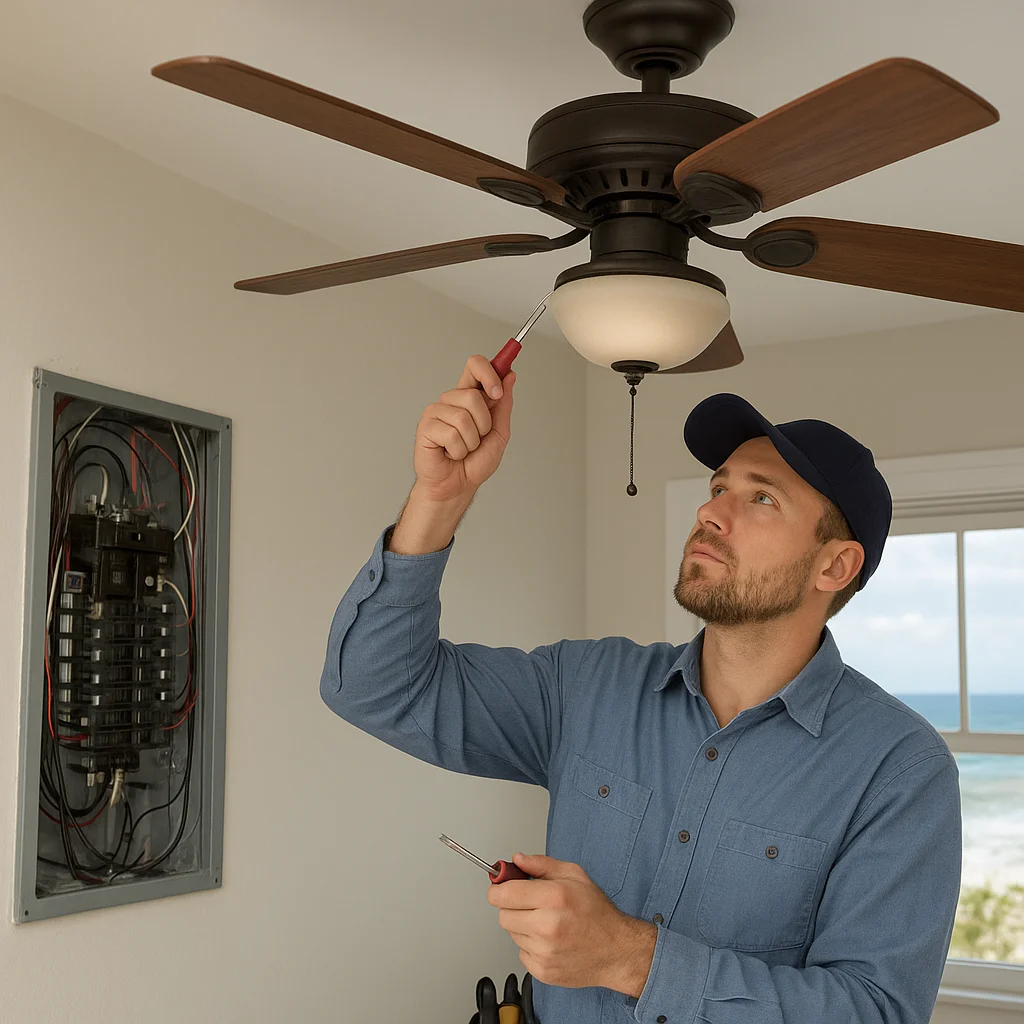
In Seaside, ceiling fans do more than move air. They help homes stay comfortable through humid summers, salt-heavy coastal weather, and busy daily power use from lighting, appliances, chargers, and smart devices. When a ceiling fan starts acting up, it is often more than a fan problem. It can be one of the first electrical clues that a home needs repair, better wiring, or a larger service upgrade.
That matters in a place like Seaside, where older homes, remodels, additions, and newer builds can all have different electrical demands. A fan that hums, wobbles, trips a breaker, or slows down under load may be telling you something useful about the wiring behind the ceiling box, the switch leg, the circuit, or even the panel. If you are looking for Ceiling Fan Services in Seaside, FL, it helps to know which symptoms are simple and which ones point to a deeper issue.
Why ceiling fan problems deserve attention in coastal homes
Salt air, moisture, and storm activity can affect electrical parts over time. In coastal Walton County homes, fan motors, wall switches, ceiling boxes, and wire connections may wear out faster than they would inland. Even if the fan itself is old, the real issue can be loose wiring, poor grounding, a weak circuit, or a box that was never rated to support the fan safely.
Ceiling fans also sit on the same electrical system that supports indoor lighting, outlets, smoke detectors, and modern devices. If a fan issue appears alongside flickering lights, warm switches, or a breaker that trips more than once, the problem may involve the broader system. That is where local Electrical Services become important, especially for homes that have been remodeled or expanded without a full electrical review.
Clues your ceiling fan may be exposing electrical trouble
The fan wobbles, but the mounting looks secure
A little movement can be normal, but persistent wobbling can point to more than a blade balance issue. If the wobble gets worse when the fan speeds up, the ceiling box may not be properly braced, or the fan may be pulling against aging hardware. In some homes, the box was installed for a light fixture rather than a ceiling fan, and that can create safety concerns over time.
The fan hums or buzzes when it runs
Buzzing is sometimes caused by the motor, but it can also come from a dimmer switch, loose wire connections, or a control that is not rated for the fan. If the fan shares a circuit with lighting or other loads, the sound may be a clue that the circuit is strained. Homeowners who search for ceiling fan installation near me often discover the issue is really about matching the right control to the right fan and wiring.
The lights flicker when the fan starts
Flickering lights can happen when a fan motor draws power and exposes a weak connection somewhere in the circuit. That might be at the switch, in the ceiling box, or inside a junction box hidden in the attic. In older Seaside homes, it can also reveal aging wiring insulation or an overloaded branch circuit. If the flicker spreads to other fixtures, the problem deserves a closer look before it turns into a larger electrical repair.
The breaker trips during fan use
A breaker that trips when the fan starts, changes speed, or runs with lights on may be protecting the home from an overload or fault. This is especially important in homes with many devices, upgraded lighting, or a recent addition that added more demand to the same panel. A repeated trip should not be ignored. It may point to breaker wear, loose connections, or a circuit that needs to be redistributed by a licensed electrician.
How modern power needs change the picture
Many Seaside homes now use far more electricity than they did when the original wiring was installed. Ceiling fans may share space with LED fixtures, smart switches, USB outlets, home office equipment, EV chargers, and backup power systems. That extra demand can expose old weak points that were easy to miss before.
For example, a homeowner searching for Smart Panels may be trying to improve control and circuit visibility, but the real benefit is often better load management. A smart panel can help identify circuits that are working too hard, including the one feeding a fan and lighting combo. In homes with more advanced power needs, ceiling fan service is often part of a bigger electrical health check.
If you are planning Indoor Lighting updates at the same time, it is smart to review the fan circuit too. New fixtures, dimmers, and controls should be compatible with the wiring and the fan motor. A mismatch can shorten equipment life and create annoying electrical noise or flicker.
What a professional checks during ceiling fan service
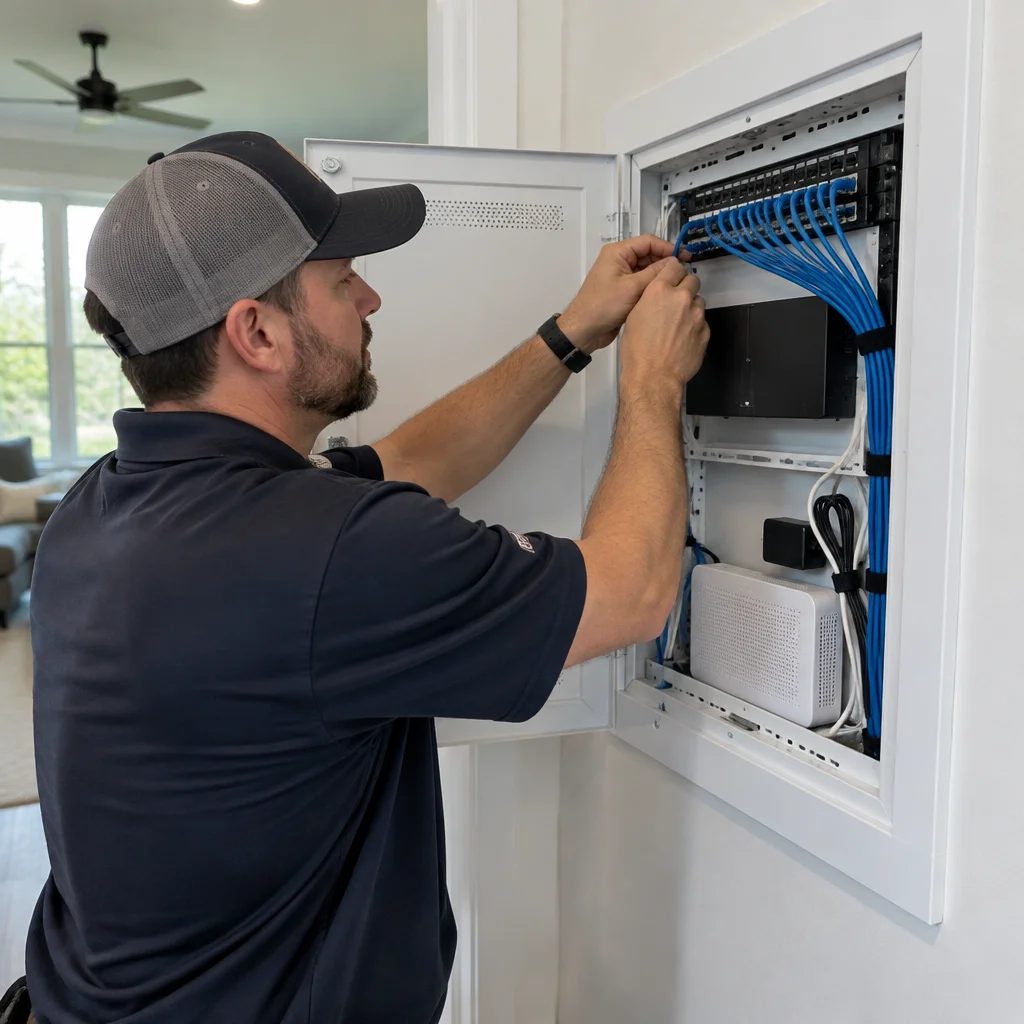
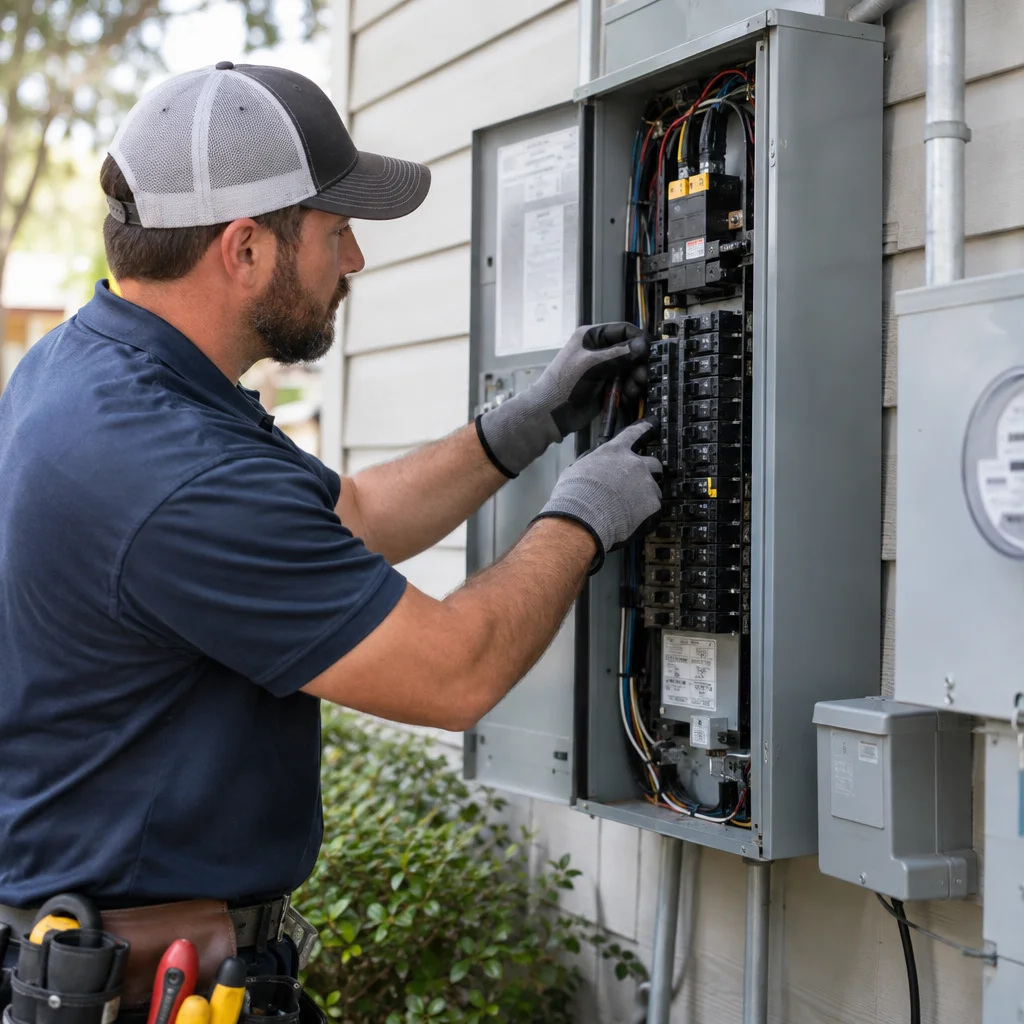
Good ceiling fan service is not just about hanging a fan and turning it on. A licensed electrician should look at the electrical box, the fan support, the switch wiring, the grounding, and the condition of the circuit. In some homes, the inspection also reveals code issues such as improper splices, missing fan-rated boxes, or outdated switch wiring.
That is especially useful in Seaside, where older homes may still have parts of the original system, while newer rooms may have been added later with different materials or methods. A careful inspection can also catch signs that point to electrical code inspection near me concerns before they become a bigger repair bill.
Common fixes that improve safety and performance
Depending on what the electrician finds, the fix may include replacing the ceiling box, tightening or redoing connections, installing a fan-rated control, correcting the grounding, or moving the fan to a dedicated circuit. In some cases, the answer is a simple switch replacement. In others, the issue is a larger wiring repair that affects nearby lights or outlets.
Some homeowners also discover that a ceiling fan issue is part of a broader need for Specialty & Smart Services, especially when they want app control, remote operation, or better integration with smart home systems. Those upgrades should always be matched to the home’s wiring capacity and the manufacturer’s requirements.
Where ceiling fan service fits into wider electrical maintenance
Ceiling fans can be a useful starting point for checking the rest of the electrical system. If a fan circuit is overloaded, the home may also have trouble with outlets, switches, or lighting elsewhere. That is why homeowners who notice repeated electrical quirks often benefit from a full review of the panel, grounding, and branch circuits.
For example, a fan issue combined with a warm outlet, a loose switch, or a dimming light can point to a circuit problem rather than a single bad fixture. If that happens, it may be time to look at electrical repair, breaker repair, or even electrical panel replacement near me if the panel is no longer supporting the home’s load safely.
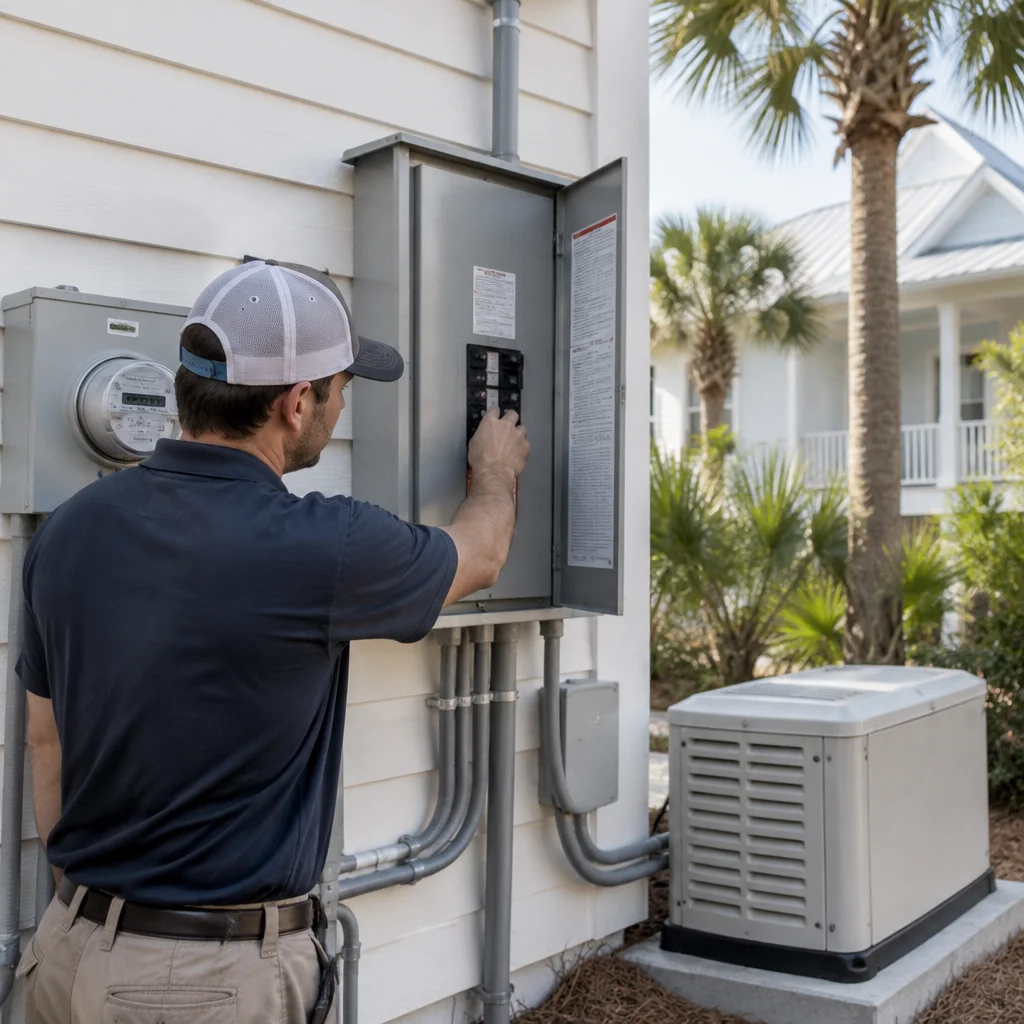
Homes with newer appliances or EV charging often need more capacity than older panels can provide. That is why searches for electrical panel upgrade near me or 200 amp panel upgrade near me are common in growing neighborhoods and remodeled homes. Ceiling fan issues can be one of the early signs that the electrical system is nearing its limit.
Coastal weather, storms, and emergency concerns
Seaside weather can be hard on electrical systems. Heavy rain, humidity, and storm-related outages can reveal weak connections or water intrusion around attic spaces and ceiling fixtures. After a storm, a fan that stops working, makes a new sound, or causes a breaker to trip should be checked before it is used again.
If a fan circuit is tied to other critical equipment, such as smoke detectors or essential lighting, a problem may become an emergency electrical concern. Homeowners searching for emergency electrician near me often need help because the issue affects more than comfort. In that case, the priority is safety, not just convenience.
Storm season is also a good time to think about backup planning. Homes with generators may need a proper transfer switch setup, and homes with sensitive electronics should consider whole home surge protector near me protection. Surge protection can help reduce damage to fan controls, smart switches, lighting, and panel components after a power event.
Other electrical upgrades that pair well with ceiling fan work
Ceiling fan projects often lead to other useful improvements. A ceiling fan replacement may be the right time to update a dimmer, add safer lighting, or correct a box that was never meant for fan weight. It can also be a good time to check GFCI protection in nearby baths, kitchens, laundry spaces, or outdoor areas.
If you are already planning lighting installation near me work, ask whether the fan and light controls should be separated or combined. If the home has older wiring, a home rewiring near me search may be pointing to a broader need for safer circuits and updated grounding. In some properties, especially older coastal homes, aluminum wiring repair near me concerns or fuse box replacement near me needs can show up during a fan inspection.
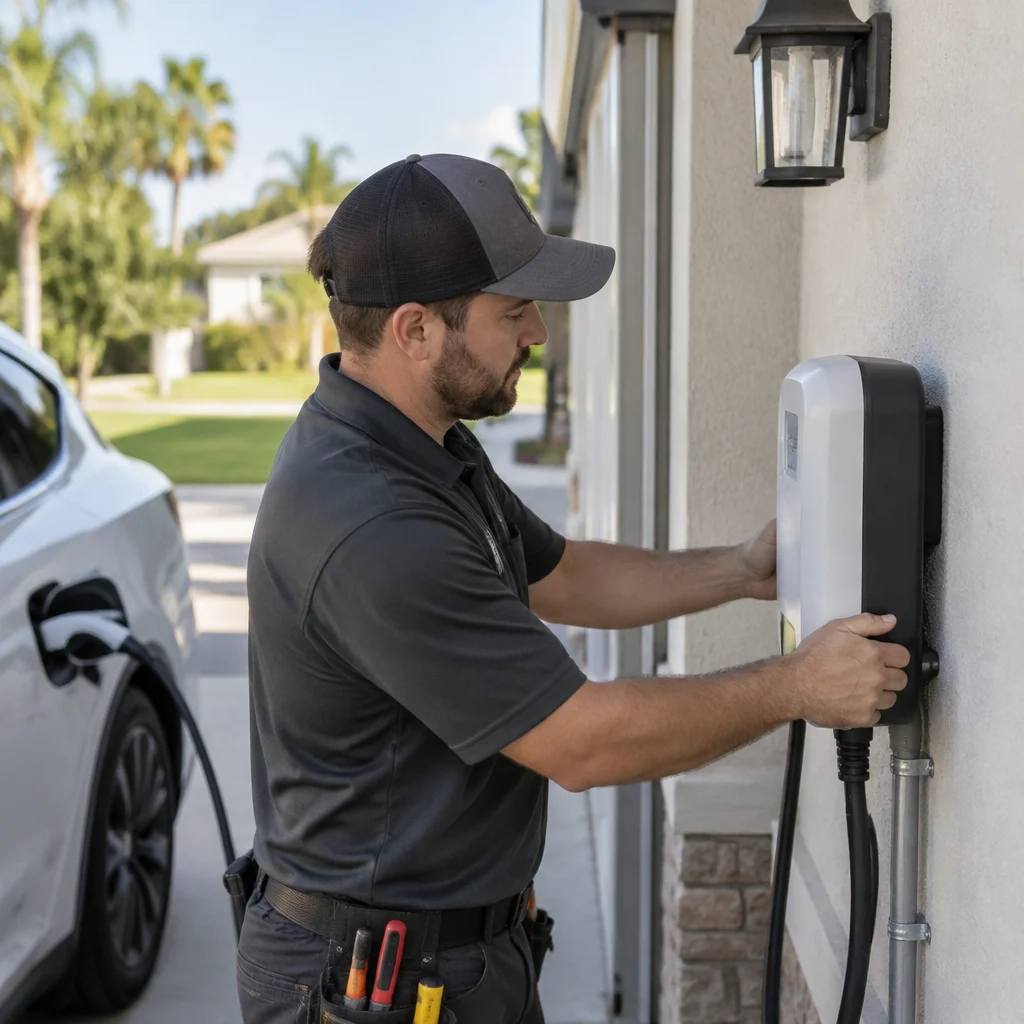
For homes adding more devices, a dedicated outlet or new circuit may also be part of the solution. That can include GFCI outlet repair near me, dryer outlet installation near me, or even a dedicated charger circuit for an EV. While those upgrades are not ceiling fan work themselves, they all affect how much electrical load a home can handle safely.
How homeowners can catch problems early
The best way to catch electrical issues early is to pay attention to small changes. A fan that used to run quietly but now hums, a switch that feels warm, a light that flickers when the fan starts, or a breaker that trips once in a while are all worth noting. These are the kinds of clues that can help a licensed electrician find the real issue before it spreads.
Routine maintenance matters too. During an inspection, ask about the ceiling box, the condition of the wiring, the age of the panel, and whether the fan is on the right circuit. If your home has recent renovations, additions, or a mix of old and new electrical parts, a local electrician can tell you whether the system is still code compliant and safe for daily use.
Homeowners searching for Seaside electrical service often want one thing first: peace of mind. A ceiling fan inspection can provide that, while also uncovering issues that affect the rest of the home. When the fan is part of a larger electrical concern, the right fix may involve outlet repair, switch replacement, lighting updates, panel work, or a full safety review.
For Seaside homes that depend on steady airflow, quiet operation, and dependable power, ceiling fan service is not just a comfort upgrade. It is one more way to protect the electrical system from avoidable wear, storm stress, and overload. A Superior Mechanical helps homeowners make those repairs before small warning signs turn into bigger electrical problems.
Find Ceiling Fan Services in Seaside, FL
If you need Ceiling Fan Services in Seaside, FL, visit our local service page or contact A Superior Mechanical today.
Map of Seaside, FL
Frequently Asked Questions
Can a ceiling fan problem mean there is an electrical issue elsewhere in the home?
Yes. A wobbling fan, flickering lights, or a tripping breaker can point to loose wiring, an overloaded circuit, a weak switch, or a panel problem that affects other parts of the home.
Why do ceiling fan issues happen more often in coastal homes like Seaside?
Moisture, salt air, and storm exposure can wear down electrical parts faster. Older homes and remodels may also have mixed wiring conditions that make fan problems more likely.
Is it safe to keep using a ceiling fan that hums or trips a breaker?
It is better to stop using it until it is checked. Humming, sparking, warm switches, or repeated breaker trips can signal a wiring or load issue that should be handled by a licensed electrician.
Can ceiling fan service help with smart home or lighting upgrades?
Yes. Fan service is often paired with dimmer switch installation, indoor lighting updates, smart controls, and circuit checks so the new equipment works safely and reliably.
Related Articles
Photo Gallery