Ceiling fans do more than move air in Parker, FL. In a coastal climate where humidity, storms, and power fluctuations are part of daily life, a fan can also reveal weak spots in the electrical system. A loose mount, a failing switch, or a poorly installed junction box may seem minor at first, but those same issues can lead to overheating, breaker trips, damaged wiring, or a call for emergency electrical repair.
For homeowners, vacation rental owners, and property managers in Bay County, ceiling fan installation and repair should always be treated as an electrical job first. Safe fan work depends on the right box rating, proper grounding, correct circuit load, and clean wiring connections. If you are already searching for ceiling fan installation and repair in Parker, it helps to understand the warning signs that point to a bigger electrical issue and not just a noisy fan.
Why ceiling fan problems matter more in Parker
Parker homes deal with conditions that can wear on electrical parts faster than many inland homes. Salt air, moisture, summer storms, and frequent use of cooling equipment all put stress on outlets, switches, breakers, and wiring. In older houses, the fan box may not be rated to support the weight and vibration of a modern fixture. In newer homes and remodels, the issue may be a circuit that is already carrying too much load from lighting, outlets, or other devices.
That is why local electrical service matters. A fan that hums, wobbles, or trips a breaker may be pointing to a problem in the branch circuit, the switch leg, or the panel. A qualified electrician can check the whole path, from the breaker to the fan box, and make sure the installation meets code requirements for support, grounding, and conductor sizing.
Electrical clues that should get your attention
Warm switches, dimming lights, or a fan that changes speed
If the wall switch feels warm, the lights dim when the fan starts, or the fan speed changes on its own, the circuit may be overloaded or the switch may be failing. These symptoms can also show up when a ceiling fan shares a circuit with recessed lighting, outlets, or other fixtures that draw too much power. In some homes, a homeowner searching for electrical panel upgrade near me is actually dealing with a circuit capacity problem that started with a fan or light fixture.
In Parker, where storm season can bring repeated surges and flickers, weak connections may become more obvious. If the fan and lights react each time a major appliance starts, the issue may be tied to loose wiring, a worn breaker, or poor grounding.
Buzzing, humming, or a breaker that trips repeatedly
A ceiling fan should not create a loud electrical hum. Some motor noise is normal, but buzzing from the switch, the canopy, or the ceiling box can indicate loose connections, an incompatible dimmer, or a failing motor. If the breaker trips when the fan runs, the circuit may be undersized, the fan may be wired incorrectly, or the breaker itself may be weak.
Repeated tripping is not something to ignore. It is a built in warning that the electrical system is protecting itself from heat or overload. A professional can determine whether the fix is a breaker replacement, a wiring repair, or a dedicated circuit. In some homes, the right answer is part of a larger electrical repair plan for panels, wiring, and safer power.
Wobble, shaking, or a fan that feels loose
A loose fan is both a mechanical and electrical concern. If the fixture shakes, the mounting box may not be rated for ceiling fan support or the blades may be out of balance. Vibration can loosen wire nuts, stress the connections in the canopy, and wear on the switch over time. In homes with older plaster ceilings or past remodel work, the box may need to be replaced with a fan rated support box before the repair is considered safe.
This is especially important in rentals and occupied homes where a failed fan can damage the ceiling, the wiring, or the switch circuit. A secure installation protects the fan and the electrical system behind it.
Flickering, sparking, or a burning smell
Flickering lights near a fan can be caused by a loose neutral, a failing switch, or a bad connection at the fixture. If you see sparking, smell burning plastic, or notice scorch marks around the switch plate or canopy, shut the circuit off right away and call an electrician. Those are fire risk clues, not cosmetic issues.
In Parker, coastal humidity can accelerate corrosion at connections and terminals. That makes regular electrical inspections and careful repair planning especially useful for older homes, waterfront properties, and houses that have gone through several renovations.
Installation details that prevent later trouble
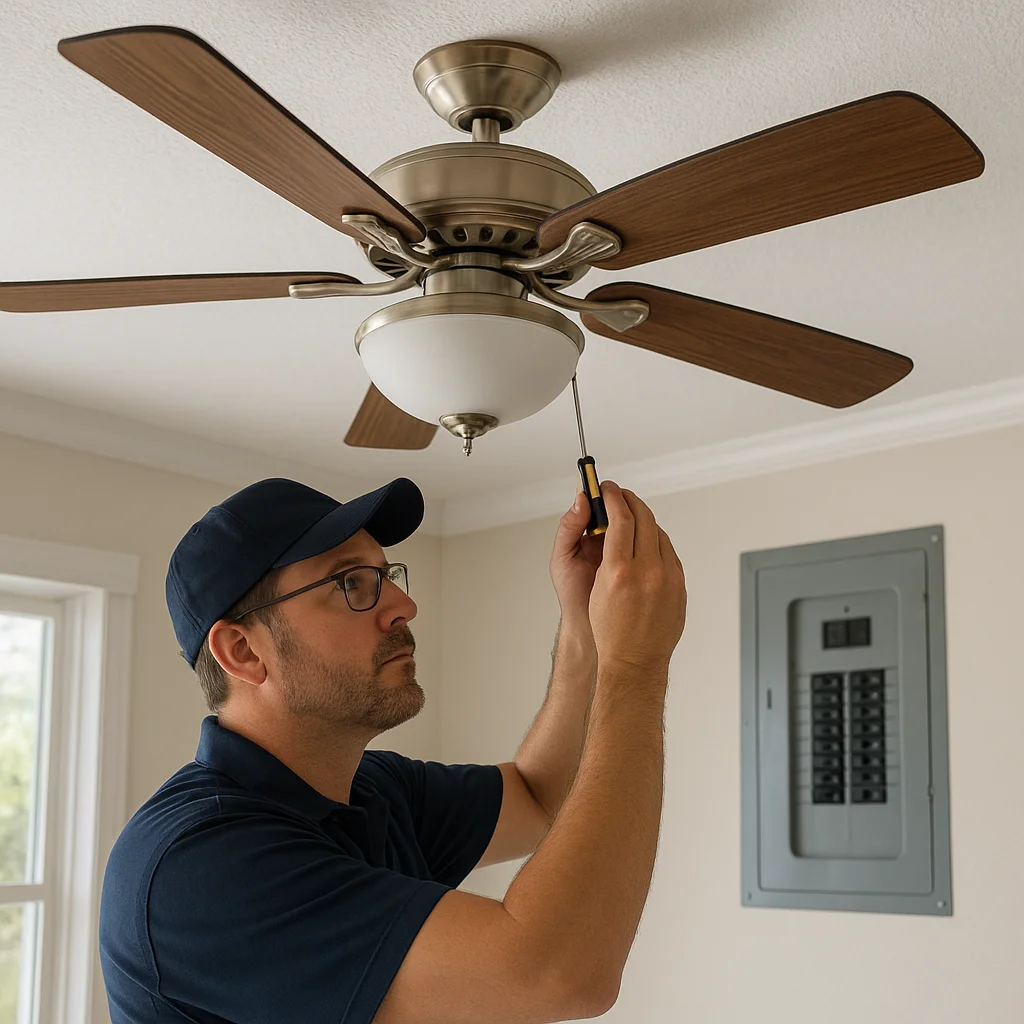
Safe ceiling fan installation starts with the box. A standard light fixture box is not always enough. The fan needs a box rated for ceiling fan support, proper anchoring to framing, and wiring that matches the load. The installer also has to confirm that the fan is grounded correctly and that the switch controls are compatible with the motor. When a homeowner wants electrical services for a new fan, the goal should be more than making it spin. It should be to make sure the circuit is safe for long term use.
That same attention applies when a fan is added during a kitchen update, a bedroom remodel, or a covered porch project. If the room is already being upgraded with lighting and fixtures, the electrician should check whether the new fan shares a circuit with recessed lighting, a dimmer, or a switched outlet. Sometimes a separate circuit or a dedicated switch is the cleaner solution.
Why switches and dimmers matter
Many fan problems start with the wrong control. A standard dimmer is not designed for every ceiling fan motor. The result can be humming, overheating, or erratic speeds. If you are looking into dedicated circuits for appliances or asking about dimmer switch installation near me, the electrician may recommend separate controls for fan and light functions. That keeps the motor protected and reduces stress on the switch.
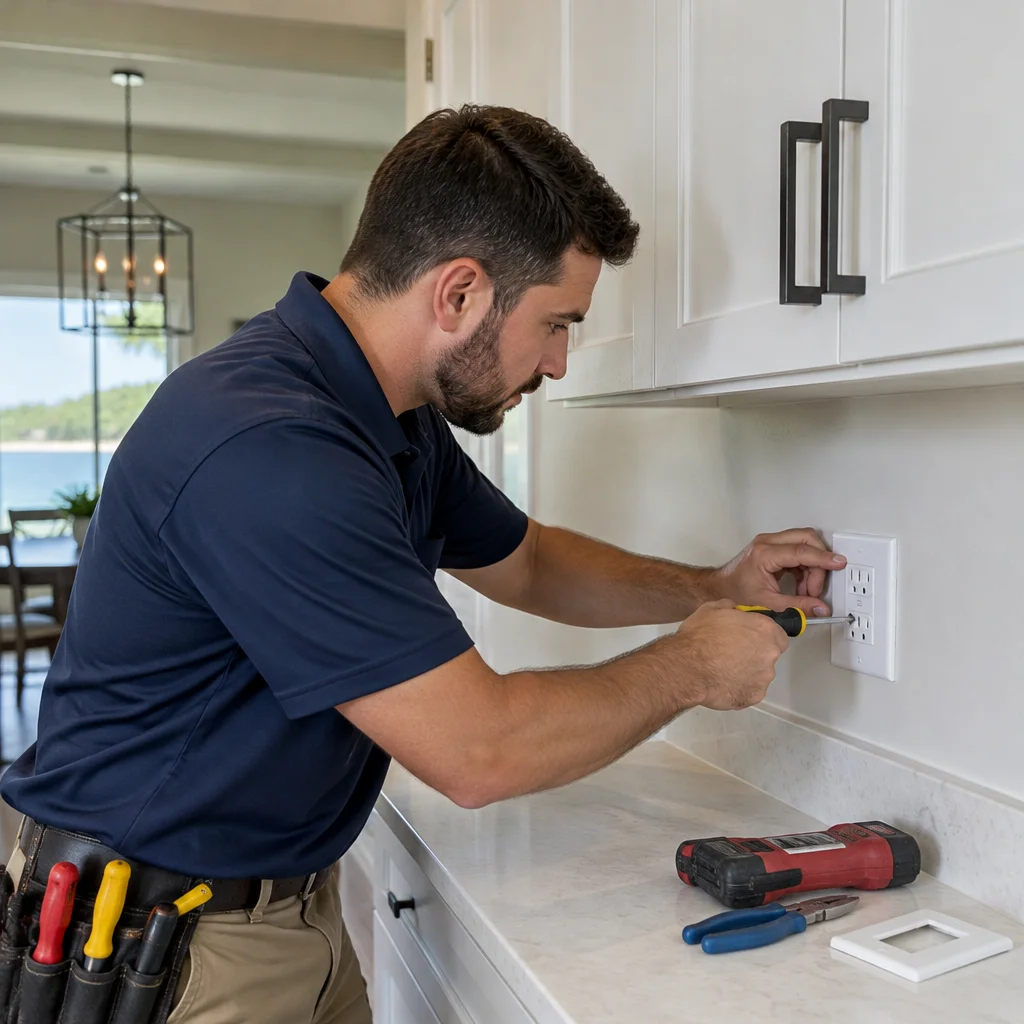
In some homes, especially older Parker properties, the right fix may include a switch replacement, a wiring correction, or an upgrade to a more modern control setup. That is also a good time to look at outlets, especially if nearby receptacles are loose, discolored, or missing GFCI protection in damp areas.
How storms and power quality affect ceiling fans
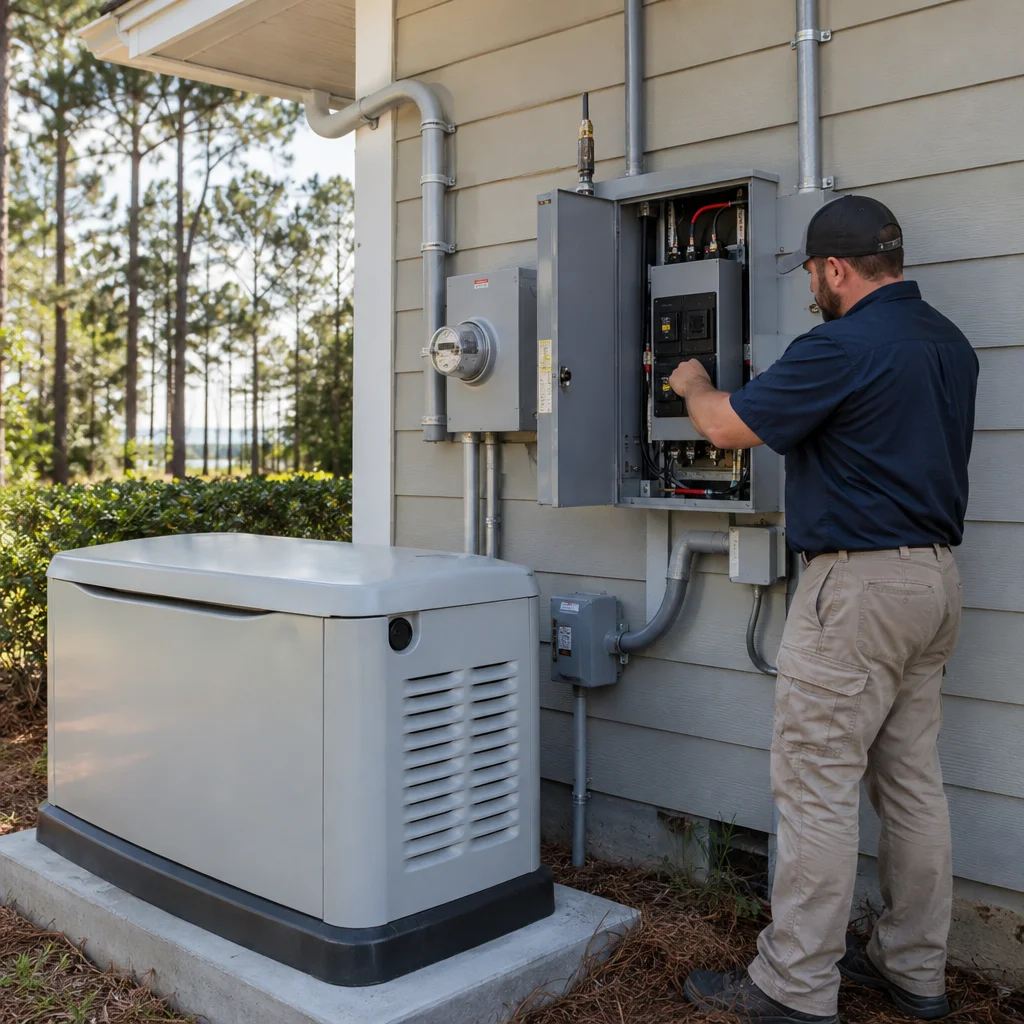
Bay County weather can be rough on electrical systems. Lightning, utility interruptions, and repeated surges can damage fan receivers, wall controls, and motor windings. A whole home surge protector helps protect more than computers and televisions. It can also reduce the chance that a ceiling fan or light control is damaged during a storm. For homeowners comparing options after a power event, a whole home generator installation plan may also make sense for preserving comfort and safety when the grid is unstable.
If your fan started acting strangely after a storm, do not assume it is only the motor. A surge can weaken a breaker, damage a switch, or create a hidden wiring fault in the ceiling box. That is one reason local homeowners often search for a Parker electrician after a storm instead of waiting for the next outage.
Older homes, remodels, and additions need extra care
Older homes in Parker may still have wiring that was never intended to support today’s mix of ceiling fans, LED lighting, smart controls, USB outlets, and charging equipment. If the house has had additions or partial remodels, the fan circuit may have been extended or spliced more than once. That is where issues like loose neutrals, mixed wire types, and undersized boxes can hide.
Homeowners searching for electrical panel upgrade near me or electrical contractor near me are often dealing with broader service concerns that show up in small ways first. A ceiling fan that fails to run properly may be the first clue that the panel, breakers, or branch wiring need attention. In some cases, the electrician may recommend house rewiring near me or old wiring replacement near me if the circuit is no longer reliable.
Fire risk prevention starts with the whole circuit
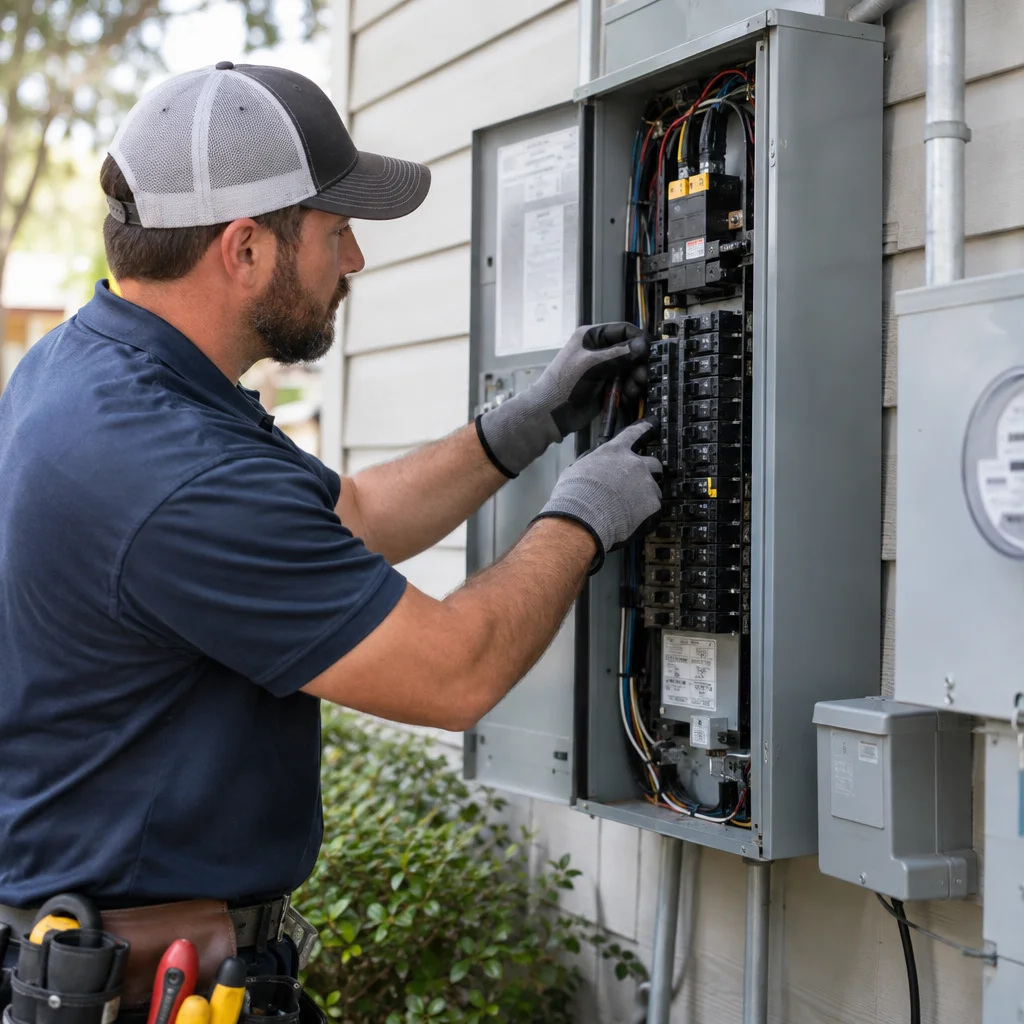
Ceiling fan safety is not just about the fixture itself. It is about the circuit, the breaker, the box, the grounding, and the condition of the connections hidden above the ceiling. If a fan is installed on a weak circuit, paired with the wrong switch, or mounted to an unsupported box, the risk of heat buildup rises. That is why a home safety inspection electrician near me search often leads to a bigger conversation about panel condition, breaker health, and code compliance.
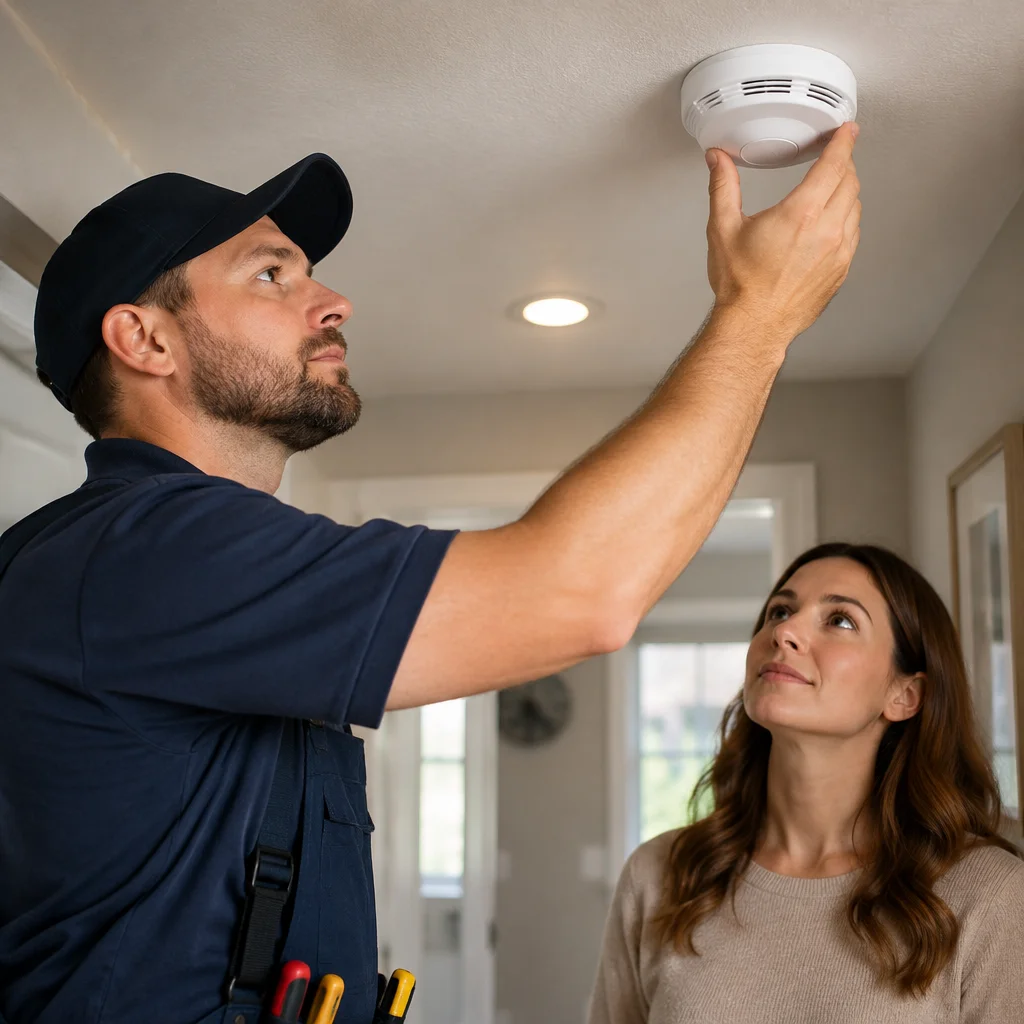
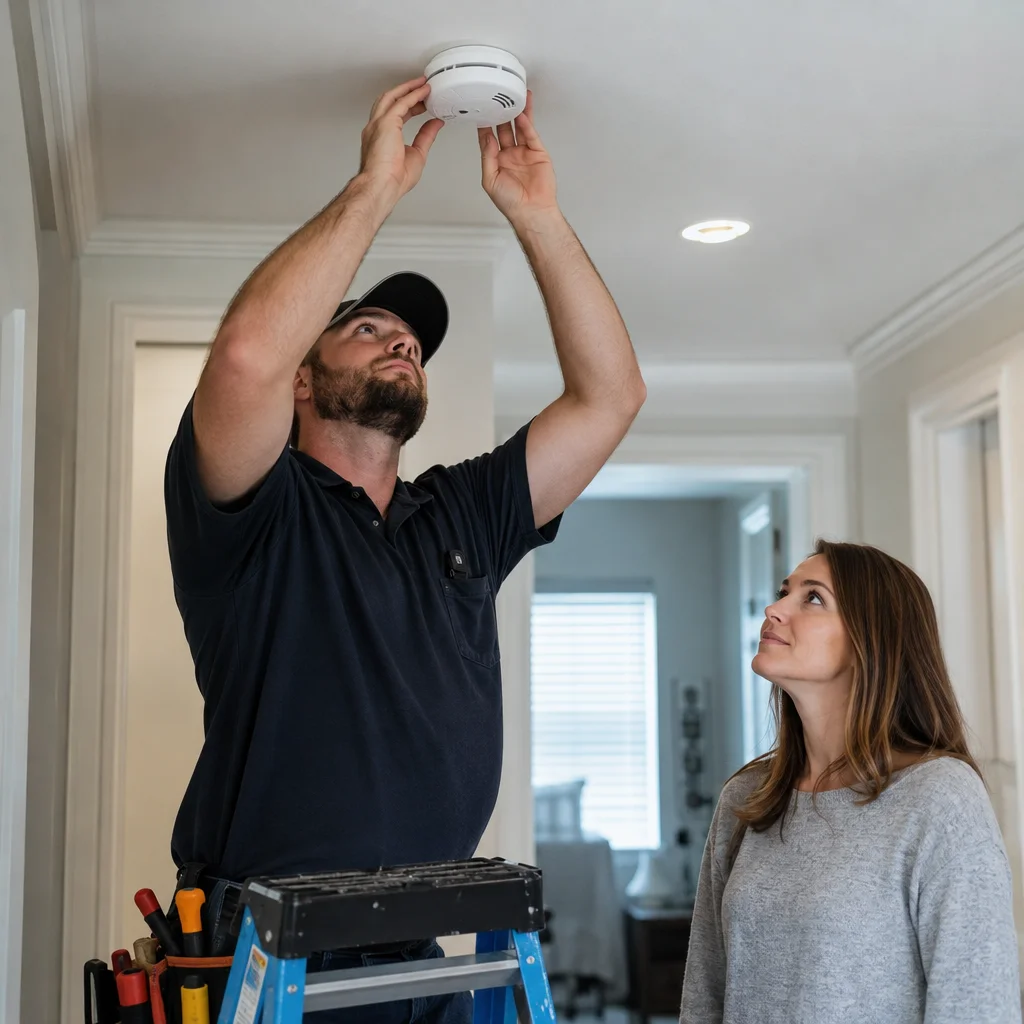
Good prevention also includes smoke detector installation, carbon monoxide detector installation, and routine electrical maintenance. If a fan issue is happening in a room with other warning signs such as flickering lights, dead outlets, or a tripping GFCI, the problem may not be isolated. The safer move is to have the circuit checked before it turns into an emergency call.
Where ceiling fan repair fits into a broader electrical plan
Sometimes a fan repair is simple, such as replacing a damaged pull chain, tightening a loose blade, or swapping a bad receiver. Other times, the fix overlaps with lighting installation, outlet repair, or breaker repair. If the room is being updated anyway, it may be the right time to add recessed lighting installation near me, led lighting installation near me, usb outlet installation near me, or kitchen lighting installation near me service while the electrician is already working in the area.
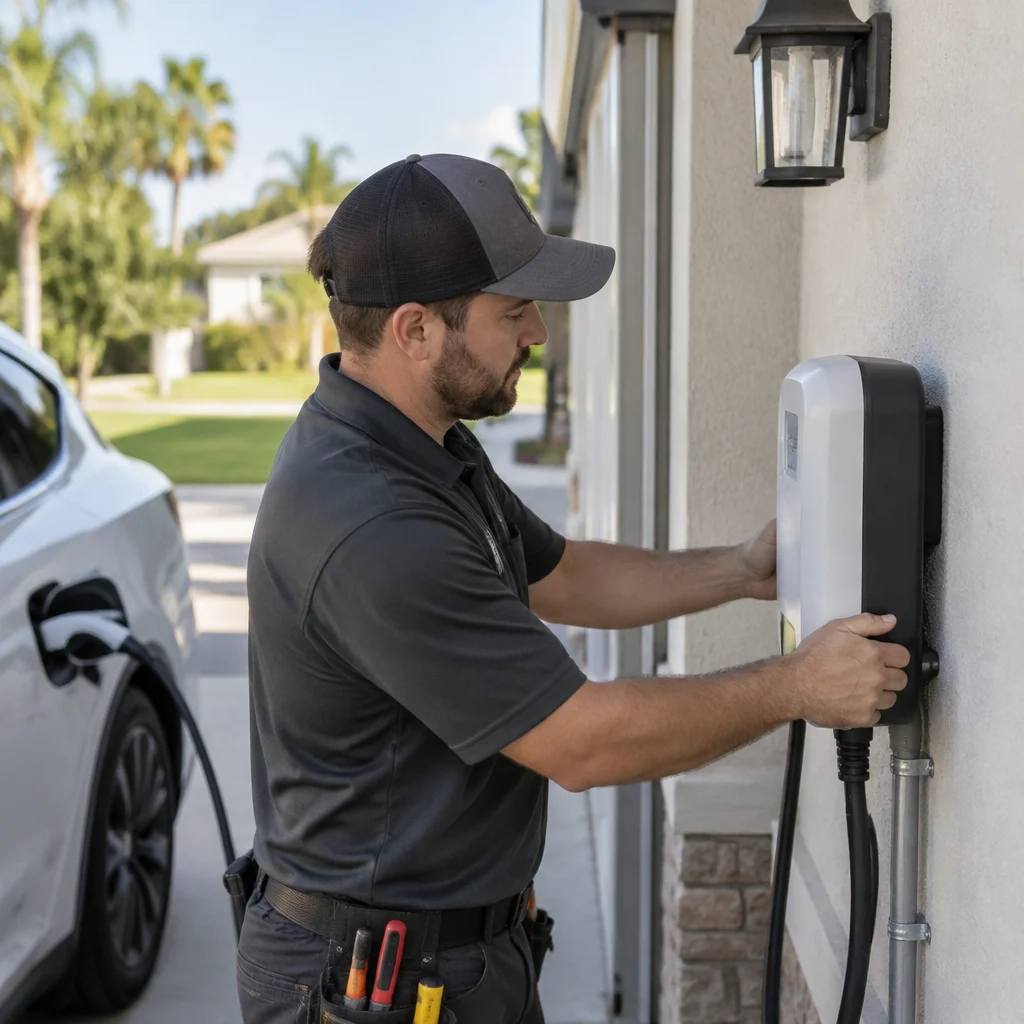
For garages, patios, and enclosed porches, the electrical plan may need GFCI protection, weather resistant devices, or a better ground path. For homeowners with electric vehicles, a nearby project might include level 2 EV charger installation near me or electric car charger installation near me service, which makes panel planning even more important. The point is to keep the whole system balanced, not just one fixture.
When to bring in a professional electrician
Call a licensed electrician if the fan is hot, noisy, loose, flickering, or tied to a breaker that trips more than once. Also call if the ceiling box is not clearly fan rated, if the wiring looks old or damaged, or if the fan was installed with a control that does not match the motor. A professional can also help if your search for emergency electrician near me is really about a fan problem that is exposing a larger issue in the home’s electrical system.
A Superior Mechanical provides ceiling fan installation and repair in Parker, FL with the kind of code aware service that helps reduce fire risk and future electrical emergencies. Whether the job involves a replacement fan, a wiring correction, a switch issue, or a broader inspection of the circuit, the right repair plan should leave the home safer than before.
For Parker homeowners, that often means checking the fan, the breaker, the panel, the grounding, and nearby outlets together. It is a practical way to protect older homes, newer builds, vacation rentals, and storm exposed properties across Bay County.
Helpful electrical checks to keep on your maintenance list
Before the next storm season or remodel project, take a look at the rooms where fans run the most. Listen for humming, check for wobble, and note any lights that flicker when the fan starts. Make sure bathroom and outdoor circuits have GFCI protection where required, and watch for signs of heat at switches or outlets. If you already have a generator, surge protection, or panel upgrade in mind, include ceiling fans in the overall review so the electrician can confirm the whole system is ready for heavier demand.
That approach is especially useful in Parker, where weather, age, and remodeling history all affect how well an electrical system performs. A ceiling fan can be a comfort upgrade, but it is also a useful clue about the condition of the wiring behind the walls and above the ceiling.
Find Ceiling Fan Installation & Repair in Parker, FL
If you need Ceiling Fan Installation & Repair in Parker, FL, visit our local service page or contact A Superior Mechanical today.
Map of Parker, FL
Frequently Asked Questions
Can a ceiling fan cause a breaker to trip?
Yes. A tripping breaker can point to an overloaded circuit, a bad switch, a wiring fault, or an issue with the fan motor. It should be checked before the problem gets worse.
Do ceiling fans need a special electrical box?
Usually, yes. A fan should be mounted to a box rated for ceiling fan support so the weight and vibration are handled safely.
Why does my ceiling fan hum when it runs?
Humming can come from the motor, but it can also mean the control is incompatible, the wiring is loose, or the fan is not installed correctly.
Should I replace the fan or repair the wiring first?
If the wiring, box, or switch is the real problem, replacing the fan alone will not solve it. An electrician can inspect the circuit and recommend the safest fix.
Related Articles
Photo Gallery