Breakfast should not start with a cloudy drinking glass, an unpleasant sip of water, or coffee that tastes off. Yet small water problems can follow a family through the day, from the kitchen sink to the shower and laundry room. White spots, stubborn residue, and frequent fixture cleaning often point to hardness, while taste and odor complaints may have a different cause.
For homeowners considering water softening in Valparaiso, FL, the most useful first step is separating those concerns. A Superior Mechanical helps homeowners address hard water with treatment selected for their water supply and household needs. Softening can reduce mineral buildup, but filtration or reverse osmosis may also be needed for better drinking and cooking water.
What your glasses, faucets, and shower are telling you
Hard water contains dissolved calcium and magnesium. As water evaporates, those minerals can remain on glass, dishes, and fixtures. A dishwasher may finish its cycle successfully, yet drinking glasses still look spotted. Around a bathroom faucet, repeated splashes can leave a chalky ring that returns soon after cleaning.
Scale buildup around faucets and showerheads is another clue. Deposits can collect in aerators and spray openings, changing the flow pattern. Inside water heaters and some appliances, heating encourages mineral precipitation. Over time, accumulated scale can reduce efficiency and contribute to maintenance problems. It does not mean every appliance failure is caused by hard water, but hardness is worth checking.
Soap residue can be just as revealing
When soap does not lather easily or leaves a film that resists rinsing, hardness may be part of the problem. Soap reacts with calcium and magnesium, creating residue on tubs, shower walls, and sometimes skin. Laundry can feel stiff, and homeowners may find themselves adding extra detergent without getting better results.
People sometimes describe dry skin from hard water or dull hair after bathing. Mineral and soap residue can affect how skin and hair feel, although water temperature, personal care products, and skin conditions also matter. Softening may improve the bathing experience, but it is not a medical treatment or a guaranteed solution for irritation.
Local water treatment starts with the actual supply
Valparaiso's warm, humid Florida Panhandle climate keeps showers, laundry, and cold drinks in regular demand, especially after outdoor activities. Those routines make water quality noticeable. Climate alone, however, cannot establish a home's hardness level, and being near Choctawhatchee Bay does not automatically mean household water has a salt problem.
Homes across Valparaiso and Okaloosa County can differ in supply connections, plumbing age, previous treatment equipment, and water use. A public water quality report provides helpful background for homes on a public supply. Testing at the property adds information about hardness and conditions at the tap. Homes using private wells need testing appropriate to their source, including safety testing beyond a basic hardness check.
Local service matters because equipment must fit the home, not just a regional assumption. Available installation space, drainage, household demand, and existing plumbing all affect the recommendation. A Superior Mechanical's Valparaiso service information and broader Okaloosa County service coverage give homeowners a starting point for arranging an evaluation.
Water softening handles hardness, not every water concern
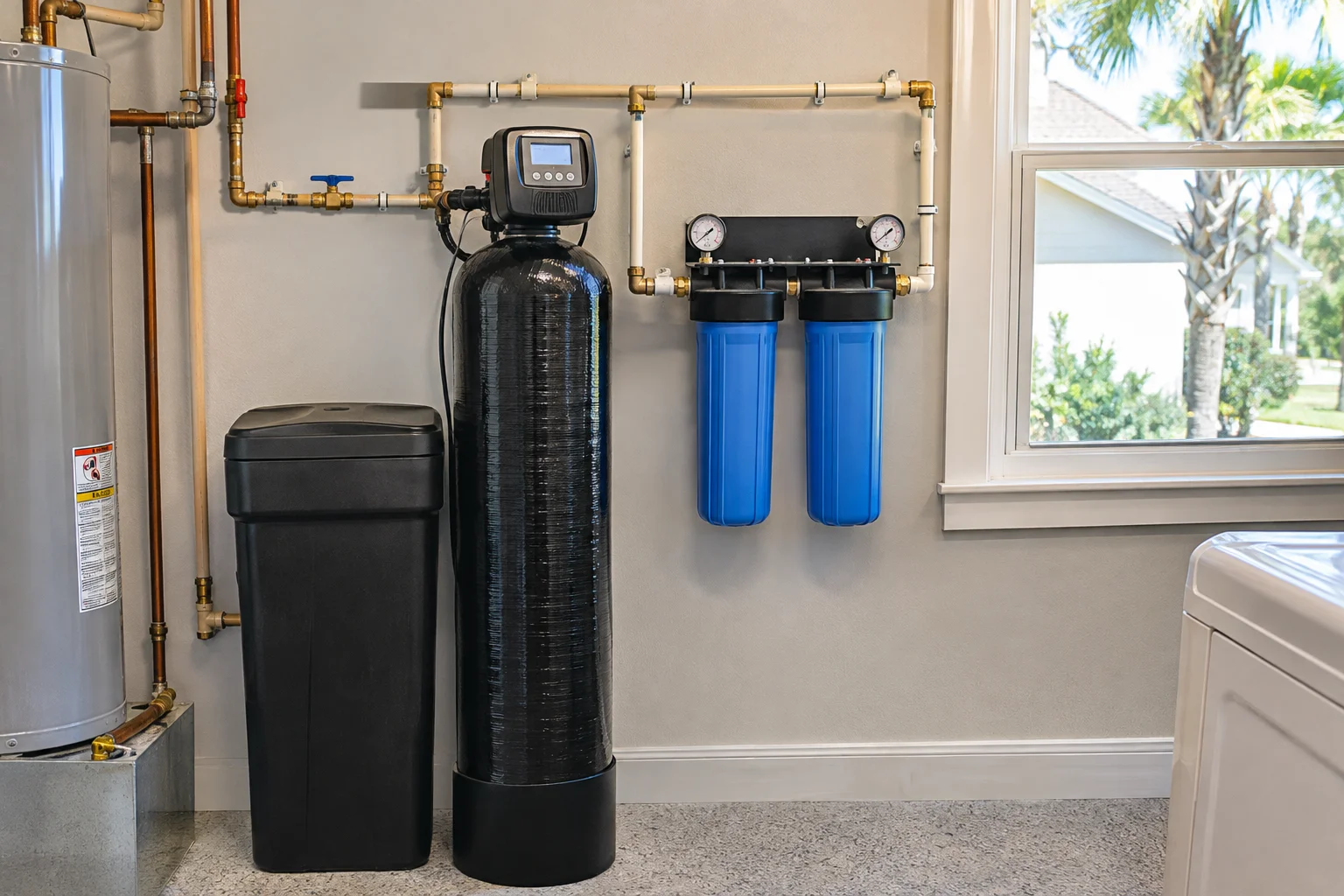
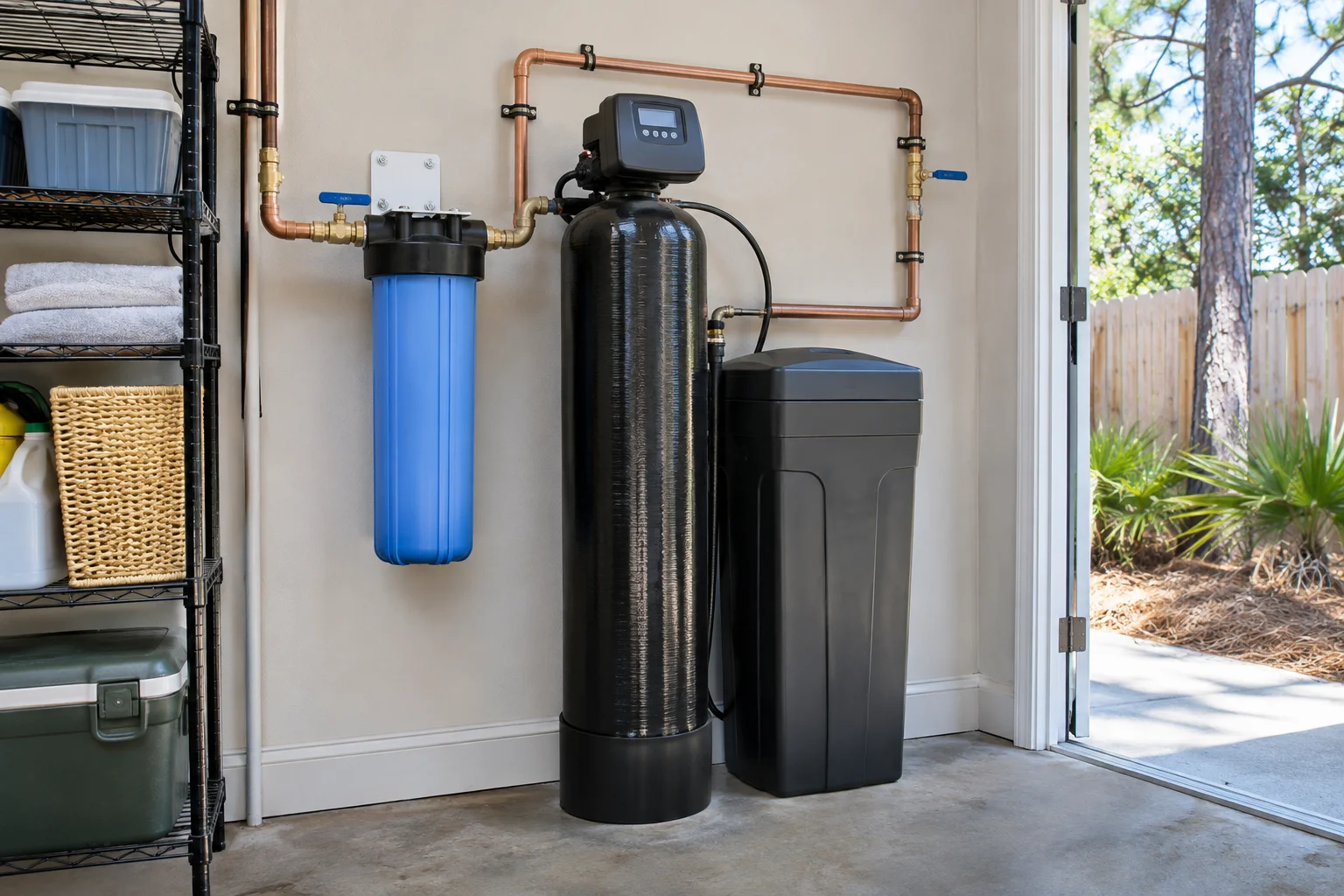
A conventional salt-based water softener uses ion exchange to remove calcium and magnesium from the water passing through it. Resin inside the treatment tank captures those hardness minerals and exchanges them for sodium or potassium ions. Periodic regeneration restores the resin's capacity using a brine solution.
Properly sized and maintained softening equipment can reduce new scale formation, improve soap performance, and make fixtures easier to clean. It can also reduce hardness-related stress on water heaters, dishwashers, and washing machines. Existing deposits may still require cleaning or professional service, and equipment already damaged by scale will not necessarily recover after installation.
Softening does not disinfect water or remove every contaminant. It is not the primary treatment for chlorine taste in water, most odor complaints, or suspended sediment. Homeowners searching for water softener installation near me should expect a discussion of measured hardness and daily demand, not a promise that one tank will solve every concern.
Explore A Superior Mechanical's water softening services in Valparaiso, FL for help selecting equipment, addressing existing softener problems, and planning maintenance.
Taste, odor, and discoloration need their own diagnosis
Metallic or chlorinated water
A metallic, chlorinated, or otherwise unpleasant taste should not automatically be blamed on hardness. Metallic taste can be associated with dissolved metals or plumbing conditions. A disinfectant taste may respond to properly selected carbon filtration. The right media and contact time depend on the disinfectant present and the treatment goal.
Taste is not a reliable safety test. Water that tastes pleasant can still contain contaminants, while an objectionable taste does not necessarily indicate a health hazard. New or persistent changes deserve investigation. For public water, check current utility notices and ask whether nearby supply work could explain a temporary change.
Sediment, unusual color, and odors
Visible sediment in household water can come from several sources, including supply disturbances, corrosion, or deteriorating components. A sediment filter may capture particles, but it will not remove dissolved minerals or identify why the particles appeared. Rust-colored water, dark particles, and recurring discoloration should be assessed before equipment is selected.
For odor concerns, note whether the smell occurs at every faucet, only with hot water, or mainly near a drain. Those details help narrow the source. A sudden strong odor or unexplained discoloration calls for prompt guidance from the utility or a qualified water professional. Follow official advisories rather than assuming a standard filter makes the water safe.
Matching filtration and reverse osmosis to family routines
Whole home water filtration treats water near the point where it enters the house. Depending on its design, a system may target sediment, chlorine, or other specific substances. It can complement water softening, but ordinary carbon and sediment filters do not remove dissolved hardness. Treatment order should follow test results and equipment requirements.
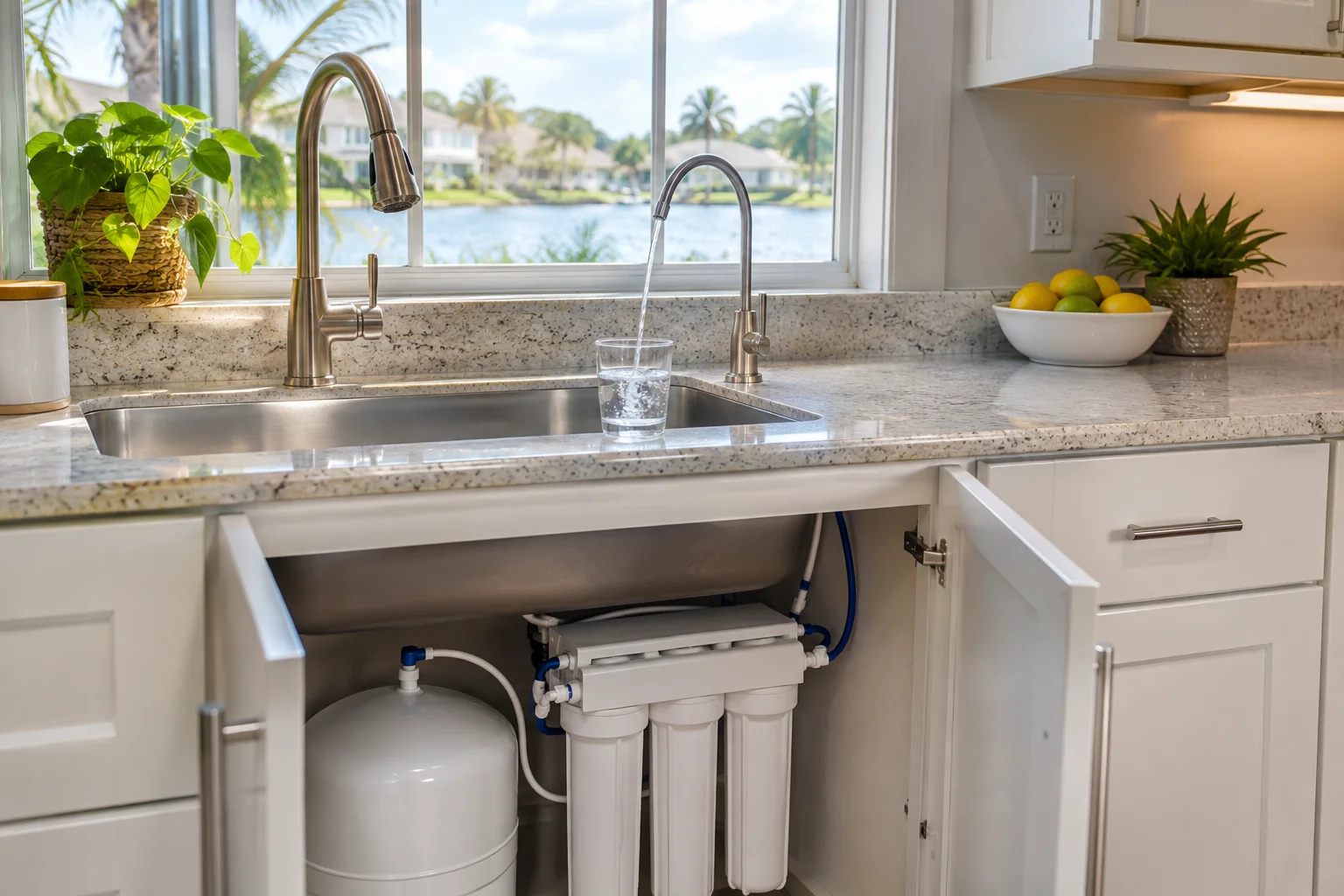
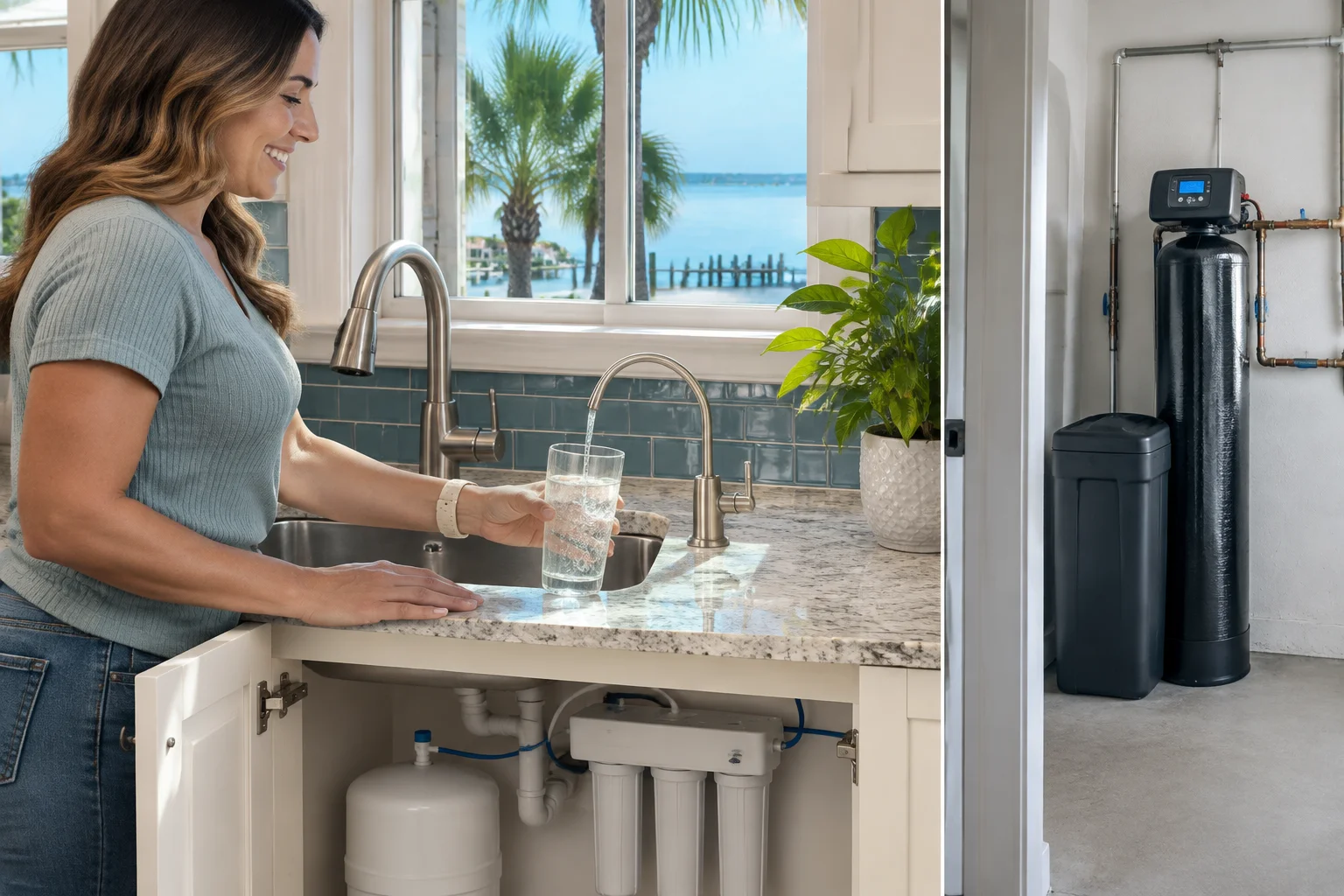
Reverse osmosis usually serves a dedicated drinking water faucet under the kitchen sink. Its membrane and associated filters can reduce many dissolved substances, with actual performance depending on the model and its certified claims. It is a practical option when the goal is better water for drinking, filling reusable bottles, preparing soup, or making coffee.
Cloudy ice cubes are not proof of contamination. Trapped air and freezing patterns can cause cloudiness, although dissolved minerals may contribute. Likewise, poor tasting coffee water can reflect disinfectant taste, mineral balance, or the coffee equipment itself. Reverse osmosis can change beverage flavor, but preferences vary, and some households prefer a system with remineralization.
Homeowners searching for reverse osmosis installation near me should discuss cabinet space, filter replacement, drain connections, and desired output. A refrigerator connection may also be possible if the equipment and pressure requirements allow it. A Superior Mechanical's water filtration, reverse osmosis, and water softener options explain how these approaches can work together.
Where AO Smith equipment fits
AO Smith water filtration and softening products include different treatment types, so the brand name alone does not tell you what a system removes. Compare the specific model's purpose, capacity, flow requirements, maintenance schedule, and independently certified reduction claims where applicable. A drinking water filter and a whole home softener serve different jobs.
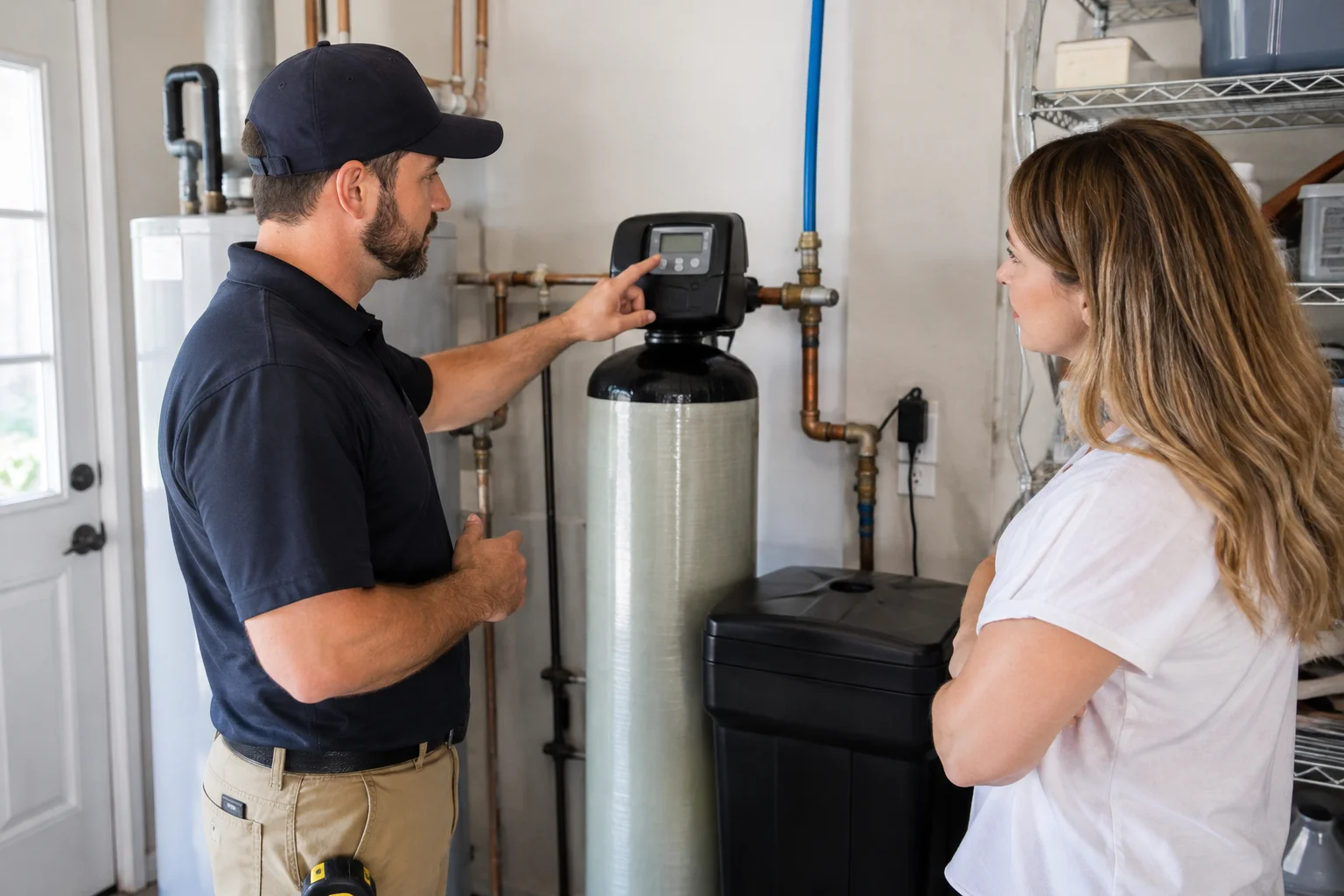
A Superior Mechanical provides AO Smith system options as part of its water softening services. Selection should account for measured hardness, household occupancy, peak flow, and any additional treatment needs. For conventional softeners, ask about regeneration settings, salt consumption, drain requirements, and whether outdoor irrigation should bypass treatment.
Softening adds some sodium to treated water, with the amount related to the hardness removed. Anyone following a sodium-restricted diet should discuss drinking water choices with their clinician and treatment provider. A properly selected reverse osmosis system may reduce sodium at a dedicated drinking water tap.
A better daily routine without unrealistic promises
In the kitchen, reduced hardness can mean fewer mineral spots on glasses and less scale in equipment that heats water. Filtration can address specific taste concerns that softening leaves behind. Together, appropriately selected systems can make the water used for pasta, morning oatmeal, and family water bottles more enjoyable.
In bathrooms and laundry areas, softened water often makes soap easier to rinse and reduces mineral residue. Detergent amounts may need adjustment according to product and appliance instructions. Soft water can feel different on skin, and adding extra soap because of that unfamiliar feel can create unnecessary waste.
Protection also has limits. Treatment will not repair corroded pipes, stop an active leak, or restore every worn appliance. The discussion in Smarter Plumbing for Valparaiso Homes helps distinguish water quality concerns from conditions that require separate plumbing attention.
Keeping treatment effective after installation
A water softener needs more than an occasional bag of salt. Check the brine tank as directed, use the recommended salt, and watch for salt bridges that prevent proper brine formation. Confirm that the unit has power, the bypass is in the correct position, and regeneration settings still match household demand.
Periodic hardness checks on treated water can reveal declining performance before scale becomes obvious. Filtration cartridges and reverse osmosis components need replacement on the manufacturer's schedule, adjusted for actual use and water conditions. Follow sanitation instructions as well. A cartridge that looks clean is not necessarily still providing its rated treatment.
Homeowners searching for water softener service near me may be noticing spots returning, unusual salt use, continuous draining, or a system that no longer regenerates. These changes deserve troubleshooting rather than repeated setting adjustments. The nearby perspective in water softening and plumbing care in Cinco Bayou also connects scale prevention with routine household maintenance.
Plan treatment around the problems you actually have
Before a service visit, note where problems appear and whether they affect hot water, cold water, or both. Photograph recurring scale, record filter changes, and gather any existing water test results. Mention changes in taste, odor, pressure, or color instead of grouping everything under hard water.
If you are comparing water treatment near me in Valparaiso, ask for recommendations that distinguish softening from filtration and drinking water treatment. A Superior Mechanical can help evaluate hardness, discuss AO Smith options, and plan service around your home. The goal is straightforward: less mineral buildup, appropriate treatment for taste and odor concerns, and equipment you can maintain confidently.
Find Water Softening in Valparaiso, FL
If you need Water Softening in Valparaiso, FL, visit our local service page or contact A Superior Mechanical today.
For a broader look at whole-home water filtration, reverse osmosis, and water softener options, visit our water filtration, RO, and water softener page.
Map of Valparaiso, FL
Frequently Asked Questions
Will a water softener remove chlorine taste and odors?
A conventional water softener primarily removes calcium and magnesium, not chlorine or most odor-causing substances. Properly selected carbon filtration may address disinfectant taste, while other odors require source-specific testing and treatment.
How do I know whether my Valparaiso home needs water softening?
Recurring mineral spots, chalky faucet deposits, poor soap performance, and scale in water-heating appliances are reasons to check hardness. A test at your home helps confirm whether softening is appropriate and provides information needed to size the equipment.
Can I use a water softener and reverse osmosis system together?
Yes. A softener can treat household water for hardness while a kitchen reverse osmosis system treats drinking and cooking water. Softening can also help protect an RO membrane from hardness-related scaling. Equipment selection and maintenance should follow water test results and manufacturer requirements.
Related Articles
- Smarter Plumbing for Valparaiso Homes: Leaks, Drains, Pipes, and Prevention
- Less Scale, Fewer Surprises: Water Softening and Plumbing Care in Cinco Bayou
- How Plumbing Wear and Tear Changes the Way Water Softening Works in Inlet Beach
- How Better Water Softening Helps Callaway Homes Protect Plumbing, Fixtures, and Water Heaters
Photo Gallery