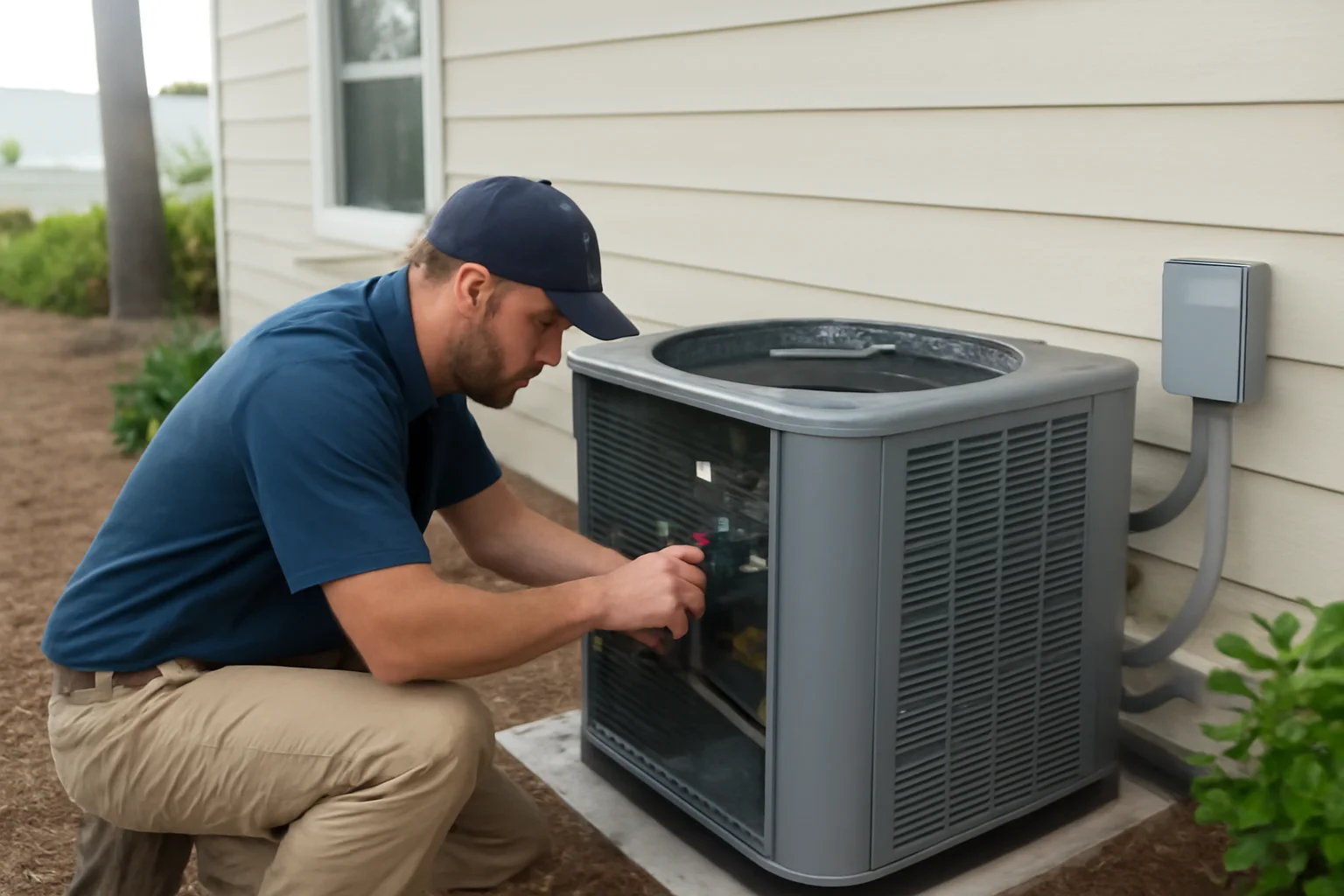
If your air conditioner keeps up during Florida’s long, humid summers, it is doing more than cooling your home. It is managing airflow, humidity, condensate drainage, and refrigerant system performance under coastal conditions. In Blue Mountain Beach, salt air and sea breezes can also add strain to HVAC components. A practical maintenance routine helps you catch small problems early, before they turn into emergency cooling concerns.
This guide is written for homeowners who want to stay ahead of AC repair needs. It covers what to check, what to schedule, and why professional HVAC service matters in Walton County’s coastal climate. For local help, you can review our air conditioning maintenance page for Blue Mountain Beach and our city service area information.
Why Blue Mountain Beach AC maintenance is different in Florida coastal weather
Blue Mountain Beach sits in a warm, humid part of Florida where air conditioners often run for months. That constant load can expose weaknesses that might not show up in cooler climates. Salt air and coastal humidity can contribute to corrosion on outdoor units and can affect the cleanliness of coils and airflow paths over time.
Maintenance is also about protecting the whole cooling process, not just the thermostat. When airflow is restricted or humidity control is off, the system can work harder, run longer, and wear out faster. That can increase energy use and lead to parts failing when you least want it.
Common Blue Mountain Beach conditions that affect HVAC performance
- Heat and humidity: Higher indoor moisture levels can reduce comfort and strain the cooling cycle.
- Salt air exposure: Coils and fan components can accumulate residue and corrode faster.
- Airflow challenges: Dirty filters, blocked returns, and ductwork leaks can reduce cooling output.
- Condensate drainage issues: Clogged drain lines can cause water overflow or moisture problems.
Know what your AC should do on a normal day
Before you troubleshoot, it helps to understand what “good performance” feels like. An air conditioning system that is operating properly typically provides steady cooling, maintains indoor comfort, and controls humidity. Airflow should feel consistent from supply vents, and the system should not cycle too rapidly or run continuously without reaching comfort.
Pay attention to patterns. If you notice a change over a week or two, that often points to maintenance items or early component wear. If the change is sudden, it can indicate a fault that needs professional attention.
Comfort clues that often show up before AC repair
- Rooms feel uneven: Some areas stay warm while others cool quickly.
- Humidity feels high: Condensation, sticky air, or “clammy” comfort can signal cooling or airflow issues.
- Airflow feels weak: Vents blow less air or only cool intermittently.
- Thermostat behavior changes: Temperature readings seem off or the system struggles to satisfy the setpoint.
- Strange noises: New rattling, grinding, or persistent buzzing can point to mechanical problems.
Homeowner checks you can do monthly (and what they can reveal)
You do not need to be an HVAC technician to spot early warning signs. A few quick checks can identify airflow restrictions, airflow imbalance, and condensate concerns before they escalate.
1) Inspect and replace air filters
Filters are one of the most common causes of reduced airflow. In humid coastal areas, filters can load up faster. Check them monthly during peak cooling season and replace when dirty or clogged.
If you are using a higher-efficiency filter, make sure it is compatible with your system’s airflow needs. Poor airflow can lead to coil icing, weak cooling, and higher energy use. If you are unsure, ask an HVAC contractor for filter guidance during scheduled maintenance.
2) Look for supply and return airflow problems
Walk through your home when the system is running. Supply vents should feel like they are delivering air consistently. Returns should not be blocked by furniture, curtains, or storage.
Uneven airflow can also be related to ductwork design or duct leaks. If you suspect duct issues, consider reading Blue Mountain Beach Homes and the Hidden Value of a Duct Inspection. Ductwork affects comfort, indoor air quality, and how hard your system has to work.
3) Check the condensate drain area
As your air conditioner cools, it produces condensation. That moisture must drain properly through the condensate drainage system. If the drain line is clogged, water can back up and create moisture issues in the home.
During routine homeowner checks, look for signs like water around the indoor unit, a musty smell, or overflow safety switch activity. Do not attempt to diagnose or clear refrigerant system issues yourself, but you can track whether condensate drainage seems to be working.
4) Review thermostat settings and operation
Confirm your thermostat settings are correct for cooling. If you have a programmable thermostat or smart thermostat, check for unusual scheduling or sensor placement. Also note whether the system cycles on and off too frequently or refuses to maintain temperature.
Thermostats can be part of the problem, but they can also reveal other issues. Consistent inability to reach setpoint can indicate airflow restrictions, coil performance problems, refrigerant system concerns, or a failing component. A professional evaluation is the safest path to accurate diagnosis.
Seasonal maintenance that matters most for AC performance
Homeowner checks help, but preventive HVAC maintenance is what keeps systems reliable. In Blue Mountain Beach, seasonal service is especially valuable before the hottest stretch and again during peak summer operation.
Pre-season tune up: set the system up for Florida heat
Before the hottest weeks arrive, schedule air conditioning service so technicians can evaluate the cooling system while it is still running normally. This timing can help reduce the chance of breakdowns during the period when demand is highest.
Typical maintenance focuses on critical tasks such as:
- Airflow assessment: Ensuring the system can move air through the indoor unit and ductwork effectively.
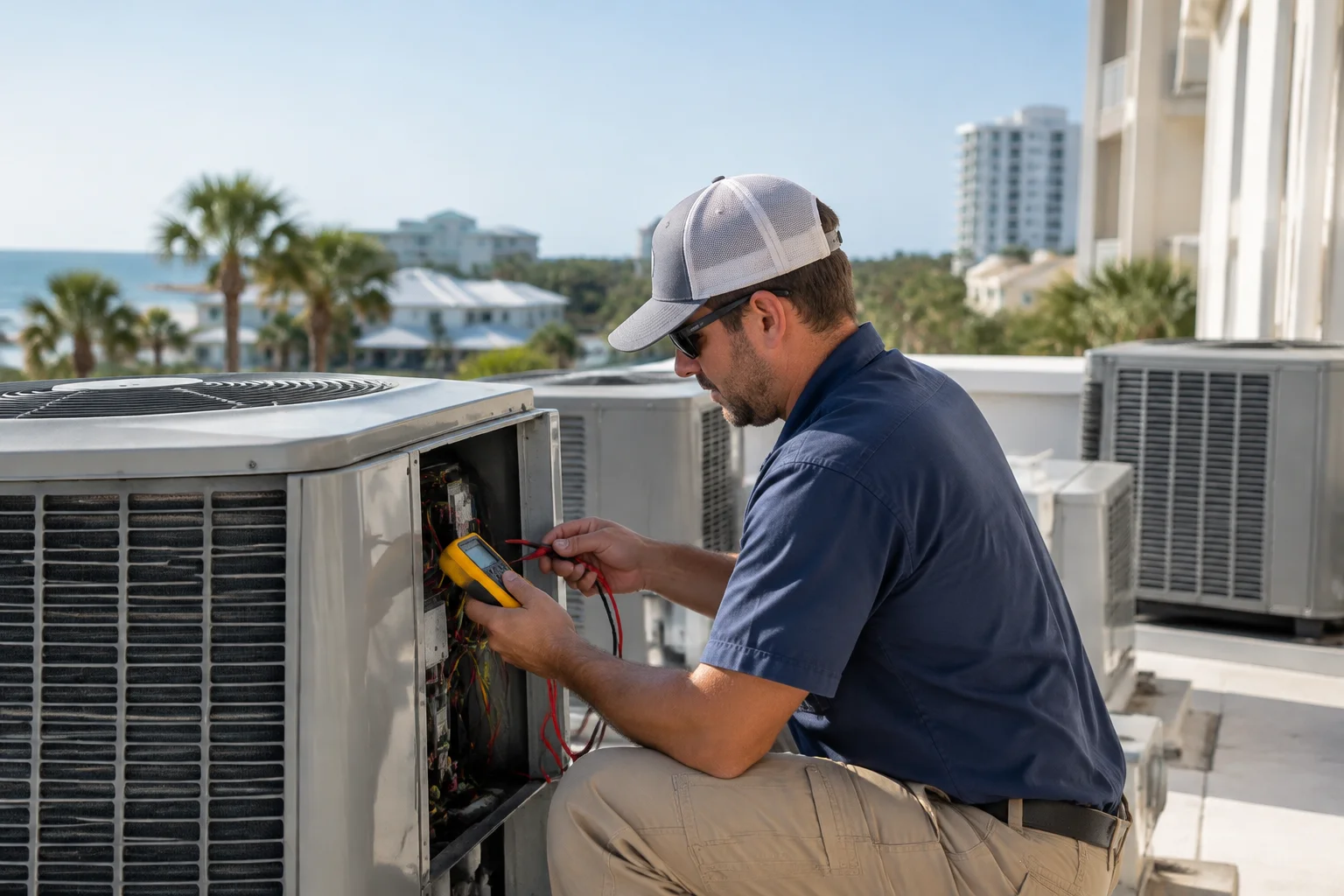
- Coil inspection and cleaning: Checking evaporator and condenser coils for dirt buildup that can reduce heat transfer.
- Condensate drainage verification: Confirming the drainage pathway works as intended.
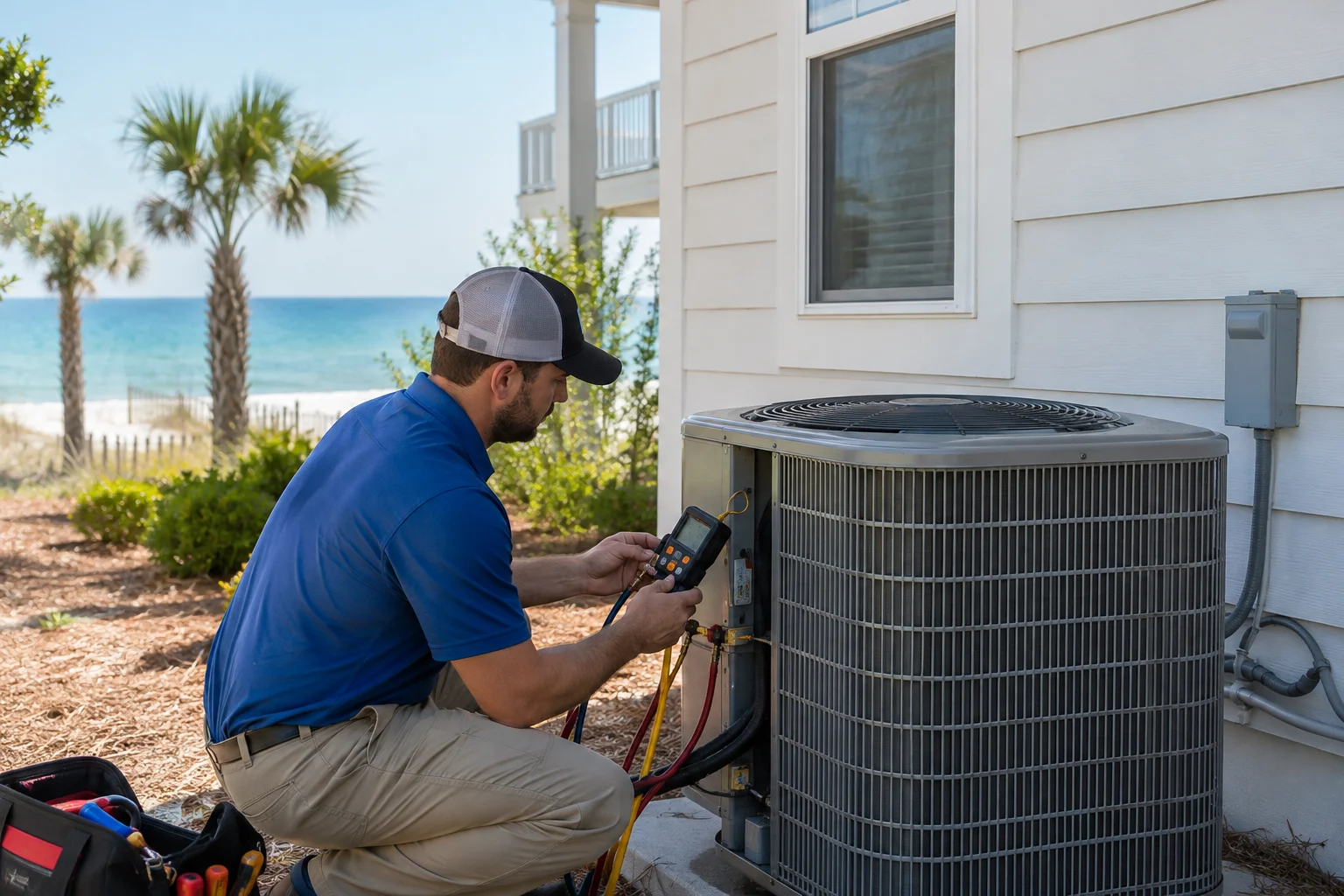
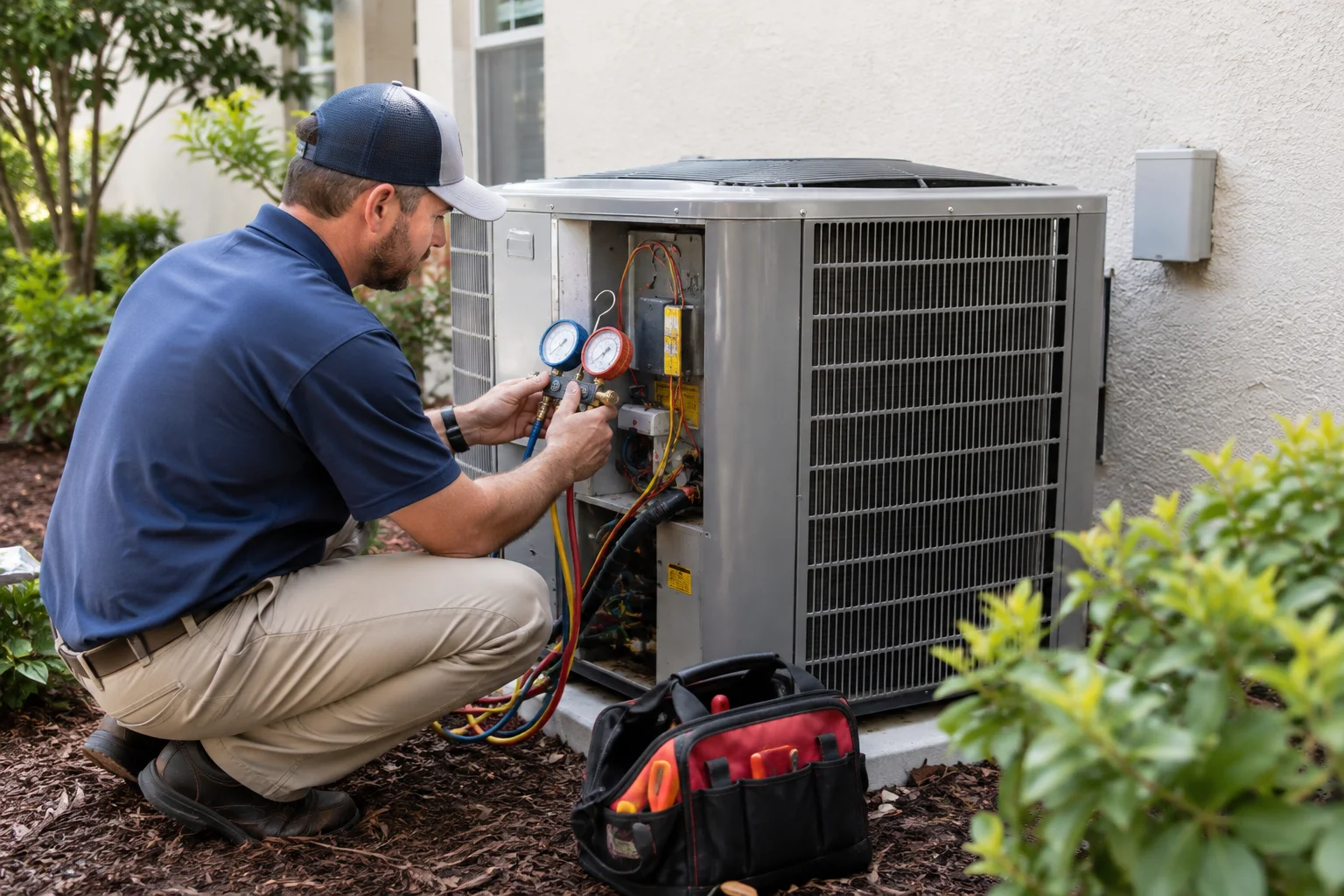
- Refrigerant system checks: Professionals evaluate system performance and look for symptoms that may indicate refrigerant-related issues. Refrigerant diagnosis should be handled in person.
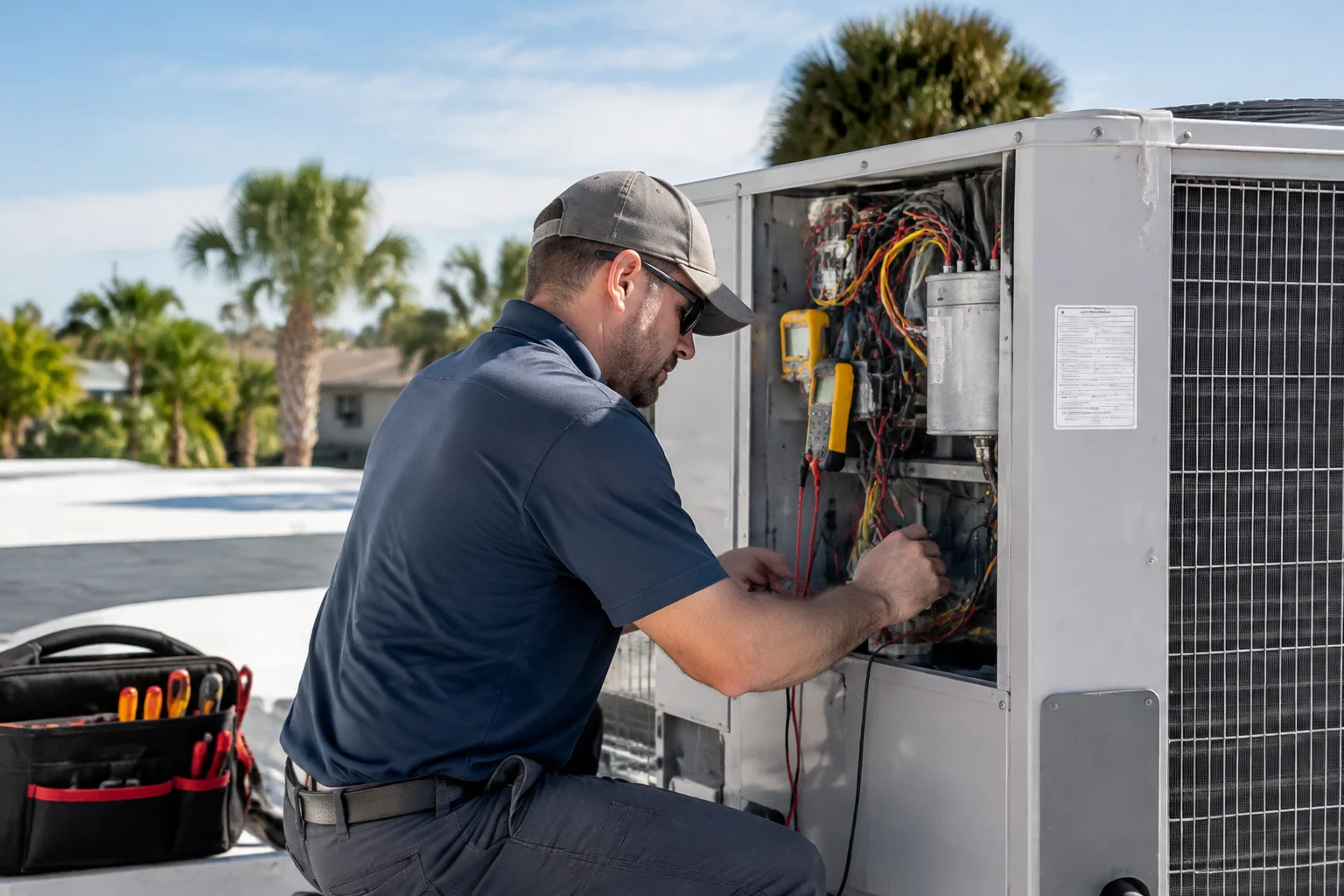
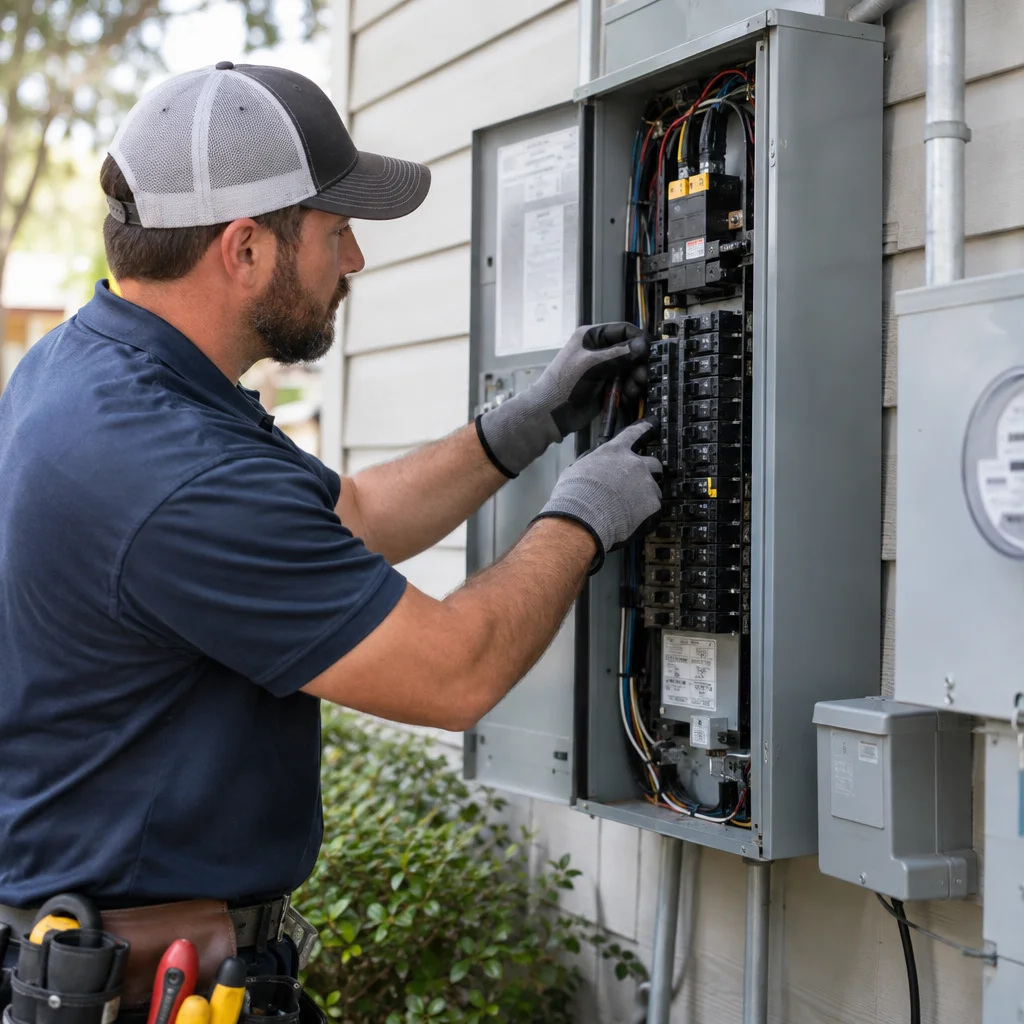
- Electrical component inspection: Technicians inspect connections and operational safety components as part of the service process.
Mid-summer attention: when humidity and comfort change
During the hottest and most humid stretches, pay attention to indoor air quality and comfort. If humidity rises, the system may not be dehumidifying properly. That can happen when airflow is off, when coils are not performing efficiently, or when other system components are struggling.
If you are dealing with persistent comfort issues, consider pairing maintenance with solutions that support indoor air quality. For example, homeowners sometimes benefit from whole home dehumidifiers when humidity management is a constant challenge.
Airflow, ductwork, and indoor air quality: the three-way link
Air conditioning maintenance is not only about the outdoor unit. Comfort and indoor air quality depend on airflow throughout the system, including the ductwork.
How restricted airflow can mimic “AC problems”
When airflow is restricted, the system may struggle to cool. Coils can become less effective at transferring heat, and the system can run longer to reach the thermostat setpoint. The result is higher energy use and a home that feels warmer or more humid than it should.
Airflow problems can come from:
- Dirty filters
- Blocked supply or return vents
- Leaky or disconnected ducts
- Undersized ductwork for the home’s layout
Duct inspection and duct repair can be part of preventive maintenance
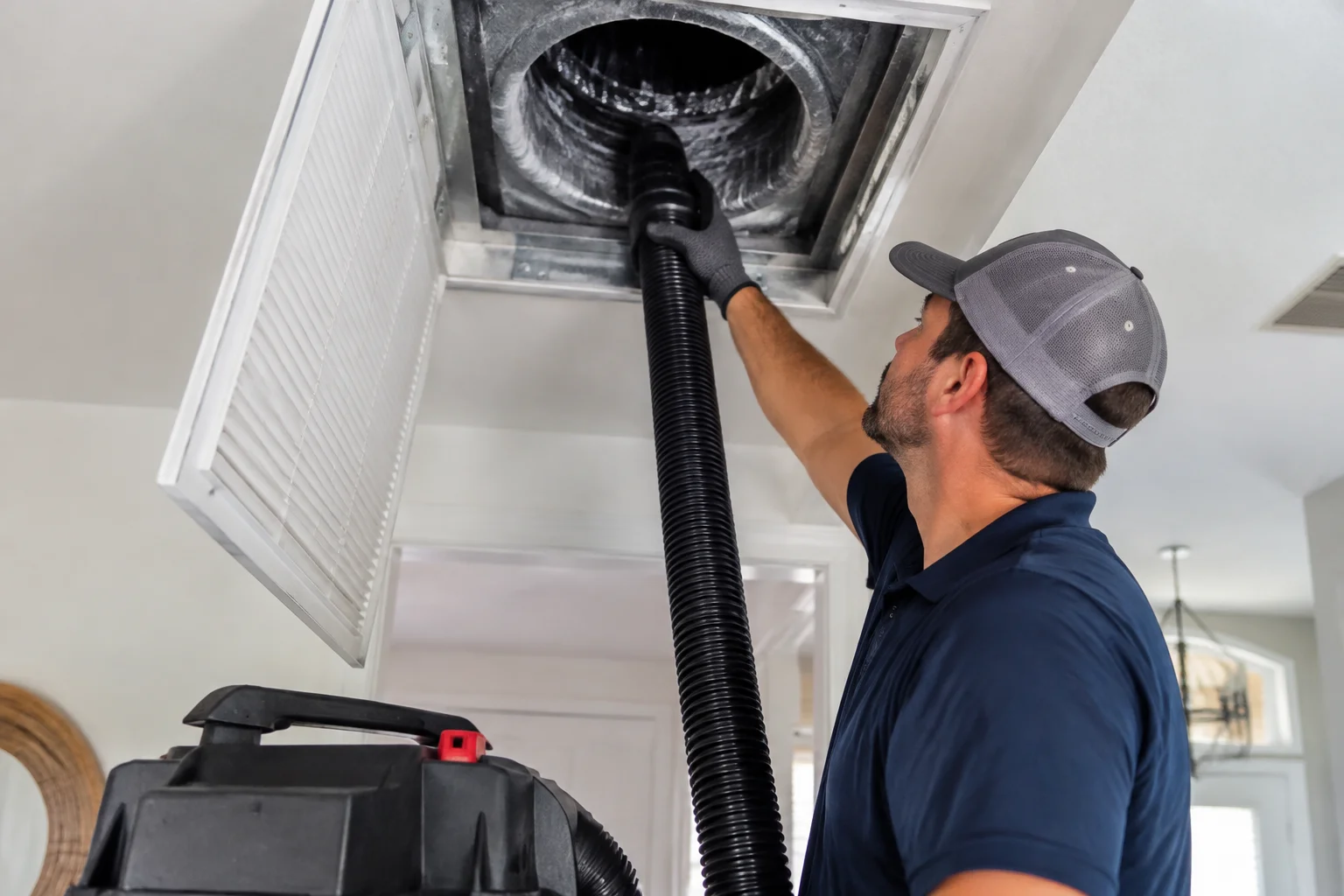
If you notice recurring hot spots, persistent humidity, or uneven airflow, ask about duct inspection. A professional evaluation can help determine whether ductwork contributes to comfort problems. You can also explore duct inspection for more targeted troubleshooting.
For homeowners searching for duct repair near me or duct cleaning near me, it is worth remembering that ductwork performance is tied to airflow and comfort. Cleaning and repairs should be considered based on the specific system condition, not as a one-size-fits-all solution.
Refrigerant systems: what you should watch for and what you should not DIY
Your air conditioner uses a refrigerant system to move heat out of the home. If refrigerant performance declines, cooling can weaken. However, refrigerant issues are not something you should try to diagnose or repair on your own.
Common symptoms that can point to refrigerant system problems
- Cooling is weak even when the thermostat is set correctly
- The indoor coil seems to have abnormal frosting or temperature behavior
- The system runs for long periods without achieving comfort
- Frequent cycling or inconsistent performance
Because refrigerant diagnosis requires proper tools and in-person evaluation, a licensed HVAC contractor should assess the system before recommending any repair. This is especially important in coastal areas where multiple factors, including airflow and coil cleanliness, can overlap with refrigerant-related symptoms.
Condensate drainage: the hidden maintenance item in humid Florida
Condensate drainage is easy to overlook, but it is essential for preventing moisture buildup. In a humid climate like Blue Mountain Beach, the air conditioner may produce more condensation during heavy cooling demand.
If condensate drainage is clogged or not draining properly, you may notice water near the indoor unit, a musty smell, or issues with indoor humidity. Homeowners sometimes confuse these symptoms with general “AC not working,” but the drainage system is a key part of reliable cooling.
During professional air conditioning service, technicians typically verify that condensate drainage is functioning properly as part of preventive HVAC maintenance.
When to call A Superior Mechanical for AC repair or emergency cooling help
Preventive maintenance reduces the likelihood of breakdowns, but problems can still happen. The goal is to address issues early and avoid a situation where the home cannot cool when temperatures spike.
Call for service soon if you notice any of these
- Cooling performance drops gradually over days or weeks
- Humidity rises noticeably even when the system runs
- Airflow feels weak from multiple vents
- Unusual sounds or odors appear during operation
- The thermostat shows correct settings but the system will not maintain temperature
Get emergency AC repair when cooling cannot keep up
If your system stops cooling during extreme heat, treat it as an urgent issue. When an HVAC maintenance near me search can prevent a mid-summer breakdown is helpful, but it does not replace emergency response when the system is not operating.
If you are searching for emergency AC repair near me in Blue Mountain Beach, contacting a local HVAC contractor quickly can help protect comfort and indoor air quality while repairs are scheduled.
How to plan maintenance across different HVAC setups in Walton County
Not every home has the same system. Some homeowners use traditional central air conditioning, while others rely on heat pump comfort or ductless solutions. The maintenance approach should match the equipment and the home layout.
Heat pumps: maintenance still matters in cooling season
In Florida, heat pumps often operate primarily in cooling mode. If your home uses a heat pump, maintenance should still include airflow checks, coil care, condensate drainage verification, and refrigerant system performance evaluation when appropriate.
If you are planning upgrades, you might also be researching heat pump installation near me. Even then, it is smart to understand how ongoing maintenance affects comfort and energy use after installation.
Ductless mini splits: airflow and cleanliness still matter
Ductless systems can improve zoning and comfort, but they still require maintenance. Filter cleanliness, airflow quality, and condensate drainage behavior need attention. If ductless is part of your home, ask about service options when you schedule seasonal AC service.
For homeowners searching for ductless mini split installation near me, maintenance planning should be part of the conversation, especially in humid coastal climates.
Energy use and comfort: what maintenance protects
A properly maintained air conditioner does not just keep you comfortable. It helps manage energy use by allowing the system to cool efficiently. When airflow is restricted, coils are dirty, or humidity control is off, the system often compensates by running longer. Over time, that increased runtime can contribute to wear and higher utility bills.
Maintenance helps ensure the cooling cycle can do its job. It also supports indoor air quality by keeping airflow pathways cleaner and by helping the system control humidity more consistently.
How to choose an HVAC contractor for maintenance in Blue Mountain Beach
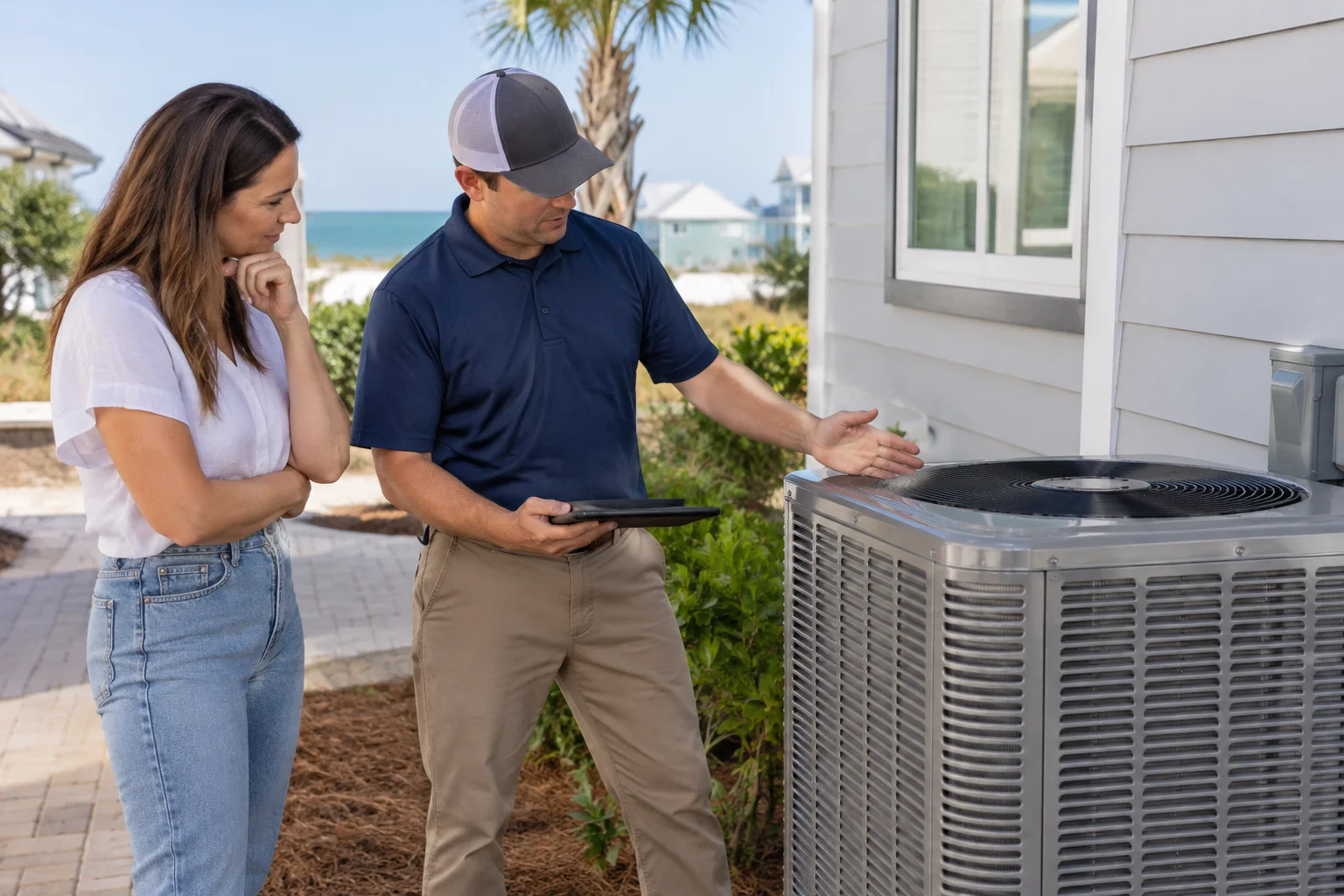
Choosing the right professional is a major part of preventive HVAC maintenance. A local contractor understands how coastal Florida conditions affect equipment and knows what to look for in real homes across Walton County.
What to ask during an air conditioning service visit
- Which parts of the cooling system will be inspected and cleaned?
- How will airflow and indoor comfort be evaluated?
- Will condensate drainage be checked as part of the service?
- How do you handle refrigerant system concerns if symptoms suggest a problem?
- Will ductwork and indoor air quality factors be discussed if comfort issues exist?
It is also helpful to review how the company approaches ongoing maintenance planning. You can explore Smart HVAC Planning for Air Conditioning Maintenance in Laguna Beach, FL for a broader framework you can adapt to your schedule, then tailor it to Blue Mountain Beach’s coastal humidity.
If you have a home with known duct challenges or you suspect airflow imbalance, pair maintenance with a focused duct inspection appointment rather than guessing.
And if you are comparing options for timing and seasonal service, you can also review A Practical Guide to Air Conditioning Maintenance in Camp Creek, FL and Keeping Coastal Comfort Steady: A Homeowner’s Guide to Air Conditioning Maintenance in Upper Grand Lagoon, FL.
Commercial comfort and mixed-use homes: don’t forget the building side
Some properties in the area include commercial spaces, rental units, or mixed-use setups. Maintenance needs can be different when occupancy is frequent or when comfort impacts business operations. If you manage a commercial property and you are coordinating cooling upkeep, you can review Commercial HVAC Installation as a starting point for system planning, then connect it back to ongoing maintenance.
For homeowners, the main takeaway is simple: whether you need HVAC service near me for a residence or a commercial HVAC service near me scenario, the maintenance plan should be based on how the building is actually used.
System replacement conversations: maintenance can still guide the decision
Most homeowners want to avoid replacing a working system. Maintenance helps extend service life by reducing the likelihood of preventable failures. Still, there comes a point when ongoing repairs and performance limits suggest it is time to discuss HVAC replacement.
If you are searching for HVAC replacement near me because your system is struggling to maintain comfort, maintenance history and documented performance matter. A professional evaluation can help clarify whether the issue is fixable through maintenance and repairs, or whether replacement is the more practical long-term path. Avoid relying on online guesses for refrigerant or equipment replacement decisions without an in-person inspection.
For many homeowners, the best next step is to schedule preventive HVAC maintenance first. That approach can reveal whether the cooling system needs cleaning, airflow correction, condensate drainage attention, or targeted repairs.
If you want a maintenance plan tailored to Blue Mountain Beach conditions, visit A Superior Mechanical’s air conditioning maintenance page or browse the broader Walton County service area.
Find Air Conditioning Maintenance in Blue Mountain Beach, FL
If you need Air Conditioning Maintenance in Blue Mountain Beach, FL, visit our local service page or contact A Superior Mechanical today.
Map of Blue Mountain Beach, FL
Frequently Asked Questions
How often should Blue Mountain Beach homeowners schedule air conditioning maintenance?
Most homeowners benefit from seasonal preventive HVAC maintenance, especially before the hottest summer weeks and again during peak cooling demand. If your home runs the system heavily, has noticeable humidity issues, or you have recurring airflow problems, you may need more frequent checkups.
What are the most common causes of weak airflow and uneven cooling?
Weak airflow often comes from dirty filters, blocked returns, or ductwork issues that limit airflow. Coastal humidity can also contribute to buildup on components. A professional inspection can confirm whether the issue is airflow related, coil performance, or another cooling system concern.
Can condensate drainage problems affect indoor air quality?
Yes. When condensate drainage is clogged or not draining properly, moisture can build up around the indoor unit. That can contribute to musty odors and higher indoor humidity, which can impact comfort and indoor air quality.
Should I try to diagnose refrigerant problems myself?
No. Refrigerant system concerns require proper tools and in-person evaluation. Homeowners can watch for symptoms like weak cooling or unusual coil behavior, but diagnosis and any refrigerant-related work should be handled by a licensed HVAC professional.
What should I do if my AC stops cooling during a hot spell?
If your system cannot keep the home cool during extreme heat, treat it as urgent. Contact an HVAC contractor for emergency cooling help so they can assess the system and restore comfort as quickly as possible.
Related Articles
- Smart HVAC Planning for Air Conditioning Maintenance in Laguna Beach, FL
- Blue Mountain Beach Homes and the Hidden Value of a Duct Inspection
- A Practical Guide to Air Conditioning Maintenance in Camp Creek, FL
- Keeping Coastal Comfort Steady: A Homeowner’s Guide to Air Conditioning Maintenance in Upper Grand Lagoon, FL
Photo Gallery