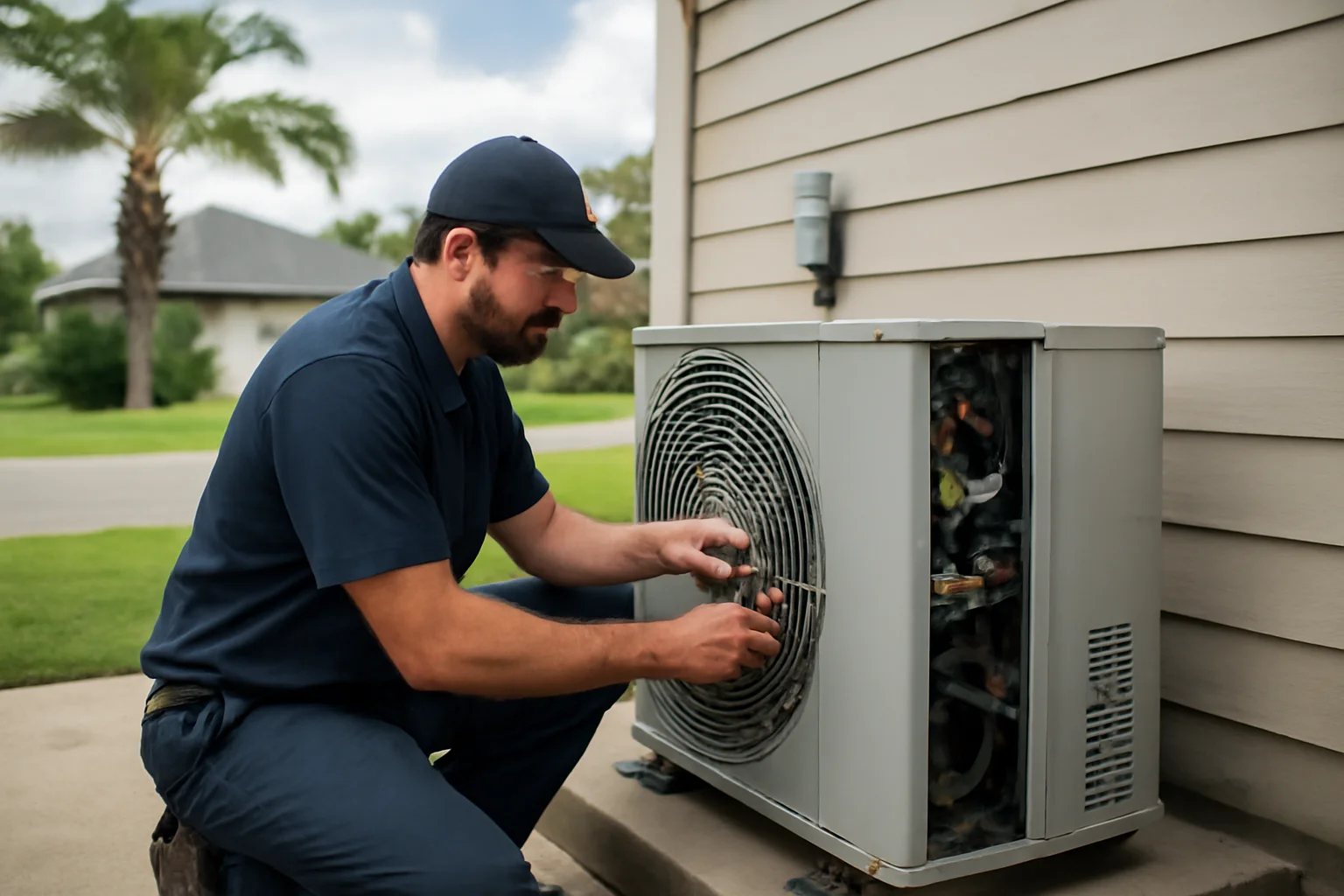
Pretty Bayou homes rely on heat pumps to handle both humid Florida summers and milder winter stretches. But coastal conditions add extra stress. When homeowners notice comfort problems, they often focus on the thermostat or assume the system is simply “old.” The truth is that heat pump service issues in Pretty Bayou are frequently caused by a mix of airflow limits, condensate drainage problems, humid air infiltration, and corrosion from salt air. These factors can look minor at first, then snowball into higher energy use, uneven temperatures, and emergency cooling concerns.
If you are searching for heat pump services in Pretty Bayou, this guide covers the causes local homeowners often overlook and what preventive HVAC maintenance can do to reduce breakdown risk.
Why Pretty Bayou heat pumps face a tougher environment
In coastal Bay County, the air is rarely dry. Heat pumps must move and manage moisture as well as temperature. When airflow is restricted or condensate drainage is off, indoor humidity can rise, and comfort can suffer even if the thermostat reads the right temperature.
Salt air also matters. Even when the outdoor unit is protected by landscaping or positioned away from the shoreline, microscopic corrosion can build over time on coil surfaces, fan components, and electrical contact points. That corrosion can reduce heat transfer efficiency and contribute to noisy operation, poor cooling, or repeated cycling.
And because many Pretty Bayou homes are built or updated at different times, ductwork layouts and insulation quality vary widely. A heat pump may be sized correctly for the home on paper, but real-world airflow and duct sealing issues can still cause performance problems.
Airflow problems that masquerade as “a heat pump issue”
One of the most overlooked causes of heat pump service problems is airflow. Homeowners may notice weak cooling, longer run times, or rooms that never feel comfortable, but they do not always connect those symptoms to ductwork, filters, or supply and return balance.
Dirty or mismatched filters
Heat pumps depend on steady airflow across indoor coils. If a filter is clogged, improperly installed, or too restrictive for the system, the indoor unit can struggle to move air. In humid conditions, restricted airflow can also reduce moisture removal, leaving the home feeling clammy.
Replacing filters is not just a routine task. It is one of the first steps in protecting indoor air quality and preventing system strain. If you are looking for air conditioning maintenance tips that work with coastal Florida, filter discipline belongs near the top of the list.
Blocked returns, closed vents, and “temporary” airflow changes
It is common to close vents in unused bedrooms or to block a return with furniture during renovations. In a heat pump system, those changes can disrupt the pressure balance. That can lead to warm rooms, cold spots, and higher energy use because the system compensates by running longer.
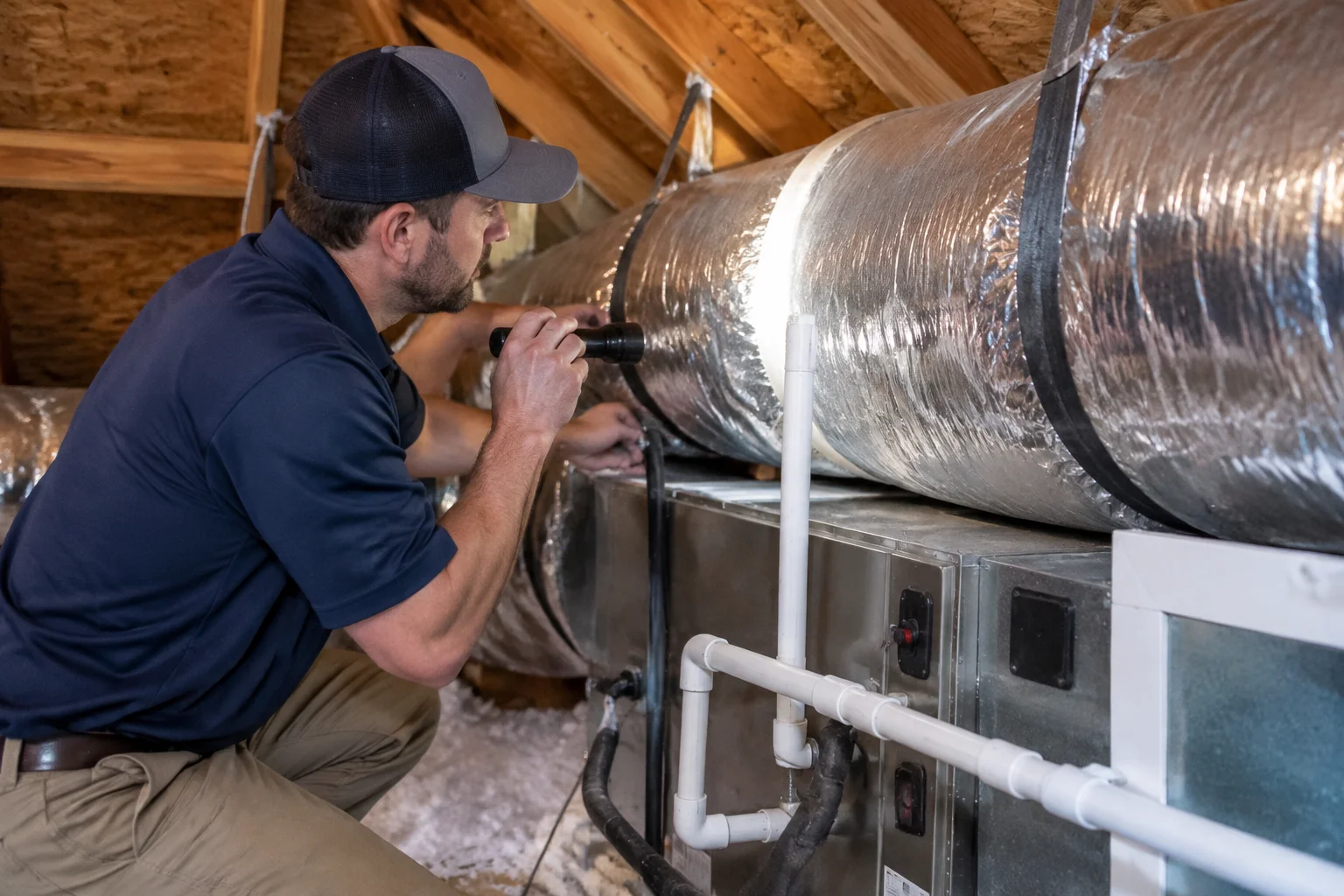
Ductwork leaks and poor duct sealing
Ductwork issues can be subtle. A small leak in a crawlspace or attic can dump cooled air into hot areas, and it can also pull in humid air that interferes with comfort and indoor air quality. If you are trying to understand whether your comfort problems are airflow related, start with the ductwork.
For more context, read What Pretty Bayou Homeowners Should Know About Ductwork Services. If you need help, consider pairing heat pump service with ductwork services in the same area.
Humidity and condensate drainage concerns in coastal homes
Heat pumps remove moisture during cooling mode. If condensate drainage is restricted or if the condensate line is misrouted, the system can struggle to control humidity. Homeowners often interpret the result as “the AC is not working,” but the root cause can be water management.
Condensate line clogs and algae or debris buildup
In Florida humidity, condensate lines can accumulate buildup. A slow drain can cause a backup that leads to poor dehumidification, musty odors, or even water around the indoor unit. Some systems will also shut down to protect components when water levels get too high.
These problems are not always obvious until the home feels wetter than usual. If you see water where it should not be, notice recurring moisture smells, or find that humidity stays high even when the thermostat is set correctly, condensate drainage should be on the checklist for an air conditioning service or heat pump inspection.
Incorrect slope or missing drain pan maintenance
Even when a drain line is present, installation details matter. If the line slopes the wrong way or if the drain pan is not maintained, water can collect and interfere with airflow across the indoor coil.
Professional service matters here because the correct diagnosis involves checking the full drainage path, not just the visible portion.
Salt air corrosion and coil performance decline
Salt air is a quiet contributor to heat pump problems. Corrosion can reduce coil efficiency and increase the likelihood of component failure. It can also make outdoor units run less smoothly, especially during peak summer humidity when the system is already working hard.
Outdoor coil fouling and reduced heat transfer
When coil surfaces become coated or corroded, the heat pump cannot transfer heat as effectively. That can show up as longer run times, elevated energy use, and less consistent cooling.
Homeowners sometimes hose down outdoor units themselves. While it may remove some surface debris, improper rinsing can create issues for fins and fans. A professional cleaning approach is safer because it considers coil condition, airflow direction, and the system’s overall operation.
Fan and contact issues that develop over time
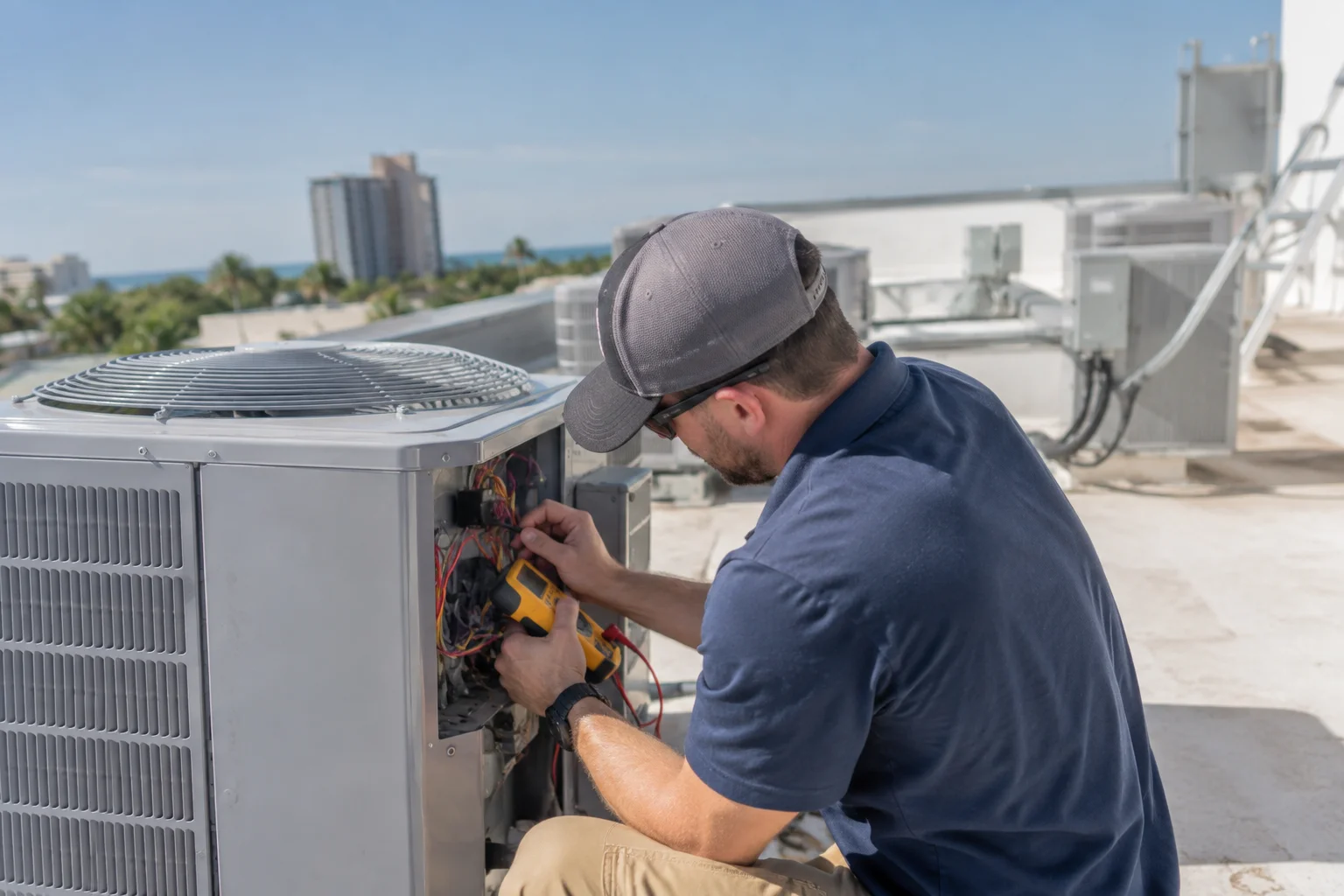
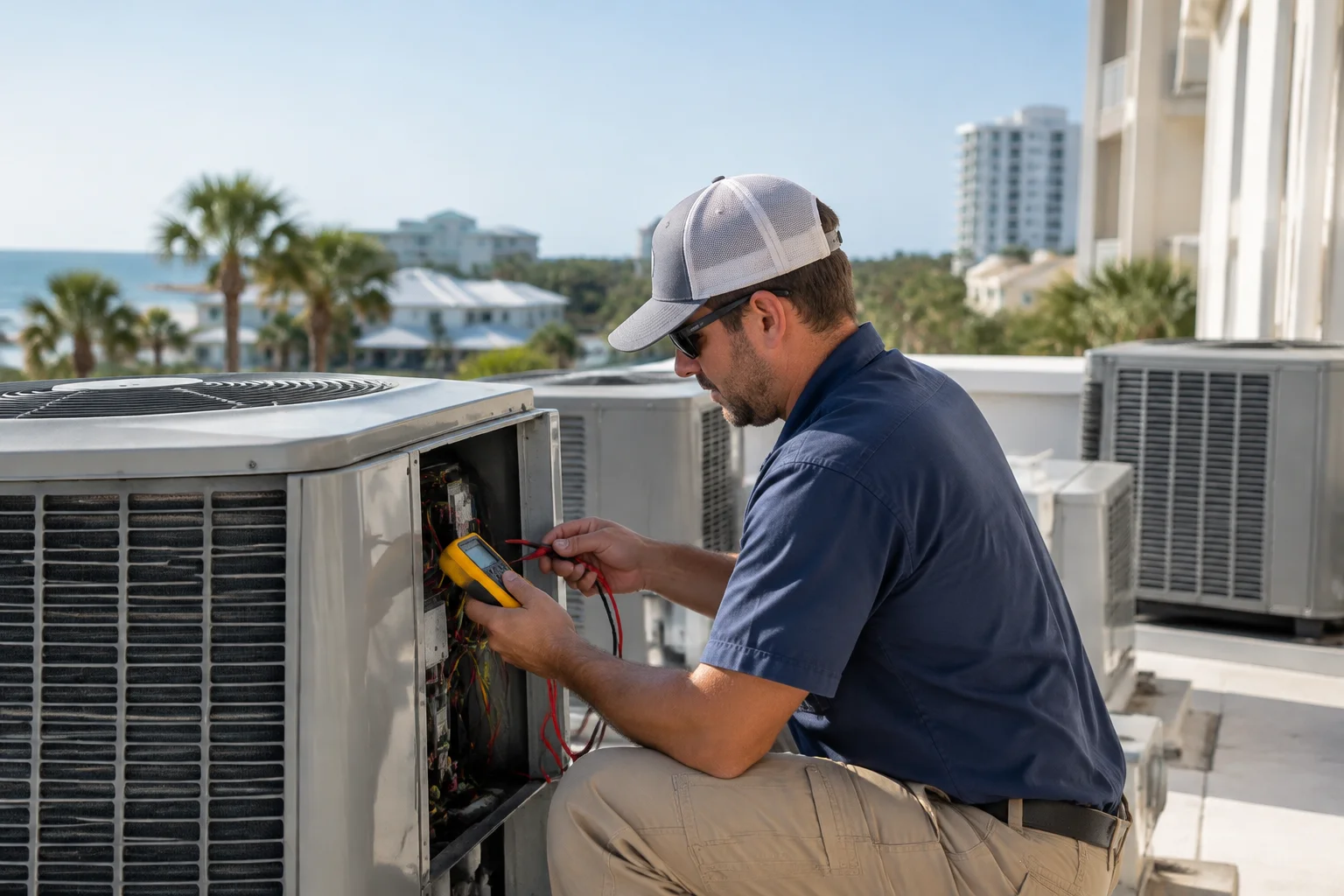
Coastal corrosion can affect fan motors, bearings, and contact points. That can lead to unusual noises, intermittent performance, or failure to reach normal operating conditions. These are not problems you want to guess at. The safest path is a careful inspection by a licensed HVAC contractor near me who can verify what is happening without guessing.
Refrigerant system strain and why it is not a DIY troubleshooting job
Heat pumps use refrigerant to move heat. When refrigerant systems are not performing as expected, the system can run longer, struggle to reach temperature targets, or cycle repeatedly. However, the cause could be related to multiple factors, including airflow and coil performance, not just refrigerant itself.
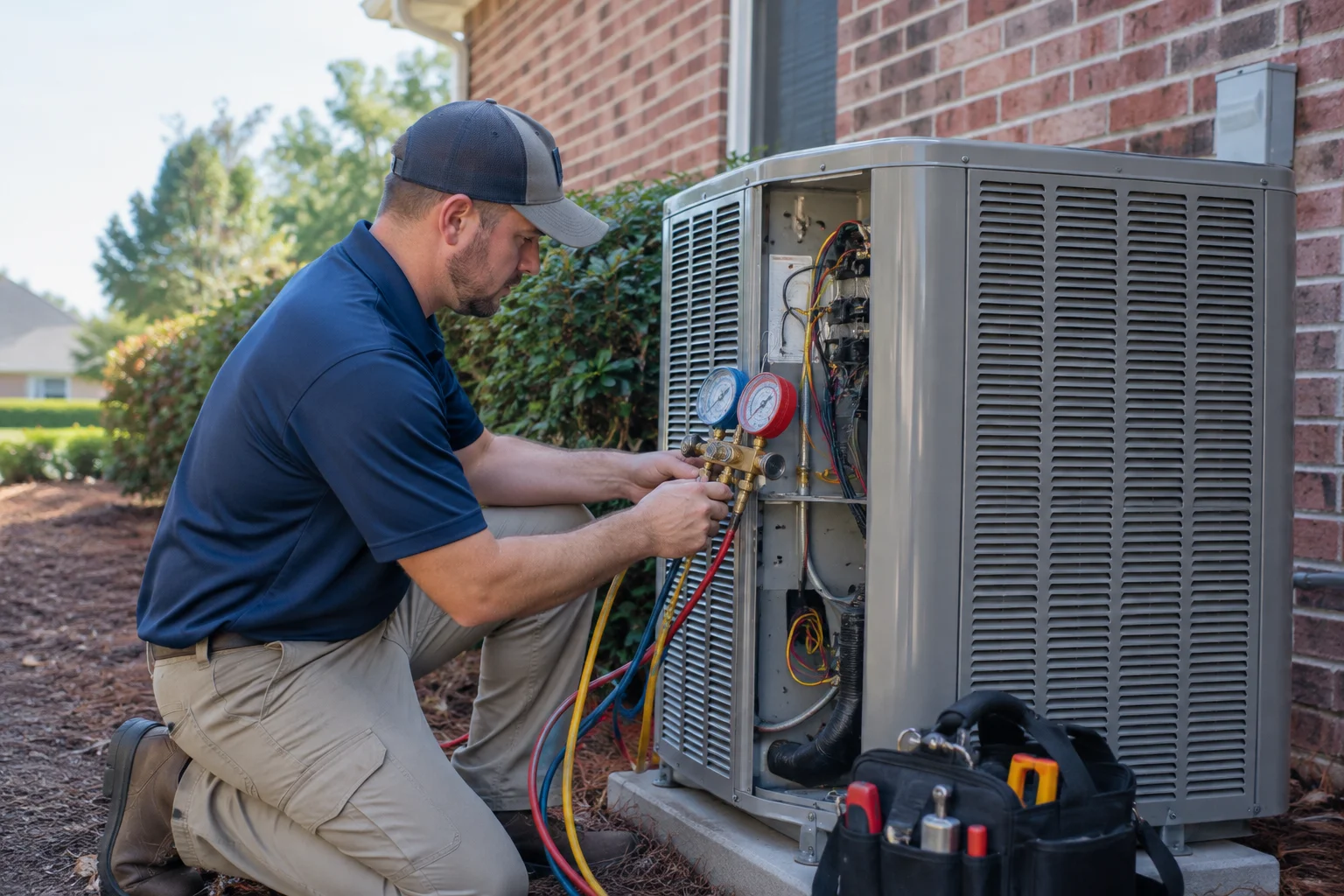
Homeowners sometimes try to “fix” refrigerant issues by adding refrigerant or by using stopgap methods. That is risky and can be inaccurate. Refrigerant work requires training, tools, and verification steps to ensure the system is operating properly and safely.
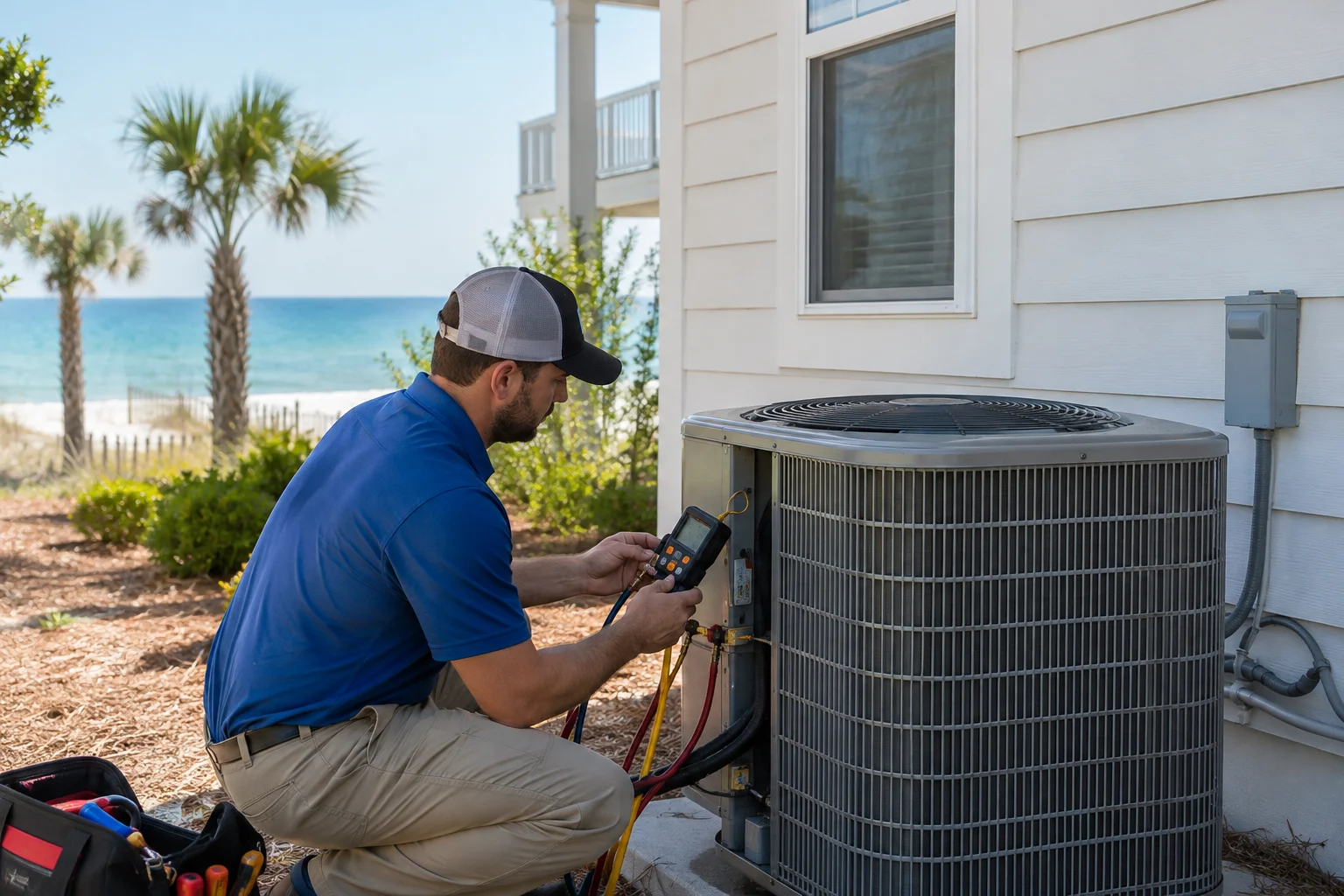
If your heat pump performance changes suddenly or cooling becomes weak, have a professional evaluate the system in person. A technician can check airflow first, verify condensate drainage, and then determine whether refrigerant system service is actually needed.
Thermostat settings, control behavior, and comfort mismatches
Thermostats can contribute to the feeling that a heat pump is failing, even when the system is functioning. In humid coastal conditions, control settings and scheduling can make comfort swings more noticeable.
Overcooling attempts and short cycling
Some homeowners set aggressive temperature changes to cool the house quickly. That can contribute to short cycling, where the system turns on and off more frequently than it should. Short cycling can reduce comfort and increase wear. It can also make humidity control less effective, because the system may not run long enough to remove moisture.
Incorrect mode selection and schedule conflicts
Heat pumps have cooling and heating modes, plus fan settings. When the thermostat is set to the wrong mode or when schedules conflict with occupancy patterns, the system may behave unexpectedly. Modern homes in Pretty Bayou often include updated controls, and those controls can interact with system performance.
If you want to improve comfort and reduce unnecessary cycling, review How Modern Homes in Pretty Bayou Get More from Heating Control Systems. It is a helpful starting point for understanding how programming affects real comfort.
Ductless mini split and airflow expectations in coastal builds
Some Pretty Bayou homes use ductless mini splits for targeted comfort. Ductless systems also rely on airflow and proper indoor unit placement. If indoor units are blocked by curtains, furniture, or heavy drapes, airflow can be reduced. Filters can also clog faster in humid environments.
If your home has ductless equipment and you are dealing with persistent comfort issues, consider professional evaluation. For homeowners searching for Air Conditioning Systems support, it can be worth asking about ductless options. If you are considering upgrades, homeowners also search for ductless mini split installation near me when they want a tailored solution for coastal layouts.
Indoor air quality problems that travel with airflow neglect
Heat pumps influence indoor air quality because they move air through filters and across coils. When airflow is restricted or when moisture management is off, indoor air quality can decline.
Musty odors and higher humidity
A musty smell can point to moisture remaining on or near components. That can be linked to condensate drainage issues, coil contamination, or duct leakage that introduces humid air.
Higher dust and allergy triggers
In coastal Florida, pollen and airborne particulates can be higher during certain seasons. If filters are not maintained, indoor air can feel dusty even after cleaning. Over time, dust buildup can reduce airflow and increase strain on the system.
If improving indoor air quality is part of your goal, explore Indoor Air Quality Services with Air Scrubbers. Pairing indoor air quality upgrades with proper heat pump service can help the system run more comfortably and consistently.
Energy use rises when heat pumps are forced to compensate
When airflow is restricted, condensate drainage is impaired, or coils are coated, the heat pump may run longer to achieve the same temperature. That increases energy use and can lead to a cycle of “it runs all the time” complaints.
In Pretty Bayou, where humidity can make the home feel warmer than the thermostat setting suggests, homeowners often increase cooling demand. If the system is already struggling with airflow or coil performance, the extra demand makes the problem more noticeable.
Energy use is not the only concern. Long run times can also increase wear on components. A professional inspection can identify the hidden causes so you are not paying for comfort you are not fully getting.
Emergency cooling concerns: why small issues turn urgent
Coastal Florida summers do not pause for repairs. A heat pump that is developing problems can fail when you need it most, especially during heat spikes and high humidity stretches.
Homeowners in Pretty Bayou often notice patterns that signal trouble, such as:
- Cooling that takes longer than it used to
- Humidity that stays high even when the temperature looks correct
- Water pooling near the indoor unit or recurring musty odors
- Frequent cycling or unusual noises from the outdoor unit
- Visible buildup on outdoor coil surfaces
When these issues appear, do not wait for total failure. Searching for emergency AC repair near me after the system stops can be stressful and may limit your options. Preventive HVAC maintenance is how you reduce the chance of an emergency cooling situation.
Preventive HVAC maintenance that protects heat pump performance
Preventive HVAC maintenance is not one single task. In Pretty Bayou, a good plan should consider humidity management, airflow, and coastal conditions.
Seasonal inspections focused on airflow and moisture control
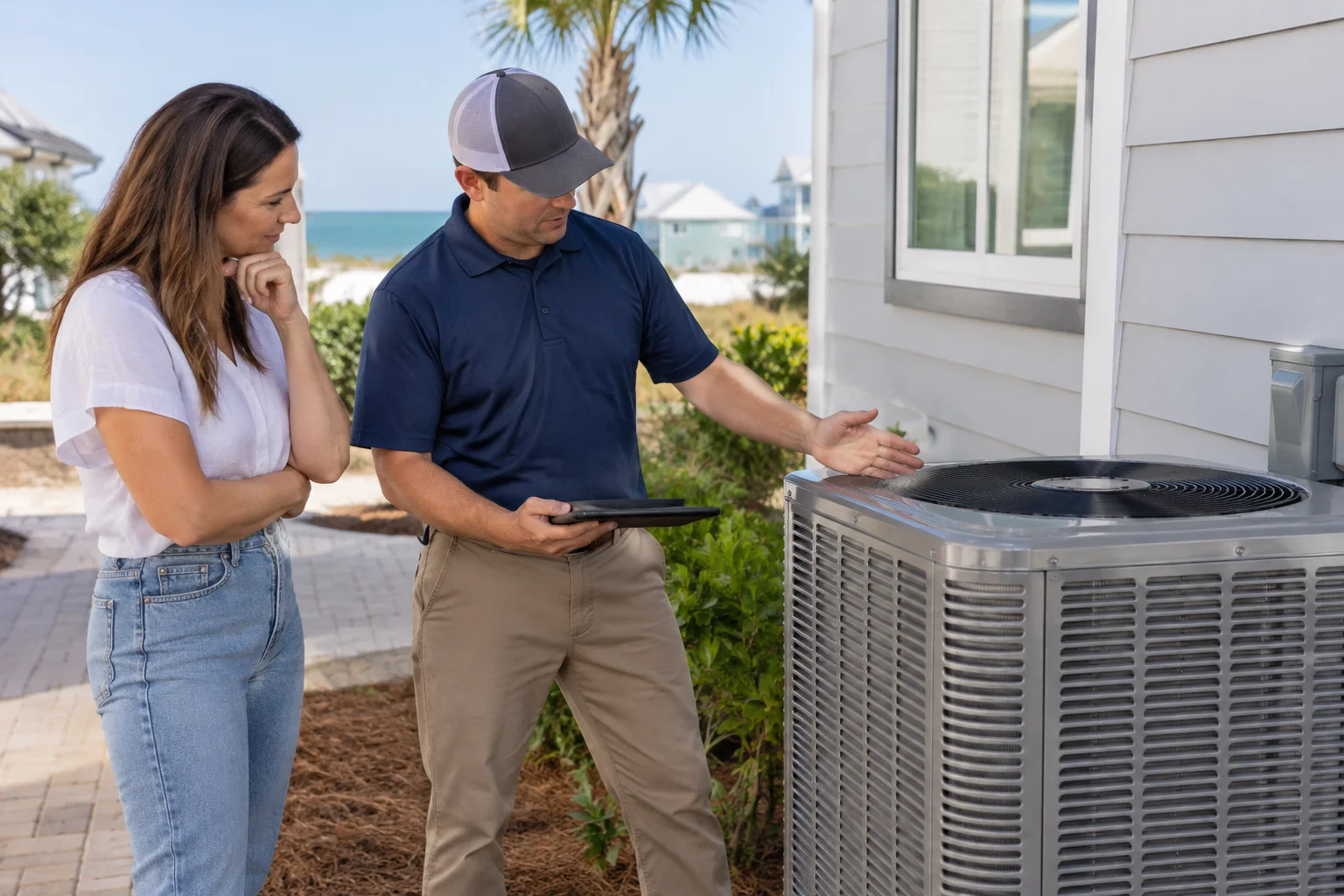
A thorough heat pump service visit should include checks of the indoor and outdoor units, airflow paths, and condensate drainage. This is also when a technician can spot early signs of coil decline, airflow restrictions, or corrosion.
Coastal coil care and outdoor unit protection
Outdoor coil cleaning and inspection should be done with attention to the coastal environment. The goal is to restore heat transfer while minimizing risk to fins and fans. A licensed HVAC contractor near me can also confirm that the unit placement and airflow clearances are appropriate.
Ductwork and filter routines that support consistent comfort
Even the best heat pump service cannot overcome severe duct leakage or long-term filtration neglect. Homeowners can support the system by keeping filters clean and ensuring returns and vents are not blocked. For deeper ductwork concerns, consider Ductwork Services to address leaks, airflow imbalance, and distribution problems.
Thermostat review as part of maintenance
During service, it is helpful to confirm that thermostat settings match how you live in the home. If you recently changed schedules, added occupants, or altered insulation, the system may need adjustments to comfort expectations.
For homeowners upgrading controls, pairing the thermostat strategy with system performance checks can help reduce short cycling and improve humidity control. The guidance in How Modern Homes in Pretty Bayou Get More from Heating Control Systems can help you understand how control behavior affects comfort.
Why local, professional service matters in Bay County
Pretty Bayou is not the same as inland Florida. Salt air, coastal humidity, and airflow realities in local housing stock create unique heat pump challenges. A local technician understands these patterns and can prioritize the most common causes of poor performance.
When you hire a professional, you get more than a quick fix. You get a systematic inspection that can separate airflow limitations from moisture drainage problems, and it can help confirm whether refrigerant system concerns are truly present. That is also why you should avoid DIY refrigerant “top offs” or unverified part replacements.
If you manage a rental property or a commercial space in the area, consistent comfort and reliable cooling are even more important. For those needs, explore Commercial HVAC Repair and ask about maintenance planning that matches your building schedule.
How to choose the right heat pump service provider
Homeowners searching for heat pump service near me should look for a contractor who takes the time to explain what is happening and why. A good service visit should include:
- A review of symptoms, thermostat settings, and how the home feels during cooling
- Inspection of airflow components, including filters and duct-related airflow pathways
- Moisture and condensate drainage checks, especially in high humidity seasons
- Outdoor unit inspection for coil condition and signs of coastal corrosion
- Clear next steps if refrigerant system service is suspected, based on in-person evaluation
If you are considering heat pump replacement near me because your system is repeatedly underperforming, start with a full inspection. System replacement is a major decision and should be based on verified performance findings, not guesswork.
To learn more about services available in the area, visit the Pretty Bayou service area page and review the heat pump services options for your home.
Find Heat Pump Services in Pretty Bayou, FL
If you need Heat Pump Services in Pretty Bayou, FL, visit our local service page or contact A Superior Mechanical today.
Map of Pretty Bayou, FL
Frequently Asked Questions
Why does my Pretty Bayou heat pump run a lot but still feel humid inside?
High humidity with long run times often points to airflow restrictions, dirty filters, duct leaks, or condensate drainage problems. A professional inspection can confirm whether moisture removal is actually happening or whether airflow and drainage are limiting performance.
Can salt air really affect a heat pump in coastal Florida?
Yes. Salt air can accelerate corrosion on outdoor coils and components, which reduces heat transfer efficiency and can contribute to noisy or inconsistent operation. Regular coastal HVAC maintenance helps slow performance decline.
What does condensate drainage have to do with heat pump comfort?
During cooling, heat pumps remove moisture and drain condensate. If the drain line is clogged or the drainage path is not working correctly, humidity control can suffer and water issues can occur. This is why condensate checks are part of quality heat pump service.
Should I try to add refrigerant if cooling is weak?
No. Refrigerant work should be handled by a qualified technician with the right tools and verification steps. Weak cooling can be caused by airflow limits, coil fouling, or other issues, so an in-person evaluation is necessary before refrigerant service.
How often should I schedule HVAC maintenance for a coastal Pretty Bayou home?
Most homeowners benefit from seasonal maintenance before peak cooling demand and again before the cooler season. If you want help preventing mid-summer breakdowns, ask about an HVAC maintenance plan suited to Bay County humidity and coastal exposure.
Related Articles
- What Pretty Bayou Homeowners Should Know About Ductwork Services
- A Pretty Bayou Homeowner’s Guide to Air Conditioning Systems That Handle Coastal Florida
- How Modern Homes in Pretty Bayou Get More from Heating Control Systems
- Keeping Pretty Bayou Cool: A Homeowner’s Guide to Air Conditioning Maintenance That Works With the Coast
Photo Gallery