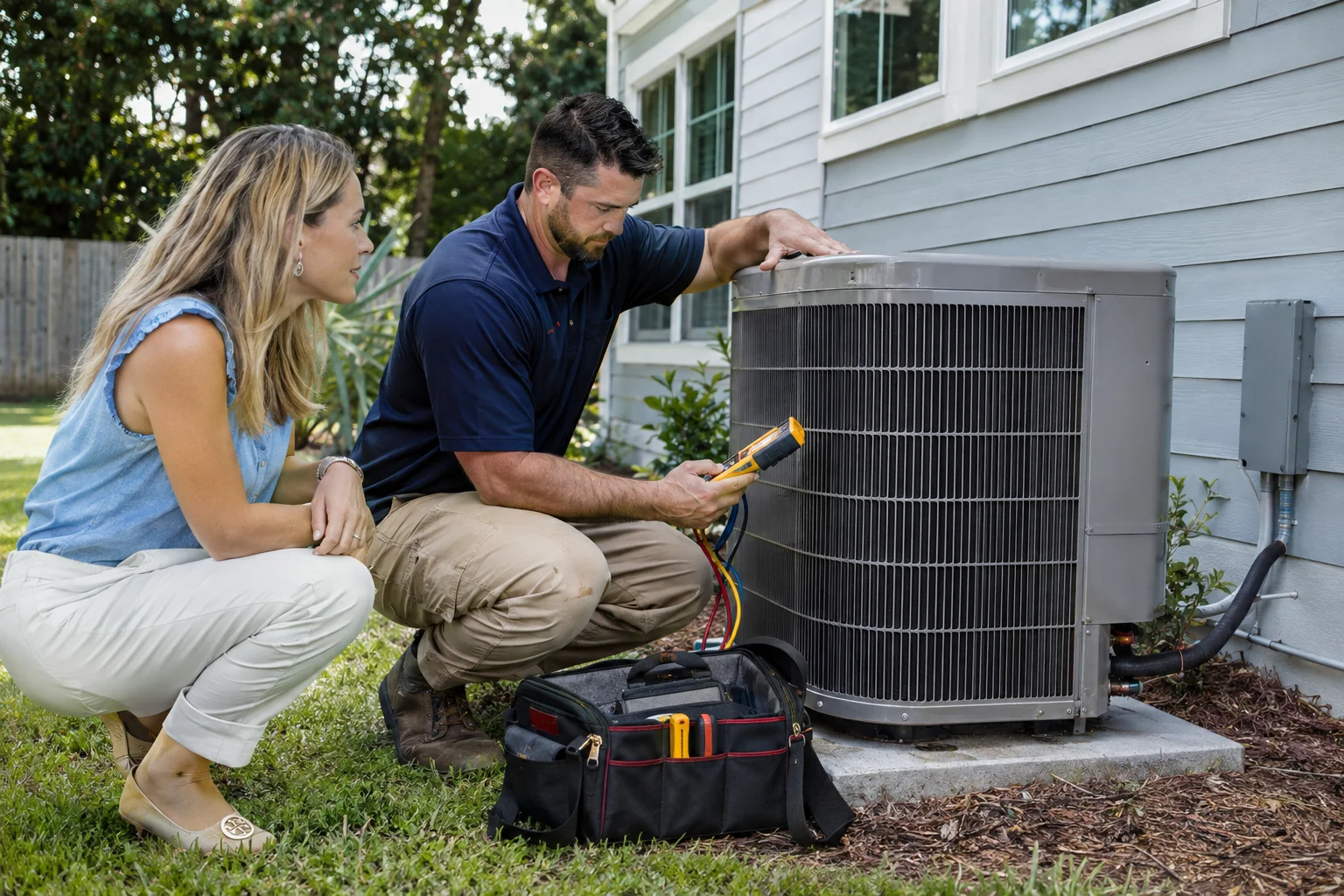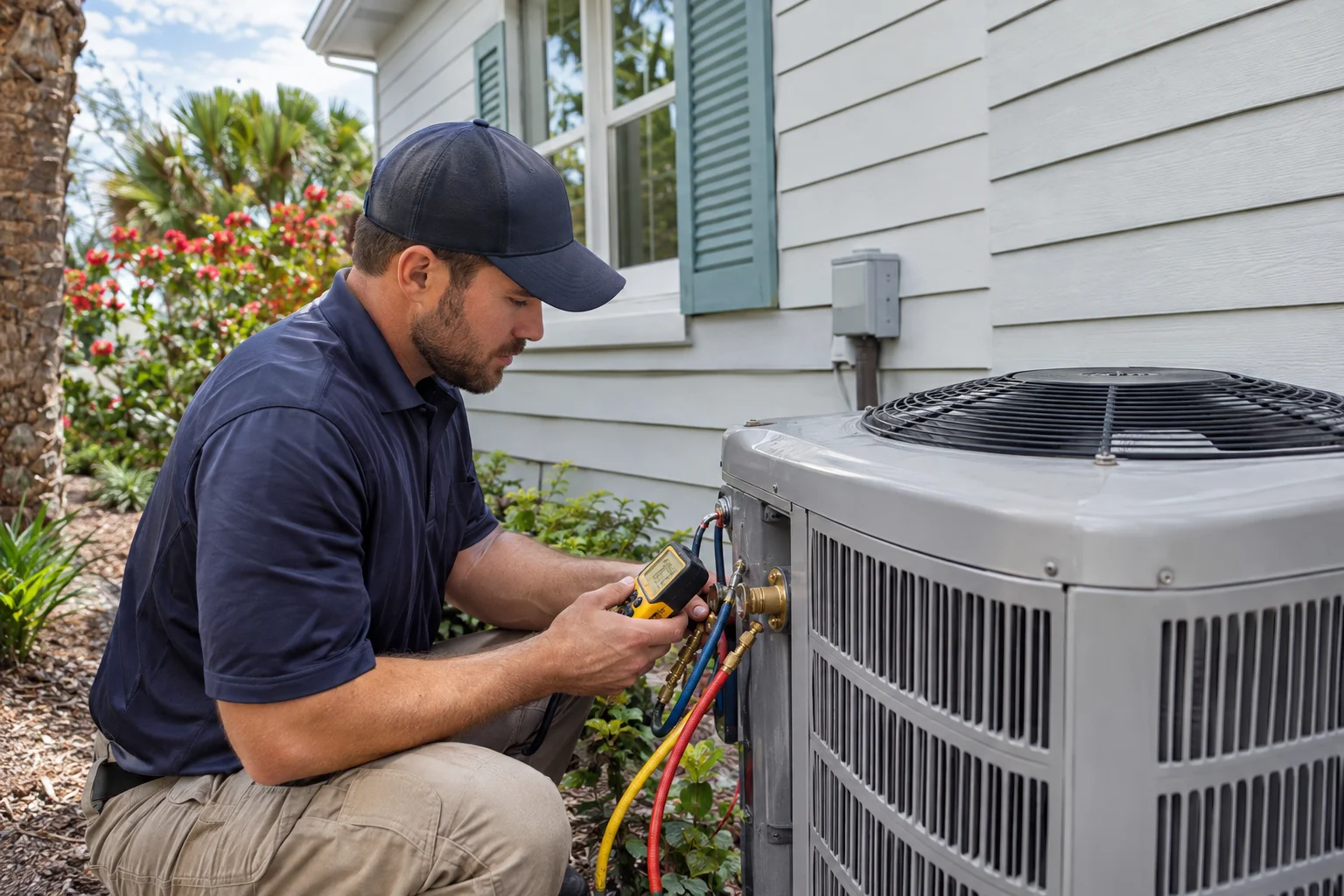
A cool morning in Santa Rosa Beach can expose a heating problem that stayed hidden through months of air conditioning. The thermostat calls for heat, but the bedrooms stay chilly. Perhaps the outdoor unit runs constantly, or the air feels warm near the air handler but barely reaches the farthest room.
Good heating repair starts with understanding the whole system. Equipment condition, airflow, thermostat settings, ductwork, and coastal moisture all affect comfort. For homeowners planning heating system repair in Santa Rosa Beach, FL, the goal should be dependable heat without leaving underlying problems unresolved.
Coastal Heating Problems Rarely Stay in One Season
Santa Rosa Beach has a long cooling season, humid weather, and occasional cold snaps that put heating equipment to work quickly. Many local homes use heat pumps, which handle both heating and cooling. A problem discovered during winter may also explain weak air conditioning performance the previous summer.
Salt air can accelerate corrosion on exposed components, while storms can leave debris around outdoor units or cause water intrusion. Coastal exposure varies by property, so equipment near the Gulf may need different attention than a more sheltered installation inland. Neither a newer home nor a recently installed system is automatically protected from these conditions.
Local service matters because diagnosis should reflect how the home is actually used. A full-time residence, a seasonal home, and a vacation rental can have very different filter loads and thermostat habits. A Superior Mechanical's Santa Rosa Beach HVAC services provide a starting point for addressing those needs within the local climate.
Describe the Comfort Problem Before Choosing the Repair
Before scheduling service, note which rooms are uncomfortable, whether the problem is constant, and what the thermostat displays. Record unusual noises and any error codes without opening equipment panels. These details give the technician a clearer starting point than simply reporting that the heat does not work.
Weak heat or unusually long cycles
Heat pump supply air often feels less hot than furnace air, especially during colder weather. That alone does not mean the system is failing. However, an indoor temperature that keeps falling, persistently cool supply air, or a sudden increase in runtime deserves attention. Possible causes include restricted airflow, refrigerant leaks, control problems, or failed auxiliary heat.
Uneven temperatures and frequent stopping
A warm living room and cold bedroom may indicate a duct problem rather than a failed heating component. Short cycling can involve thermostat placement, airflow restrictions, overheating protection, or equipment sizing. Homeowners searching for heating repair near me should describe these patterns so the visit addresses the cause rather than just the immediate symptom.
Know Which Heating System Is Being Diagnosed
Heat pumps and outdoor equipment
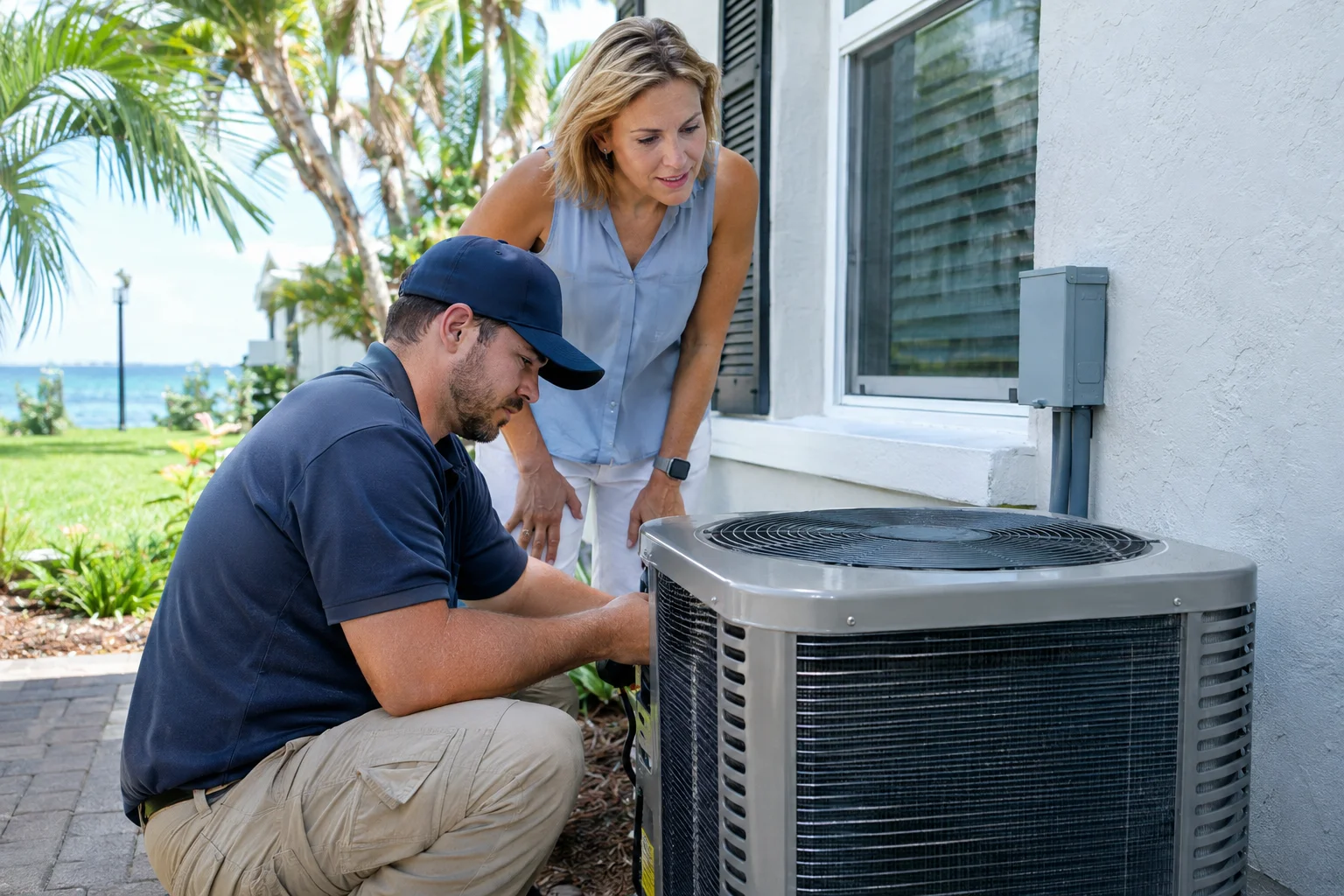
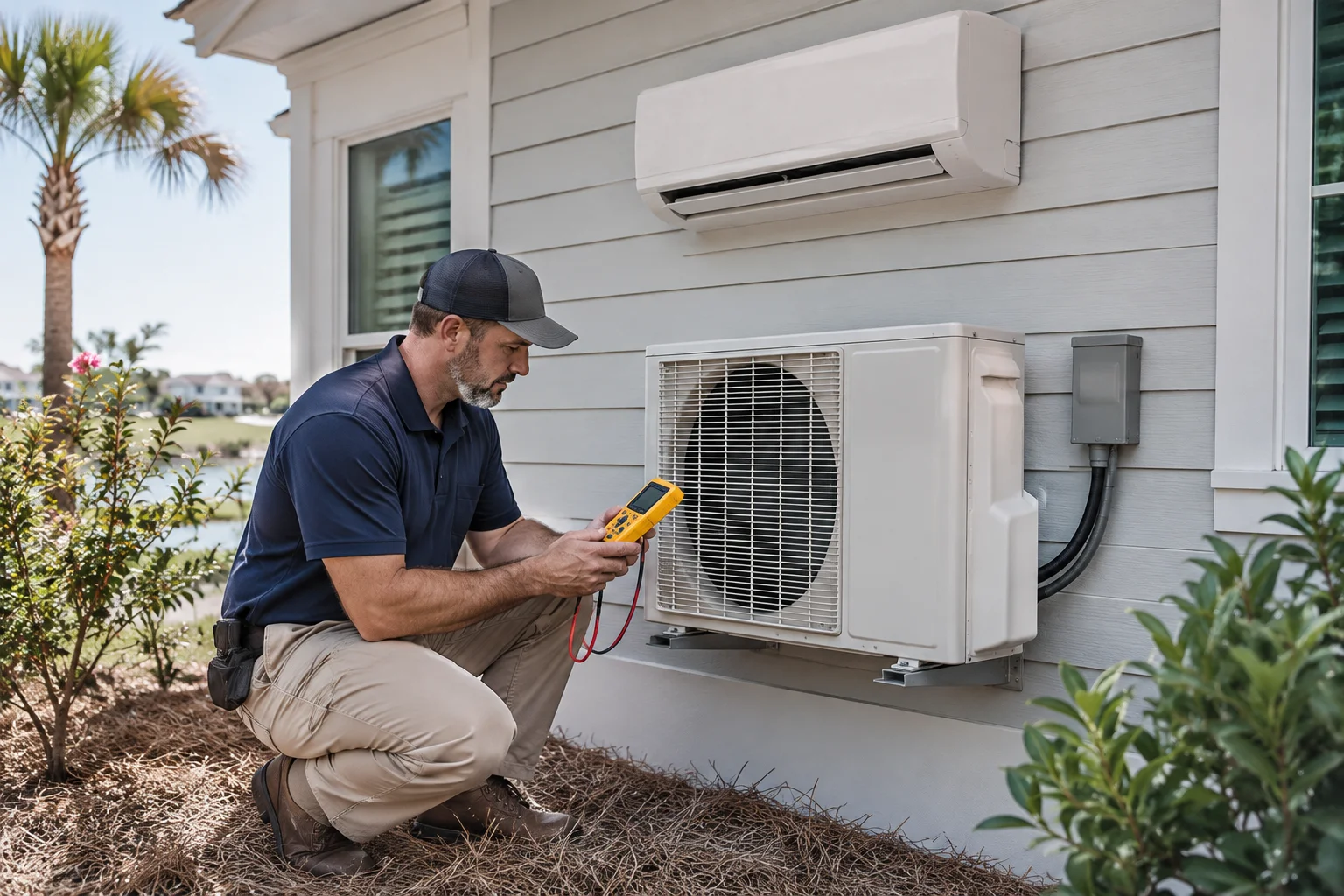
In heating mode, a heat pump absorbs outdoor heat and releases it indoors. The outdoor unit, sometimes casually called the condenser, changes roles as the system switches modes. Light frost and brief defrost cycles can be normal, and steam during defrost is not necessarily smoke. Persistent heavy ice, repeated shutdowns, or grinding noises are different concerns.
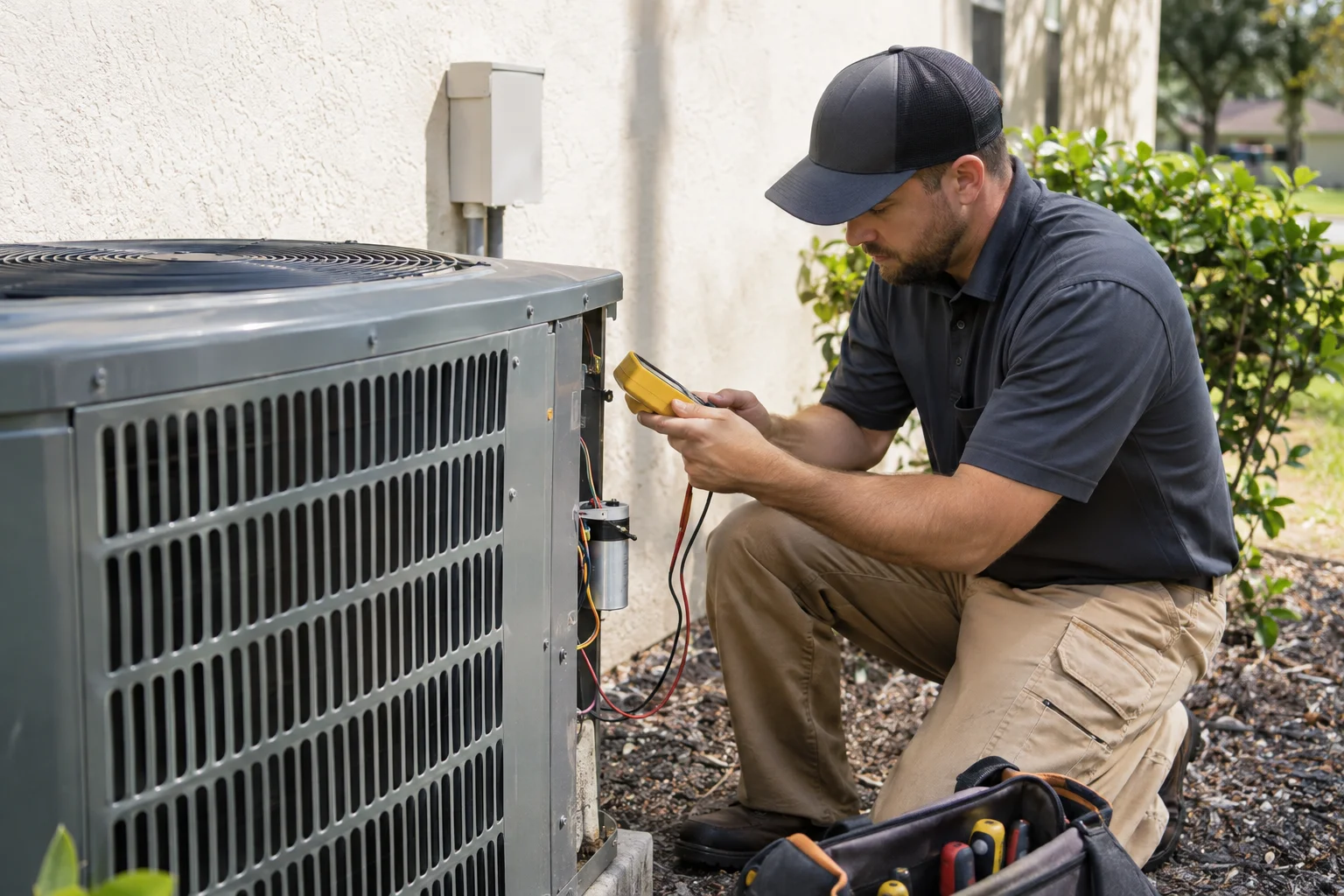
Heat pump repair may involve sensors, the reversing valve, fan components, refrigerant circuits, or controls. A technician should distinguish normal defrost operation from a fault. Refrigerant is not a fuel that gets used up; a low charge warrants investigation for leakage or an installation issue rather than repeated topping off.
Air handlers, electric heat, and furnaces
Air handlers move conditioned air through the home and may contain electric resistance heat strips. A blower problem can reduce both heating and cooling performance, while a failed heat strip can leave a heat pump struggling during colder conditions. Professional testing helps separate an airflow failure from an auxiliary heating failure.
Homes with furnaces need equipment-specific service. Electric furnaces require checks of heating elements, controls, and airflow. Gas furnace service also involves ignition, combustion, venting, and safety controls. Homeowners should not bypass safety switches or attempt burner adjustments. For fuel-burning equipment, maintain carbon monoxide alarms according to manufacturer instructions.
Airflow Is Part of the Repair, Not an Extra
A heating system cannot deliver comfort if it cannot move enough air. Dirty filters, obstructed returns, blower faults, and damaged ducts can all reduce delivery. Simply increasing the thermostat setting does not correct those restrictions and may extend runtime without making the cold rooms comfortable.
Start with accessible checks: inspect the filter, keep furniture away from return grilles, and make sure supply vents are open and unobstructed. Avoid closing multiple vents to push heat elsewhere. That can raise duct pressure and create new operating problems instead of balancing the house.
Look beyond the equipment cabinet
Older homes may have aging duct insulation, loose connections, or modifications from past renovations. Newer homes can still have poorly balanced branches or inadequate return pathways. In either case, ductwork repair and duct sealing may be necessary when warmed air escapes into an attic or unconditioned space.
A useful assessment may include static pressure measurements, blower checks, and room-by-room airflow evaluation. If an air handler repair near me search begins with weak vents throughout the house, ask whether the diagnosis includes the filter, indoor coil, blower, and ducts. Replacing a motor without addressing excessive resistance can leave the original problem in place.
Humidity Still Matters When the Heat Is On
Heating raises air temperature and generally lowers relative humidity, but it does not necessarily remove moisture from the home. During mild, damp coastal weather, short heating cycles may leave the house feeling clammy. Moisture can also enter through air leaks, leaky return ducts, or inadequate bathroom and kitchen exhaust.
Use a separate humidity monitor rather than relying only on how the air feels. An indoor relative humidity range around 30 to 50 percent is a useful general target, adjusted for comfort and condensation concerns. Persistent readings above 60 percent deserve investigation, especially when accompanied by musty odors or visible moisture.
Indoor air quality services can help identify whether moisture control, ventilation, filtration, or duct repairs are appropriate. A whole-home dehumidifier may help when moisture remains high despite corrected HVAC problems. An air purifier is not a substitute for fixing leaks, drying wet materials, or controlling humidity.
Filters, coils, and drain lines work together
A higher-efficiency filter must be compatible with the system's airflow capacity. Selecting a restrictive filter without checking that capacity can reduce performance. The indoor coil, commonly called the evaporator coil during cooling, also needs appropriate inspection because dirt buildup can interfere with heat transfer and airflow.
Condensate drain lines deserve attention even during a heating appointment because the same equipment often handles the next cooling season. A blocked cooling drain can cause leaks or a safety-switch shutdown. Homeowners who later search for AC repair near me may be dealing with an issue that could have been identified during seasonal service.
Thermostats Should Match the Equipment and the Household
A thermostat can appear normal while sending incorrect commands because of configuration, wiring, sensor, or compatibility problems. Heat pumps need appropriate controls for reversing-valve operation and auxiliary heat. Incorrect setup can cause poor comfort or unnecessary resistance heating, which generally costs more to operate than heat pump heating.
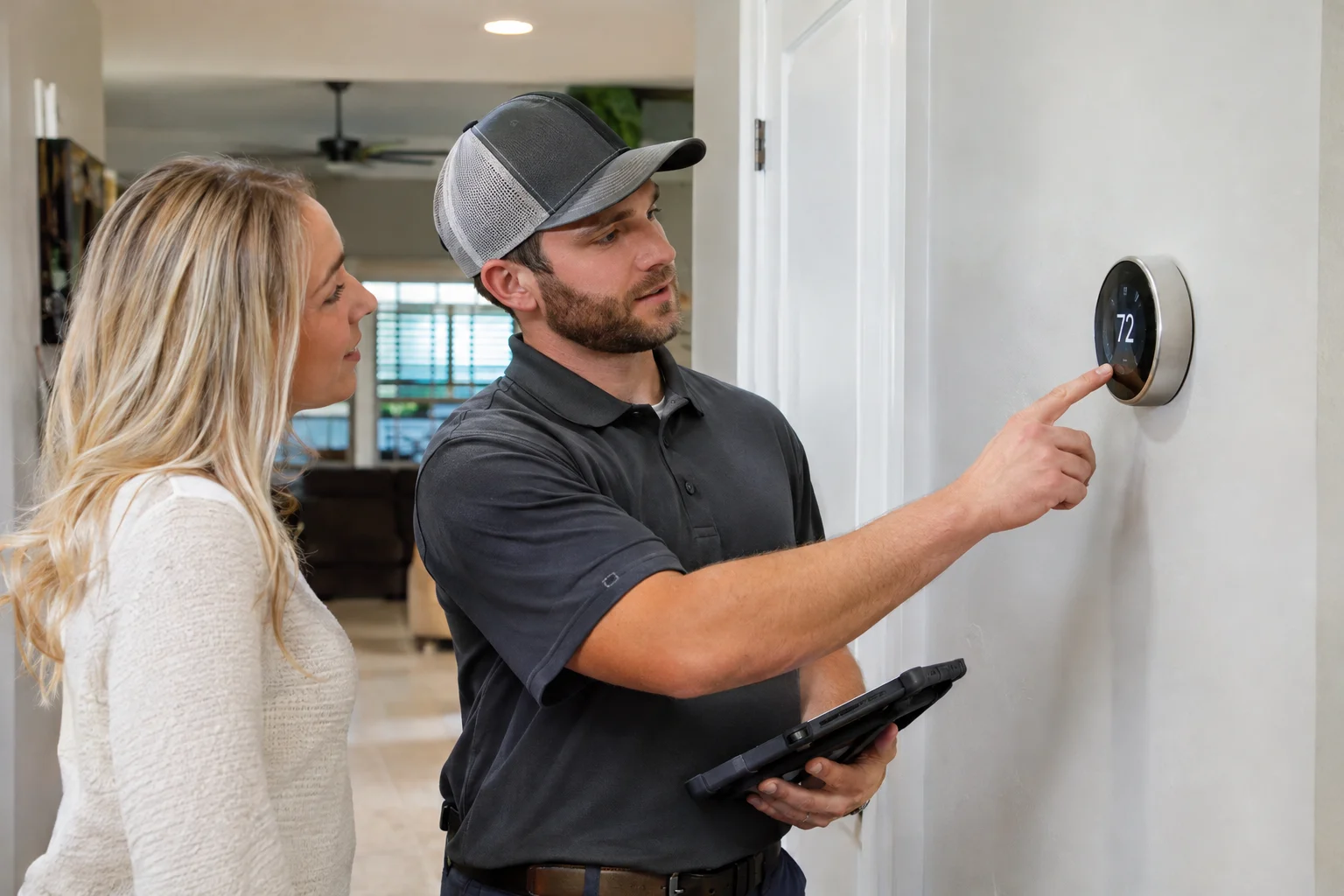
Thermostat installation should include configuration and an operating test, not just mounting a new screen. If you are searching for thermostat installation near me, ask whether the service includes heat pump staging and backup heat settings. Keep portable heaters and other heat sources away from the thermostat because they can distort its reading.
Moderate, consistent settings often suit coastal homes well. Large temperature increases can trigger auxiliary heat on some systems. For seasonal properties, avoid shutting off climate control for long periods without considering humidity. Ask for settings appropriate to the equipment, occupancy pattern, and moisture conditions rather than using one universal vacation temperature.
Remodels and Additions Can Change the Repair Decision
A converted garage, enclosed porch, or new bedroom changes the home's heating and cooling needs. Extending an existing duct run may leave both the addition and the original rooms uncomfortable if the system lacks capacity or available airflow. Insulation, window area, air leakage, and room orientation all matter.
Ductless mini splits can serve additions or isolated rooms, but they still need proper sizing, placement, drainage, and maintenance. Multi-zone designs require careful planning as well. For larger or more complex layouts, this guide to room-by-room coastal comfort and VRF HVAC explains another approach worth discussing with a qualified contractor.
Prevent the Next Cold-Morning Breakdown
Inspect filters regularly and replace them according to their condition and manufacturer guidance. Homes with pets, renovation dust, or frequent guest turnover may need more frequent checks. Keep vegetation and stored items away from outdoor units, maintaining the manufacturer's required clearances. Do not cover an operating heat pump.
Schedule heating maintenance before cooler weather and cooling service before the busiest warm-weather period when possible. Seasonal demand can limit appointment availability. A maintenance visit should address operating temperatures, airflow, controls, visible corrosion, drainage, and equipment condition, with additional tests guided by findings.
After storms, inspect equipment visually from a safe distance. Do not operate flooded equipment or approach damaged wiring. Coastal coil cleaning should follow manufacturer recommendations; pressure washing or harsh chemicals can damage fins and protective coatings. Coordinating heating upkeep with air conditioning service helps keep shared components on a consistent maintenance schedule.
Recognize Urgent Problems and Plan the Next Step
Smoke, sparks, a strong burning odor, repeated breaker trips, or water reaching electrical components require prompt action. Stop using the system if it is safe to do so, and do not repeatedly reset a breaker. If a carbon monoxide alarm sounds or you suspect a gas leak, leave the building and contact emergency services or the gas utility from outside.
A complete loss of heat during cold weather can also become urgent, especially for vulnerable occupants. Use 24/7 emergency HVAC services for urgent equipment problems, but treat immediate fire, gas, and carbon monoxide hazards as emergencies first. Never heat the home with an oven or outdoor combustion equipment.
For nonemergency repairs, ask for the diagnosed cause, recommended work, and any remaining concerns. Compare a repair's cost with equipment condition, repair history, efficiency, and comfort performance. If replacement becomes reasonable, planning financing around better overall comfort can help keep ductwork and controls in the discussion rather than focusing only on new equipment.
A Superior Mechanical provides heating repair for Santa Rosa Beach and surrounding Walton County communities. When scheduling, share the system type, symptoms, affected rooms, and recent changes to the home. That information helps turn a heating complaint into a practical plan for reliable comfort, balanced airflow, and fewer preventable disruptions.
Find Heating System Repair in Santa Rosa Beach, FL
If you need Heating System Repair in Santa Rosa Beach, FL, visit our local service page or contact A Superior Mechanical today.
Map of Santa Rosa Beach, FL
Frequently Asked Questions
Why does my heat pump blow air that feels cool during heating?
Heat pump air often feels cooler than furnace air, and a brief change during defrost can be normal. If the home cannot reach the thermostat setting, the air stays cool, or the outdoor unit develops persistent heavy ice, schedule service. Airflow restrictions, refrigerant problems, controls, or auxiliary heat failures may be involved.
Can heating system repair help with uneven room temperatures?
Yes, if the repair addresses the underlying cause. Uneven temperatures can result from blower problems, leaking ducts, restricted returns, or poor air balancing. A remodel or addition may also change heating needs. Ask for an airflow and duct assessment rather than assuming the heating equipment needs replacement.
How should Santa Rosa Beach homeowners prepare their heating systems for cooler weather?
Inspect the filter, clear obstructions from vents and returns, and keep the outdoor unit clear according to manufacturer requirements. Schedule professional maintenance before seasonal demand increases. Coastal homes also benefit from checks for corrosion, drainage problems, duct leakage, and proper thermostat and auxiliary heat operation.
Related Articles
- Finance Better Comfort, Not Just a New HVAC System in Santa Rosa Beach
- Room-by-Room Comfort on the Coast: Planning VRF HVAC in Santa Rosa Beach
- Keeping Santa Rosa Beach Toilets Reliable: Repairs, Replacements, and Prevention
- A Better Electrical Backbone for Santa Rosa Beach Homes: Panels, Wiring, and Everyday Power
Photo Gallery