Commercial HVAC systems in the 30A area are expected to do more than keep temperatures comfortable. With Florida heat, high humidity, and salt air that can drift near coastal properties, equipment can wear faster and operate less efficiently. For homeowners who own or manage commercial spaces such as offices, retail, restaurants, and multi-unit properties, a maintenance plan is often the difference between steady comfort and emergency cooling concerns during peak season.
This guide focuses on commercial HVAC maintenance for coastal Florida homes and mixed-use properties in 30A, FL. It covers what matters most, what problems commonly show up locally, and how professional service helps protect airflow, indoor air quality, and energy use.
Why 30A coastal conditions make commercial HVAC maintenance non optional
Most HVAC issues start quietly. A system that is slightly underperforming may still blow air, but it can consume more energy, struggle to maintain consistent temperatures, and increase humidity inside the space. In coastal Walton County, several factors raise the stakes:
- Heat and humidity: When outdoor temperatures climb, cooling demand increases. Humidity also affects comfort, comfort level consistency, and how well coils remove moisture.
- Salt air exposure: Salt can contribute to corrosion on outdoor components. Over time, that can reduce airflow efficiency and increase the chance of component failures.
- Airflow and ductwork stress: Commercial buildings can have longer duct runs, complex layouts, and multiple zones. Even small airflow restrictions can cause temperature swings and higher energy use.
- Condensate drainage challenges: During cooling, systems create condensate. If condensate drainage is restricted or drains poorly, moisture can lead to comfort problems and indoor air quality issues.
That is why commercial HVAC maintenance is not just a seasonal “checkup.” It is a planned approach to keep refrigerant systems, condensate drainage, thermostats, ductwork performance, and indoor air quality working together.
What commercial HVAC maintenance should cover in a coastal Florida building
Every property is different, but a quality maintenance visit typically includes several core areas. If you are searching for HVAC maintenance near me because you manage a commercial space, these are the categories to expect from a licensed HVAC contractor.
1) Outdoor condenser and coil care for salt air and Florida pollen
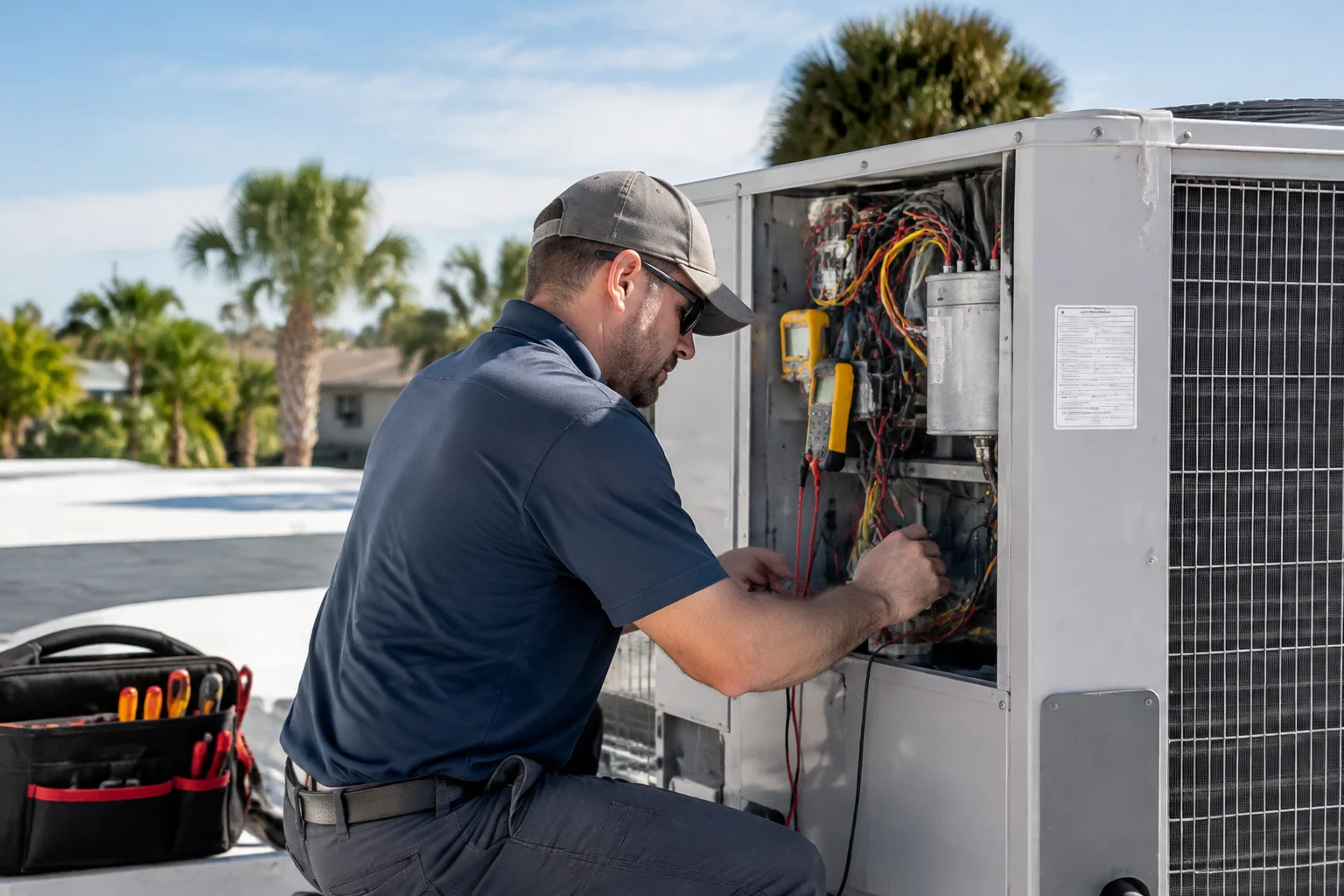
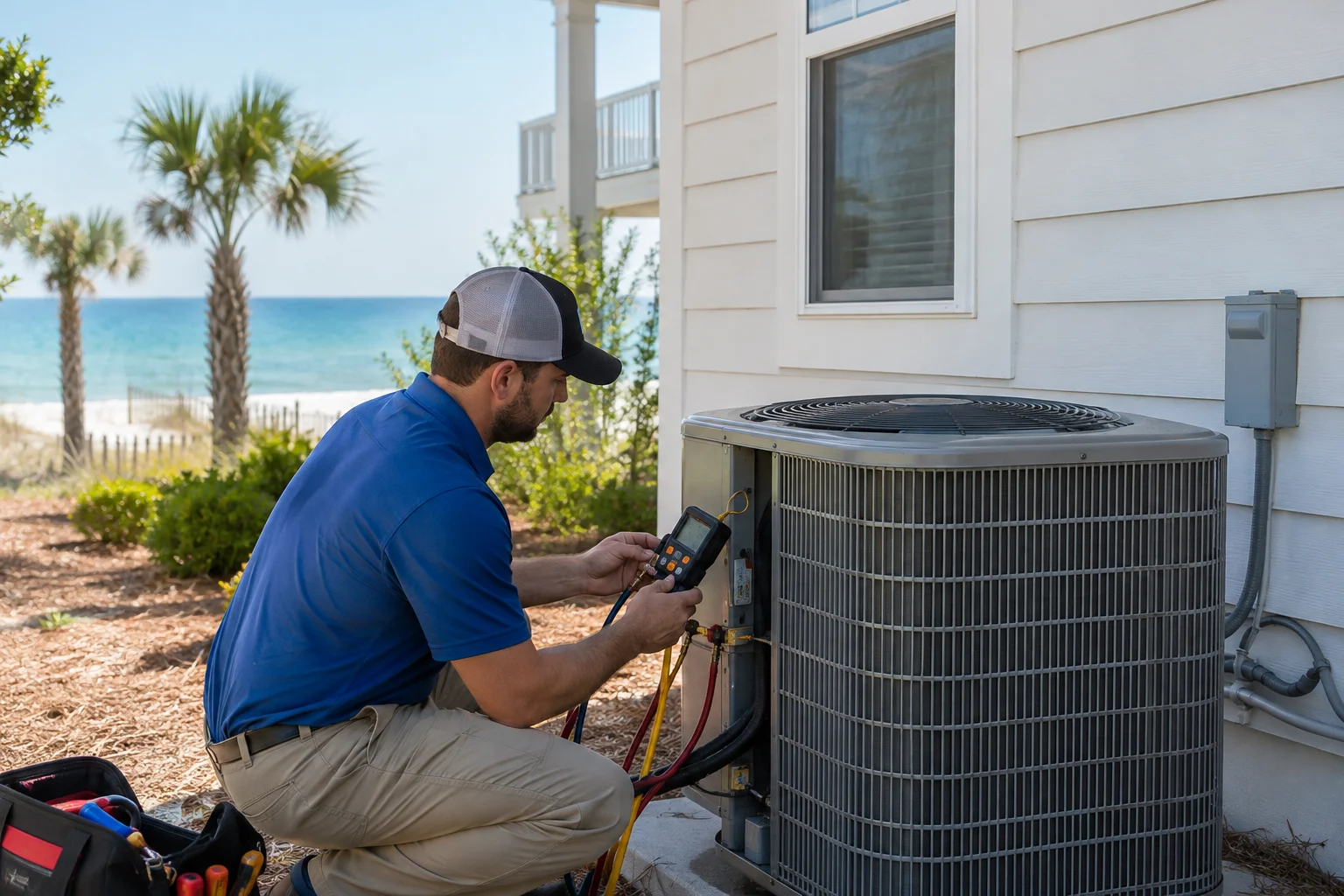
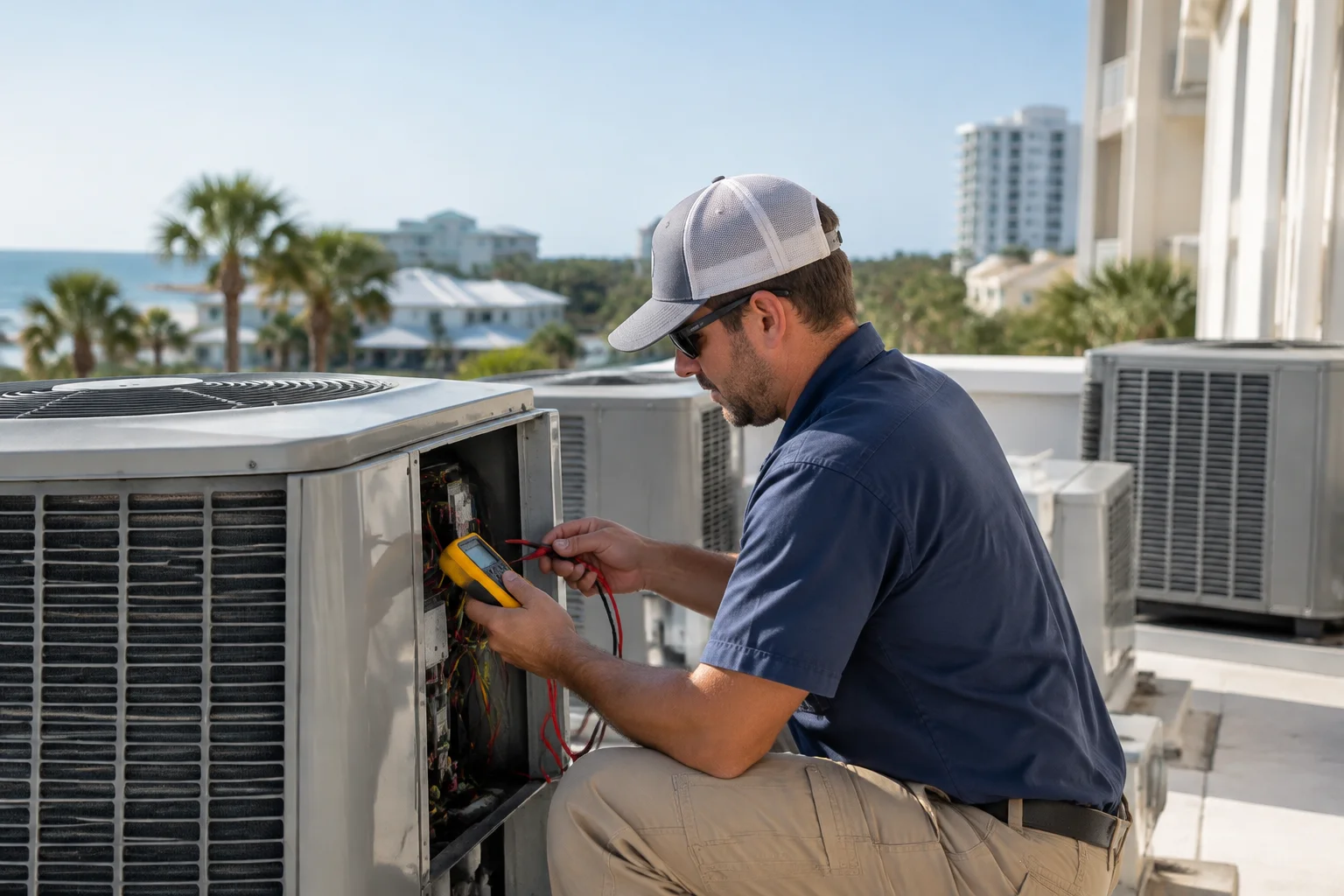
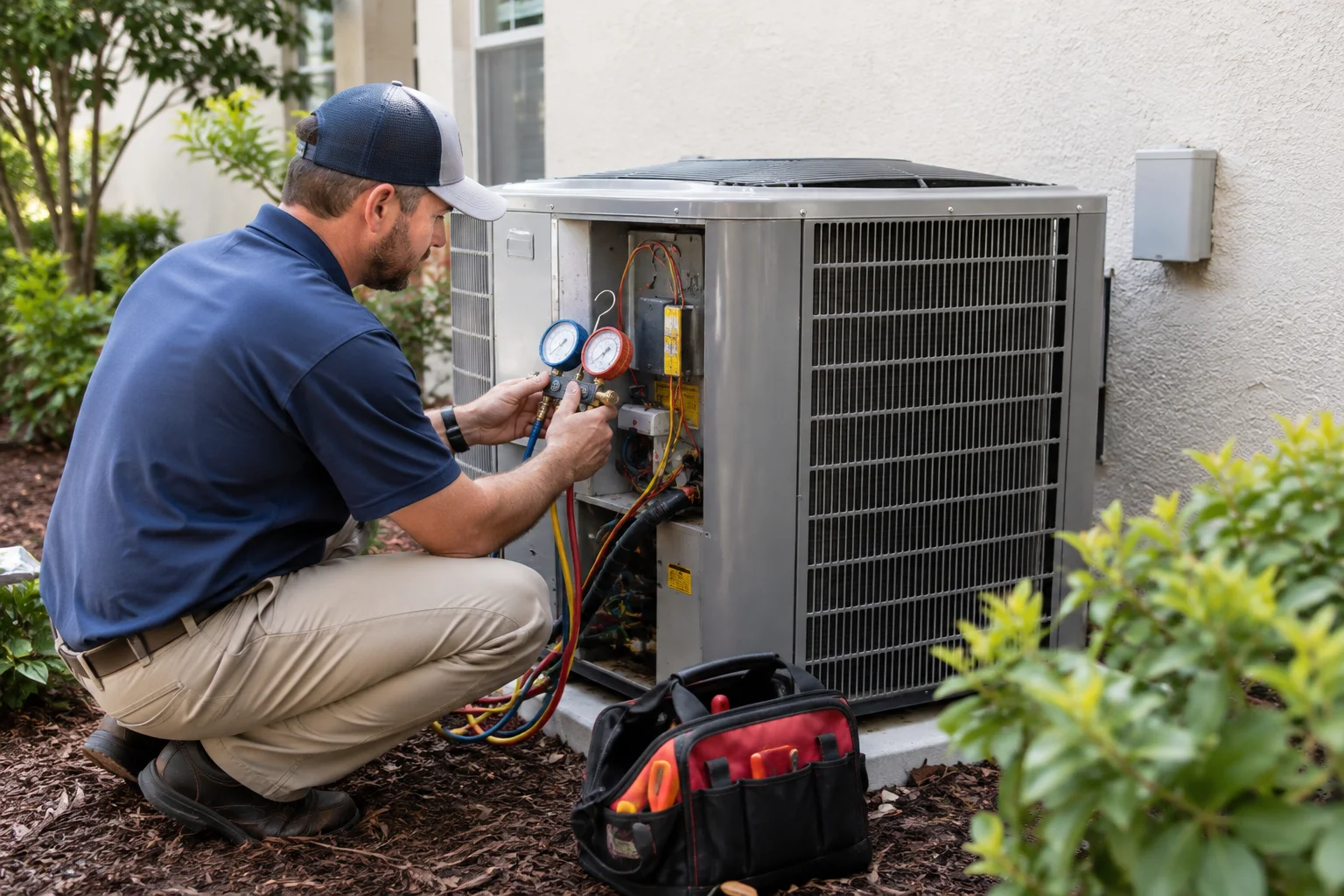
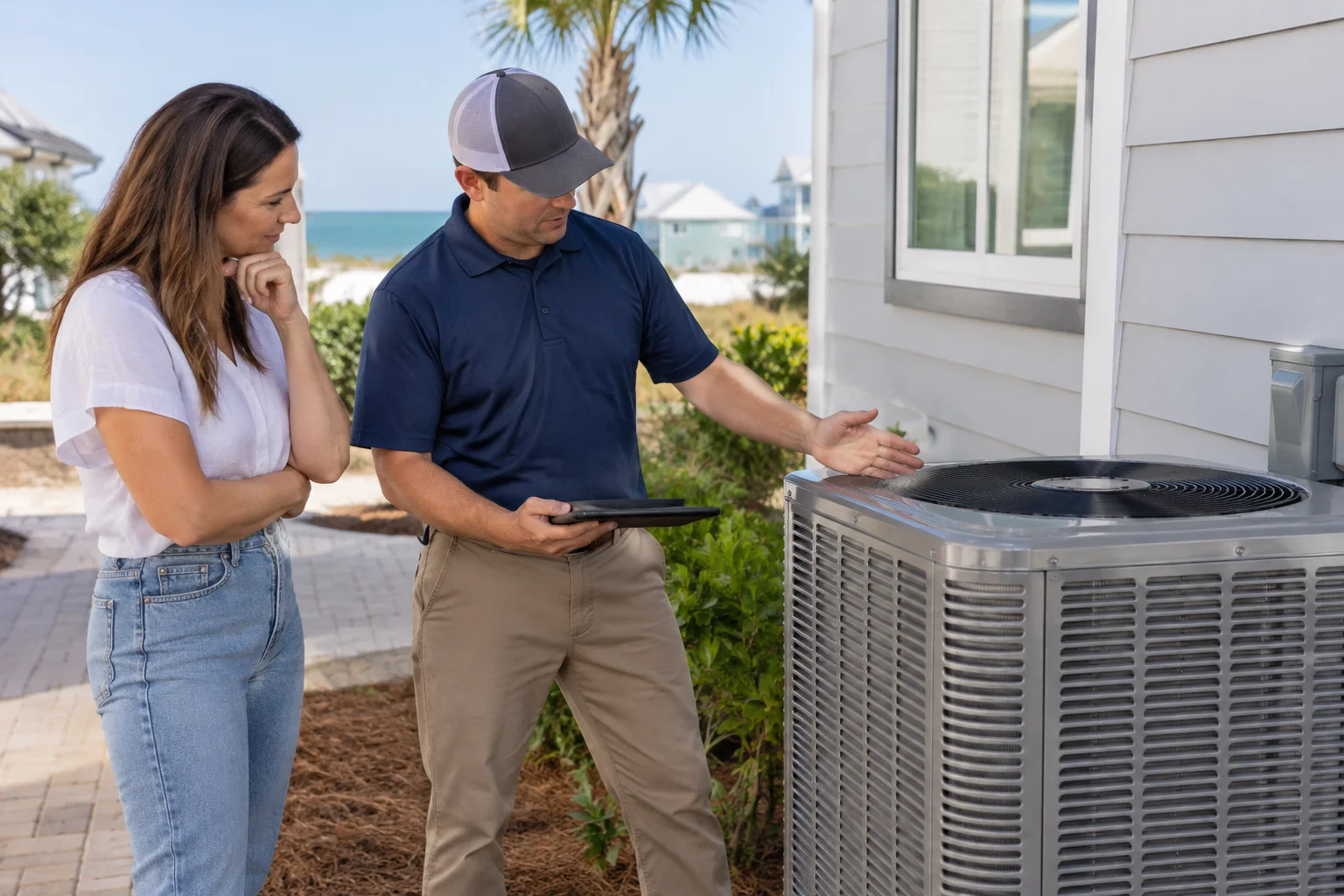
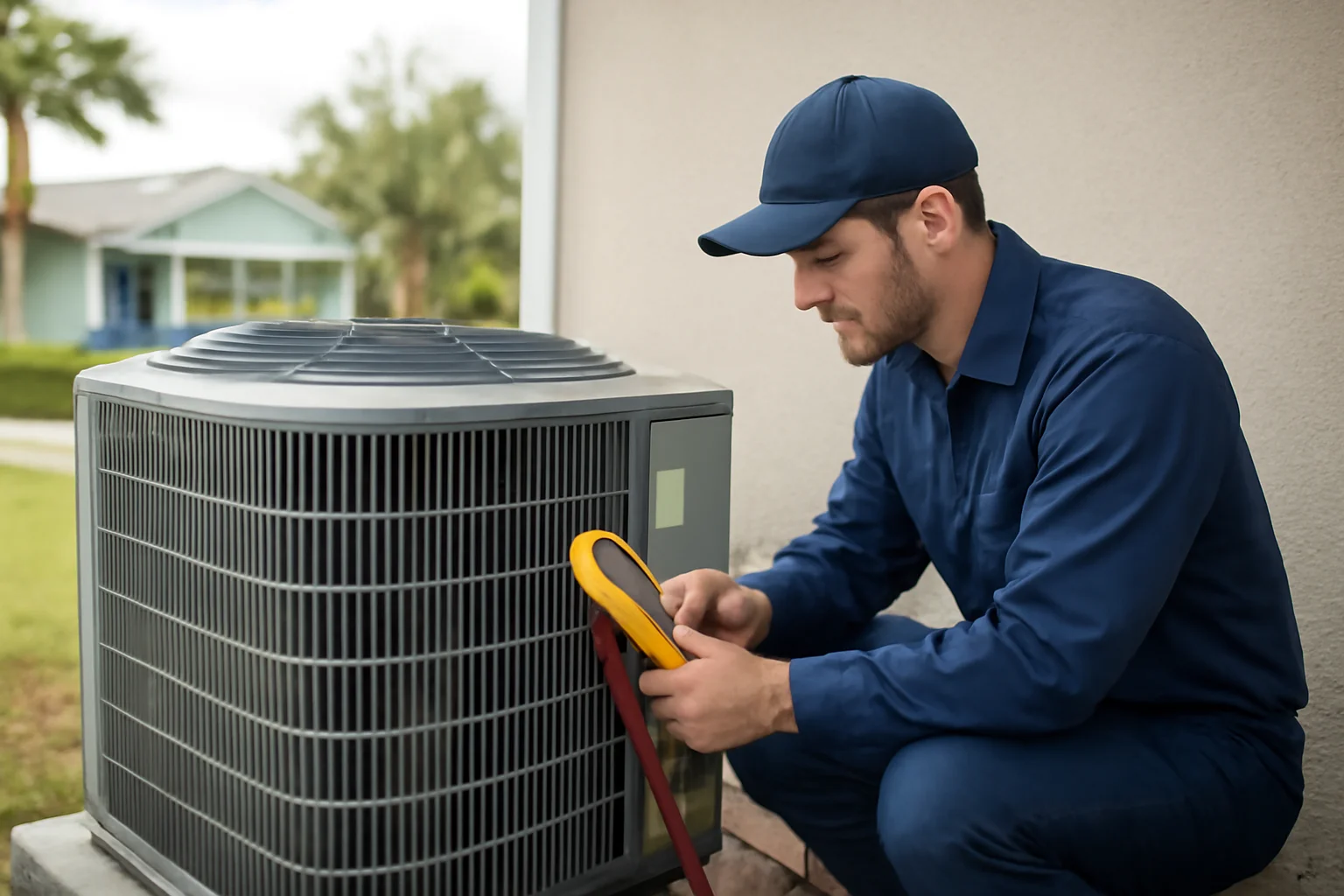
Outdoor units are exposed to salt air, coastal wind, pollen, and debris. A technician should inspect and clean where appropriate, and confirm the unit can move air through the coil surfaces effectively. Reduced airflow across the coil can make the system work harder and can lead to temperature inconsistency indoors.
Homeowners should also pay attention to how quickly the system seems to get “dirty.” In coastal areas, coil maintenance can be more frequent than people expect.
2) Airflow checks across the system
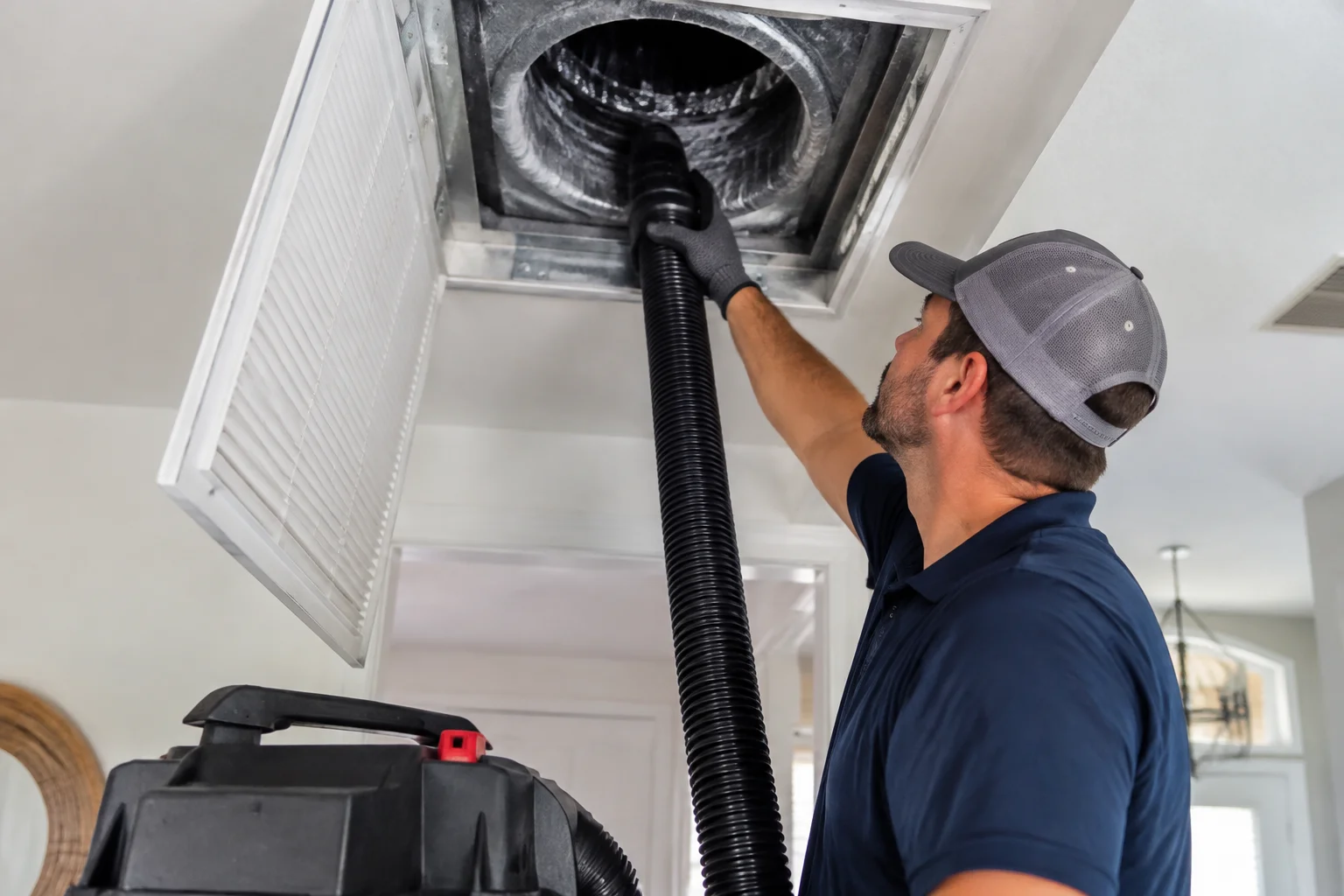
Airflow drives comfort. During a maintenance visit, professionals evaluate whether indoor air is moving at the right rate through supply and return paths. They may check fan operation, verify air distribution performance, and look for signs that ductwork or filters are restricting airflow.
If you are noticing hot and cold spots, delayed cooling, or rooms that feel stuffy, that often points back to airflow issues that maintenance can help identify early. For more on duct performance, consider Duct Inspection.
3) Refrigerant system performance and safety monitoring
Commercial HVAC systems use refrigerant systems to move heat. Maintenance should include performance monitoring and visual inspection for signs of issues. A professional should follow safe procedures and manufacturer guidance.
It is important to note that refrigerant diagnosis is not something homeowners should attempt to self diagnose. If a system is not cooling correctly, a licensed HVAC contractor should evaluate the system in person before recommending repairs.
4) Condensate drainage inspection
In Florida humidity, cooling cycles produce condensate. During maintenance, technicians inspect condensate drainage paths and confirm that drainage is clear and properly routed. If drainage is restricted, condensate can back up and contribute to moisture problems, musty odors, and reduced comfort.
For businesses and multi-unit properties, moisture can also worsen indoor air quality. That is one reason condensate drainage is a key part of commercial HVAC maintenance.
5) Thermostat and control review
Thermostats and controls affect how consistently a system maintains temperature and humidity. Maintenance should include a review of thermostat operation, setpoints, and control behavior. For example, if the thermostat is misreading temperature or scheduling incorrectly, the system can short cycle or run longer than needed.
When control settings are wrong, energy use can climb even if the equipment is technically working. This is especially noticeable during peak heat when cooling demand is high.
6) Indoor air quality considerations
Commercial HVAC service should also consider indoor air quality. In humid climates, removing moisture and managing airflow helps reduce conditions that can make spaces feel uncomfortable.
If you are looking for indoor air quality services near me, ask whether your maintenance plan includes filter and airflow evaluation, and whether the technician can recommend next steps for your specific building. For focused support, review Indoor Air Quality Testing.
7) Energy use and operational efficiency
Maintenance helps equipment run the way it is designed to run. When coils are clean, airflow is correct, and controls are set properly, systems typically operate more efficiently. That does not mean “set it and forget it,” but it does mean fewer surprises in monthly energy use during long Florida summers.
Common commercial HVAC problems homeowners see in 30A
Coastal conditions can turn small issues into bigger ones. Here are several issues that often show up in commercial settings around 30A:
Cooling that feels weak or inconsistent
Weak cooling can come from airflow restrictions, coil performance problems, control issues, or other refrigerant system concerns. If certain areas feel warmer than others, it can also point to ductwork problems or zone imbalances.
Humidity that stays high even when the thermostat says “cool”
High humidity is a comfort and indoor air quality issue. It can also indicate coil performance problems or drainage concerns. In Florida humidity, a system needs to remove moisture effectively, not just lower air temperature.
Condensate drainage problems and moisture around equipment
Some signs are visible: water accumulation near indoor equipment, damp ceilings, or recurring musty odors. In commercial buildings, these issues can be disruptive because they can affect multiple tenants or customers.
Short cycling and frequent on off cycles
Short cycling can increase wear on components and can reduce dehumidification performance. It may be related to thermostat behavior, airflow, or other system conditions that require in person evaluation.
Outdoor unit corrosion and performance decline
Salt air can accelerate corrosion on outdoor components. When corrosion progresses, airflow and heat transfer can decline, leading to reduced cooling capacity and higher energy use.
Preventive HVAC maintenance schedules that fit coastal schedules
There is no single schedule that fits every commercial building. Some properties may benefit from more frequent checks based on how close the building is to the coast, how much debris and pollen the area experiences, and how heavily the system runs.
For many 30A commercial spaces, preventive HVAC maintenance is especially important before peak summer demand. A well planned maintenance approach can help reduce the odds of a mid summer breakdown. If you want a deeper look at how prevention affects air conditioning repair outcomes, read Why Preventive HVAC Service Pays Off for Air Conditioning Repair in 30A, FL.
How to spot trouble early before you need emergency cooling
Homeowners and property managers do not need to be HVAC experts to notice patterns. These are practical indicators that maintenance or service may be needed:
- Temperature swings: Rooms feel inconsistent, especially during the warmest part of the day.
- Longer run times: The system runs more often or longer to reach setpoints.
- Rising humidity: Condensation on surfaces, muggy air, or persistent dampness.
- Unusual sounds: New rattling, grinding, or repeated cycling patterns.
- Airflow complaints: Stuffy rooms, weak supply airflow, or high return airflow noise.
- Visible moisture issues: Water near indoor units or recurring odors that suggest condensate drainage problems.
If homeowners are searching for AC repair near me because problems started suddenly, that usually means the system has been struggling longer than it appeared. Maintenance helps catch many of these issues before they escalate.
Why professional commercial HVAC service matters more in 30A
Commercial systems are built for continuous or frequent use. They often include multiple zones, larger ductwork networks, and more complex control strategies than typical residential setups. That complexity makes professional service important for both safety and performance.
A licensed HVAC contractor can evaluate the full system, including refrigerant system operation, airflow, ductwork, condensate drainage, thermostat behavior, and indoor air quality factors. That is especially relevant when coastal exposure affects outdoor components.
If you are trying to find an HVAC contractor near me for commercial HVAC service, look for a company that treats maintenance as a system wide process, not a quick checklist. For a maintenance focused option, you can explore commercial HVAC maintenance in 30A, FL through A Superior Mechanical.
You can also browse the broader service area at Walton County 30A HVAC services to see related options.
Related considerations: ductwork, indoor air quality, and system upgrades
Maintenance often leads to better decisions about ductwork, indoor air quality, and long term equipment planning.
Ductwork performance affects comfort and energy use
Even a well tuned system cannot overcome major duct restrictions. Commercial ductwork can accumulate debris, experience leakage, or lose performance if dampness and airflow patterns change over time. If you suspect ductwork issues, start with a targeted inspection. A helpful next step is Duct Inspection.
Indoor air quality services can complement maintenance
When humidity and airflow are not balanced, indoor air quality can suffer. If tenants complain about odors, stuffiness, or irritation, it may be time to evaluate air quality beyond basic filter changes. For options in the area, consider Indoor Air Quality Testing.
Heat pumps and ductless systems in commercial spaces
Some 30A properties use heat pumps or ductless mini split systems for zoning and efficiency. If you are considering upgrades, make sure any planning includes maintenance realities such as coil care, drainage management, and airflow comfort targets. For related service, homeowners can search for heat pump installation near me or ductless mini split installation near me, but upgrades should be based on an in person evaluation of the building and load needs.
When system replacement becomes a planning conversation
Maintenance can extend equipment life, but no system lasts forever. If repairs become frequent or performance cannot be restored to acceptable comfort levels, replacement may eventually be considered. Homeowners searching for HVAC replacement near me should be prepared for a full assessment of comfort needs, ductwork condition, indoor air quality goals, and control strategy.
Replacement decisions should be made after an on site review by a professional. Avoid assuming a specific part is at fault without proper evaluation.
Budgeting and scheduling: keeping maintenance realistic for commercial owners
Commercial HVAC maintenance is an ongoing cost, but it can be far less disruptive than unplanned downtime. Many property owners also need to manage cash flow when repairs or upgrades become necessary.
If you are working through budgeting, it can help to plan ahead rather than waiting for a failure. For guidance on keeping projects aligned, see Keeping HVAC Financing on Track in 30A, FL Homes.
Also remember seasonal stress. For example, the busiest weeks of summer can overload technicians and leave fewer options for short notice repairs. If you want practical steps to reduce emergency cooling concerns, read How 30A Homes Can Stay Ahead of HVAC Emergencies During Seasonal Stress.
How to prepare your building before a maintenance visit
Simple preparation can improve the effectiveness of commercial HVAC service:
- Document symptoms: Note when cooling problems happen, which areas are affected, and any humidity issues.
- Check access: Make sure indoor units, return grilles, and outdoor equipment have clear access.
- Confirm thermostat settings: Share typical setpoints and any scheduling used during business hours.
- Review filter practices: Let the technician know what filters are used and how often they are changed.
- Share any recent repairs: Maintenance should reflect prior service history.
This helps a licensed HVAC contractor focus on the right causes and prioritize the most important maintenance actions first.
Questions to ask your commercial HVAC maintenance provider
If you are interviewing an air conditioner service near me or a commercial HVAC service near me provider, these questions can help you evaluate the quality of the maintenance plan:
- What parts of the system do you inspect and clean, including coils, airflow components, and condensate drainage?
- How do you evaluate airflow performance and ductwork limitations?
- Do you review thermostat operation and control behavior as part of preventive HVAC maintenance?
- How do you address indoor air quality concerns related to humidity and airflow?
- How do you document findings so we can plan repairs or upgrades responsibly?
A Superior Mechanical provides professional commercial HVAC maintenance in 30A, FL to help Walton County businesses reduce downtime, control energy costs, and keep indoor comfort consistent year round. You can review the service details at commercial HVAC maintenance for 30A, FL.
Find Commercial HVAC Maintenance in 30A, FL
If you need Commercial HVAC Maintenance in 30A, FL, visit our local service page or contact A Superior Mechanical today.
Map of 30A, FL
Frequently Asked Questions
How often should a commercial HVAC system be maintained in 30A, FL?
Many commercial buildings benefit from preventive HVAC maintenance at least once before peak cooling demand, with additional service depending on usage, humidity levels, and exposure to salt air and debris. A Superior Mechanical can help tailor a maintenance plan after reviewing your system and building conditions.
What are the most common signs commercial AC needs maintenance?
Look for weak or inconsistent cooling, rising indoor humidity, frequent cycling, airflow complaints, unusual noises, and moisture concerns related to condensate drainage. If you notice these issues, scheduling HVAC service sooner can prevent a larger problem.
Does humidity affect commercial HVAC performance in Walton County?
Yes. Florida humidity makes cooling performance and dehumidification important. A system that cools air but does not manage moisture can leave spaces feeling muggy and can contribute to indoor air quality problems. Maintenance that includes coil and condensate drainage checks helps address this.
Can homeowners diagnose refrigerant or drainage problems themselves?
Refrigerant and drainage issues should be evaluated in person by a licensed HVAC contractor. DIY attempts can miss the real cause and can be unsafe. A professional should inspect the system and determine the appropriate next steps.
How can maintenance help reduce energy use for a commercial building?
When coils are clean, airflow is correct, and controls such as thermostats are operating properly, systems typically run more efficiently. That can help limit unnecessary energy use during hot, humid 30A summers.
Related Articles
Photo Gallery