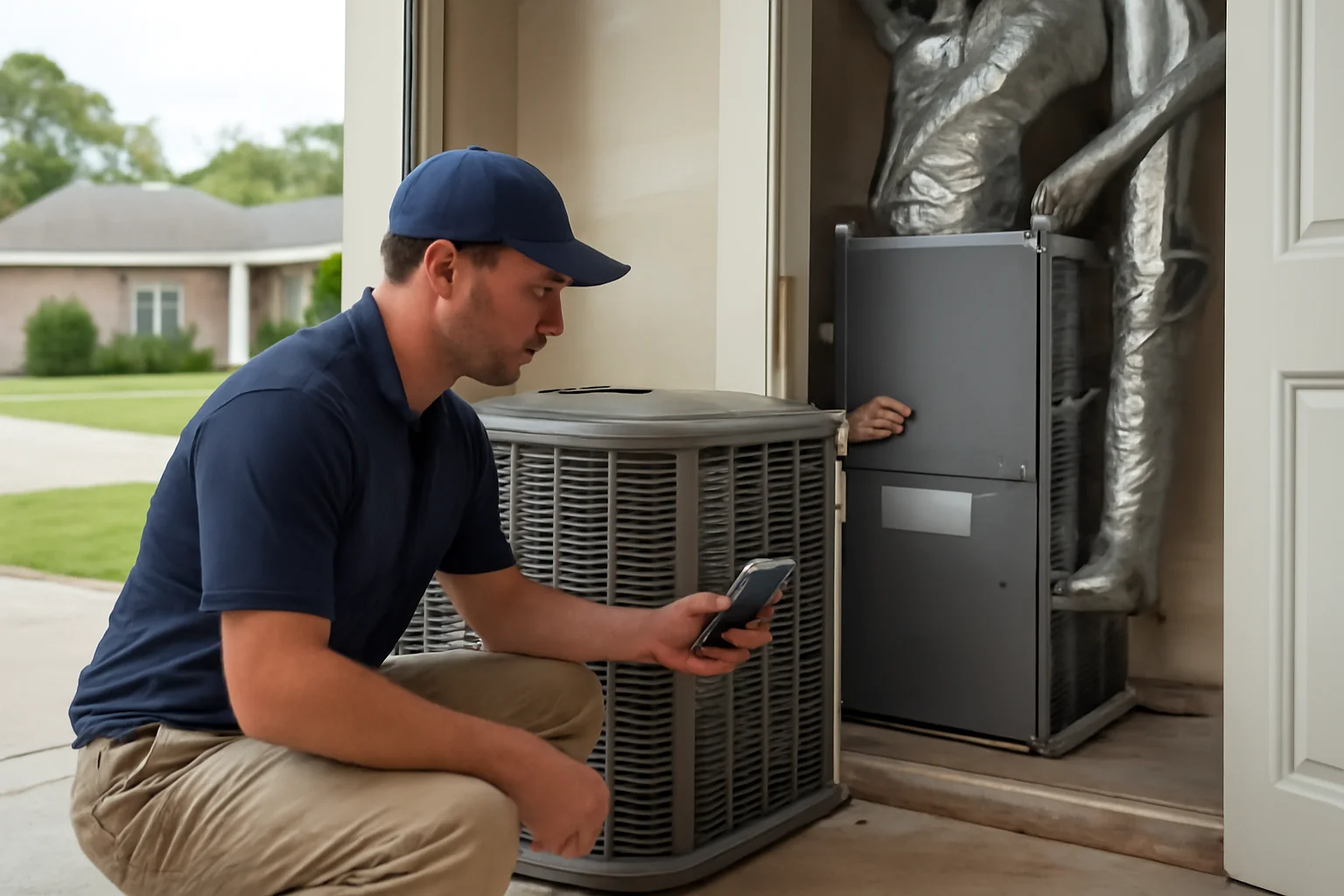
Freeport, FL homes live with heat, humidity, and salt air that can stress ductwork and the HVAC system behind it. Even when your air conditioner or heat pump seems to run, duct problems can quietly reduce airflow, worsen indoor air quality, and drive up energy use. A proper duct inspection in Freeport, FL helps homeowners understand what is happening inside the system before small issues turn into expensive repairs or emergency cooling concerns.
If you are searching for HVAC service near me or air conditioning inspection near me, duct inspection is often the missing step. It is also a smart part of preventive HVAC maintenance for both older homes and newer builds in Walton County.
Why duct inspection is a bigger deal in Freeport than many homeowners realize
Florida humidity is not just uncomfortable. It can affect how air moves through ductwork and how moisture behaves in and around HVAC components. In Freeport, warm air and frequent humidity can increase condensation risk, especially when the HVAC system runs in cooling mode and the duct system is not properly sealed or insulated.
There is also salt air exposure for many neighborhoods near the coast and waterways. Over time, salt-laden air can contribute to corrosion and wear in metal components. That does not automatically mean your ducts will fail quickly, but it does mean small gaps and weak connections can become bigger problems sooner.
Older homes may have ductwork that settled over decades, joints that loosened, or insulation that deteriorated. Newer homes are not immune either. If ducts were installed during construction with less-than-ideal sealing, if the system was balanced poorly, or if the home has unusual airflow paths, you can still see uneven temperatures and lingering humidity issues.
What a duct inspection actually looks for
A duct inspection is designed to answer practical questions: Are the ducts delivering the right airflow to the right rooms? Are there leaks that are pulling in unconditioned air? Is moisture getting into the duct system or living spaces? And are the system and ducts working together efficiently?
Airflow loss and duct leaks
One of the most common issues duct inspection reveals is duct leakage. Leaks can occur at joints, seams, takeoffs, and connections. When conditioned air escapes, the system has to work harder to maintain comfort. Homeowners often notice this as:
- Hot or cold rooms that never seem to stabilize
- Weak airflow from registers
- Longer run times from the air conditioner or heat pump
- Increased energy use as the system compensates
Uneven airflow and poor duct layout
Even when ducts are intact, airflow can be restricted by crushed sections, poor transitions, or duct runs that are not sized or routed effectively for the home. In Florida heat, airflow problems become more noticeable because the system is often running at peak demand.
Inspection can also help identify whether the airflow pattern matches the thermostat settings and comfort expectations. If the thermostat is calling for cooling but certain rooms lag behind, ductwork can be part of the story.
Moisture and condensate drainage concerns
In cooling mode, many HVAC systems produce condensation. That moisture must be handled through proper condensate drainage. While the drain line and indoor coil area are not “ductwork” in the strictest sense, moisture issues can still travel through the system, especially if there are leaks, wet insulation, or airflow that carries humidity into the wrong areas.
A duct inspection can flag signs of moisture exposure, including:
- Musty odors that return during humid weather
- Visible staining or deterioration around duct runs
- Wet or damaged insulation
- Condensation in areas that should stay dry
Air quality risks from duct contamination
Ducts can accumulate dust, debris, and other contaminants over time. When air leakage pulls in unconditioned air from attics, crawl spaces, or other areas, the system can also introduce particulate matter and humidity into the living space.
For homeowners concerned about indoor air quality, duct inspection is often part of the process before deciding on any indoor air quality services. It helps clarify whether the issue is primarily filtration and ventilation or whether duct leakage and airflow problems are contributing to the overall air quality.
Older homes: common duct issues that show up in Florida humidity
In Freeport, older homes can have ductwork that has been altered over time by renovations, room additions, or changes in HVAC equipment. Even if the system was upgraded at some point, duct performance may not have been fully addressed.
Settling, gaps, and aging insulation
Over the years, duct joints can loosen and insulation can degrade. When the HVAC system runs, small leaks can become larger airflow pathways. In humid weather, those leaks can allow moist air to enter duct cavities or living spaces, creating a cycle of discomfort and higher energy use.
Undersized or poorly balanced ductwork
Some older duct systems were designed for older equipment or for a different layout. When an HVAC system is replaced, the ducts may not be able to deliver the airflow the new refrigerant system needs to perform as intended. The result can be temperature swings, frequent cycling, and uneven comfort.
Newer homes: why duct problems still happen after construction
Newer homes in Walton County can still experience duct-related issues. Construction timelines, changes during build-out, and the need to meet airflow requirements can lead to ductwork that looks fine but performs differently than expected once the system runs in real-world coastal Florida conditions.
Sealing and connection details
Duct sealing and connection quality matter. If joints are not sealed properly, small leaks can reduce airflow and pull in air from areas that are not meant to be part of the conditioned space. Homeowners may first notice it during the hottest weeks when the AC is under load.
Thermostat behavior and comfort complaints
Modern thermostats can help manage comfort, but they cannot fix duct restrictions. If your thermostat is set correctly and the home still feels uneven, ductwork may be limiting airflow to certain rooms. In that case, an air conditioning services visit that focuses only on the outdoor unit may miss the indoor airflow problem.
Signs your ductwork needs inspection before the problem escalates
Homeowners often wait until comfort is unbearable. Duct inspection can help you address issues earlier, especially before peak summer demand leads to emergency cooling concerns.
Comfort and airflow clues
- Registers that feel weak or inconsistent across rooms
- Rooms that are consistently warmer or cooler than the thermostat setting
- Airflow that improves or worsens depending on the time of day
- More frequent AC cycles than you remember, or longer run times
Humidity and moisture clues
- Persistent indoor humidity that does not improve after AC runs
- Musty smells coming from vents, especially during humid weather
- Visible condensation or damp insulation near duct runs
- Drying issues in closets, ceilings, or crawl space areas near ducts
Air quality clues
- Dust that seems to return quickly after cleaning
- Allergy-like symptoms that worsen during certain seasons
- Uneven airflow that makes some rooms feel “stale”
If you are noticing these patterns, it is reasonable to start with duct inspection as part of HVAC repair planning. It can also complement an duct inspection recommendation alongside air conditioning repair, heat pump service, or system balancing.
Why duct issues can raise costs even when the AC seems to work
When ductwork leaks or restricts airflow, the HVAC system has to compensate. That can mean longer run times, higher energy use, and more strain on components involved in the refrigerant system and airflow delivery.
It can also affect comfort in ways that lead homeowners to adjust thermostats more aggressively, which can further increase operating time. In Freeport’s summer heat, that cycle can become expensive quickly.
Duct problems can also create “false alarms” where homeowners believe the AC repair is the only fix. Sometimes the air conditioner service call uncovers that the indoor side of the system is not delivering what the refrigerant system expects. A duct inspection helps prevent guessing and supports more accurate next steps after a technician evaluates the full system.
How duct inspection ties into AC repair, heat pump service, and system replacement decisions
Ductwork is part of the HVAC system pathway. Even if your outdoor unit is functioning properly, ducts influence how well the system can cool or heat the home.
AC repair and airflow verification
If you are dealing with uneven cooling, weak supply air, or persistent humidity, duct inspection can help confirm whether airflow is being lost through leaks or restrictions. That can guide whether the next step is focused on ductwork, airflow balance, condensate drainage, or other HVAC repair needs.
Heat pump service in humid climates
Heat pumps operate differently than conventional systems, but airflow and duct performance still matter. In Florida, humidity management often remains part of comfort concerns. Duct inspection can help identify whether the duct system is contributing to moisture issues or uneven comfort that makes heat pump operation feel unreliable.
System replacement planning
Homeowners sometimes assume that replacing an HVAC system will automatically fix comfort. In reality, if ductwork is leaking or undersupplying airflow, a new system may still struggle to deliver consistent results. A duct inspection can help you understand the condition of the ductwork before you make major replacement decisions.
Important note: A professional evaluation is needed before any recommendation about refrigerant system performance, equipment replacement, or major changes. Duct inspection supports the bigger picture, but it does not replace hands-on diagnosis.
Preventive HVAC maintenance that keeps ducts working with your system
Duct inspection should not be the only step. Preventive HVAC maintenance helps keep the system stable, protects indoor air quality, and reduces the chance that small issues become costly.
Schedule inspections and tune ups before peak summer
In Freeport, planning ahead matters because the hottest weeks can compress your options. When homeowners search for AC tune up near me or air conditioner service near me, earlier scheduling can help avoid last-minute stress.
Change filters and check airflow paths
Filters are part of indoor air quality and airflow. If filters are clogged or mismatched, airflow can drop and register performance can suffer. That is not the same as duct leakage, but it can make duct problems worse by increasing system strain.
Address duct sealing and duct repair needs
If duct inspection reveals leaks, duct sealing near me or duct repair near me is often the logical next step. Sealing and repairs should be done carefully so airflow pathways are restored without creating new restrictions.
Keep an eye on condensate drainage
Condensate drainage problems can cause moisture concerns that affect both comfort and indoor air quality. While a technician should inspect the drain components as part of HVAC maintenance, duct inspection can also help identify how moisture is behaving in the system.
What to ask a licensed HVAC contractor during a duct inspection in Freeport
Homeowners can get more value from the visit by knowing what questions to ask. A good technician will explain findings clearly and connect them to your comfort goals.
Questions about airflow, leakage, and moisture
- Where is airflow being lost, and which rooms are affected?
- Are there visible or suspected duct leaks at joints, seams, or connections?
- Is there any sign of moisture exposure or insulation damage near duct runs?
- How does this relate to indoor humidity and how the thermostat is responding?
Questions about next steps
- Should we prioritize duct sealing, duct repair, or airflow balancing?
- Would this duct issue change how we approach AC repair or heat pump service?
- How does the current setup affect energy use and comfort during Florida heat?
When you are looking for a licensed HVAC contractor near me, choose someone who will evaluate the whole system, not just one component. Duct inspection should be part of a professional, methodical approach to HVAC service in Freeport and across Walton County.
Emergency cooling concerns: why early duct inspection can prevent a crisis
Most duct issues do not stop the system instantly. They build over time through leaks, restrictions, and moisture-related discomfort. That is exactly why duct inspection matters. When comfort is uneven and humidity stays high, homeowners may push the thermostat harder or run the system longer, which can increase the chance of unexpected HVAC repair needs during the busiest weeks of the year.
If you ever find yourself searching for emergency AC repair near me, the best strategy is to reduce the odds of duct-related strain and indoor comfort problems before they become urgent. A duct inspection can help you map out what to fix and why, so you can plan repairs instead of reacting.
Local context: why Walton County homeowners benefit from a Freeport-focused approach
Freeport is part of Walton County, and local home characteristics matter. Many properties include attics, crawl spaces, and older construction materials that can influence how ducts perform. Coastal air exposure and seasonal humidity cycles also affect how quickly ductwork and insulation age.
That is why working with a company that regularly services the area can improve the quality of recommendations. You can explore more about services and coverage on the Freeport service page or browse the broader Walton County HVAC service area.
Pair duct inspection with HVAC maintenance for smoother comfort all year
Duct inspection is a strong starting point for homeowners who want to understand airflow, moisture behavior, and indoor air quality conditions in their homes. It is especially useful when comfort problems persist, when humidity feels stubborn, or when the system seems to run longer than expected.
To support overall performance, it helps to combine duct inspection with ongoing preventive HVAC maintenance. If you want additional reading that connects HVAC performance to maintenance habits, these may be useful:
- Why Efficient Heating and Cooling Starts With Commercial HVAC Maintenance in Freeport, FL
- The Details That Get Missed in Commercial HVAC Installation in Freeport, FL
- A Homeowner’s Guide to HVAC Financing and Why It Matters in Freeport, FL
For homes that need more immediate troubleshooting, an HVAC visit that addresses both airflow and the comfort symptoms can help. If your goal is better cooling performance, you can also explore air conditioning inspection and air conditioning services to keep the system aligned with your ductwork.
Find Duct Inspection in Freeport, FL
If you need Duct Inspection in Freeport, FL, visit our local service page or contact A Superior Mechanical today.
Map of Freeport, FL
Frequently Asked Questions
How often should a homeowner schedule duct inspection in Freeport, FL?
Many homeowners schedule duct inspection when comfort problems start, when they notice rising humidity, or after HVAC changes such as a system replacement. If your home has older ductwork or you have recurring indoor air quality concerns, an inspection can also be a preventive step as part of routine HVAC maintenance.
Can duct leaks affect my energy use even if my air conditioner runs?
Yes. When conditioned air leaks from ductwork or airflow is restricted, the HVAC system often runs longer to reach thermostat targets. That can increase energy use and make some rooms feel uncomfortable even though the system is operating.
What indoor air quality issues can start with duct problems?
Duct leakage can pull in unconditioned air from attics or crawl spaces, which may add dust and humidity. Duct contamination and uneven airflow can also contribute to stale air and allergy-like symptoms. A professional inspection helps identify whether ductwork or filtration and ventilation should be addressed first.
Is duct inspection the same as AC repair?
No. Duct inspection focuses on airflow pathways, duct leaks, and moisture behavior. AC repair addresses issues inside the HVAC system, such as refrigerant system components, electrical controls, or other equipment concerns. In many cases, the best plan includes both, based on the findings from an in-person evaluation.
Do newer homes in Freeport need duct inspection too?
They can. Newer ductwork can still have sealing or balancing issues that become obvious in Florida heat and humidity. If you have uneven temperatures, persistent humidity, or airflow complaints, duct inspection can help confirm whether the duct system is performing as intended.
Related Articles
- Why Efficient Heating and Cooling Starts With Commercial HVAC Maintenance in Freeport, FL
- The Details That Get Missed in Commercial HVAC Installation in Freeport, FL
- A Homeowner’s Guide to HVAC Financing and Why It Matters in Freeport, FL
- Staying Ahead of Commercial HVAC Problems in Freeport, FL: A Practical Guide for More Reliable Buildings
Photo Gallery