At breakfast, you take a clean glass out of the dishwasher and rub a thumb across the white spots. Someone pours the first cup of coffee and notices a chlorine taste. Both problems started at the tap, but a filter that makes the coffee taste better may leave just as many spots on tomorrow's glasses.
A Superior Mechanical provides clean water services in Sandestin, FL, for homes and rentals. Choosing a system starts with two practical questions: What do you want to change about the water, and where do you notice it? The answers help distinguish a kitchen project from one worth doing for the entire home.
Read the spots before you replace the dishwasher
Look at a glass that air-dried on the rack, the base of the kitchen faucet and the shower door. If all three have pale marks where droplets dried, dissolved minerals are a likely explanation. Calcium and magnesium stay behind as water evaporates. On a clear glass the deposit looks like a spot; around a faucet that gets wet a dozen times a day, it can build into a chalky ring.
Try a little white vinegar on one spot on an ordinary drinking glass, then rinse it. A mark that comes off suggests a mineral deposit. If a dishwasher glass stays cloudy even after cleaning, the surface may be etched. A water softener can reduce future mineral spotting, but it will not restore etched glass. Keep acidic cleaners off natural stone and fixture finishes that the manufacturer says they can damage.
Where scale matters beyond appearance
Unscrew a faucet aerator if it is designed for easy removal. A crust across the screen can explain a crooked spray even when pressure elsewhere seems fine. Similar deposits can block individual showerhead openings. Inside plumbing and water-using appliances, scale is harder to see. Buildup on heating surfaces can interfere with heat transfer, contribute to appliances wearing out faster and leave a kettle needing frequent descaling.
A hardness measurement helps decide whether hard water treatment is worthwhile. Ask for the result in grains per gallon or milligrams per liter rather than just a description like “pretty hard.” Note how soon deposits return after cleaning. Losing flow at several fixtures within weeks is a different concern from wiping an occasional spot off the guest bathroom mirror.
Follow a taste or odor back to its source
When the morning coffee tastes wrong, try the cold tap water in a clean glass before changing beans. Compare it with water from another cold faucet, then with the refrigerator dispenser if you have one. If you notice an unpleasant taste only from the fridge, check its filter date and clean the ice bin before investing in kitchen treatment. Cloudy ice cubes alone prove little. Air trapped during freezing can turn a cube white even when the water tastes fine.
A chlorinated taste at several taps points toward a different solution than a metallic taste confined to the first glass drawn from one faucet. Disinfectant used in a public supply can affect flavor; water standing in contact with household plumbing can also pick up a taste. Tell the technician whether the taste changes after normal use resumes. Taste cannot tell you the concentration of a metal or establish that water is safe.
For an odor at the sink, fill a glass and carry it into another room. If the glass smells fine away from the sink, the drain may deserve attention instead of the water supply. If an odor follows the glass, note which taps are affected and whether it occurs with hot water, cold water or both. A hot-water-only odor is a reason to investigate the water heater before ordering a whole home filter.
Take a sudden change seriously
Visible sediment in water might look like grit caught in a screen, or the water itself may run brown. Check for a utility notice and ask whether nearby homes are affected. If discoloration is sudden, persistent or accompanied by a strong unfamiliar odor, avoid using the water for drinking or cooking until your supplier advises you. Do not taste it to investigate. A cartridge that catches particles is not proof that the underlying problem has been corrected.
Match the equipment to the job
Softening for showers, laundry and mineral deposits
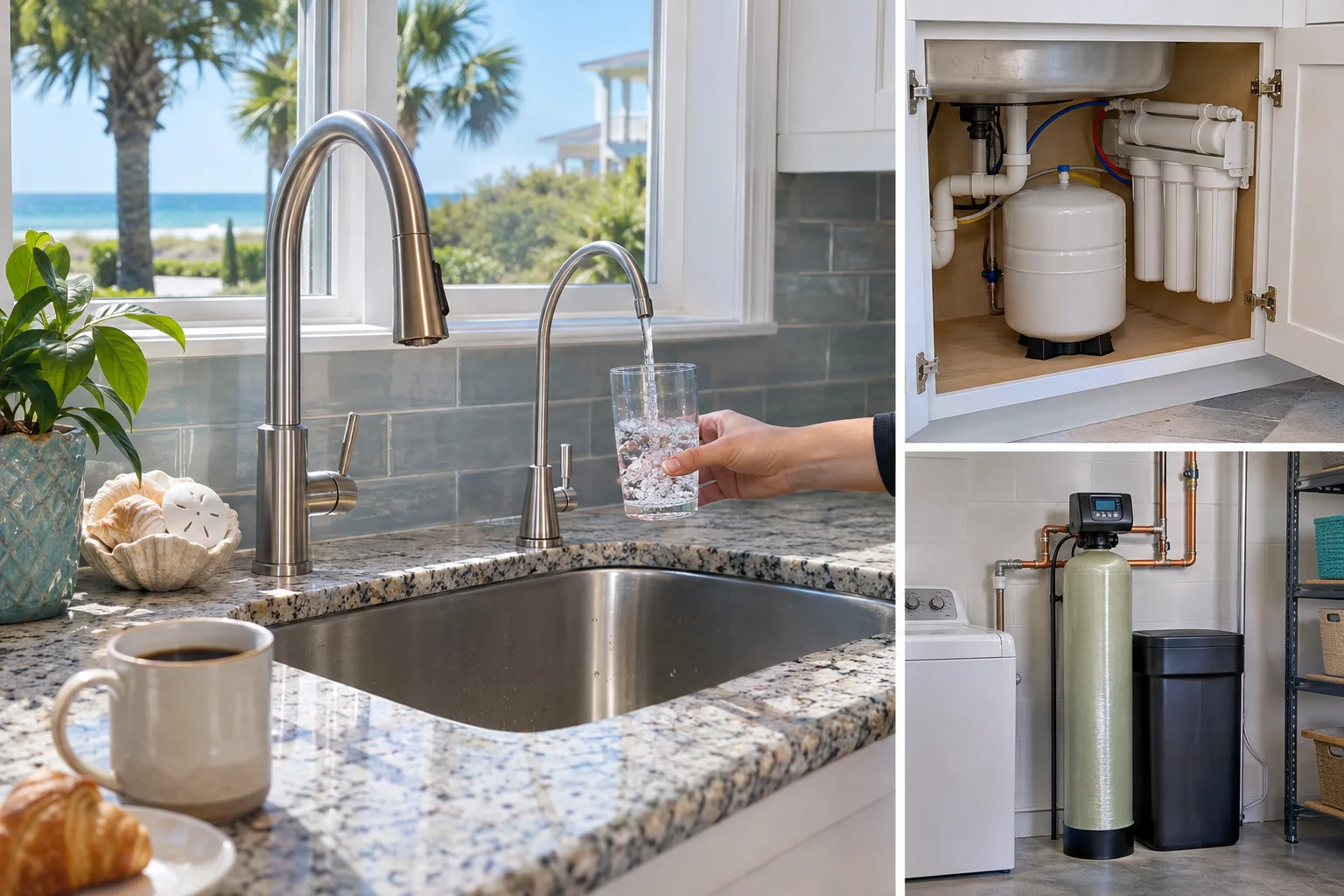
A conventional water softener exchanges hardness minerals for sodium or potassium ions. It treats water before it reaches the fixtures you want to protect. It makes sense to consider one when scale keeps returning on faucets and showerheads, soap does not lather easily and freshly washed towels feel stiff despite using the recommended detergent dose. A softener is not intended to remove a disinfectant taste or act as an all-purpose drinking water purifier.
Some households notice dry skin or dull hair after bathing, or feel as though soap does not rinse well. Hardness can contribute to soap residue, though water temperature and bathing products matter too. After softening, start with a little less soap and follow detergent directions for soft water. More suds do not mean cleaner laundry, and an extra scoop can leave residue of its own.
Whole home water filtration for issues at several taps
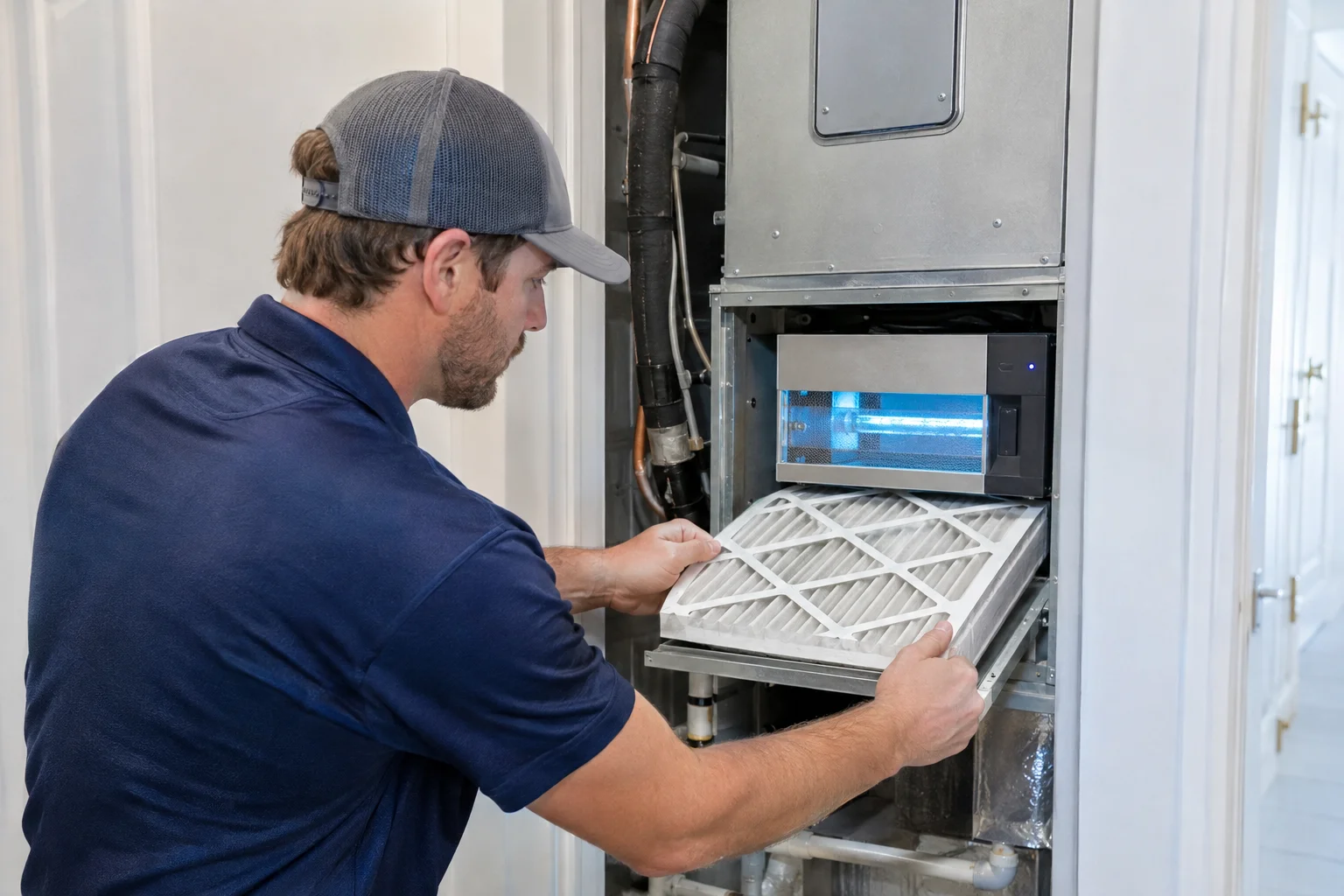
If sediment reaches both bathroom and kitchen taps, an appropriately sized sediment filter at the point of entry may be more useful than separate faucet filters. Carbon filtration serves another purpose: a suitable model can reduce the taste and odor of the disinfectant present in the supply. A sediment cartridge alone will not do that, and carbon alone generally will not remove dissolved hardness minerals.
When comparing AO Smith water filtration equipment or an AO Smith water softener, look at the specific model rather than the brand name alone. Ask which substances the model is certified to reduce, its rated flow and the cost of replacement media or salt. For a household dealing with scale and chlorine taste, separate treatment stages may make sense. A Superior Mechanical's filtration, reverse osmosis and water softener options cover these distinct jobs.
Reverse osmosis for the family kitchen
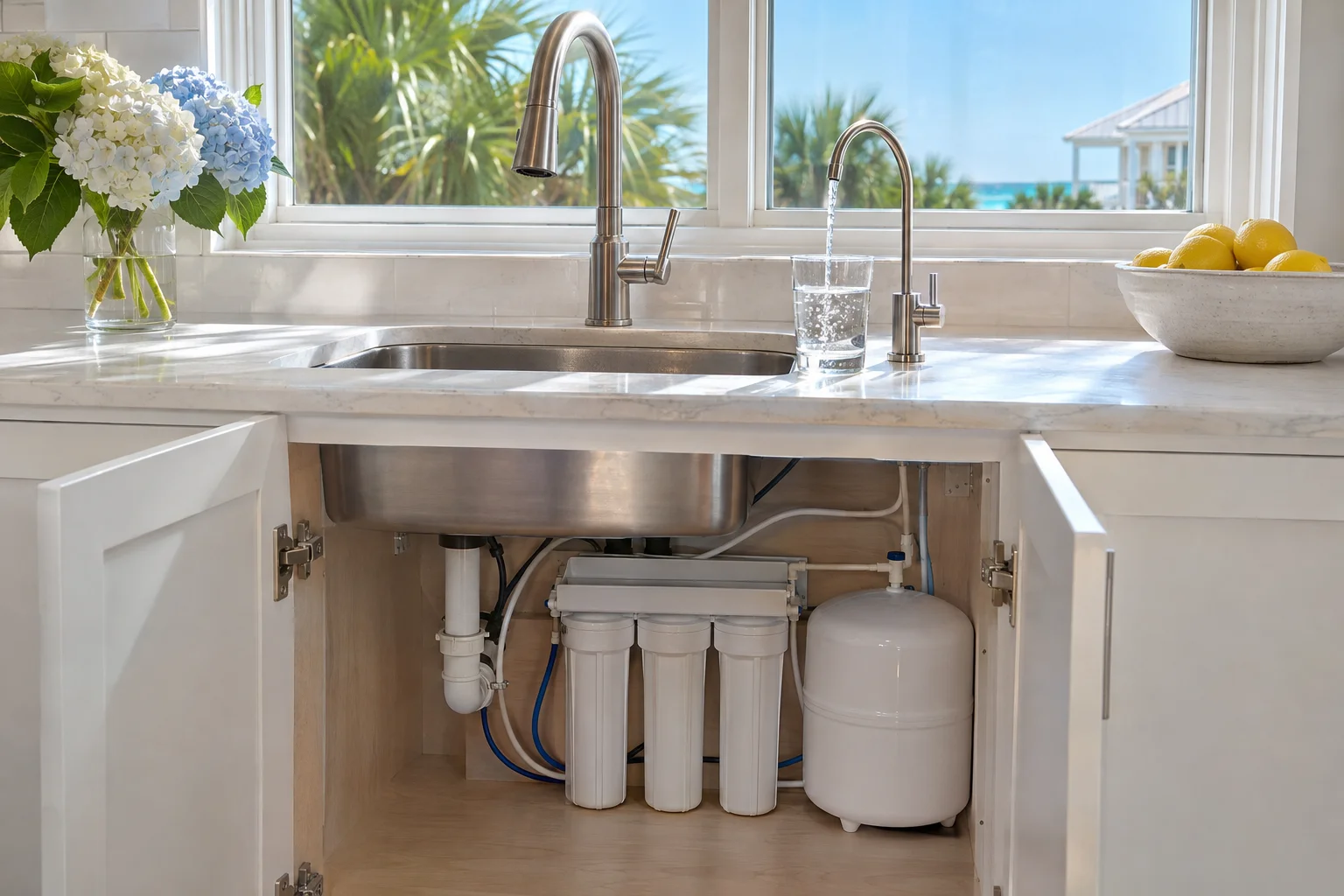
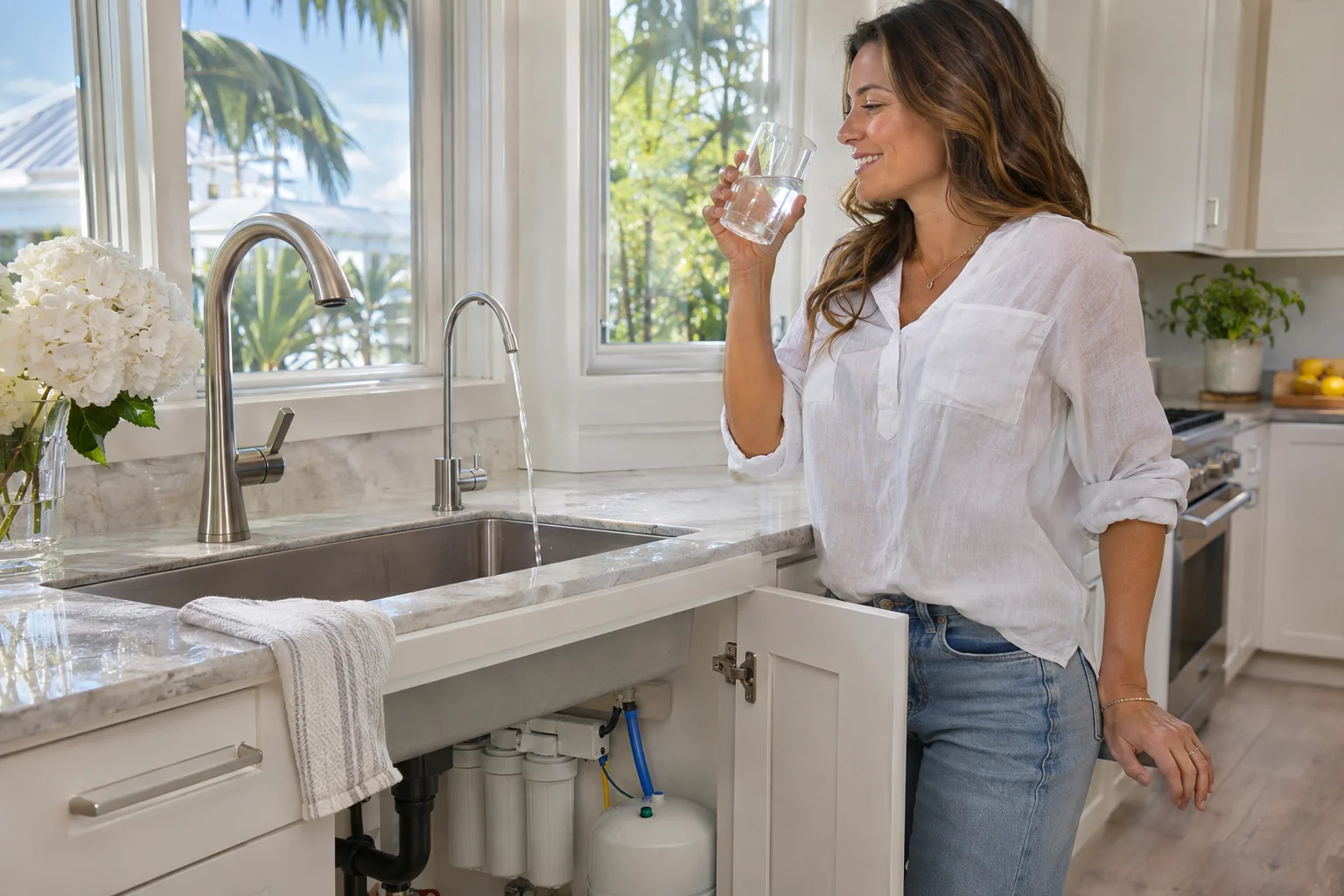
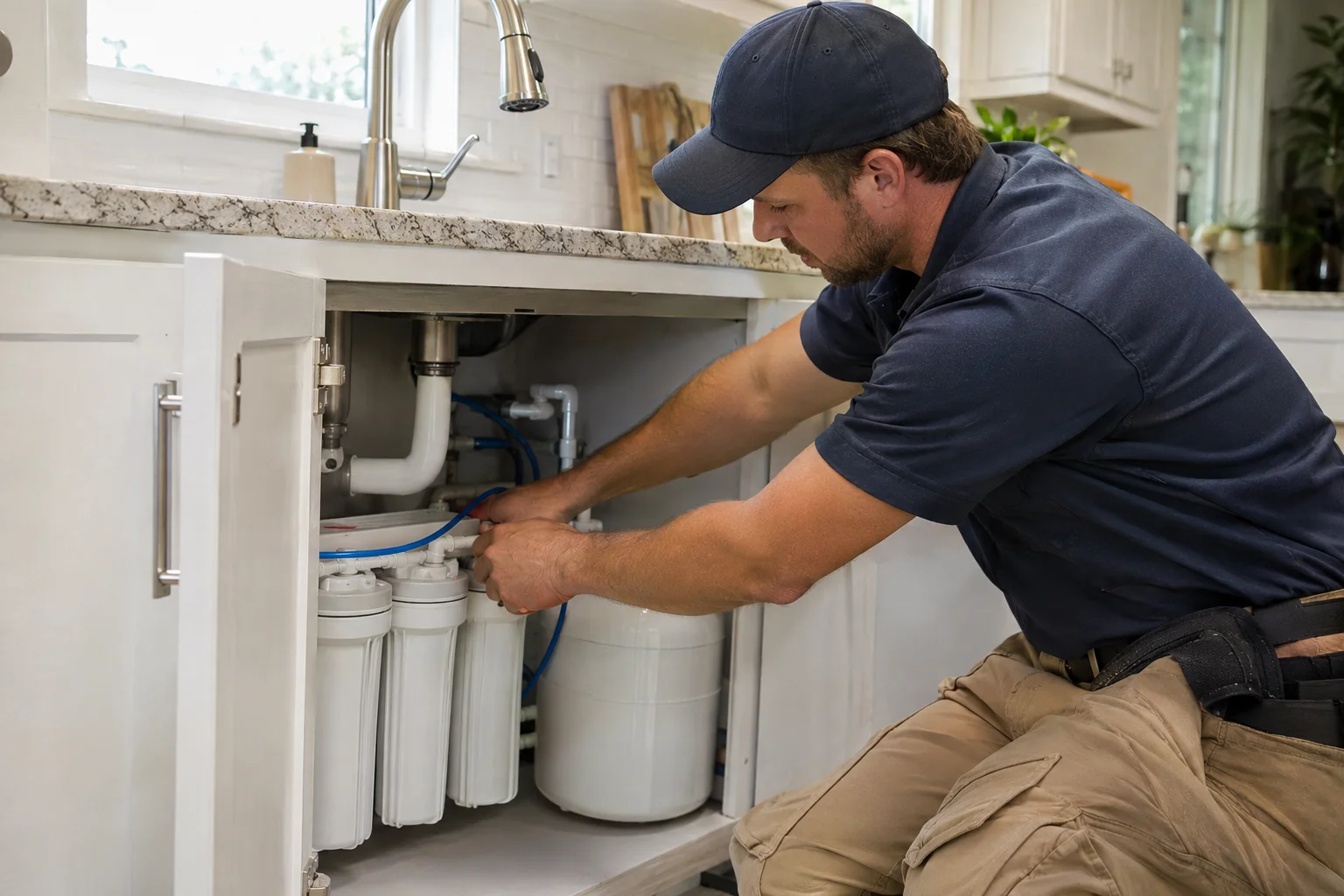
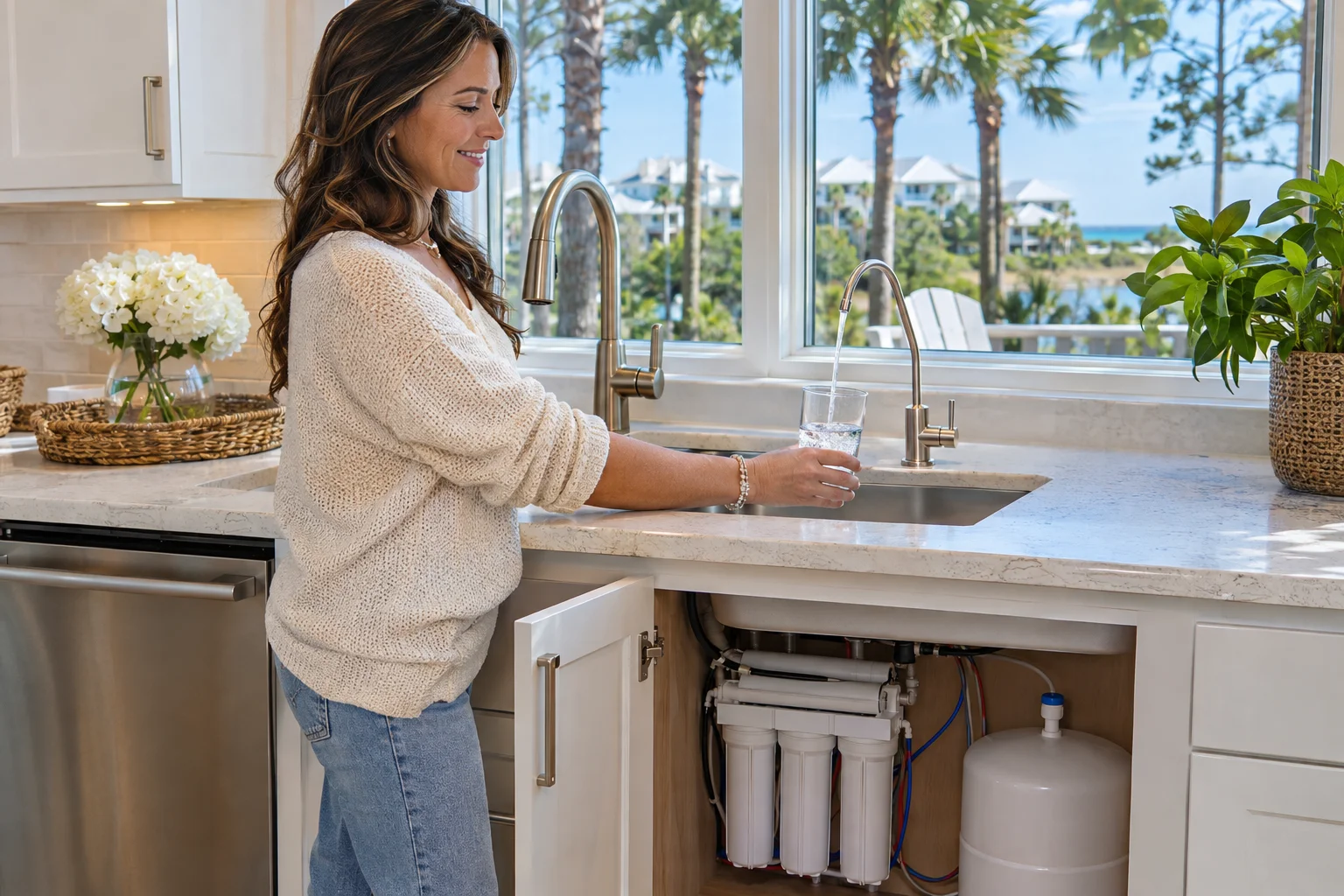
If everyone is happy with the showers but reaches for bottled water at dinner, start at the sink. An under-sink reverse osmosis system uses a membrane and accompanying filters to reduce specific dissolved substances. Look for verified reduction claims that match your water test. For a chlorine taste alone, a suitable carbon drinking water filter may deliver the change you want at a lower cost.
Think through a busy supper before choosing the system. Filling four glasses is one task; filling a pasta pot after someone has drawn a pitcher is another. Ask how much treated water is available at once and how quickly the unit produces more. Reverse osmosis installation also needs room for service access and a drain connection. If better water for drinking and cooking is the goal, decide whether you want that same supply routed to the ice maker.
Size a Sandestin system for the week the house is full
In Sandestin's warm, humid coastal climate, a summer afternoon can mean showers after the beach, towels in the wash and dinner going on the stove at the same time. A vacation home's monthly water bill may suggest modest use while saying very little about that hour. A whole home filtration system needs enough service flow for simultaneous use. A softener also needs enough capacity for the measured hardness and the number of people staying there.
Water conditions at a particular Walton County address matter more than proximity to the Gulf. A coastal address does not, by itself, establish that tap water is salty or hard. For a public supply, consult the supplier's annual water quality report for context, then test at the property for the concern you actually have. In a condo, ask management which lines serve only your unit and whether changes at the point of entry are permitted.
Local service matters just as much for access as for testing. A treatment tank may fit in a utility closet yet leave no way to load salt or remove a cartridge. Owners coordinating work between guest stays can check A Superior Mechanical's Sandestin service area or its Walton County coverage for a second property. Have a photo of the proposed installation space handy when discussing a visit.
Keep the improvement you paid for
At installation, record the hardness reading, filter model and service date somewhere the next person looking after the house can find them. Follow the manufacturer's time and volume limits for cartridges. Taste is not a reliable replacement indicator: a filter can reach its rated capacity before the coffee tastes different. In a rental, a guest turnover checklist is a convenient place to note a slow drinking faucet or a change in shower spray.
For a softener, check the brine tank as directed and use the recommended salt. If spots return while the tank still looks full, request water softener service rather than increasing the hardness setting by guesswork. A technician can compare untreated and softened samples and check whether the unit is bypassed or failing to regenerate. For reverse osmosis, arrange filter changes, membrane checks and sanitation according to the model's instructions, including its guidance after an extended vacancy.
Know when treatment is not the repair. If only one fixture sheds rusty particles, or one branch of the plumbing keeps losing flow while the rest of the house runs normally, have that section inspected. A new inlet filter cannot catch debris released farther down the line. This guide to aging pipes and plumbing replacement in Sandestin homes explains where a plumbing assessment fits.
For a water treatment visit, bring one spotted glass, the date of your last filter change and a short description of the problem that bothers you most. “I want the showerhead to stop clogging” gives the technician a different starting point from “I want tap water I'd use in my coffee.” It also gives you a useful way to judge the result once the equipment is in service.
Find Clean Water Services in Sandestin, FL
If you need Clean Water Services in Sandestin, FL, visit our local service page or contact A Superior Mechanical today.
For a broader look at whole-home water filtration, reverse osmosis, and water softener options, visit our water filtration, RO, and water softener page.
Map of Sandestin, FL
Frequently Asked Questions
Will a whole home water filter stop spots on my shower glass?
Not usually if it is a sediment or carbon filter. Those filters do not generally remove the dissolved calcium and magnesium that leave spots. Ask for a hardness test before selecting a softener, and clean existing deposits separately.
Do I need reverse osmosis for better tasting coffee water?
Not necessarily. If chlorine is the main flavor you notice, a carbon filter rated for your supply's disinfectant may be sufficient. Reverse osmosis is worth comparing if you also want to reduce specific dissolved substances identified by testing.
How should I size a water treatment system for a Sandestin vacation rental?
Use peak occupancy rather than average monthly use. Tell the installer how many showers and appliances may run together, how long the home sits vacant and who will handle maintenance. For a softener, the installer will also need the water hardness at the property.
Related Articles
- Less Scale, Better Sips: Clean Water Services for Everyday Life in Sandestin, FL
- Less Scale, Better Taste: Clean Water Services for Sandestin Homes
- Smarter Plumbing Replacement for Sandestin Homes: Leaks, Drains, Pipes, and Prevention
- What Sandestin Homes Should Know About Plumbing Emergencies and the Wear That Shortens System Life
Photo Gallery