Unload the dishwasher before breakfast and you might find a white ring on every juice glass. Fill the coffee pot at the same sink and you might notice a chlorine smell. It’s reasonable to wonder if one piece of equipment under the sink could fix both. But the minerals that leave spots on glass aren’t usually responsible for that smell, and an under-sink filter won’t change the water going to the dishwasher.
For homeowners considering water softening services in Panama City, FL, the best starting point is to identify what needs to change and at which taps. That distinction can save you from buying a whole house filter for a hardness problem or installing a softener when all you want is better drinking water.
Read the marks the water leaves behind
Hardness is a measure of dissolved minerals, mainly calcium and magnesium. They’re usually invisible when you fill a glass. Once the last drops evaporate, though, the minerals stay behind. That’s why hard water spots on glass tend to show up so clearly on a shower door, even if the water looked clear while the shower was running.
Take a look at surfaces you don’t polish every day. A chalky collar at the base of a faucet, a crust on the kettle element, and showerhead openings that spray sideways are more telling together than any one spot. If the fixture manufacturer allows it, clean a small area with diluted white vinegar, rinse it, and watch how quickly the deposits return. Avoid acidic cleaners on natural stone and finishes that can be damaged by them.
Spots that wipe off versus glass that stays cloudy
Hard water spots on dishes can look a lot like etching. Try wiping one cloudy drinking glass with a little vinegar, then rinsing and drying it. If the haze lifts, a mineral film is a likely explanation. If it stays, the surface itself may be etched. Softening can reduce future mineral deposits, but it won’t restore damaged glass. Check the dishwasher manual before changing detergent amounts, especially after a softener is installed.
Why the water source matters in Panama City
Deer Point Lake supplies much of Bay County’s public drinking water. A home on a private well has a different starting point, and even homes on the same public system can experience different conditions at the tap. An older home may have a mix of pipe materials; a remodeled kitchen may have a filter no one has changed since the previous owner moved out. A neighbor’s equipment list isn’t a substitute for a sample from your own sink.
Panama City’s long, humid summers put household water to work. There are extra showers after afternoons on the bay, more beach towels in the wash, and pitchers of ice water to keep filled. Humidity doesn’t make the water hard, but heavier use makes an undersized softener easier to notice. Local service matters here: a technician can check the supply, measure hardness, and account for a busy summer household rather than sizing equipment by square footage alone.
Where softer water makes a practical difference
A conventional water softener passes water through resin that exchanges hardness minerals for sodium or potassium ions. The system periodically regenerates the resin with brine so it can keep doing that job. Installed on the incoming line serving the house, it can treat water before it reaches the heater, laundry, kitchen, and baths. Outdoor irrigation generally doesn’t need softened water and can often be left on a separate line.
Showers, towels, and the amount of soap you use
If soap does not lather easily, the natural response is to use more. In hard water, some soaps react with minerals to form residue instead of suds. You may notice a film on the tub, towels that feel stiff, or shampoo that doesn’t seem to rinse well. Dry skin or dull hair after bathing can have several causes, including hot showers and the products you use. They’re worth noting alongside scale, but neither one proves the water is hard.
After softening, try a little less soap before you change brands. The shower water may feel slicker than you’re used to, and laundry may need less detergent to come out clean. Start with the detergent maker’s guidance for soft water and adjust for the size and soil level of the load. A basket of sandy towels still needs a different wash than a few lightly worn shirts.
Faucets, heating elements, and appliance wear
Scale buildup around faucets is easy to see. Deposits inside a water heater or dishwasher are less obvious. Heat encourages some minerals to come out of solution, and a coating on a heating element can interfere with heat transfer. Restricted passages and repeated buildup can contribute to appliances wearing out faster. Softening limits new hardness deposits; it doesn’t repair a worn element or clear every scaled pipe. If a replacement is already planned, our guide to water heater replacement in Panama City Beach explains why the surrounding plumbing deserves attention, too.
For taste and odor, start at the kitchen sink
Pour a glass from the cold tap before making coffee. If it smells chlorinated, compare it with water from another cold tap. If both smell similar, and the concern is a familiar disinfectant taste on a public supply, an appropriately rated carbon filter may be all the kitchen needs. A softener alone isn’t designed to remove chlorine. Herbs, tea, and a delicate broth can all taste different once that competing flavor is reduced.
A metallic taste calls for a different check. Note whether it’s strongest in the first glass of the morning, whether it fades after running the tap, and whether it’s limited to one fixture. Those details help a professional decide whether to investigate plumbing materials or recommend testing the supply. Taste can’t identify a metal or tell you whether the water is safe. For a strong new odor, sudden discoloration, or an unexplained change affecting several taps, contact your utility or, for a private well, a qualified water professional before relying on a filter.
Reverse osmosis for drinking water and cooking water
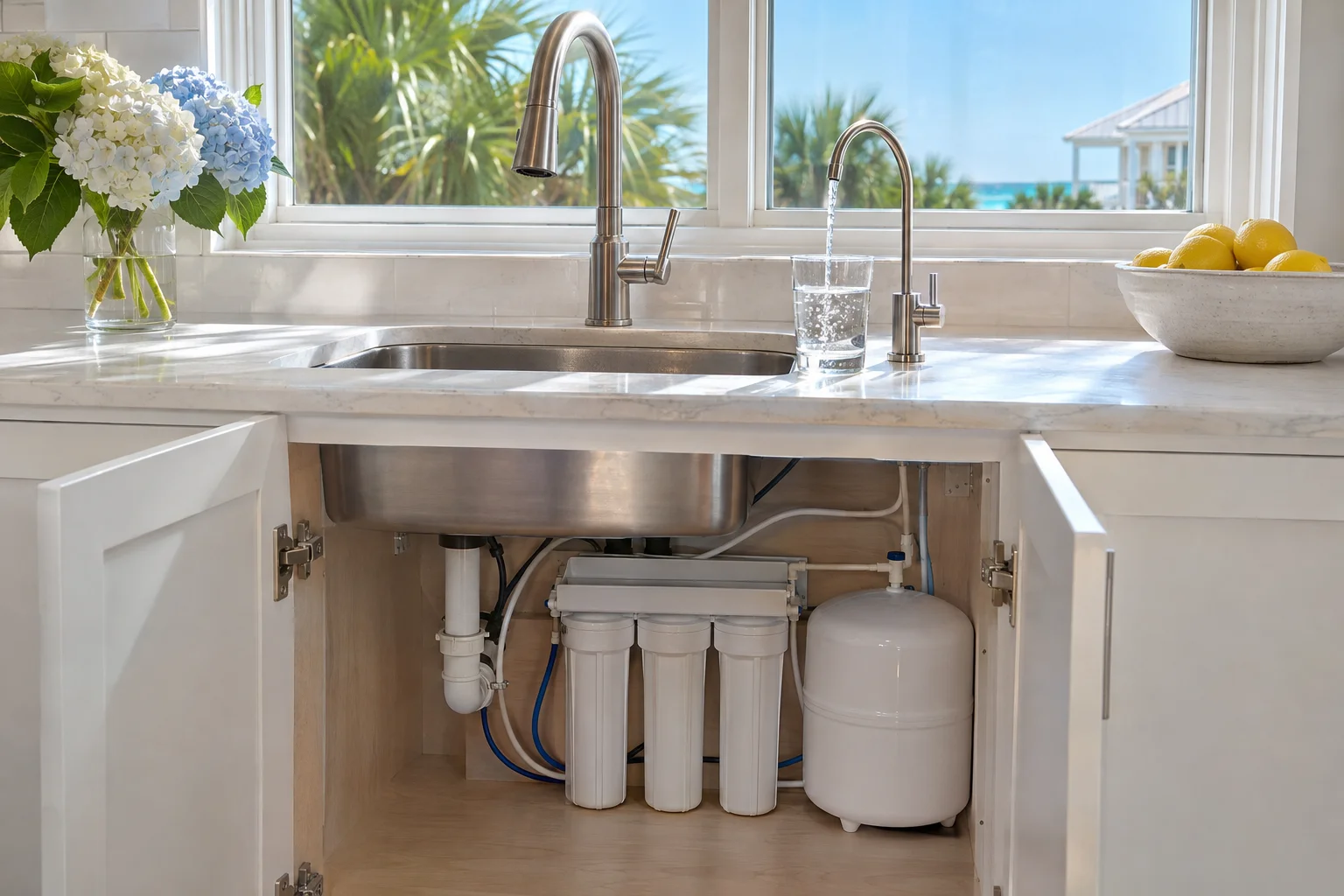
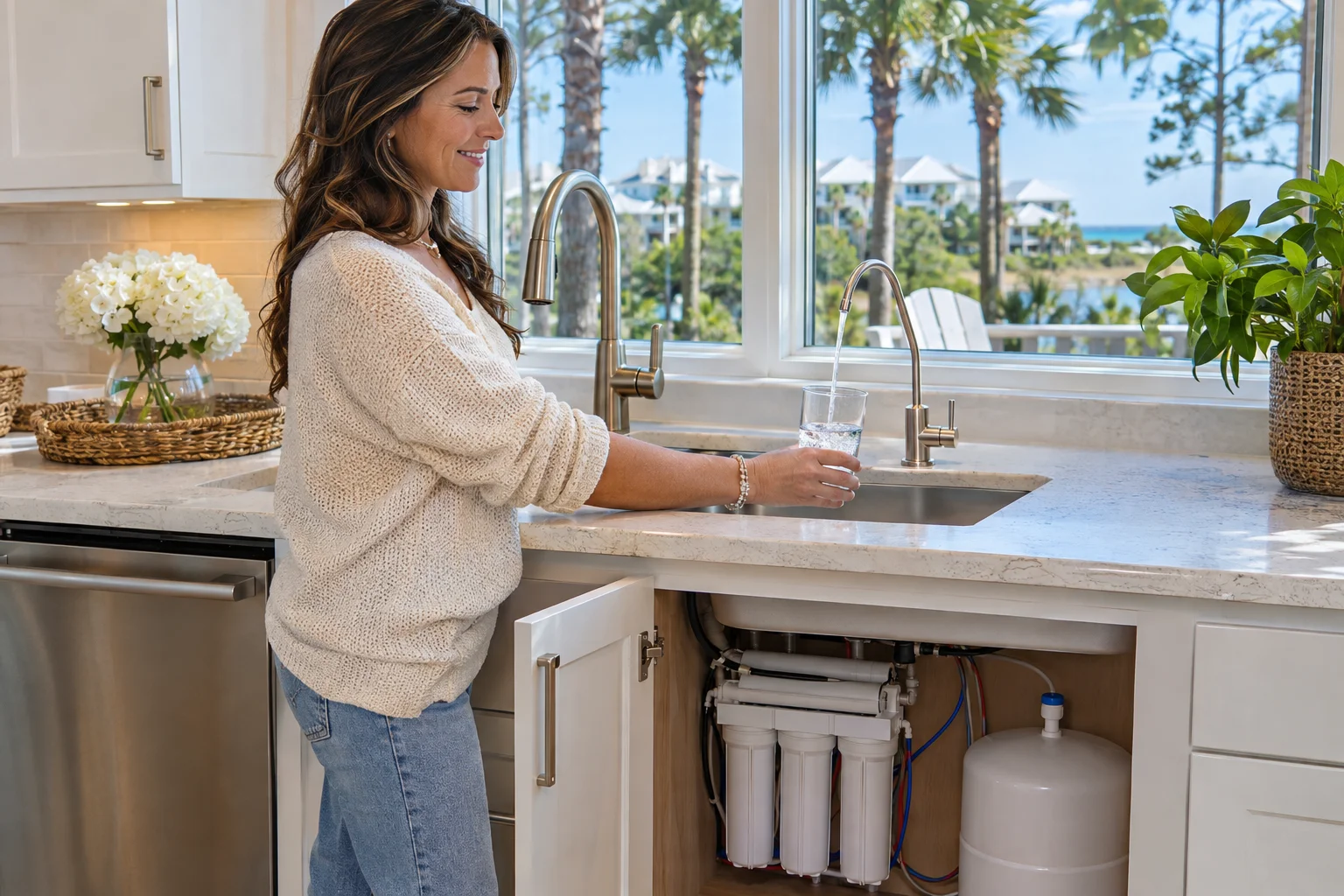
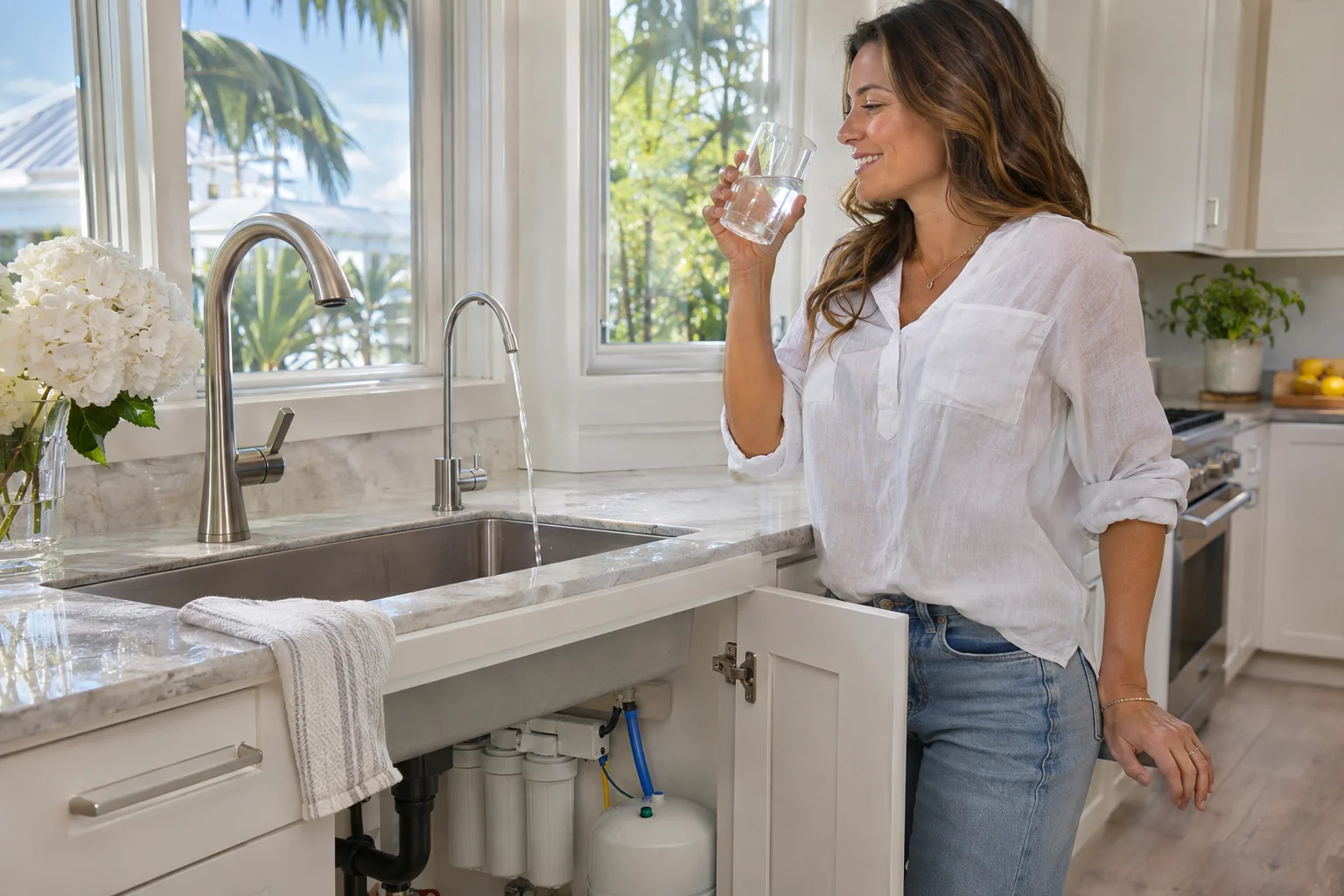
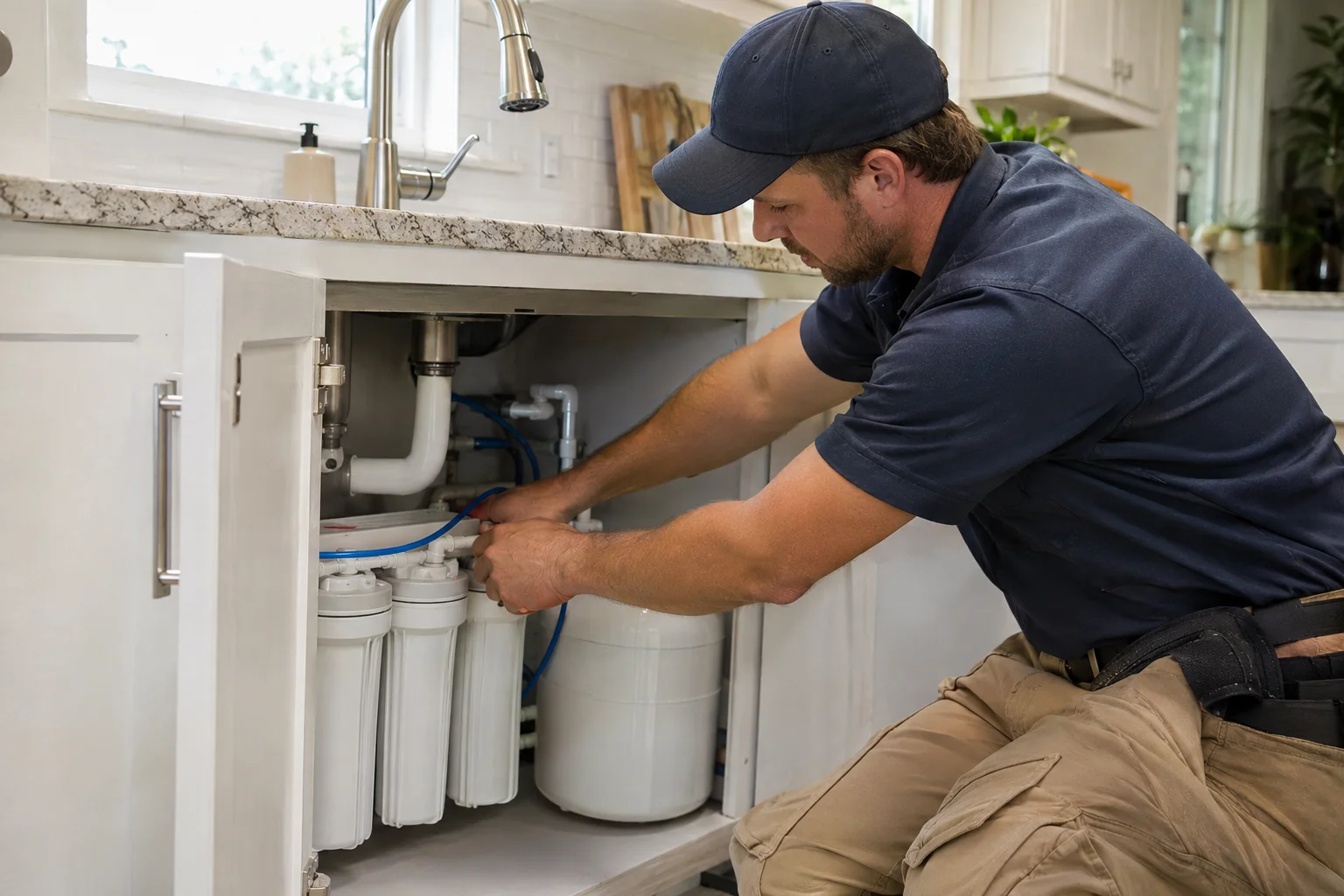
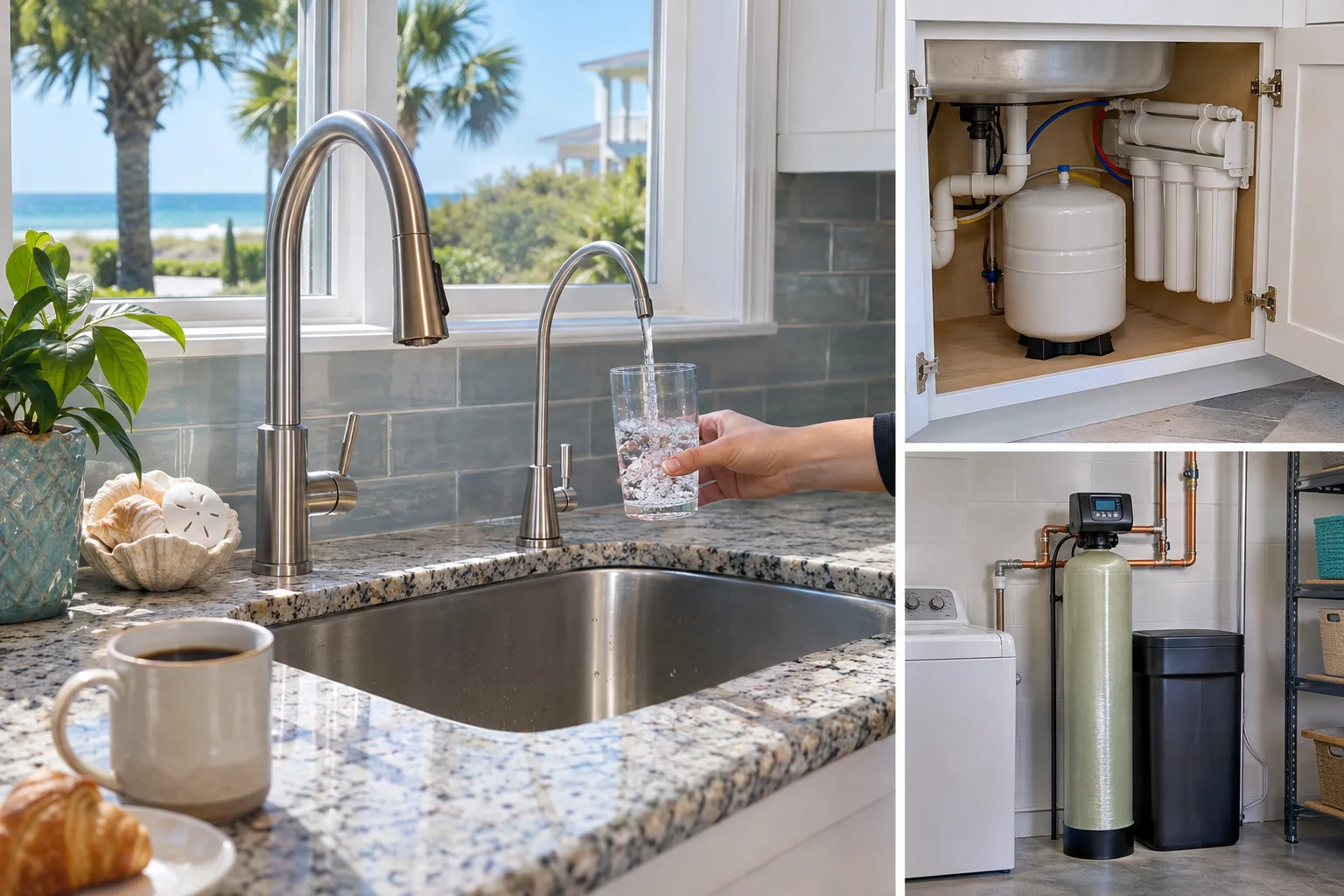
A reverse osmosis system treats a smaller stream of water, usually at a dedicated kitchen tap. Its membrane reduces many dissolved substances, while associated filters address other concerns according to their ratings. For a family that wants better water for drinking and cooking but is happy with the showers and laundry, that targeted approach can make more sense than treating every gallon entering the house.
Think about a regular supper: someone fills a pasta pot while someone else tops off water bottles for tomorrow. Ask about the system’s dispensing rate and usable storage, not just its daily production rating. If cloudy ice cubes are the main frustration, remember that trapped air and the way water freezes also affect clarity. Reverse osmosis can reduce dissolved solids without guaranteeing crystal clear ice.
Choosing a whole home filter without buying more than you need
Visible sediment in household water is different from dissolved hardness. A sediment filter can catch particles of an appropriate size; it won’t catch dissolved calcium. A whole home carbon filter can address certain tastes and odors throughout the house, but it won’t soften the water either. Before installing either, investigate the source of recurring grit or rusty color. Particles from a deteriorating component downstream of the filter will still reach the tap.
When comparing AO Smith water filtration or other clean water systems, look past the brand name to the individual model’s reduction claims, rated flow, and replacement schedule. A whole house water filter needs to handle two showers and a running washer without an objectionable pressure drop. A kitchen unit needs to fit inside the cabinet with enough room to change cartridges. You can compare the roles of water filtration, reverse osmosis, and water softeners before deciding whether a single system or a combination fits your household.
What a useful softener service visit should cover
Show the technician where the trouble is most noticeable, including any taps that seem unaffected. For an existing softener, a hardness reading before and after the unit is more useful than guessing from the salt level. Hard water at both sample points may point to an open bypass, a regeneration issue, or exhausted capacity. Soft water leaving the unit but hard water at one sink suggests that the sink’s supply route needs a closer look.
For a new installation, ask how the measured hardness and your daily water use translate into capacity and regeneration frequency. The installer should also check peak flow, access for salt deliveries, a suitable drain connection, and space to service the valve. If the work is part of a remodel, the layout considerations in our Panama City plumbing installation guide can help you plan access before cabinets or walls go in.
Keep a simple record after installation
Write the installation date, hardness setting, and recommended service interval on a card near the equipment. Check the brine tank at the interval your installer recommends. A hard salt crust can conceal empty space beneath it, so a tank that looks full may not be supplying brine properly. For filters, record cartridge changes separately. A softener regenerating on schedule tells you nothing about how much life is left in a carbon cartridge.
If spots return, note whether they appear all week or only after a houseful of guests. If taste returns at the kitchen tap but the showers remain free of scale, ask about the drinking water filter rather than increasing the softener setting. Those small observations help A Superior Mechanical narrow down a service issue. Homeowners in Panama City and elsewhere in Bay County can request a water softener evaluation with a specific goal in mind, whether that’s keeping a new showerhead clear or sorting out why yesterday’s glasses dried with spots again.
Find Water Softening Services in Panama City, FL
If you need Water Softening Services in Panama City, FL, visit our local service page or contact A Superior Mechanical today.
For a broader look at whole-home water filtration, reverse osmosis, and water softener options, visit our water filtration, RO, and water softener page.
Map of Panama City, FL
Frequently Asked Questions
Do I need both a water softener and a drinking water filter?
Only if you have concerns that call for both. A hardness test helps determine whether softening would reduce scale. If your main concern is chlorine taste in drinking water, a kitchen carbon filter rated for chlorine reduction may meet your needs without a softener.
Can I leave my kitchen cold tap unsoftened?
Often, yes. Depending on the plumbing layout, an installer may be able to bypass the kitchen cold line or provide a separate drinking tap. Discuss this before installation, particularly if you want to limit sodium added by a salt-based softener.
Why are spots coming back even though my softener has salt?
Salt in the tank doesn’t confirm that the system is drawing brine or regenerating correctly. A bypass setting, salt bridge, or increased household demand could explain the change. Testing hardness on both sides of the softener helps distinguish a service problem from another source of spotting.
Related Articles
Photo Gallery