At breakfast, someone fills the coffee maker while the kids get ice for their water bottles. The glasses look spotted straight out of the dishwasher, the ice is cloudy, and the coffee tastes a little like chlorine. It is tempting to blame the dishwasher or buy a filter for the fridge. But those three observations do not necessarily point to the same problem.
A Superior Mechanical’s clean water services in Seagrove Beach, FL start with a practical distinction: what is dissolved in the water, what is suspended in it, and where in the house does it bother you? The answers help narrow down whether you need hard water treatment, drinking water filtration, or attention to a single fixture.
Read the marks the water leaves behind
Calcium and magnesium can be dissolved in clear tap water. When a droplet dries, the water evaporates but the minerals stay on the surface. That is why hard water spots on glass often show up as little white rings. Check the sheltered side of the shower door, a dark plate left in the drying rack, and the deck around the bathroom faucet. Similar marks in several rooms tell you more than one cloudy wineglass does.
To distinguish deposits from damaged glass, try a little white vinegar on an ordinary spotted drinking glass, then rinse and dry it. If the patch clears, removable mineral film is likely. If it stays cloudy, the dishwasher may have etched the surface. Softening the water will not restore etched glass. Keep acidic cleaners off natural stone and specialty fixture finishes unless the manufacturer approves them.
Look beyond the shower door
The crust around a faucet outlet can build up inside the aerator too, turning a smooth stream into several sideways jets. Showerheads develop uneven spray for the same reason. Scale also collects on hot plumbing surfaces and water heater elements. Over time, heavy deposits can leave appliances working less efficiently or wearing out faster. A kettle that needs frequent descaling is a useful clue, though it cannot tell you how much scale is inside the heater.
Hardness changes how soap behaves. A bar of soap may not lather well, and the residue can be difficult to rinse from the tub or a washcloth. Some people notice dry skin or dull hair after bathing. Neither symptom proves the water is hard. Compare those experiences with fixture deposits and a measured hardness result before investing in a softener.
What changes between the street and a Seagrove Beach kitchen?
Along this part of Walton County, a year-round household, a beach cottage that sits empty for weeks, and a busy rental can have quite different experiences with their taps. Water that has been sitting in a branch line can taste different from water drawn after normal morning use. In warm, humid Seagrove Beach weather, an outdoor shower may get daily use all summer while an indoor guest bath barely gets turned on.
Coastal location alone does not establish that a home has salty or hard water. Salt spray can leave a film on an exterior window, but it does not explain chalk inside a kettle. For a home on public water, the supplier’s annual water quality report provides context about the supply. A sample at the house helps answer the separate question of what reaches your tap. A private well calls for its own testing rather than a neighbor’s report.
Before a service visit, note which outlets are affected, whether the change is sudden, and whether it happens on hot water, cold water, or both. In a seasonal property, record whether it persists after the house returns to normal use. Those observations help a technician serving Seagrove Beach homes decide where to sample instead of assuming every property on the same street needs the same equipment.
Trace an odd taste, color or odor to its source
Start with a clean glass at the cold tap
If the usual complaint is chlorinated coffee, compare the odor of cold tap water in a clean glass with water from the fridge dispenser. A difference may tell you the refrigerator filter is doing useful work, or that an overdue cartridge deserves attention. Metallic tasting water, especially on the first draw of the morning, warrants a closer look at the fixture and household plumbing. Taste cannot identify a particular metal, and the absence of taste does not establish safety.
For water odor concerns around a sink, carry the filled glass away from the drain before smelling it. If the odor stays at the sink rather than following the glass, a whole house water filter is unlikely to be the answer. If an odor follows hot water from several taps but is absent on cold, have the hot water system evaluated before treating the incoming supply.
Separate cloudy ice from visible sediment
Ordinary ice trays and refrigerator ice makers trap air as water freezes, so cloudy ice cubes are not a reliable purity test. Air can also make freshly drawn tap water look milky. If a glass clears from the bottom upward as bubbles rise, that points toward air. Grit settling on the bottom is different. Note its color and whether it appears at more than one cold outlet.
A sudden change to brown water, persistent discoloration, or a new chemical or fuel-like smell is not a reason to experiment with cartridges. Avoid using that water for drinking, ice or cooking until the cause is assessed. Check with the utility about work or advisories if you are on public water. For a private well, contact the local health department for guidance on testing and an appropriate alternative supply.
Match the treatment to the job you want it to do
Water softening for scale, laundry and fixtures
A conventional water softener exchanges calcium and magnesium for sodium or potassium ions. This addresses the minerals behind scale and can reduce spotting on dishes and fixtures. In the laundry room, you may be able to use less detergent for the same load. Start with the detergent maker’s soft water guidance rather than keeping the old dose. Excess detergent can make freshly washed towels feel as though they never rinsed clean.
Size a softener using measured hardness, daily water use and peak flow. A cottage with two residents most weeks may still need to supply two showers and a washing machine at once when family visits. Ask which lines will receive softened water. There is usually little benefit in spending salt and treatment capacity on landscape irrigation. If someone follows a sodium-restricted diet, discuss a separate drinking water tap and the sodium contribution before installation.
Whole home water filtration for problems at several taps
If chlorine odor bothers you in both the kitchen and the bath, carbon filtration at the point of entry may be a better fit than several small faucet filters. The specific media matters, particularly if the supplier uses chloramine rather than free chlorine. A sediment filter has a different role: it catches particles within its rated range. Neither an ordinary sediment cartridge nor a standard carbon filter takes the place of a softener for dissolved hardness.
When comparing AO Smith water filtration equipment or another whole home system, look at the exact model’s performance data. What is it rated to reduce, at what flow, and for how many gallons? A filter that performs well at a kitchen tap is not necessarily suitable for simultaneous showers. A Superior Mechanical’s guide to filtration, reverse osmosis and water softeners is a useful starting point for comparing those different jobs.
Reverse osmosis for the water you actually drink
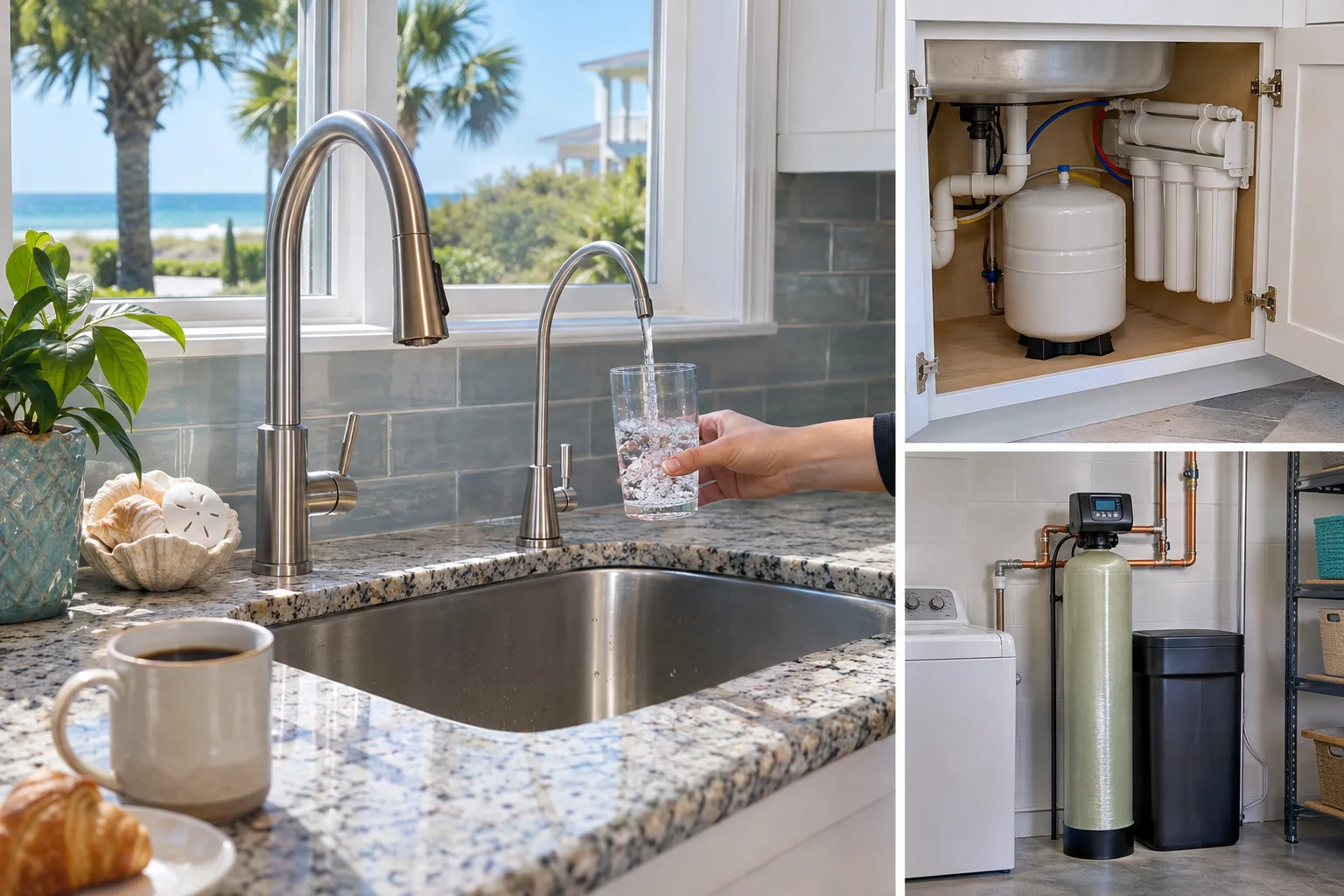
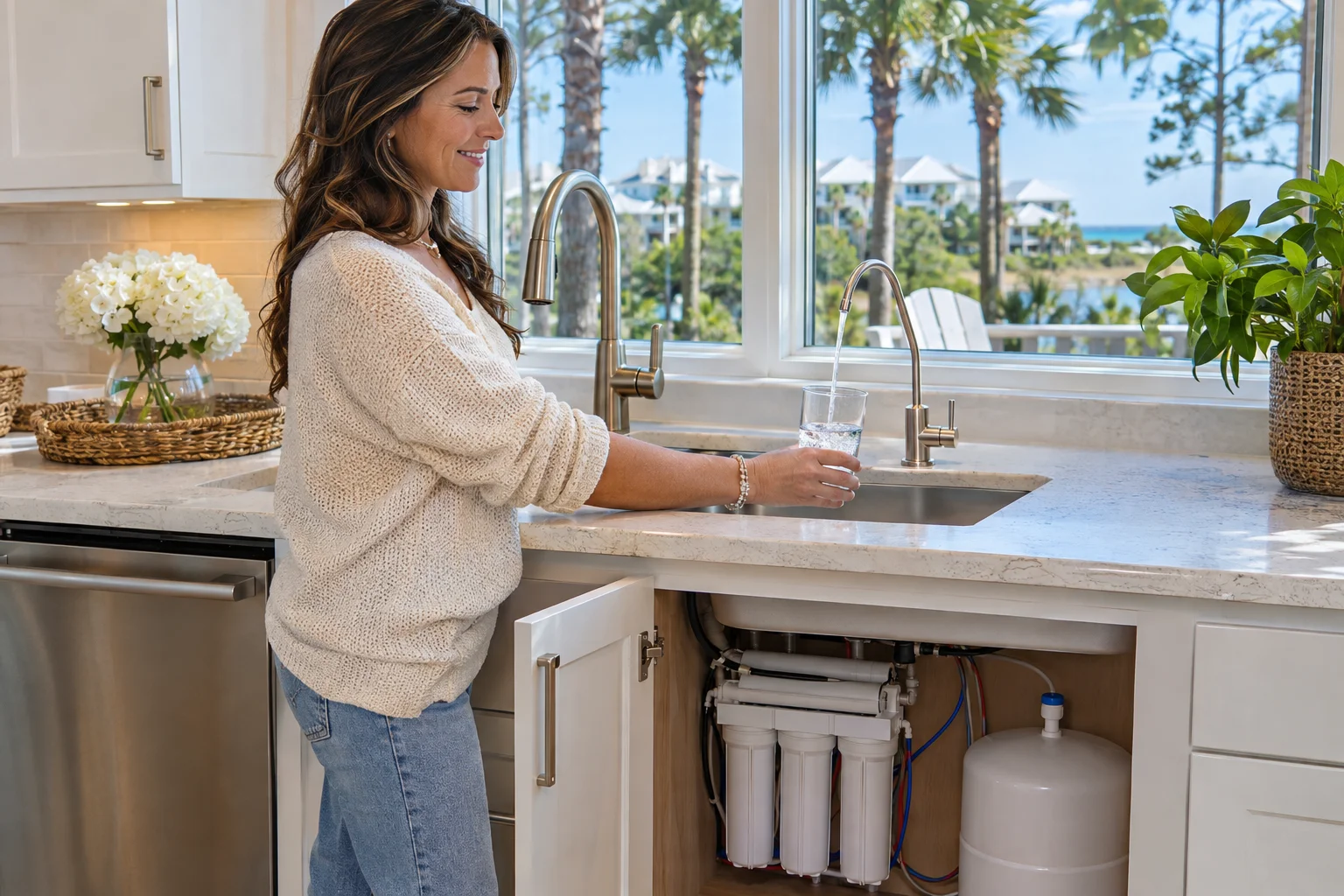
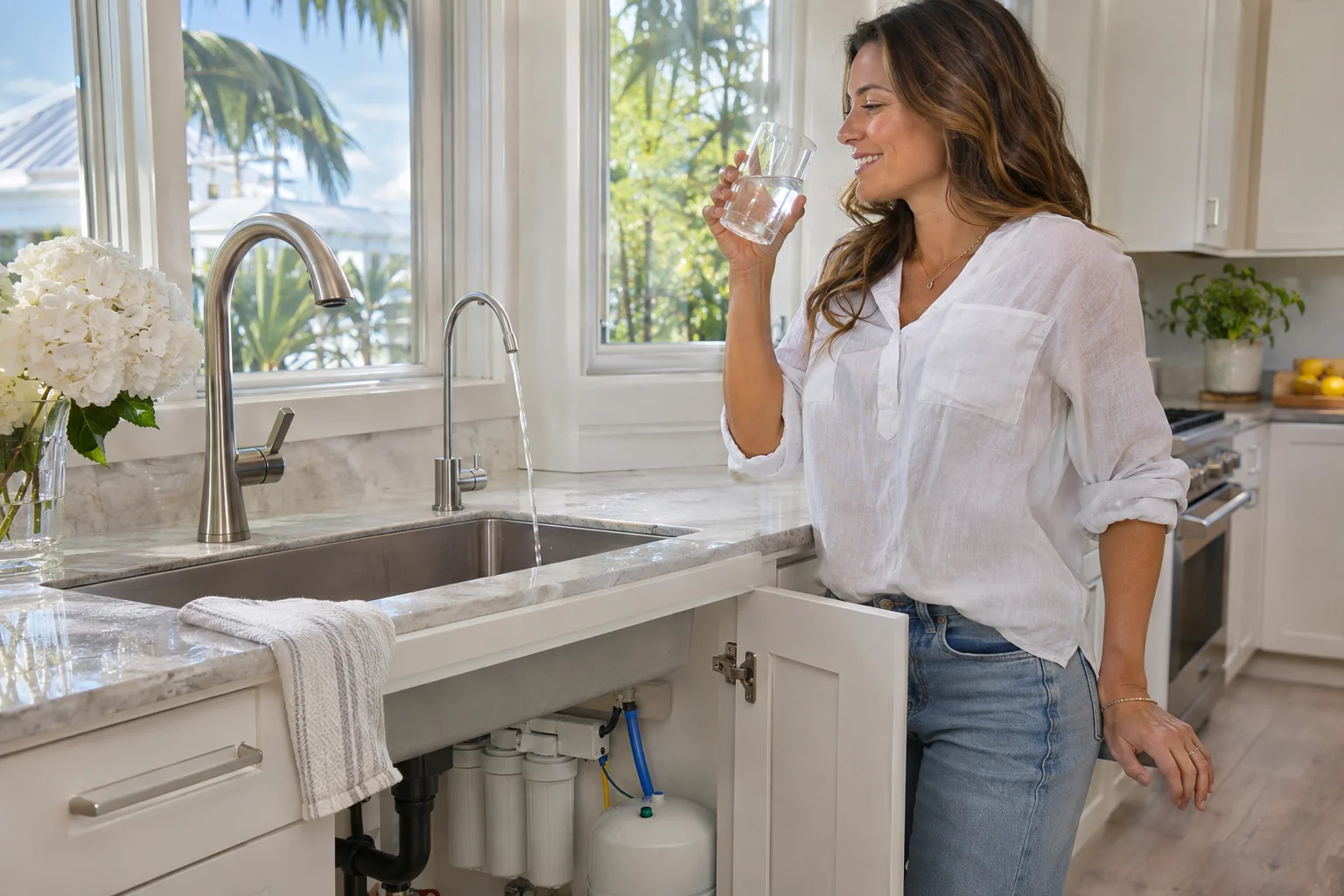
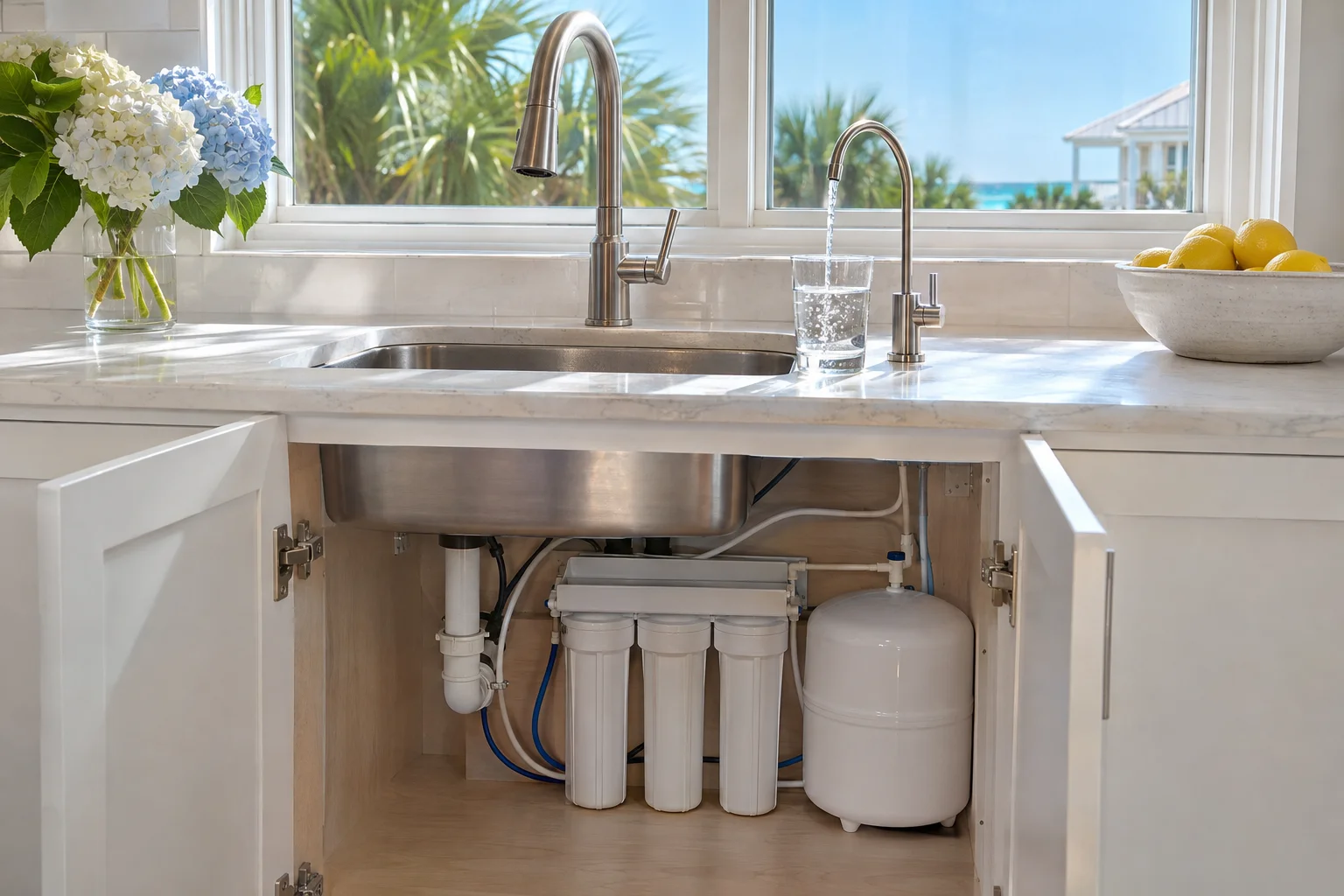
If everyone is happy with the shower but no one likes the tap water in a glass, focus on the kitchen. An under-sink reverse osmosis system uses a membrane to reduce many dissolved substances and typically includes carbon filtration for taste. Choose a model with verified reduction claims for the substances your test identifies. Reverse osmosis installation at one sink does not protect a water heater or stop spots in the upstairs bathroom.
Think through a normal dinner before selecting capacity. Filling a pasta pot, rinsing rice, and topping up four water bottles can draw more than an occasional glass. Check available cabinet space and the system’s delivery and refill rates. If you want treated water for ice, ask whether the unit can serve the refrigerator at the pressure its maker requires. Better water for drinking and cooking is most useful when it is convenient enough for the family to use.
Keep treatment working through busy weeks and quiet months
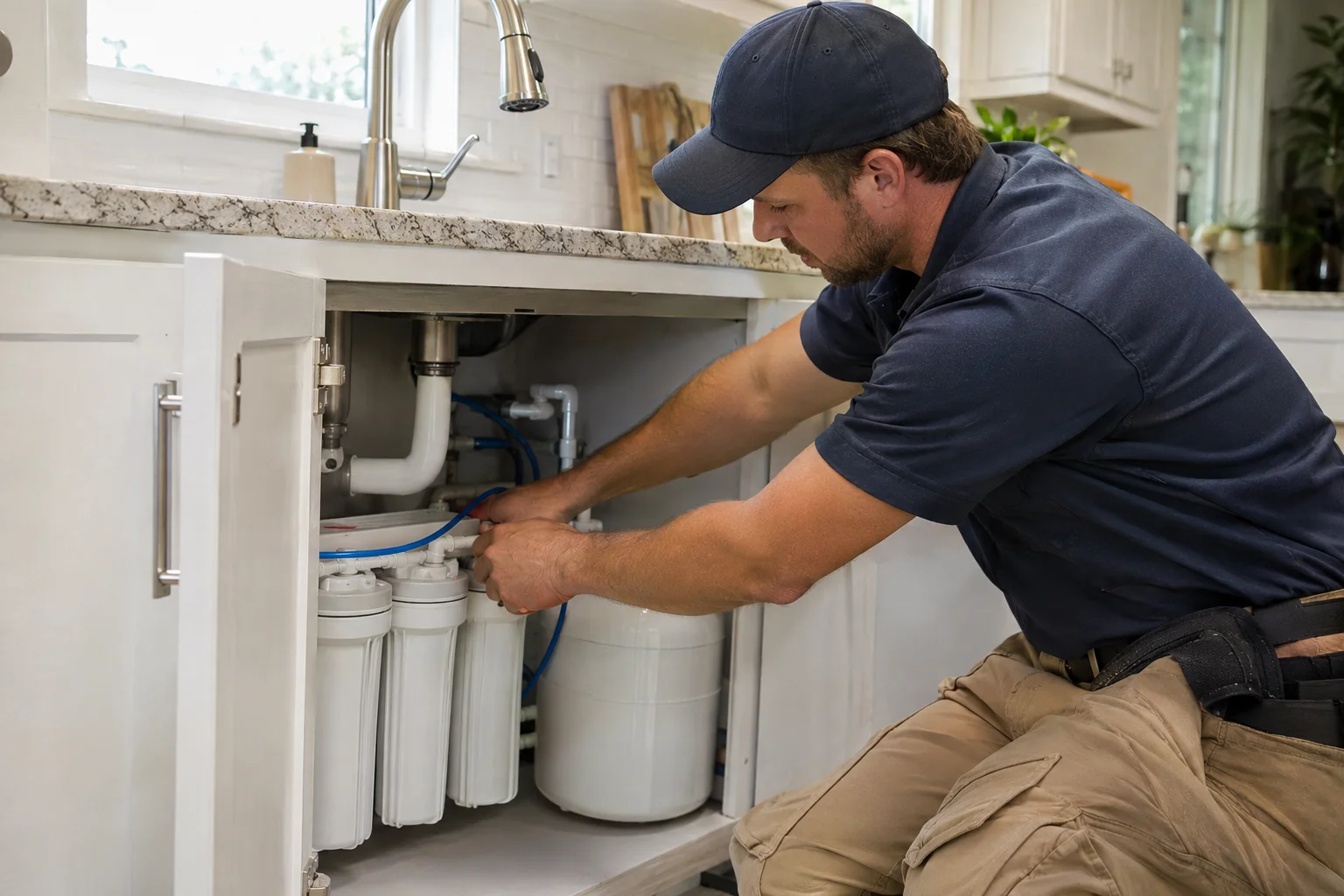
Write the installation date, cartridge model and recommended replacement interval inside the sink cabinet or utility closet. Follow both time and gallon limits. A vacation rental may reach its gallon limit early in summer, while a seldom-used cottage can reach a time limit first. After a long vacancy, follow the equipment maker’s flushing and sanitation directions before serving water to guests. Running the tap briefly is not a substitute for required maintenance.
For a softener, check the salt level periodically and use the product specified for the unit. If spots return while the tank still looks full, request water softener service rather than changing the hardness setting by guesswork. A technician can compare untreated and treated hardness and check regeneration. Existing scale does not disappear overnight; a showerhead or heater may still need attention. This local guide to water heaters and scale explains why treatment and appliance maintenance are separate decisions.
When scheduling service with A Superior Mechanical in Walton County, describe the outcome that matters most: clear dishes after Sunday dinner, coffee without a chlorine taste, or less crust on the showerhead. Bring a recent water report if you have one and ask for the relevant test results, expected maintenance costs and a way to verify performance after installation. A measured drop in hardness or a filter rated for the identified taste issue is a more useful basis for a purchase than a promise to fix everything in the water.
Find Clean Water Services in Seagrove Beach, FL
If you need Clean Water Services in Seagrove Beach, FL, visit our local service page or contact A Superior Mechanical today.
For a broader look at whole-home water filtration, reverse osmosis, and water softener options, visit our water filtration, RO, and water softener page.
Map of Seagrove Beach, FL
Frequently Asked Questions
Will a whole home water filter stop hard water spots on my shower glass?
A standard carbon or sediment filter will not remove dissolved calcium and magnesium. If testing confirms hardness, a properly sized softener is the more direct treatment. It can reduce new deposits, but existing film still needs to be cleaned.
Do I need reverse osmosis if my only complaint is chlorine taste?
Not necessarily. A kitchen carbon filter rated for the disinfectant your supplier uses may be enough. Reverse osmosis is worth considering if you also want to reduce specific dissolved substances that a carbon filter is not rated to address.
How should I size a water treatment system for a Seagrove Beach vacation home?
Consider both the quiet weeks and the busiest occupied days. Whole home equipment needs enough flow for fixtures used at the same time, while a kitchen drinking water system should meet meal preparation and refill needs. Ask for a maintenance and restart schedule that accounts for vacancies.
Related Articles
- Beyond the Water Spots: Clean Water Services in Seagrove Beach, FL
- A Practical Guide to Water Heater Installation in Seagrove Beach and the Plumbing Problems That Shorten System Life
- How Smart Plumbing Installation Helps Seagrove Beach Homes Avoid Bigger Problems
- Coastal Comfort Starts With a Better AC Installation Plan in Seagrove Beach
Photo Gallery