If your kitchen tap leaves grit in a glass, try filling a second glass at the bathroom sink. That small comparison can change what you ask a plumber to do. Debris at a single faucet might be sitting in its aerator. Particles at several cold taps deserve a look farther upstream. And if the grit shows up only when you turn on the hot water, the water heater belongs in the conversation.
For homeowners considering water filtration services in Wright, FL, the first decision is not which filter to buy. It’s whether the trouble starts in the water entering the house, in a pipe or at the fixture itself. Here’s how to tell those problems apart and spend your repair budget where it will help.
Read the tap before you shop for a filter
Start with the fixture you use most. Is the complaint about taste, visible particles, spots on dishes or how long it takes to fill the pasta pot? Note whether you notice it first thing in the morning or all day. In a Wright home with a guest bath that sits unused between visits, water that has been standing in one branch can look different on the first draw than water at the busy kitchen tap.
If you have public water, check your supplier’s current water quality report and any service notices. A report describes the supply, not necessarily what comes out of a particular faucet after water passes through your home’s pipes. If you use a private well, your own water test is the better starting point. For a suspected health concern, ask a certified laboratory about the right sample and collection method. Clear water and a pleasant taste are not proof of safety.
Match the treatment to the complaint
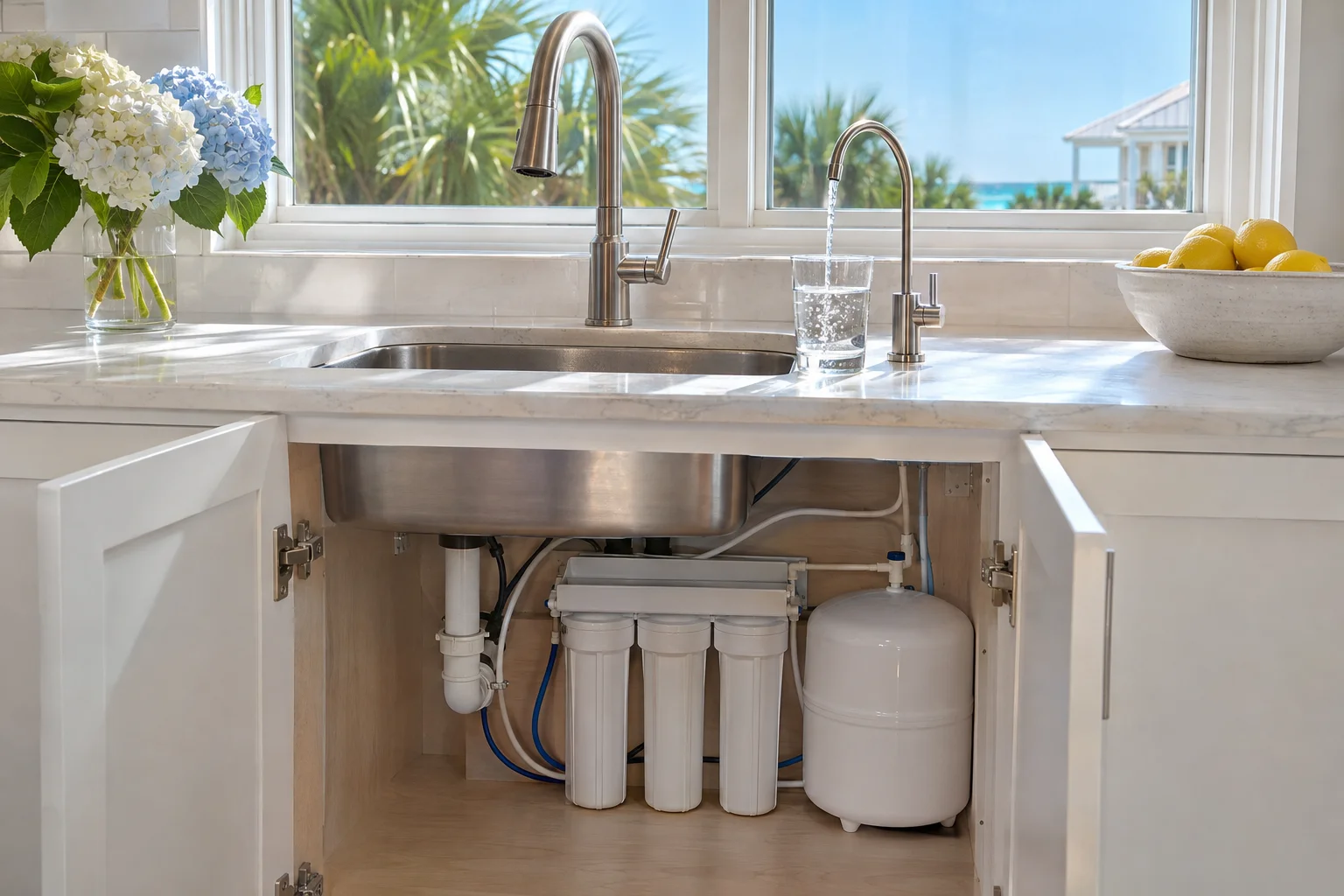
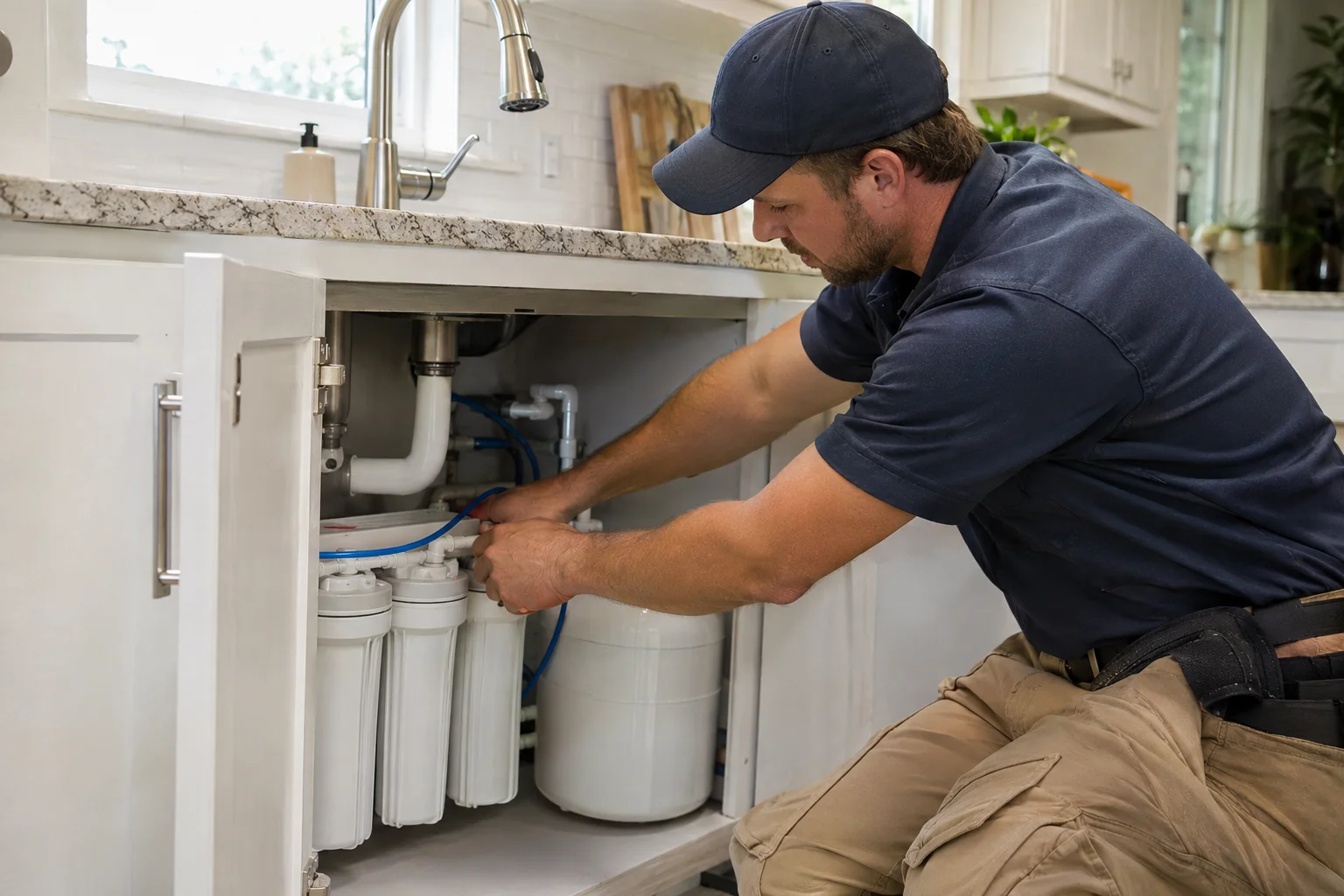
A sediment filter catches particles; it does not remove dissolved hardness minerals. Activated carbon can address chlorine taste and odor, but a carbon cartridge is not a universal contaminant filter. If the only goal is better tasting drinking water, an under-sink unit at the kitchen may serve the family better than treating every gallon that goes to the tub or toilet. For a specific contaminant, look for independent certification for that reduction claim on the actual model, not just the brand.
Chalky crust on a showerhead or on the edge of a kettle points to a different question: how hard is the water? Ask for a hardness measurement before paying for treatment. A softener reduces dissolved calcium and magnesium; a standard whole-house sediment cartridge does not. If scale is the reason you’re requesting a quote, make sure the proposal addresses hardness rather than promising vaguely cleaner water.
A whole-house filter still has to deliver a good shower
Think about a typical warm Saturday in Wright. Someone showers after yard work while the washer fills and another person rinses dishes. That overlap matters more for sizing than the number of gallons on last month’s bill. A filter can have plenty of treatment capacity over its lifetime yet restrict flow during those busy few minutes. Tell the installer which fixtures run together and whether outdoor hose bibs or irrigation draw from the line being treated.
Homeowners often describe any weak stream as low water pressure. Pressure is the force behind the water; flow is how much reaches the fixture in a given time. A gauge can show adequate pressure with everything shut off even though a clogged cartridge limits flow once a tub starts filling. A plumber can compare readings on either side of the filter while water is running. That is more useful than turning up a pressure regulator to compensate for a restriction.
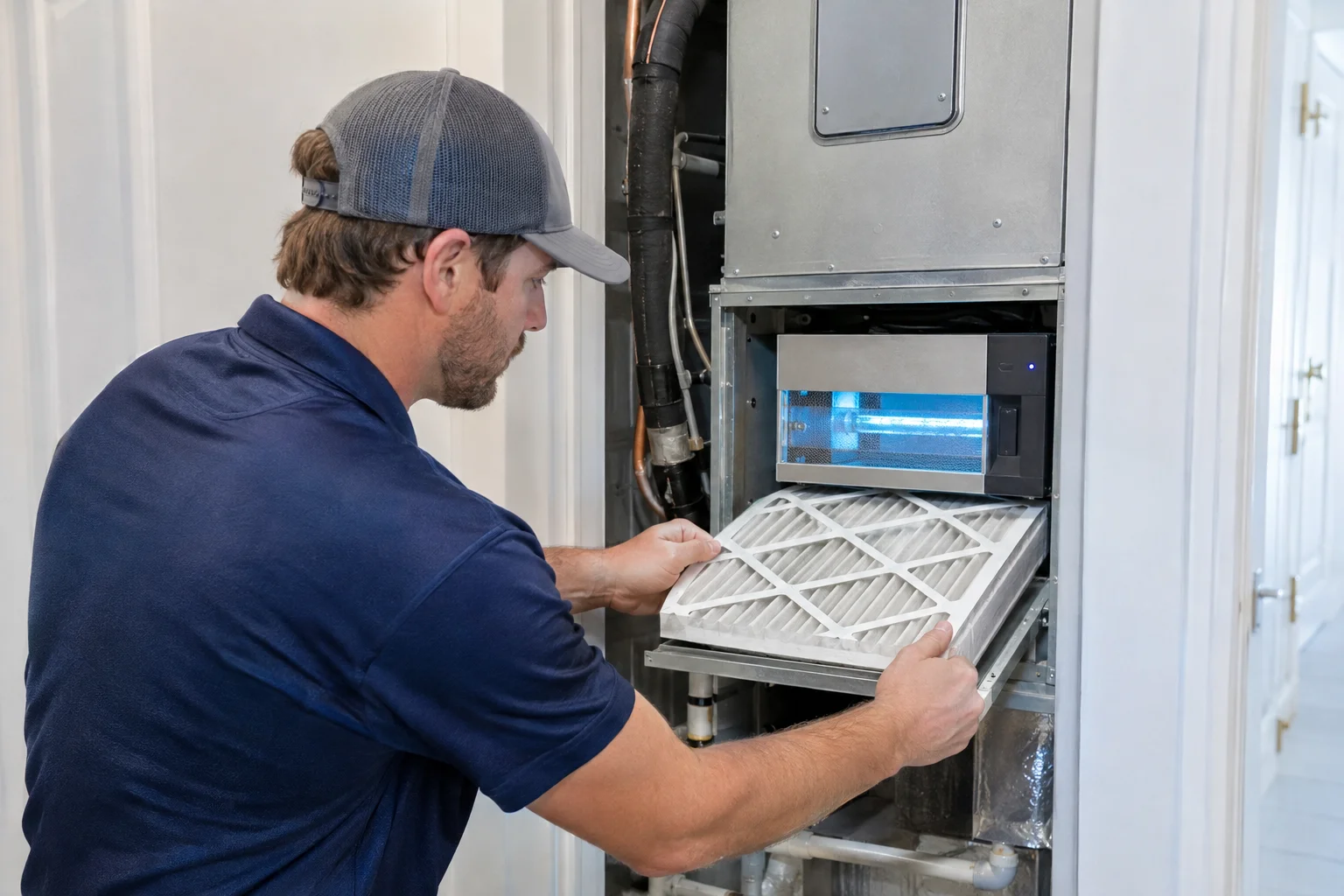
Before installation, have the plumber show you the proposed location. Can you reach the shutoff without moving the washer? Is there enough room below the housing to remove it for service? In a garage or utility closet, leave a clear view of the floor beneath the connections. A bypass that is labeled and accessible can make future plumbing maintenance easier. Remember that water routed through a bypass will not receive the usual treatment.
Track a leak separately from a water quality problem
Northwest Florida’s warm, humid weather can leave cold plumbing damp with condensation. A film of moisture over a cold pipe after a long shower differs from a bead that keeps forming at one threaded connection. Dry the area, set a clean paper towel under the fitting and check where moisture returns first. If a filter housing drips, don’t try to unscrew or tighten it under pressure. Follow the system’s shutoff instructions and arrange leak repair if the source isn’t clear.
An unexplained increase in water use warrants a meter check. Turn off fixtures and make sure the dishwasher, ice maker, irrigation and any treatment system with a scheduled rinse are idle. Check the meter, leave water unused and check again. Movement suggests water is going somewhere, but does not tell you where. A toilet that quietly refills every few minutes is worth checking before assuming there’s a broken line under the house. Toilet repair in Wright may be all that’s needed if water is escaping from the tank into the bowl.
Take persistent floor moisture seriously
In a slab home, a warm patch of floor, damp baseboard or sound of running water with every tap closed can point to a concealed supply leak. None of those observations alone proves a slab leak. If you’re searching for “leak detection near me,” ask how the plumber will narrow down the location before opening a wall or floor. This guide to protecting plumbing beneath Wright homes explains why small changes are worth documenting. A filter won’t stop water escaping from a damaged pipe.
Follow debris back to the fixture, pipe or heater
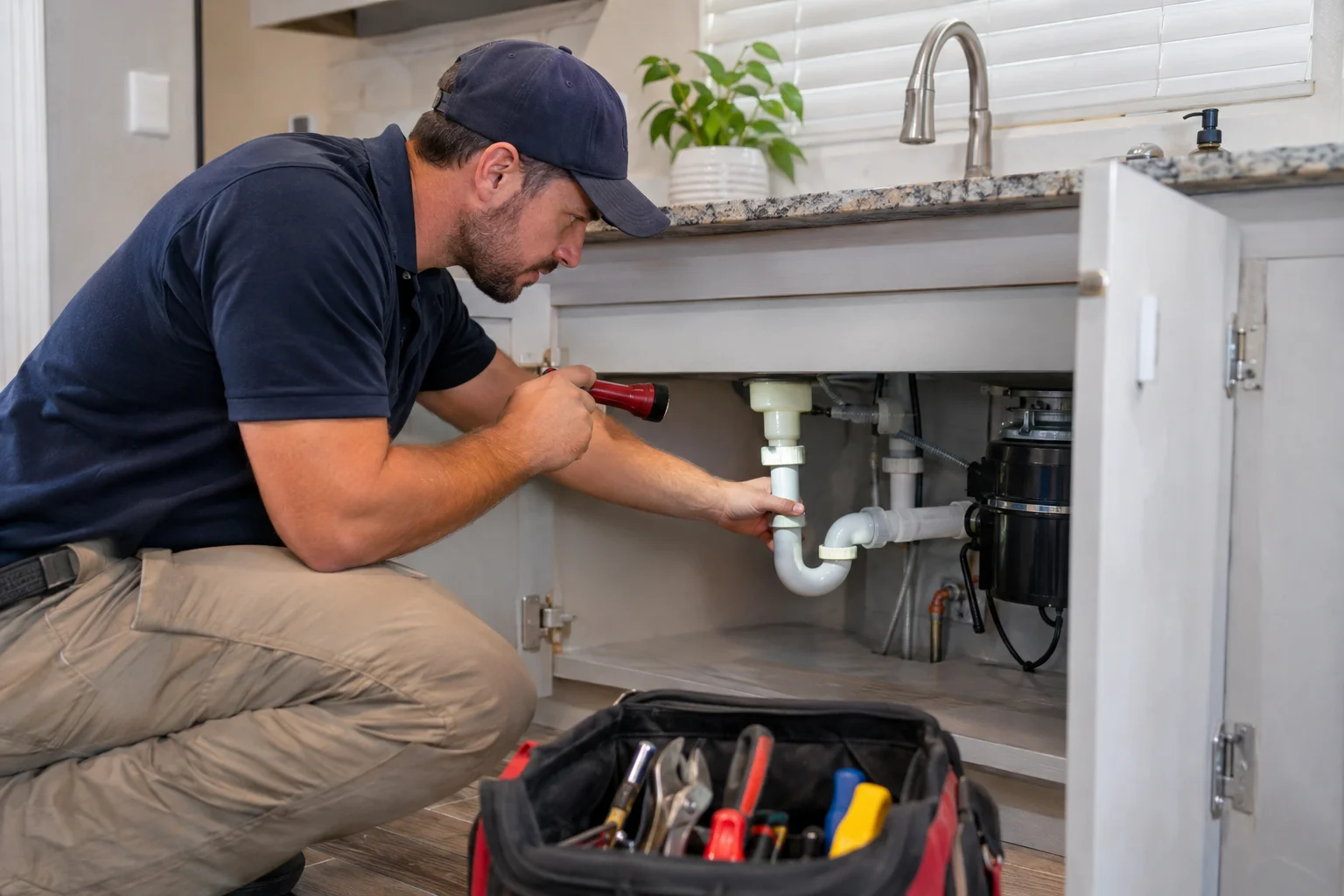
If only one sink has a weak or uneven stream, check its removable aerator according to the faucet instructions. Note what it contains before rinsing it. A few particles after recent pipe work may not return. A screen that fills repeatedly while other taps stay clear gives a plumber a reason to inspect the local shutoff, supply connector and faucet. Faucet repair might restore the stream without changing the water treatment anywhere else in the house.
In an older home with a remodeled kitchen, new fixtures can still be fed by older piping behind the wall. Recurring discoloration along one branch or repeated pinhole leaks deserve an assessment of the pipe material and condition. A filter installed where water enters the home cannot catch rust released downstream. Ask whether a targeted pipe repair makes sense or whether replacing a deteriorating pipe section would avoid another visit for the same problem.
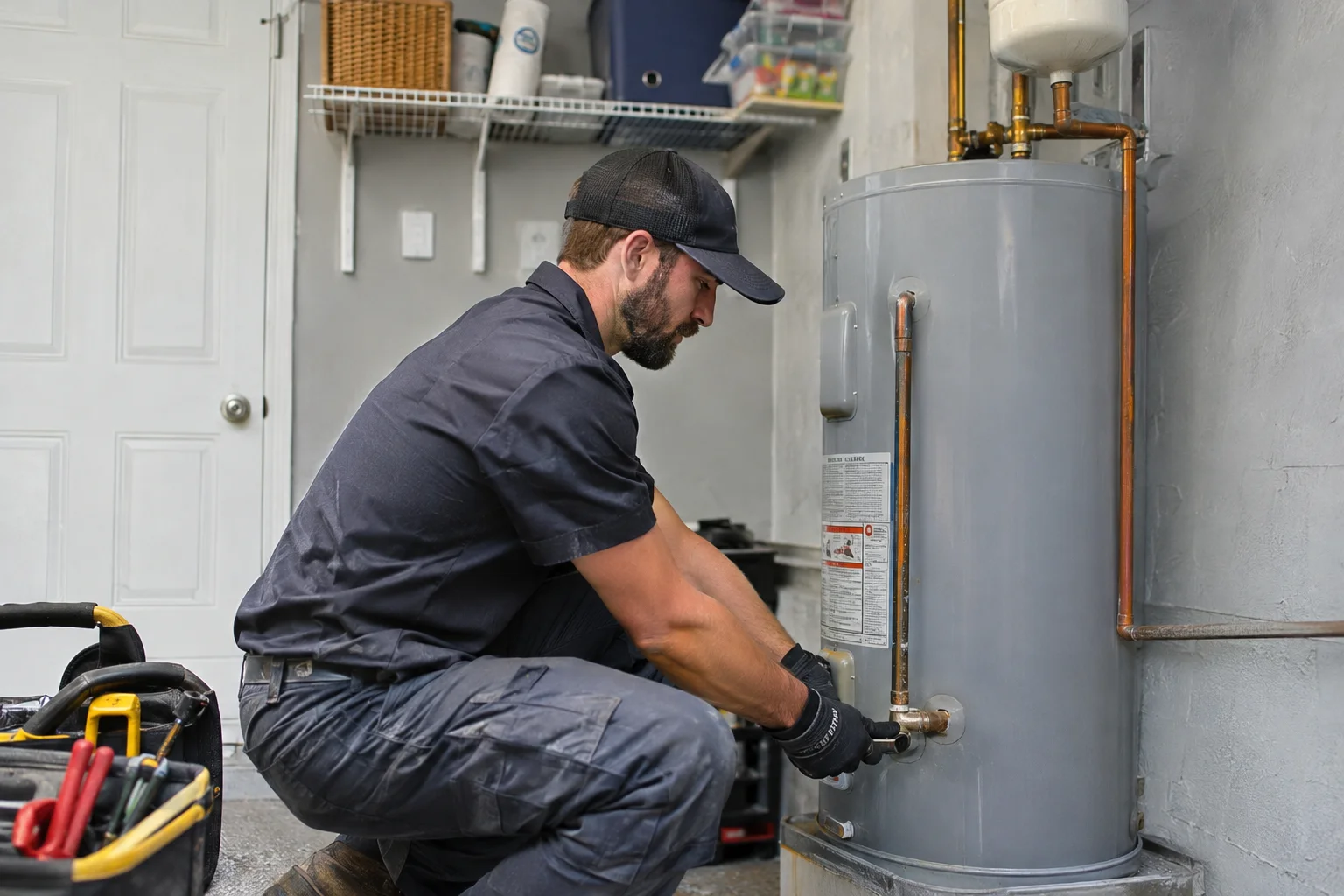
When particles or discoloration appear only in hot water at several fixtures, schedule water heater service in Wright. The tank, hot supply connections and distribution pipes are all possibilities. Let the technician know about noises, changes in available hot water or moisture near the base. If replacement is already on the table, this plumbing checklist for Wright homes getting a new water heater is useful before installation day. Treatment chosen now should suit the replacement heater’s requirements, too.
Drains tell a different story from supply pipes
A strong stream that fills the basin faster than it empties usually points to the drain, not the filter. Hair near a bathroom stopper or grease and food buildup in a kitchen branch can slow one fixture. Remove accessible debris at the strainer and note whether neighboring fixtures drain normally. If you need drain cleaning, tell the plumber whether the sink backs up on its own or only when an appliance discharges. That distinction helps locate the restriction.
Some treatment equipment, including softeners and certain reverse osmosis systems, also sends water to a drain. Ask the installer where that discharge goes and how the connection prevents wastewater from flowing back toward the equipment. If water starts pooling in the laundry room only during a softener cycle, report the timing. The issue could be the receiving drain’s capacity rather than a leak from the treatment tank.
A toilet that bubbles when the washer drains, especially with wastewater rising in a nearby shower, is more urgent than one sluggish sink. Stop running water and keep people away from the backup. Rather than starting with a “sewer inspection near me” search and booking a camera alone, describe the active backup when you call for sewer line help. The plumber can determine whether clearing the blockage must come first.
Make the service visit count
When comparing local plumbing services in Wright, ask for the recommended treatment, its rated flow, the cost of replacement media and the service interval in writing. Local experience matters in Okaloosa County because two nearby homes can have different suppliers, pipe materials and layouts. A useful estimate accounts for your supply and the route from the main shutoff to the fixtures, rather than assuming the system that suits a neighbor will suit you.
Once the unit is installed, record the cartridge model, installation date and starting pressure readings if gauges are fitted. Follow the manufacturer’s replacement schedule even if the water still tastes fine. Recheck flow sooner if showers weaken throughout the house. After each service, look for moisture at the housing and nearby joints with water both running and off. Keep the service record near the unit so the next person doesn’t have to guess when it was last opened.
For an active supply leak, shut off the water if you can safely reach the valve. Stay clear of standing water near electrical equipment. If you’re looking for an emergency “plumber near me,” say first whether the water is still running, whether sewage is involved and whether the shutoff worked. For a routine filtration visit with A Superior Mechanical, the most helpful details are simpler: which taps are affected, what changed and what you want the treated water to do. Those answers give the plumber a practical place to start.
Find Water Filtration Services in Wright, FL
If you need Water Filtration Services in Wright, FL, visit our local service page or contact A Superior Mechanical today.
Map of Wright, FL
Frequently Asked Questions
Do I need a whole-house filter if only my kitchen water tastes like chlorine?
Not necessarily. If drinking and cooking water are your only concerns, a kitchen filter certified to reduce chlorine taste and odor may be enough. Compare its flow rate, cartridge life and replacement cost with a whole-house option.
Why did my shower get weaker a few months after a filter installation?
If several fixtures have lost flow, the cartridge may be loading up with sediment. A plumber can compare pressure before and after the filter while water is running. If only the shower is weak, the showerhead or valve is a better starting point.
Can a water filter prevent slab leaks in a Wright home?
No filter can guarantee that or repair an existing leak. If the meter moves while water use is stopped, or a floor stays damp without an obvious source, arrange leak detection rather than relying on filtration to protect the pipe.
Related Articles
Photo Gallery