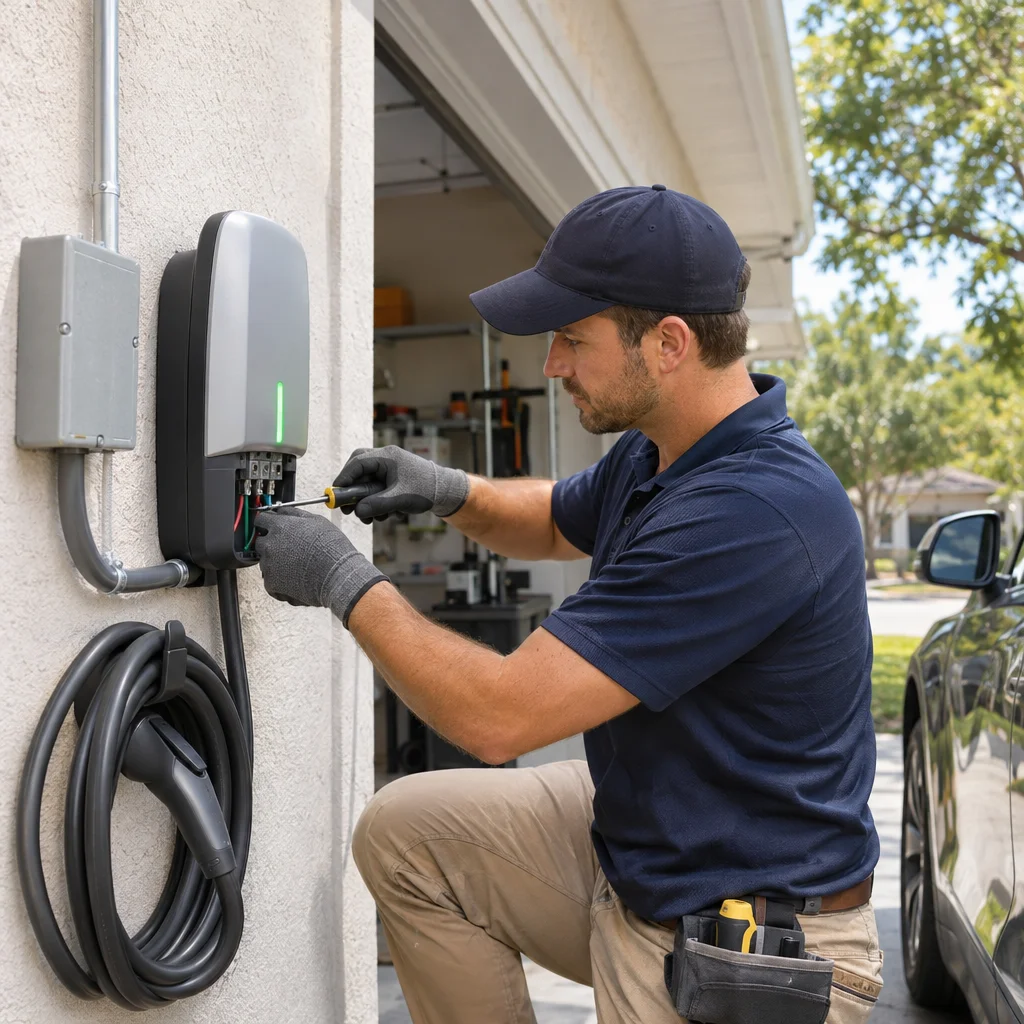
Pull into your regular parking spot and picture plugging in with groceries in one hand. Which side of the car is the charge port on? Would the cord cross the door into the house? Could you reach it if a second car were parked beside you? These questions can save as much trouble as picking the right breaker, particularly if the shortest wiring route puts the charger on the wrong wall.
For EV charger installation in Lake Lorraine, FL, the goal is enough power to cover your driving, delivered through a circuit that can carry it safely for hours. Here is how to work through that decision before buying equipment or opening a garage wall.
Start with the miles you need back by morning
A driver who makes short trips around Lake Lorraine and Shalimar has different charging needs from someone who gets home late after a long commute and leaves again before dawn. Look at a normal week, not just the longest drive of the year. Note the miles driven, how long the vehicle stays parked and whether two drivers will need the same parking space.
For a rough example, a car averaging 3 miles per kilowatt-hour uses about 12 kilowatt-hours to travel 36 miles. At 240 volts, a Level 2 charger delivering 16 amps supplies about 3.8 kilowatts. Even allowing for charging losses, that can cover the day's driving in roughly four hours. A higher setting might save time you need, or it might simply leave the car sitting fully charged for more of the night.
A search for “Tesla charger installation near me” may turn up equipment capable of more power than your car can accept. Check the vehicle's onboard AC charging limit as well as connector compatibility. For light use, even Level 1 charging may be sufficient, provided an electrician verifies that the 120-volt circuit and receptacle are suitable. An old garage outlet shared with a freezer is not automatically a good candidate.
Read the panel as a record of the whole house
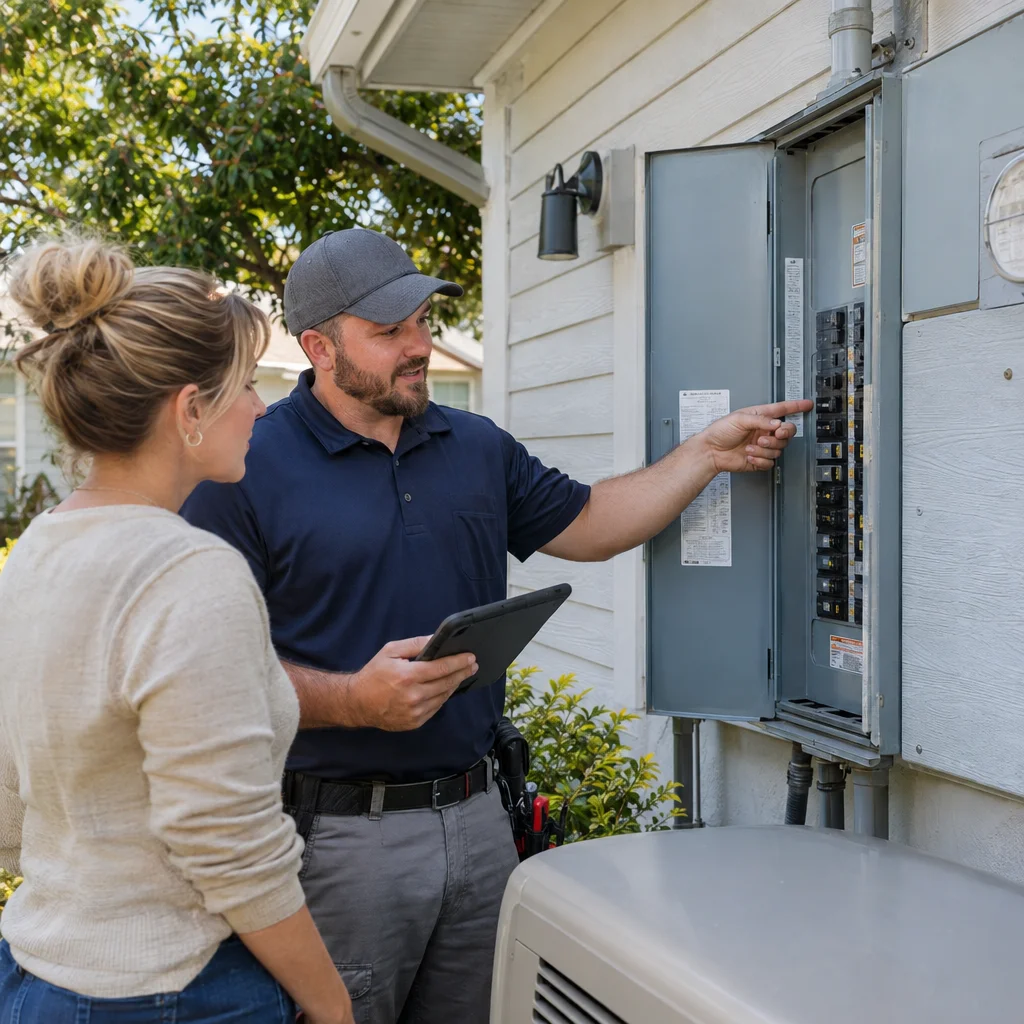
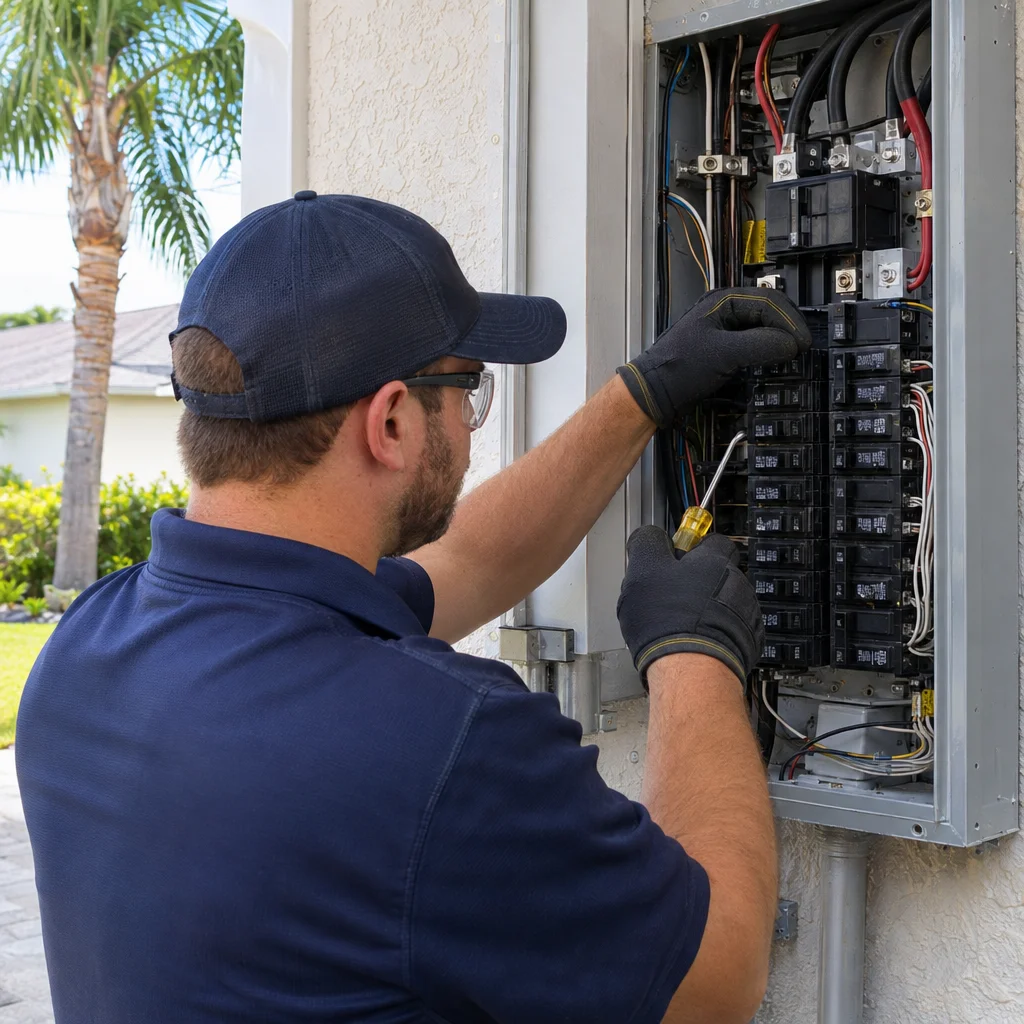
An empty breaker slot tells you there may be physical room for another breaker. It says nothing about how much additional demand the service can support. An electrician needs to assess the service rating, panel condition, existing loads and proposed charging current. If the charger will draw from a garage subpanel, the feeder supplying that panel matters too.
In an older Lake Lorraine home, a directory marked “garage” might predate a workshop addition, a converted carport or a kitchen remodel. A newer house can present the opposite surprise: a tidy, well-labeled panel that already serves electric cooking, a pool and a large electric water heater. Tell the contractor about planned additions, not just appliances that are in place today. A load calculation is more useful than adding up the numbers printed on the breaker handles.
If capacity is tight, compare three options
First, ask whether a lower charging current would meet your overnight target. Second, ask about a listed energy management system that monitors household demand and reduces or pauses charging as needed. That can be useful on hot Florida afternoons when the car comes home while cooling demand is high. A simple start timer is convenient, but it does not monitor the actual load or correct an undersized installation.
Third, consider a panel or service upgrade if the equipment is damaged, unsuitable or unable to support planned loads. Have the estimate distinguish a panel replacement from an increase in service capacity. They are not the same job. The local guide to electrical panel planning in Lake Lorraine is useful if EV charging is only the first of several improvements.
Choose the wiring route before the wall gets closed
Level 2 home charging typically calls for a dedicated 240-volt branch circuit. Because the load can continue for hours, circuit sizing must account for sustained current. A familiar example is a 40-amp charging setting on a properly designed 50-amp circuit. That example is not a specification for every home. The electrician must select compatible protection and wiring for the equipment, route and installation conditions.
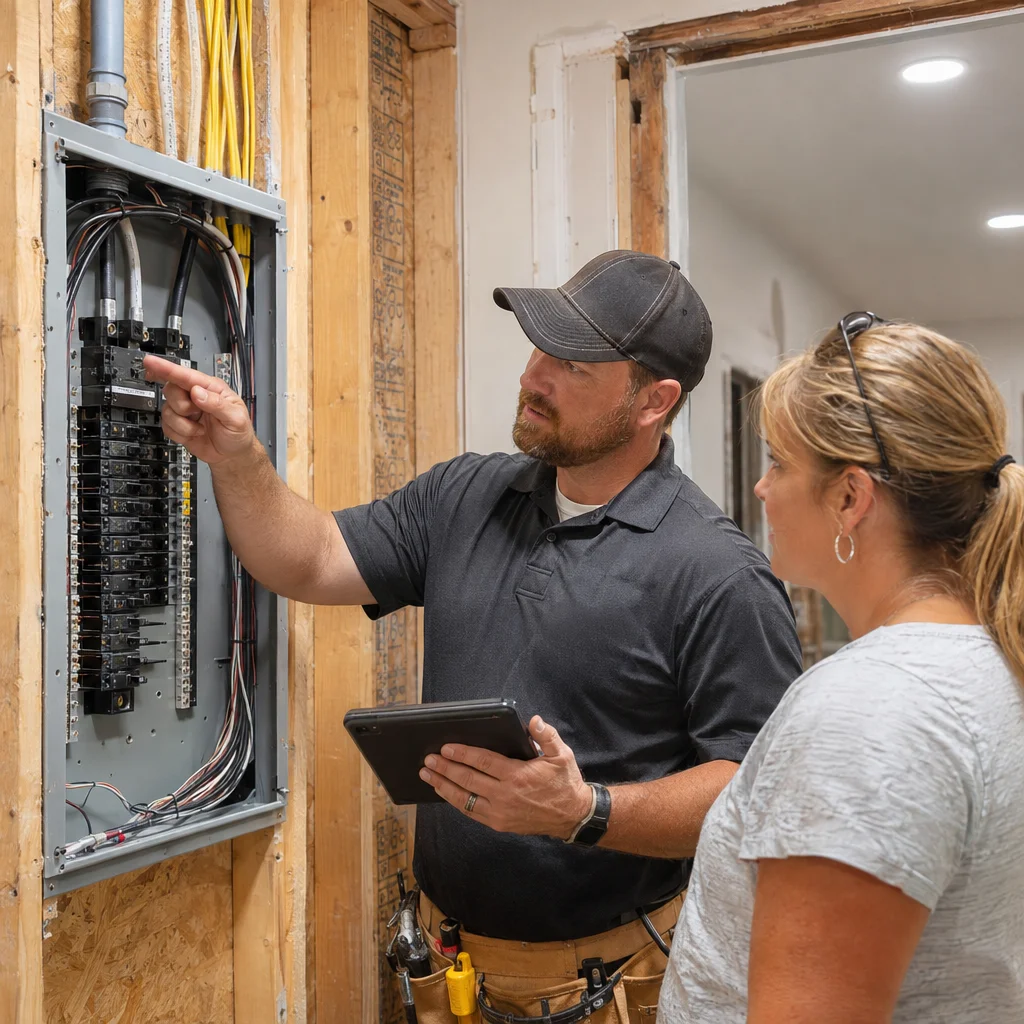
A straight run along an accessible garage wall can be less disruptive than a shorter route through a finished ceiling. Detached garages introduce other questions, including underground routing and existing feeder capacity. Ask where conduit will be visible, how penetrations will be sealed and whether the estimate includes trench restoration or drywall repair. If a remodel has already exposed the framing, have that conversation before insulation goes back in.
While the walls are accessible, look at how you'll use the space after dark. A light switch hidden behind the open car door is a daily inconvenience; a dark step beside a charging cable is a trip hazard. Coordinate any garage lighting installation with the wiring work, but keep lighting, ceiling fans and general outlets off the dedicated charging circuit. A labeled panel directory should make those circuits easy to distinguish later.
Hardwired charger or outlet? Consider the connection itself
A hardwired unit eliminates the plug and receptacle as potential wear points. It is often a practical choice for a permanent parking spot or an exposed wall. A plug-in model can make sense if you want removable equipment, but the receptacle must be suitable for EV charging, correctly installed and matched to the plug. Ask how the design addresses GFCI protection, equipment grounding and the manufacturer's instructions under the applicable electrical code.
If “dryer outlet installation near me” was your starting point, don't assume an existing laundry outlet is a shortcut. A similar-looking receptacle may have a different rating or grounding arrangement, and the dryer still needs its circuit. Adapters, extension cords and cables pinched under garage doors are poor substitutes for getting power to the actual parking location. Show the installer the mobile connector you intend to use rather than ordering a receptacle by appearance.
Give outdoor equipment a fighting chance in coastal weather
In Lake Lorraine, a carport roof may block ordinary rain but do little against wind-driven water during a storm. Choose equipment rated for the exposure and a location clear of downspouts, sprinkler spray and spots where water collects. Humidity and salt exposure can take a toll on metal fittings. Have the contractor account for corrosion resistance, cable storage and any applicable flood elevation requirements when choosing the mounting position.
Walk the proposed route with the garage door open and shut. The connector should reach without tension, lie clear of tires and return to its holder without dragging through wet sand. At a vacation rental, guests may park in either direction or arrive at night. A visible holder and a short note showing where to park can prevent more damage than a longer cord left loose on the driveway.
Plan for outages without putting the generator under strain
If your house has backup power, find out whether the charger would be energized during an outage. A load that is modest on utility power can consume a large share of a standby generator's output. The installer can evaluate leaving the EV circuit outside the backed-up loads or designing controls to shed charging while the generator runs. Do not rely on everyone remembering to unplug before a storm.
If you're considering generator installation or maintenance in Lake Lorraine, review the transfer equipment and charger together. This is also a good time to discuss whole-home surge protection. It can reduce exposure to certain voltage surges, but it is not a guarantee against lightning damage and does not make water-damaged charging equipment safe to use.
Know what needs electrical repair, not another reset
A charging session that stops once may reflect a vehicle schedule or an equipment setting. Repeated breaker trips, buzzing at a receptacle, a burnt odor or a plug that no longer seats firmly are different. Stop charging and have the circuit inspected. What starts as a search for “outlet repair near me” may turn out to be a loose termination, worn contacts or damaged wiring farther upstream. Installing a larger breaker without addressing the circuit is not a repair.
Tell the electrician whether other symptoms occur at the same time. Lights that flicker across several rooms when charging begins warrant a broader inspection than a single faulty garage lamp. If equipment is smoking, arcing or on fire, move away, get everyone clear and call 911 from a safe place. Do not touch a wet panel or try to disconnect a charger while standing in water. After flooding, leave affected equipment out of service until a professional assesses it.
A simple maintenance habit between service visits
When you put the cable away, glance at the jacket, connector and holder. Look for cuts, discoloration, cracked covers and signs of water entry. After a storm, check the area from a safe, dry location before resuming use. Keep storage bins clear of the panel and follow the manufacturer's maintenance guidance. Leave covers, internal connections, breaker testing and wiring repair to a qualified electrician.
Ask for an estimate you can use after installation day
A useful written scope identifies the charger location, charging setting, circuit rating, wiring route and whether the unit will be hardwired. It should also explain any panel work, code corrections, permit arrangements and required inspections. For a rental or shared parking area, identify who can change settings and whom guests should contact if charging stops. Commercial or multi-space projects may need a different design from a single household installation.
At handover, ask the installer to demonstrate a charging session with your vehicle, point out the labeled breaker and show you the configured current limit. Keep the equipment manual, permit records and installation details together. If you add a second EV, install a spa or convert the garage later, those records give the next electrician a reliable starting point.
A Superior Mechanical plans charging for homes, businesses and vacation rentals in Lake Lorraine and across Okaloosa County. To request an installation assessment, have your vehicle model, typical daily mileage and preferred parking spot handy. A photo of the closed panel and the intended charger wall can help explain the project without removing a cover or handling any electrical equipment.
Find EV Charger Installation in Lake Lorraine, FL
If you need EV Charger Installation in Lake Lorraine, FL, visit our local service page or contact A Superior Mechanical today.
Map of Lake Lorraine, FL
Frequently Asked Questions
Does a 100-amp service rule out Level 2 charging in Lake Lorraine?
Not necessarily. An electrician needs to calculate the home's load and evaluate the panel and any garage feeder. A lower charging setting or a listed load management system may fit the existing service without an upgrade.
Can I put the charger outside if my garage is used for storage?
Yes, if the equipment and installation are suitable for the location. Have the electrician check rain exposure, drainage, corrosion resistance and cable reach. A permanent outdoor charging point is preferable to running a cord under a garage door.
What if I plan to buy a second EV next year?
Tell the installer before choosing the wiring route. Depending on how much both cars travel and when they are parked, two chargers that share available power may be more practical than sizing two independent circuits for maximum output.
Related Articles
Photo Gallery