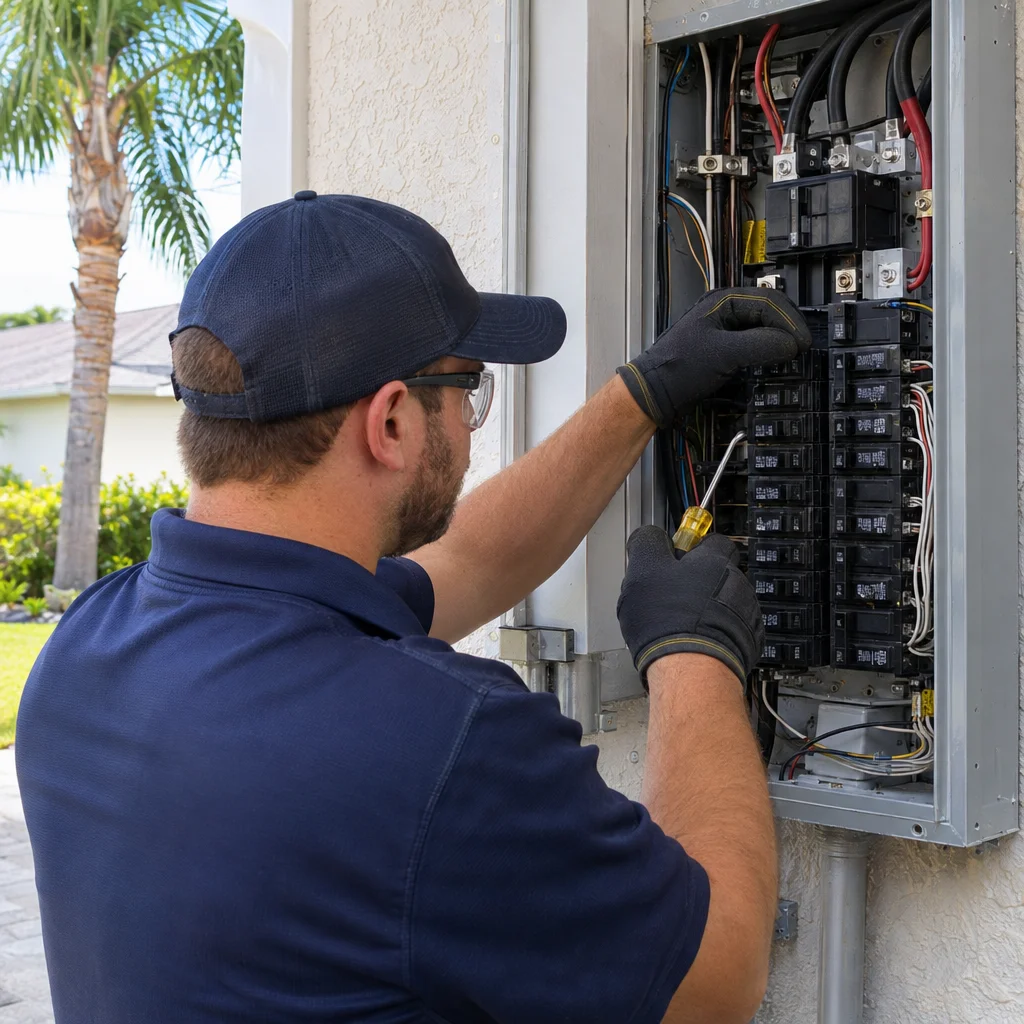
On a rainy Niceville afternoon, the thermostat can read 74 degrees while the sheets in the back bedroom still feel damp. Lowering the setting might make the hallway colder without making that bedroom comfortable. Before spending money on AC repair or a bigger system, it helps to separate three questions: Is the heat pump cooling the air? Is enough of that air reaching the room? Is the system removing enough moisture?
Those questions are a useful starting point for heat pump services in Niceville, FL. A Superior Mechanical provides repair, installation, replacement, and maintenance. Which service makes sense depends as much on the house and its ductwork as it does on the age of the outdoor unit.
Read the room before adjusting the thermostat
Start with where and when you notice discomfort. A west-facing room that warms up only in late afternoon presents a different problem from a bedroom that stays warm overnight with the door shut. The first may be gaining heat through the windows faster than the supply vent can offset it. In the second, air delivered through the vent may not have an adequate path back to the return grille. Note whether leaving the door open changes the temperature overnight.
Next, compare that room with the space around the thermostat. A hallway thermostat reads the hallway, not the nursery, sunroom, or upstairs office. A nearby supply vent blowing directly at the sensor can end a cooling cycle before other rooms catch up. If the display itself seems inaccurate, ask about sensor placement and calibration before booking a thermostat installation. A new control in the same poor location can make the same decisions.
Why a cool house can still feel humid near the bay
During cooling, moisture in household air condenses on the cold indoor evaporator coil. The water collects in a pan and leaves through a drain line. Niceville’s coastal weather puts that process to the test, particularly when showers cool the roof and outdoor air but leave plenty of moisture behind. With less heat to remove, the thermostat may call for only brief cooling cycles. That can be enough to satisfy the temperature setting without drying the house.
Check fan operation and measure moisture
If the thermostat has a conventional fan setting, check whether it is set to ON or AUTO. In many systems, AUTO stops the blower between cooling calls instead of circulating air across a wet coil and returning some moisture to the house. Use a small humidity meter away from windows and vents to track the result. A reading that routinely exceeds 60 percent indoors deserves attention, especially if closets smell musty or condensation lingers on cool surfaces.
Short cycles, leaky return ducts, and a bathroom fan that vents into the attic can all contribute to moisture complaints. They need different fixes. If the equipment and exhaust fans are working properly but indoor humidity stays high in mild weather, a whole home dehumidifier can remove moisture without relying on a call for cooling. For a closer look at filters and indoor air quality, read how to plan for cleaner, drier air without sacrificing airflow.
Follow the air from the filter to the far bedroom
Before an air conditioning service visit, make sure the filter fits its slot, supply vents are open, and furniture is clear of return grilles. A filter bowed inward or whistling at the edges is worth mentioning. Don’t assume a denser filter will improve indoor air quality in every home. If the filter area is too small for that media, the extra resistance can reduce airflow through the air handler and across the coil.
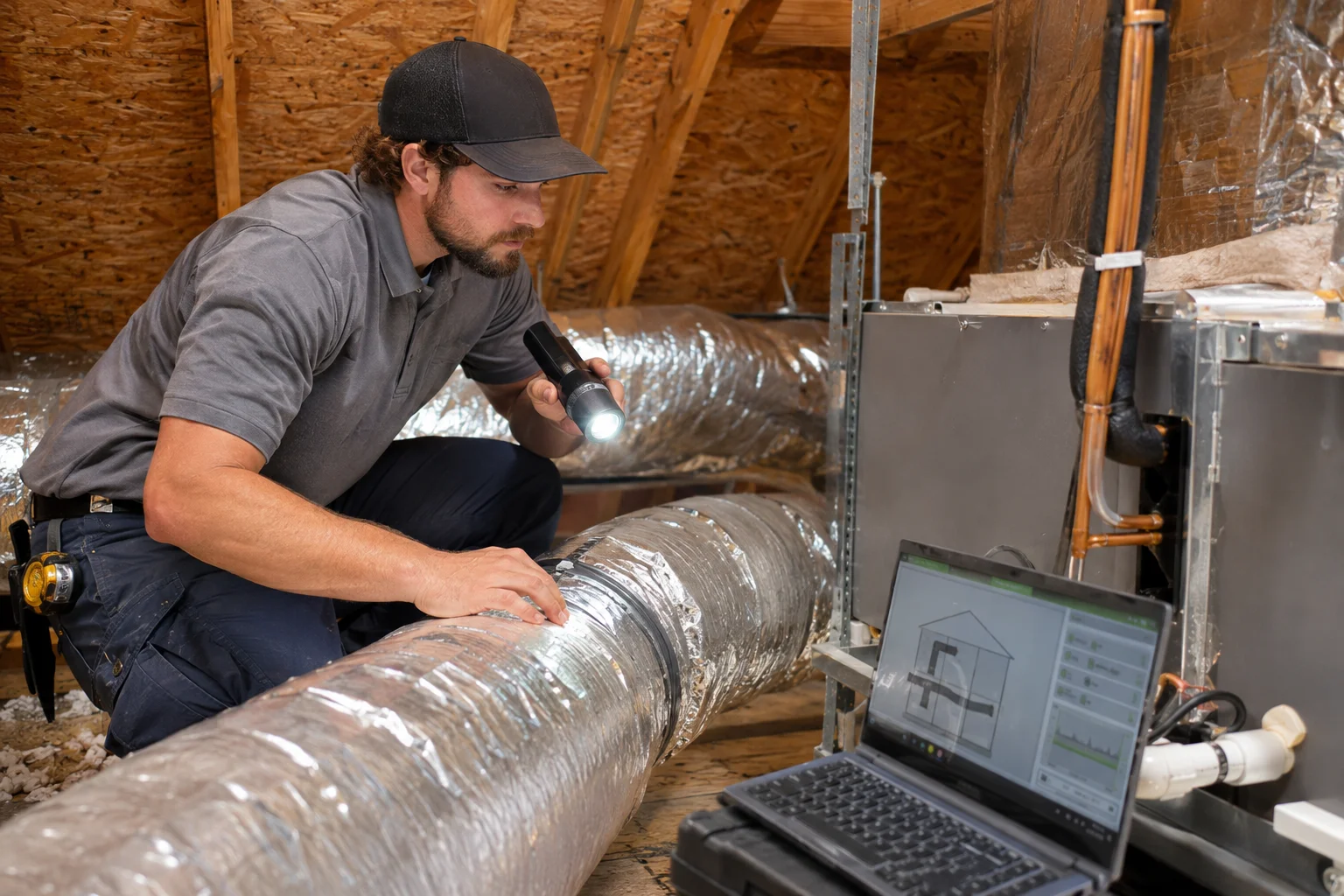
In older Niceville homes, a branch duct may have worked loose in the attic or been flattened during another project. In newer homes, tight doors and limited return paths can still leave a bedroom uncomfortable. Ask the technician to measure airflow at the problem vent and check static pressure, the resistance the blower works against. Those measurements help distinguish a local branch problem from a restriction affecting the whole system.
A leaking supply duct sends paid-for cooling into an attic. A leaking return can draw hot, humid air and dust into the equipment. If testing identifies leaks at joints or boots, duct sealing in Niceville targets those losses. A crushed or undersized duct may need ductwork repair or redesign instead. Ask which defect was found and how airflow will be checked after the work.
Outside, salt air and storm debris change the maintenance plan
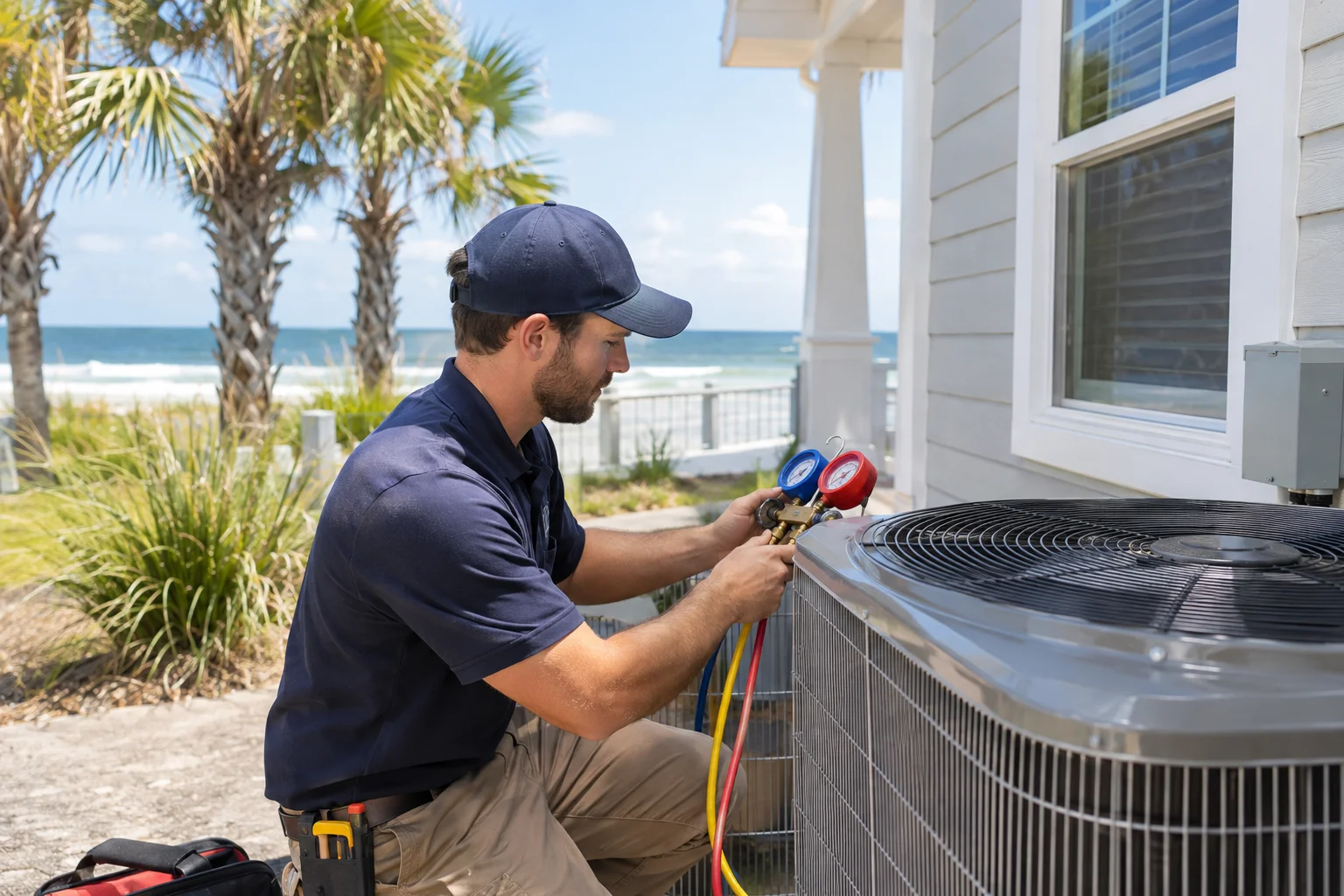
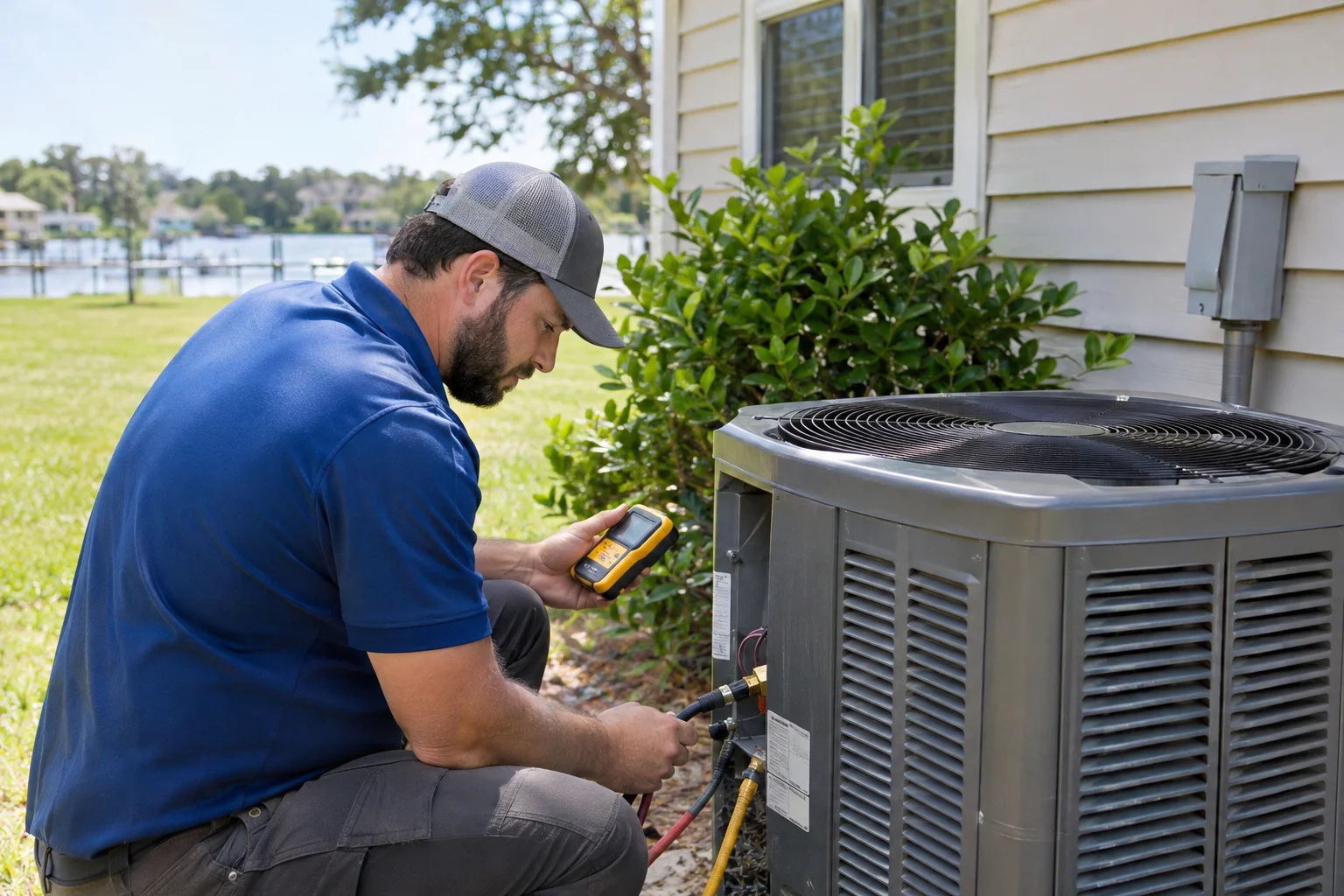
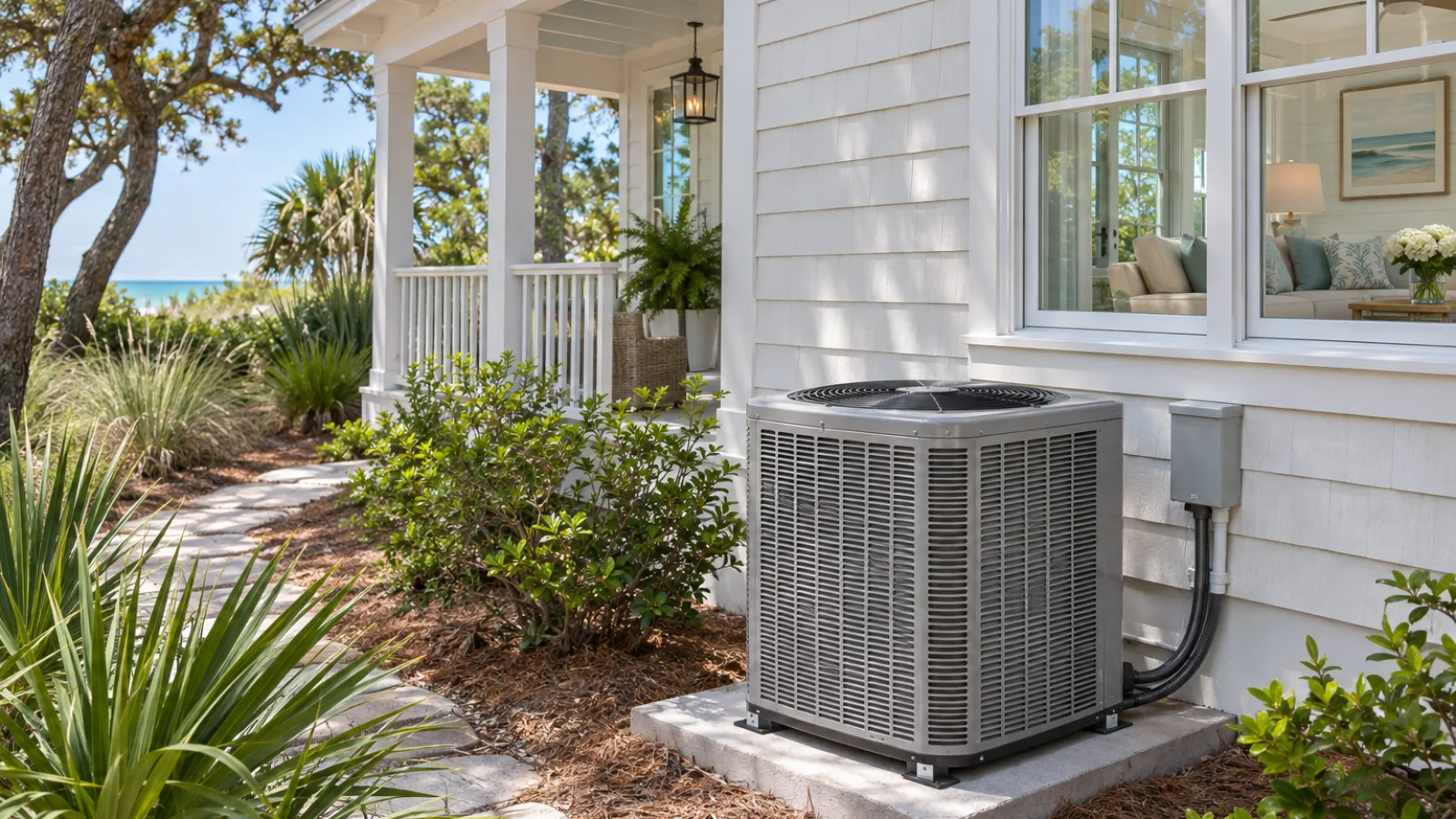
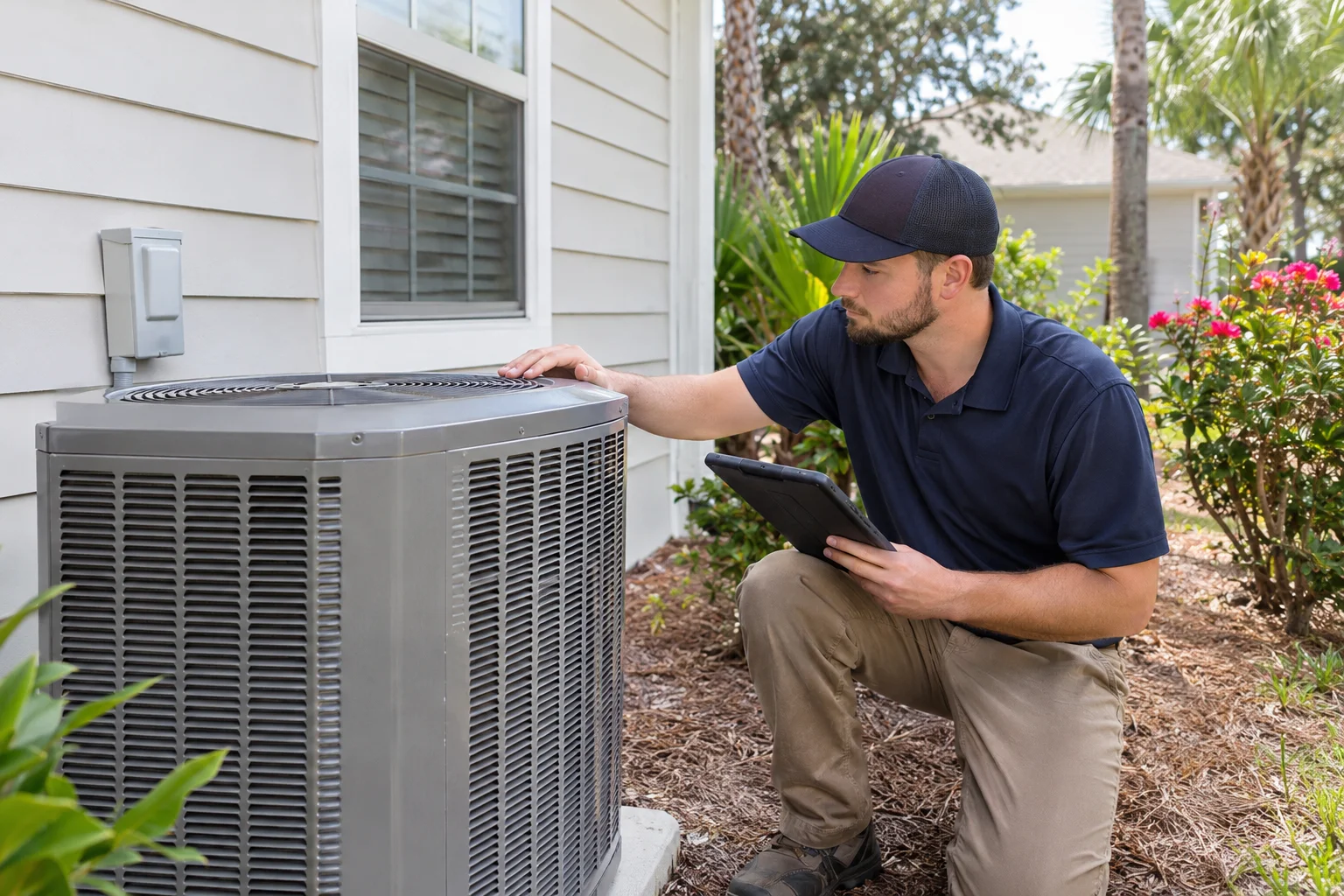
The cabinet many homeowners call the condenser contains a coil that releases heat outdoors during cooling and absorbs heat outdoors during heating. Grass clippings and leaves can obstruct it in either season. Properties exposed to salt air around Choctawhatchee Bay may also see corrosion on coil fins, fasteners, and cabinet panels. Exposure varies by site, so a unit near the water may need a different inspection schedule from one farther inland.
Look at the unit from ground level after windy weather. Check for fallen limbs, shifted landscaping, and mulch piled against the cabinet. Keep shrubs back according to the manufacturer’s clearance instructions, and avoid pressure washing the delicate fins. If stormwater reached the equipment or the cabinet shifted on its pad, leave it off pending professional inspection. An outdoor unit that looks dry today may have sustained damage while the water was up.
Separate an inconvenient symptom from an urgent repair
Ice, weak airflow, or water at the air handler
Ice on the indoor coil or insulated refrigerant line during cooling is not a sign of extra cooling power. Restricted airflow and refrigerant leaks are among the possible causes. Turn cooling off, avoid chipping away ice, and tell the service dispatcher where you saw the frost. Mention any water below the air handler as well. A thawing coil can overwhelm a pan, while a clogged condensate drain can cause an overflow even when the coil never froze.
If water is spreading from an attic air handler or staining the ceiling below it, shut the system off if you can do so safely and request prompt help. A float switch that stops cooling may be protecting the ceiling from damage. Don’t bypass it. If a search for “air conditioning repair near me” starts with a blank thermostat, say whether water is visible. That detail can point the visit toward drainage rather than an unnecessary thermostat replacement.
Cold weather changes what counts as normal
In heating mode, a light frost can form outdoors. A brief defrost cycle may produce a cloud of vapor and temporarily change the sound of the unit. Persistent heavy ice, repeated shutdowns, or a house that keeps losing temperature are different matters. Heat pump supply air often feels milder than air from a furnace, so judge performance by whether the indoor temperature recovers, not just by how warm the vent feels against your hand.
When requesting heating repair, tell the contractor whether the thermostat shows auxiliary heat. Some homes have electric backup strips; others pair the heat pump with a furnace. That distinction helps determine whether heat pump repair, furnace service, or a control check is appropriate. For smoke or an active fire, leave the home and call emergency services. For lost cooling during dangerous heat, move vulnerable occupants somewhere cool while arranging emergency HVAC repair.
Size replacement equipment for the house you have now
A remodel changes the assumptions behind the original installation. New windows may reduce afternoon heat gain, while an enclosed porch or addition can increase the load at the far end of a duct run. If you’re searching for “AC replacement near me,” ask for a room-by-room load calculation and a duct assessment rather than a quote based only on the old unit’s capacity. Oversized equipment can cool too quickly to manage humidity, and a larger blower cannot fix a poorly routed branch.
A ductless mini split can be practical for an addition that needs conditioning only part of the day. Compare the cost of a separate system with extending or correcting the central ductwork. Include a sensible location for the indoor head, access for filter cleaning, and a route for condensate drainage. For a central replacement, ask how the proposed outdoor unit, indoor coil, air handler, and thermostat work together, including how the blower manages moisture at lower cooling demand.
Book maintenance around Niceville’s busy seasons
Plan a cooling check before the first sustained stretch of hot, humid weather, when seasonal demand can narrow appointment choices across Okaloosa County. A useful spring visit covers coil condition, filter fit, blower operation, drainage, thermostat response, and cooling performance. Before colder nights, have heating operation, defrost controls, and backup heat checked. A heat pump serves both seasons, so a quiet summer doesn’t tell you whether its backup heat will work in January.
Between visits, check the filter regularly and use the manufacturer’s replacement guidance, adjusting for pets, dust, or remodeling. Keep a short record of filter changes, unusual noises, humidity readings, and service findings. Compare energy bills with similar weather and occupancy rather than treating one expensive month as proof of equipment failure. If operating costs rise along with long run times and falling comfort, that combination gives a technician a better lead.
When comparing local HVAC contractors after an “HVAC maintenance near me” search, ask what they measure and what you’ll receive in writing. A useful service note might identify low airflow at the rear bedroom, document a cleared drain, or explain why a refrigerant leak test is recommended. For help planning a visit, explore A Superior Mechanical’s Niceville services. Tell the team which room feels wrong, what the weather was doing, and whether the system was heating or cooling. Those details help put the first diagnostic check in the right place.
Find Heat Pump Services in Niceville, FL
If you need Heat Pump Services in Niceville, FL, visit our local service page or contact A Superior Mechanical today.
Map of Niceville, FL
Frequently Asked Questions
Should I lower my thermostat if my Niceville home feels damp?
Not as a lasting fix. If the house is already cool, track indoor humidity and check whether the fan runs continuously between cooling cycles. Persistent dampness calls for a look at cycle length, return duct leaks, and ventilation before changing equipment.
Does one warm bedroom mean my heat pump needs replacement?
Usually not by itself. If other rooms are comfortable, a technician can check the bedroom’s supply airflow, return path, and afternoon heat gain. Note whether opening the door improves comfort. That observation can help narrow the diagnosis.
What should I do if my heat pump freezes during cooling?
Turn cooling off and arrange service. Don’t chip ice from the coil or refrigerant line. Watch for water near the air handler as the ice melts, and tell the technician about weak airflow, a recent filter change, or any earlier freezing.
Related Articles
- Planning Cleaner, Drier Air in Niceville Without Sacrificing HVAC Airflow
- A Smarter Plumbing Budget for Niceville Homes: Financing Repairs and Preventing Surprises
- Keeping Niceville Plumbing Flowing: Smarter Care for Drains, Leaks, and Sewer Lines
- Water Softening in Niceville, FL: Less Scale, Better Daily Water
Photo Gallery