If the microwave goes dark when you start the toaster, note what else lost power. If half the house goes dark and the lights in the other half get unusually bright, leave the appliances alone and call the utility right away. Both situations can look like a breaker problem. The second can indicate a damaged electrical connection serving the whole house.
In Springfield, FL, an electrical problem might surface during a Gulf Coast storm or on a clear morning in a recently remodeled kitchen. The useful question is not just how to get power back. It is whether the circuit is safe to use again. Here is how to make that first decision and what to have an electrician check afterward.
Electrical trouble tonight: who gets the first call?
If you see smoke or flames, or hear an alarm and suspect a fire inside a wall, get everyone outside and call 911. Do not stop at the panel on your way out. Treat a downed wire as live, even if the neighborhood is dark. Stay well away from the wire and anything it touches, including fences and standing water, and report it to the utility from a safe location.
For an outage with no immediate sign of danger, check the utility outage map on your phone. A dark block points toward a utility problem, but the house next door having power does not rule one out. Report a partial outage, a damaged overhead service line, or lights that brighten in one room as they dim in another. The utility can check its supply; an electrician can address damage on the homeowner’s side of the service.
An outlet that crackles, a burning smell at a switch, or a buzzing panel needs urgent attention even if the lights still work. Stop using the affected equipment. Do not touch a hot cover, pull a scorched plug, or open the panel to investigate. If you suspect a fire, leave and call 911. Otherwise, A Superior Mechanical provides 24/7 emergency electrical services in Springfield, FL for hazards like these.
Read a breaker trip as information, not a diagnosis
Consider that microwave and toaster. In an older Springfield kitchen, two receptacles several feet apart may share one circuit. Each appliance may run fine on its own, yet together they draw more current than the circuit can carry. A breaker that trips under those conditions may be doing its job. Moving the toaster one outlet down the counter will not help if both outlets are on the same circuit.
What the timing tells an electrician
Tell the electrician whether the trip happened when an appliance started, after it had run for a while, or with nothing you know of in use. Mention recent work, too. A trip that first appeared after a dishwasher replacement calls for a different investigation than one that happens only when wind drives rain against the back porch. Leave a repeatedly tripping breaker off rather than resetting it to demonstrate the problem.
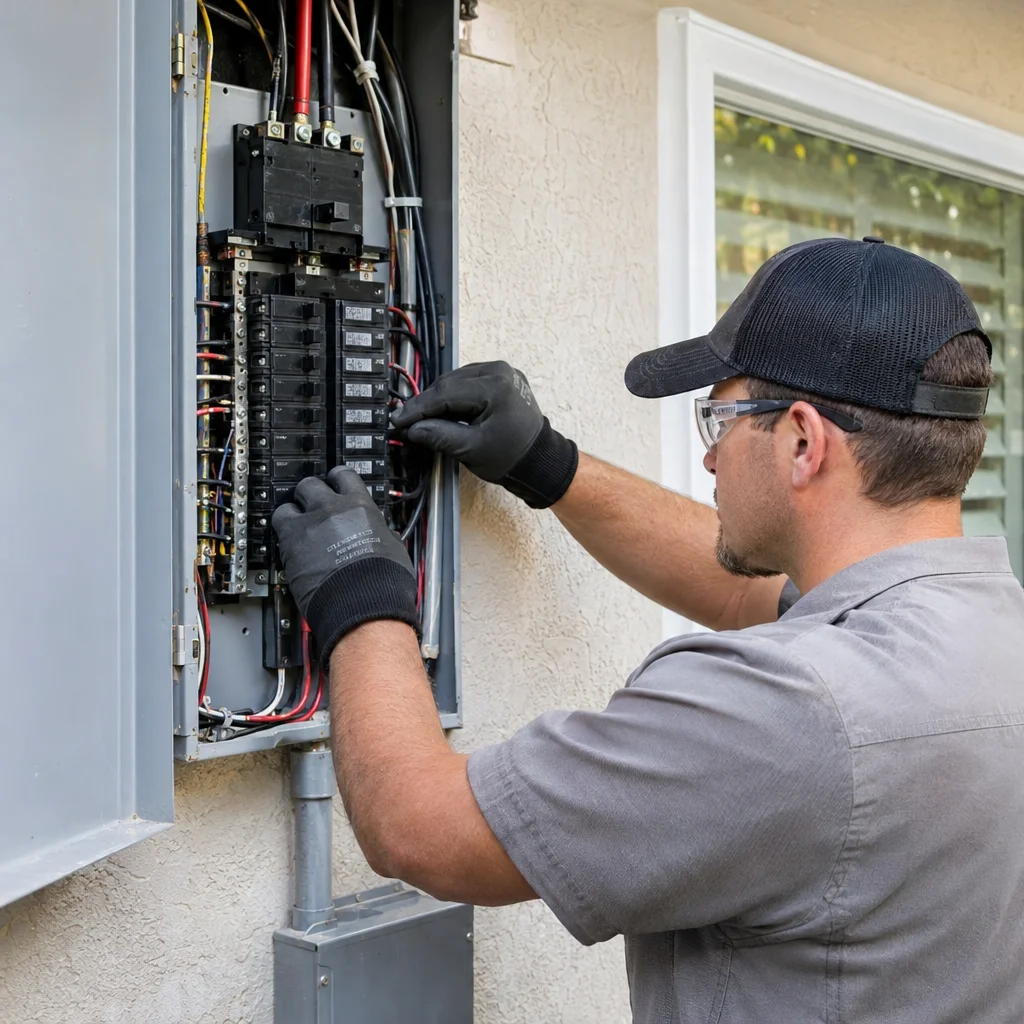
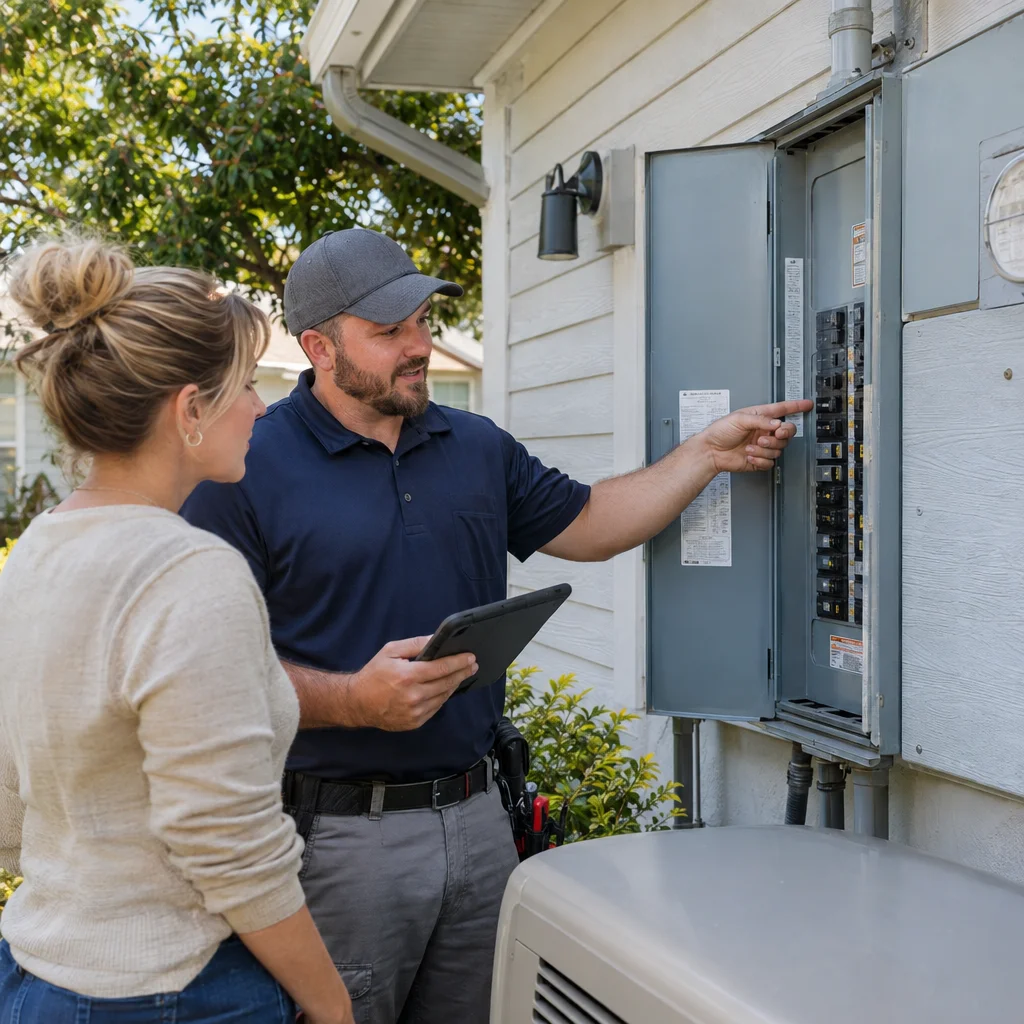
A search for “breaker panel repair near me” makes sense when the trouble seems to start at the box. But breaker repair is not necessarily the fix. An electrician may find a damaged appliance cord, a wiring fault, a poor connection in the panel, or a breaker that needs replacement. Installing a higher rated breaker just to stop trips can leave the existing conductors without proper protection.
Panel capacity is more than a count of empty slots
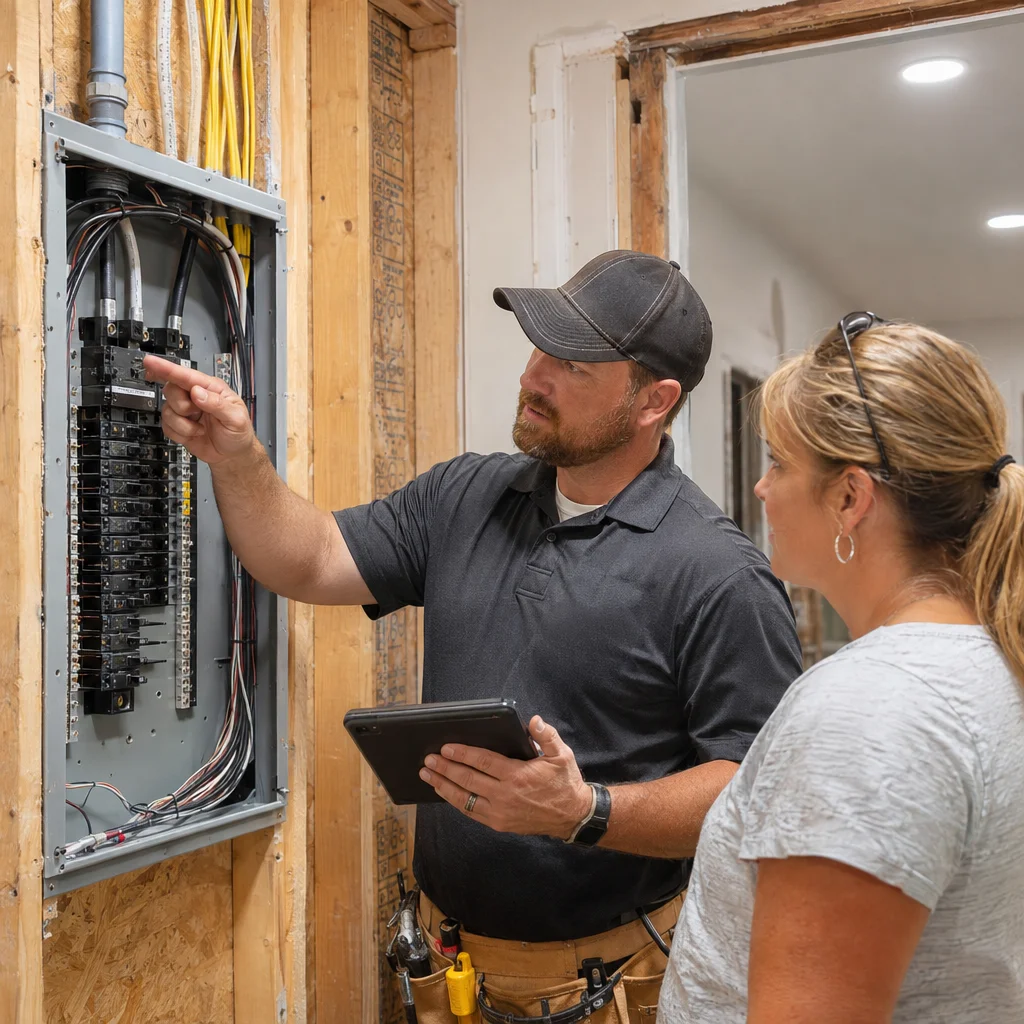
A panel upgrade is worth discussing if you are adding substantial loads or the existing equipment is damaged. An empty breaker space does not establish that the service can supply a new appliance. Conversely, a full panel does not automatically mean the entire service needs replacement. Ask the electrical contractor for a load calculation and an explanation of what limits the installation: panel space, service capacity, equipment condition, or some combination.
Look beyond the outlet that stopped working
A dead patio outlet and a dead garage outlet may have one cause. A ground fault circuit interrupter, or GFCI, can protect other receptacles downstream, so the protective device may not be where you plugged in the tool. Its job is to interrupt power when it detects current taking an unintended path. If the trip follows heavy rain, do not keep pressing reset. Leave wet equipment alone and have the source of the moisture checked.
Indoors, a plug that falls out under its own weight is reason enough to stop using that receptacle and arrange outlet repair. Loose contact can create heat. If the cover is discolored, hot, or giving off an odor, treat the problem as urgent. A new faceplate will hide a mark without correcting the connection behind it. With the circuit safely isolated, an electrician can determine whether the box, receptacle, and nearby wiring have sustained heat damage.
Lighting can offer clues as well. One LED lamp that flickers only at a low dimmer setting might be incompatible with the dimmer. Several fixtures that flicker together warrant a look at what they share. Tell the electrician whether a ceiling fan slows down at the same time. That detail is more helpful than guessing which switch has failed, and it can narrow the scope of electrical repair in your Springfield home.
Plan for what Bay County weather can reach
On a covered patio, an outlet can stay dry through an ordinary shower and take on water during a wind driven storm. Coastal humidity also gives damp enclosures less opportunity to dry. From a safe distance, look for broken covers, detached fixtures, and conduit pulled loose from an exterior wall. If flooding reached outlets, wiring, or the panel, do not enter standing water to shut off power. Have the utility and an electrician coordinate a safe disconnect and assessment before power is restored.
When arranging outdoor lighting installation, point out where water collects after a downpour and which beds you routinely dig or edge. That information helps the installer choose locations, cable routes, and equipment suitable for the exposure. Indoors, ask about whole home surge protection at the service equipment. It can limit damage from transient voltage spikes, but it will not correct a failing service connection or guarantee protection against a direct lightning strike.
Make the generator decision before the outage
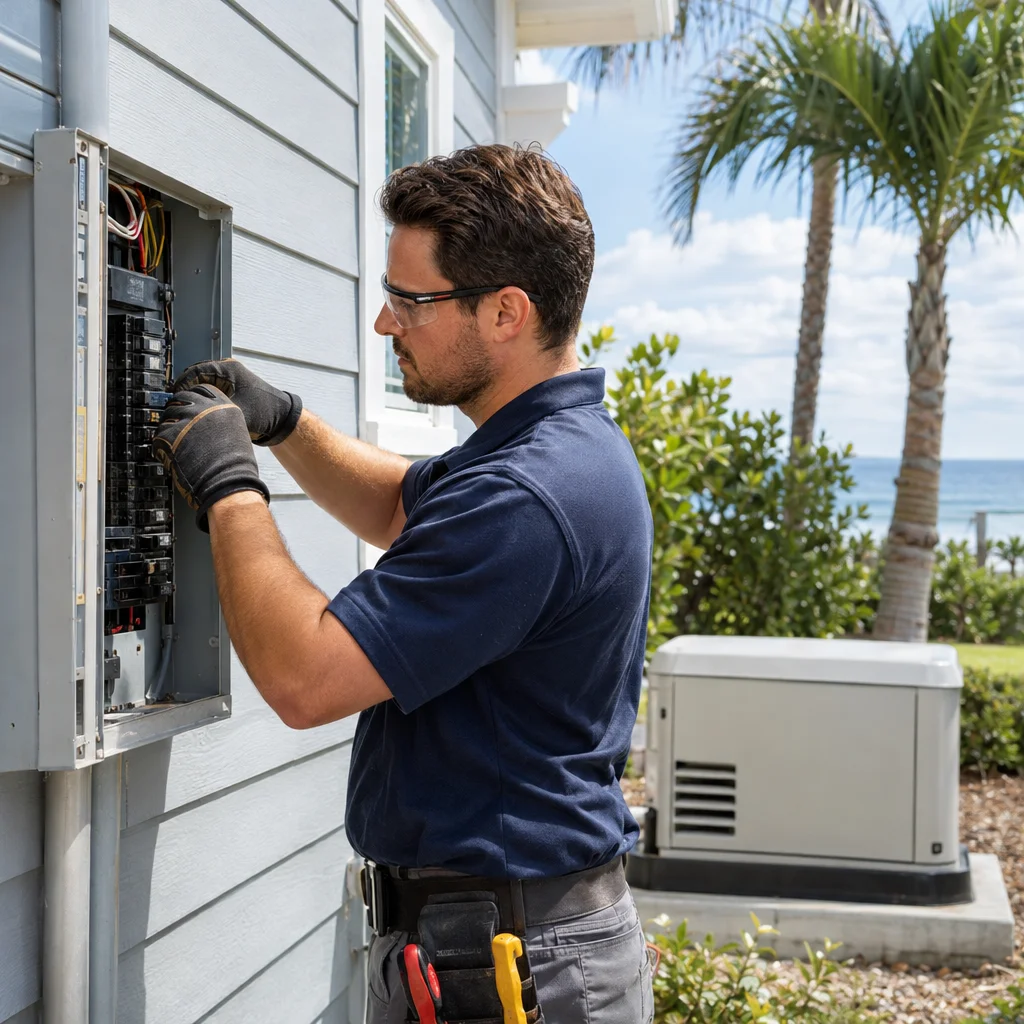
Start a generator installation plan with what you actually need to run. A refrigerator, lights, and medical equipment present a different demand than those same loads plus electric cooking and cooling. Include motor starting requirements in the sizing discussion. A permanently connected standby generator needs appropriate transfer equipment so it cannot energize utility lines during an outage. Never feed a portable generator into a wall outlet.
Portable units belong outdoors, at least 20 feet from the home, with exhaust directed away from doors, windows, and vents. An open garage door does not make a garage safe for generator operation. Before storm season, test carbon monoxide alarms according to their instructions and make sure everyone in the household knows where the portable unit can safely run.
Use a remodel to fix the circuit, not just the symptom
In an older house, a porch enclosure or laundry addition may still share power with rooms that once served fewer purposes. In a newer home, a garage designed for lights and a door opener can become a workshop and charging space within a year. Neither the home’s age nor the appearance of its outlets tells you how much load the wiring can safely serve.
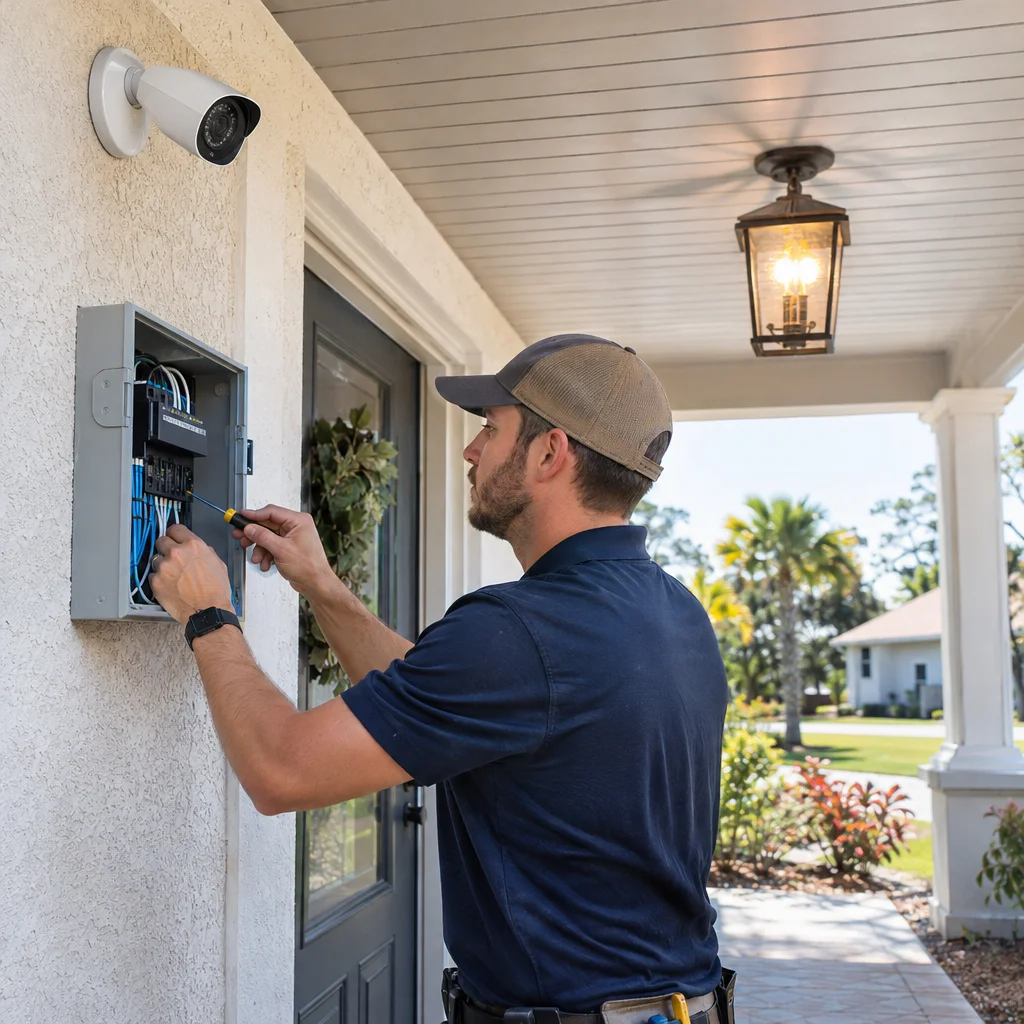
Before cabinets go in, give the electrician the actual appliance list and a sketch of where you use countertop equipment. Discuss dedicated circuits, GFCI protection, task lighting, and switches reachable from each kitchen entrance. While the walls are accessible, wiring repair and grounding corrections are easier to plan. The same principle applies to camera and alarm power, as explained in this guide to electrical planning for Springfield home security systems.
For a garage project, tell the installer how far you drive on a typical day and how long the car stays parked overnight. Level 2 EV charger installation does not always require the highest available charging rate. A lower setting or listed load management equipment may meet your needs without a service upgrade. Ask who will handle permits, which electrical inspections apply, and how any code corrections will be documented before the walls close.
Keep a household electrical record you can use in the dark
On a quiet day, take a readable photo of the panel directory without removing any covers. Save it on your phone along with the utility outage number and your electrician’s contact information. If entries say only “plugs” or name a room that no longer exists, ask for accurate circuit labeling during the next service visit. In a vacation rental, leave guests simple instructions for reporting an outage, not instructions for troubleshooting the panel.
Make local electrical maintenance specific to your house. Follow manufacturer instructions for testing GFCIs and smoke alarms. Check alarm replacement dates and discuss smoke detector installation if an addition has changed the sleeping layout. Keep stored items away from the panel. Schedule an electrical inspection if you inherit undocumented remodeling work, notice recurring trips, or plan a large new load. Give the electrician your list of symptoms rather than waiting for them to happen during the appointment.
If you are searching for an “electrician near me” during a partial outage, the most useful details for the call are your Springfield address, which rooms have lost power, whether the utility has been notified, and whether anyone noticed heat, smoke, or water. No one needs to recreate a spark or get close enough to photograph damaged equipment. A Superior Mechanical handles urgent calls in Springfield and serves the surrounding Bay County area. Once the immediate hazard is addressed, ask which circuits can safely return to use and which should remain off pending repair.
Find Emergency Electrical Services in Springfield, FL
If you need Emergency Electrical Services in Springfield, FL, visit our local service page or contact A Superior Mechanical today.
Map of Springfield, FL
Frequently Asked Questions
Is it an emergency if only part of my Springfield home loses power?
It can be. If unrelated rooms lose power or some lights get unusually bright while others dim, report it to the utility promptly. A service connection may be damaged even if neighboring homes have power. If you see smoke or suspect a fire, leave and call 911.
Can I use a patio outlet again once it dries out?
If water entered the receptacle or its box, do not assume a dry cover means it is safe. Leave it unused and have an electrician check the device, enclosure, and GFCI protection before putting it back in service.
Does a breaker that trips repeatedly mean I need a new electrical panel?
Not necessarily. The cause might be an overloaded circuit, a faulty appliance, damaged wiring, or a defective breaker. Leave the affected breaker off and arrange an assessment. Panel replacement should be based on equipment condition and capacity, not the number of trips alone.
Related Articles
- Before the Walls Close: Smart Electrical Planning for Springfield Commercial Builds
- Behind a Reliable Security System: Electrical Planning for Springfield Homes
- Ductless Comfort in Springfield Starts with Airflow, Humidity, and a Better Plan
- Keep Comfort Inside: Ductwork Aeroseal Planning for Springfield Homes
Photo Gallery